Russia says it destroyed howitzer used to shell Zaporizhzhia nuclear plant
Aug 26 (Reuters) – Russia’s Defence Ministry said on Friday that its forces had destroyed a U.S.-made M777 howitzer which it said Ukraine had used to shell the Russian-controlled Zaporizhzhia nuclear plant.
In its daily briefing, the Defence Ministry said that the howitzer had been destroyed west of the town of Marganets, in Ukraine’s Dnipropetrovsk region.
Reuters could not immediately verify the report.
The Zaporizhzhia nuclear plant, Europe’s largest, was captured by Russian forces in March. It remains near the frontline, and has repeatedly come under fire in recent weeks. Both Ukraine and Russia have accused each other of shelling the facility.
A Crucial Week For The Iran Nuclear Deal
Iran Nuclear Deal Has Never Been Closer, https://oilprice.com/Energy/Energy-General/A-Crucial-Week-For-The-Iran-Nuclear-Deal.html 26 Aug 22, Indirect talks between the United States and Iran are moving closer to a final stage as both Tehran and Washington have responded to the European Union’s final draft, with further talks expected next week.
-It remains to be seen if the Iranian authorities would drop demands such as scrapping the IRGC from the US terrorist list or demanding written guarantees there would be no sudden US snapback on the JCPOA.
-Iranian crude exports have averaged approximately 800,000 b/d so far this year, the highest level since the Trump administration quit the JCPOA, as oversight turned laxer.
-There have been no exports to Europe since November 2018, whilst almost all of Asian demand is coming from China which takes in cargoes either directly or via ship-to-ship transfers in Malaysia.
Iran’s UN envoy slams Israel refusal to join NPT, urges nuclear-weapon-free zone in Middle East
Israel, which pursues a policy of deliberate ambiguity about its nuclear weapons, is estimated to possess 200 to 400 nuclear warheads in its arsenal, making it the sole possessor of non-conventional arms in West Asia.
Friday, 26 August 2022,
A senior Iranian diplomat has denounced Israel’s continued refusal to join the Nuclear Non-Proliferation Treaty (NPT), stressing that establishing a Middle East region free of nuclear weapons is of utmost importance.
Iran’s ambassador and permanent representative to the United Nations, Majid Takht-Ravanchi, made the remarks while speaking to reporters on Friday on the sidelines of the Tenth Review Conference of the Parties to the Treaty on the Non-Proliferation of Nuclear Weapons held at the UN headquarters in New York.
“The issue of the Middle East as a region free of nuclear weapons is one of the important discussions… because the Israeli regime, as the only possessor of hundreds of nuclear warheads, is not ready to join the Nuclear Non-Proliferation Treaty and place its nuclear facilities under the supervision of the International Atomic Energy Agency,” he said.
He added that Israel’s refusal to join the NPT comes as some countries are cooperating with the regime and have always supported it.
The Iranian delegation attending the tenth NPT review conference played a constructive role in highlighting the significance of a Middle East region free of weapons of mass destruction, he said
As documents relating to the NPT review conferences in 1995, 2000, and 2010 have explicitly announced that the Israeli regime must join the treaty, the Iranian team emphasized that the issue should also be included in the final statement of the 10th NPT review meeting, Takht-Ravanchi added.
He emphasized that during the current conference, the Islamic Republic clearly announced that it would not back down from its stance on the importance of a Middle East without any weapons of mass destruction.
“We said that this issue is one of the red lines of the Islamic Republic of Iran and if they want to act honestly and constructively, the literature used in the statements of previous conferences should also be used in this conference in order to move towards a Middle East without nuclear weapons,” the senior Iranian diplomat pointed out.
He noted that Iran seeks to reach a consensus with the participants at the current NPT review conference but it has principles and certain measures must be carried out.
n a Monday address to the Tenth Review Conference of the Parties to the Treaty on the Non-Proliferation of Nuclear Weapons, Takht-Ravanchi expressed concern over the lack of progress in the implementation of the 1995 Nuclear Nonproliferation Treaty (NPT) resolution and the 2010 action plan on the Middle East, saying the Israeli regime must eliminate its stockpile of nuclear weapons.
Takht-Ravanchi also slammed the US double standards, saying Israel’s accession to the NPT “without precondition and further delay” and the placement of all of its nuclear activities and facilities under the comprehensive IAEA safeguards are “essential in realizing the goal of universal adherence to the Treaty in the Middle East and the establishment of a nuclear-weapon-free zone in the Middle East.”
Israel, which pursues a policy of deliberate ambiguity about its nuclear weapons, is estimated to possess 200 to 400 nuclear warheads in its arsenal, making it the sole possessor of non-conventional arms in West Asia.
The illegitimate entity has, however, refused to either allow inspections of its military nuclear facilities or sign the NPT.
What has emboldened Tel Aviv to accelerate its nuclear activities, according to observers, is the support from the US and Europe, the two countries most critical of Iran’s peaceful nuclear program.
The regime has assassinated at least seven Iranian nuclear scientists and conducted a series of sabotage operations against the Islamic Republic’s nuclear facilities.
Robot issue delays fuel removal from Fukushima nuclear plant
The operator of the wrecked Fukushima nuclear power plant says it is postponing the start of the removal of highly radioactive melted fuel from its damaged reactors because of delays in the development of a remote-controlled robotic arm
abc news, By, MARI YAMAGUCHI Associated Press, August 25, 2022, Tokyo Electric Power Company Holdings had originally planned to begin removing melted fuel from the Unit 2 reactor at the Fukushima Daiichi plant last year, 10 years after the disaster triggered by a massive earthquake and tsunami on March 11, 2011.
That plan was postponed until later this year, and now will be delayed further until about autumn next year because of additional work needed to improve the performance of the robotic arm, TEPCO said.
The giant arm, jointly developed by Veolia Nuclear Solutions of Britain and Japan‘s Mitsubishi Heavy Industries, has been transported to Japan and is being adjusted at a testing facility south of the Fukushima plant…………………… https://abcnews.go.com/Technology/wireStory/robot-issue-delays-fuel-removal-fukushima-nuclear-plant-88839281
Why Dr Jane Goodall is still hopeful about the Earth’s future
Why Dr Jane Goodall is still hopeful about the Earth’s future
The world-leading primatologist says poverty and unsustainable lifestyles are among the main drivers of environmental destruction.
The west’s false narrative about Russia and China
https://johnmenadue.com/the-wests-false-narrative-about-russia-and-china/ The Western narrative about the Ukraine war is that it is an unprovoked attack by Putin in the quest to recreate the Russian empire. Yet the real history starts with the Western promise to Soviet President Mikhail Gorbachev that NATO would not enlarge to the East, followed by four waves of NATO aggrandisement:
At the core of all of this is the US attempt to remain the world’s hegemonic power, by augmenting military alliances around the world to contain or defeat China and Russia. It’s a dangerous, delusional, and outmoded idea.
There is only one country whose self-declared fantasy is to be the world’s dominant power: the US.
https://johnmenadue.com/the-wests-false-narrative-about-russia-and-china/ By Jeffrey Sachs, Aug 24, 2022, The world is on the edge of nuclear catastrophe in no small part because of the failure of Western political leaders to be forthright about the causes of the escalating global conflicts. The relentless Western narrative that the West is noble while Russia and China are evil is simple-minded and extraordinarily dangerous. It is an attempt to manipulate public opinion, not to deal with very real and pressing diplomacy.
The essential narrative of the West is built into US national security strategy. The core US idea is that China and Russia are implacable foes that are “attempting to erode American security and prosperity.” These countries are, according to the US, “determined to make economies less free and less fair, to grow their. militaries, and to control information and data to repress their societies and expand their influence.”
The irony is that since 1980 the US has been in at least 15 overseas wars of choice (Afghanistan, Iraq, Libya, Panama, Serbia, Syria, and Yemen just to name a few), while China has been in none, and Russia only in one (Syria) beyond the former Soviet Union. The US has military bases in 85 countries, China in 3, and Russia in 1 (Syria) beyond the former Soviet Union.
President Joe Biden has promoted this narrative, declaring that the greatest challenge of our time is the competition with the autocracies, which “seek to advance their own power, export and expand their influence around the world, and justify their repressive policies and practices as a more efficient way to address today’s challenges.” US security strategy is not the work of any single US president but of the US security establishment, which is largely autonomous, and operates behind a wall of secrecy.
The overwrought fear of China and Russia is sold to a Western public through manipulation of the facts. A generation earlier George W. Bush, Jr. sold the public on the idea that America’s greatest threat was Islamic fundamentalism, without mentioning that it was the CIA, with Saudi Arabia and other countries, that had created, funded, and deployed the jihadists in Afghanistan, Syria, and elsewhere to fight America’s wars.
Or consider the Soviet Union’s invasion of Afghanistan in 1980, which was painted in the Western media as an act of unprovoked perfidy. Years later, we learned that the Soviet invasion was actually preceded by a CIA operation designed to provoke the Soviet invasion! The same misinformation occurred vis-à-vis Syria. The Western press is filled with recriminations against Putin’s military assistance to Syria’s Bashar al-Assad beginning in 2015, without mentioning that the US supported the overthrow of al-Assad beginning in 2011, with the CIA funding a major operation (Timber Sycamore) to overthrow Assad years before Russia arrived.
Or more recently, when US House Speaker Nancy Pelosi recklessly flew to Taiwan despite China’s warnings, no G7 foreign minister criticised Pelosi’s provocation, yet the G7 ministers together harshly criticised China’s “overreaction” to Pelosi’s trip.
The Western narrative about the Ukraine war is that it is an unprovoked attack by Putin in the quest to recreate the Russian empire. Yet the real history starts with the Western promise to Soviet President Mikhail Gorbachev that NATO would not enlarge to the East, followed by four waves of NATO aggrandisement: in 1999, incorporating three Central European countries; in 2004, incorporating 7 more, including in the Black Sea and Baltic States; in 2008, committing to enlarge to Ukraine and Georgia; and in 2022, inviting four Asia-Pacific leaders to NATO to take aim at China.
Nor do the Western media mention the US role in the 2014 overthrow of Ukraine’s pro-Russian president Viktor Yanukovych; the failure of the Governments of France and Germany, guarantors of the Minsk II agreement, to press Ukraine to carry out its commitments; the vast US armaments sent to Ukraine during the Trump and Biden Administrations in the lead-up to war; nor the refusal of the US to negotiate with Putin over NATO enlargement to Ukraine.
Of course, NATO says that is purely defensive, so that Putin should have nothing to fear. In other words, Putin should take no notice of the CIA operations in Afghanistan and Syria; the NATO bombing of Serbia in 1999; the NATO overthrow of Moammar Qaddafi in 2011; the NATO occupation of Afghanistan for 15 years; nor Biden’s “gaffe” calling for Putin’s ouster (which of course was no gaffe at all); nor US Defence Secretary Lloyd Austin stating that the US war aim in Ukraine is the weakening of Russia.
At the core of all of this is the US attempt to remain the world’s hegemonic power, by augmenting military alliances around the world to contain or defeat China and Russia. It’s a dangerous, delusional, and outmoded idea. The US has a mere 4.2% of the world population, and now a mere 16% of world GDP (measured at international prices). In fact, the combined GDP of the G7 is now less than that of the BRICS (Brazil, Russia, India, China, and South Africa), while the G7 population is just 6 percent of the world compared with 41 percent in the BRICS.
There is only one country whose self-declared fantasy is to be the world’s dominant power: the US. It’s past time that the US recognised the true sources of security: internal social cohesion and responsible cooperation with the rest of the world, rather than the illusion of hegemony. With such a revised foreign policy, the US and its allies would avoid war with China and Russia, and enable the world to face its myriad environment, energy, food and social crises.
Above all, at this time of extreme danger, European leaders should pursue the true source of European security: not US hegemony, but European security arrangements that respect the legitimate security interests of all European nations, certainly including Ukraine, but also including Russia, which continues to resist NATO enlargements into the Black Sea. Europe should reflect on the fact that the non-enlargement of NATO and the implementation of the Minsk II agreements would have averted this awful war in Ukraine. At this stage, diplomacy, not military escalation, is the true path to European and global security.
Fears of a radiation leak mount near Ukrainian nuclear plant
WHSV3 By PAUL BYRNE, Aug. 26, 2022 ,
KYIV, Ukraine (AP) — Authorities began distributing iodine tablets to residents near Ukraine’s Zaporizhzhia nuclear power plant Friday in case of a radiation leak, amid mounting fears that the fighting around the complex could trigger a catastrophe.
The move came a day after the plant was temporarily knocked offline because of what officials said was fire damage to a transmission line. The incident heightened dread of a nuclear disaster in a country still haunted by the 1986 explosion at Chernobyl.
Continued shelling was reported in the area overnight, and satellite images from Planet Labs showed fires burning around the complex — Europe’s biggest nuclear plant — over the last several days.
Iodine tablets, which help block the absorption of radioactive iodine by the thyroid gland in a nuclear accident, were issued in the Ukrainian-controlled city of Zaporizhzhia, about 45 kilometers (27 miles) from the plant. A woman and her small daughter were among those receiving the pills……………..
In Thursday’s incident, Ukraine and Russia blamed one another for the transmission-line damage that knocked the plant off the power grid………
The plant requires power to run the reactors’ vital cooling systems. A loss of cooling could lead to a nuclear meltdown.
Ukrenergo, Ukraine’s transmission system operator, reported Friday that two damaged main lines supplying the plant with electricity had resumed operation, ensuring a stable power supply.
Worst Places to Be If There’s a Nuclear Attack on America
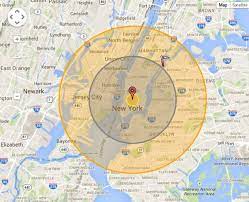
247melly, Michael B. Sauter, August 26, 2022 Russia’s invasion of Ukraine has included battles in or near nuclear power plants. The recent shelling at the Zaporizhzhia Nuclear Power Plant has raised alarm bells worldwide. The recent grandstanding by Russia, China, and North Korea [ed: what about USA and UK?], including several intercontinental ballistic missile tests, has further raised global tensions.
In the unlikely scenario of a nuclear attack on America – an all-out nuclear war – very few places would be safe, though no doubt less populated, remote areas would be safer.
An enemy nation would first aim to neutralize the U.S. nuclear capabilities by targeting strategic military installations, many of which are near large urban centers.
Stephen Schwartz, author of “Atomic Audit: The Costs and Consequences of US Nuclear Weapons Since 1940,” identified 15 such targets. The targets, mapped by Business Insider, include command centers, ICBM bases, communication stations, and air force and submarine bases. In addition, Dr. Irwin Redlener, a professor at Columbia University’s Mailman School of Public Health, identified six economic centers most likely to be attacked.
To find the worst places to be if there’s a nuclear attack on America, 24/7 Wall St. constructed an index consisting of several measures to rank major U.S. cities likely to be targets based on both Schwartz’s and Redlener’s lists. The measures in the index include population density; city preparedness for emergency; economic significance; city preparedness plans; distance to the strategic military target; proximity to nuclear power plants; and ease of evacuation based on commute time as a proxy to congestion and the percentage of a city area that is water. We also added projected fatalities and injuries assuming a 1 megaton bomb, using Nukemap.
Click here to see the worst places to be if there’s a nuclear attack on America.
Click here to see our detailed methodology.………….. https://247wallst.com/special-report/2022/08/26/worst-places-to-be-if-theres-a-nuclear-attack-on-america/—
Hungary approves construction of two Russian-built nuclear reactors
Work to begin in coming weeks in move that emphasises ties between Viktor Orbán and Vladimir Putin.
Agence France-Presse in Budapest,Sat 27 Aug 2022
Hungary has announced that the €12.5bn (£10.6bn) construction of two nuclear reactors by Russia’s Rosatom will begin in the coming weeks after regulators approved the project.
The war in Ukraine has not deterred Hungary’s interest in the project to add to the four reactors already operating at the Paks plant outside Budapest.
The fact it is moving forward is another indication of the close ties between Hungary’s nationalist prime minister, Viktor Orbán, and the Russian president, Vladimir Putin.
“This is a big step, an important milestone,” the Hungarian foreign minister, Péter Szijjártó, said on Facebook after the national regulator issued a permit on Thursday after numerous delays.
………………………….Russia is financing most of the project with a €10bn loan to Hungary, which is paying the remaining €2.5bn.
………… Hungary has obtained exceptions and has negotiated extra deliveries of natural gas………………………. https://www.theguardian.com/world/2022/aug/26/hungary-approves-construction-two-russian-built-nuclear-reactors
All About Groundwater- Hanford Part 1
https://www.hanfordchallenge.org/inheriting-hanford 9 Aug 22, [good diagrams]
Part 1
The Hanford Nuclear Site is one of the most complex and arduous cleanup efforts in the history of the United States. Hundreds of billions of gallons of radioactive and chemical waste were dumped into the ground on site. Pacific Northwest National Laboratory (PNNL) issued a report in September 2021, Adaptive Site Management Strategies for the Hanford Central Plateau Groundwater, that outlines an innovative strategy to tackle the challenge of groundwater cleanup. The report suggests adopting a new approach—Adaptive Site Management—to address groundwater cleanup in Hanford’s Central Plateau.
Adaptive Site Management is centered on thorough site planning and a robust understanding of site conditions and uncertainties. Large and complex hazardous waste sites often implement this approach. Adaptive Site Management would create a groundwater cleanup framework of planning, implementation, and assessment to nimbly adapt to new information and changing site conditions at Hanford. The goal would be to develop effective cleanup strategies that achieve the required outcomes while staying on schedule and budget.
The Adaptive Site Management approach attempts to reduce uncertainty by comprehensively characterizing the contaminants in the soil and groundwater. Characterization identifies the physical and chemical properties of the waste and the extent of contaminants in the vadose zone and groundwater. Characterization also identifies the geological makeup of the site, which can influence the movement of contaminants. The characterization process gathers information that then informs waste treatment and cleanup strategies.
An Adaptive Site Management approach for Hanford’s Central Plateau would include:
- Establishing site objectives or end goals that are consistent with the overall Hanford Site goals and that support the development of a long-term management approach;
- Developing interim objectives that provide step-by-step progress toward the overall site cleanup strategy; and
- Identifying key cleanup actions to reduce uncertainty, address site complexities, and analyze data gaps.
The report proposes various long-term site and interim objectives for the Central Plateau to provide examples for implementing the Adaptive Site Management approach at Hanford. These objectives are based on the primary goal of Hanford cleanup operations—protecting the Columbia River.
The objectives must also be consistent with the United States Department of Energy’s (USDOE) decision about future land use when cleanup finishes. For example, USDOE decided that the Central Plateau is designated exclusively for industrial use, meaning manufacturing, processing, or storing materials. The decision to have the Central Plateau remain solely for industrial use means that the cleanup strategy doesn’t have to be as protective as for other areas of the Hanford Site, such as the River Corridor. USDOE can leave some contamination in place because it’s assuming that the land won’t be openly accessible to the public. However, that is a big assumption considering that some radionuclides remain dangerous for hundreds of thousands of years. It’s impossible to know what the world will look like that far into the future, but USDOE probably won’t be around to prevent future generations from staying out of the Central Plateau.
In conclusion, the report makes the case that the Adaptive Site Management approach is an appropriate tool for a large and complex site, such as Hanford. Since many of the cleanup activities in the Central Plateau are still early in the decision process and not set in stone, the report states that now is an appropriate time to implement the Adaptive Site Management approach.
In addition to outlining the Adaptive Site Management approach, the report dives into the history of Hanford’s soil and groundwater contamination, current cleanup strategies, and the various challenges to cleaning up the soil and groundwater. Read on to Part 2 to learn more about soil and groundwater contamination at Hanford.
This material is funded through a Public Participation Grant from the Washington State Department of Ecology. The content was reviewed for grant consistency, but is not necessarily endorsed by the agency.
Uranium Ghost Town in the Making
, Time and again, mining company Homestake and government agencies promised to clean up waste from decades of uranium processing. It didn’t happen.
Reader supported News, Mark Olalde and Maya Miller/ProPublica, 25 Aug 22
he “death map” tells the story of decades of sickness in the small northwest New Mexico communities of Murray Acres and Broadview Acres. Turquoise arrows point to homes where residents had thyroid disease, dark blue arrows mark cases of breast cancer, and yellow arrows mean cancer claimed a life.
Neighbors built the map a decade ago after watching relatives and friends fall ill and die. Dominating the top right corner of the map, less than half a mile from the cluster of colorful arrows, sits what residents believe is the cause of their sickness: 22.2 million tons of uranium waste left over from milling ore to supply power plants and nuclear bombs.
“We were sacrificed a long time ago,” said Candace Head-Dylla, who created the death map with her mother after Head-Dylla had her thyroid removed and her mother developed breast cancer. Research has linked both types of illnesses to uranium exposure.
Beginning in 1958, a uranium mill owned by Homestake Mining Company of California processed and refined ore mined nearby. The waste it left behind leaked uranium and selenium into groundwater and released the cancer-causing gas radon into the air. State and federal regulators knew the mill was polluting groundwater almost immediately after it started operating, but years passed before they informed residents and demanded fixes.
The contamination continued to spread even after the mill closed in 1990.
The failures at Homestake are emblematic of the toxic legacy of the American uranium industry, one that has been well-documented from its boom during the Cold War until falling uranium prices and concerns over the dangers of nuclear power decimated the industry in the 1980s. Uranium mining and milling left a trail of contamination and suffering, from miners who died of lung cancer while the federal government kept the risks secret to the largest radioactive spill in the country’s history.
But for four decades, the management of more than 250 million tons of radioactive uranium mill waste has been largely overlooked, continuing to pose a public health threat.
ProPublica found that regulators have failed to hold companies to account when they missed cleanup targets and accepted incorrect forecasts that pollution wouldn’t spread. The federal government will eventually assume responsibility for the more than 50 defunct mills that generated this waste.
At Homestake, which was among the largest mills, the company is bulldozing a community in order to walk away. Interviews with dozens of residents, along with radon testing and thousands of pages of company and government records, reveal a community sacrificed to build the nation’s nuclear arsenal and atomic energy industry.
Time and again, Homestake and government agencies promised to clean up the area. Time and again, they missed their deadlines while further spreading pollution in the communities. In the 1980s, Homestake promised residents groundwater would be cleaned within a decade, locals told the Environmental Protection Agency and ProPublica. After missing that target, the company told regulators it would complete the job around 2006, then by 2013.
In 2014, an EPA report confirmed the site posed an unacceptable cancer risk and identified radon as the greatest threat to residents’ health. Still, the cleanup target date continued shifting, to 2017, then 2022.
Rather than finish the cleanup, Homestake’s current owner, the Toronto-based mining giant Barrick Gold, is now preparing to ask the Nuclear Regulatory Commission, the independent federal agency that oversees the cleanup of uranium mills, for permission to demolish its groundwater treatment systems and hand the site and remaining waste over to the U.S. Department of Energy to monitor and maintain forever.
Before it can transfer the site to the Department of Energy, Homestake must prove that the contamination, which exceeds federal safety levels, won’t pose a risk to nearby residents or taint the drinking water of communities downstream.
Part of Homestake’s strategy: buy out nearby residents and demolish their homes. Local real estate agents and residents say the company’s offers do not account for the region’s skyrocketing housing costs, pushing some who accept them back into debt in order to buy a new home. Those who do sell are required to sign agreements to refrain from disparaging Homestake and absolve the company of liability, even though illnesses caused by exposure to radioactive waste can take decades to manifest.
Property records reveal the company had, by the end of 2021, purchased 574 parcels covering 14,425 acres around the mill site. This April, Homestake staff indicated they had 123 properties left to buy. One resident said the area was quickly becoming a “ghost town.”
Even after the community is gone, more than 15,000 people who live nearby, many of them Indigenous, will continue to rely on water threatened by Homestake’s pollution.
The company said it has produced models showing that its waste won’t imperil the region’s water if it walks away. The NRC says it will only grant a groundwater cleanup exemption if that’s the case.
But while Homestake and other mining companies have polluted the region, it’s been the NRC and various other agencies that stood by as it happened. ProPublica found the NRC has issued exemptions from groundwater cleanup standards to uranium mills around the country, only to see pollution continue to spread. This has occurred as climate change hammers the West, making water ever scarcer.
“Groundwater moves. Groundwater doesn’t care about regulations,” said Earle Dixon, a hydrogeologist who reviewed the government’s oversight of uranium cleanup and pollution around Homestake for the New Mexico Environment Department and the EPA. Dixon and other researchers predict contamination at Homestake will likely spread if cleanup ends.
The company has denied that its waste caused residents’ illnesses, and judges ruled in Homestake’s favor in a case residents filed in 2004 alleging the site caused cancer. Doctors testified that the pollution was a substantial factor contributing to residents’ cancers, but tying particular cases to a single source requires communitywide blood, urine and other testing, which hadn’t been done…………………………………………………..
ProPublica found that, as with most uranium mills in the U.S., Homestake built no liner between the earth and the sandy waste left over from milling, known as tailings. This happened even though an engineer with the New Mexico Department of Health warned the company only weeks after the mill opened that it needed to at least compact the soil underneath its waste to prevent leaks. Without a liner, pollution seeped into aquifers that supplied drinking water. In 1961, the same engineer wrote that groundwater samples showed radium 226, a radioactive and cancer-causing element, at levels as much as 31 times higher than naturally occur in the area, indicating “definite pollution of the shallow ground water table by the uranium mill tailings’ ponds.”
A federal report a year later identified even higher levels of radium 226 in groundwater…………………………..
More than 500 abandoned uranium mines pockmark the Navajo Nation, and Billiman’s father, a Navajo Code Talker in World War II, died of stomach cancer, an illness associated with downwind exposure to nuclear tests. Boomer has written the story of uranium into lyrics, singing about the harm caused by the waste that was left behind…………………………………………….more https://www.rsn.org/001/a-uranium-ghost-town-in-the-making.html
S Korea signs $2.25 billion deal with Russia nuclear company
By KIM TONG-HYUNG, August 26, 2022
SEOUL, South Korea (AP) — South Korea has signed a 3 trillion won ($2.25 billion) contract with a Russian state-run nuclear energy company to provide components and construct turbine buildings for Egypt’s first nuclear power plant, officials said Thursday.
The South Koreans hailed the deal as a triumph for their nuclear power industry, although it made for awkward optics as their American allies push an economic pressure campaign to isolate Russia over its war on Ukraine.
South Korean officials said the United States was consulted in advance about the deal and that the technologies being supplied by Seoul for the project would not clash with international sanctions against Russia.
According to South Korea’s presidential office and trade ministry, the state-run Korea Hydro and Nuclear Power was subcontracted by Russia’s Atomstroyexport to provide certain materials and equipment and construct turbine buildings and other structures at the plant being built in Dabaa. The Mediterranean coastal town is about 130 kilometers (80 miles) northwest of Cairo.
Atomstroyexport, also called ASE, is a subsidiary of Rosatom, a state-owned Russian nuclear conglomerate. The company has a contract with Egypt to deliver four 1,200 megawatt reactors through 2030. Korea Hydro and Nuclear Power’s part of project is from 2023 to 2029…………….. https://apnews.com/article/russia-ukraine-middle-east-africa-349bf2b3eb2551bdea5ec886855dea92
Is NATO a Defensive Alliance?
The Hidden Truth about the War in Ukraine, The Postil Magazine, Jacques Baud “………………………………………………………………………………………… NATO’s rationale is to bring European Allies under the US nuclear umbrella. It was designed as a defensive alliance, although recently declassified US documents show that the Soviets had apparently no intention to attack the West.
For the Russians, the question about whether NATO is offensive or defensive is beside the point. To understand Putin’s point of view, we have to consider two things that are usually overlooked by Western commentators: the enlargement of NATO towards the East, and the incremental abandonment of the international security’s normative framework by the US.
In fact, as long as the US didn’t deploy missiles in the vicinity of its borders, Russia didn’t bother so much about NATO extension. Russia itself considered to apply for membership. But problems stated to appear in 2001, as George W. Bush decided to unilaterally withdraw from the ABM Treaty and to deploy anti-ballistic missiles (ABM) in Eastern Europe. The ABM Treaty was intended to limit the use of defensive missiles, with the rationale of maintaining the deterrent effect of a mutual destruction by allowing the protection of decision-making bodies by a ballistic shield (in order to preserve a negotiating capacity). Thus, it limited the deployment of anti-ballistic missiles to certain specific zones (notably around Washington DC and Moscow) and prohibited it outside national territories.
Since then, the United States has progressively withdrawn from all the arms control agreements established during the Cold War: the ABM Treaty (2002), the Open Skies Treaty (2018) and the Intermediate-range Nuclear Forces (INF) Treaty (2019).
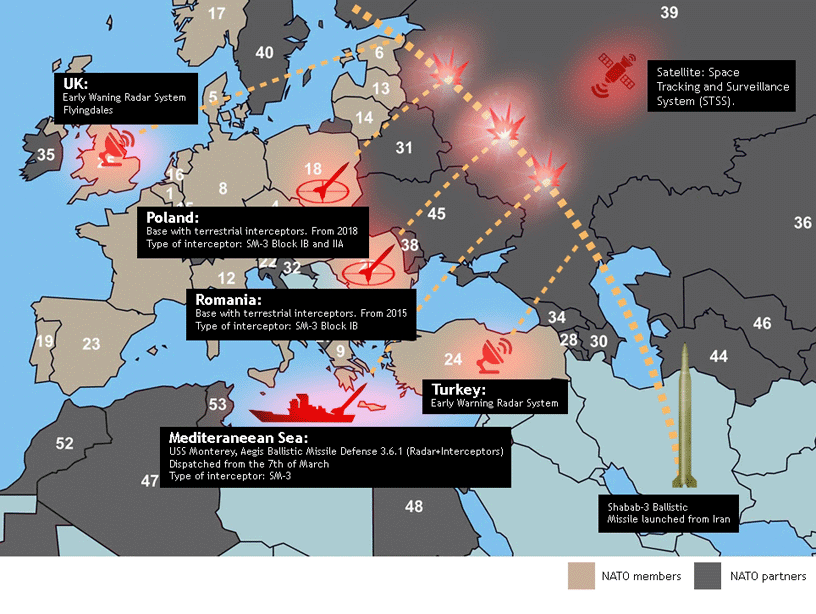
In 2019, Donald Trump justified his withdrawal from the INF Treaty by alleged violations by the Russian side. But, as the Stockholm International Peace Research Institute (SIPRI) notes, the Americans never provided proof of these violations. In fact, the US was simply trying to get out of the agreement in order to install their AEGIS missile systems in Poland and Romania. According to the US administration, these systems are officially intended to intercept Iranian ballistic missiles. But there are two problems that clearly cast doubt on the good faith of the Americans:
The first one is that there is no indication that the Iranians are developing such missiles, as Michael Ellemann of Lockheed-Martin stated before a committee of the American Senate.The second one is that these systems use Mk41 launchers, which can be used to launch either anti-ballistic missiles or nuclear missiles. The Radzikowo site, in Poland, is 800 km from the Russian border and 1,300 km from Moscow.
The Bush and Trump administrations said that the systems deployed in Europe were purely defensive. However, even if theoretically true, it is technically and strategically false. For the doubt, which allowed them to be installed, is the same doubt that the Russians could legitimately have in the event of a conflict. This presence in the immediate vicinity of Russia’s national territory can indeed lead to a nuclear conflict. For in the event of a conflict, it would not be possible to know precisely the nature of the missiles loaded in the systems—should the Russians therefore wait for explosions before reacting? In fact, we know the answer: having no early-warning time, the Russians would have practically no time to determine the nature of a fired missile and would thus be forced to respond pre-emptively with a nuclear strike.
Not only does Vladimir Putin see this as a risk to Russia’s security, but he also notes that the United States is increasingly disregarding international law in order to pursue a unilateral policy. This is why Vladimir Putin says that European countries could be dragged into a nuclear conflict without wanting to. This was the substance of his speech in Munich in 2007, and he came with the same argument early 2022, as Emmanuel Macron went to Moscow in February.
Finland and Sweden in NATO—A Good Idea?
The future will tell if Sweden’s and Finland’s decision to apply for NATO membership was a wise idea. They probably overstated the value of the nuclear protection offered by NATO. As a matter of fact, it is very unlikely that the US will sacrifice its national soil by striking Russian soil for the sake of Sweden or Finland. It is more likely that if the US engages nuclear weapons, it will be primarily on European soil and only as a last resort on Russian territory, in order to preserve its own territory from nuclear counter-strike.
Further, these two countries, which met the criteria of neutrality that Russia would want for its direct neighbors, deliberately put themselves in Russia’s nuclear crosshairs. For Russia, the main threat comes from the Central European theater of war. In other words, in the event of a hypothetical conflict in Europe, Russian forces would be engaged primarily in Central Europe, and could use their theater nuclear armies to “flank” their operations by striking the Nordic countries, with virtually no risk of a U.S. nuclear response.
Was it Impossible to Leave the Warsaw Pact?
The Warsaw Pact was created just after Germany joined NATO, for exactly the same reasons we have described above. Its largest military engagement was the invasion of Czechoslovakia in August 1968 (with the participation of all Pact nations, except Albania and Romania). This event resulted in Albania withdrawing from the Pact less than a month later, and Romania ceasing to participate actively in the military command of the Warsaw Pact after 1969. Therefore, asserting that no one was free to leave the treaty is not correct. https://www.thepostil.com/the-hidden-truth-about-the-war-in-ukraine/
The Hidden Truth about the War in Ukraine, and about Crimea and Donbass – Jacques Baud
The whole Western narrative about the “annexation” of Crimea is based on a rewriting of history and the obscuring of the 1991 referendum, which did exist and was perfectly valid.
The 1994 Budapest Memorandum remains extensively quoted since February 2022, but the Western narrative simply ignores the 1997 Friendship Treaty which is the reason for the discontent of the Russian-speaking Ukrainian citizens.
The Postil Magazine, Jacques Baud The cultural and historical elements that determine the relations between Russia and Ukraine are important. The two countries have a long, rich, diverse, and eventful history together.
This would be essential if the crisis we are experiencing today were rooted in history. However, it is a product of the present. The war we see today does not come from our great-grandparents, our grandparents or even our parents. It comes from us. We created this crisis. We created every piece and every mechanism. We have only exploited existing dynamics and exploited Ukraine to satisfy an old dream: to try to bring down Russia. Chrystia Freeland’s, Antony Blinken’s, Victoria Nuland’s and Olaf Scholz’s grandfathers had that dream; we realized it.
The way we understand crises determines the way we solve them. Cheating with the facts leads to disaster. This is what is happening in Ukraine. In this case the number of issues is so enormous that we will not be able to discuss them here. Let me just focus on some of them.
Did James Baker make Promises to Limit Eastward Expansion of NATO to Mikhail Gorbachev in 1990?
…………………………………………………………. In February 2022, in the German magazine Der Spiegel, Joshua Shifrinson, an American political analyst, revealed a declassified SECRET document of March 6, 1991, written after a meeting of the political directors of the foreign ministries of the United States, Great Britain, France and Germany. It reports the words of the German representative, Jürgen Chrobog:
We made it clear in the 2+4 negotiations that we would not extend NATO beyond the Elbe. Therefore, we cannot offer NATO membership to Poland and the others.
The representatives of the other countries also accepted the idea of not offering NATO membership to the other Eastern European countries.
So, written record or not, there was a “deal,” simply because a “deal” was inevitable. Now, in international law, a “promise” is a valid unilateral act that must be respected (“promissio est servanda“). Those who deny this today are simply individuals who do not know the value of a given word.
Did Vladimir Putin disregard the Budapest Memorandum (1994)?
In February 2022, at the Munich Security Forum, Volodymyr Zelensky referred to the 1994 Budapest Memorandum and threatened to become a nuclear power again. However, it is unlikely that Ukraine will become a nuclear power again, nor will the nuclear powers allow it to do so. Zelensky and Putin know this. In Fact, Zelensky is not using this memorandum to get nuclear weapons, but to get Crimea back, since the Ukrainians see Russia’s annexation of Crimea as a violation of this treaty. Basically, Zelensky is trying to hold Western countries hostage. To understand that we must go back to events and facts that are opportunistically “forgotten” by our historians.
On 20 January 1991, before the independence of Ukraine, the Crimeans were invited to choose by referendum between two options: to remain with Kiev or to return to the pre-1954 situation and be administered by Moscow. The question asked on the ballot was:
Are you in favor of the restoration of the Autonomous Soviet Socialist Republic of Crimea as a subject of the Soviet Union and a member of the Union Treaty?
This was the first referendum on autonomy in the USSR, and 93.6% of Crimeans agreed to be attached to Moscow. The Autonomous Soviet Socialist Republic of Crimea (ASSR Crimea), abolished in 1945, was thus re-established on 12 February 1991 by the Supreme Soviet of the Ukrainian SSR.
On 17 March, Moscow organized a referendum for the maintenance of the Soviet Union, which would be accepted by Ukraine, thus indirectly validating the decision of the Crimeans. At this stage, Crimea was under the control of Moscow and not Kiev, while Ukraine was not yet independent. As Ukraine organized its own referendum for independence, the participation of the Crimeans remained weak, because they did not feel concerned anymore.
Ukraine became independent six months after Crimea, and after the latter had proclaimed its sovereignty on September 4. On February 26, 1992, the Crimean parliament proclaimed the “Republic of Crimea” with the agreement of the Ukrainian government, which granted it the status of a self-governing republic. On 5 May 1992, Crimea declared its independence and adopted a Constitution. The city of Sevastopol, managed directly by Moscow in the communist system, had a similar situation, having been integrated by Ukraine in 1991, outside of all legality. The following years were marked by a tug of war between Simferopol and Kiev, which wanted to keep Crimea under its control.
In 1994, by signing the Budapest Memorandum, Ukraine surrendered the nuclear weapons of the former USSR that remained on its territory, in exchange for “its security, independence and territorial integrity.” At this stage, Crimea considered that it was—de jure—no longer part of Ukraine and therefore not concerned by this treaty. On its side, the government in Kiev felt strengthened by the memorandum. This is why, on 17 March 1995, it forcibly abolished the Crimean Constitution. It sent its special forces to overthrow Yuri Mechkov, President of Crimea, and de facto annexed the Republic of Crimea, thus triggering popular demonstrations for the attachment of Crimea to Russia. An event hardly reported by the Western media.
Crimea was then governed in an authoritarian manner by presidential decrees from Kiev. This situation led the Crimean Parliament to formulate a new constitution in October 1995, which re-established the Autonomous Republic of Crimea. This new constitution was ratified by the Crimean Parliament on 21 October 1998 and confirmed by the Ukrainian Parliament on 23 December 1998. These events and the concerns of the Russian-speaking minority led to a Treaty of Friendship between Ukraine and Russia on 31 May 1997. In the treaty, Ukraine included the principle of the inviolability of borders, in exchange—and this is very important—for a guarantee of “the protection of the ethnic, cultural, linguistic and religious originality of the national minorities on their territory.”
On 23 February 2014, not only did the new authorities in Kiev emerge from a coup d’état that had definitely no constitutional basis and were not elected; but, by abrogating the 2012 Kivalov-Kolesnichenko law on official languages, they no longer respected this guarantee of the 1997 treaty. The Crimeans therefore took to the streets to demand the “return” to Russia that they had obtained 30 years earlier.
On March 4, during his press conference on the situation in Ukraine a journalist asked Vladimir Putin, “How do you see the future of Crimea? Do you consider the possibility that it joins Russia?” he replied:
No, we do not consider it. In general, I believe that only the residents of a given country who are free to decide and safe can and should determine their future. If this right has been granted to the Albanians in Kosovo, if this has been made possible in many parts of the world, then no one is excluding the right of nations to self-determination, which, as far as I know, is laid down in several UN documents. However, we will in no way provoke such a decision and will not feed such feelings.
On March 6, the Crimean Parliament decided to hold a popular referendum to choose between remaining in Ukraine or requesting the attachment to Moscow. It was after this vote that the Crimean authorities asked Moscow for an attachment to Russia.
With this referendum, Crimea had only recovered the status it had legally acquired just before the independence of Ukraine. This explains why it renewed its request to be attached to Moscow, as in January 1991.
Moreover, the status of force agreement (SOFA) between Ukraine and Russia for the stationing of troops in Crimea and Sevastopol had been renewed in 2010 and to run until 2042. Russia therefore had no specific reason to claim this territory. The population of Crimea, which legitimately felt betrayed by the government of Kiev, seized the opportunity to assert its rights.
On 19 February 2022, Anka Feldhusen, the German ambassador in Kiev, threw a spanner in the works by declaring on the television channel Ukraine 24 that the Budapest Memorandum was not legally binding. Incidentally, this is also the American position, as shown by the statement on the website of the American embassy in Minsk.
The whole Western narrative about the “annexation” of Crimea is based on a rewriting of history and the obscuring of the 1991 referendum, which did exist and was perfectly valid. The 1994 Budapest Memorandum remains extensively quoted since February 2022, but the Western narrative simply ignores the 1997 Friendship Treaty which is the reason for the discontent of the Russian-speaking Ukrainian citizens.
Is the Ukrainian Government Legitimate?
The Russians still see the regime change that occurred in 2014 as illegitimate, as it was not done through constitutional process and without any support from a large part of the Ukrainian population.
The Maidan revolution can be broken down into several sequences, with different actors. Today, those who are driven by hatred of Russia are trying to merge these different sequences into one single “democratic impulse”: A way to validate the crimes committed by Ukraine and its neo-Nazis zealots.
At first, the population of Kiev, disappointed by the government’s decision to postpone the signing of the treaty with the EU, gathered in the streets. Regime change was not in the air. This was a simple expression of discontent.
Contrary to what the West claims, Ukraine was then deeply divided on the issue of rapprochement with Europe. A survey conducted in November 2013 by the Kyiv International Institute of Sociology (KIIS) shows that it was split almost exactly “50/50” between those who favored an agreement with the European Union and those favoring a customs union with Russia. In the south and east of Ukraine, industry was strongly linked to Russia, and workers feared that an agreement excluding Russia would kill their jobs. That is what would eventually happen. In fact, at this stage, the aim was already to try to isolate Russia.
In the Washington Post, Henry Kissinger, Richard Nixon’s National Security Advisor, noted that the European Union “helped turn a negotiation into a crisis.”
What happened later involved ultranationalist and neo-Nazis groups coming from the Western part of the country. Violence erupted and the government withdrew, after signing an agreement with the rioters for new elections. But this was quickly forgotten.
It was nothing less than a coup d’état, led by the United States with the support of the European Union, and carried out without any legal basis, against a government whose election had been qualified by the OSCE as “transparent and honest” and having “offered an impressive demonstration of democracy.” In December 2014, George Friedman, president of the American geopolitical intelligence platform STRATFOR, said in an interview:
Russia defines the event that took place at the beginning of this year [in February 2014] as a coup organized by the US. And as a matter of fact, it was the most blatant [coup] in history.
Unlike European observers, the Atlantic Council, despite being strongly in favor of NATO, was quick to note that the Maidan revolution had been hijacked by certain oligarchs and ultra-nationalists. It noted that the reforms promised by Ukraine had not been carried out and that the Western media stuck to an acritical “black and white” narrative.
A telephone conversation between Victoria Nuland, then Assistant Secretary of State for Europe and Eurasia, and Geoffrey Pyatt, the U.S. ambassador to Kiev, revealed by the BBC, shows that the Americans themselves selected the members of the future Ukrainian government, in defiance of the Ukrainians and the Europeans. This conversation, which became famous thanks to Nuland’s famous “F*** the EU!”
The coup d’état was not unanimously supported by the Ukrainian people, either in substance or in form. It was the work of a minority of ultra-nationalists from western Ukraine (Galicia), who did not represent the whole Ukrainian people. Their first legislative act, on 23 February 2014, was to abrogate the 2012 Kivalov-Kolesnichenko law, which established the Russian language as an official language along with Ukrainian. This is what prompted the Russian-speaking population to start massive protests in the southern part of the country, against authorities they had not elected.
In July 2019, the International Crisis Group (funded by several European countries and the Open Society Foundation), noted:
The conflict in eastern Ukraine began as a popular movement. […]
The protests were organized by local citizens claiming to represent the Russian-speaking majority in the region. They were concerned both about the political and economic consequences of the new government in Kiev and about that government’s later abandoned measures to prevent the official use of the Russian language throughout the country [“Rebels without a Cause: Russia’s Proxies in Eastern Ukraine,” International Crisis Group, Europe Report N° 254, 16 juillet 2019, p. 2].
Western efforts to legitimate this far-right coup in Kiev led to hide the opposition in the southern part of the country. In order to present this revolution as democratic, the real “hand of the West” was cleverly masked by the imaginary “hand of Russia.” This is how the myth of a Russian military intervention was created. Allegations about a Russian military presence were definitely false, an event the chief of the Ukrainian Security service (SBU) confessed in 2015 that there were no Russian units in Donbass.
To make things worse, Ukraine didn’t gain legitimacy through the way it handled the rebellion. In 2014-2015, poorly advised by NATO military, Ukraine waged a war that could only lead to its defeat: it considered the populations of Donbass and Crimea as enemy foreign forces and made no attempt to win the “hearts and minds” of the autonomists. Instead, its strategy has been to punish the people even further. Bank services were stopped, economic relations with the autonomous regions were simply cut, and Crimea didn’t receive drinking water anymore.
This is why there are so many civilian victims in the Donbass, and why the Russian population still stands in majority behind its government today. The 14,000 victims of the conflict tend to be attributed to the “Russian invaders” and the so-called “separatists.” However, according to the United Nations—more than 80% of civilian casualties are the result of Ukrainian shelling. As we can see, the Ukrainian government is massacring its own people with the help, funding and advice of the military of NATO, the countries of the European Union, which defends its values.
In May 2014, the violent repression of protests prompted the population of some areas of the Donetsk and Lugansk regions of Ukraine to hold referendums for Self-Determination in the Donetsk People’s Republic (approved by 89%) and in the Lugansk People’s Republic (approved by 96%). Although Western media keeps calling them referendums of “independence,” they are referendums of “self-determination” or “autonomy” (самостоятельность). Until February 2022, our media consistently talked about “separatists” and “separatist republics.” In reality, as stated in the Minsk Agreement, these self-proclaimed republics didn’t seek “independence,” but an “autonomy” within Ukraine, with the ability to use their own language and their own customs………………………………………. more https://www.thepostil.com/the-hidden-truth-about-the-war-in-ukraine/
NATO Abandons Diplomacy, Says No Longer ‘At Peace’
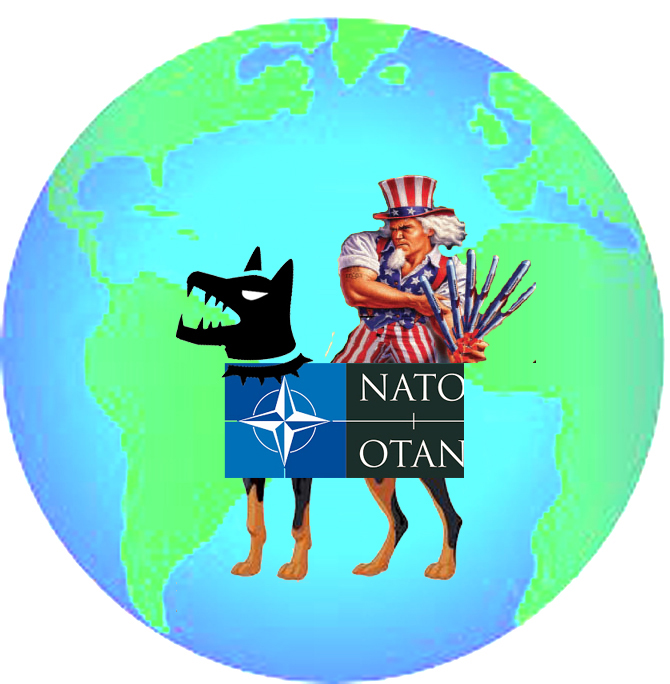
Libertarian Instituteby Bas Spliet | Aug 23, 2022 At the end of its annual summit in Madrid in late June, NATO adopted a new strategic concept. The guidance document is the eighth of its kind since the founding of the alliance in 1949. It radically breaks with the three previous post-Cold War security briefs, however, which observed that “the Euro-Atlantic area is at peace” because “the threat of a conventional attack against NATO territory is low.”
In the eyes of NATO, Russia’s invasion of Ukraine has changed that calculus, claiming that the military organization can no longer discount the possibility of an assault on sovereign NATO states. Continuing the same cryptic language, the new strategic concept concludes that the Euro-Atlantic area now is “not at peace,” in spite of no NATO member being in a state of war with Russia.
Behind this word play, a more dangerous policy change has been codified in the document. Since the adoption of the Harmel Report in 1967, NATO has always officially included diplomacy in one form or another (with political dialogue and strategic partnership being interchangeable labels) as one of its “core” or “fundamental” tasks. The “NATO 2030” report from November 2020, for instance, unequivocally stated that “NATO should continue the dual-track approach of deterrence and dialogue with Russia.”
In the new strategic concept, the core tasks have been purged of the need for diplomacy, except for one or two throw-away lines about “meaningful and reciprocal political dialogue” about arms control issues buried in the middle of the text. Rather, in addition to its original function of deterrence and defense, NATO now fully embraces “crisis prevention and management,” which it has spearheaded since the 1990s with its legally dubious and morally questionable interventions in the Balkans, Afghanistan, and Libya; and “cooperative security,” referring to NATO’s enlargement in Eastern Europe and its Partnership for Peace cooperation with countries in ever further-away regions, including the Black Sea, the Middle East, North Africa, and even the Indo-Pacific, which the British have been pushing to include in a “global NATO.”
Russia was the first country to sign up for the Partnership for Peace program back in 1994. The new NATO doctrine, however, states that Russia can no longer be considered a partner “in light of its hostile policies and actions.” The strategic concept ignores the fact that NATO’s enlargement and new core tasks, which the alliance adopted after the Cold War in an effort to justify its continued existence, have likewise long been seen as hostile in Moscow, nor does it offer any reflection on how the new policies might have contributed to the current unpeaceful “strategic environment.” Instead, it hails the “historic success” of NATO’s expansion in terms of space and substance and insists that the alliance “does not seek confrontation and poses no threat to the Russian federation.”
……………………………….. Now, NATO apologists, like Ukrainian President Volodymyr Zelensky, argue that if the alliance had not expanded eastward, Vladimir Putin would have been even bolder in his imperial ambitions. But as John Mearsheimer pointed out back in 2014, there is virtually no evidence that Putin aimed to incorporate Crimea before the Maidan coup. Rather, his offensive foreign policy in Ukraine since 2014, culminating in the 2022 invasion, is one of reaction to NATO creeping up to Russia’s borders. Bringing Ukraine into the NATO fold has long been a big fat redline for Russia, and we crossed it.
First of all, West-European officials promised the Soviets after the fall of the Berlin Wall that NATO’s borders would not move “one inch” eastward. But then all former Warsaw Pact countries and even some former Soviet Republics were incorporated in the 1990s and early 2000s. In addition to the evidence the National Security Archive assembled on this issue a few years ago, recent archival research has once again confirmed these broken promises.
Next, in 2008, Russian Foreign Minister Sergei Lavrov warned American diplomats that further NATO enlargement, particularly to Ukraine, would constitute a “potential military threat.” …………………………….
After 2014, Ukraine started to become a de facto member of NATO, which bolstered the Ukrainian regime to take a tough stance against Russia. In 2017, Trump decided to sell “defensive weapons” to Kyiv. Other NATO countries got in on the act, shipping weapons to Ukraine, training its military and teaming up with it in joint air and naval exercises. In June 2021, a British destroyer sailed through the Black Sea in an effort to shore up support for Ukraine, precipitating a diplomatic stand-off with Russia. NATO was undeterred, however, because a total of 32 countries participated in a major naval exercise in the Black Sea one month later.
In response, Russia decided to engage in coercive diplomacy, much like the Obama administration had done to get Iran to sign on to the 2015 nuclear deal. Putin amassed troops on the Ukrainian border, demanding guarantees that no offensive missiles would be installed in Eastern Europe and Ukraine not to join NATO. When the crisis was not solved diplomatically, Russia invaded Ukraine. Up until recently, there was hardly any diplomatic intercourse between Washington and Moscow in order to resolve the conflict. The UK’s Boris Johnson, too, “urged against negotiations” during a trip to Kyiv in April. Other NATO members, such as France, Germany, Italy and Hungary, have warmed to negotiations. But as long as there is no bigger push to re-establish diplomacy as a core task of the military alliance, Wilsonian rhetoric is likely to continue to make the world unsafe. https://libertarianinstitute.org/articles/nato-abandons-diplomacy-says-no-longer-at-peace/—
-
Archives
- February 2026 (228)
- January 2026 (308)
- December 2025 (358)
- November 2025 (359)
- October 2025 (376)
- September 2025 (258)
- August 2025 (319)
- July 2025 (230)
- June 2025 (348)
- May 2025 (261)
- April 2025 (305)
- March 2025 (319)
-
Categories
- 1
- 1 NUCLEAR ISSUES
- business and costs
- climate change
- culture and arts
- ENERGY
- environment
- health
- history
- indigenous issues
- Legal
- marketing of nuclear
- media
- opposition to nuclear
- PERSONAL STORIES
- politics
- politics international
- Religion and ethics
- safety
- secrets,lies and civil liberties
- spinbuster
- technology
- Uranium
- wastes
- weapons and war
- Women
- 2 WORLD
- ACTION
- AFRICA
- Atrocities
- AUSTRALIA
- Christina's notes
- Christina's themes
- culture and arts
- Events
- Fuk 2022
- Fuk 2023
- Fukushima 2017
- Fukushima 2018
- fukushima 2019
- Fukushima 2020
- Fukushima 2021
- general
- global warming
- Humour (God we need it)
- Nuclear
- RARE EARTHS
- Reference
- resources – print
- Resources -audiovicual
- Weekly Newsletter
- World
- World Nuclear
- YouTube
-
RSS
Entries RSS
Comments RSS
 nuclear-news