China Says It Does Not Want To See Another North Korean Nuclear Test
NDTV
China’s UN Ambassador Zhang Jun has urged Washington to ease unilateral sanctions on North Korea and end joint military exercises with South Korea in a bid to revive talks with Pyongyang.
WorldReuters: June 10, 2022 United Nations:
China’s U.N. envoy said on Thursday that Beijing does not want to see North Korea carry out a new nuclear test, which is partly why China vetoed a U.S.-led bid to impose new U.N. sanctions on Pyongyang over renewed ballistic missiles launches.
But Ambassador Zhang Jun warned against making presumptions on how Beijing might react at the United Nations if North Korea goes ahead with its first nuclear test since 2017. Washington has warned such a test could happen at “any time” and it would again push for more U.N. sanctions.
Let’s see what will happen, but I think we should not prejudge what will happen with a nuclear test,” Zhang told Reuters, two weeks after China and Russia vetoed imposing more U.N. Security Council sanctions on North Korea.
“The denuclearization is one of the key goals of China,” Zhang said. “We do not want to see another test.”
The double veto publicly split the 15-member Security Council for the first time since it started punishing Pyongyang in 2006. The body has steadily – and unanimously – ratcheted up sanctions over the years in a bid to cut off funding for North Korea’s nuclear weapons and ballistic missile programs.
However, in recent years China and Russia have been pushing for an easing of sanctions on humanitarian grounds – and in the hope that North Korea can be convinced to return to negotiations with the United States on giving up its nuclear weapons………………….. https://www.ndtv.com/world-news/china-says-it-does-not-want-to-see-another-north-korean-nuclear-test-3054324
Iran removes nuclear watchdog’s cameras after criticism
David GrittenBBC News Iran has told the global nuclear watchdog it is removing 27 surveillance cameras from its nuclear facilities.
It comes after the International Atomic Energy Agency’s board censured Iran for not answering questions about uranium traces found at three undeclared sites.
IAEA Director General Rafael Grossi said 40 cameras would remain, but that the move posed a “serious challenge”.
Unless it was reversed within three to four weeks, he warned, it would deal a “fatal blow” to the Iran nuclear deal.
Under the 2015 agreement with world powers, Iran agreed to limit its nuclear activities and allow continuous and robust monitoring by the IAEA’s inspectors in return for relief from economic sanctions.
However, it has been close to collapse since the US pulled out unilaterally and reinstated sanctions four years ago and Iran responded by breaching key commitments.
The US now wants to rejoin the deal if Iran returns to compliance, but indirect negotiations in Vienna have stalled since March…………………………… https://www.bbc.com/news/world-middle-east-61719196
Climate action is going in the right direction, but what now? What is a realistic aim?

| The world’s 1.5°C climate goal is slipping out of reach – so now what? Scientists say it is still theoretically possible to limit global warming to 1.5°C, but realistically that now seems practically impossible. Should we admit our failure and double down on holding warming below 2°C? As scientists frequently point out, 1.5°C isn’t a cliff edge. It isn’t a precisely calculated moment at which we know we will hit tipping points that turn the Amazon into a savannah or commit Antarctica’s ice sheets to a rapid collapse. While most scientists maintain that 1.5°C is still technically possible, the majority of those New Scientist spoke to think the goal will be missed. The idea of conceding that prospects for hitting 1.5°C are dead might seem irredeemably gloomy. But it is worth remembering the path we were on before the world adopted the goal in 2015. Five years earlier, climate pledges globally had us on track for up to 5°C of warming by 2100, an apocalyptic level that would be almost impossible to adapt to, given that we are already struggling to do so after heating Earth by just over a degree. Humanity shifted the goalposts at Paris, prioritising 1.5°C over 2°C. We have made significant progress to even have a chance of landing somewhere between the two. History may yet judge failure on 1.5°C as a success, given how much the rallying cry has dragged societies in the right direction. New Scientist 7th June 2022 https://www.newscientist.com/article/2323175-the-worlds-1-5c-climate-goal-is-slipping-out-of-reach-so-now-what/ |
International Energy Agency stresses that energy efficiency must be at the forefront of climate policies

With the world facing an almost unprecedented energy crisis, the
International Energy Agency (IEA) aims to once again put energy efficiency
at the forefront of policymakers’ agenda. During its 7th Global Energy
Efficiency Conference hosted in Sonderborg, Denmark, the IEA has sought to
convince policymakers worldwide of the merits of energy efficiency policies
while providing a policy toolkit to go with it.
“Energy efficiency is a
critical solution to so many of the world’s most urgent challenges,”
said Fatih Birol, the IEA’s executive director. According to an IEA
analysis presented during the conference, the world could achieve massive
energy savings by the end of the decade through increased ambition while
simultaneously reducing CO2 emissions.
Euractiv 8th June 2022 https://www.euractiv.com/section/energy/news/iea-presents-energy-efficiency-push-to-make-russias-gas-oil-obsolete/
Nuclear Free Local Authorities (NFLA) join the call for UK to join the nuclear ban Treaty Summit
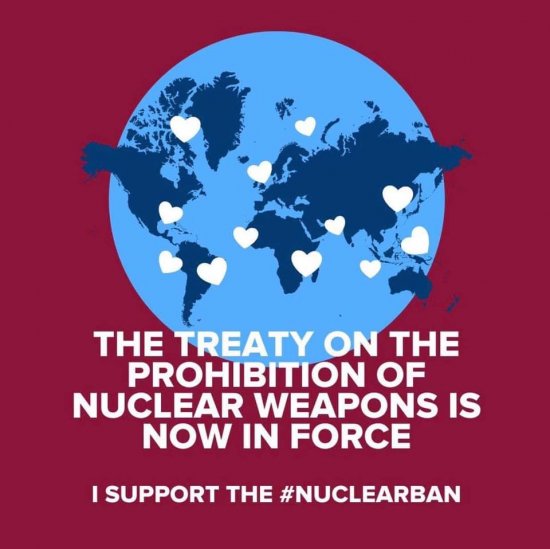
| The Nuclear Free Local Authorities have joined with campaign groups opposed to nuclear weapons in calling on the British Foreign Secretary to ensure that the UK is represented at the forthcoming nuclear treaty ban conference to be held later this month in Vienna. Sixty-one member states of the United Nations have so far signed and ratified the UN Treaty on the Prohibition of Nuclear Weapons, the first international law to prohibit the manufacture, stockpiling, transfer and use of nuclear weapons which entered force in January 2021. A further twenty-five states have signed the Treaty in readiness to ratify it. These member states will meet at the UN in Vienna between 21 – 23 June to discuss the progress so far in creating a nuclear weapons free world, and, in light of the recent conflict in Ukraine, the next best steps to get there. None of the world’s nuclear weapons states have so far engaged with the treaty, and the UK has steadfastly refused to recognise it, despite five of the states, including the UK, making a commitment as signatories to the Nuclear Non-Proliferation Treaty to work in ‘good faith’ to achieve global nuclear disarmament at the earliest possible date. Britain made this commitment as one of the first signatories to the NPT in 1968. NFLA 8th June 2022 https://www.nuclearpolicy.info/news/nuclear-free-local-authorities-join-call-for-uk-to-attend-nuclear-ban-summit/ |
Nuclear power – a renaissance? or another false dawn?
EDF delays the scheduled maintenance shutdowns of 7 French nuclear reactors.

| EDF has pushed back scheduled shutdowns for next winter of seven French reactors and plans to delay an eighth, Remit data showed on Wednesday. These changes concern the shutdowns of the Bugey 5 (880 MW), Cattenom 2 (1,300 MW), Cruas 4 (915 MW), Golfech 2 (1,310 MW), Gravelines 1 (910 MW), Nogent 2 (1,310 MW) reactors. ) and Paluel 1 (1,330 MW). The delays vary from several weeks to about a month. The company also plans to push back for two weeks, until February 25, the scheduled shutdown of its St Alban 1 reactor (1.3 GW). EDF gave no explanation for these measures. They come amid fears of a shortage of electricity supply in France next winter, due to a record drop in nuclear generation. The public nuclear electric company was forced to unexpectedly shut down several reactors for checks and repairs following the discovery of corrosion on important safety circuits at the end of last year. Last month, EDF revised the dates of thirteen scheduled reactor outages, citing corrosion-related checks and repairs. Montel 8th June 2022, https://www.montelnews.com/fr/news/1326472/edf-retarde-les-arrts-hivernaux-de-7-racteurs-franais |
World can make massive energy savings, reduce emissions through energy conservation measures

| With the world facing an almost unprecedented energy crisis, the International Energy Agency (IEA) aims to once again put energy efficiency at the forefront of policymakers’ agenda. During its 7th Global Energy Efficiency Conference hosted in Sonderborg, Denmark, the IEA has sought to convince policymakers worldwide of the merits of energy efficiency policies while providing a policy toolkit to go with it. “Energy efficiency is a critical solution to so many of the world’s most urgent challenges,” said Fatih Birol, the IEA’s executive director. According to an IEA analysis presented during the conference, the world could achieve massive energy savings by the end of the decade through increased ambition while simultaneously reducing CO2 emissions. Euractiv 8th June 2022 https://www.euractiv.com/section/energy/news/iea-presents-energy-efficiency-push-to-make-russias-gas-oil-obsolete/ |
Nuclear Free Local Authorities oppose Nuclear Waste Authorities’ seismic testing in the Irish Sea
| On World Oceans Day (8 June), the Nuclear Free Local Authorities have joined environmental and anti-nuclear campaigners in opposing proposals to carry out seismic testing in the Irish Sea as part of plans to develop an offshore, undersea nuclear waste dump. A joint letter, whose signatories include renowned environmentalist Jonathan Porritt, has been sent to the head of the Marine Management Organisation opposing an exemption to the requirement to obtain a Marine Licence which has been claimed by Nuclear Waste Services to enable them to plough ahead with their summer plans to carry testing in the waters off West Cumbria. The NWS, an operating division of the Nuclear Decommissioning Authority, is responsible for finding a site for a so-called Geological Disposal Facility, either below ground or beneath the seabed. This nuclear waste dump will be filled with the toxic radioactive waste that is the legacy of Britain’s seven decades of the civil nuclear power production; much of it will remain radioactive for many tens of thousands of years. Three search areas in Cumbria, falling within the local authority areas of Allerdale and Copeland and offshore up to 22kms, are under consideration. Seismic testing will enable NWS to determine if the geology beneath the bed of the Irish Sea is suitable to host a repository for the nuclear waste. This involves firing blasts of sound from air guns below the waves every 10 seconds for four weeks or longer. This sound penetrates under the ocean floor to help scientists discover more about the suitability of the geology to store nuclear waste. Seismic testing can seriously impair the health of marine life, which in the Irish Sea includes whales, dolphins, porpoises, and seals, but some scientific reports also suggest that even tiny shellfish and plankton can be adversely impacted, hazarding the whole marine ecosystem. NFLA 8th June 2022, https://www.nuclearpolicy.info/news/nuclear-free-local-authorities-oppose-seismic-testing-on-world-oceans-day/ |
TODAY. France’s nuclear industry – the world leader, is just as corrupt as the rest of them
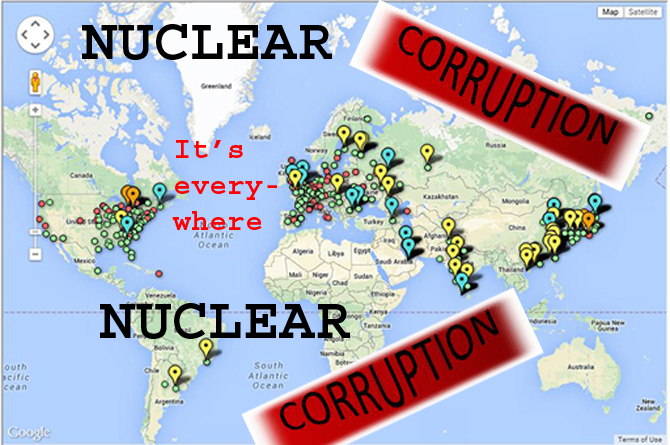
Today we learn that French prosecutors are investigating alleged cover-ups of incidents at the Tricastin nuclear power station. Oh dear – France – the poster child for the global nuclear industry!
What a surprise – NOT!
Articles at https://nuclearinformation.wordpress.com/?s=corruption will cure the reader of any lingering beliefs that the nuclear industry world-wide might be decent and honest. The necessary secrecy in operations so dangerous as nuclear activities makes it so much easier, indeed, inevitable for the entire industry to be crooked – which it is.
Julian Assange is still in jail, but the new Australian government has the power to act to help him.
https://michaelwest.com.au/assange-is-still-in-jail-what-can-the-new-government-do/ by Greg Barns | Jun 7, 2022
There are signs that Prime Minister Anthony Albanese seems more interested in dealing with the plight of Julian Assange than was the Morrison government. UK Home Secretary Priti Patel has to decide whether or not to sign off on Assange’s extradition to the US by the middle of this month. Albanese must act now, writes Greg Barns.
Julian Assange is an Australian citizen facing over 170 years in a US prison for revealing the truth about US war crimes in Iraq and Afghanistan. His case is important for a number of reasons, including the inhumanity of keeping him locked up in the notorious Belmarsh prison in the UK as his mental and physical health declines. Assange’s case is an attack on freedom of speech. It also represents a dangerous development for citizens, journalists and publishers around the world because the United States is using its domestic laws to snare an individual who has no connection to the jurisdiction. This is the sort of law which Australia has condemned in the context of Beijing imposed laws on Hong Kong.
Tonight, the ABC broadcasts a documentary Ithaka, a film by Julian’s brother Gabriel Shipton which follows their father John Shipton across the world as he campaigns for his son. The broadcast is a milestone in the Australian campaign to free Assange from the shackles that the US and UK have bound him since 2012, when he sought asylum in the Ecuadorean embassy in London, fearing, rightly, that he would extradited to the US.
Anthony Albanese is taking an interest in this case, in contrast to Scott Morrison’s government that showed little interest in pushing Washington on behalf of an Australian citizen facing cruel and unusual punishment in the US It was manifested in an answer he gave last week in a media conference and was confirmed by his Foreign Minister Penny Wong in an interview on the ABC last Friday.
Asked whether he would intervene with the US to save Assange, Albanese replied that his “position is that not all foreign affairs is best done with the loudhailer.” In other words, as one foreign affairs expert told this writer, Albanese is rightly respecting the US-Australia relationship by raising the Assange issue in private with the White House.
Wong’s comments last week should also be seen as a positive sign that, at last, some action will be taken to stand up for freedom of speech by ending the Assange case. Speaking on Radio National last Friday, Wong said:
The Prime Minister has expressed that it’s hard to see what is served by keeping Mr Assange incarcerated and expressed a view that it’s time for the case to be brought to an end.
As former Labor foreign minister Bob Carr has written, it is perfectly legitimate for Australia to ask the US to withdraw its case against Assange. Carr has also pointed to the dangerous precedent set by the case – the extraterritorial reach of the US to seize anyone anywhere in the world who exposes something which embarrasses Washington. On September 8, 2020 Carr told The Sydney Morning Herald:
If America can get away with this — that is digging up an Australian in London and putting him on trial for breaching their laws — why can’t another government do the same thing? For example, an Australian campaigning for human rights in Myanmar, that Australian in theory could be sought by the government of Myanmar and brought back to Myanmar from London and put on trial there for breach of their national security laws.
Ironically the Morrison government opposed the security law that China imposed on Hong Kong in 2020 in part because it includes a provision which catches foreign citizens who criticise Beijing’s rule in Hong Kong.
The case of Assange cannot be allowed to continue. It represents an affront to fundamental democratic values and it shows Washington to be no better than authoritarian regimes that hunt down critics the world over. The early signs are the Albanese government is uncomfortable about the case, which is a welcome development, but there is little time to do so.
Ukraine bars IAEA nuclear regulator from visiting Russian-occupied power plant !

The International Atomic Energy Agency wants to ensure that the Zaporizhzhia nuclear power plant is safe. Politico, BY LOUISE GUILLOT, June 7, 2022
Energoatom, Ukraine’s nuclear power plant operator, on Monday denounced a request by the global nuclear watchdog to visit the Russian-occupied Zaporizhzhia nuclear power plant.
The Ukrainian operator accused Rafael Mariano Grossi, head of the International Atomic Energy Agency, of “lying” and warned that the visit was a way of legitimizing Russia’s occupation of Europe’s largest nuclear plant — which is operated by Ukrainian staff but has been under the control of Russian troops since March.
“The Ukrainian side did not invite Grossi to visit ZNPP [Zaporizhzhia Nuclear Power Plant] and had previously denied him such a visit, emphasizing that a visit to the power plant will be possible only when our country regains control over it,” Energoatom said in a Telegram post.
Rosatom Director General Alexey Likhachev said in March that the Russian state-owned nuclear operator had no intention of taking operational control of Zaporizhzhia.
Grossi said Monday that he was “actively working” on sending an expert mission to the plant “sooner or later but better sooner.” Grossi has been working on setting up such a trip for months, but has so far been unsuccessful in getting Ukraine and Russia to agree on the details.
Dmitry Peskov, Russian President Vladimir Putin’s spokesperson, said last month that the IAEA was in touch with both Russian and Ukrainian authorities about a possible visit, Russian state-controlled press agency Interfax reported………………………..
Grossi also said Monday that Ukraine told his agency it has “lost control over” nuclear material at Zaporizhzhia and that data communication on nuclear safeguards with the plant has broken down. Nuclear safeguards mechanisms are essential to ensure that nuclear facilities are not misused and nuclear material not diverted from peaceful uses.
“The urgent need for us to be there is clear to all,” he said. “Logistics and other such considerations must not prevent it. We must find a solution to the hurdles preventing progress at Zaporizhzhia NPP.”………………
The IAEA declined to comment on Energoatom’s allegations. https://www.politico.eu/article/ukraine-nuclear-regulator-visit-russia-power-plant/
Indigenous groups challenge New Brunswick’s costly radioactive waste legacy
Difficulty, cost of managing radioactive waste underlined by hearings, https://nbmediacoop.org/2022/06/08/indigenous-groups-challenge-new-brunswicks-costly-radioactive-waste-legacy/ by Kim Reeder and Susan O’DonnellJune 8, 2022
The recent re-licencing hearing for New Brunswick’s Point Lepreau nuclear reactor highlighted the difficulty and cost of managing the province’s long-lived legacy of radioactive waste.
Most of the radioactive materials generated by the Lepreau nuclear facility were never found in nature before the discovery of nuclear fission 83 years ago.
The Point Lepreau facility, however, has produced – and will continue to produce – thousands of tons of these toxic radioactive materials in the form of high, intermediate and low-level radioactive waste which must be kept isolated from all living things for a period of time that dwarfs the span of recorded human history.
When the Point Lepreau reactor was first built, the materials used in the core area – the metal, the concrete, even the heavy water that fills the vessel – were ordinary, non-radioactive materials. However, these items have all been transformed into extremely radioactive material during the normal operation of the reactor.
In fact, because these materials are so toxic, once the plant is shut down, NB Power has a plan to let the facility sit for approximately three decades before dismantling it, a strategy referred to as ‘deferred decommissioning’. During this time, referred to as the ‘dormancy’ period, the radioactivity will decrease significantly. However, the radioactivity will still be sufficiently high as to require handling by robotic equipment and careful packaging so as not to deliver a lethal dose of radiation to an unshielded worker or the environment.
The second consideration is that currently, no waste disposal site exists for the Point Lepreau facility itself, which will become thousands of tons of radioactive rubble, classified as intermediate and low-level waste. By deferring decommissioning, NB Power avoids the need to store and monitor the wastes until a disposal facility becomes available. As well, they avoid potential double-handling of wastes to meet unknown future disposal facility requirements.
NB Media Co-op’s Harrison Dressler described in a previous article that during the re-licencing hearing for Point Lepreau, a main focus of the Peskotomuhkati Nation’s intervention reflected their concerns about the lack of adequate planning for the toxic decommissioning waste. The Nation is and always has been opposed to producing and storing radioactive waste on its territory, which includes Point Lepreau.
The Nation does not want the regulator, the Canadian Nuclear Safety Commission (CNSC), to ‘approve’ NB Power’s inadequate plan and financial guarantee for decommissioning Point Lepreau.
The Nation’s expert on the topic, Canadian Coalition for Nuclear Responsibility president Gordon Edwards, compared NB Power’s financial guarantee with an OECD study of dozens of reactors that have already been dismantled. In his report, Edwards notes that NB Power’s financial guarantee is less than 40 percent of what is needed according to the OECD study. Indeed, the total amount NB Power plans to set aside is more than a billion dollars less than what the OECD estimates is likely required.
NB Power’s current decommissioning plan assumes much of the decommissioning waste will be sent off-site to a licensed facility for permanent disposal. Currently no such facilities exist, which is recognized as an industry challenge.
Edwards also found that NB Power has so far made no effort to locate a repository to receive the decommissioning waste, which is solely the responsibility of NB Power and the provincial government. Without a storage site, and without adequate funding, where will it all go?
During the re-licencing hearings in May, both the CNSC and NB Power were questioned by the regulator about the unrealistic nature of their plan, considering the plan assumes there will be a permanent home for this waste – and that no plans are being made for such a facility.
CNSC staff explained that the current plan is all that is required under Canadian law, and NB Power said that because of the deferred decommissioning strategy, they have a long time to figure out a solution to the problem. Experience shows, however, that NB Power and the New Brunswick government are already late in starting the effort, if they indeed do intend to have a site approved in the 2050s. Lepreau is scheduled to be shut down around 2040.
At the CNSC hearing, the Mi’gmawe’l Tplu’taqnn Inc., and Kopit Lodge – representing Elsipogtog First Nation – also raised similar concerns about radioactive waste. The Wolastoq Nations did not participate in the hearing. However, in March 2021, the traditional Wolastoq Grand Council issued a declaration against producing more radioactive waste at Point Lepreau. No Indigenous community in Canada – or elsewhere – has so far declared itself in favour of storing radioactive waste on its traditional territory.
Without a dramatic increase in the financial guarantee that NB Power must accumulate while the reactor is still earning money by selling electricity, and without a concerted effort to develop a concrete long-term strategy for New Brunswick’s radioactive waste legacy, both the Peskotomuhkati Nation and the New Brunswick population will be left with a permanent dump for radioactive waste right on the shore of North America’s Natural Wonder: the Bay of Fundy.
Kim Reeder, a senior policy analyst with the RAVEN project at the University of New Brunswick, coordinated the CNSC intervention for the Passamaquoddy Recognition Group. Susan O’Donnell, the lead researcher for RAVEN, also participated at the CNSC hearing.
Putting People First in Low-Dose Radiation Research

Putting People First in Low-Dose Radiation Research, Bemnet Alemayehu Natural Resources Defense Council. 7 June 22.It is urgent and feasible to improve our understanding of low-dose and low-dose-rate ionizing radiation health effects according to a new report released by the National Academies of Sciences, Engineering, and Medicine (NAS). At the request of the U.S. Congress, the NAS formed a committee of experts to conduct the study, sponsored by the U.S. Department of Energy. The report’s primary goal was to recommend a research program to increase the certainty of how exposure to low-dose and low-dose-rate radiation affects human health.
NRDC agrees that this is the right time to reconsider low-dose interdisciplinary radiation research in the United States and explore opportunities that advances in radiation health physics and information technology are providing. A large fraction of the U.S. population is exposed to low-dose, and low-dose-rate radiation and this number is increasing. Low-dose radiation research is most relevant to impacted communities due to disproportionate level of radiation exposure these communities have experienced compared to the general U.S. population due to activities carried out as part of the U.S. nuclear weapons program. Going forward, the study should give an opportunity for stakeholders and impacted communities to have deep and meaningful engagement at all stages of the research program by identifying priorities of research that concern them. The study should also prioritize trust building and make use of local community expertise.
How are we exposed to low-dose radiation?
People are exposed to ionizing radiation from a variety of sources. Most of this exposure comes from background radiation sources and from medical procedures.
Ionizing radiation is radiation that carries with it enough energy to remove an electron from an atom. This process can initiate a chain of events leading to health problems. When considering the health effects of radiation, understanding the amount of radiation dose absorbed by a person or an organ is critical.
Low-dose and low-dose-rate (low-dose accumulated over several years) are defined to mean a dose below 100 milligray and 5 milligray per hour, respectively. Gray is a unit used to measure the amount of radiation absorbed by an object or person, reflecting the amount of energy that radioactive sources deposit in materials through which they pass. Low-dose radiation exposure includes exposure to natural radiation, medical applications, and occupational exposures. According to the NAS report, low doses of radiation delivered over long periods do not cause prompt tissue or organ damage but may cause cellular damage that increases an individual’s long-term risk of cancer and hereditary disorders in a stochastic (or probabilistic) fashion.
The NAS report identified the following seven low-dose and low-dose-rate radiation exposure sources to be relevant for the study:
- exposure from natural radiation sources
- exposure to patients from medical applications
- occupational exposures
- exposure of workers that results from nuclear power routine operations and accidents
- exposure from nuclear or radiological incidents
- exposures from the nuclear weapons program, and
- exposure from nuclear waste.
Key recommendations from the report
Research agenda
Ionizing radiation occurs in a wide range of settings and the number of exposed individuals is increasing. However, the relationship between exposure to radiation and cancer risk at the very low doses is not well established. Currently, there is also no dedicated low-dose and low-dose-rate radiation research program or coordinated research strategy in the United States.
The report recommended research programs that leverage advances in modern science to obtain direct information on low-dose and low-dose-rate radiation health effects. These are:
- advances in epidemiological study design and analysis
- advances in radiobiological research
- advances in biotechnology and research infrastructure
For the research to achieve its goals, integration and interaction between these research programs is critical.
Program funding
The report found that a significant investment over a sustained period spanning several decades is necessary to accomplish the research goals. The report estimated that $100 million annually is needed during the first 10 to 15 years with periodic assessments. The report cautioned that inadequate funding for the program would lead to the possible inadequate protection of patients, workers, and members of the public from the adverse effects of radiation.
Leadership for low-dose research in the United States
The report proposed joint Department of Energy and National Institute of Health leadership for low-dose radiation research that involves division of tasks based on capabilities. The report also recommended that the Department of Energy take strong and transparent steps to mitigate the issues of distrust toward research that it manages.
Engagement with impacted communities
Success of the low-dose radiation program would depend not only on its scientific integrity but also on its ability to meaningfully engage and communicate with the stakeholders, which includes impacted communities.
Impacted communities, according to the report, include indigenous communities; atomic veterans; nuclear workers; uranium miners, transporters, and their families; and individuals or communities impacted by radioactive contamination or nuclear fallout due to nuclear weapons testing, offsite radiation releases from nuclear weapons production sites, and nuclear waste cleanup activities.
Impacted communities have strongly objected to the Department of Energy’s management of the low-dose radiation program due to the Department’s responsibility for management and cleanup of nuclear sites conflicting with its role as a manager of studies on low-dose and low-dose-rate radiation health effects.
For the success of the low-dose radiation program, the program needs to:
- develop a transparent process for stakeholder identification, engagement, and communication
- include members of the impacted communities in the independent advisory committee so that they may participate in various aspects of research planning and implementation, and
- set up additional advisory subcommittees with substantial stakeholder participation to advise on specific projects that involve human populations exposed to low-dose radiation.
Australia’s new government must act to save Australian citizen Julian Assange, where the previous government failed

By John Jiggens https://independentaustralia.net/politics/politics-display/assange-albanese-must-act-where-the-coalition-failed,16446 9 June 2022, The Morrison Government failed Julian Assange. Supporters of the persecuted publisher are looking to Anthony Albanese to make good on his statement that “enough is enough”, writes Dr John Jiggens.
AFTER 20 APRIL, when a UK court formally approved the extradition of Julian Assange to the United States, mainstream media presented a narrative that claimed UK Home Secretary Priti Patel would have until 31 May to rubber-stamp Assange’s extradition.
That date has now come and gone and we still await Patel’s decision.
But is this all there is to it?
The victory of Anthony Albanese’s Labor Party in the Australian Federal Election has brought new hope to supporters of the Australian publisher.
Last year, our new Attorney-General Mark Dreyfus issued a statement saying that Labor wanted the Assange matter ‘brought to an end’. His leader, our new Prime Minister Anthony Albanese, said he couldn’t see any purpose in keeping Assange in gaol, stating “enough is enough”.
In the first week of the Albanese Government, the ABC reported:
‘Mr Albanese is also a signatory to the Bring Julian Assange Home Campaign petition.’
However, the ABC gave no source for this claim. (The Bring Julian Assange Home Campaign petition –‘Free Julian Assange, before it’s too late. Sign to STOP the USA Extradition’ – is an online petition that has now garnered over 715,000 signatures.)
Phillip Adams – not the popular ABC Late Night Live host – who originated the online petition, this week published an update stating firstly that he was not the source of the ABC’s information, but then added, rather coyly, that the ABC report gave him ‘great confidence’ that the campaign had ‘turned a corner’ and had brought a smile to his face.
That smile no doubt broadened when PM Anthony Albanese replied to a question fromThe Guardian, which asked whether it was now his position that the U.S. should be encouraged to drop the charges against Assange and whether he had made any such representations to the U.S. Government.
Albanese replied that it was his position that “not all foreign affairs is best done with the loudhailer”.
So, there is still no confirmation that Anthony Albanese signed the online petition. Although, signing a petition which would ultimately go to himself (as the PM) seems an odd way for Albanese to indicate his support for Assange when he could have joined the Bring Julian Assange Home Campaign parliamentary group. That certainly isn’t a loudhailer approach.
The battle to stop the extradition of Julian Assange hangs, intriguingly, in the balance.
-
Archives
- February 2026 (228)
- January 2026 (308)
- December 2025 (358)
- November 2025 (359)
- October 2025 (376)
- September 2025 (258)
- August 2025 (319)
- July 2025 (230)
- June 2025 (348)
- May 2025 (261)
- April 2025 (305)
- March 2025 (319)
-
Categories
- 1
- 1 NUCLEAR ISSUES
- business and costs
- climate change
- culture and arts
- ENERGY
- environment
- health
- history
- indigenous issues
- Legal
- marketing of nuclear
- media
- opposition to nuclear
- PERSONAL STORIES
- politics
- politics international
- Religion and ethics
- safety
- secrets,lies and civil liberties
- spinbuster
- technology
- Uranium
- wastes
- weapons and war
- Women
- 2 WORLD
- ACTION
- AFRICA
- Atrocities
- AUSTRALIA
- Christina's notes
- Christina's themes
- culture and arts
- Events
- Fuk 2022
- Fuk 2023
- Fukushima 2017
- Fukushima 2018
- fukushima 2019
- Fukushima 2020
- Fukushima 2021
- general
- global warming
- Humour (God we need it)
- Nuclear
- RARE EARTHS
- Reference
- resources – print
- Resources -audiovicual
- Weekly Newsletter
- World
- World Nuclear
- YouTube
-
RSS
Entries RSS
Comments RSS
 nuclear-news