Solar beats nuclear at many potential settlement sites on Mars
Thanks to today’s light, flexible solar panels, photovoltaics may be more practical for long stays,
Science Daily April 27, 2022, Source:University of California – BerkeleySummary:While most missions to the moon and other planets rely upon solar power, scientists have assumed that any extended surface mission involving humans would require a more reliable source of energy: nuclear power. Improvements in photovoltaics are upending this calculus. A new study concludes that a solar power system would weigh less than a nuclear system, and would be sufficient to power a colony at sites over nearly half the surface.
The high efficiency, light weight and flexibility of the latest solar cell technology means photovoltaics could provide all the power needed for an extended mission to Mars, or even a permanent settlement there, according to a new analysis by scientists at the University of California, Berkeley……………………………… https://www.sciencedaily.com/releases/2022/04/220427100529.htm
Severe Indian heatwave will bake a billion people and damage crops.

Severe Indian heatwave will bake a billion people and damage crops. An
unusual heatwave forecast across much of India will see temperatures in the
mid-to-high 40s°C. More than a billion people are facing a severe heatwave
across India this week, which will have wide-ranging consequences for the
health of the most vulnerable and will damage wheat harvests. Temperatures
in the mid-to-high 40s°C are forecast for much of the country in the
coming days, with the India Meteorological Department (IMD) issuing
heatwave warnings for several states. The UK Met Office says that
temperatures are currently above average in India and that this will
probably continue into the coming week. India is entering a season ahead of
the monsoon’s arrival when heatwaves are common, the Met Office says, but
this year it follows a period of unusually early sweltering conditions in
India.
New Scientist 26th April 2022
NATO pulls Switzerland deeper into its meshes — Anti-bellum
ReutersApril 27, 2022 Swiss OK agreement on classified information exchange with NATO Switzerland’s government approved on Wednesday an agreement that forms the basis for exchanging sensitive information with NATO, it said. Such agreements make it possible, among other things, for Swiss companies to apply for contracts with classified content that are advertised by the NATO […]
NATO pulls Switzerland deeper into its meshes — Anti-bellum
Britain’s foreign secretary calls on global NATO to defend Taiwan, Ukraine — Anti-bellum
PoliticoApril 27, 2022 UK’s Liz Truss: NATO should protect Taiwan tooBritish foreign secretary also urges Western allies to supply Ukraine with warplanes NATO should seek to boost security in the Indo-Pacific region, Britain’s foreign secretary said, as she singled out Taiwan’s need for protection against China. In a speech on the U.K.’s foreign policy Wednesday […]
Britain’s foreign secretary calls on global NATO to defend Taiwan, Ukraine — Anti-bellum
A new coal mine in Cumbria makes no sense for the climate – or Britain’s energy security — Inside track

A flurry of newspaper articles has speculated that Michael Gove, the UK minister responsible for planning, will shortly approve the long debated proposal for a new deep coal mine in Cumbria, northern England. Look closer, and this speculation is based on one unnamed source who told The […]
A new coal mine in Cumbria makes no sense for the climate – or Britain’s energy security — Inside track
Do Not Underestimate the Links Between Climate Change and Conflict, Experts Warn — The Center for Climate & Security

General Tom Middendorp, Chair of the IMCCS: “I would sacrifice my life for a world where we wouldn’t need a military…But in reality, there is friction. And especially in fragile states when security levels and security institutions are poor, you see that friction easily flame up into conflicts. And climate is accelerating that.” – Munich…
Do Not Underestimate the Links Between Climate Change and Conflict, Experts Warn — The Center for Climate & Security
Renewables to be “the new baseload” by 2030, says McKinsey — RenewEconomy

Solar and wind power are on track to become the new baseload electricity supply for global energy markets as early as 2030, McKinsey says. The post Renewables to be “the new baseload” by 2030, says McKinsey appeared first on RenewEconomy.
Renewables to be “the new baseload” by 2030, says McKinsey — RenewEconomy
”’Blind Freddy” could see that the Ukraine war proves the perilous danger of nuclear reactors.
I often wish I knew who ”Blind Freddy” is. He sure is someone that we need in power, in these near suicidal days of war and of countries arking up their militarism.

As the danger of nuclear reactors becomes so patently obvious right now, there’s a frenzy of promotion of nuclear reactors by governments in China, USA, Europe, (notably France), and indeed, across the world
The Ukraine situation, with war surrounding Europe’s largest complex of nuclear reactors – at Zaporizhzhia, surely illustrates how very unwise it is, to have nuclear reactors at all. While everyone, especially Rafael Grossi, head of the IAEA, is scared of a catastrophic accident there, it wouldn’t be the same if it the energy facility were a solar centre, or wind farm. No other method of energy production carries this immense risk of a devastating release of ionising radiation.
The Chernobyl situation is an equally telling one. The disastrous accident happened 36 years ago, yet the site is still terribly dangerous, and made more so by climate change, bringing wildfires close to the crippled reactor. All this, with fighting, shelling, missiles going on. (A somewhat less dangerous situation is in the USA, where the site of the 1971 Santa Susana radiological disaster is threatened by wildfires)
Chernobyl anniversary week – nuclear news
What a week! All about the war crimes – though it is not certain that all these crimes are committed by just one side in this truly awful Ukraine war. Meanwhile Julian Assange is blamed, persecuted, and kept in apparently endless imprisonment for exposing war crimes.
Coronavirus . Latest on worldwide coronavirus spread, and medical developments.
Climate. The climate has become unstable. Scientists warned us for decades. Now even they are rebelling. Why climate change matters for human health.
The US Cries About War Crimes While Imprisoning A Journalist For Exposing Its War Crimes.
Who Profits From Narrative Management & Eliminating Dissent? Big Tech monopolies — Facebook, Google, and Amazon control media in the interests of American militarism. Ukraine: The End Game – A Proxy War and Armageddon – Who are the Flag Waivers supporting? https://www.youtube.com/watch?v=niyd1bIRnTM&t=20sn America’s aim is not for Ukraine to win, It is to prolong the war and weaken Russia. Western think tanks push permanent NATO presence on Russian border, Asia-Pacific analog — Anti-bellum U.S., allies pour arms into Ukraine for war of prolonged attrition . Nuclear weapons manufacturers see stock prices rise.
How do we assess the dangers of nuclear power plants in wartime? International Chernobyl Disaster Remembrance Day.
The big mistake of sudden renewed optimism about nuclear power. First-ever talks: Pentagon completing integration of EU into transatlantic military network ,
An increased 2 degree Celsius world will not be liveable for vast swathes of humanity – but that’s the latest semi-optimistic research result.
Why are nature-based solutions on climate being overlooked?
UKRAINE. Ukraine can fight Russia ‘for 10 years’ claims Zelensky. Ukraine threatens ‘terrorist’ attack on Crimean Bridge – the longest bridge in Europe. Mariupol – city under siege – the OTHER SIDE OF THIS STORY https://www.youtube.com/watch?v=K2uK2wNxAbM&t=13s Playing with fire at Chornobyl.
JAPAN. Scientists: Japan’s Plan To Dump Nuclear Waste Into The Pacific Ocean May Not Be Safe. Examination of Fukushima Daiichi Nuclear Power Plant for discharge of treated water to be finished; Regulatory Commission to solicit public opinion in May. Fear of broken contaminated pipes being fixed with wire ropes, which may break and sag due to earthquakes, TEPCO Fukushima Daiichi Nuclear Power Plant. Yoshinobu Segawa of Koriyama City, who voluntarily evacuated his wife and children to Saitama City, says the accident “has not been resolved.
Magnitude 5.3 earthquake shakes Fukushima and Ibaraki.
Hibakusha renews call for nuclear abolition. No more nuclear power plants, no more war! 〜4.16 “Sayonara Nuke Plant Metropolitan Area Rally” was held.
EUROPE. Editorial: Will Europe be bled by ten-year war? — Anti-bellum. Overwhelming majority of Members of European Parliament oppose inclusion of nuclear power in Europe’s taxonomy as ”green”.
SWITZERLAND. Swiss population keen for nuclear bunkers, -but it’s doubtful that they’d be any use anyway.
RUSSIA. Russia warns of nuclear weapons in Baltic if Sweden and Finland join NATO. Russia tests nuclear-capable missile that Vladimir Putin says will make enemies ‘think twice’. Russia makes another offer to besieged Ukrainian forces. Over a third of the world’s uranium is supplied by Russian-owned sources.
UK.
- Report that Chinese drones are spying on UK nuclear sites, including submarines.
- The life and slow death of nuclear power plants. Bechtel and Westinghouse will be big on talk but short on delivery for UK’s nuclear projects – Nuclear Free Local Authorities . Grannies For The Future glue themselves to table in protest during nuclear power debate.
- ‘‘Decommissioming” of UK’s dead nuclear reactors is likely to cost the tax-payer much more than planned for. Constant cheap renewable power to Britain – the Sahara wind and solar cables. Energy Department’s own survey shows 8 in 10 Britons support onshore wind – and the Nuclear Free Local Authorities says the Government should back it.
- UK’s Nuclear Free Local Authorities join in Wales’ call to Japan not to dump radioactive wastewater at sea.
KENYA. Treasury allocates Sh2bn for nuclear and coal units, but nuclear is unlikely to happen for decades.
FRANCE. Emmanuel Macron won French election on a wide margin, running on a pro nuclear policy. French election: Macron and Le Pen’s nuclear plans torn apart: ‘Waste of time AND money’. France’s nuclear energy output falling, as signs of corrosion halt several nuclear reactors. Investigations continue into possible stress corrosion in several of EDF’s nuclear reactors in France.
GERMANY. Olaf Scholz cites risk of nuclear war in refusal to send tanks to Ukraine
IRAN. Iran nuclear negotiations at stalemate over IRGC terror listing.
SOUTH AFRICA. South Africa. Fired National Nuclear Regulator board member takes Minister Gwede Mantashe to court.
ISRAEL. Israel ranked as world’s eighth largest nuclear power.
SOUTH KOREA. Greenpeace chief urges Yoon to reevaluate nuclear-focused decarbonization plan.
HUNGARY. Hungary receives nuclear fuel shipment by air from Russia.
SOUTH AFRICA. Floods in South Africa – a ”climate catastrophe of enormous proportions”.
International Chernobyl Disaster Remembrance Day
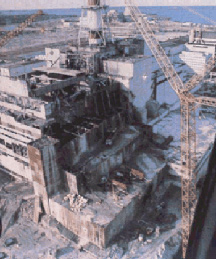
International Chernobyl Disaster Remembrance Day Date in the current year: April 26, 2022
Until recently, Memorial Day for the Victims of the Chernobyl Nuclear Accident was observed only in the countries directly affected by the accident (Ukraine, Belarus and Russia). This changed in 2016, when the United Nations General Assembly designated April 26 as International Chernobyl Disaster Remembrance Day
The Chernobyl accident, also referred to as the Chernobyl disaster, was a catastrophic nuclear accident that occurred in Ukraine (then the Ukrainian Soviet Socialist Republic). On April 26, 1986, Reactor No. 4 at the Chernobyl Nuclear Power Plant was completely destroyed by an explosion caused by a catastrophic power increase. The explosion resulted in radioactive contamination of large parts of the USSR, now the territories of Ukraine, Belarus and Russia. Over 8 million people in these countries were exposed to radiation.
Four years passed after the accident before the Soviet government reluctantly acknowledged the need for international assistance in mitigating the consequences of the disaster. In 1990, the UN General Assembly adopted a resolution that called for international cooperation in overcoming the consequences of the Chernobyl accident.
Since 2002, the main focus of the Chernobyl strategy has been a long-term developmental approach instead of emergency humanitarian assistance. In 2009, the International Chernobyl Research and Information Network was launched to provide support to programs that aim to contribute to the sustainable development of affected territories.
International Chernobyl Disaster Remembrance Day was inaugurated in 2016 to raise awareness of the consequences of the accident and to consolidate efforts to eliminate them. In Ukraine, it is one of the official remembrance days marked by memorial ceremonies and special lessons at schools. In addition, Ukraine observes Chernobyl Liquidators Day on December 14.
Is New Mexico’s Nuclear Waste dump right now affected by wildfires?
Emergency declaration for multiple wildfires in New Mexico SANTA FE, N.M. (AP) — New Mexico Gov. Michelle Lujan Grisham has signed emergency declarations as 20 wildfires continued to burn Sunday in nearly half of the state’s drought-stricken 33 counties.
One wildfire in northern New Mexico that started April 6 merged with a newer fire Saturday to form the largest blaze in the state, leading to widespread evacuations in Mora and San Miguel counties. That fire was at 84 square miles (217 square kilometers) Sunday and 12% contained. An uncontained wind-driven wildfire in northern New Mexico that began April 17 had charred 81 square miles (209 square kilometers) of ponderosa pine, oak brush and grass by Sunday morning north of Ocate, an unincorporated community in Mora County.
……….. https://www.tri-cityherald.com/news/nation-world/national/article260711157.html#storylink=cpy
Fire training, equipment lacking at US nuclear dump in New Mexico
KNAU News Talk – Arizona Public Radio | By Associated Press April 25, 2022 Independent federal investigators say there are significant issues related to fire training at the U.S. government’s nuclear waste repository in New Mexico.
The U.S. Energy Department’s Office of Inspector General also found that firefighting vehicles at the Waste Isolation Pilot Plant were in disrepair from years of neglected maintenance.
Federal officials say they’re making changes to address the issues.
The repository is the backbone of a multibillion-dollar program for cleaning up tons of Cold War-era waste from past nuclear research and bomb making.
The safety concerns come as New Mexico’s governor and others voice opposition to expanding the types of radioactive waste that can be shipped to the repository.
America’s aim is not for Ukraine to win, It is to prolong the war and weaken Russia
US Makes It Clear Its Aim Is to ‘Weaken’ Russia Consortium News, By Joe Lauria April 25, 2022

The U.S. makes plain its plan is not just to win its poxy war in Ukraine, but to continue flooding the country with weapons systems and ammunition, long enough to “weaken” Russia, reports JoeLauria.
The United States on Monday gave away a bit more of its ultimate goals in Ukraine by saying for the first time that it aims to “weaken” Russia’s military capabilities as a result of the war.
……………………….. Russia says its aim was never to take control of Ukraine but to defend Russian-speakers in the eastern Donbass region who have fought an 8-year civil war of independence against Ukraine after it resisted the U.S.-backed unconstitutional change of government in 2014.
Moscow says it “demilitarizing” Ukraine and “de-nazifying” it of neo-fascist groups that took part in the overthrow of the elected government in 2014, and in the Donbass war. The West has been saying that Ukraine is winning the war since it began at the end of February. It claims that the Ukrainian forces defeated a Russian attempt to takeover Kiev.
But Russia says it never had any intention of taking the capital and had only parked its forces outside the city as a diversion to pin down Ukrainian forces while Russia fought to gain control of Mariopuol in the south. Russia says it withdraw its troops from near Kiev to join the battle for Donbass.
Austin’s remarks are the clearest indication of U.S. goals for Russia via a proxy war in Ukraine since President Joe Biden said in Poland on March 26, “For God’s sake, this man cannot remain in power,” referring to Putin. Biden also said on two occasions that the reason for the economic sanctions on Russia was never to prevent an invasion but to get the Russian people to rise up against its government. In fact the U.S. needed the invasion to launch its economic and information warfare against Russia. It got the invasion by dismissing Russia’s treaty proposals to remove NATO troops and missiles from Eastern Europe, even though Russia threatened war. The U.S. did not stop Ukraine from beginning an offensive on Donbass, luring Russia to invade.
Prolonging the war as long as possible — Blinken said ten days ago it would last at least until the end of this year — is part of the trap the U.S. has set for Russia, similar to the one that former Carter national security adviser Zbigniew Brzezinski admitted he set for Moscow in Afghanistan to bring down the Soviet Union by giving it its “Vietnam,” much as the U.S. is aiming to topple Putin. https://consortiumnews.com/2022/04/25/us-makes-it-clear-its-aim-is-to-weaken-russia/
Playing with fire at Chornobyl — Beyond Nuclear International

Will we avoid a deadly sequel?
Playing with fire at Chornobyl — Beyond Nuclear International
After 36 years the nuclear site is again in danger https://beyondnuclearinternational.org/2022/04/24/playing-with-fire-at-chornobyl/
By Linda Pentz Gunter
For 36 years things had been quiet at Chornobyl. Not uneventful. Not safe. But no one was warning of “another Chornobyl” until Russian forces took over the site on February 24 of this year.
Russia’s invasion of Ukraine first took their troops through the Chornobyl Exclusion Zone, where they rolled armored vehicles across radioactive terrain, also trampled by foot soldiers who kicked up radioactive dust, raising the radiation levels in the area.
As the Russians arrived at the Chornobyl nuclear site, it quickly became apparent that their troops were unprotected against radiation exposure and indeed many were even unaware of where they were or what Chornobyl represented. We later learned that they had dug trenches in the highly radioactive Red Forest, and even camped there.
After just over a month, the Russians pulled out. Was this to re-direct troops to now more strategically desirable — or possibly more reasonably achievable — targets? Or was it because, as press reports suggested, their troops were falling ill in significant numbers, showing signs of radiation sickness? Those troops were whisked away to Belarus and the Russians aren’t talking. But rumors persist that at least one soldier has already succumbed to his exposure.
Plant workers at the nuclear site, despite working as virtual hostages during the Russian occupation and in a state of perpetual anxiety, where shocked that even the Russian radiation experts subsequently sent in, were, like the young soldiers, using no protective equipment. It was, said one, a kind of suicide mission.
What could have happened at Chornobyl — and still could, given the war is by no means over and the outcome still uncertain — could have seen history repeat itself, almost 36 years to the day of that first April 26, 1986 disaster.
Yet, Chornobyl has no operating reactors. So why is it still a risk? Doesn’t the so-called New Safe Confinement (NSC) structure protect the site?
The $2.3 billion NSC was built to cover over the original and crumbling old sarcophagus that had encased the lethal cargo left behind after the April 26, 1986 explosion of Unit 4.
Supposed to last just 100 years, that still inadequate timeframe was thrown into jeopardy as a reported firefight broke out prior to the Russian takeover. Fears arose that the shocks and vibrations of repeated shelling and artillery fire could cause the NSC to crack or crumble.
Housed inside the NSC is the destroyed Unit 4 as well as 200 metric tonnes of uranium, plutonium, irradiated dust, solid and liquid fuel, and a molten slurry of uranium fuel rods, zirconium cladding, graphite control rods, and melted sand.
The fuel lump from Unit 4, sitting inaccessible on a basement floor, remains unstable. In May 2021, there was a sudden and baffling escalation of activity there and a rise in neutrons, evoking fears of a chain reaction or even another explosion.
All of these volatile fuels and waste inventories still depend on cooling pumps to keep them cool. And those cooling pumps depend on power.
However, not everything at the site is within the NSC.
Units 1, 2 and 3 are not yet fully decommissioned and likely won’t be until at least 2064. Even though their fuel has been cooling for 20 years, it cannot go indefinitely without power. And managing it necessitates skilled, and unharried, personnel.
Loss of power threatens the ISF-1 spent nuclear fuel pool where much of the waste fuel is still stored. As nuclear engineer, Dave Lochbaum, described it in an email, “If forced cooling is lost, the decay heat will warm the water until it boils or until the heat dissipated by convective and conduction allows equilibrium to be established at a higher, but not boiling, point.
“If the pool boils, the spent fuel remains sufficiently cooled until the water level drops below the top of the fuel assemblies.”
At that point, however, adds Union of Concerned Scientists physicist, Ed Lyman, “a serious condition in the ISF-1 spent nuclear fuel pool” could occur. “However, because the spent fuel has cooled for a couple of decades there would be many days to intervene before the spent fuel was exposed.”
At the time of the invasion, workers at the site had been engaged in moving the full radioactive waste inventory from all 4 of the Chornobyl reactors, from the common fuel pool to the ISF-2 facility where it will be dismantled and put into long-term storage casks. It is unclear whether this operation was halted, but likely so.
Fire also remains a significant risk at the site. The massive 2020 wildfire that reached the perimeter of the Chornobyl plant site, occurred in April, well before the dry season. Military combat clearly invites the risk of igniting a lethal fire.
Indeed, the entire region, known as the Chornobyl Exclusion Zone, is a tinderbox. As Dr. Tim Mousseau and his research team discovered, dead wood and leaf litter on the forest floors is not decaying properly, likely because the microbes and other organisms that drive the process of decay are reduced or gone due to their own prolonged exposure to radiation.
As leaf litter and organic matter build up, the risk of ignition increases. There have been several hundred fires in the Zone already, sometimes, incomprehensibly, deliberately started. The explosions of war fighting could spark another. Indeed, stories did emerge about fires during the Russian occupation, their origin unclear.
But even without military attacks or destruction of the site, it was still at risk, especially when offsite power was lost, twice, raising fears of a potential catastrophe if emergency on-site power — consisting of diesel generators — did not work or ran out of fuel. Later reports revealed that plant workers had taken to stealing Russian fuel to keep those generators running.
Meanwhile, the State Nuclear Regulatory Inspectorate of Ukraine (SNRIU) had lost complete contact with its Chornobyl workforce. As days dragged into weeks, the SNRIU legitimately worried that an exhausted workforce, going without shift changes and operating under duress and potentially fear, could lead to mistakes that could prove deadly.
It was, after all, human error that had contributed to the first Chornobyl catastrophe.
On March 17, the SNRIU reported, “There is no information on the real situation at the Chornobyl NPP site, as there is no contact with the NPP personnel present directly at the site for the 22nd day in a row without rotation.”
Radiation monitors had remained off since the Russian occupation, leaving authorities and the public in the dark should there be any significant release of radioactivity as a result of damage at the site inflicted by military conflict or other causes.
Repeating a warning that had become a daily one on the SNRIU website, the agency concluded: “Given the psychological, moral, and physical fatigue of the personnel, as well as the absence of day-time and repair staff, maintenance and repair activities of equipment important to the safety of the facilities at the Chornobyl NPP site are not carried out, which may lead to the reduction of its reliability, which in turn can lead to equipment failures, emergencies, and accidents.”
Finally, a month into the occupation, a partial shift change was allowed. Workers could go home and rest. But almost immediately, the Russians attacked the nearby worker town of Slavutych, terrorizing the workforce and leaving at least three dead according to press reports.
Some personnel, including security guards, chose to stay on at the site. With good reason, they perhaps feared that the Russian occupying force would behave irresponsibly at a site that houses lethal cargos.
Sure enough, on March 24 stories emerged that Russian forces at Chornobyl may have “looted and destroyed a laboratory near the abandoned Chernobyl nuclear power plant that was used to monitor radioactive waste,” according to CNN and other news sources.
The laboratory, which conducts research into radioactive waste management, houses radioactive materials that may then have fallen into Russian hands.
The State Agency of Ukraine for Exclusion Zone Management, which announced the attack, went further in wishing “the enemy today…will harm himself, not the civilized world.”
And now here we are, just days away from the 36th commemoration of that terrible day in 1986. Still watching. Still waiting. Still holding our breath. The war is neither over, nor won by either side. The Chornobyl site, possibly now more radioactive than in the immediate past, sits like a ticking time bomb. Along with too many unanswered — and unanswerable — questions.
Who will protect it? Will it be spared further assault? And will the word Chornobyl come to mark a new nuclear catastrophe 36 years after the first?
Just how dangerous are the nuclear wastes at WIPP waste dump in New Mexico, and at Los Alamos National Laboratory?
Report: Some Los Alamos nuclear waste too hazardous to move via Santa Fe New Mexican, The Atomic Age, By Scott Wyland Oct 28 2017, https://lucian.uchicago.edu/blogs/atomicage/2021/08/04/report-some-los-alamos-nuclear-waste-too-hazardous-to-move-via-santa-fe-new-mexico/comment-page-2/
Los Alamos National Laboratory has identified 45 barrels of radioactive waste so potentially explosive — due to being mixed with incompatible chemicals — that crews have been told not to move them and instead block off the area around the containers, according to a government watchdog’s report.
Crews have worked to ferret out drums containing volatile compounds and move them to a more secure domed area of the lab after the Defense Nuclear Facilities Safety Board issued a scathing report last year saying there were possibly hundreds of barrels of unstable nuclear waste.
The safety board estimated an exploding waste canister could expose workers to 760 rem, far beyond the threshold of a lethal dose. A rem is a unit used to measure radiation exposure. In its latest weekly report, the safety board said crews at Newport News Nuclear BWXT Los Alamos, also known as N3B — the contractor in charge of cleaning up the lab’s legacy waste — have pegged 60 barrels with volatile mixtures and have relocated 15 drums to the domed area.
[…]
Officials at the U.S. Department of Energy’s environmental management office said they couldn’t comment on the report or on how the lab stores waste, citing lack of time to answer questions.
Volatile waste mixtures have received more attention since 2014 when a waste container from the Los Alamos lab packaged with a blend of organic cat litter and nitrate salts burst in an underground chamber of the Waste Isolation Pilot Plant near Carlsbad. The radioactive release contaminated the storage site so extensively it shut down for three years and cost $2 billion to clean up.
Hirsch noted some radioactive vapors escaped from WIPP’s underground site to the open air amid the leak. Federal reports have described a small amount of radioactivity slipping through exhaust vents that have since been sealed.
The fact that any radiation was emitted from below ground illustrates how destructive a waste barrel blowing up above ground could be, Hirsch said.
In the October report, the safety board said lab personnel had failed to analyze chemicals present in hundreds of containers of transuranic nuclear waste, making it possible for incompatible chemicals to cause a container to explode. Crews also never sufficiently estimated how much radiation would be released by such an event.
Waste with that kind of hair trigger should only be analyzed in a “hot cell,” with walls several feet thick, blast-proof glass and robotic arms that a technician operates to handle the materials, Hirsch said.
Read more at Report: Some Los Alamos nuclear waste too hazardous to move
-
Archives
- February 2026 (228)
- January 2026 (308)
- December 2025 (358)
- November 2025 (359)
- October 2025 (376)
- September 2025 (258)
- August 2025 (319)
- July 2025 (230)
- June 2025 (348)
- May 2025 (261)
- April 2025 (305)
- March 2025 (319)
-
Categories
- 1
- 1 NUCLEAR ISSUES
- business and costs
- climate change
- culture and arts
- ENERGY
- environment
- health
- history
- indigenous issues
- Legal
- marketing of nuclear
- media
- opposition to nuclear
- PERSONAL STORIES
- politics
- politics international
- Religion and ethics
- safety
- secrets,lies and civil liberties
- spinbuster
- technology
- Uranium
- wastes
- weapons and war
- Women
- 2 WORLD
- ACTION
- AFRICA
- Atrocities
- AUSTRALIA
- Christina's notes
- Christina's themes
- culture and arts
- Events
- Fuk 2022
- Fuk 2023
- Fukushima 2017
- Fukushima 2018
- fukushima 2019
- Fukushima 2020
- Fukushima 2021
- general
- global warming
- Humour (God we need it)
- Nuclear
- RARE EARTHS
- Reference
- resources – print
- Resources -audiovicual
- Weekly Newsletter
- World
- World Nuclear
- YouTube
-
RSS
Entries RSS
Comments RSS
 nuclear-news