43rd anniversary of the Three Mile Island nuclear accident
Today marks the 43rd anniversary of Three Mile Island nuclear accident https://lancasteronline.com/news/local/today-marks-the-43rd-anniversary-of-three-mile-island-nuclear-accident/article_eeb55904-ae9d-11ec-8e5a-07c5df9c0e70.html LANCASTERONLINE | Staff 28 Mar 22
Today marked the 43rd anniversary of the accident at the Three Mile Island nuclear plant, the nation’s worst nuclear accident.
A combination of human error and malfunctioning controls resulted in a partial meltdown of the Unit 2 reactor and caused tens of thousands of Central Pennsylvania residents to be evacuated or to flee the area for several days in 1979.
Unit 2 never was reopened and has been placed in monitored storage until the Unit 1 reactor is closed and decommissioned.
In 2017, Exelon announced preliminary plans to close the facility unless a buyer was found; after no sale was reached, Unit 1 was officially shut down in December of 2019. Decommissioning is expected to last until 2079.
Scientists caught off guard by massive ice shelf collapse in ‘coldest, driest’ part of Antarctica

Scientists caught off guard by massive ice shelf collapse in ‘coldest, driest’ part of Antarctica
A huge ice shelf has collapsed in Antarctica, coinciding with a period of intense and unseasonal heat which may have been “the straw that broke the camel’s back”.
New nuclear reactors will pose a bigger, hotter, more long-lasting waste problem

As Boris Johnson prepares a new push for nuclear power, the £131bn
problem of how to safely dispose of vast volumes of radioactive waste
created by the last British atomic energy programme remains unsolved.
The hugely expensive and dangerous legacy of the UK’s 20th-century nuclear
revolution amounts to 700,000 cubic metres of toxic waste – roughly the
volume of 6,000 doubledecker buses. Much of it is stored at Sellafield in
Cumbria, which the Office for Nuclear Regulation says is one of the most
complex and hazardous nuclear sites in the world.
As yet, there is nowhere
to safely and permanently deposit this waste. Nearly 50 years ago the
solution of a deep geological disposal facility (GDF) was put forward, but
decades later the UK is no nearer to building one.
Experts say new nuclear
facilities will only add to the problem of what to do with radioactive
waste from nuclear energy and that the “back end” issue of the
hazardous toxic waste from the technology must not be hidden.
An assessment by the Nuclear Decommissioning Authority (NDA) says spent fuel from new
nuclear reactors will be of such high temperatures it would need to stay on
site for 140 years before it could be removed to a GDF, if one is ever
built in the UK.
“It is essential to talk about the back end of the
nuclear fuel cycle when you are considering building new nuclear power
stations,” said Claire Corkhill, a professor of nuclear material
degradation at the University of Sheffield and a member of the Committee on
Radioactive Waste Management, an independent body that advises the
government.
Whilst we have a plan to finally and safely deal with the
waste, it is less certain how this will be applied to the modern nuclear
reactors that the government are planning to roll out. “These are
completely different to previous reactors and we are at a very early stage
of understanding how to deal with the waste.
In my personal view, I do not
think we should be building any new nuclear reactors until we have a
geological disposal facility available.” “The amount of legacy waste is
not small in terms of nuclear waste,” said Corkhill. “It is expensive
to deal with. These materials are hazardous and we are looking at an
underground footprint of some 20km at a depth of 200 metres to 1,000
metres.
So regarding new nuclear sites, we need to think about whether it
is possible to build a GDF big enough for all the legacy waste and the new
nuclear waste.” Steve Thomas, a professor of energy policy at the
University of Greenwich, said: “Despite 65 years of using nuclear power
in Britain, we are still, at best, decades away from having facilities to
safely dispose of the waste. Until we know this can be done, it is
premature to embark on a major new programme of nuclear power plants.”
A government spokesperson said: “This is not an either/or situation. As the
prime minister has said, nuclear will be a key part of our upcoming energy
security strategy alongside renewables. We are committed to scaling up our
nuclear electricity generation capacity, and building more nuclear power
here in the UK, as seen through the construction of Hinkley Point C – the
first new nuclear power station in a generation. Alongside this we’re
developing a GDF to support the decommissioning of the UK’s older nuclear
facilities.”
Guardian 28th March 2022
Space Force Gets Roughly 40% Increase in Biden Request

Space Force Gets Roughly 40% Increase in Biden Request
A constellation of satellites will track ground vehicles, improve launch trajectories, and better nuclear command-and-control.TARA COPP | MARCH 28, 2022
The Space Force is requesting $24.5 billion in the 2023 budget, roughly 40 percent more than in last year’s request. Officials said the jump reflects the urgency to launch and defend satellites that can spot a hypersonic missile, track a moving truck, assure U.S. nuclear command and control, and more. ………
The budget request also includes $566 million for the Space Force’s evolved strategic SATCOM program, which ensures survivable strategic communications for the presidential fleet and DOD’s nuclear command and control aircraft.
“Our general posture has been to assume essentially impunity in space,” Kendall said. “We could put up expensive systems in small numbers, not worrying too much about [them] getting attacked—that era is over.”……………….. https://www.defenseone.com/policy/2022/03/space-force-gets-40-increase-biden-request/363687/
Washington Should Think Twice Before Launching a New Cold War
Heightened rhetoric about Russia and China seeking to undermine American influence will only reinforce Washington’s support for repressive regimes. The consequences of that could, in turn, prove to be potentially disastrous: a growing chorus of pundits and policymakers has suggested that Russia’s invasion of Ukraine marks the beginning of a new Cold War. If so, that means trillions of additional dollars for the Pentagon in the years to come coupled with a more aggressive military posture in every corner of the world. March 27, 2022 William D. Hartung, Nick Cleveland-Stout, Taylor Giorno TOM DISPATCH
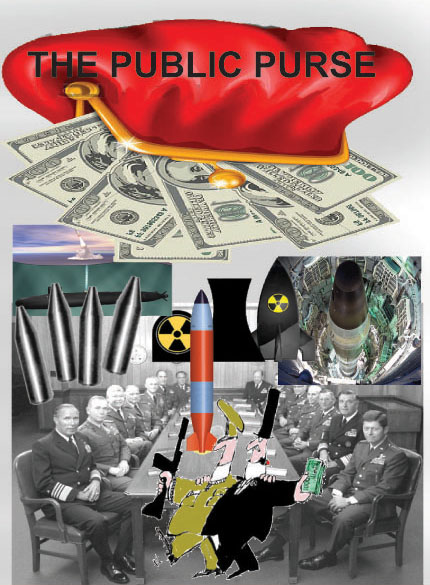
Before this country succumbs to calls for a return to Cold War-style Pentagon spending, it’s important to note that the United States is already spending substantially more than it did at the height of the Korean and Vietnam Wars or, in fact, any other moment in that first Cold War. Even before the invasion of Ukraine began, the Biden administration’s proposed Pentagon budget (as well as related work like nuclear-warhead development at the Department of Energy) was already guaranteed to soar even higher than that, perhaps to $800 billion or more for 2023.
Some supporters of higher Pentagon spending have, in fact, been promoting figures as awe inspiring as they are absurd. Rich Lowry, the editor of the conservative National Review, is advocating a trillion-dollar military budget, while Matthew Kroenig of the Atlantic Council called for the United States to prepare to win simultaneous wars against Russia and China. He even suggested that Congress “could go so far as to double its defense spending” without straining our resources. That would translate into a proposed annual defense budget of perhaps $1.6 trillion. Neither of those astronomical figures is likely to be implemented soon, but that they’re being talked about at all is indicative of where the Washington debate on Pentagon spending is heading in the wake of the Ukraine disaster.
Ex-government officials are pressing for similarly staggering military budgets. As former Reagan-era State Department official and Iran-Contra operative Elliott Abrams argued in a recent Foreign Affairs piece titled “The New Cold War”: “It should be crystal clear now that a larger percentage of GDP [gross domestic product] will need to be spent on defense.” Similarly, in a Washington Post op-ed, former Defense Secretary Robert Gates insisted that “we need a larger, more advanced military in every branch, taking full advantage of new technologies to fight in new ways.” No matter that the U.S. already outspends China by a three-to-one margin and Russia by 10-to-one.
Truth be told, current levels of Pentagon spending could easily accommodate even a robust program of arming Ukraine as well as a shift of yet more U.S. troops to Eastern Europe. However, as hawkish voices exploit the Russian invasion to justify higher military budgets, don’t expect that sort of information to get much traction. At least for now, cries for more are going to drown out realistic views on the subject.
Beyond the danger of breaking the budget and siphoning off resources urgently needed to address pressing challenges like pandemics, climate change, and racial and economic injustice, a new Cold War could have devastating consequences. Under such a rubric, the U.S. would undoubtedly launch yet more military initiatives, while embracing unsavory allies in the name of fending off Russian and Chinese influence.
The first Cold War, of course, reached far beyond Europe, as Washington promoted right-wing authoritarian regimes and insurgencies globally at the cost of millions of lives. Such brutal military misadventures included Washington’s role in coups in Iran, Guatemala, and Chile; the war in Vietnam; and support for repressive governments and proxy forces in Afghanistan, Angola, Central America, and Indonesia. All of those were justified by exaggerated — even at times fabricated — charges of Soviet involvement in such countries and the supposed need to defend “the free world,” a Cold War term President Biden all-too-ominously revived in his recent State of the Union address (assumedly, yet another sign of things to come).
Indeed, his framing of the current global struggle as one between “democracies and autocracies” has a distinctly Cold War ring to it and, like the term “free world,” it’s riddled with contradictions. After all, from Egypt to Saudi Arabia, the United Arab Emirates to the Philippines, all too many autocracies and repressive regimes already receive ample amounts of U.S. weaponry and military training — no matter that they continue to pursue reckless wars or systematically violate the human rights of their own people. Washington’s support is always premised on the role such regimes supposedly play in fighting against or containing the threats of the moment, whether Iran, China, Russia, or some other country.
Count on one thing: the heightened rhetoric about Russia and China seeking to undermine American influence will only reinforce Washington’s support for repressive regimes. The consequences of that could, in turn, prove to be potentially disastrous.
Before Washington embarks on a new Cold War, it’s time to remind ourselves of the global consequences of the last one.
Cold War I: The Coups
……… In 1954, the Eisenhower administration launched a coup that overthrew the Guatemalan government of President Jacobo Arbenz. His “crime”: attempting to redistribute to poor peasants some of the lands owned by major landlords, including the U.S.-based United Fruit Company. Arbenz’s internal reforms were falsely labeled communism-in-the-making and a case of Soviet influence creeping into the Western Hemisphere……In 1954, the Eisenhower administration launched a coup that overthrew the Guatemalan government of President Jacobo Arbenz. His “crime”: attempting to redistribute to poor peasants some of the lands owned by major landlords, including the U.S.-based United Fruit Company. Arbenz’s internal reforms were falsely labeled communism-in-the-making and a case of Soviet influence creeping into the Western Hemisphere.
In 1973, Richard Nixon and Henry Kissinger followed Eisenhower’s playbook by fomenting a coup that overthrew the democratically elected socialist government of Chilean President Salvador Allende, installing the vicious dictatorship of General Augusto Pinochet………..
Vietnam and Its Legacy
The most devastating Cold War example of a war justified on anti-communist grounds was certainly the disastrous U.S. intervention in Vietnam. ……………………………..
The defeat in Vietnam helped spawn what was called the Nixon Doctrine, which eschewed large-scale intervention in favor of the arming of American surrogates like the Shah of Iran and the Suharto regime in Indonesia. ………………….
Chief among this country’s blunders of that previous Cold War era was its response to the Soviet invasion of Afghanistan, a policy that still haunts America today……………………..
most of the Cold War policies outlined above, even though carried out under the rubric of promoting “freedom” in “the free world,” would undermine democracy in a disastrous fashion.
A New Cold War?
Cold War II, if it comes to pass, is unlikely to simply follow the pattern of Cold War I either in Europe or other parts of the world. Still, the damage done by the “good versus evil” worldview that animated Washington’s policies during the Cold War years should be a cautionary tale. The risk is high that the emerging era could be marked by persistent U.S. intervention or interference in Africa, Asia, and Latin America in the name of staving off Russian and Chinese influence in a world where Washington’s disastrous war on terrorism has never quite ended.
The United States already has more than 200,000 troops stationed abroad, 750 military bases scattered on every continent except Antarctica, and continuing counterterrorism operations in 85 countries. The end of U.S. military involvement in Afghanistan and the dramatic scaling back of American operations in Iraq and Syria should have marked the beginning of a sharp reduction in the U.S. military presence in the Middle East and elsewhere. Washington’s reaction to the Russian invasion of Ukraine may now stand in the way of just such a much-needed military retrenchment.
The “us versus them” rhetoric and global military maneuvering likely to play out in the years to come threaten to divert attention and resources from the biggest risks to humanity, including the existential threat posed by climate change. It also may divert attention from a country — ours — that is threatening to come apart at the seams. To choose this moment to launch a new Cold War should be considered folly of the first order, not to speak of an inability to learn from history. https://portside.org/2022-03-27/washington-should-think-twice-launching-new-cold-war
The entire world views it as I do; all except Kamikaze Joe and his puppeteers.. — The Goomba Gazette

The following are excerpts from CNN; one of the staunchest supporters of Kamikaze Joe. When the far left media starts getting on his ass, I would conclude the problem is absolutely severe. CNN Has Biden shaken international confidence in his so-far strong leadership in bringing the NATO alliance together in a united front against Moscow?
The entire world views it as I do; all except Kamikaze Joe and his puppeteers.. — The Goomba Gazette
- And will Putin be able to exploit disquiet over Biden’s comments in European capitals?
- Did the President’s comment dangerously escalate already high tensions in the worst confrontation between the West and Russia in decades?
- Will the notion that Biden hopes to topple Putin — even if the US says it’s not true — harden the embattled Russian leader’s resolve against negotiations or cause him to further escalate an already merciless war against civilians?
- Has Biden’s now stinging rhetoric about Putin effectively ruled out any future direct diplomacy or meetings between the world’s top nuclear powers — and could it endanger global peace if they can’t communicate in a future crisis that threatens humanity?
- Or will Biden’s human reaction to spending time with Ukrainian refugees soon be overtaken by the daily unfolding horror of the war or come to be seen as a strong moral stand that changed the way the world views the Russian leader? After all, ex-President Ronald Reagan’s call for then-Soviet leader Mikhail Gorbachev to “tear down this wall” in Berlin was initially opposed by some of his own aides as too provocative.
- And finally, since Moscow already sees extraordinarily tough Western sanctions as economic warfare and given Putin’s deeply conspiratorial view of the West and its role in vanquishing the Soviet Union, can a few loose presidential words that rile up everyone in Washington really make things any worse?Because the United States has put itself into very precarious position electing this senile fool to the leader of the country, because of his disastrous decision making and uncontrollable disparaging remarks, it is imminent but there has to be a change………………
In the last few months Kamikaze has made some very disparaging remarks about Putin. Although they may be true, this is not path to a diplomatic solution.
What is the current nuclear arms pact between Russia and the US?
What is the current nuclear arms pact between Russia and the US? News Nation now, Sydney Kalich MAR 28, 2022
— In the aftermath of the Cold War, the U.S. and Russia had agreed to multiple non-nuclear proliferation agreements.
Out of eight nuclear arms control agreements between Russia and the U.S., only one is still in effect. That is the new Strategic Arms Reduction Treaty or “New START.”
The treaty limits nuclear warheads to 1,550 and limits the number of launchers and delivery systems. President Joe Biden and Russian President Vladimir Putin extended this deal in February of last year. It will be in effect until 2026.
But New START doesn’t cover the thousands of battlefield nuclear weapons. Those are less deadly nuclear weapons that could still kill thousands of people.
Notably, Ukraine actually had its own nuclear missiles until 1994 when the country agreed to give all its weapons to Russia in exchange for security assurances, which leaders say were violated by the 2014 invasion of Crimea.
This comes as top NATO leaders say any chemical attack by Russia on Ukraine would change the course of the war, but they are not saying whether NATO would take military action.
Russia and Ukraine are set to meet for peace talks Tuesday. Ukraine could declare neutrality and offer security guarantees to Russia to secure peace “without delay,” President Volodymyr Zelenskyy said ……. https://www.newsnationnow.com/morninginamerica/current-nuclear-arms-pact/
Plaid Cymru Party in Wales sticking firmly to their anti-nuclear position
| — Plaid Cymru leader Adam Price has said that nuclear power is “the wrong answer” to Wales’ energy needs as three new nuclear reactors have been mooted for Wylfa on Anglesey. The UK Government have shown a renewed interest in nuclear power over the last months as soaring energy prices and the Russian invasion of Ukraine put energy supply and security firmly on the political agenda. US nuclear company Westinghouse has put together a consortium with construction group Bechtel to revive plans for two nuclear reactors at Wylfa since Hitachi, a Japanese conglomerate, abandoned their own plans in 2019. A consortium led by Rolls-Royce also wants to place one of their own ‘small’ modular reactors on the site. Speaking at Plaid Cymru’s conference in Cardiff, Adam Price – whose party is in control of Anglesey council – said that although there was discussion within the party they would stick firmly to their anti-nuclear stance. “We’ve always been a pluralist political party that allows a debate to ensue and to reflect the fact that obviously there are, and there have been divergent views on this issue,” Adam Price told Sunday Politics Wales. “But at the national level, of course, we can only have one policy and our national consistent national policy and every motion that we’ve ever had an annual conference has been consistent that we are a party that doesn’t believe in nuclear. “We do not support nuclear power. It’s the wrong answer. Renewables absolutely is the way to go. And I fear that, you know, nuclear power, very expensive and unnecessary distraction.” Nation Cymru 27th March 2022https://nation.cymru/news/nuclear-the-wrong-answer-says-plaid-cymru-leader-as-new-reactors-mooted-for-anglesey/ |

Stop Sizewell C campaigners query the government’s planning judgment , especially on costs

Stop Sizewell C campaigners yesterday questioned how the Government can
make an impartial planning judgement on the project if it is intending to
invest in it. The Planning Inspectorate’s report containing its
recommendation on the proposals is expected to be made public in late May.
Previous estimates have put the cost of Sizewell C at about £20bn – less
than the plant being built at Hinkley Point in Somerset – though the figure
could rise with global inflationary pressures.
East Anglian Daily Times 27th March 2022
https://www.eadt.co.uk/news/business/sizewell-c-government-to-take-stake-8785356
Biden administration shuts down Trump-era nuclear cruise missile program
Biden administration kills Trump-era nuclear cruise missile program
After conducting the upcoming Nuclear Posture Review, the Biden administration has chosen to end the sea-launched cruise missile program, a senior Pentagon official said. Breaking Defense
By VALERIE INSINNAon March 28, 2022 WASHINGTON: In a rare political win for non-proliferation advocates, the Biden administration has cancelled the Sea-Launched Cruise Missile-Nuclear program, one of the two new nuclear weapons greenlit by the Trump administration.
The Pentagon’s fiscal year 2023 budget request, released today, zeroes out funding planned for the so-called SLCM-N program, according to a senior defense official who spoke to reporters about the spending proposal.
“Really this decision came out of the Nuclear Posture Review,” the official said. “There was direction from the president to reduce the role of nuclear weapons in our defense strategy. That [decision to cancel SLCM-N] was a component.”
The determination is the latest in a back-and-forth spanning multiple administrations about the utility of a nuclear-armed cruise missile that could be launched from destroyers or Virginia-class attack submarines that typically use conventional weapons.
The Obama administration’s 2010 Nuclear Posture Review called on the Navy to sunset the nuclear-version of its Tomahawk cruise missile, which was retired by 2013, according to the Federation of American Scientists.………………………..
Despite the cancellation of SLCM-N, funding for other nuclear programs flourished in the FY23 request.
| When asked about the fate of the W76-2, the senior defense official responded that there is “no change there,” hinting that the upcoming Nuclear Posture Review — due to be released in the coming weeks — will continue to support the low-yield warhead.According to a department fact sheet on the budget, the Pentagon requested a total of $34.4 billion across the nuclear enterprise for FY23, including $4.8 billion for nuclear command, control and communications.The Navy requested $6.3 billion for the Columbia-class submarine, its leg of the nuclear triad. Meanwhile, the Air Force is also modernizing its two components of the triad, asking $5 billion for the B-21 bomber program and $3.6 billion for the Ground Based Strategic Deterrent program that will replace Minuteman III intercontinental missiles https://breakingdefense.com/2022/03/biden-administration-kills-trump-era-nuclear-cruise-missile-program |
Nearly half of Americans concerned about nuclear war amid Russia-Ukraine invasion
Nearly half of Americans concerned about nuclear war amid Russia-Ukraine invasion
by: The Associated Press via Nexstar Media Wire
Mar 28, 2022 WASHINGTON (AP) — Russia’s war on Ukraine has most Americans at least somewhat worried that the U.S. will be drawn directly into the conflict and could be targeted with nuclear weapons, with a new poll reflecting a level of anxiety that has echoes of the Cold War era.
Close to half of Americans say they are very concerned that Russia would directly target the U.S. with nuclear weapons, and an additional three in 10 are somewhat concerned about that, according to the new poll from The Associated Press-NORC Center for Public Affairs Research. Russian President Vladimir Putin placed his country’s nuclear forces on high alert shortly after the Feb. 24 invasion.
Roughly nine in 10 Americans are at least somewhat concerned that Putin might use a nuclear weapon against Ukraine, including about six in 10 who are very concerned……… https://www.wfxrtv.com/news/russia-ukraine-conflict/nearly-half-of-americans-concerned-about-nuclear-war-amid-russia-ukraine-invasion/
Hinkley Point C nuclear project faces mor.e delays, increased costs
 |
| Hinkley Point C faces more delays amid Ukraine crisis. Developer EDF warns war may trigger even higher costs for Britain’s flagship nuclear power station. The UK’s £23bn new flagship nuclear power plant is at risk of becoming more expensive and being plagued by delays as its developer EDF blamed challenges including the conflict in Ukraine. EDF is carrying out a “new comprehensive review” of the costs and timeframes of Hinkley Point C, which it is building in Somerset with updates expected in the summer. The majority French state-owned company had already raised cost estimates in 2017, 2019 and again in 2021 amid the pandemic, with the project currently set to cost between £22bn and £23bn and start generating power in mid-2026. It was originally forecast to cost £18bn. The developers have to foot the bill for cost overruns at the project, but it comes as EDF is in talks with the UK Government about building a second new power plant, Sizewell C in Suffolk, which could see households take on more risk for overruns. The Prime Minister is believed to want nuclear power to supply about a quarter of Britain’s electricity by 2050. That could imply about six large stations similar to Hinkley will be needed by 2050. In a sign of its commitment to the technology, the Government is planning to take a 20pc equity stake in the Sizewell C project. In documents filed with French financial authorities, EDF said of Hinkley Point C: “Due to the difficulties encountered by the project, notably on civil performance and marine works, and the increase in risks such as the Ukrainian conflict, Brexit, Covid, supply chain disruption and inflation, a new comprehensive review to update the costs and schedule estimates announced in January 2021 is underway and is expected to be finalised by summer 2022.” Telegraph 27th March 2022https://www.telegraph.co.uk/business/2022/03/27/hinkley-point-c-faces-fresh-cost-overrun-ukraine-crisis/ |
Zelensky: Russia will be driven out of Caucasus, Transnistria, Crimea, all post-Soviet space — Anti-bellum
Which of course has been the West’s plan for the past thirty years. Rustavi2March 28, 2022 Russia will certainly lose everything, including Abkhazia – Volodymyr Zelensky Vladimir Putin’s plans are non-strategic, Russia will certainly lose everything, including Abkhazia. Such a statement made Volodymyr Zelensky. “…There are a number of stories: the Caucasus is the Caucasus, […]
Zelensky: Russia will be driven out of Caucasus, Transnistria, Crimea, all post-Soviet space — Anti-bellum
African nations condemn Ukraine’s recruiting mercenaries for “international legion” — Anti-bellum
Deutsche WelleMarch 28, 2022 Ukraine’s bid to recruit fighters from Africa sparks uproar Nigeria, Senegal and Algeria have criticized Ukraine’s efforts to enlist international fighters as it resists the Russian invasion. Analysts say those who have responded to the call need to reconsider. Russia’s war on Ukraine is barely two weeks old, but Kyiv is […]
African nations condemn Ukraine’s recruiting mercenaries for “international legion” — Anti-bellum
Norway: NATO continues largest drills since Cold War off Russia’s coast — Anti-bellum
Anadolu AgencyMarch 28, 2022 Cold Response 2022: NATO’s largest Arctic exercise in 30 years continues in NorwayDrill includes around 30,000 troops, 220 aircraft and 50 vessels from 27 countries Cold Response 2022, NATO’s largest exercise in the Arctic in the last 30 years, continues in cold weather conditions across Norway – on land, in the […]
Norway: NATO continues largest drills since Cold War off Russia’s coast — Anti-bellum
1 This Month
23 April – WEBINAR – Why new nuclear reactors are the wrong tools for decarbonization Thursday, April 23 • 1 AM – 2 AM AEST

Pine Ridge Uranium is the real threat, not Tehran- Tell Burgum: Stop the Extraction.
Chernobyl: The Lost Tapes – A good documentary on Chernobyl on SBS available On Demand for the next 3 weeks– https://www.sbs.com.au/ondemand/tv-program/chernobyl-the-lost-tapes/2352741955560
To see nuclear-related stories in greater depth and intensity – go to https://nuclearinformation.wordpress.com
-
Archives
- April 2026 (261)
- March 2026 (251)
- February 2026 (268)
- January 2026 (308)
- December 2025 (358)
- November 2025 (359)
- October 2025 (376)
- September 2025 (257)
- August 2025 (319)
- July 2025 (230)
- June 2025 (348)
- May 2025 (261)
-
Categories
- 1
- 1 NUCLEAR ISSUES
- business and costs
- climate change
- culture and arts
- ENERGY
- environment
- health
- history
- indigenous issues
- Legal
- marketing of nuclear
- media
- opposition to nuclear
- PERSONAL STORIES
- politics
- politics international
- Religion and ethics
- safety
- secrets,lies and civil liberties
- spinbuster
- technology
- Uranium
- wastes
- weapons and war
- Women
- 2 WORLD
- ACTION
- AFRICA
- Atrocities
- AUSTRALIA
- Christina's notes
- Christina's themes
- culture and arts
- Events
- Fuk 2022
- Fuk 2023
- Fukushima 2017
- Fukushima 2018
- fukushima 2019
- Fukushima 2020
- Fukushima 2021
- general
- global warming
- Humour (God we need it)
- Nuclear
- RARE EARTHS
- Reference
- resources – print
- Resources -audiovicual
- Weekly Newsletter
- World
- World Nuclear
- YouTube
-
RSS
Entries RSS
Comments RSS
 nuclear-news