February 13 Energy News — geoharvey

Opinion: ¶ “Temporary spent nuclear fuel storage isn’t temporary” • The proposal to “store” spent nuclear fuel in New Mexico is a Trojan horse that will defeat the goal of geologically isolating this highly radioactive and chemically toxic material. The proposed interim storage facility is geologically unsuitable even for a period of decades. [Santa Fe […]
February 13 Energy News — geoharvey
The Green Bucket List
Peter Dykstra
When you’re immersed in environmental science and environmental politics, it’s sometimes hard to step back and measure progress. Here are a few gains and victories to charge your batteries.
Kenichi Hasegawa, former dairy farmer who continued to tell the truth about the nuclear accident in Fukushima, passes away.

Immediately after the accident, I pressed the village mayor to disclose information.
He also shared the voice of a dairy farmer friend who committed suicide.
Mr. Kenichi Hasegawa, a former dairy farmer who continued to appeal about the current situation in Iitate Village contaminated by radiation after the Fukushima Daiichi Nuclear Power Plant accident in 2011, died of thyroid cancer on October 22, 2011 at the age of 68. He was 68 years old. He was the co-chairman of Hidanren, a group of victims of the nuclear power plant accident, and the head of the group of Iitate villagers who filed for alternative dispute resolution (ADR). Since 2005, he has been focusing on growing buckwheat noodles in the village, while criticizing what the government and administration call “reconstruction projects” and “reconstruction Olympics. In February and March of this year, he was diagnosed with cancer and fell ill. Many people are saddened by the death of Mr. Hasegawa, who continued to communicate the issues of the nuclear accident both inside and outside Japan.

On January 13, 2012, prior to the Global Conference for a Nuclear Power Free World held in Yokohama, NGO officials and journalists from overseas visited Fukushima and Mr. Hasegawa conveyed the current situation of the Iitate villagers. He said, “I wish there were no nuclear power plants. He said, “I wish we didn’t have nuclear power plants, and I hope the remaining dairy farmers will do their best not to be defeated by nuclear power plants. He left a message that said, ‘I have lost the will to work.
Our government has been promoting nuclear power plants as a national policy, so I thought they would take proper measures when an accident occurred. But the government did not take any action. I may return to my village, but I can’t bring my grandchildren back. If we go back and end our lives, that will be the end of the village.
Paul Saoke, a Kenyan public health specialist and then secretary general of the Kenya chapter of the International Council for the Prevention of Nuclear War, recorded Hasegawa’s lecture on his iPad. Mr. Saoke said, “In Kenya, the Fukushima nuclear accident is almost unknown. When I return to Japan, I would like to have the media watch the video of my lecture and let them know what kind of damage is being done by the residents. Mr. Hasegawa’s appeal was posted on the Internet and quickly spread around the world.
In 2012, he gave a speech at the European Parliament.
The film “My Legacy: If Only There Were No Nuclear Power Plants
In 2012, Mr. Hasegawa gave a lecture at the European Parliament in Belgium on the one-year anniversary of the Fukushima nuclear accident. Mr. Hasegawa visited Europe with his wife Hanako, and together with Eisaku Sato, former Governor of Fukushima Prefecture, conveyed the current situation in Fukushima.

Our Iitate village was a beautiful village,” said Mr. Hasegawa. “Our Iitate village was a beautiful village,” Mr. Hasegawa began. While explaining how the government experts who came to the village kept saying that the village was safe, he said, “The villagers were exposed to radiation while the mayor and the people in the village administration clung to the village. We dairy farmers were told not to raise cows in the planned evacuation zone, and with no follow-up from the government, prefecture, or village, we made the decision to quit dairy farming on our own. Finally, I conveyed the regret of my friend who committed suicide, leaving behind a note saying, “If only there were no nuclear power plants.

Photo: Hideaki Takamatsu
In 2002, Naomi Toyoda’s film “The Last Will and Testament: If Only There Were No Nuclear Power Plants” was completed, and Mr. Hasegawa’s words and the events of his friend who committed suicide were further disseminated to society. Yasuhiro Abe, manager of the Forum Fukushima movie theater, said, “At the time, various debates were boiling in the local community, and despite the length of the film, it was fully booked for three days. Mr. Hasegawa’s words about Iitate were very human, and he had a different level of strength that no one else had.
Through his activities in Japan and abroad, Mr. Hasegawa has connected and interacted with a wide range of people.
Mr. Toshiyuki Takeuchi, the president of Fukushima Global Citizen’s Information Center (FUKUDEN), who has been informing people in Japan and abroad about Mr. Hasegawa’s activities, said, “Mr. Hasegawa is a person who has been affected by pollution. Mr. Hasegawa has been active as an anti-nuclear and anti-radiation activist, criticizing the government, the administration (village authorities), and TEPCO for failing to take appropriate measures that put the health of the residents of the contaminated area first. At the same time, he has a strong attachment to the Maeda area and his life there, and has returned to the area to start making soba noodles and rebuild his life. The complexity of his feelings (“irrationality”) was sometimes difficult to convey to people overseas.
As I listened to Mr. Hasegawa’s story, there were many moments when I felt that “everything was there in Iitate Village and Maeda area before the earthquake, and it was the center of the world and life. “Complex irrationality” is probably a cross-section of the tragedy of everything being taken away on its own.
Solidarity with the Nuclear Weapons Abolition Movement
Bringing together people from all walks of life
In 2007, after the International Campaign to Abolish Nuclear Weapons (ICAN) was awarded the Nobel Peace Prize, ICAN Co-Chairman Tilman Ruff (Australia) and ICAN International Steering Committee member and Peace Boat Co-Chairman Satoshi Kawasaki visited Mr. Hasegawa’s house in Iitate Village with medals.

Mr. Ruff said. He refused to be cowed or silenced, and continued to speak the truth about the nuclear disaster in Fukushima, stressing the need for rights, dignity, health, and recognition of the people and land that the government and TEPCO unreasonably put in harm’s way. I am honored to have known Kenichi and to have been able to work for a common cause.”
Mr. Kawasaki also mourns his death. Mr. Kawasaki also mourned his passing. “We were together on many occasions, including the European Parliament in Belgium in 2012, the round trip to Australia in 2013, and the Peace Boat trip. I remember the way he spoke straight from the bottom of his heart about the damage he had suffered as a dairy farmer and the anger and frustration of the people of Fukushima, strongly conveying his message to people even though they spoke different languages. I believe that Ms. Hanako, who has always accompanied us and talked about the damage caused by nuclear power plants from her own perspective, will continue to play a role as a sender.
Ms. Riko Mutoh (Funehiki), who is also a co-chair of Hidanren, said, “Ms. Hasegawa was a big presence. His words were powerful and persuasive. After returning to Iitate Village, she was busy with local activities. He was a person who brought people together, both inside and outside of the village, within and outside of the prefecture, those who had evacuated and those who were living there.
(Text and photo by Hiroko Aihara)
PCB waste treatment plan in Fukushima: “Insufficient explanation” and opposition from many people

Feb. 07, 2022
A meeting was held to check the government’s plan to dispose of highly concentrated PCB waste generated in Fukushima Prefecture after the nuclear power plant accident in Muroran City.
The Ministry of the Environment presented a plan to treat waste containing polychlorinated biphenyls (PCBs), a toxic substance, from the “contaminated waste management area” in Fukushima Prefecture at a facility in Muroran City, and the city and province approved the plan last December.
On the 7th, a meeting was held in Muroran City to check the government’s project, with representatives of citizens’ groups and academic experts attending.
At the meeting, a representative from the Ministry of the Environment explained that the decision was made based on the opinions of experts who had investigated the safety of the treatment at the site.
In response to this, a number of committee members expressed their opposition to the disposal of PCBs, arguing that the Ministry of the Environment’s explanation was too sketchy and that they had not received a reply to their questionnaire.
One of the committee members, Akiaki Kono, representative of the Association for the Safety of PCB Disposal, said, “Information on the field survey has not been properly disclosed. I felt that the administrative procedures were incomplete. The situation is not such that safety can be confirmed,” he said.
The Ministry of the Environment said, “We have not decided when we will start processing. The Ministry of the Environment says, “We have not decided when we will start the treatment, but we will answer the opinions and questions raised this time.
https://www3.nhk.or.jp/sapporo-news/20220207/7000043152.html?fbclid=IwAR3fXeQ4VwN56XNR5S05uFjTGHYCiRcQ9nk85uC9NbSG5V3FvDDQ4nFDEpY
Robot photos appear to show melted fuel at Fukushima reactor

MARI YAMAGUCHI – February 10, 2022
TOKYO (AP) — A remote-controlled robot has captured images of what appears to be mounds of nuclear fuel that melted and fell to the bottom of the most damaged reactor at Japan’s wrecked Fukushima nuclear plant, officials said Thursday.
A massive earthquake and tsunami in 2011 damaged cooling systems at the power plant, causing the meltdown of three reactor cores. Most of their highly radioactive fuel fell to the bottom of their containment vessels, making its removal extremely difficult.
A previous attempt to send a small robot with cameras into the Unit 1 reactor failed, but images captured this week by a ROV-A robot show broken structures, pipes and mounds of what appears to be melted fuel and other debris submerged in cooling water, plant operator Tokyo Electric Power Company Holdings said Thursday.
About 900 tons of melted nuclear fuel remain inside the plant’s three damaged reactors, including about 280 tons in Unit 1. Its removal is a daunting task that officials say will take 30-40 years. Critics say that’s overly optimistic.
The robot, carrying several tiny cameras, obtained the internal images of the reactor’s primary containment vessel while on a mission to establish a path for subsequent probes, TEPCO said.
TEPCO spokesperson Kenichi Takahara said the piles of debris rose from the bottom of the container, including some inside the pedestal — a structure directly beneath the core — suggesting the mounds were melted fuel that fell in the area.
Takahara said further probes will be needed to confirm the objects in the images.
At one location, the robot measured a radiation level of 2 sievert, which is fatal for humans, Takahara said. The annual exposure limit for plant workers is set at 50 millisievert.
The robot probe of the Unit 1 reactor began Tuesday and was the first since 2017, when an earlier robot failed to obtain any images of melted fuel because of the extremely high radiation and interior structural damage.
The fuel at Unit 1 is submerged in highly radioactive water as deep as 2 meters (6.5 feet).
TEPCO said it will conduct additional probes after analyzing the data and images collected by the first robot.
Five other robots, co-developed by Hitachi-GE Nuclear Energy and the International Research Institute for Nuclear Decommissioning, a government-funded consortium, will be used in the investigation over the next several months.
The investigation at Unit 1 aims to measure the melted fuel mounds, map them in three dimensions, analyze isotopes and their radioactivity, and collect samples, TEPCO officials said.
Those are key to developing equipment and a strategy for the safe and efficient removal of the melted fuel, allowing the reactor’s eventual decommissioning.
Details of how the highly radioactive material can be safely removed, stored and disposed of at the end of the cleanup have not been decided.
TEPCO hopes to use a robotic arm later this year to remove an initial scoop of melted fuel from Unit 2, where internal robotic probes have made the most progress.
https://www.yahoo.com/now/robot-photos-appear-show-melted-134212334.html
Zero Contaminated Water” and “Dismantling of Reactor Buildings” Missing from the Plan: The Final Form of Decommissioning the TEPCO’s Fukushima Daiichi Nuclear Power Plant
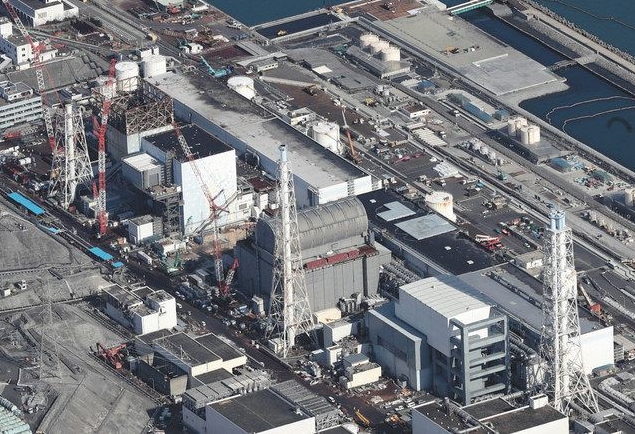
February 11, 2022
On March 11, it will be 11 years since the accident at TEPCO’s Fukushima Daiichi Nuclear Power Plant occurred. During this time, two goals have disappeared from the decommissioning plans of TEPCO and the government. During this time, two goals have disappeared from the decommissioning plans of TEPCO and the government: “zero generation of contaminated water” and “dismantling of reactor buildings. The core of decommissioning has been lost, and the goal of convergence work has yet to be drawn. (Kenta Onozawa)
Unable to stop inflow of groundwater as source of contamination
We want to proceed according to the schedule. We want to proceed as scheduled,” Akira Ono, chief executive officer of TEPCO’s Fukushima No. 1 Decommissioning Promotion Company, stressed at a press conference on January 27. The Nuclear Regulation Authority’s review of the plant’s facilities is scheduled to be conducted once a week, and is expected to be completed by the end of March.
In its initial decommissioning plan, TEPCO had set a goal of “zero generation of contaminated water. However, this goal disappeared when the plan was revised in 2019. Although the amount of contaminated water has been reduced to about one-third of what it was at the time of the accident, it is not known how the large amount of groundwater is flowing into the reactor buildings, the source of the contamination.
The frozen soil barrier, which was introduced to stop the inflow of groundwater, has not been proven to be effective. TEPCO did not respond to the request from the Regulatory Commission to show a direction to stop the water in the building, and continued to emphasize that the tanks would be full next spring, and the government decided to release the water into the ocean.
Once the release of treated water begins, there is no need for TEPCO and the government to hastily revive the goal of “zero contaminated water” because even if contaminated water continues to be generated, it can be purified and treated before being released. However, as long as contaminated water is not reduced to zero, the process of purification, storage, and release will continue endlessly.
Nuclear fuel removal technology and storage also face a difficult road.
What is even more unclear is what to do with the melted down nuclear fuel (debris) and the reactor building where it remains.
In a survey of the interior of the containment vessel of the Unit 1 reactor, a large amount of molten debris, which appeared to have solidified, was seen at the bottom of the vessel photographed by an underwater robot on August 9. It is likely to be debris, as it is close to the pressure vessel where the nuclear fuel was located.
Of the three reactors that suffered meltdowns, Unit 1 was the only one where the accumulation of debris could not be confirmed, and the detailed investigation using six different robots finally showed signs of progress.
However, the road to debris recovery is long and arduous. At the Unit 2 reactor, which will be the first to take out debris, trial collection is planned to start within 2010, but it will be limited to a few grams each by robots.
The total amount of debris, which is high-dose radioactive waste, is estimated to be 880 tons for the three reactors. The total amount of debris, or high-dose radioactive waste, is estimated to be 880 tons for the three reactors, and even if it takes 30 years to remove the debris, it will not be finished until 80 kilograms are removed each day. We do not have the technology to remove the entire amount of waste, nor do we have a concrete plan for how to store it in an environment where high radiation levels are a hindrance.
Decommissioning usually means clearing the land…
TEPCO and the government will maintain the plan to finish decommissioning the plant in 41-51 years, but the original plan to dismantle the reactor buildings disappeared in 2013. Decommissioning refers to the clearing of the land for normal nuclear power plants, but what is the status of Fukushima Daiichi?
The final decision on what to do will be made in consultation with the local government. Akira Ono, who is in charge of TEPCO’s decommissioning, once answered at a press conference. TEPCO and the government have yet to even consider the final form of decommissioning, with only the end date unchanged.
https://www.tokyo-np.co.jp/article/159484?rct=national&fbclid=IwAR2VVYtQA4iLWpvxMz_YXqCWzee3_uXLmJmR6yUaDYIrKJDdeezIIcr-lUE
Conflict resolution – the positive way out of the Ukraine crisis

According to Anatol Lieven, an academic and Ukraine specialist, this is “the most dangerous crisis in the world today; it is also in principle the most easily solved”. A solution exists, drawn up by France, Germany, Russia and Ukraine in 2015, which involves the implementation of the Minsk II agreement. This offers demilitarisation, a restoration of Ukrainian sovereignty including control of the border with Russia, and full autonomy for the Donbas region. The main objection for Kyiv is that autonomy for the Donbas would prevent Ukraine from joining Nato and the EU.
One way through this would be for Nato to declare Ukraine a neutral country and decree that it does not join Nato for at least a decade. In practice, Ukrainian membership of the EU is ruled out for at least a generation because of Ukraine’s corruption, political dysfunction and lack of economic progress.
I’m a conflict mediator. This is a way out of the Ukraine crisis https://www.theguardian.com/commentisfree/2022/feb/09/conflict-mediator-ukraine-vladimir-putin, Gabrielle Rifkind
Instead of ramping up the threats, western nations should be offering Vladimir Putin a ladder to climb down, The current western narrative on the Ukraine crisis is that Russia is a machiavellian power with an expansionist agenda. That view is shaping our response: we are matching Vladimir Putin’s aggression, meeting strength with strength and threats with threats. But what if we tried to get inside the mind of the enemy, and ask what was motivating the aggression? By doing so, could we break this cycle – and offer Putin a way out, too?
When the USSR deployed ballistic missiles to Cuba in the 1960s, their proximity to the US nearly unleashed a third world war. Sitting in Moscow today, does Putin see being encircled by Nato as an equivalent threat? After all, one of his core demands is that Nato curbs its expansion close to the Russian border, and that Ukraine must not join. Russia claims that the US repeatedly told Soviet leaders it would incorporate Russia into a cooperative European security framework. In practice, Nato emerged as a US-dominated security frame with about 75,000 US troops still on European soil. Great powers always treat with suspicion and hostility the presence of rival great powers on their borders.
Putin was always bitter about the collapse of the Soviet Union. He bided his time, and in 2014 Russia seized Crimea and sent troops into Ukraine’s mostly Russian-speaking Donbas region to support the separatist movement.
Russia today is no benign liberal democracy and President Putin has an intelligence mindset, playing poker, not chess. He is prepared to threaten war, create chaos and spread misinformation to push back Nato from Russia’s borders. Using coercive diplomacy, he has amassed more than 130,000 troops on the eastern border of Ukraine, a continued threat to its sovereignty.
Yet however provocative Russia’s behaviour, western governments have a responsibility not to escalate the threat of war. The consequences of a direct US-Russian confrontation in Ukraine would be catastrophic on all sides. A full-scale conventional war could escalate into nuclear war. Even a limited war would create a ruinous global economic crisis that could destroy for the foreseeable future any chance of serious action against climate change.
I have worked in conflict resolution for the past 20 years and seen the dangers of stumbling into wars, unable to stop or turn back. Selling weapons to a country may look like a principled act in support of an ally but it usually takes them deeper and deeper into the quagmire of conflict. The US and the UK have instigated and been involved in four failed wars this century, but we seem to have failed to have learned the lessons.
There are those who argue that sending military support to Ukraine strengthens Nato’s hand at the negotiating table. Yet there are inherent dangers in this approach – the use of deterrence could be the very thing that escalates the situation.
Washington and London have pledged to increase offensive military aid to Ukraine and have announced arms deliveries, ammunition and anti-tank weapons. The UK is seeking to put itself at the forefront of western efforts to forestall what the prime minister, Boris Johnson, has called the risk of a “lightning war” in eastern Europe.
Germany has been much more sceptical, blocking the transfer of German-made weapons from Baltic states to Ukraine. It has long argued against sending weapons to active conflict zones. Germany has declared that it is prepared to have a serious dialogue with Russia to defuse the highly dangerous situation, arguing that diplomacy is the only viable way.
Whatever western governments feel about Moscow’s behaviour, de-escalating the conflict and giving Moscow a ladder to climb down is in everyone’s interest. We should not underestimate the link between humiliation and aggression. Putin is a very proud man, and smart politics by western governments should offer face-saving gestures if we are serious about avoiding war.
According to Anatol Lieven, an academic and Ukraine specialist, this is “the most dangerous crisis in the world today; it is also in principle the most easily solved”. A solution exists, drawn up by France, Germany, Russia and Ukraine in 2015, which involves the implementation of the Minsk II agreement. This offers demilitarisation, a restoration of Ukrainian sovereignty including control of the border with Russia, and full autonomy for the Donbas region. The main objection for Kyiv is that autonomy for the Donbas would prevent Ukraine from joining Nato and the EU.
One way through this would be for Nato to declare Ukraine a neutral country and decree that it does not join Nato for at least a decade. In practice, Ukrainian membership of the EU is ruled out for at least a generation because of Ukraine’s corruption, political dysfunction and lack of economic progress.
Talks between Putin and France’s President Macron this week were more conciliatory in tone. Macron said: “There is no security for Europeans if there is no security for Russia.” A permanent forum where Russia is welcome is needed to re-examine the post-cold war security system in Europe. This approach to issues such as missile deployments, arms control and transparency around military exercises could ease this conflict. Such a dialogue could create a climate of security cooperation with Russia.
- Gabrielle Rifkind is a specialist in conflict resolution and the director of Oxford Process
Russian Congress of Intellectuals: An Open Letter to the Russian Leadership
Russian Congress of Intellectuals..An Open Letter to the Russian Leadership. https://johnmenadue.com/russian-congress-of-intellectuals-an-open-letter-to-the-russian-leadership-february-4-2022/ February 4, 2022, By John Menadue, (letter, signed by a large number of individuals)
Our position is simple: Russia does not need a war with Ukraine and the West. Such a war is devoid of legitimacy and has no moral basis.
There is an ever-increasing flow of alarming news about a possible Russian invasion of Ukraine. Reports are emerging about stepped-up recruitment of mercenaries within Russia and the transfer of fuel and military equipment to Ukraine’s Donetsk and Luhansk regions. In response, Ukraine is arming itself and NATO is sending additional forces into Eastern Europe. The tension is not abating, but rather mounting.
Russian citizens are becoming de facto hostages of a reckless adventurism that has come to typify Russia’s foreign policy. Not only must Russians live with the uncertainty of whether a large-scale war will begin, but they are also experiencing a sharp rise in prices and a devaluation of their currency. Is this the sort of policy Russians need? Do they want war—and are they ready to bear the brunt of it? Have they authorized the authorities to play with their lives in this way?
But no one asks Russian citizens for their opinion. There is no public debate. State television presents only a single viewpoint—that of the warmongers. Direct military threats, aggression and hatred are aimed at Ukraine, the US, and the West. But the most dangerous thing is that the war is being depicted not only as permissible, but as inevitable. This is an attempt to deceive the population, to impose upon them the idea of waging a crusade against the West, rather than investing in the country’s development and improving living standards. The cost of the conflict is never discussed, but the price—the huge, bloody price—will be paid by the common Russian people.
We, responsible citizens and patriots of Russia, appeal to Russia’s political leadership. We openly and publicly call out the Party of War that has been formed within the government.
We represent the viewpoint of those in Russian society who reject war, who consider unlawful the use of military threats and the deployment of a blackmailing style in foreign policy.
We reject war, whereas you, the Party of War, consider it acceptable. We stand for peace and prosperity for all Russian citizens, whereas you put our lives on the line for the sake of political games. You deceive and manipulate people, whereas we tell them the truth. You do not speak in the name of the Russian population—we do. For decades, the Russian people, who lost millions of lives in past wars, have lived by the saying: “if only there were no war.” Have you forgotten this?
Our position is quite simple. Russia does not need a war with Ukraine and the West. No one is threatening us, no one is attacking us. Policies based on the idea of such a war are immoral and irresponsible and must not be conducted in the name of the Russian people. Such a war is devoid of legitimacy and has no moral basis. Russian diplomacy should take no other position than a categorical rejection of such a war.
Not only does such a war not reflect Russia’s interests, but it also threatens the country’s very existence. The senseless actions of the country’s political leadership, which is pushing us in this direction, will inevitably lead to a mass anti-war movement in Russia. Each of us will naturally play a part in it.
We will do everything in our power to prevent this war, and if it begins, to stop it.
Signed,
Continue readingMacron goes for a new nuclear renaissance, despite the industry’s woes in France

France to build up to 14 new nuclear reactors by 2050, says Macron. French president says ‘renaissance’ of atomic energy industry will help end country’s reliance on fossil fuels, Guardian, Angelique Chrisafis in Paris 11 Feb 22, Emmanuel Macron has announced a “renaissance” for the French nuclear industry with a vast programme to build as many as 14 new reactors, arguing that it would help end the country’s reliance on fossil fuels and make France carbon neutral by 2050.
“What our country needs … is the rebirth of France’s nuclear industry,” Macron said in a speech in the eastern industrial town of Belfort, in which he lauded the country’s technological prowess.
The centrist French president, who is expected to announce his campaign for re-election this month, is conscious of a growing debate about energy ahead of this spring’s presidential vote as costs to consumers rise. Environmental issues are also a growing concern among French voters.
….. recent attempts to build new-generation reactors to replace older models have become mired in cost overruns and delays.
Presidential candidates on the right have supported more nuclear power plants saying France should have “sovereignty” over its electricity, while detractors on the left have warned of the cost and complexity of building new reactors. Environmentalists have raised safety concerns over radioactive waste that remains deadly for tens of thousands of years.
……… He also announced a major acceleration in the development of solar and offshore wind power. He said France had no choice but to rely on renewables and nuclearand that the country would also have to consume significantly less energy in the next decades.
He said he would seek to extend the lives of all existing French nuclear plants where it was safe to do so.
The announcement comes at a difficult time for debt-laden, state-controlled energy provider, EDF, which faces delays and budget overuns on new nuclear plants in France and Britain, and corrosion problems in some of its ageing reactors.
Macron announced the construction of at least six new reactors by EDF by 2050, with an option for another eight.
His recent focus on nuclear power marks a policy shift from the start of his presidency, when he had promised to reduce its share in France’s energy mix.
The French government lobbied hard and successfully to get the European Commission to label nuclear power “green” this month in a landmark review which means it can attract funding as a climate-friendly power source.
The Green presidential candidate, Yannick Jadot, said it was a moral imperative to progressively end France’s dependence on nuclear to protect the climate and French people’s safety. He said Macron’s project was backward-looking and would condemn France to a kind of “energy and industrial obsolescence”. https://www.theguardian.com/world/2022/feb/10/france-to-build-up-to-14-new-nuclear-reactors-by-2050-says-macron
Entergy nuclear plant accused of overcharging ratepayers – customers could now get $millions on refunds.

there are also allegations that the utility is living high on the hog and trying to stick ratepayers with the bill. Among other charges, regulators questioned Entergy’s expenses for $1.6 million of private airplane travel, lobbying expenses, advertisements promoting Entergy and industry association dues. The PSC said Entergy has improperly assessed ratepayers for those expenses.
Growing fight over Entergy nuclear plant could net millions in refunds for customers. Probe over accounting at Grand Gulf has spawned a litany of allegations, BY SAM KARLIN THE ADVOCATE STAFF WRITER, FEB 11, 2022 –
A probe over Entergy’s accounting at its Grand Gulf nuclear power plant in Mississippi has morphed into a larger fight between regulators and the power company, which is accused of overcharging ratepayers at its various subsidiaries hundreds of millions of dollars over a period of several years.
If the Louisiana Public Service Commission and other regulators prevail in the three main probes now open before the Federal Energy Regulatory Commission, or FERC, Entergy could be forced to pay customers substantial refunds.
What started as an obscure probe into arcane accounting practices has turned into a broader battle – over tax maneuvers, compensation for executives and the plant’s performance – the latter of which has drawn in former FERC commissioners and even Mississippi Gov. Tate Reeves, who wrote a letter to the commission about Grand Gulf’s economic impact to his state.
The potential refunds could amount to $1 billion or more across Entergy’s network if FERC sides with regulators across the board, which could mean hundreds of dollars for each affected customer. Regulators in one of the cases already won a favorable recommendation from a judge, who advised FERC to make Entergy pay back $422 million to customers, plus interest, for one of the allegations, likely bringing the tally for that case alone to over $600 million, according to an SEC filing Entergy made late last year.
The judge made that recommendation in April 2020. FERC hasn’t yet made a decision on the case.
Customers of Entergy Louisiana and Entergy New Orleans would split the refunds with ratepayers in Mississippi and Arkansas – a group that totals about 2.5 million customers. Entergy Louisiana and New Orleans customers would get roughly 14% and 17% of the total refunds, respectively, according to the best estimates available in FERC filings…………………………………
The PSC, which regulates Entergy Louisiana, filed a complaint in 2018 accusing the company of violating accounting rules by overbilling ratepayers for a sale-leaseback arrangement – where Entergy sold assets and leased them back from the new owner. Entergy owns 90% of Grand Gulf through a subsidiary called SERI, while Cooperative Energy of Mississippi owns the other 10%.
While investigating that complaint, regulators say they uncovered a host of accounting practices that, taken together, amount to a scheme to systematically overcharge electric customers who get power from Grand Gulf. Among those allegations is essentially that Entergy charged ratepayers more for taxes than it was paying. …………..
there are also allegations that the utility is living high on the hog and trying to stick ratepayers with the bill. Among other charges, regulators questioned Entergy’s expenses for $1.6 million of private airplane travel, lobbying expenses, advertisements promoting Entergy and industry association dues. The PSC said Entergy has improperly assessed ratepayers for those expenses.
Complaints turn to performance issues
Last year, the inquiry widened further. The PSC, the New Orleans City Council and regulators in Arkansas and Mississippi filed a new complaint asking FERC to force Entergy to reimburse customers for a host of glaring performance problems at the nuclear plant – the least reliable nuclear plant in the nation from 2018-2020, according to figures compiled by the Nuclear Energy Institute. The figures showed Grand Gulf was running at full power less frequently than any other nuclear plant in the U.S.………………..
Grand Gulf, which was built in the 1970s, has been troubled from the start. Its two units were budgeted to cost $1.2 billion, but its first unit wound up costing nearly $3 billion. The energy it produced when it went online was about 13 cents per kilowatt hour, well above the typical price of power of about 3 cents per kilowatt hour, according to a FERC filing made by the PSC.
“Grand Gulf has been a bad apple since the late 1970s,” said Logan Burke, head of the Alliance for Affordable Energy. “The costs to run it are going up, benefits from running it are going down, and customers are kind of stuck paying for this thing.” https://www.theadvocate.com/baton_rouge/news/article_6e99be86-8b7a-11ec-8155-e3988c8fc7b3.html
Space rocket with NASA satellites launched, but now lost in space
Astra Space launches from Space Coast, but rocket last seen spinning in space
By RICHARD TRIBOU. ORLANDO SENTINEL| FEB 10, 2022
Astra Space successfully launched a rocket Thursday for the first time from the Space Coast, but the mission was a failure as the upper stage was last seen spinning in space with its ultimate fate unclear……….
The plan was to deploy four satellites for NASA a little more than eight minutes after liftoff, but cameras on board ahead of the deployment showed the second stage tumbling in space.
Speed and altitude data on the stream showed the rocket hit a maximum velocity of nearly 9,700 mph and continued to climb in altitude even after the malfunction, moving from 85 miles altitude when the fairing separated and last seen at around 140 miles altitude and climbing when data cut off on the video.
…………………… This mission, which was the culmination of $3.9 million awarded to the company as part of NASA’s Venture Class Launch Services Demonstration 2 contract was dubbed ELaNa 41, as in the Educational Launch of Nanosatellites.
The four CubeSats lost in space came from the University of Alabama (BAMA-1), New Mexico State University (INCA), the University of California at Berkeley (QubeSat) and NASA’s Johnson Space Center (R5-S1).
The company had looked to complete the first of what is planned to be many launches from Florida. Last week it became the first company to get Federal Aviation Administration approval for a new type of license that combines what previously required multiple licenses. https://www.orlandosentinel.com/space/os-bz-astra-space-launch-attempt-thursday-20220210-n7bxzytogrd2flsq7j4ajm6xqi-story.html
Philippines: the case against coal, other fossil fuels and nuclear power
Building a nuclear power plant will only further burden Filipino consumers economically and expose the country and citizens to more health hazards, contamination and disaster risks.Nuclear energy is the most expensive and most dangerous source of electricity. Contrary to others’ expectations, nuclear will actually cost us so much: fuel, expertise and technologies all have to be imported overseas. That’s aside from the huge costs of dealing with the safety risks and disasters associated with nuclear power plants.
By Ludwig Federigan, Manila Times, February 12, 2022, The author is the executive director of the Young Environmental Forum and a nonresident fellow of the Stratbase ADR Institute. He ranks 236th among global Sustainable Development Goals (SDG) influencers, according to the Taking Action Online. You can email him at ludwig.federigan@gmail.com. Follow him on Twitter at @WiggyFederigan
GROWTH is difficult to imagine without energy and energy that does not take the needs of future generations into consideration can only destroy and not build………The Philippines has enough renewable resources to meet its power needs but some are unevenly distributed.
Some locations may not be as well-endowed. Geographic features, such as mountains, may cause clouds to appear more often and block sunlight. Others may disrupt wind flows, making it harder to generate electricity from the wind.The solution in such cases is to import power from nearby areas better endowed with renewable sources.
Given that we can be self-sufficient in renewable electricity nationwide, less endowed areas should not have to look too far to source electricity. This is no different from what we do today when we construct hundred-megawatt and gigawatt-level power plants — these are so widely-spaced apart that they have to export their output to distant locations, too.
Delivering electricity to localities in need requires transmission and distribution lines. Thus, even where renewables make it possible for more households and communities to consume electricity at the point it is generated, we still need transmission infrastructure to support less endowed localities.The importance given to baseload plants — plants that provide a steady output 24/7 — is an outdated idea. It was useful in the past when renewables were very expensive but is less so today in an era of cheap renewables. It is possible to cope with the variable output of solar panels and wind turbines in the same way that banks cope with the inherent unpredictability of deposits and withdrawals.
The claim that renewable electricity is too expensive to compete with fossil fuels might have been valid a few years ago. It is not so true today. Various case studies have already shown how rooftop solar is cheaper than grid electricity in most parts of the country. Of course, if consumers still think otherwise, then the market for renewables will remain sluggish.
What is needed at this point is for the policymakers, academics, media and the public to be better informed about the state of prices. This is something that can be done by suppliers and the government. Unfortunately, too many policymakers, academics and media people still think that “solar is expensive.”
………………The government must do more to support renewable energy (RE). When people say RE is expensive, it’s in large part because it takes so many permits and many years to develop a project in the country. Many of the steps are unnecessary and sometimes are subject to discretion and abuse of public officials. If we cut this red tape, it will decrease the cost and risks of development, allow more local and foreign companies to compete, and reduce costs for all consumers.
On nuclear power
Building a nuclear power plant will only further burden Filipino consumers economically and expose the country and citizens to more health hazards, contamination and disaster risks.Nuclear energy is the most expensive and most dangerous source of electricity. Contrary to others’ expectations, nuclear will actually cost us so much: fuel, expertise and technologies all have to be imported overseas. That’s aside from the huge costs of dealing with the safety risks and disasters associated with nuclear power plants.
The uranium needed to fuel a nuclear facility will have to be imported as deposits do not exist in the country. Not only will this reduce the country’s energy independence, it will also render the price we pay for power dependent on changes in world uranium prices. Transportation of the fuel is also another cost that has to be shouldered. The costs of building, operating and eventually decommissioning nuclear plants are also much more higher than renewables.Nuclear energy is not clean or truly renewable. While atomic energy can be regenerated, substances such as uranium are finite resources. These materials are also mined, just like fossil fuels, and need further processing before they are usable. The processing also poses risks for the environment and is likely to contribute to greenhouse gas emissions rather than mitigate them, as is often claimed by nuclear power proponents…………..
The risk and costs of environmental destruction and the impacts on health and livelihoods outweigh any short-term perceived benefits from nuclear. The government must instead focus on achieving ambitious RE targets and aim for 100-percent RE power generation. We should stop wasting time, money and effort on pursuing nuclear energy, which is a losing proposition for consumers, the economy, and our health and safety. https://www.manilatimes.net/2022/02/12/business/green-industries/the-case-against-coal-other-fossil-fuels-and-nuclear-power/1832623.
Furthest from Ukraine frontline, Washington is most eager for war

Washington intends to instigate wars, in a bid to increase the legitimacy of NATO’s existence and the bloc’s internal cohesion to tie Europe – which has shown some signs of departing from Washington – more tightly to the US. Some other analysts say the US can take the opportunity to sell arms – a reasonable suspicion based on history.
Furthest from Ukraine frontline, Washington is most eager for war: Global Times editorial, By Global Times, Feb 07, US President Joe Biden recently approved the deployment of 3,000 US troops to the eastern part of Europe. The first batch has arrived in Germany and Poland. This is an eye-offending move the US made after it withdrew its troops from Afghanistan and Iraq. The Pentagon previously announced that 8,500 US troops are placed on heightened alert to possibly deploy to Eastern Europe. In addition, NATO defense ministers will discuss further reinforcements at their next meeting on February 16 and 17. Although these troops are not deployed directly in Ukraine, the move has de facto made people think Eastern Europe is on the brink of war.
Washington, it must be noted, is furthest away from the Ukrainian frontline but it is most eager for a war, while both Russia and Ukraine have repeatedly announced they have no intention of going to war or solving their problems by force. Ukraine’s president and defense minister publicly stated that the situation is not as tense as the US has portrayed. But Washington, which is far away from the region, has been hyping that war is on the verge of breaking out. US media Bloomberg has even released fake news that “Live: Russia Invades Ukraine.” The US has not only fanned the flames of public opinion, but also provided arms to Ukraine and enhanced military deployment around the European country. The US’ intention is to urge Ukraine to “hold on” and not “fall behind” in its confrontation with Russia.
 | |||
Washington intends to instigate wars, in a bid to increase the legitimacy of NATO’s existence and the bloc’s internal cohesion to tie Europe – which has shown some signs of departing from Washington – more tightly to the US. Some other analysts say the US can take the opportunity to sell arms – a reasonable suspicion based on history.
In short, the US is trying to hit various birds with one stone, but it is playing an immoral and dangerous game. The New York Times reported that “even many reliably hawkish voices in both parties show no appetite for seeing US troops fight and potentially die for Ukraine.” The US is pushing Ukraine into the firing line, but it itself has jumped aside to avoid being implicated.
One of Washington’s aims is to make Russia feel uncomfortable, but Ukraine is very likely to become the victim. Anyone with a discerning eye can figure out that the last thing Ukraine really needs is arms. The US’ donating or selling weapons to Ukraine cannot change the military balance between Russia and Ukraine. What Ukraine does need is a peaceful and stable internal and external environment. The country has to focus on developing its economy, improving people’s livelihoods, and easing tensions with Russia. If the US “stands with Ukraine” as it has claimed, it should have provided Ukraine the necessary and substantial help in these fields. It needs to be underlined that the most difficult thing for Ukraine to withstand right now is to add fuel to the fire, but Washington has repeatedly “created” opportunities to escalate the situation between Russia and Ukraine.
……………. the China-Russia joint statement stated clearly: “Peace, development and cooperation lie at the core of the modern international system… and the international community is showing a growing demand for the leadership aiming at peaceful and gradual development.”
Against this backdrop, Washington still intends to impair other countries and maintain its hegemony by instigating wars. This is a staggering geopolitical daydream. To wake up from such a pipe dream, the bunch of political elites in Washington should carefully read this joint statement and understand how to make the US conform to the trend of the times and become a truly responsible power. https://www.globaltimes.cn/page/202202/1251577.shtml
Amid Ukraine Tension, US Deploys Nuclear-Ready B-52 Bombers to UK
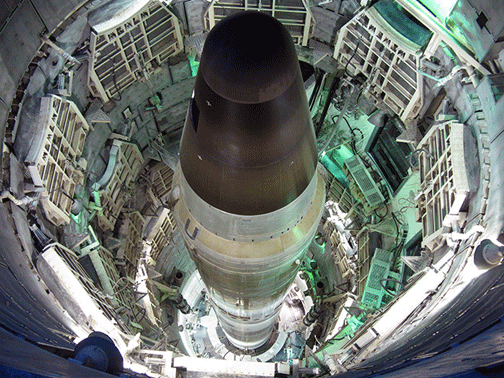
Amid Ukraine Tension, US Deploys Nuclear-Ready B-52 Bombers to UK “The West is trying to make a tragedy out of this,” said Russia’s foreign minister. Common Dreams, JULIA CONLEY February 11, 2022 Despite repeated warnings from Ukrainian President Volodymyr Zelensky that the U.S. is driving the rise of tensions at Ukraine’s eastern border, the U.S. Air Force has deployed four B-52 bombers with nuclear capabilities to the U.K., where one official acknowledged that the deployment is at least partially connected to Russia’s recent military activities.
Two B-52 Stratofortress aircrafts arrived at Royal Air Force Fairford on Thursday, with two more following. The bombers integrated with other NATO members’ forces en route to Fairford, according to the Air Force, including “British Typhoon aircraft and Portuguese F-16s currently assigned to NATO’s Icelandic Air Policing mission.”………
According to The Telegraph, a former British intelligence official noted that the Pentagon could launch air strikes from Fairford as it has before.
“From Fairford they could operate against a range of targets: troop concentrations in southern Russia and Belarus, Moscow/St. Petersburg, even the naval bases in the White Sea,” the former official told the outlet. “In 1991 they hit Baghdad from Fairford, flew on to Diego Garcia, refueled and rearmed, bombed Baghdad again on the way back, and returned to Fairford.”
The bombers sent from Minot Air Force Base in North Dakota are capable of carrying precision-guided and nuclear weapons…………………………….. https://www.commondreams.org/news/2022/02/11/amid-ukraine-tension-us-deploys-nuclear-ready-b-52-bombers-uk
Safety concerns as counterfeit parts found in U.S. nuclear reactors.

Counterfeit parts have been discovered in U.S. nuclear plants, potentially increasing the risk of a safety failure, the inspector general of the federal nuclear industry regulator said in a report released on Thursday.
The report is a blow to a U.S nuclear industry that has shrunk in recent years due to competition from renewable power and plants that burn natural gas and lingering public concerns following high-profile mishaps includinga 2011 tsunami at Japan’s Fukushima plant.
“Counterfeit parts are safety and security concerns that could have serious consequences in critical
power plant equipment required to perform a safety function,” the report from the inspector general’s office of the Nuclear Regulatory Commission
(NRC) said.
Reuters 10th Feb 2022
1 This Month
26 April – Chernobyl: Inside the Meltdown airs on National Geographic on Sunday 26th April from 4pm


29 April – Nuclear Expert Webinar #1 – Radiation Impacts on Families with Mary Olson and Cindy Folkers
- 12:15 PM MT – 1:45 PM MT
- Location: Virtual – REGISTER TODAY

4 May -West Suburban Peace Coalition to discuss Iran war at May Educational Forum
Monday, May 4, 7:00 – 8:00 PM Central Standard Time
Title: : How Trump’s Narrative Tries to Shape the Reality of the War on Iran.
Contact Walt Zlotow, zlotow@hotmail.com 630 442 3045 for further information
14 May – online event From Bombs to Data Centres: the Face of Nuclear Colonialism


Pine Ridge Uranium is the real threat, not Tehran- Tell Burgum: Stop the Extraction.
Chernobyl: The Lost Tapes – A good documentary on Chernobyl on SBS available On Demand for the next 3 weeks– https://www.sbs.com.au/ondemand/tv-program/chernobyl-the-lost-tapes/2352741955560
To see nuclear-related stories in greater depth and intensity – go to https://nuclearinformation.wordpress.com
-
Archives
- April 2026 (288)
- March 2026 (251)
- February 2026 (268)
- January 2026 (308)
- December 2025 (358)
- November 2025 (359)
- October 2025 (376)
- September 2025 (257)
- August 2025 (319)
- July 2025 (230)
- June 2025 (348)
- May 2025 (261)
-
Categories
- 1
- 1 NUCLEAR ISSUES
- business and costs
- climate change
- culture and arts
- ENERGY
- environment
- health
- history
- indigenous issues
- Legal
- marketing of nuclear
- media
- opposition to nuclear
- PERSONAL STORIES
- politics
- politics international
- Religion and ethics
- safety
- secrets,lies and civil liberties
- spinbuster
- technology
- Uranium
- wastes
- weapons and war
- Women
- 2 WORLD
- ACTION
- AFRICA
- Atrocities
- AUSTRALIA
- Christina's notes
- Christina's themes
- culture and arts
- Events
- Fuk 2022
- Fuk 2023
- Fukushima 2017
- Fukushima 2018
- fukushima 2019
- Fukushima 2020
- Fukushima 2021
- general
- global warming
- Humour (God we need it)
- Nuclear
- RARE EARTHS
- Reference
- resources – print
- Resources -audiovicual
- Weekly Newsletter
- World
- World Nuclear
- YouTube
-
RSS
Entries RSS
Comments RSS
 nuclear-news