Zero Contaminated Water” and “Dismantling of Reactor Buildings” Missing from the Plan: The Final Form of Decommissioning the TEPCO’s Fukushima Daiichi Nuclear Power Plant
February 11, 2022
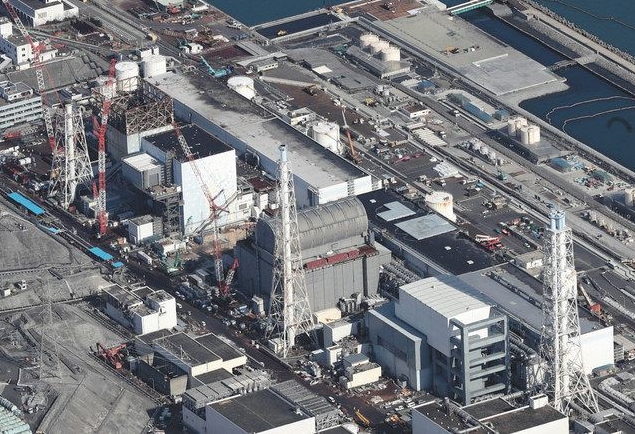
On March 11, it will be 11 years since the accident at TEPCO’s Fukushima Daiichi Nuclear Power Plant occurred. During this time, two goals have disappeared from the decommissioning plans of TEPCO and the government. During this time, two goals have disappeared from the decommissioning plans of TEPCO and the government: “zero generation of contaminated water” and “dismantling of reactor buildings. The core of decommissioning has been lost, and the goal of convergence work has yet to be drawn. (Kenta Onozawa)
Unable to stop inflow of groundwater as source of contamination
We want to proceed according to the schedule. We want to proceed as scheduled,” Akira Ono, chief executive officer of TEPCO’s Fukushima No. 1 Decommissioning Promotion Company, stressed at a press conference on January 27. The Nuclear Regulation Authority’s review of the plant’s facilities is scheduled to be conducted once a week, and is expected to be completed by the end of March.
In its initial decommissioning plan, TEPCO had set a goal of “zero generation of contaminated water. However, this goal disappeared when the plan was revised in 2019. Although the amount of contaminated water has been reduced to about one-third of what it was at the time of the accident, it is not known how the large amount of groundwater is flowing into the reactor buildings, the source of the contamination.
The frozen soil barrier, which was introduced to stop the inflow of groundwater, has not been proven to be effective. TEPCO did not respond to the request from the Regulatory Commission to show a direction to stop the water in the building, and continued to emphasize that the tanks would be full next spring, and the government decided to release the water into the ocean.
Once the release of treated water begins, there is no need for TEPCO and the government to hastily revive the goal of “zero contaminated water” because even if contaminated water continues to be generated, it can be purified and treated before being released. However, as long as contaminated water is not reduced to zero, the process of purification, storage, and release will continue endlessly.
Nuclear fuel removal technology and storage also face a difficult road.
What is even more unclear is what to do with the melted down nuclear fuel (debris) and the reactor building where it remains.
In a survey of the interior of the containment vessel of the Unit 1 reactor, a large amount of molten debris, which appeared to have solidified, was seen at the bottom of the vessel photographed by an underwater robot on August 9. It is likely to be debris, as it is close to the pressure vessel where the nuclear fuel was located.
Of the three reactors that suffered meltdowns, Unit 1 was the only one where the accumulation of debris could not be confirmed, and the detailed investigation using six different robots finally showed signs of progress.
However, the road to debris recovery is long and arduous. At the Unit 2 reactor, which will be the first to take out debris, trial collection is planned to start within 2010, but it will be limited to a few grams each by robots.
The total amount of debris, which is high-dose radioactive waste, is estimated to be 880 tons for the three reactors. The total amount of debris, or high-dose radioactive waste, is estimated to be 880 tons for the three reactors, and even if it takes 30 years to remove the debris, it will not be finished until 80 kilograms are removed each day. We do not have the technology to remove the entire amount of waste, nor do we have a concrete plan for how to store it in an environment where high radiation levels are a hindrance.
Decommissioning usually means clearing the land…
TEPCO and the government will maintain the plan to finish decommissioning the plant in 41-51 years, but the original plan to dismantle the reactor buildings disappeared in 2013. Decommissioning refers to the clearing of the land for normal nuclear power plants, but what is the status of Fukushima Daiichi?
The final decision on what to do will be made in consultation with the local government. Akira Ono, who is in charge of TEPCO’s decommissioning, once answered at a press conference. TEPCO and the government have yet to even consider the final form of decommissioning, with only the end date unchanged.
https://www.tokyo-np.co.jp/article/159484?rct=national&fbclid=IwAR2VVYtQA4iLWpvxMz_YXqCWzee3_uXLmJmR6yUaDYIrKJDdeezIIcr-lUE
No comments yet.
1 This Month

of the week – Shut Down Drone Warfare!


Tell the Ukrainian Government to Drop Prosecution of Peace Activist Yurii Sheliazhenko

Petition to revoke the licensing of the Near Surface Nuclear Disposal Facility (NSDF) at Chalk River. https://www.ourcommons.ca/petitions/en/Petition/Details?Petition=e-7247
To see nuclear-related stories in greater depth and intensity – go to https://nuclearinformation.wordpress.com
-
Archives
- March 2026 (251)
- February 2026 (268)
- January 2026 (308)
- December 2025 (358)
- November 2025 (359)
- October 2025 (376)
- September 2025 (257)
- August 2025 (319)
- July 2025 (230)
- June 2025 (348)
- May 2025 (261)
- April 2025 (305)
-
Categories
- 1
- 1 NUCLEAR ISSUES
- business and costs
- climate change
- culture and arts
- ENERGY
- environment
- health
- history
- indigenous issues
- Legal
- marketing of nuclear
- media
- opposition to nuclear
- PERSONAL STORIES
- politics
- politics international
- Religion and ethics
- safety
- secrets,lies and civil liberties
- spinbuster
- technology
- Uranium
- wastes
- weapons and war
- Women
- 2 WORLD
- ACTION
- AFRICA
- Atrocities
- AUSTRALIA
- Christina's notes
- Christina's themes
- culture and arts
- Events
- Fuk 2022
- Fuk 2023
- Fukushima 2017
- Fukushima 2018
- fukushima 2019
- Fukushima 2020
- Fukushima 2021
- general
- global warming
- Humour (God we need it)
- Nuclear
- RARE EARTHS
- Reference
- resources – print
- Resources -audiovicual
- Weekly Newsletter
- World
- World Nuclear
- YouTube
-
RSS
Entries RSS
Comments RSS
 nuclear-news
Leave a comment