Texas residents affected by New Mexico nuclear tests – radioactive fallout ignores state lines
Nuclear fallout ignores state lines: Lon Burnam and Istra Fuhrmann, https://www.elpasotimes.com/story/opinion/2022/01/07/nuclear-fallout-ignores-state-lines-lon-burnam-and-istra-fuhrmann/9122752002/ Early in the morning of July 16, 1945, native El Pasoan Barbara Kent was thrown out of her bunk bed at dance camp.
Just 13 years of age, she had traveled to Ruidoso, New Mexico, to learn ballet, unwittingly only a short distance from the site of the first nuclear weapons test. After the explosion awakened her, she says the camp owner came running in to tell the young girls to head outside, where the sky had turned from dark to blindingly bright.
Barbara Kent describes playing in pleasantly warm snow improbably falling in July, grabbing it in her hands and rubbing it on her face. Decades later, she realized that this “snow” had been radioactive fallout from the atomic blast. Today, she is the only survivor from the camp – all the other girls passed away from cancers before the age of 30.
El Paso is less than 150 miles from the epicenter of the nuclear bomb detonation known as the Trinity Test. While Kent happened to be in New Mexico that day, she was not the only Texan exposed to dangerous radiation levels. According to U.S. Census data, between 100,000-130,000 people lived in El Paso during the blast. Nuclear fallout from the explosion settled over thousands of square miles and exposed locals to radiation levels 10,000 times higher than what is currently allowed.
Unfortunately, many of our state’s lawmakers in Congress do not see radiation exposure as a Texas issue. They have not treated the problem with the urgency it is due. It’s time to acknowledge this historical wrong and compensate Texans and New Mexicans suffering from life-threatening illnesses due to nuclear weapons activities.
Congress has united in compensating nuclear testing survivors in the past. In 1990, Utah Senator Orrin Hatch introduced the Radiation Exposure Compensation Act (RECA), which received strong bipartisan support and was signed into law by President George H.W. Bush. Unless Congress acts, this compensation program is set to expire in July 2022. Making matters worse, Texas and New Mexico “downwinders” – locals exposed to nuclear fallout – have never been eligible.
Last month, communities affected by nuclear testing celebrated when the RECA Amendments Act of 2021 was overwhelmingly approved by the House Judiciary Committee. If passed into law, this bill will extend RECA by 19 years and allow New Mexican downwinders to claim compensation for the first time. Importantly, Texan downwinders just across the border are also pushing to be included.
Texas is currently covered in RECA as a uranium mining state that supplied material for America’s nuclear weapons arsenal. Uranium workers employed before 1971 who have developed radiation-related illnesses are eligible to receive a one-time RECA payment of $150,000. Many industry workers came from low-income Native and Hispanic communities and were never informed of deadly radiation exposure.
Greg Harman writes that “after 30 years of heavy [uranium] mining activity, cancer rates in Navajo Country began to shoot upward, doubling by the late ’90s.” RECA does not compensate post-1971 uranium miners, even though mining (and cancer cases) continued past this cutoff date. Texas contained the country’s third-largest uranium reserves and ranked second in the nation in drilling for uranium in 1971. As a result, many Texan uranium miners stand to benefit from the RECA extension, which expands eligibility to include workers in the industry post-1971.
We scored another victory when El Paso’s Congresswomen Veronica Escobar recently cosponsored the RECA Amendments Act. Now it’s time for Senators John Cornyn and Ted Cruz to cosponsor and endorse the Senate version. This bill ensures that compensation for Texan uranium miners will not expire this summer. Advocates from local groups like the Tularosa Basin Downwinders Consortium ask legislators to amend the bill’s language to include El Paso County.
Nuclear fallout does not respect state lines or dates on the calendar. Perhaps, in this case, neither should Congress. It is long past time to compensate Texans, New Mexicans, and downwinders of the 1945 Trinity Tests.
Concerns in New Mexico, about taking in out-of-state nuclear waste, as Waste Isolation Pilot Plant has limited space.
Waste Isolation Pilot Plant criticized for accepting out-of-state nuclear waste, Adrian Hedden, Carlsbad Current-Argus, 8 Jan 22, About 200 shipments of nuclear waste were sent to the Waste Isolation Pilot Plant repository near Carlsbad last year for disposal in an underground salt deposit, but New Mexico officials continued criticism that most of the shipments were coming from out of state.
Waste disposed of at WIPP is known as transuranic (TRU) nuclear waste, made up of clothing materials and equipment irradiated during nuclear activities at U.S. Department of Energy facilities across the nation.
TRU waste is shipped from Los Alamos National Laboratory (LANL) in northern New Mexico, but also from sites like Idaho National Laboratory in Idaho or Savannah River Site in North Carolina.
Of the 210 shipments recorded in 2021, per DOE records, 55 or 26 percent came from LANL. Another 21 came from Oak Ridge National Laboratory in Tennessee, eight came from Savannah River, two came from Lawrence Livermore National Laboratory in California and one came from Waste Control Specialists in Andrews, Texas.
The other 123 shipments, or about 58 percent of WIPP shipments last year were from Idaho National Laboratory, where research is conducted on nuclear reactors.
In total, 74 percent or about three quarters of WIPP’s shipments last year came from out of state.
The State of Idaho entered into a settlement agreement with the DOE in 1995 to prioritize waste shipments from its national laboratory to an out-of-state location: the WIPP site in New Mexico.
But that prioritization is a problem for New Mexico Rep. Christine Chandler (D-43).
Her district represents Los Alamos County, home to LANL, and Chandler said because New Mexico accepts the risk of the waste, its facilities that generate nuclear waste should be given top priority for disposal.
“I feel very strongly that since the WIPP is in New Mexico, and New Mexico accepts the risk for operating that plant that NM waste should be prioritized,” Chandler said. “That would mostly mean from LANL.
“They have a settlement with Idaho and so shipments from there are prioritized to the detriment of actual active sites like LANL.”……………………………..
Chandler’s concerns were echoed in a recent letter from NMED Cabinet Secretary James Kenney to the Government Accountability Office calling for federal oversight of DOE decisions related to the shipment priorities.
The Idaho settlement, Kenney argued, was entered without public input from New Mexicans who he said would bear the risk of disposal.
“The practice of DOE (Office of Emergency Management) solely managing waste shipments to WIPP from around the U.S. without first discussing with New Mexico stakeholders – including NMED as its regulator – now merits immediate congressional oversight,” Kenney wrote.
Other than pressuring federal regulators, Chandler said the State of New Mexico and lawmakers have little recourse to reprioritize disposal at WIPP to benefit their state.
“Truthfully, there is very little we can do. Most of the issues at Los Alamos are driven by federal law. Mostly, it’s placing pressure on the DOE to do the right thing for the state of New Mexico,” Chandler said.
“They need to recognize that LANL is the leading lab and it needs the Department’s full support in all things including clean up.”
Realigning shipment priorities could be achieved through the pending 10-year renewal of WIPP’s operating permit with NMED, said Don Hancock at Albuquerque-based watchdog group Southwest Research and Information Center.
He said regardless of priority for wastes from specific facilities, there is not enough room at WIPP for all the DOE’s waste and the federal government should develop alternate repositories.
WIPP is presently the nation’s only deep-geological repository that can dispose of nuclear waste off-site from where it is generated.
“The State of New Mexico now needs to be pushing on other approved repository sites to be permitted,” Hancock said. “They need to enforce the capacity limits. The DOE and Congress are going to have to start looking at alternatives.”………… https://www.currentargus.com/story/news/local/2022/01/07/wipp-criticized-accepting-out-state-nuclear-waste/9078220002/
UK: Blackburn and Darwen Council approving and old nuclear dump site for commercial development ?
A CONTROVERSIAL development site which residents and politicians fear is
above buried nuclear waste has been kept in the latest version of a
borough’s planning blueprint.
Blackburn with Darwen Council included the 94
acres of countryside near the M65’s Junction 5 in its draft local plan
published last year as suitable for employment uses.
But residents and WestPennine Tory councillor Julie Slater fear nuclear waste was dumped down old
mineshafts in the 1950s. Now following a consultation a new version of the
blueprint has been published and the the green belt land between Belthorn
and Guide remains earmarked as ideal for commercial and job-creating
development.
Lancashire Telegraph 7th Jan 2022
Fault found in France’s Chooz 2 nuclear reactor – its outage shutdown now extended
Chooz 2 nuclear reactor outage extended after fault discovered
Reuters PARIS, Jan 6 (Reuters) – The outage of the 1.5 gigawatt (GW) No.2 reactor at the Chooz nuclear power plant in northern France has been extended after an inspection found the same fault as at the Civaux plant in the west of the country, operator EDF (EDF.PA) said on Thursday.
The two plants were shut down in December after discovery of corrosion in a safety system at the Civaux plant. read more
The reactor outage was extended to Apr. 20 from the previous expected return date of Jan. 23.
| The repair solution is being investigated with the French nuclear safety authority ASN, EDF said, adding that inspections on the Chooz 1 reactor are still in progress…………French power grid operator RTE said in December that French nuclear capacity in January was expected to be at its lowest level ever for this time of year. read more ….Nuclear power accounts for about 70% of France’s electricity mix and the COVID-19 pandemic has delayed maintenance work on some nuclear reactors. https://www.reuters.com/business/energy/chooz-2-nuclear-reactor-outage-extended-after-fault-discovered-2022-01-06/ |
Emissions fromthe five major economies set to cause a doubling of extremely hot years in many nations
The emissions of five major economies over a 40-year period look set to
double the number of nations that will experience “extreme hot years”, new
research warns. A new scientific paper published today (6 January) in
Communications Earth and Environment from scientists at ETH Zurich and
Climate Analytics has examined the impacts of the emissions of China, the
US, the EU, India and Russia.
The emissions from these five economies
account for around 53% of global emissions. According to the study, the
emissions that will be emitted from these economies between 1991-2030 look
set to double the number of nations that will be exposed to increasingly
hot years. Under current emissions reductions targets, 92% of all countries
are expected to experience extreme hot years every second year by 2030,
which is twice the number of countries compared to removing emissions from
those five economies.
Edie 6th Jan 2022
Scotland very nearly reached goal of 100% renewable energy over 2020
Final figures released by the Scottish government show that the country
just missed out on reaching its goal of 100% of its energy consumption
being from renewables by 2020. In the year, the equivalent of 98.6% of
gross electricity consumption in Scotland was from renewable sources in
2020, up on the provisional figure of 97.4% released in May 2021.
Current 6th Jan 2022
Hunterston nuclear station shut down – then comes the long cleanup
A at the stroke of midday on Friday,
January 7, the North Ayrshire Hunterston B nuclear plant will be shut down with the simple push
of a button. In the high-security control room, director Paul Forrest will
step forward and trigger the end for one of Scotland’s last nuclear power
stations.
Environmental campaigners said the final shutdown of Hunterston B
– which started producing electricity 45 years and 11 months ago – was
“inevitable”. Lang Banks, the director of WWF Scotland, said the plant
had become “increasing unreliable”, arguing that growth in renewable
energy means nuclear power is no longer required.
Mr Banks said the “repeated failure to solve the problem of hundreds of cracks in the
graphite bricks surrounding the reactor core means the closure of
Hunterston B was inevitable”. He added: “Thankfully Scotland has
massively grown its renewable power-generating capacity, which means
we’ll no longer need the electricity from this increasingly unreliable
nuclear power plant. “As the expensive and hazardous job of cleaning up
the radioactive legacy Hunterston leaves in its wake now begins, Scotland
must press on with plans to harness more clean, renewable energy.”
STV 7th Jan 2022
UK’s Heysham nuclear plant to shut down two years earlier than planned
The Heysham 2 nuclear power station in Lancashire is set to shut down for
good two years earlier than planned following a new assessment. The power
station, the fuel for which is made at the Springfields factory at Salwick,
will now stop generating power in 2028. In 2016, the site’s operational
life was extended by seven years to 2030 as no new power station projects
were in the pipeline and nuclear is needed to maintain a steady base load
for the electricity grid.
Blackpool Gazette 9th Jan 2022
Updates: East versus West in battle for Kazakhstan — Anti-bellum
[Ed note; great place to be planning a new nuclear plant – NOT !!]
Anti-Bellum: John Bolton’s nightmare: 2,500 CSTO troops in Kazakhstan leads to restoration of Russian Empire, Soviet Union rising from its ashes Global Times: Rioting deescalates in Kazakhstan amid Russia-US wrangling: US smears Russian presence for fear of fading influence in Central Asia: expert The Hill: Article compares Kazakh crackdown to Tiananmen Square in 1989, says […]
Updates: East versus West in battle for Kazakhstan — Anti-bellum
The world must not fall for the fantasies of the nuclear and technology billionaires – theme for January 2022.

We have the example of Japan – its ”nuclear village” with towns locked in to an economy that depends on the nuclear industry, with its criminal connections and dependent on nuclear-linked subsidies from the government.
We have the example of Russia’s secret ‘‘sacrifice zones” where the population are both bribed and brainwashed into becoming hubs of deadly nuclear wastes.
Yet now -we are being subjected to global propaganda about the nuclear industry as the saviour of the planet!
The reality is:
- they want the gee-whiz non-existent ”new” nuclear reactors in order to keep the nuclear industry, and in particular, the nuclear weapons industry , going.
- they want to keep the ageing big nuclear reactors going so that they don’t have to deal with the shutting down and toxic wastes problems – that is so costly that it’s best to pass costs down to our great-grandchildren
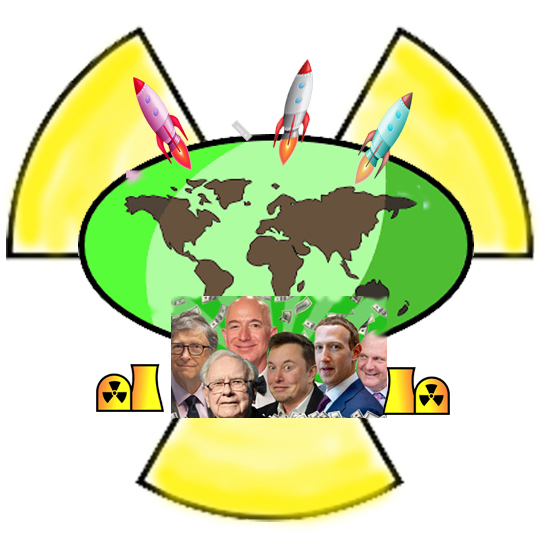
Meanwhile we are asked to believe in the spin of the new magicians – the technology billionaires – very clever people indeed, but lacking in all-round intelligence and wisdom.
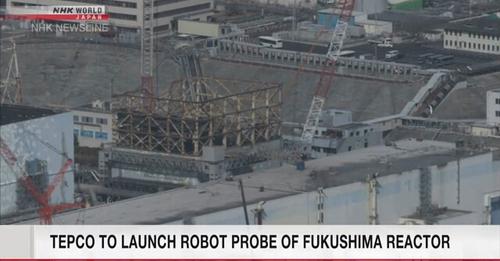
TEPCO to begin robot probe of Fukushima reactor
Jan. 6, 2022
The operator of the crippled Fukushima Daiichi Nuclear Power Station says it will launch a probe of the inside of the No.1 reactor on Wednesday using robots. The firm is seeking to clear debris from the reactor interior as part of the decommissioning process.
Tokyo Electric Power Company, or TEPCO, says the probe will involve six types of robots, each with a different function.
It says the survey will continue for more than six months. It will use ultrasonic devices to locate and measure the thickness of debris believed to be submerged under water inside the reactor containment vessel.
The utility says it also hopes to collect small samples of the debris.
TEPCO says it will use a robot to install a cover on a path for the survey machines to move smoothly under water.
The No.1, 2 and 3 reactors of the plant suffered meltdowns in the massive earthquake and tsunami of 2011.
TEPCO confirmed the existence of what is believed to be solid fuel debris inside the No.2 and 3 reactors, but not inside the No.1 reactor. The debris consists of molten nuclear fuel and metal parts.
Fukushima Daiichi Decontamination & Decommissioning Engineering Company, which was established by TEPCO, said on Thursday it will use the robots to gather information before considering how to remove the debris.
A warning against fetishizing nuclear power so it’s part of every solution

the enthusiasm overlooks some ugly truths about nuclear power.
Many alternative reactor designs are pitched as if they’re novel. They’re not. A good example is the Natrium reactor
The drawbacks of sodium technology should resonate especially loudly for Californians.
The 1959 explosion of a sodium-cooled test reactor at the government’s secretive Santa Susana Field Laboratory outside Simi Valley remains the worst nuclear accident in U.S. history
Today’s younger environmental activists may be more inclined to accept these promises today because their thinking wasn’t forged in the anti-nuclear protests of the 1960s and 1970s, as was that of their older colleagues.
The danger is that they, and society, may have to learn the harsh lessons of nuclear power’s past all over again.
Nuclear energy backers say it’s vital for the fight against global warming. Don’t be so sure, Los Angeles Times, BY MICHAEL HILTZIKBUSINESS COLUMNIST , JAN. 6, 2022
No one would have believed this possible only a few years ago, but nuclear energy has been creeping up in public estimation, despite its long record of unfulfilled promise and cataclysmic missteps.
The impetus has come from government and big business, among other sources.
Billions of dollars in incentives to keep existing nuclear plants operating and to get new nuclear technologies off the drawing board were enacted as part of the $1.2-trillion infrastructure bill signed late last year by President Biden.
You don’t compromise safety to keep a nuclear plant open so you can meet a carbon target—you need to have minimum, stringent safety standards. – EDWIN LYMAN, UNION OF CONCERNED SCIENTISTS……………

Some celebrity entrepreneurs have weighed in, without demonstrating that they have given the issue the thorough consideration it deserves. Elon Musk last month tweeted that “unless susceptible to extreme natural disasters, nuclear power plants should not be shut down.”Musk didn’t, however, define “extreme natural disasters” or mention the myriad other reasons that a plant might need to be shuttered, such as advanced age, upside-down economics or dangers in its own design or operation……………..
the enthusiasm overlooks some ugly truths about nuclear power.
The history of nuclear power in America is one of rushed and slipshod engineering, unwarranted assurances of public safety, political influence and financial chicanery, inept and duplicitous regulators, and mismanagement on a grand scale.
Many of the problems originated in the government’s decision to place the technology in the hands of the utility industry, which was ill-equipped to handle anything so complicated.
This record accounts for the technology’s deplorable public reputation, which has made it almost impossible to build a new nuclear plant in the U.S. for decades. Forgetting the history threatens to stage the same drama over again.
The debate over the nuclear power future is really two separate debates.
First, there are the optimistic expectations raised by alternatives to the design of the 93 reactors currently in operation in the U.S. — reactors in which a radioactive core heats water, producing steam to drive electricity-generating turbines.
Then there’s the question of what to do with the existing reactors, many of which have lasted well beyond their design lives. Only 28 of these have remained “competitive” — that is, economically viable — according to energy expert Amory Lovins.

That existing fleet includes Diablo Canyon, whose owner, PG&E, said the plant was facing an unprofitable future when it made the decision to abandon plans to seek a permit renewal from the Nuclear Regulatory Commission.
Many alternative reactor designs are pitched as if they’re novel. They’re not. A good example is the Natrium reactor, which is cooled not by water but liquid sodium and is being promoted by TerraPower, a firm founded by Microsoft billionaire Bill Gates.
Far from an advanced new technology, sodium-cooled reactors date from the very dawn of the nuclear power age. They were considered as an alternative to water-cooled reactors for submarine power plants, for example, by Adm. Hyman Rickover, the founder of America’s nuclear navy.
Rickover, whose rigorous standards for technology and crew training made the nuclear navy a success, ordered a prototype sodium reactor for the submarine Seawolf. Almost instantly, the technology demonstrated its flaws.
While the Seawolf was still at the dock, the reactor sprung a leak. “It took us three months, working 24 hours a day, to locate and correct” the leak, Rickover told a congressional committee in 1957.
Rickover abandoned any thought of using the reactors in his submarines, finding them “expensive to build, complex to operate, susceptible to prolonged shut down as a result of even minor malfunctions, and difficult and time-consuming to repair,” as he advised his Navy superiors and technical experts at the Atomic Energy Commission in late 1956 and early 1957.
The drawbacks of sodium technology should resonate especially loudly for Californians.
The 1959 explosion of a sodium-cooled test reactor at the government’s secretive Santa Susana Field Laboratory outside Simi Valley remains the worst nuclear accident in U.S. history, venting an immense amount of radioactivity into the air and creating what former California EPA Director Jared Blumenfeld called “one of the most toxic sites in the United States by any kind of definition.”

The three entities controlling portions of the site — Boeing Co., the U.S. Department of Energy and NASA — reached agreements with the state in 2007 and 2010 binding them to restore the site to “background” standards. Much of the work still hasn’t begun.
“There’s been a kind of cult that’s been trying to keep this technology alive for decades” despite persistent evidence of its inadequate reliability or sustainability, says Edwin Lyman, director of nuclear power safety at the Union of Concerned Scientists and the author of a report challenging safety and efficiency claims made for Natrium, among other alternative technologies.
“Pretty effective lobbyists” push the idea that “this is somehow a breakthrough technology that’s going to transform nuclear power,” Lyman said of sodium-cooled reactors.
“History tells us that it’s not a very reliable source of power and has a number of safety and security disadvantages that make one wonder why there’s such enthusiasm for it,” he said. None of the other alternatives, he adds, solve the most pressing problem of nuclear power: what to do with the radioactive waste produced by every plant.
………. TerraPower’s utility partner, PacifiCorp, a unit of Berkshire Hathaway (the conglomerate controlled by Warren Buffett), which is to take over the project once it’s operational, has no experience running a nuclear plant.
In any case, the Natrium reactor won’t become operational until 2028 at the earliest. That’s a deadline imposed by the government’s Advanced Reactor Demonstration Program, which is providing some of the funding…….
He cautions against “fetishizing nuclear power so it’s part of every solution.” His view is “you don’t compromise safety to keep a nuclear plant open so you can meet a carbon target — you need to have minimum, stringent safety standards.”
By that measure, there’s hardly any doubt that Diablo Canyon should be shut down, and the sooner the better.
The plant’s history makes that case…………………………………………….
The danger is that claims for the future of nuclear energy — that it will be a cheap and efficient path to a carbon-free future — will be as illusory as those of the past, when nuclear power was also promoted as safe and “too cheap to meter.”
Today’s younger environmental activists may be more inclined to accept these promises today because their thinking wasn’t forged in the anti-nuclear protests of the 1960s and 1970s, as was that of their older colleagues. The danger is that they, and society, may have to learn the harsh lessons of nuclear power’s past all over again. https://www.latimes.com/business/story/2022-01-06/column-nuclear-energy-backers-say-its-vital-for-the-fight-against-global-warming-dont-believe-them?fbclid=IwAR015ej03ZDoUA2kcNoc_mAqJS3D2N8T
Extraditing Julian Assange Threatens Journalists Worldwide

In countries where the press faces restriction and persecution, US interference sets a dangerous precedent. The Nation, By Hasan Ali January 2022
On December 14, while addressing the Foreign Relations Committee of the United States Senate, the ambassador-designate to Pakistan, Donald Armin Blome, pledged that he would champion the press in his new post. “Pakistani journalists and members of civil society face kidnappings, assaults, intimidation and disappearances,” he said, promising to advocate for expanded protections and to hold the perpetrators of these actions to account.
As a Pakistani journalist myself, I ought to have been relieved. In spite of all the talk of its impending decline, the United States remains the world’s preeminent superpower, and you would think that an incoming ambassador throwing his weight behind the media would augur better days for our embattled fraternity. Instead, I cannot help but question his moral authority to lecture anyone in the world on the issue of press freedom. Three successive administrations of the country he represents have mercilessly gone after Julian Assange, the long-tortured founder and publisher of Wikileaks, whom the United States government is trying to place in the dock on trumped-up charges of incitement and espionage.
On December 10—just four days before Blome made his speech—a British court ruled that Assange could be extradited to the United States to stand trial, where he faces a maximum sentence of 175 years’ imprisonment.
We have already read in these pages about the impact such a prosecution would have on the First Amendment. Let us now widen the net and examine what it will do to those of us who work outside the glittering republic. In Pakistan, the perils of telling the truth have never been greater. Scores of journalists—a handful of them spoke to The Nation in August—have been targeted because the state did not approve of their work. Indeed, so brazen has been this policy of intimidation that in the same week that this magazine published its report, the brother of one of the journalists profiled was abducted in broad daylight from the streets of Lahore.
The story is not very different beyond Pakistan’s borders either. In our neighbor to the east, India, which is supposed to be the world’s largest democracy, journalists are routinely charged with sedition and incitement, or else beaten and tortured for writing the wrong tweet. In Afghanistan, ever since the Taliban took control, hundreds if not thousands of reporters have fled, with the Afghan Journalists Safety Committee estimating that some 70 percent of the country’s news outlets have ceased operations. Then there is Iran, our Western neighbor, where female journalists are banned for blowing the whistle on workplace harassment, locked up for publishing material that is deemed irreligious, and murdered for taking photographs of public protests. Finally, there is China, with whom we share a border to the northeast. It ranks 177 of the 180 on the World Press Freedom Index and has become even more repressive in the wake of Covid 19.
Which returns us to the case of Assange, who is being punished for publishing documents that prove that the United States committed war crimes in Afghanistan and Iraq. Daniel Bastard, Asia-Pacific director of Reporters Without Borders, says, “The way the US has been treating Julian Assange is clearly giving a blank cheque to authoritarian governments around the world to crack down on press freedom and force into silence journalists and information providers who displease them.” His view is shared by his colleague Rebecca Vincent, who argues that the persecution of Assange will undermine US efforts to promote the cause of press freedom internationally. “If the Biden administration is serious about its commitment to media freedom, they would lead by example and end this more than decade-long persecution now.”………….
Sadly, what we have witnessed in the first 11 months of Biden’s premiership is a continuation of the same policy positions that left critics of the previous administration convulsing with anger. The United States continues to sell arms to Saudi Arabia; leaders of countries with which it has important strategic partnerships—Abdel Fatah el-Sisi and Volodomyr Zelensky, to name a couple—are being allowed to punish those who would hold them to account; and the preeminent chronicler of American atrocity, Julian Assange, is being tormented for doing what any courageous reporter with access to the same information would have done in a heartbeat………..
If the United States were to free Assange, it would send a powerful message to the political establishment of repressive regimes around the world that the US has ceased to believe that journalism is a crime.
Otherwise, things will carry on as they are. My colleagues will continue to be abducted in broad daylight; many will return to tell the tale to police officers who won’t register their complaints out of fear; some, like Mudassar Naaru, will disappear altogether. Others, like Saleem Shahzad, will be found dead in a ditch.
And all the while, the likes of Donald Blome will find themselves in drawing rooms with unscrupulous leaders who will earnestly nod their heads while listening to sermons on press freedom, without ever really feeling under pressure to change their ways. https://www.thenation.com/article/society/assange-extradition-journalism/witter
To preserve the planet, we must reduce our consumption of resources.

To save the planet, the degrowth movement calls not for us to sacrifice prosperity, but to redefine it. UNDARK, BY PETER SUTORIS 12.30.2021 THE GLOBAL CONVERSATION about climate change has revolved largely around a single, misguided idea: that we can replace carbon-intensive technologies with cleaner ones and reach the goal of net zero greenhouse gas emissions without fundamentally altering our economy. In other words, that we can achieve, and indefinitely maintain, green growth.
But a competing narrative argues that infinite growth on a finite planet is impossible, and that even supposedly green technologies will perpetuate the extraction of natural resources and the destruction of the natural environment. Even if these technologies help us mitigate climate change to an extent, they might backfire, for example, by disrupting biodiversity. In this narrative, the underlying problem lies not in the so-called cleanliness of our technologies but in our compulsion to keep growing our economies.
Proponents of this second view argue that to preserve the planet, we must reduce our consumption of resources, a strategy that has come to be known as degrowth. This approach calls for us to shrink parts of our economy, and to move away from measures such as gross domestic product as indicators of economic health…………
Degrowth doesn’t imply a radical decline in living standards, as some commentators have suggested, nor does it mean that poor people would become even poorer. This is because degrowth calls not only for reducing the extraction of resources but also for distributing those resources more equitably. Neither does degrowth mean that all sectors of the economy would shrink; sectors less dependent on resource extraction, such as education and health care, could keep expanding.
But even more importantly, degrowth is too often portrayed merely as an economic idea when it is, in fact, just as much a cultural notion. The culture of degrowth calls for us to view ourselves as stewards of the planet. It pushes us to recognize that our relationship with the natural environment is a two-way street — that we must take care of nature if we want nature to take care of us. And it calls for us to respect our planet’s limits, to look out for other species, and to recognize that our own fate is tied up with the health of the ecosystems we inhabit.
A culture of degrowth sees justice as intergenerational, and respects the rights of the world’s future inhabitants.
What would it take for society to embrace degrowth as a new cultural paradigm?
We can start by questioning the underlying ideologies that have enabled our economic system for decades, including extractivism, the idea that the earth is ours to exploit, and speciesism, the idea that human beings are morally superior to all other species, which fuels the widespread belief that non-human species are essentially disposable…………..
our current global system of infinite growth didn’t emerge by chance. It was partly an outgrowth of cultural forces that took hold in the post-World War II era: a revolution in advertising, media coverage that stressed the benefits of capitalism and globalization, and a drumbeat of Hollywood films depicting material wealth as the symbol of success.
Similar forces could be marshalled to drive a cultural shift toward degrowth…………..

Education is another space that shapes culture. Many of the world’s education systems are currently focussed on churning out productive workers who can keep the infinite-growth economy spinning. Even at so-called elite educational institutions, critical thinking too often equates with problem solving for infinite growth. Our education systems — currently preoccupied with STEM subjects, and with imparting technology skills demanded by corporate employers — must place greater emphasis on creativity, imagination, and political engagement. We need to be able to imagine alternative futures before we can bring them into being, and degrowth is no exception…………
Ultimately, degrowth is inevitable. We will either choose this path voluntarily, or we will be forced into it violently and uncontrollably as a result of environmental disasters. If we want to prevent the suffering and tragedies that accompany such drastic shifts, we must bring about a culture of degrowth. And where the cultural winds blow, the political winds will follow.
Peter Sutoris, Ph.D., is an environmental anthropologist based at University College London, and the author of “Visions of Development” (Oxford University Press) and the forthcoming “Educating for the Anthropocene” (The MIT Press). More about his research can be found at www.petersutoris.com and he tweets @PSutoris. https://undark.org/2021/12/30/degrowth-isnt-just-about-the-economy-its-about-culture/
Nuclear is not a practicable means to combat climate change.

“Nuclear is just not part of any feasible strategy that could counter climate change.”
Communiqué – Statement: Former Heads of Nuclear Regulation and Governmental Radiation Protection Committees: Nuclear is not a Practicable Means to Combat Climate Change. Nuclear Consulting Group 6th Jan 2022 www.ccnr.org/nuclear_climate_change_2022.pdf
Dr. Greg Jaczko, former Chairman of the U.S. Nuclear Regulatory Commission.
Prof. Wolfgang Renneberg, former Head of the Reactor Safety, Radiation Protection and Nuclear Waste, Federal Environment Ministry, Germany.
Dr. Bernard Laponche, former Director General, French Agency for Energy Management, former Advisor to French Minister of Environment, Energy and Nuclear Safety.
Dr. Paul Dorfman, former Secretary UK Govt. Committee Examining Radiation Risk from Internal
Emitters.
The climate is running hot. Evolving knowledge of climate sensitivity and polar ice melt-rate makes clear that sea-level rise is ramping, along with destructive storm, storm surge, severe precipitation and flooding, not forgetting wildfire. With mounting concern and recognition over the speed and pace of the low carbon energy transition that’s needed, nuclear has been reframed as a partial response to the threat of global heating. But at the heart of this are questions about whether nuclear could help with the climate crisis, whether nuclear is economically viable, what are the consequences of nuclear accidents, what to do with the waste, and whether there’s a place for nuclear within the swiftly expanding renewable energy evolution.
As key experts who have worked on the front-line of the nuclear issue, we’ve all involved at the highest governmental nuclear regulatory and radiation protection levels in the US, Germany, France and UK. In this context, we consider it our collective responsibility to comment on the main issue: Whether nuclear could play a significant role as a strategy against climate change.
The central message, repeated again and again, that a new generation of nuclear will be clean, safe, smart and cheap, is fiction. The reality is nuclear is neither clean, safe or smart; but a very complex technology with the potential to cause significant harm. Nuclear isn’t cheap, but extremely costly. Perhaps most importantly nuclear is just not part of any feasible strategy that could counter climate change. To make a relevant contribution to global power generation, up to more than ten thousand new reactors would be required, depending on reactor design.
In short, nuclear as strategy against climate change is:
• Too costly in absolute terms to make a relevant contribution to global power production
• More expensive than renewable energy in terms of energy production and CO2 mitigation, even taking into account costs of grid management tools like energy storage associated with renewables roll-out.
• Too costly and risky for financial market investment, and therefore dependent on very large public subsidies and loan guarantees.
• Unsustainable due to the unresolved problem of very long-lived radioactive waste.
• Financially unsustainable as no economic institution is prepared to insure against the full potential cost, environmental and human impacts of accidental radiation release – with the majority of those very significant costs being borne by the public.
• Militarily hazardous since newly promoted reactor designs increase the risk of nuclear weapons proliferation.
• Inherently risky due to unavoidable cascading accidents from human error, internal faults, and external impacts; vulnerability to climate-driven sea-level rise, storm, storm surge, inundation and flooding hazard, resulting in international economic impacts.
• Subject to too many unresolved technical and safety problems associated with newer unproven concepts, including ‘Advanced’ and Small Modular Reactors (SMRs).
• Too unwieldy and complex to create an efficient industrial regime for reactor construction and operation processes within the intended build-time and scope needed for climate change mitigation.
• Unlikely to make a relevant contribution to necessary climate change mitigation needed by the 2030’s due to nuclear’s impracticably lengthy development and construction time-lines, and the overwhelming construction costs of the very great volume of reactors that would be needed to make a difference.
1 This Month
26 April – Chernobyl: Inside the Meltdown airs on National Geographic on Sunday 26th April from 4pm

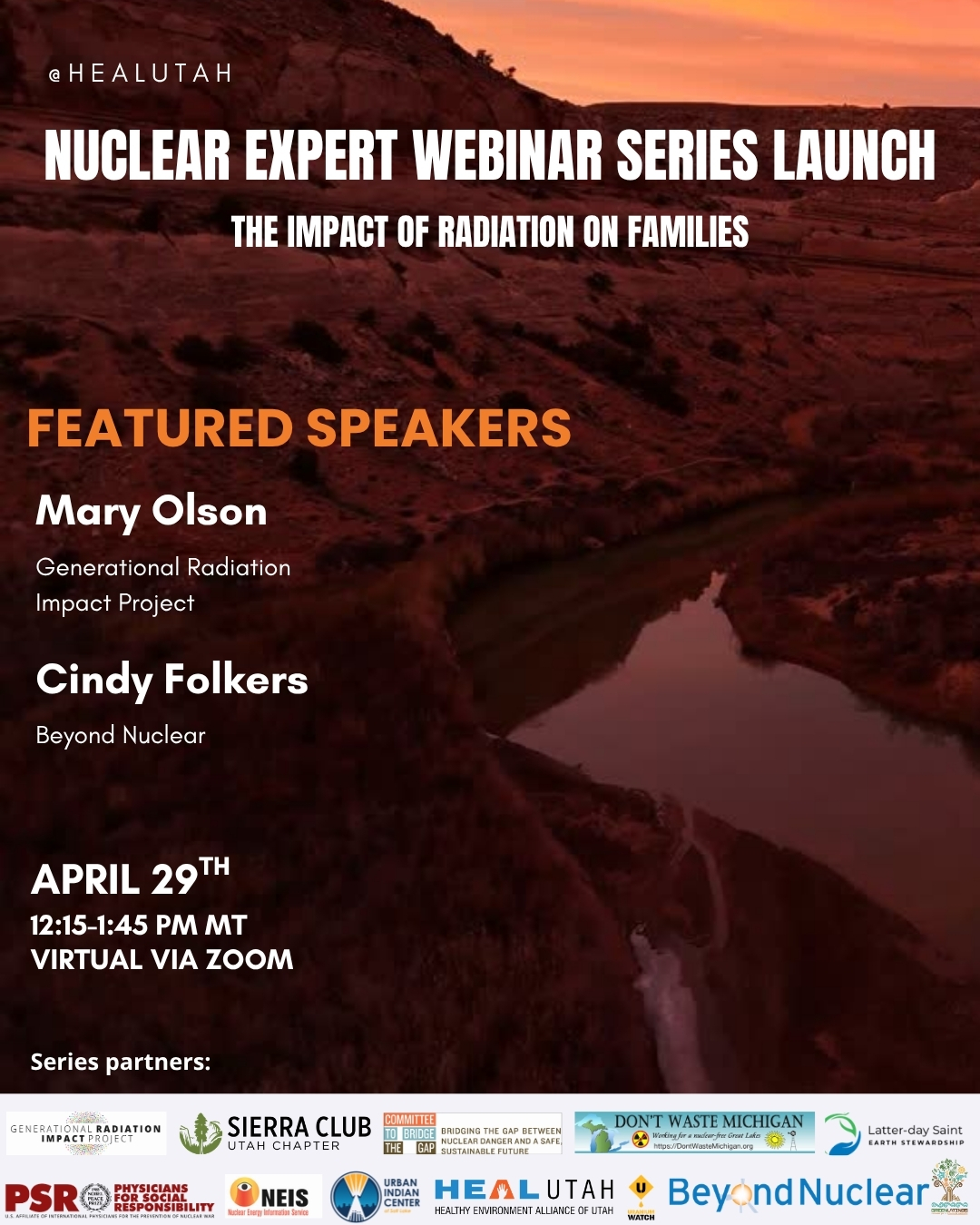
29 April – Nuclear Expert Webinar #1 – Radiation Impacts on Families with Mary Olson and Cindy Folkers
- 12:15 PM MT – 1:45 PM MT
- Location: Virtual – REGISTER TODAY

4 May -West Suburban Peace Coalition to discuss Iran war at May Educational Forum
Monday, May 4, 7:00 – 8:00 PM Central Standard Time
Title: : How Trump’s Narrative Tries to Shape the Reality of the War on Iran.
Contact Walt Zlotow, zlotow@hotmail.com 630 442 3045 for further information
14 May – online event From Bombs to Data Centres: the Face of Nuclear Colonialism

Pine Ridge Uranium is the real threat, not Tehran- Tell Burgum: Stop the Extraction.
Chernobyl: The Lost Tapes – A good documentary on Chernobyl on SBS available On Demand for the next 3 weeks– https://www.sbs.com.au/ondemand/tv-program/chernobyl-the-lost-tapes/2352741955560
To see nuclear-related stories in greater depth and intensity – go to https://nuclearinformation.wordpress.com
-
Archives
- April 2026 (327)
- March 2026 (251)
- February 2026 (268)
- January 2026 (308)
- December 2025 (358)
- November 2025 (359)
- October 2025 (376)
- September 2025 (257)
- August 2025 (319)
- July 2025 (230)
- June 2025 (348)
- May 2025 (261)
-
Categories
- 1
- 1 NUCLEAR ISSUES
- business and costs
- climate change
- culture and arts
- ENERGY
- environment
- health
- history
- indigenous issues
- Legal
- marketing of nuclear
- media
- opposition to nuclear
- PERSONAL STORIES
- politics
- politics international
- Religion and ethics
- safety
- secrets,lies and civil liberties
- spinbuster
- technology
- Uranium
- wastes
- weapons and war
- Women
- 2 WORLD
- ACTION
- AFRICA
- Atrocities
- AUSTRALIA
- Christina's notes
- Christina's themes
- culture and arts
- Events
- Fuk 2022
- Fuk 2023
- Fukushima 2017
- Fukushima 2018
- fukushima 2019
- Fukushima 2020
- Fukushima 2021
- general
- global warming
- Humour (God we need it)
- Nuclear
- RARE EARTHS
- Reference
- resources – print
- Resources -audiovicual
- Weekly Newsletter
- World
- World Nuclear
- YouTube
-
RSS
Entries RSS
Comments RSS
 nuclear-news