Drones sighted over Sweden’s nuclear power stations

Days of sightings of drones over key Swedish sites including nuclear plants have prompted the country’s security service to take the lead in an investigation. Three nuclear sites have been targeted and sightings have been reported over airports and the royal palace. Authorities have not speculated on who is behind the mysterious drones. Police and the coastguard are searching the sea and islands around Stockholm, local media reports say.
The latest sightings on Monday evening involved a drone above the Forsmark nuclear plant, but security agency Sapo said it was also investigating earlier drone flights near the Ringhals and Oskarshamn power
plants. Police appealed to the public to come forward with information. Sapo said the drones were suspected of “grave unauthorised dealing with secret information”.
BBC 18th Jan 2022
https://www.bbc.co.uk/news/world-europe-60035446
Australia-UK talks – all about nuclear submarines and military co-operation against China.

Nuclear submarines and closer interaction with British military to dominate Australian talks with UK, ABC, By defence correspondent Andrew Greene Closer military cooperation and possible basing of British defence assets in Australia will be discussed when ministers from both nations hold long-awaited face-to-face talks in Sydney this week.
Key points:
- British and Australian ministers will discuss the nuclear submarine deal and emerging security threats
- This will be the countries’ first in-person AUKMIN meeting since before the pandemic
- Scott Morrison will host the British ministers at Kirribilli House ahead of the talks
The British foreign and defence secretaries are due to arrive on Thursday ahead of their formal AUKMIN talks with their Australian counterparts on Friday.
This year’s Australia–United Kingdom Ministerial Consultations is expected to be dominated by the recent AUKUS nuclear submarine deal, as well as growing concerns over China’s power in the Indo-Pacific. ……………………….. https://www.abc.net.au/news/2022-01-19/nuclear-submarines-dominate-australia-uk-talks/100765474
Taiwan’s KMT says public health most important when considering Fukushima food imports
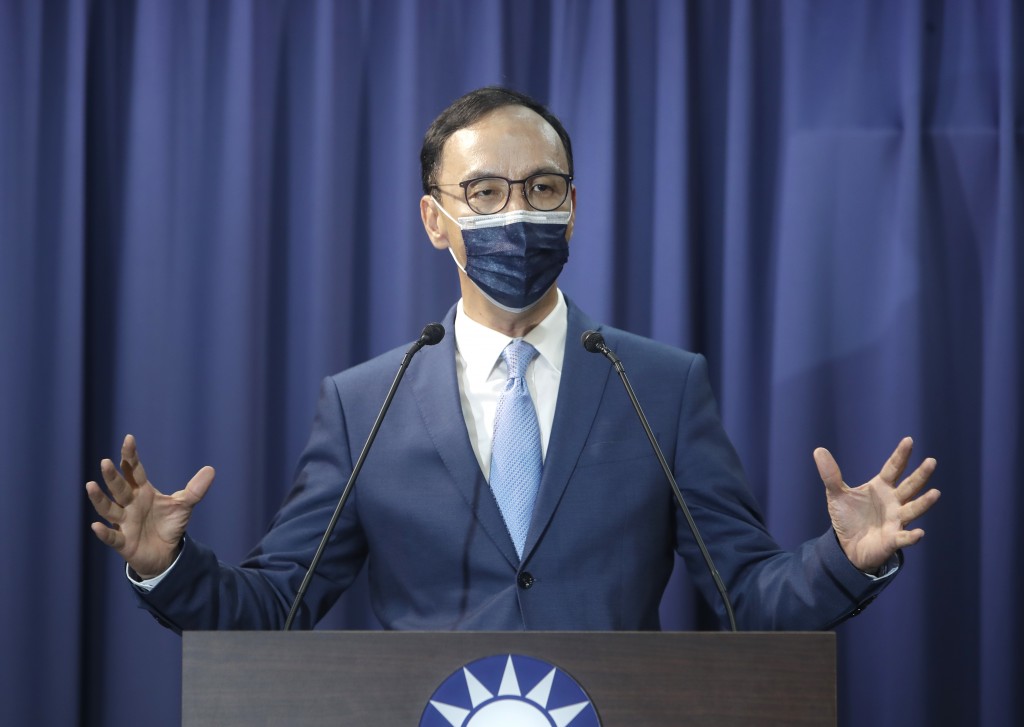
KMT Chairman Eric Chu says party gathering data to ‘defend the health of Taiwanese’
2022/01/16
TAIPEI (Taiwan News) — Kuomintang (KMT) Chairman Eric Chu (朱立倫) on Saturday (Jan. 15) commented on the issue of importing food products from Fukushima, Japan, saying the party prioritizes the health of Taiwanese.
China Broadcasting Chair Chao Shao-kang (趙少康) recently stated he could not believe the KMT had released a press release saying that “as long as Japan can guarantee the safety of food imported to Taiwan, the KMT will agree to import nuclear food from Japan.” “I almost fainted when I read it,” Chao said.
In response to his remark, Chu said in a media interview that the KMT is “absolutely 100% opposed” to anything that harms the health of Taiwanese and that the party must stand with the public, CNA reported.
He said that if the Democratic Progressive Party is promoting imported Fukushima food products in pursuit of political interests, the KMT will never approve of this.
The KMT Central Committee, KMT-led local governments, and party think tanks will join together to collect scientific evidence and data to “defend the people’s health,” Chu added.
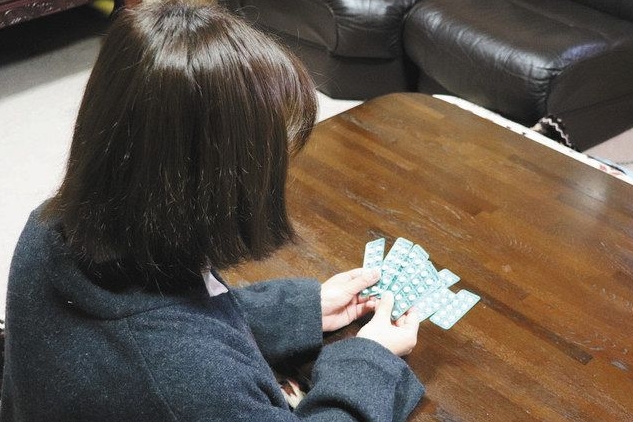
Six people who were children at the time of the accident are suing TEPCO, claiming that they developed thyroid cancer due to exposure to radiation from the Fukushima Daiichi Nuclear Power Plant accident.
January 19, 2022
Six men and women between the ages of 17 and 27 who were living in Fukushima Prefecture at the time of the accident filed a lawsuit against TEPCO on January 27, claiming that they developed thyroid cancer due to radiation exposure caused by the accident at TEPCO’s Fukushima Daiichi Nuclear Power Plant. On April 27, six men and women aged 17 to 27 who were living in Fukushima Prefecture at the time of the accident filed a lawsuit against TEPCO in the Tokyo District Court, seeking a total of 616 million yen in damages. According to the lawyers, this is the first time that patients who developed thyroid cancer as children are suing TEPCO because of the nuclear accident. (Natsuko Katayama)
Defense: “We can’t think of any cause other than radiation exposure.
The lawsuit is filed by four people who lived in Fukushima City and Koriyama City, and one each in the Aizu region in the western part of the prefecture and the Hamadori region in the eastern part of the prefecture. They were between the ages of 6 and 16 at the time of the accident, and are now high school students or working as office workers or part-time employees in the prefecture or in Tokyo.
Two have had one side of their thyroid gland removed, four have had total thyroidectomy due to recurrence, and are undergoing or planning to undergo radiation therapy. Some have had four operations and others have metastasized to the lungs. Some have had four surgeries and others have had their lungs metastasized. The treatments and surgeries have forced them to give up their desired jobs, drop out of college, or retire. They are not only worried about relapse, but also about whether they will be able to get married or have children.
The lawyers argued that most of the thyroid cancers found in the children, including the six, were papillary cancers, which were confirmed in children and young adults after the Chernobyl nuclear accident, and that they were not hereditary and could not be caused by anything other than radiation exposure. Kenichi Ido, the head of the legal team, said, “Many of the cancers have recurred, so it is hard to imagine overdiagnosis. TEPCO should admit that the cause of the cancer was the nuclear accident and provide relief as soon as possible.
The expert panel’s position is that a causal relationship cannot be established.
With regard to the causal relationship between exposure to radiation from the nuclear power plant accident and thyroid cancer, the Fukushima prefectural government’s expert panel has taken the position that “no causal relationship can be recognized at this time.
Since the nuclear accident, the prefecture has been conducting tests for thyroid cancer as a part of the prefectural health survey for a total of about 380,000 people who were under the age of 18 at the time of the accident and who were born before April 1, 2012 (including those who evacuated from the prefecture).
Normally, the incidence of pediatric thyroid cancer is estimated to be about one to two cases per one million people per year, but according to the survey and other findings, by June last year, about 300 people had developed thyroid cancer or thyroid cancer-related diseases. By June last year, however, about 300 people had been diagnosed with thyroid cancer or suspected of having thyroid cancer. All the medical expenses are covered by the “Prefectural Health Care Fund” established with financial support from the government and compensation from TEPCO.
The expert panel is continuing to investigate the results of the diagnoses, saying, “It has been pointed out that there is a possibility of over-diagnosis, finding cancers that do not need treatment in the future.
https://www.tokyo-np.co.jp/article/154959?fbclid=IwAR06xqKA6vo3utW1-lfN3PIkFiBnS20b6BMD1WAXyzUo5yJKMzU3KU5elGs
Fukushima Daiichi Hit By Tsunami
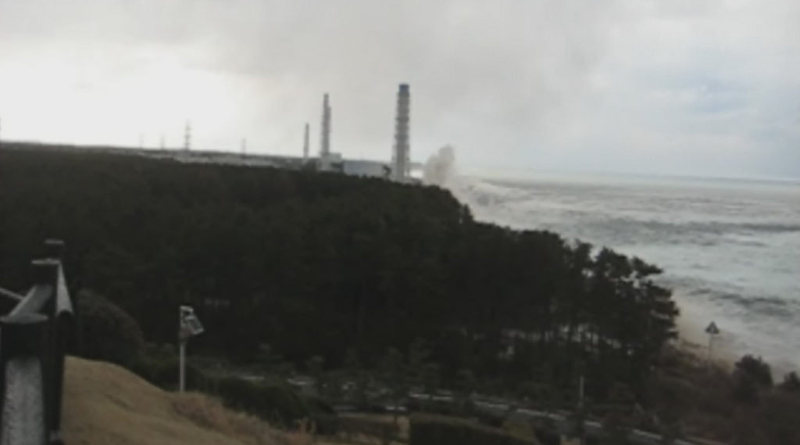
Japan has lifted all tsunami advisories and warnings.
Japan has reduced one of the tsunami warnings, left one in place, and left the alerts for the entire south and east coasts in force. The Japan Meteorological Agency told people to remain vigilant and not return to low coastal areas. The JMA representative mentioned they do not know the exact mechanism that created the tsunami waves and they don’t know if the danger has passed.
Japan’s nuclear regulator and TEPCO have not released any information about conditions at Daiichi or any of the other coastal nuclear power plants in Japan. Another relevant concern is the large piles of contaminated soil bags that have been stored along the Fukushima coast on beaches and along low-lying areas of river banks near the coast. The inundation levels could put these bags at risk of being swept out to sea.
NHK TV reported that Onahama Port, near Fukushima Daiichi received increasing tsunami waves from the Tonga volcano explosion.
The waves in some areas around the Fukushima coast and Tohoku region reached 1 meter in height while Onahama port were at 70cm and continued to increase.
The existing defenses at Daiichi should have been sufficient to handle the wave inundation but there was equipment in the port that remained unprotected and a few low lying sea front
areas that could have been vulnerable.
TEPCO on January 17 has released some initial reporting on damage at Fukushima Daiichi.
The seafront water intake equipment for units 5 & 6 remained functional as did some equipment related to the sub-drain sump pump system around units 1-4. Visual inspection of silt fences on the port openings indicated they were intact. Certain silt fences are now scheduled to be pulled up and inspected further. TEPCO noted that the MegaFloat that is still housed in the port was undamaged. This was relocated and tethered in a more sheltered portion of the port a few years ago when it was identified as a risk in the event of a tsunami. TEPCO did not mention the condition of a construction rig in the port conducting initial work for the contaminated water discharge pipe.
TEPCO typically releases information from an initial visual walk down after a major event. Subsequent reports may identify more damage as they look further.
TEPCO report in Japanese.
https://www.tepco.co.jp/decommission/information/newsrelease/reference/pdf/2022/1h/rf_20220117_4.pdf
New ‘cool’ pro nuclear propaganda ignores plutonium danger – theme for February 22
The new pro nuclear shills are young, feminine, cool, and disastrously ignorant about radioactivity and nuclear wastes.

Why do we let them keep on making this toxic radioactive trash?
On Cape Cod, a nuclear nightmare arrives
On Cape Cod, a nuclear nightmare arrives, https://news.yahoo.com/column-cape-cod-nuclear-nightmare-095201547.html, Brent Harold Columnist, Mon, January 17, 2022,
We’re living in E.F. Schumacher’s nightmare future.

Fifty years ago, before there was much nuclear power to worry about, before Three Mile Island, Chernobyl, or Fukushima, he was already worrying about it in his 1973 book “Small is Beautiful: A Study of Economics As If People Mattered.” The book was ranked by The Times Literary Supplement as one of the 100 most influential books published since World War II.
It’s striking that the main argument against using nuclear energy was there from the very start.
“The biggest cause of worry for the future is the storage of the long-lived radioactive wastes,” he wrote. “In effect, we are consciously and deliberately accumulating a toxic substance on the off-chance that it may be possible to get rid of it at a later date.”
No amount of convenience or efficiency — or profits — he argued “could justify the accumulation of large amounts of highly toxic substances which nobody knows how to make ‘safe’ and which remain an incalculable danger to the whole of creation for historical or even geological ages. To do such a thing is a transgression against life itself.”
We are in that “later date” and as we know, there still is no solution to the problem of how to get rid of the radioactive waste that is a systematic byproduct of generating nuclear energy .
We are in that future Schumacher warned against.
A few years ago, when Pilgrim Nuclear Power Plant was still limping along, a documentary titled “Containment” played in Wellfleet, showing in convincing detail the nuclear future Schumacher warned against, especially the ongoing problem of containment of lethal radioactive wastes.
There is no mopping up as with oil spills. You don’t flush this, clean it up and move on. There is no getting rid of the mess we’ve made. All we can do is try to contain it, on and on farther into the future than the 10,000 years often cited as the age of “civilization” — perhaps longer than our species has been around.
There’s an interesting segment in the film about attempts to come up with a sign to warn our distant descendants of the lethal mess we have bequeathed them.
Containment is the job and the company that owned Pilgrim, when it closed the plant, handed the job of cleanup and containment off to a company named Holtec, which thought it could make a go of it while making a profit for its shareholders.
Containment is the job. But only in its first year or two, Holtec recently announced, almost off-handedly, that it was considering dumping a million gallons of radioactive waste in our Cape Cod Bay. ”What?” asked many. “Can they get away with that?”
Apparently they are within their legal rights. Certainly, the company has emphasized it has no obligation to be guided by those whose lives will be most affected by it.
In reaction to the outcry Holtec has said it will put off the dumping for a spell. To make us feel better it noted that Entergy had for years, when Pilgrim was still operating, been dumping radioactive water in the bay.
Fifty years ago Schumacher wrote: “It was thought at one time that these wastes could safely be dumped into the deepest parts of the oceans…but this has since been disproved…wherever there is life, radioactive substances are absorbed into the biological cycle.”
Containment is the job. Dumping a million gallons of radioactive waste into Cape Cod Bay seems like the opposite of containment.
Once again, as with Entergy, we find ourselves in the situation of having our present and future safety in the hands of a bottom line-oriented company.
Call it a nuclear energy problem. Call it a corporation/capitalism problem. It is both.

There is a decades-long history of opposition to Pilgrim. Diane Turco and others founded Cape Downwinders in the early 1990s, a group that worked toward the shuttering of Pilgrim..
This newspaper kept Cape citizens informed with its strong coverage of the deterioration of Pilgrim and wrote editorials advocating its closure.
The closure of the plant in 2019 was considered by activists a victory and there has been a natural tendency (for people whose name isn’t Diane Turco) to become complacent about the still-dangerous site. Certainly it does seem less glamorous being the first generation of citizens, of who knows how many, to practice ongoing wariness about containment and the company in charge of it. But that’s the reality of our situation.
A place to start getting involved or re-involved is a gathering for a speak-out on Jan. 31 at 5 p.m. at Plymouth Town Hall Great Room, to be followed at 6:30 p.m. by a meeting of the Nuclear Decommissioning Citizens Advisory Panel.
Brent Harold, a Cape Cod Times columnist and former English professor, lives in Wellfleet. Email him at kinnacum@gmail.com.
This article originally appeared on Cape Cod Times: pilgrim nuclear plant and holtec’s plan to dump contaminated water.
Nuclear weapons must be relegated to the past – Treaty for the Prohibition of Nuclear Weapons

The letter also marks the first anniversary of Pope Francis’ statement prior to the entry into force of the treaty on Jan. 22, 2021; the Pope said nuclear weapons “strike large numbers of people in a short space of time and provoke long-lasting damage to the environment.” On Tuesday, the archbishop said, “It is the duty of the Archdiocese of Santa Fe, the birthplace of nuclear weapons, to support that treaty while working toward universal, verifiable nuclear disarmament.”
As of this week, the treaty has 59 member nation signatories. The purpose of the treaty is to outlaw the manufacture, testing, possession, stockpiling and use or threat of use of nuclear weapons. It is the legal form chosen by 122 nations who, in 2015, sought a route toward disarmament that would be more effective than the United States’ languishing 1970 promise to disarm “at an early date.”
 | |||
Nuclear weapons must be relegated to the past, https://www.santafenewmexican.com/opinion/my_view/nuclear-weapons-must-be-relegated-to-the-past/article_d247c8d8-7559-11ec-ab06-bfa71f3f3b1e.html, By Basia Miller, Jan 16, 2022 .
On Jan. 11, the Archbishop of Santa Fe, John C. Wester, shared his pastoral letter, “Living in the Light of Christ’s Peace: A Conversation Toward Nuclear Disarmament” (“Archbishop decries labs’ weapons production,” Jan. 12).
His letter, a timely, courageous and powerful call for a culture of peace, comes at a time when the United States appears to be entering a new arms race, one in which contamination of the waters and lands of the Rio Grande watershed with radioactive, toxic and hazardous pollutants is often accepted passively, without questioning the deadly — and growing — enterprise behind it.
In his summary, the archbishop makes a link between the costs of military spending and the reciprocal effect on civilian life. He says, “Moreover, we are robbing from the poor and needy with current plans to spend at least
$1.7 trillion to ‘modernize’ our nuclear weapons and keep them forever.”
The archbishop presented his letter six days before the Dr. Martin Luther King Jr. holiday and 10 days before the first anniversary of the entry into force of the International Treaty on the Prohibition of Nuclear Weapons, on Jan. 22.
The letter also marks the first anniversary of Pope Francis’ statement prior to the entry into force of the treaty on Jan. 22, 2021; the Pope said nuclear weapons “strike large numbers of people in a short space of time and provoke long-lasting damage to the environment.” On Tuesday, the archbishop said, “It is the duty of the Archdiocese of Santa Fe, the birthplace of nuclear weapons, to support that treaty while working toward universal, verifiable nuclear disarmament.”
As of this week, the treaty has 59 member nation signatories. The purpose of the treaty is to outlaw the manufacture, testing, possession, stockpiling and use or threat of use of nuclear weapons. It is the legal form chosen by 122 nations who, in 2015, sought a route toward disarmament that would be more effective than the United States’ languishing 1970 promise to disarm “at an early date.”
The long-range expectation is the dynamic among the treaty’s signatory nations (including the NATO countries) will gradually curb the United States’ appetite for building more weapons. The purpose was once “deterrence,” but even that rationalization has been undermined.
In this way, a new legal norm will have been created by which nuclear weapons follow the pattern of the worldwide ban on landmines and chemical and biological weapons.
An occasion to honor Dr. Martin Luther King Jr. and celebrate the first anniversary of the Treaty for the Prohibition of Nuclear Weapons is planned by local activists and veterans groups at Ashley Pond in Los Alamos from 1 p.m. to 3 p.m. on Saturday, Jan. 22. The public is invited. Basia Miller is a board member of Concerned Citizens for Nuclear Safety. She has lived in Santa Fe for over 30 years.
Swiss reactor meltdown
Swiss reactor meltdown https://www.swisscommunity.org/en/news-media/swiss-review/article/swiss-reactor-meltdown#:~:text=A%20core%20meltdown%2C%20a%20severe,narrowly%20escaped%20a%20nuclear%20catastrophe 20.03.2019 – Marc Lettau
If, Heaven forbid, there was a nuclear meltdown today and the Geiger counters went off the scale, pictures of the accident would be flashed around the world within hours. Which is why the photos of Switzerland’s biggest-ever nuclear accident are a little disconcerting.Only now – 50 years later – have these visual reminders seen the light of day – belated proof that the “power of images” we hear so much about is sometimes never felt.
What happened? A core meltdown, a severe nuclear reactor accident, occurred at the Lucens underground nuclear reactor (in the canton of Vaud) on 21 January 1969. The reactor was destroyed and the plant itself, built in a chamber inside a mountain, was severely contaminated. Switzerland narrowly escaped a nuclear catastrophe. In hindsight, there is an emotional edge to the unspectacular, strangely clean-cut images taken at the time. The discreetly handled accident in Lucens shattered Switzerland’s dream of building nuclear power plants from scratch itself. According to recent historical research, the accident was also a major factor in Switzerland shelving plans to develop its own atomic bomb. In 1958, the Federal Council publicly stated that the army needed to have the most effective weapons at its disposal to protect Switzerland, “including atomic weapons”. Historian Michael Fischer, who is conducting research on the matter, believes that the Lucens reactor could have bred the plutonium needed for weapons. Historian Jürg Stüssi-Lauterburg, who was able to access files that remain confidential, says, “Yes, Switzerland was a nuclear threshold state.” Lucens was the end point.
King’s voice thundered: “It costs $500,000 to kill every enemy soldier while we spend only $53 a year for every poor person. — limitless life
On May 17, 1967, Rev. Martin Luther King Jr. spoke from the steps of Sproul Hall at the University of California’s Berkeley campus, before a massive crowd of 7,000 students. The NAACP had recently released a statement calling King’s growing criticism of the US war in Vietnam a “serious tactical mistake.” King was unwavering. He […]
King’s voice thundered: “It costs $500,000 to kill every enemy soldier while we spend only $53 a year for every poor person. — limitless life
Meet the scientist moms fighting climate change for their children
Looking for climate optimism? Meet the Science Moms.
Amid climate “doomerism,” what can be done to fight global warming? A lot, it turns out. And female scientists are at the forefront.
EU plans may boost Asian nuclear ambitions but progress likely to stutter, say analysts
EU plans may boost Asian nuclear ambitions but progress likely to stutter, say analysts, Geographical and technical hurdles coupled with a gas glut in Asia mean nuclear power is unlikely to gain a toehold in the region, despite its inclusion in Europe’s “gold standard” green investment rulebook. Eco Business Liang LeiJan. 17, 2022 Southeast Asia could see more funding in nuclear power, following the European Union’s (EU) proposal to include the energy source in their green finance guide, according to analysts.
More Asian countries may also consider including nuclear energy in sustainable investment frameworks, analysts told Eco-Business, but doubt that these developments will significantly help to hit net-zero
2050 targets, citing cost, technological hurdles and competition with other fuels.
The EU released a draft of its green finance taxonomy on 31 December, which defines what projects can be classed as green to pique the interest of investors…….. (subscribers only) https://www.eco-business.com/news/eu-plans-may-boost-asian-nuclear-ambitions-but-progress-likely-to-stutter-say-analysts/
Iran nuclear talks deadlock risks dangerous vacuum
Iran nuclear talks deadlock risks dangerous vacuum, Analysis: As clock runs down on Vienna talks, key obstacles remain to be cleared by Tehran and the west. Guardian, Patrick Wintour Diplomatic editor, Mon 17 Jan 2022 The countdown to the end of the six-month-long talks in Vienna on the future of the Iran nuclear deal has begun. No deadline has been formally set, but if there is no progress in less than two weeks the process will come to an end leaving a dangerous vacuum.
The White House has already been rolling the pitch preparing its political lines for a breakdown by saying the US withdrawal from the agreement by Donald Trump in 2018 has proved to be a disaster. If there is no agreement, the Biden team intend Trump will take the blame…………
Those close to the talks say they think there can be an agreement, but that from a western perspective it will possibly be so limited in scope it is will be seen as temporary. If so, as Enrique Mora, the chief EU negotiator has said, it will not be for lack of trying……….
Full-scale talks will resume on Monday, with both the UK and Germany represented by new chief negotiators, Stephanie Al-Qaq and Tjorven Bellmann respectively. Detail on progress is being kept to a minimum………………….
A second issue surrounds the guarantees Iran is seeking that the US will not repeat Trump’s withdrawal from the deal in May 2018. The US cannot offer a legally binding treaty since the Senate would never agree to one. Price said: “There is no such thing as a guarantee in diplomacy and international affairs. We can speak for this administration, but this administration has been very clear that we are prepared to return to full compliance with the JCPOA [Joint Comprehensive Plan of Action] and to stay in full compliance with the JCPOA as long as Iran does the same.”
A UN security council resolution might be a bare minimum of comfort for Iran, but is hardly binding on the parties. Tehran wants binding commitments that if the US quits the deal, the EU will do more to defy secondary US sanctions by injecting real cash into the abortive trading mechanism Instex set up by the EU to bypass US sanctions.
A third issue is verification. What are the metrics by which Iran can verify that sanctions have been lifted in reality and not just on paper, and consequently that it must stop enriching uranium at levels of purity not allowed under the agreement? There has been loose talk that the US believes the lifting of sanctions could be verified in 48 hours, but Iran wants a longer process with benchmarks.
The final issue is how to handle both the technical knowledge, including advanced centrifuges and large amounts of enriched uranium that Iran has acquired during the period it has ended its commitments to the JCPOA. https://www.theguardian.com/world/2022/jan/17/iran-nuclear-talks-deadlock-risks-dangerous-vacuum
Anglesey does not need nuclear energy – Nuclear Free Local Authorities (NFLA)
Anglesey does not need nuclear energy, says Welsh NFLA chair https://www.northwaleschronicle.co.uk/news/19853825.anglesey-not-need-nuclear-energy-says-welsh-nfla-chair/
By Matthew Chandler @chandler98_ 17 Jan 22, Report THE chair of the Welsh Forum of Nuclear Free Local Authorities (NFLA) has countered the recent suggestion by Isle of Anglesey County Council’s leader that nuclear energy is needed ‘now more than ever’.
Councillor Llinos Medi, made this claim to Guto Harri on S4C’s current affairs series, Y Byd yn ei Le.
Responding, the chair of the NFLA Welsh Forum, Councillor Ernie Galsworthy, said: “The council leader seems unaware of the reality that is nuclear power and unaware of her own party’s (Plaid Cymru’s) position on the subject.
“Nuclear energy projects are notorious for being delivered years late, being delivered massively over budget, and on occasions – as we have seen at Wylfa in the recent past – being delivered not at all.
“If the council leader really does want to keep the lights on for her electors then it is pointless looking to nuclear energy to deliver the goods.
“The small modular reactors that Councillor Medi talks of are reliant upon designs that are not yet proven and will not be operational until the mid-2030s at the earliest, and we need to tackle energy insecurity and climate change now.
“They would also be delivered at a massive cost to the Welsh taxpayer as everyone will face a ‘nuclear tax’ on their electricity bills to fund it, thanks to the Conservative Government’s Nuclear Energy (Financing) Bill.”
The NFLA is clear on its own position: Wales should move away from nuclear and make a commitment to powering the nation using 100 per cent renewables.
Councillor Galsworthy added: “The Scottish Government has set itself a target of meeting 100 per cent of their nation’s energy needs through renewables alone, and they are now up to 96 per cent, and the Welsh Government should look to do the same.
“Our nation is blessed with natural resources that can, and should, be utilised to meet our current and future energy needs.
“I would urge Councillor Medi not to become another Atomic Kitten. Wales does not ‘need’ nuclear and we do not have to ‘have’ it.
Solar, tidal, wind and hydro-electric power projects can all be delivered now using proven technology far more quickly and at much less cost than nuclear, and without the dangers associated with nuclear power or the need to store safely the resultant radioactive waste.
“Anglesey as the ‘energy island’ could be at the forefront of that renewables’ revolution bringing the many jobs, far more than nuclear, for that island community that would result.
“If Councillor Medi wishes to have a ‘conversation’ about bringing that vision to the island, the Welsh NFLA will be happy to have it.”
Contradictory demands on EDF
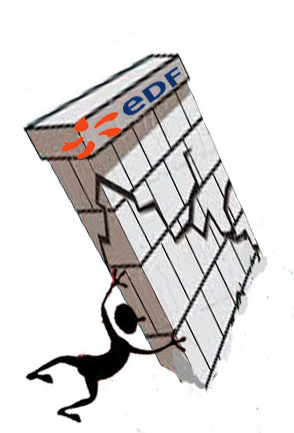
“Neither its organization nor its finances allow EDF to meet all then challenges it faces”. Ensuring the country’s energy security, promoting French know-how internationally, producing ever greener products and serving as a financier of last resort: EDF is subject to contradictory political injunctions, underlines in his column Jean-Michel Bezat, journalist Le Monde.
Let’s face it, we would not like to be in the place of the CEO of EDF. At the controls of the energy giant since 2014, Jean-Bernard Lévy is not the type to let his arm be twisted without afight. But after tough negotiations, the state shareholder (83.9%) ended up imposing its views on it: within the framework of the mechanism for regulated access to historical nuclear electricity (Arenh), imposed byBrussels in 2011 in the name of the competition, he will have to sell to his competitors – at a sale price, it’s in season – 20% more power than usual.
Le Monde 17th Jan 2022
1 This Month
26 April – Chernobyl: Inside the Meltdown airs on National Geographic on Sunday 26th April from 4pm

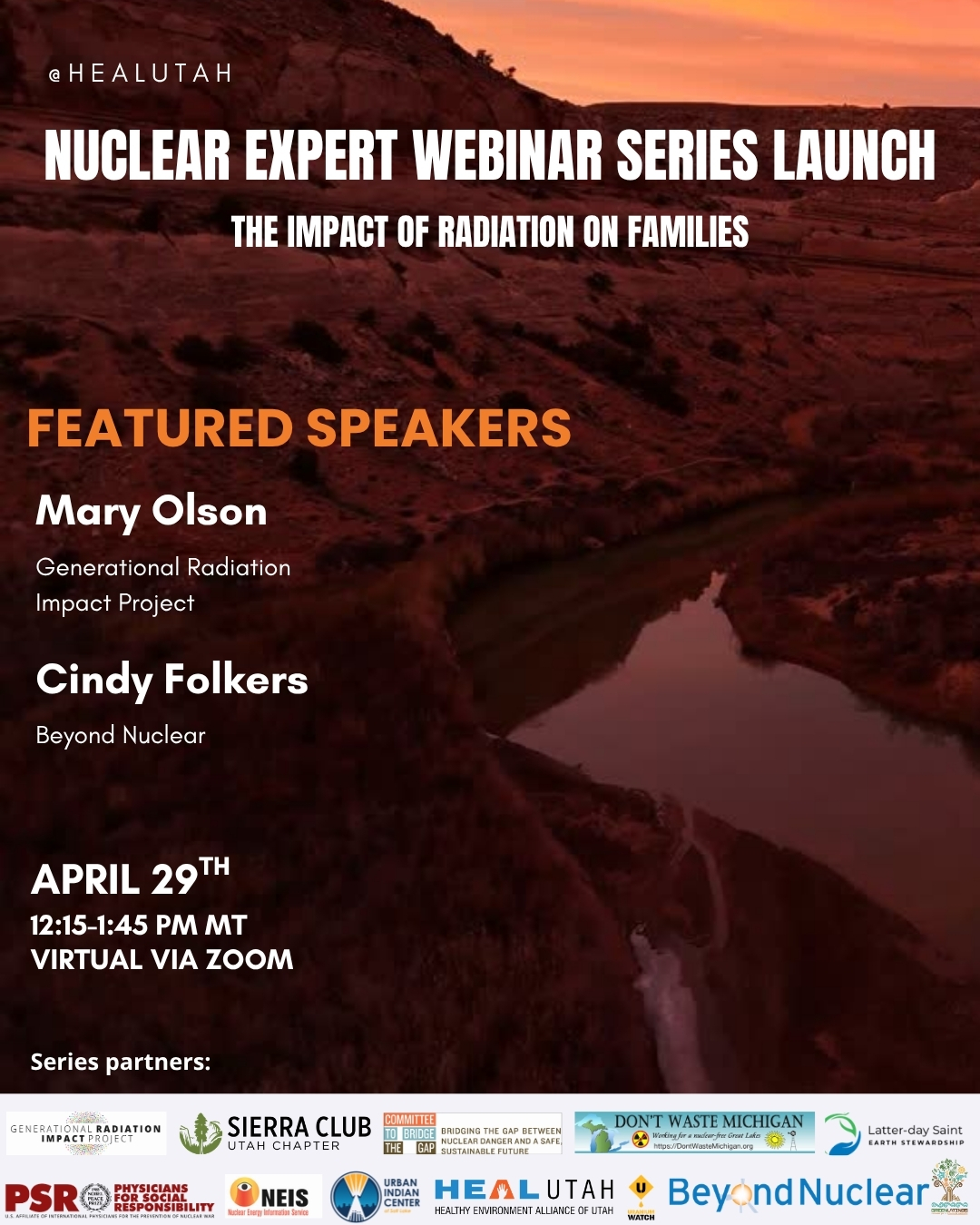
29 April – Nuclear Expert Webinar #1 – Radiation Impacts on Families with Mary Olson and Cindy Folkers
- 12:15 PM MT – 1:45 PM MT
- Location: Virtual – REGISTER TODAY

4 May -West Suburban Peace Coalition to discuss Iran war at May Educational Forum
Monday, May 4, 7:00 – 8:00 PM Central Standard Time
Title: : How Trump’s Narrative Tries to Shape the Reality of the War on Iran.
Contact Walt Zlotow, zlotow@hotmail.com 630 442 3045 for further information
14 May – online event From Bombs to Data Centres: the Face of Nuclear Colonialism

Pine Ridge Uranium is the real threat, not Tehran- Tell Burgum: Stop the Extraction.
Chernobyl: The Lost Tapes – A good documentary on Chernobyl on SBS available On Demand for the next 3 weeks– https://www.sbs.com.au/ondemand/tv-program/chernobyl-the-lost-tapes/2352741955560
To see nuclear-related stories in greater depth and intensity – go to https://nuclearinformation.wordpress.com
-
Archives
- April 2026 (288)
- March 2026 (251)
- February 2026 (268)
- January 2026 (308)
- December 2025 (358)
- November 2025 (359)
- October 2025 (376)
- September 2025 (257)
- August 2025 (319)
- July 2025 (230)
- June 2025 (348)
- May 2025 (261)
-
Categories
- 1
- 1 NUCLEAR ISSUES
- business and costs
- climate change
- culture and arts
- ENERGY
- environment
- health
- history
- indigenous issues
- Legal
- marketing of nuclear
- media
- opposition to nuclear
- PERSONAL STORIES
- politics
- politics international
- Religion and ethics
- safety
- secrets,lies and civil liberties
- spinbuster
- technology
- Uranium
- wastes
- weapons and war
- Women
- 2 WORLD
- ACTION
- AFRICA
- Atrocities
- AUSTRALIA
- Christina's notes
- Christina's themes
- culture and arts
- Events
- Fuk 2022
- Fuk 2023
- Fukushima 2017
- Fukushima 2018
- fukushima 2019
- Fukushima 2020
- Fukushima 2021
- general
- global warming
- Humour (God we need it)
- Nuclear
- RARE EARTHS
- Reference
- resources – print
- Resources -audiovicual
- Weekly Newsletter
- World
- World Nuclear
- YouTube
-
RSS
Entries RSS
Comments RSS
 nuclear-news