Economic Cost Of Peak Population: Japan, China, The World. — One Finite Planet

The world has reached peak child, and is headed towards peak population. Many economic metrics collapse between peak child and peak population, resulting in bear stock markets and even collapses, all if the real economy and outside their investment portfolios, most people are relatively unaffected. Economic Ponzi Scheme Metrics. Peak Child and National Economies. Market […]
Economic Cost Of Peak Population: Japan, China, The World. — One Finite Planet
Bellona signs open letter to prevent nuclear energy and fossil gas from being labelled as green

(Signed by 129 reputable European and international organisations)
Granting nuclear and fossil gas the label of sustainability would undermine the EU’s climate targets, divert much-needed investments in the green transition and jeopardize the credibility of the entire European Green Deal. Olaf ScholzFederal Minister of Finance
and Vice Chancellor
11016 Berlin
Germany
Dear Federal Minister,
We are extremely concerned by the announcement of the European Commission’s President, Ursula von der Leyen, to likely label both nuclear energy and fossil gas as sustainable in the context of the EU’s taxonomy. According to media coverage, it was the absence of a strong German voice against nuclear in the European Council on 21/22 October that directly contributed to this decision. In your role as current finance minister and future Chancellor, we call on you to swiftly and decisively confirm the German veto against labelling nuclear as a sustainable form of energy and highlight that the Commission’s attempt to shape this discussion during the sensitive time of a new government being formed in Germany is not acceptable.
The EU taxonomy regulation is meant to provide guidelines for the necessary future-oriented investments for Europe’s economic transition. Nuclear energy, however, is unsustainable due to severe safety risks, environmental pollution and the unsolved waste problem. Fossil gas emits large quantities of climate-damaging greenhouse gases, especially methane, along its extraction and transport chain. Granting nuclear and fossil gas the label of sustainability would undermine the EU’s climate targets, divert much-needed investments in the green transition and jeopardize the credibility of the entire European Green Deal.
Dear Federal Minister, Germany has embarked upon a clear path to phase out nuclear power by the end of next year. NGOs from across Europe count on you to take an equally clear stance against nuclear energy but also fossil gas at the European level. more https://bellona.org/news/climate-change/2021-11-bellona-signs-open-letter-to-take-action-to-prevent-nuclear-energy-and-fossil-gas-from-being-labelled-as-green
These 129 reputable European and international organisations have signed up to letter opposing inclusion of nuclear and gas as being ”sustainable” and ”green”.

| France Nature Environnement, France CEE Bankwatch Network European Environmental Bureau (EEB) The Green Tank, Greece Umanotera – Slovenian Foundation for Sustainable Development, Slovenia Umweltinstitut München e.V., Germany Socio-ecological union international Climate Strategy Group Andy Gheorghiu Consulting, Germany Green Liberty, Latvia 10 BürgerBegehren Klimaschutz Bürgerbewegung Finanzwende, Germany AnsvarligFremtid, Denmark Klimabevægelsen i Danmark (350 Denmark), Denmark Naturschutzbund Deutschland e.V., Germany BirdLife Europe uranium-network.org, Germany eco-union, Spain Mouvement Ecologique (FoE-Luxembourg), Luxemburg urgewald, Germany 20 .ausgestrahlt, Germany 350.org Europe Deutscher Naturschutzring, Germany Stowarzyszenie Pracownia na rzecz Wszystkich Istot, Poland Legambiente, Italy Carbon Market Watch Health and Environment Justice Support (HEJSupport) Counter Balance ZERO – Association for the Sustainability of the Earth System, Portugal Clean Air Action Group, Hungary 30 Alofa Tuvalu, Tuvalu Réseau pour la transition énergétique CLER, France Creatura Think & Do Tank, Finland Women Against Nuclear Power, Finland Women for Peace, Finland The Alliance of the Associations Polish Green Network, Poland FMKK – The Swedish Anti Nuclear Movement, Sweden Polish Ecological Club Mazovian Branch, Poland Stowarzyszenie Ekologiczne EKO-UNIA, Poland Stowarzyszenie Ekologiczno-Kulturalne “Wspólna Ziemia”, Poland 40 Arbeitskreis Indianer Nordamerikas, Austria EuroNatur Stiftung, Germany Our Fish E3G – Third Generation Environmentalism Bioland e.V., Germany Deutsche Umwelthilfe e.V., Germany Germanwatch e.V., Germany Fair Finance International National Society of Conservationists – Friends of the Earth Hungary, Hungary Nucléaire Stop Kernenergie – Belgium 50 Tegengas/Dégaze – Belgium IPPNW (International Physicians for the Prevention of Nuclear War), German affiliate, Germany Urgenda Foundation, The Netherlands Focus Association for Sustainable Development, Slovenia Milieudefensie, The Netherlands Za Zemiata/Friends of the Earth Bulgaria, Bulgaria Fair Finance Guide, Sweden Corporate Europe Observatory Jihočeské matky, z.s., Czech Republic | WEED e.V. – World Economy, Ecology and Development, Germany 60ShareAction Global Witness Reclaim Finance, FranceFossielvrij NL, The Netherlands Bürgerinitiative “Kein Atommüll in Ahaus” e.V., GermanyThe Peace Movement of Orust, Sweden Global Nature Fund, Germany Climate Action Network International Transport & Environment NewClimate Institute gGmbH, Germany 70 Miljöringen lovisa Finland Réaction en chaîne humaine pour l’arrêt du nucléaire France Calla – Association for Preservation of the Environment, Czech republic Réseau “Sortir du nucléaire”, France BI “Stoppt Temelin”, Germany GLOBAL 2000 – Friends of the Earth Austria, Austria Suomen luonnonsuojeluliitto (Finnish Association for Nature Conservation), Finland Forum Ökologie & Papier, Germany Plattform gegen Atomgefahren Salzburg (PLAGE), Austria Gas Free Pensions, Europe 80 Réseau Action Climat France PSR / IPPNW Switzerland (Physicians for Social Respon sibility /International Physicians for the Prevention of Nuclear War) Greenpeace Begegnungszentrum für Aktive Gewaltlosigkeit, Austria Hiilivapaa Suomi, Finland Food & Water Action Europe, Europe International Network for Sustainable Energy – Europe ReCommon, Italy Inter-Environnement Wallonie, Belgique 90 Campagna “Per il Clima Fuori dal Fossile”, Italy Movimento No TAP/SNAM Brindisi, Italy Redazione emergenzaclimatica.it, Italy BankTrack, the Netherlands TerraBlu, Italy Bellona Europa, Belgium Bellona Deutschland, Germany Forum Ambientalista O.d.V., Italy Climate Action Network, Europe Associazione Tarantola Rubra, Italy 100 Friends of the Earth, Europe Trivelle Zero Molise, Italy Environmental Coalition on Standards, Belgium Collettivo No al Fossile Civitavecchia, Italy WWF Forlì-Cesena, Italy Coordinamento ravennate Fuori dal Fossile, Italy The Swedish Anti-Nuclear Movement, Branch Gävle, Sweden NOAH Friends of the Earth Denmark Wiener Plattform Atomkraftfrei, Austria Parents For Future Vienna, Austria 110 Trivelle Zero Marche, Italy Parents for Future Gütersloh, Germany A Sud, Italy European Alliance for the Self-determination of Indigenous Peoples, Austria/France/Germany/Switzerland Mom Loves Taiwan Forum Ökologisch-Soziale Marktwirtschaft e.V., Germany WISE Netherlands atomstopp_atomkraftfrei leben!, Austria Freistädter Mütter gegen Atomgefahr, Austria Grandparents For Future Austria 120 Parents For Future Oberösterreich, Austria Frauen für den Frieden Schweiz Bund für Umwelt und Naturschutz Deutschland (BUND) e.V – Friends of the Earth Germany, Germany nternational Commission for the Protection of the Alps (CIPRA International), Liechtenstein Rete “Legalità per il clima”, Europe Collectif anti-nucléaire Ouest, France Fédération anti-nucléaire Bretagne, France GasExit Greenpeace, Russia 129 |
UK government tries to save its nuclear skin by turning to dubious Regulated Asset Base funding

At a time of rising energy bills in the UK, it certainly seems risky of the government to commit to increasing them further and opening themselves up to a downside risk that could prove very costly.
The National Infrastructure Commission, a body designed to give impartial advice to the government, said in March 2020 that a “renewable-based system looks like a safer bet” and a “substantially cheaper” option than the construction of multiple new nuclear power plants.
The UK’s nuclear plan is a financial, environmental and political risk, Investment Monitor, Jon Whiteaker , 16 Nov 21,” …………..The problem with financing nuclear power
…… Hinkley Point C has been a bit of a nightmare for the UK government. It is already seven years behind schedule, has controversial Chinese investors that the government is understood to be trying to get rid of, and is widely agreed to be far too expensive.
It was financed under the contracts for difference (CfD) model used for offshore wind. This guarantees a ‘strike price’ for the power plant owner, allowing them to raise capital for construction by having certainty of revenues.
Using the same funding model as offshore wind has, however, allowed for simple comparisons of the costs of the two power types. While the latest round of offshore wind projects saw strike prices of about £40 per megawatt-hour (MWh) over a 15-year contract, the owners of Hinkley are guaranteed at least £89.5/MWh over 35 years.
The reasons the Hinkley strike price is so much higher is because the capital costs are much higher, but also because the risks involved in developing them are much greater.
At least Hinkley Point C is being built. A number of planned projects, including the Moorside power station in West Cumbria and Wylfa Newydd plant on Anglesey, have been cancelled or shelved in recent years.
With the need to develop the UK’s next generation of nuclear plants increasingly urgent, the government has turned to the RAB model to save its skin.
UK government turns to the RAB model
The RAB model is known mostly for its successful use on the Thames Tideway Tunnel (TTT), the new super sewer in London that is helping to clean up the Thames River. The government says that like that project, nuclear power plants are complex, have high capital costs and long operating lives.
The RAB model allows developers of infrastructure to earn immediate revenues by adding charges to consumers’ utility bills during the construction. Bill payers will have to buy before they try their lovely new nuclear power.
This in theory widens the pool of potential investors, making the government less beholden to a small group of companies who typically invest in and build nuclear plants, lowering the cost of financing, and ultimately saving money for bill payers.
The government predicts that using the RAB model to build a new nuclear plant will save energy bill payers £10 per year compared with the CfD model.
Legislation allowing the introduction of the RAB model for new nuclear was introduced in October 2021 and is moving through the House of Commons. The government has pledged to reach a final investment decision on at least one new nuclear plant by the end of this parliament in 2024.
It is hoped by government that the previously stalled 3.2GW Sizewell C, owned by EDF Energy, will be the first nuclear project to use the RAB model.https://www.investmentmonitor.ai/business-activities/energy/uk-nuclear-rab-energy-renewable
The problems with RAB for nuclear
While this all sounds like a perfect panacea for the government’s problems, there are several downsides to using the RAB model.
The depth of investor interest in new nuclear power stations is yet unknown. As the UK government should be painfully aware, having just hosted COP26, the conversation about what does and does not meet different investors ESG standards is a live one. Whether nuclear power is seen as a sustainable investment is debatable.
Trying to get any of the investors in TTT to make clear their stance on nuclear power is not easy, and I have tried. For the government to achieve its goals, institutional investors, like those that supported TTT, should want to invest in new nuclear too.
Asset manager Aviva Investors, a major investor in UK infrastructure, has called on the government to present a robust ESG case for new nuclear, which it says is lacking at present.
Many investors will be concerned over whether nuclear meets the criteria of an environmentally sustainable activity. Institutional investors are incredibly cautious by nature and the shadow cast by the Fukushima disaster in Japan in 2011 is still long.
All energy suppliers will have to contribute to the costs of RAB nuclear plants, whether they want to or not, before passing those costs on to bill payers. That seems a retrograde step for an energy market that has been diversifying to provide customers with ‘green only’ options in recent years. Whether you have ethical objections to nuclear power or not, you will have to use a supplier that helps fund that technology.
Hinkley Point C is seven years behind schedule. You would be brave to bet against any delays to the first RAB model nuclear plant too.
The government says that there would be a cap on how much extra investors could charge consumers but that this cap could be increased by the government if deemed necessary. If the costs became excessive, the government would have the option of covering the costs itself, although this is ultimately taxpayer money too.
At a time of rising energy bills in the UK, it certainly seems risky of the government to commit to increasing them further and opening themselves up to a downside risk that could prove very costly. Perhaps the government thinks these are all costs worth shouldering to ensure its net-zero plans stay on track.
The National Infrastructure Commission, a body designed to give impartial advice to the government, said in March 2020 that a “renewable-based system looks like a safer bet” and a “substantially cheaper” option than the construction of multiple new nuclear power plants.
That sounds like advice worth considering again. https://www.investmentmonitor.ai/business-activities/energy/uk-nuclear-rab-energy-renewable
New German government aims for coal exit, and 80 pct renewables, by 2030

New deal between SDP, Greens and pro-business party calls for coal exit by 2030, and an 80 per cent share for renewables. The post New German government aims for coal exit, and 80 pct renewables, by 2030 appeared first on RenewEconomy.
Soren Amelung and Benjamin Wehrmann 25 November 2021 https://reneweconomy.com.au/new-german-government-aims-for-coal-exit-and-80-pct-renewables-by-2030/ Germany’s prospective new government has agreed to speed up the country’s coal exit and accelerate the rollout of renewable power to get the country on track for climate neutrality.
“We will align our climate, energy and economic policies nationally, in Europe and internationally with the 1.5 degree path and activate the potential at all levels of government,” states the coalition agreement between Social Democrats (SPD), Greens, and pro-business Free Democrats.
“With ambition and perseverance, we are making the country a pioneer in climate protection,” likely future chancellor Olaf Scholz, a Social Democrat, said during the presentation of the coalition treaty. He added that “modernisation won’t be for free – we will invest massively so Germany can stay a world leader.”
Germany plans to become climate-neutral by 2045, but the measures implemented by the outgoing government, a coalition between chancellor Angela Merkel’s Conservatives and the SPD, are insufficient to reach that target.
The September vote had been called a “climate election” due to the high importance many voters had given the topic.
Scholz aims to be elected chancellor in the week of December 6. Prior to that, the Greens will invite all 120,000 party members to vote on the coalition agreement online. The SPD and the FDP will organise party conferences on December 4 and 5, respectively, to secure their members’ backing for the agreement.
Faster rollout of renewables
“Reaching climate targets will require an accelerated exit from coal power generation,” the coalition treaty reads. “Ideally, this will be achieved by 2030 already.”
Green Party co-leader Robert Habeck said the measures agreed by the three parties would put Germany on an emissions reduction path compatible with the Paris Climate Agreement‘s target of limiting global warming to 1.5 degrees Celsius.
The coalition treaty’s “core” principle would be to reconcile prosperity with climate action, he argued.
“We have decided against setting higher climate targets in the coalition agreement, but rather formulated concrete measures,” Habeck said, adding that these measures would put the country on a 1.5 degree path.
The three parties aiming to form the next German government, said they aim to cover 80 percent of the country’s power demand with renewables by 2030, a significant increase from the current target of 65 percent. “Renewables are no longer an addition but will have to carry our supply security,” Habeck said.
FDP leader Christian Lindner, who is likely to become new finance minister, said “no other industrialised country will make efforts in climate action as great as ours, this is the most ambitious programme to date” and the government would make sure that it is sufficiently funded. At the same time, Germany would remain “an advocate of prudent financial policy,” Lindner added.
The parties also rejected calls for postponing the end of nuclear power plants. “We will stick to the nuclear exit,” their coalition agreement says.
To help the country’s famed industry to lower emissions, the future government plans to use new instruments, such as carbon contracts for difference, and support an EU-wide carbon border adjustment mechanism.
The coalition partners also said they will consider a national carbon floor price of 60 euros if the price in the EU emissions trading system falls below that limit. In the transport sector, they want to achieve a fast transition to low-emission mobility. “Our target is at least 15 million fully electric cars by 2030,” the treaty says.
The future government also agreed on considerable changes to the government architecture to implement its climate agenda. The parties plan to create a novel climate ministry that merges the energy and industry departments of the economy ministry with the environment ministry’s climate department.
First published on Clean Energy Wire
Powerful greenhouse gases emitted from Hunterston A nuclear station
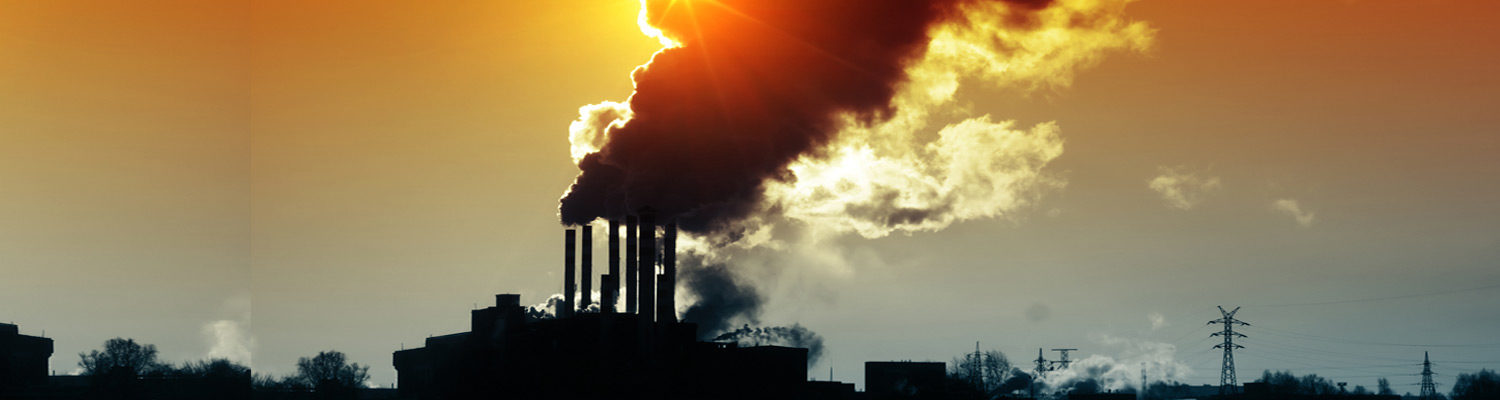
| THE release of a refrigerant gas during the ongoing decommissioning of Hunterston A has been revealed at a recent nuclear summit. Hunterston ‘A’ bosses reported two environmental incidents at the station during its decommissioning phase linked to their air conditioning units. Earlier this year, the release of fluorinated gases was noticed. These are powerful man-made gases that can stay in the atmosphere for centuries and contribute to a global greenhouse effect. The incidents formed part of a report to the recent Hunterston site stakeholders meeting. Largs & Millport News 22nd Nov 2021 https://www.largsandmillportnews.com/news/19720653.gas-leak-hunterston-reported-sepa/ |
The UK’s nuclear plan is a financial, environmental and political risk
The UK’s nuclear plan is a financial, environmental and political risk, Investment Monitor, Jon Whiteaker , 16 Nov 21, If the UK government thinks the RAB model will solve all its nuclear power problems, it may have a nasty surprise coming its way.
As the dust settles on COP26, the UK government will turn its attention away from global discussions and towards what it is doing domestically to help mitigate the climate crisis.
The government’s Net Zero Strategy sets aside £120m towards developing new nuclear power plants, which it says “could support our path to decarbonising the UK’s electricity system” by 2035.
Could’ is doing a lot of work in that sentence, because although nuclear power plays a prominent role in the government’s decarbonising strategy, bringing additional nuclear capacity online is far from straightforward.
The government says nuclear is a continuous, reliable and low-carbon form of energy that has been part of the UK electricity system for 65 years. Nuclear is also controversial, hugely expensive in comparison to other fossil fuel alternatives, and often proves challenging to develop.
According to the latest World Nuclear Industry Status Report, between 1951 and 2021, of the 783 nuclear reactor projects launched, 12% have been cancelled. Delays and cost overruns are also very common when constructing nuclear plants.
The UK government is hoping to kickstart development of new nuclear in the UK through the introduction of the regulated asset base (RAB) funding model. This model is intended to widen the investor pool for nuclear power, reduce financing costs, and ultimately save bill payers money.
While the RAB model has proved successful for other large UK infrastructure projects, it comes with risks for the government. It is unclear which investors will be happy to support new nuclear projects, and there are potential political costs if UK citizens are made to pick up at least part of the tab if things go wrong.
The government expects electricity usage to increase by 40–60% by 2035. It has mapped out several scenarios for how this demand can be met solely by renewables, all of them dependant on building new nuclear power capacity.
Yet in 2020, while generation from all other renewable energy sources increased, generation from nuclear power actually declined in the UK due to a decision not to restart operations at the Dungeness B plant in Kent, which had been suffering a prolonged outage since 2018.
The UK nuclear fleet is old, suffering performance issues and largely due to be decommissioned. By 2035, the UK will lose almost 8GW of nuclear power plants to decommissioning.
The only new nuclear plant under construction is the 3.26GW Hinkley Point C plant, which is now due to be completed in 2026.
All this means the government needs to quickly develop new nuclear capacity. It seems very taken by new small modular reactors, particularly if they are developed by UK companies such as Rolls-Royce.Yet this and another new technology, advanced modular reactors, are not due to reach the demonstration phase until the early 2030s.
So, the government has been seeking a way to deliver several new Hinkley Point Cs…………………
The National Infrastructure Commission, a body designed to give impartial advice to the government, said in March 2020 that a “renewable-based system looks like a safer bet” and a “substantially cheaper” option than the construction of multiple new nuclear power plants.
That sounds like advice worth considering again. https://www.investmentmonitor.ai/business-activities/energy/uk-nuclear-rab-energy-renewable
German nuclear power shutdown will not lead to power shortage: report
German nuclear power shutdown will not lead to power shortage: report https://www.euractiv.com/section/energy/news/german-nuclear-power-shutdown-will-not-lead-to-power-shortage-report/
By Jessica Bateman and Nikolaus J. Kurmayer | EURACTIV.com with CLEW 24 Nov 21, The shutdown of Germany’s last nuclear power plants will not cause supply shortages, according to calculations by the German Institute for Economic Research (DIW Berlin), CLEW reported.
As the so-called “traffic light” coalition in Berlin takes shape, there have been concerns that the country’s upcoming phase-out of nuclear power could cause power shortages as the country’s renewable expansion has been slow-going for years.
“I’m looking for a flashing orange traffic light emoji when the German government will have to face blackouts later this winter,” tweeted energy analyst Thierry Bros.
Researchers used modelling methods to see how the decommissioning of nuclear power plants Brokdorf, Grohnde and Gundremmingen C (which will be taken off the grid at the end of this year) and Neckarwestheim 2, Isar 2 and Emsland (which will be shut down in late 2022) will affect power flows and the energy mix in Germany.
They found the decline in nuclear power will temporarily lead to a higher use of fossil fuels and imports, but that this should be quickly reduced by the accelerated expansion of renewable energies.
German energy use is expected to increase by 100 TWh until 2030, while the next German government wants to phase out coal by 2030 and to be done with gas in 2040.
The next government is expected to boost the expansion of renewable energy in Germany by speeding up planning and permitting processes, as well as mandatory solar PV installations on newly built buildings, according to FAZ.
According to reports, the next German government may aim for 80% renewable electricity in 2030, up from the current target of 65%.
Projections currently put Germany’s 2030 energy demand somewhere between 645 to 665 TWh. If those prove true, it would mean that wind and solar would have to generate upwards of 516 TWh per year, or more than double the current renewable energy generation capacity.
In 2020, renewable energy consumption was 251 TWh, according to CLEW.
In order to keep grid operation stable, congestion management will also need to be adjusted. “The lights will not go out in Germany,” study author Claudia Kemfert said in statement.
“On the contrary: the [nuclear] shutdown paves the way for the overdue expansion of renewable energies. Nuclear energy was uneconomical from the start and characterised by incalculable risks.”
Plans to phase out nuclear energy in Germany were introduced in 2011 after the Fukushima nuclear disaster in Japan. The decision has been criticised for worsening the country’s reliance on imported fossil gas while Germany exits coal at the same time.
Manager at Tricastin NPP files complaint about safety issues and harrassment

In the midst of a debate on the revival of nuclear power, a whistleblower
throws a stone in the pond: a member of the management of the Tricastin
power station (Drôme), one of the oldest in the French fleet, has filed a
complaint against EDF concerning site safety, endangering others, the Labor
Code and harassment, as revealed by Le Monde.
Mediapart 24th Nov 2021
Christmas bonanza from USA tax-payers to the nuclear industry
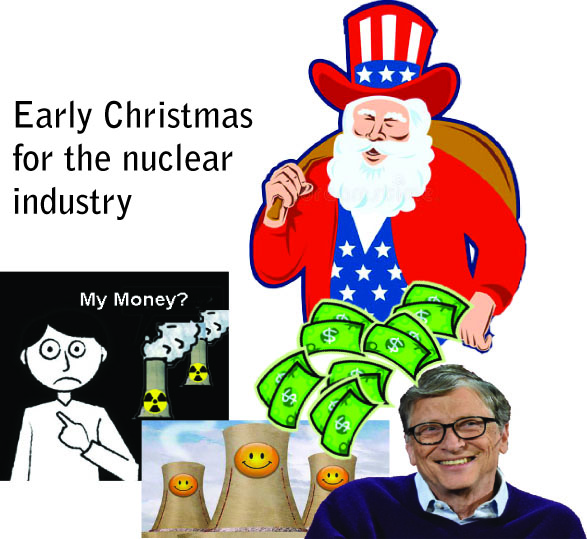
Passage of the Infrastructure Investment and Jobs Act last Monday had some nice things for nuclear energy. The overall Bill is a $1.2 trillion for everything from bridges and roads to the nation’s broadband, water and energy systems.
Nuclear got about $25 billion, distributed as:
– $3.2 billion (to FY2027) Advanced Reactor Demonstration Program (ARDP);
$21.5 billion (to 2025) for an Office of Clean Energy Deonstrations in DOE including: $6 billion civil nuclear credit program to preserve the existing nuclear fleet and prevent premature shutdowns of nuclear power plants like Diablo Canyon pictured above;
$8 billion for clean hydrogen hubs,
……… $1 billion for demonstration projects in rural areas and $0.5 billion for demonstration projects in economically hard-hit communities
$0.5 billion for new clean energy demonstration on mine lands assistance for siting micro-reactors, small modular reactors, and advanced nuclear reactors in isolated communities
provides federal government authority to transfer real property for advanced reactor demonstrations and
authorizes longer term protections for intellectual property related to nuclear technology used in demonstrations changes to the DOE Loan Programmaking it more usable by reducing the credit subsidy costs that borrowers must pay.
Forbes 23rd Nov 2021
Tricastin nuclear power plant: cascading cover-ups.
Tricastin nuclear power plant: cascading cover-ups. In the case of the
whistleblower at the Tricastin power plant, which files a complaint against
EDF, new elements consulted by Mediapart reveal that the Nuclear Safety
Authority has long known about the problem. According to an internal
document, EDF lied and the safety authority also in its public
communication.
Mediapart 24th Nov 2021
Incoming German government commits to NATO nuclear deterrent
Incoming German government commits to NATO nuclear deterrent, Defense News, By Sebastian Sprenger WASHINGTON – Germany’s incoming government has affirmed its commitment to NATO’s nuclear deterrent, including the role accorded to Berlin in the strategy, according to a coalition agreement unveiled Nov. 24 by Social Democrats (SPD), the Greens and the liberal Free Democrats (FDP)………… https://www.defensenews.com/global/europe/2021/11/24/incoming-german-government-commits-to-nato-nuclear-deterrent/
Another step in the effort to clean up Hanford’s massive nuclear waste problem .

20 years in the making, massive nuclear plant takes final steps to treating Hanford waste, Tri City Herald BY ANNETTE CARY 23 Nov 21 The massive Hanford vitrification plant now is in its final phase of work before it starts operating to treat some of the nuclear reservation’s radioactive tank waste. The Department of Energy announced Tuesday that the startup testing phase for treating low activity radioactive waste at the $17 billion plant was complete, following completion of plant construction around the first of the year.
Now Hanford workers can shift all of their focus to commissioning, taking the final steps to demonstrate that the plant works before it starts treating radioactive waste by late 2023………………………….
Commissioning includes operating the plant with a nonradioactive simulant of the waste it was built to treat, before radioactive waste is piped to the plant in about two years. Construction on the plant started in 2002 with a plan to turn much of the 56 million gallons of radioactive and hazardous chemical waste stored in underground tanks into a stable glass form for disposal.
The waste is left from producing nearly two-thirds of the plutonium for the nation’s nuclear weapons program from World War II through the Cold War at the 580-square-mile site near Richland in Eastern Washington………….
The plant is not required under a federal court order to be fully operational, treating both high level and low activity waste, until 2036. But the court-set deadline for treating low activity waste is the end of 2023, although DOE may be given some additional time due to the COVID-19 pandemic, which slowed some work…………
The containers of low activity radioactive waste will be disposed of at a nearby lined landfill, Hanford’s Integrated Disposal Facility. https://www.tri-cityherald.com/news/local/hanford/article256040252.html
Boris Johnson quizzed over future of Bradwell, (Essex) nuclear plant
Boris Johnson quizzed over future of Essex nuclear plant https://www.maldonandburnhamstandard.co.uk/news/19738655.boris-johnson-quizzed-future-essex-nuclear-plant/
By Jessica Day-ParkerTrainee Reporter PRIME Minister Boris Johnson told MPs he does not want to “pitchfork away” all investment from China in response to a question about Bradwell B.
Matthew Pennycook, Labour MP for Greenwich and Woolwich, pressed the Prime Minister on Bradwell B – the proposed nuclear power station at Bradwell-on-Sea put forward by China General Nuclear Power Group (CGN) – in the House of Commons.
Mr Pennycook said: “The Government’s Integrated Review concluded the Chinese state poses a systemic challenge to our national security and the Prime Minister has made clear that when it comes to China we must remain vigilant about our critical national infrastructure.
General Nuclear to own and operate its own plant in Bradwell in Essex have been abandoned?”
Mr Johnson confirmed the Government doesn’t want to see “undue influence by potentially adversarial countries in our critical national infrastructure” and insisted “there will be more information” coming on Bradwell.
But he added: “What I don’t want to do is pitchfork away wantonly all Chinese investment in this country or minimise the importance in this country of having a trading relationship with China.”
Arctic Ocean started getting warmer decades earlier than we thought – Study
Arctic Ocean started getting warmer decades earlier than we thought – Study
he Arctic Ocean has been getting warmer since the beginning of the 20th century – decades earlier than records suggest – due to warmer water flowing into the delicate polar ecosystem from the Atlantic Ocean.
1 This Month


Tell the Ukrainian Government to Drop Prosecution of Peace Activist Yurii Sheliazhenko

Petition to revoke the licensing of the Near Surface Nuclear Disposal Facility (NSDF) at Chalk River. https://www.ourcommons.ca/petitions/en/Petition/Details?Petition=e-7247


of the week – STOP SMALL MODULAR REACTORS IN CANADA
To see nuclear-related stories in greater depth and intensity – go to https://nuclearinformation.wordpress.com
-
Archives
- March 2026 (204)
- February 2026 (268)
- January 2026 (308)
- December 2025 (358)
- November 2025 (359)
- October 2025 (376)
- September 2025 (258)
- August 2025 (319)
- July 2025 (230)
- June 2025 (348)
- May 2025 (261)
- April 2025 (305)
-
Categories
- 1
- 1 NUCLEAR ISSUES
- business and costs
- climate change
- culture and arts
- ENERGY
- environment
- health
- history
- indigenous issues
- Legal
- marketing of nuclear
- media
- opposition to nuclear
- PERSONAL STORIES
- politics
- politics international
- Religion and ethics
- safety
- secrets,lies and civil liberties
- spinbuster
- technology
- Uranium
- wastes
- weapons and war
- Women
- 2 WORLD
- ACTION
- AFRICA
- Atrocities
- AUSTRALIA
- Christina's notes
- Christina's themes
- culture and arts
- Events
- Fuk 2022
- Fuk 2023
- Fukushima 2017
- Fukushima 2018
- fukushima 2019
- Fukushima 2020
- Fukushima 2021
- general
- global warming
- Humour (God we need it)
- Nuclear
- RARE EARTHS
- Reference
- resources – print
- Resources -audiovicual
- Weekly Newsletter
- World
- World Nuclear
- YouTube
-
RSS
Entries RSS
Comments RSS
 nuclear-news