The nuclearization of space — Beyond Nuclear International

Fast track to Mars could come at terrible price
The nuclearization of space — Beyond Nuclear International
WikiLeaks and the Crimes of the West in Afghanistan

In 2010, WikiLeaks published 76,000 previously classified documents about the war, containing references to hundreds of other war crimes. But instead of investigating these cases and bringing the guilty to justice, the messenger, Julian Assange, was pursued.
Today he is sitting, critically ill, in a British high-security prison and has to fear being extradited to the U.S., where he is threatened with life imprisonment under inhumane conditions.
UN Special Rapporteur on Torture Nils Melzer, came to the conclusion, after an in-depth investigation of the case, that Assange had been and is systematically tortured by Western authorities.
WikiLeaks & the Crimes of the West in Afghanistan https://consortiumnews.com/2021/08/20/wikileaks-the-crimes-of-the-west-in-afghanistan/ August 20, 2021 Fabian Scheidler says so much suffering — including Assange’s imprisonment for exposing war criminals — buries the idea of “humanitarian intervention.” By Fabian Scheidler
Common Dreams
The heedless flight of NATO troops from Afghanistan and the havoc they leave behind are only the last chapter in a devastating story that began in October 2001.
At that time, the U.S. government, supported by allies including the German administration, announced that the terror attacks of Sept. 11 should be answered by a war in Afghanistan.
None of the assassins were Afghan. And the Taliban government at the time even offered the U.S. to extradite Osama bin Laden — an offer the U.S. did not even respond to. Virtually no word was said about the country of origin of 15 of the 19 terrorists — Saudi Arabia.
On the contrary: members of the Bin Laden family were flown out of the U.S. A in a night-and-fog operation so that they could not be interrogated. After classified parts of the 9/11 commission report were released in 2016, it emerged that high-ranking members of the Saudi embassy in Washington had been in contact with the terrorists before the attacks. Consequences? None. They are our allies.
So, Afghanistan was attacked. Already during the Cold War, the U.S. and Saudi Arabia had supported Islamists there on a large scale against the Soviet Union.
Now the Islamist warlords of the “Northern Alliance” were the new allies. The German Armed Forces flanked the U.S. troops. While their deployment was shrouded in the narrative of a “humanitarian intervention”, the Bundeswehr in fact worked hand in hand with the warlords, as investigative journalist Marc Thörner reported. (He was the only German reporter on site who was not embedded in the military.)
Thörner predicted that the complicity of the NATO troops in the war crimes and the “counterinsurgency methods from the colonial era” would turn the population more and more against the West and strengthen fundamentalism. We see the result today: the triumph of the Taliban across the country.
Supporting War Criminals & Committing War Crimes
The U.S. troops as well as the Bundeswehr and other allies not only supported war criminals on the ground, they also committed serious crimes themselves. None of the perpetrators was ever convicted in court for this.
Take Kunduz, for example: in September 2009 the Bundeswehr bombed a mainly civilian trek here, with over one hundred dead or seriously injured, including children. The proceedings against those primarily responsible, Colonel Georg Klein and Defense Minister Jung (CDU), ended with acquittals.
In 2010, WikiLeaks published 76,000 previously classified documents about the war, containing references to hundreds of other war crimes. But instead of investigating these cases and bringing the guilty to justice, the messenger, Julian Assange, was pursued.
Today he is sitting, critically ill, in a British high-security prison and has to fear being extradited to the U.S., where he is threatened with life imprisonment under inhumane conditions.
UN Special Rapporteur on Torture Nils Melzer, came to the conclusion, after an in-depth investigation of the case, that Assange had been and is systematically tortured by Western authorities.
Most of the big media, which got a lot of attention and made money with the leaks of their journalist colleague, have now largely dropped him. And with it the defense of the freedom of the press, which is especially crucial when it comes to questions of war and peace. So, Assange is on trial — and not the war criminals.
All those who warned against the Afghanistan war were ridiculed from the start as naive pacifists or even accused of evading humanitarian responsibility and thus playing into the hands of the Islamists.
But today it is finally clear: the alleged humanitarian operation only plunged the country further into misery and strengthened the Islamists. As in Iraq, as in Libya, as in Mali. It is time to finally bury the doctrine of the “responsibility to protect,” which was coined at the time of the beginning of the Afghan war, and to brand it as what it was from the beginning: a neocolonial project.
Instead of military interventions, one could, for example, begin to drain the terror sponsor Saudi Arabia financially and stop all arms exports there. It would also be worthwhile to advance the project of a Conference for Security and Cooperation in the Middle East, which — based on the model of the détente policy of the OSCE in Cold War Europe — could be working on a new civil security architecture for the region.
The Afghanistan debacle should also be an occasion to question the enormous expansion of Western military budgets in recent years, which was justified not least of all by deployments abroad.
German military spending went up from € 40 billion to € 52 billion from 2015 to 2020, an increase of a whopping 30 percent. The U.S. military budget is at $ 778 billion, about 12 times of what Russia spends for its army. This money is urgently needed for tasks that really move the world forward, especially for countering the climate urgency and for a socio-ecological transition. The U.S. military not only has a gloomy balance sheet in terms of peace policy, but is also THE largest greenhouse gas emitter on Earth. It is time for a slimming cure.
Fabian Scheidler is the author of “The End of the Megamachine. A Brief History of a Failing Civilization” (2019). See more of his work on his website here. Follow him on Twitter: @ScheidlerFabian.
US nuclear policy reflects a hypocritical Cold War mindset
US nuclear policy reflects hypocrisy, Cold War mindset
By Jiang Tianjiao | China Daily | 2021-08-21 09:29 US arms control experts, including former secretary of defense William Perry, recently wrote to Japanese Prime Minister Yoshihide Suga, asking him to support the “no first use of nuclear weapons” policy the Joe Biden administration is likely to propose. But despite the good intentions of people like Perry, it is difficult to change the stubborn conservative thinking and offensive nuclear strategy of most US politicians.
After the end of the Cold War, the US nuclear arms control policy has undergone periodic fluctuations, but on the whole, it is still dominated by conservative forces not averse to fighting a nuclear war. In the 1990s, with the collapse of the bipolar world order, the Bill Clinton administration tried to promote arms control, but the conservative forces, using the possibility of some countries possessing weapons of mass destructions as a pretext, helped build an overwhelming public opinion against it………….
In its latest “Nuclear Posture Review Report”, the US not only called for a comprehensive upgrading of the nuclear arsenal, but also said that in case it faces a “major non-nuclear strategic attack”, it will actively respond with nuclear weapons.
Although the Democratic Party has always supported arms control, “first use of nuclear weapons” has become the politically correct strategic stance for the Biden administration for three key reasons.
First, the “first use of nuclear weapons” policy has become part of the strategic culture of the US. During the Cold War, the US prepared for a possible nuclear war with the Soviet Union and accordingly engaged in capacity-building. But even three decades after the end of the Cold War, the US is still preparing to fight and win a nuclear war. As such, it cannot give up the “first use” policy.
Second, the “first use of nuclear weapons” policy is the keystone of the US’ deterrence strategy and the basis of its global alliance system. Since the beginning of the Cold War, the US has provided its global allies with a nuclear umbrella. If it abandons its “first use” policy, it can no longer provide the nuclear umbrella for its allies, which would increase the possibility of nuclear proliferation among its allies such as Japan and the Republic of Korea and could eventually lead to the collapse of the US alliance system.
Third, the “first use of nuclear weapons” policy is what gives the US asymmetric advantages in any
strategic competition and conflict with another country. The US is also worried that rival countries could acquire asymmetric means, thanks to the rapid development of the new military technology, to launch sudden attacks against it……… The author is an assistant director of the Center for BRICS Studies, Fudan Development Institute. http://global.chinadaily.com.cn/a/202108/21/WS61205711a310efa1bd66a3c9.html
Top Westinghouse Nuclear Executive Charged with Conspiracy, Fraud
Top Westinghouse Nuclear Executive Charged with Conspiracy, Fraud in 16-Count Federal Indictment, Department of Justice, U.S. Attorney’s OfficeDistrict of South Carolina.
Wednesday, August 18, 2021. Columbia, South Carolina — Acting United States Attorney for the District of South Carolina M. Rhett DeHart announced today that a Federal Grand Jury has charged former Westinghouse Electric Company Senior Vice President Jeffrey A. Benjamin for his role in failing to truthfully report information regarding construction of new nuclear units at the V.C. Summer nuclear plant.
Benjamin, who served as Senior Vice President for New Plants and Major Projects and directly supervised all new nuclear projects worldwide for Westinghouse during the V.C. Summer project, is charged in a federal indictment with sixteen felony counts including conspiracy, wire fraud, securities fraud, and causing a publicly-traded company to keep a false record.
The charges Benjamin faces carry a maximum of twenty years imprisonment and a $5,000,000 fine.
The indictment alleges that Benjamin was personally involved in communications between Westinghouse and its owners, SCANA and Santee Cooper, regarding the status of the V.C. Summer project.
The indictment further alleges that, throughout 2016 and into 2017, when Westinghouse had direct control over the construction and schedule of the project, Benjamin received information that the V.C. Summer units were materially behind schedule and over budget. Nevertheless, at various times from September 2016 through March 2017, the indictment alleges that Benjamin assured the owners that the units would be completed on schedule and took active steps to conceal from the owners damaging information about the project schedule. During this time period, the owners paid Westinghouse over $600,000,000 to construct the two V.C. Summer units, both of which were ultimately abandoned.
“Our commitment to investigate and prosecute the V.C. Summer nuclear debacle has never wavered,” said Acting U.S. Attorney DeHart. “While the indictment – and the allegations contained within – speak for itself, it is further proof of our commitment to seek justice for South Carolina ratepayers and all others affected by the V.C. Summer project failure.”
“This indictment with its attendant allegations and charges is another step toward justice for all those responsible for the V.C. Summer nuclear plant fiasco,” said FBI Special Agent in Charge Susan Ferensic. “The FBI has devoted substantial resources to investigating this matter and will continue to work with the United States Attorney’s Office, the South Carolina State Law Enforcement Division, and the South Carolina Attorney General’s Office to find facts and prove criminal conduct.”
Benjamin is the fourth individual to be charged in the ongoing federal investigation, stemming from the exhaustive and multi-year joint investigation by the U.S. Attorney’s Office, the Federal Bureau of Investigations (FBI), the U.S. Securities and Exchange Commission (SEC), the South Carolina Attorney General’s Office, and the South Carolina Law Enforcement Division. Former SCANA Chief Executive Officer Kevin Marsh, former SCANA Executive Vice President Stephen Byrne, and former Westinghouse Vice President Carl Churchman have all pleaded guilty to federal felony charges for their roles in the matter.
Time to stop the bailout of America’s insanely expensive nuclear industry
The “problem” is obvious: the cost of operating and maintaining old nukes is skyrocketing. So is the cost of building new ones. The last two under construction in the US – in Georgia – have already doubled in cost (approaching $30 billion) and are still not open. If they ever do open (God help us!!!) the electricity they’d produce would be far more expensive than the wind turbines and solar panels that will surround them.
Stop the Insane Nuke Bailout, By Harvey Wasserman, Reader Supported News, 21 August 21
 uried deep in Joe Biden’s various infrastructure deals is a bailout every bit as insane as the original decision to stay in Afghanistan – up to $50 billion in handouts to keep old nuke reactors operating … at least until they blow up.
The cost of our arrogant lunacy in Afghanistan was thousands of lives and maybe $2 trillion.
The cost of the inevitable explosion at one or more of these crumbling jalopy nukes could be millions of lives and trillions in both destroyed property and an irradiated ecosphere.
Throughout the globe, the Solartopian technologies of wind, solar, batteries, and efficiency are skyrocketing in production while their prices plummet. But Biden’s proposed bailout would take a huge amount of capital away from clean, job producing renewables and put it into expensive, dangerous, obsolete reactors.
Richard Nixon in 1974 – amidst the Arab oil embargo – promised there’d be a thousand “Peaceful Atom” nukes in the US by the year 2000. In that year there were 104. Today there are 93, with the number still dropping – but not fast enough.
Every day these fast-deteriorating reactors become more likely to explode. Under the Price-Anderson Act of 1957, their owners are exempted from liability if their negligence lets a reactor carpet the American landscape with deadly radiation.
Because they’re not on the hook for the apocalypse they might cause, reactor owners have no particular incentive to expensively maintain these nukes as they sink into decrepitude. And thus the taxpayer and the individual citizen (YOU!) must absorb the cost of the meltdowns/explosions we all know are coming.
The rationale for the bailout is that aging atomic reactors – even ones long since amortized – cannot compete with the onslaught of renewables, batteries and efficiency. Allegedly, in our “free market capitalist” country, we all must compete. But when major corporate assets like nuke reactors can’t, apparently they must be bailed out.
The “problem” is obvious: the cost of operating and maintaining old nukes is skyrocketing. So is the cost of building new ones. The last two under construction in the US – in Georgia – have already doubled in cost (approaching $30 billion) and are still not open. If they ever do open (God help us!!!) the electricity they’d produce would be far more expensive than the wind turbines and solar panels that will surround them.
Indeed, from 2009 to 2019, the price for solar photovoltaic electricity dropped by 89%. For on-shore wind, it went down by 70%……….
The lengths to which the corporate dinosaurs will go to preserve these old reactors is astounding. The owners of two extremely decrepit and dangerous nukes on Lake Erie helped funnel a $61 million bribe to the Speaker of the Ohio House in exchange for a $1 billion ratepayer bailout (since repealed). Disgraced governor Andrew Cuomo helped shut two extremely dangerous old nukes at Indian Point, near Manhattan, but forced through $7.6 billion in handouts for four falling-apart upstate reactors, at least one of which the owner wanted to shut. Connecticut, New Jersey, Illinois and other states are in various stages of bailout madness.
But now Biden wants to take the disease federal. The reactors he wants to save for $50 billion cannot compete with new wind or solar. They may temporarily sustain an aging, fast-retiring workforce. But they’ll create no new training or safe longterm employment for a rising Solartopian generation………….. https://readersupportednews.org/opinion2/277-75/71091-rsn-stop-the-insane-nuke-bailout
Russian nuclear power plants insured for $27 billion
Russian nuclear power plants insured for $27 bln
The insurance case is recognized as loss, damage of insured property as a result of radiation impact, fire, lightning stroke, explosion https://tass.com/economy/1328737MOSCOW, August 22. /TASS/ Rosenergoatom, a member of the electric power division of the Russian state-run nuclear corporation Rosatom, will ensure all domestic nuclear power plants (NPP) against catastrophic risks for 2 trillion rubles ($27 bln). Sogaz became the winning bidder according to minutes of the meeting of the procurement board, posted on the government procurement website.Rosenergoatom will pay the insurance premium of 3 bln rubles ($40.5 mln) to the insurer.
“All the property to be accounted as fixed assets” of Rosenergoatom’s nuclear power plants is registered under the insurance agreement, according to the posted draft agreement.
The insurance case is recognized as loss, damage of insured property as a result of radiation impact, fire, lightning stroke, explosion, crash of piloted aircraft, their parts or cargo, earthquake, volcanic eruption, hurricane, whirlwind, storm, typhoon and other natural disasters, unlawful acts of third parties, terrorism, sabotage, machinery and equipment failures and cyberrisks. The insurance will be valid from September 1, 2021 to August 31, 2023.
Greenham Common’s renowned Women’s Peace Camp, the world’s longest-running anti-nuclear demonstration
Greenham Common 40 years on – when ordinary women drove nuclear weapons
out of UK. Three Welsh protesters reveal what they learnt after being part
of the renowned Women’s Peace Camp, the world’s longest-running
anti-nuclear demonstration, forty years ago in Berkshire.
Mirror 21st Aug 2021
https://www.mirror.co.uk/news/uk-news/greenham-common-40-years-ordinary-24809222
Secretive process of Allerdale Working Group studying potential dump sites for UK’s vast stockpile of nuclear waste
Allerdale Working Group met behind closed doors in July and decided which
parts of Allerdale may become the burial site for the UK’s vast stockpile
of nuclear waste.
Cumbria Trust was refused permission to be involved in
the site selection, and Allerdale Working Group is still refusing to reveal
its choice to us as that’s how the rules of the process have been
arbitrarily defined.
The similarities with the previous failed process,
MRWS, are clear. When the geological screening report didn’t produce the
outcome they would have preferred, they supressed it, only to release an
amended version 3 months later in which the Solway Plain had switched from
excluded to included. As with the current process, these meetings and
deliberations were hidden from the public gaze.
Cumbria Trust 21st Aug 2021
GDF – LDNP Back in the mix?
NRC respond’s to New Mexico’s legal bid to stop Holtec’s planned nuclear waste dump
NRC: Court lacks authority in New Mexico lawsuit against nuclear waste site, Adrian Hedden, Carlsbad Current-Argus 20 Aug 21. A proposal to build a temporary nuclear waste storage site near Carlsbad and Hobbs drew a lawsuit against the Nuclear Regulatory Commission (NRC), the agency tasked with permitting the facility, from the State of New Mexico which sought to block the project.
In a Monday filing, the NRC asked the U.S. District Court for the District of New Mexico to dismiss the State’s lawsuit due to lack of jurisdiction.
The State alleged in the suit that the NRC acted illegally in issuing an environmental impact statement (EIS) for the Holtec project that found the site would have minimal environmental impact and recommended a permit be granted.
Citing the Nuclear Waste Policy Act (NWPA), New Mexico Attorney General Hector Balderas argued federal law stipulated a permanent repository be available before an interim storage site, like Holtec’s, could be permitted.
But the NRC argued that in the State’s suit, Balderas ignored the NRC’s authority to issue licenses for nuclear facilities as designated in the Atomic Energy Act (AEA), that allows challenges to licenses applications be raised in the U.S Court of Appeals which New Mexico failed to do.
The NRC argued U.S. District Court was the wrong venue for New Mexico to appeal the decision under the AEA and that the case should be before the U.S. Court of Appeals………..
State leaders cited the alleged risk the project, proposed by Holtec International, would pose to the environment and public safety should it be allowed to operate, along with concerns that it could become permanent as no such repository existed and potential incidents when transporting the waste into New Mexico.
Holtec first applied for a license from the NRC in 2017 to build the facility that would ultimately store up to 100,000 spent nuclear fuel rods on the surface at a location near the Eddy-Lea county line while a permanent repository was developed.
Such a repository does not yet exist, so the Holtec site would see the high-level nuclear waste brought into the remote area in southeast New Mexico via rail from nuclear power plants and facilities across the country to be held temporarily at the site known as consolidated interim storage facility (CISF).
A similar project was also amidst an NRC licensing process in Andrews, Texas, near the New Mexico-Texas state line for another company Interim Storage partners which so far received favorable reviews from the agency with a final decision expected later this year.
Upon announcing the lawsuit against the NRC to block Holtec’s project Balderas sought an injunction to block the licensing process.
He said the project would bring an unnecessary risk to the local communities near the site and along its transportation routes, along with economic drivers like oil and gas extraction and agriculture in the region.
“I am taking legal action because I want to mitigate dangers to our environment and to other energy sectors,” Balderas said. “It is fundamentally unfair for our residents to bear the risks of open ended uncertainty https://www.currentargus.com/story/news/local/2021/08/20/nrc-court-lacks-authority-new-mexico-lawsuit-against-nuclear-waste-site/8185804002/
Nuclear Weapons in South Korea? Not So Fringe Anymore.
Nuclear Weapons in South Korea? Not So Fringe Anymore.
Conservatives in South Korea’s upcoming presidential election support the country’s nuclear armament. This trend may be a sign that Washington might soon be dealing with an incoming administration who potentially champions a dangerous pro-nuclear policy.by William Kim The National Interest, 22 Aug 21, Don’t be taken aback if one of the hottest issues for South Korea’s upcoming presidential election is nuclear weapons—more specifically, the need for South Korea to possess its own. While North Korea has refrained from nuclear weapons testing since 2017, the progress they demonstrated in the past has moved the nuclear debate to the forefront of South Korean society. This year, Kim Jong-un’s remarks about strengthening the Democratic People’s Republic of Korea’s (DPRK) nuclear arsenal delivered at the recent Eighth Party Congress was enough for South Korean conservatives to once again stand in favor of developing their own nuclear weapons. With the South Korean presidential election in March 2022 quickly approaching, political discourse in Seoul about nuclear armament is a trend not to be ignored by the U.S. government.
Hawkish voices in favor of nuclearization in South Korea are not new. …………….. https://nationalinterest.org/feature/nuclear-weapons-south-korea-not-so-fringe-anymore-192122
Iran Foreign Ministry defends latest nuclear measures
Foreign Ministry Defends Latest Nuclear Measures, Financial Tribune, 21 Aug 21,
Iran reiterated that its nuclear program is peaceful and said it had informed the International Atomic Energy Agency about its latest nuclear enrichment activities.
It added that its moves away from the 2015 nuclear deal would be reversed if the United States returned to the accord and lifted sanctions.
“If the other parties return to their obligations under the nuclear accord and Washington fully and verifiably lifts its unilateral and illegal sanctions … all of Iran’s mitigation and countermeasures will be reversible,” Foreign Ministry Spokesman Saeed Khatibzadeh said, ISNA reported.
The remarks by the senior diplomat came after the UN atomic watchdog said in a report on Tuesday that Iran has accelerated its enrichment of uranium to the 60% purity level……………………….
The talks have been at a standstill since the inauguration of Iran’s new President Ebrahim Raeisi, although he says he supports efforts to lift US sanctions. https://financialtribune.com/articles/national/109860/foreign-ministry-defends-latest-nuclear-measures
5.2-magnitude quake strikes off Japan’s Fukushima Prefecture, no tsunami warning issued
5.2-magnitude quake strikes off Japan’s Fukushima Prefecture, no tsunami warning issued http://www.xinhuanet.com/english/asiapacific/2021-08/22/c_1310141633.htmSource: Xinhua| 2021-08-22 TOKYO, Aug. 22 (Xinhua) — An earthquake with a magnitude of 5.2 struck off Japan’s Fukushima Prefecture on Sunday, according to the Japan Meteorological Agency (JMA).
The temblor occurred at around 11:24 a.m. local time, with its epicenter at a latitude of 37.6 degrees north and a longitude of 141.7 degrees east, and at depth of 60 km.
The quake logged 4 in some parts of Fukushima Prefecture on the Japanese seismic intensity scale which peaks at 7.
So far no tsunami warning has been issued.
Nuclear lobby miserable, but Friends of the Earth relieved, that nuclear industry is excluded from the Green Zone at COP26 Climate Summit.

We’re barred from COP26’: nuclear industry complains after rejected applications https://theferret.scot/were-barred-from-cop26-nuclear-industry-complains/ Paul Dobson, August 19, 2021
The international nuclear energy industry has complained about being excluded from the COP26 climate summit in Glasgow — prompting environmentalists to say it should have “no place” there.
In a letter to COP26 UK president, Alok Sharma, global trade body, the World Nuclear Association, said that every application made by nuclear groups for exhibits at the conference had been rejected.
This was “very disappointing”, the association told The Ferret. A Scottish environmental group, however, said that it was “right” to keep the nuclear industry out.
Nuclear power is seen by some as clean energy because they say it doesn’t emit greenhouse gases when producing electricity. But it has faced continual opposition from environmental groups due to high costs, complications with decommissioning and the need to dispose of radioactive waste.
The World Nuclear Association, which lists 183 nuclear companies as members, said it was “deeply concerned” that plans for nuclear exhibits in civil society’s Green Zone at COP26 had been turned down.
The Green Zone is billed as a space for organisations to host “workshops, panel discussions and keynote speeches” which “promote dialogue, awareness, education and commitments” on the climate crisis.
The Cabinet Office COP26 unit said it had received “a huge level of interest” from groups wanting to be in the Green Zone. “Discussions are still ongoing”, stressed a spokesperson, pointing out that “limited capacity” meant not all applicants could be accommodated.
Richard Dixon, Friends of the Earth ScotlandThe UK Government is managing the Green Zone, which will be located at the Glasgow Science Centre for the duration of the conference in November. Officials are determining which organisations will be granted space at the venue.
COP26, which stands for the UN’s 26th Conference of the Parties on Climate Change, is being held at the Scottish Events Campus (SEC) in Glasgow between 1-12 November. It is widely viewed as the last chance for world leaders to reach an agreement which mitigates the worst impacts of the climate crisis.
As part of the application process, organisations interested in making use of space in the Green Zone were required to provide details of their “sustainability or environmental policies”.
Businesses looking to host Green Zone events also had to be signed up to the Science Based Targets initiative and the Race to Zero campaign. These are UN schemes aimed at ensuring companies have “credible” plans to achieve net-zero emissions.
The Green Zone will be open to the general public and successful applicants could present to audiences of 200 people at a time.
Friends of the Earth Scotland criticised the criteria for getting a platform in the Green Zone as too weak. “But if they are keeping the nuclear industry out then they are definitely getting that bit right,” said the group’s director, Richard Dixon.
“Having failed with the ridiculous claim that nuclear is cheap, the latest wheeze from the nuclear industry is to tell us that nuclear reactors are the answer to climate change.”
There was an “very urgent” need to reduce emissions, Dixon argued. “The nuclear industry’s disastrous history of cost and time overruns show very clearly that what they offer would be too little, too expensive and far too late.”
The World Nuclear Association, however, insisted that nuclear power could help “meet increasing demand for low-carbon electricity”. Nuclear reactors could also play a role in “eliminating the use of fossil fuels in the production of glass and steel”, it said.
The association’s rejected exhibits would have made these points. They were also going to showcase plans to use nuclear energy in the future production of green hydrogen, which the industry says could be used as fuel to help decarbonise the economy.
The association hoped that the exclusion of its exhibits was not “indicative” of the way it will be treated throughout COP26. “It is very disappointing that no nuclear exhibits were selected for the UK’s Green Zone exhibition,” said an association spokesperson.
“More and urgent action is needed to advance the use of a broad range of low-carbon technologies, including nuclear, if we are to avoid the catastrophe that runaway climate change would cause.”
The association also confirmed that two unnamed UK-based nuclear trade associations have applied to be included in side events taking place within the UN-managed Blue Zone at COP26.
The Blue Zone will be inside the SEC alongside the main negotiations at the conference. Access will be limited to national delegations and accredited businesses and activist groups.
The two UK nuclear associations hope to be involved in panel discussions with what they consider “fellow clean energy groups”, including the renewables industry.
The UN is set to publish a list of organisations participating in side events in the Blue Zone on 30 September.
In July, The Ferret revealed that 19 nuclear industry executives were among a host of companies, including major fossil fuel polluters, who were part of key UN climate negotiations in the lead up to COP26.
This story is the fourth of a series The Ferret is planning in the run-up to COP26 in November. Investigations have been supported by the European Climate Foundation, which cannot be held responsible for any use which may be made of the information contained or expressed therein.
Arnie Gundersen writes to Bill Gates – about public funding for Gates’ false Natrium nuclear solution to climate change
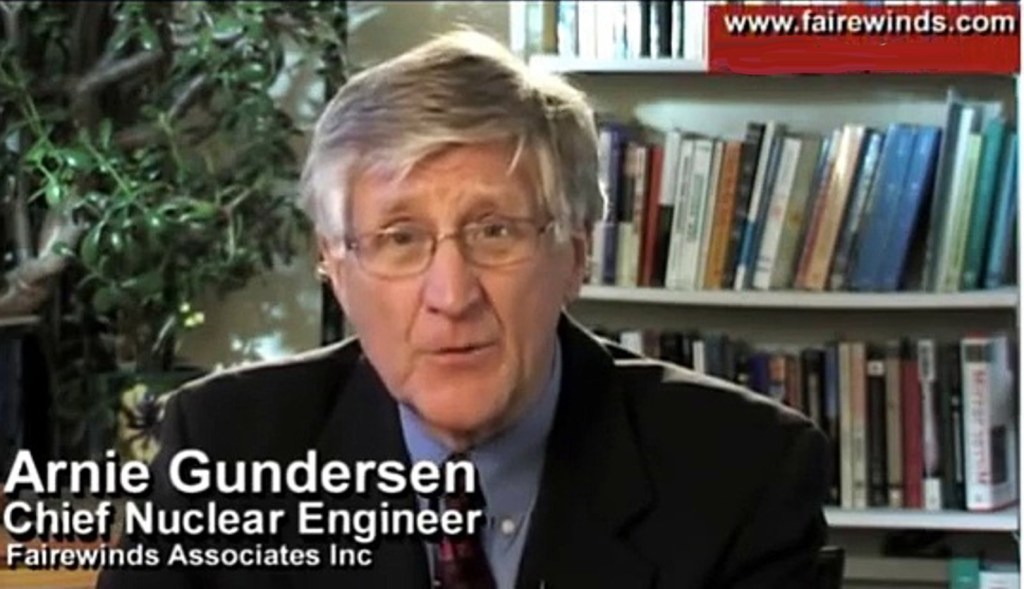
History shows a legacy of failures in the pursuit of the sodium reactor fantasy. As Admiral Rickover said almost 70 years ago, sodium reactors are “expensive to build, complex to operate, susceptible to prolonged shutdown as a result of even minor malfunctions, and difficult and time-consuming to repair.”
Mr. Gates, it’s time to face the music (and the facts) – your supposedly foolproof, sodium-cooled Natrium brainchild will encounter those same obstacles. In my fifty years of nuclear power expertise, I have learned that sooner or later, in any foolproof system, the fools are going to exceed the proofs. Now is the time to stop the Natrium marketing hype and instead use those precious public funds to pursue renewable energy options with a proven history of actually working inexpensively in a time frame that will prevent catastrophic climate change!
An Open Letter to Bill Gates About his Wyoming Atomic Reactor, https://www.counterpunch.org/2021/08/20/an-open-letter-to-bill-gates-about-his-wyoming-atomic-reactor/
BY ARNIE GUNDERSEN Dear Mr. Gates,
I am writing this open letter to you because I believe you have crossed the line by leveraging your fortune maneuvering State Governments and indeed the US Government to syphon precious taxpayer funds in support your latest atomic contrivance in Wyoming. How you spend your personal fortune is your decision and yours alone, but I question your zeal to leverage that fortune by securing additional public funds for an unproductive techno-solution[1] that claims to solve the climate crisis! Your latest technofix is the scheme to have taxpayers fund your new nuclear power concept in Wyoming, claiming that it will mitigate the climate crisis. It won’t!
Atomic power generation is not part of your skillset, but it is mine. The many facets of nuclear energy have been areas of my professional focus for the last 50 years. Beginning in 1971 with two nuclear engineering degrees, a Reactor Operator’s license, a corporate Senior Vice President position for an atomic licensee, a nuclear safety patent, two peer reviewed papers on radiation, and a best-selling book on Fukushima, nuclear power is in my wheelhouse, not yours.
Based on my experience, I am writing this public letter to express my fear that you have made a huge mistake by proposing to build a sodium-cooled small modular reactor (SMR) in Wyoming. Mr. Gates, your atomic power company Natrium (for the Latin word for sodium) is following in the footsteps of a seventy-year long record of sodium-cooled nuclear technological failures. Your plan to recycle those old failed attempts to resurrect liquid sodium yet again will siphon valuable public funds and research from much more inexpensive and proven renewable energy alternatives. Spending public funds on Natrium will make the global climate crisis worse, not better!
Let me explain why Natrium is doomed. As you probably have already been told, all present-day atomic reactors are cooled by water and are called Light Water Reactors (LWRs). Similarly, all US coal, oil, and gas-fired electric plants heat water, not exotic coolants. While some Small Modular Reactors concepts retain water cooling, Natrium’s proposed design deviates from this pattern by cooling the atomic chain reaction using an exotic coolant and specially designed steam generators to remove the atomic heat. Nuclear power concepts that do not use water for cooling are called Non-Light Water Reactors (or NLWRs), and Natrium claims that cooing with liquid sodium is safer and more reliable than traditional water-cooled reactors. What evidence exists to support that assertion?
World renowned energy economist Mycle Schneider calls Natrium and other proposed conceptual reactors “PowerPoint Reactors” as none are close to being fully designed yet all are being marketed as though their successful and safe operation were a fait accompli. According to Mycle Schneider, as reported in Politico EU:
All they have right now are basically PowerPoint reactors — it looks nice on the slide but they’re far from an operating pilot plant. We are more than a decade away from anything on the ground.”
The Union of Concerned Scientists (UCS) recently completed an exhaustive, 140-page study of the supposed safety improvements claimed by NLWR manufactures like Natrium. Entitled Advanced Isn’t Always Better, UCS concludes:
“But a fundamental question remains: Is different actually better? The short answer is no. Nearly all of the NLWRs currently on the drawing board fail to provide significant enough improvements over LWRs to justify their considerable risks.”
Recently, the media and governors in western states have become enthralled with one NLWR design hyped by you and your publicity team at Natrium. Using your successes at Microsoft, you are now asking state and national governments to bankroll a “fast reactor” concept that is cooled by liquid sodium.
“Wyoming To Lead The Coal-To-Nuclear Transition
Interest for new nuclear plants is growing beyond Wyoming as states in the western region like Montana, Nebraska, Utah, Idaho and North Dakota reevaluate the role of nuclear energy – particularly applications for advanced nuclear reactors … the brainchild of Bill Gates, … has developed a 345 MW sodium-cooled fast reactor with a molten salt-based energy storage system.”
The history of sodium as an atomic coolant does not support your grandiose claims for its success. Mr. Gates, the marketing hype associated with your latest “brainchild” ignores 70 years of failures using liquid sodium as an atomic reactor coolant. What follows are just a few examples of the monumental failures that have used liquid sodium that I am not so sure you have studied carefully before pressing for government funds in pursuit your idea.
According to Scientific American, liquid sodium “is no mere novelty; as dangerous as it is captivating… Sodium has significant disadvantages. On contact with air, it burns; plunged into water, it explodes.”
The Bulletin of Atomic Scientists goes even further stating:
“Unfortunately, this pitch glossed over stubborn facts… because plutonium fast-breeder reactors use liquid metal coolants, such as liquid sodium, operating them safely is far more challenging and expensive than conventional reactors. When private industry tried in the early 1960s to operate its own commercial-sized fast-breeder, Fermi I, the benefits were negative. Barely three years after Fermi 1 came online, a partial fuel meltdown in 1966 brought it down… These facts, however, are rarely emphasized….”
In addition to the meltdown at Fermi 1, whose failure is highlighted in the book We Almost Lost Detroit, other sodium cooled reactors have failed in the United States and worldwide. Beginning in 1950, the Navy attempted to develop a sodium-cooled reactor for the Seawolf submarine. According to the American Nuclear Society, Admiral Rickover, the founder of the nuclear Navy, testified to Congress in 1957 stating:
“We went to full power on the Seawolf alongside the dock on August 20 of last year. Shortly thereafter, she developed a small leak. It took us 3 months, working 24 hours a day, to locate and correct the leak. This is one of the serious difficulties in sodium plants.”
Rickover killed the Navy’s sodium powered reactor because of sodium leaks, sodium’s volatility and because sodium repairs take too long and radiation exposure to workers was too high. The problem of high radiation exposures to maintenance personnel while repairing inevitable sodium leaks was also highlighted by Rickover in that same 1957 testimony when he stated:
“Sodium becomes 30,000 times as radioactive as water. Furthermore, sodium has a half-life of 14.7 hours, while water has a half-life of about 8 seconds.”
Making rapid repairs in a sodium-cooled reactor is impossible because sodium becomes highly radioactive as it flows through the reactor core and it stays radioactive for weeks after shutdown. In contrast, water used to cool conventional reactors stays highly radioactive for about one minute.
After failed attempts to use liquid sodium on the Seawolf and on Fermi 1, nuclear zealots convinced the US Congress to subsidize yet another sodium-cooled reactor at Clinch River in Tennessee. The concept of a sodium reactor at Clinch River originated before the meltdown at Fermi 1, but was continued with huge government subsidies until 1984. Overcoming the safety issues presented by cooling atoms using liquid sodium led to delays and cost overruns that were certainly significant factors when the project was finally killed by Congress. However, serious, game-changing, safety concerns were also a factor in the cancelation of the project. According to The Rise and Demise of the Clinch River Breeder Reactor in Scientific American:
“In 1982 … the Energy Department videotaped safety tests it had conducted of how molten sodium might react once it came in contact with the reactor’s concrete containment structure. Concrete contains water crystals. Molten sodium reacts explosively when it comes in contact with oxygen, including oxygen contained in water. What the test demonstrated and the video showed was concrete exploding when it came in contact with liquid sodium.”
Even after the cancelation of the Clinch River fiasco, those same nuclear zealots continued to pursue the fantasy of a sodium-cooled reactor at the Monju site in Japan. Construction began in 1985 and about a decade later, the Monju sodium-cooled reactor was finally ready to operate. It did not operate long, however. After operating only 4 months, Monju had an emergency shutdown when the inevitable sodium leak caused an inevitable sodium fire.
According to a report issued by the Monju Construction Office entitled Sodium Leak at Monju-Causes and Consequences, the failure mode that caused the leak could not have been anticipated by Monju’s designers.
“On December 8, 1995, a sodium leak from the Secondary Heat Transport System (SHTS) occurred in a piping room of the reactor auxiliary building at Monju. The sodium leaked through a thermocouple temperature sensor due to the breakage of the well tube of the sensor installed near the outlet of the Intermediate Heat Exchanger (IHX) in SHTS Loop C… On the basis of the investigations, it was concluded that the breakage of the thermocouple well was caused by high cycle fatigue due to flow induced vibration in the direction of sodium flow.”
After ten years of construction, Monju’s four months of operation were followed by a fifteen year shutdown, Monju again restarted in 2010, but operated for less than a year when the equipment used for refueling fell into the reactor while a refueling was in progress. It never restarted. The simple fact is that the Monju sodium reactor took ten years to construct, ran intermittently for one year, and failed operate for twenty years. And then there is the matter of Japan’s government subsidized costs which exceeded $11 Billion USD.

“The move to shut the Monju prototype fast breeder reactor in Fukui prefecture west of Tokyo adds to a list of failed attempts around the world to make the technology commercially viable and potentially cut stockpiles of dangerous nuclear waste…. With Monju’s shutdown, Japan’s taxpayers are now left with an estimated bill of at least 375 billion yen ($3.2 billion) to decommission its reactor, on top of the 1 trillion yen ($8.5 billion) spent on the project.”
A half a world away from Japan, France generates 75% of its electricity for light water cooled atomic reactors and has also considered sodium reactors. Given the repeated failures of sodium-cooled technology in Japan and the US, and with the falling price of renewable power, in 2019 France chose not to pursue the path chosen by you and Natrium. According to Reuters, France has decided to pull the plug on its sodium-cooled reactor designs for at least half a century!
PARIS (Reuters) – France’s CEA nuclear agency has dropped plans to build a prototype sodium-cooled nuclear reactor, it said on Friday, after decades of research and hundreds of millions of euros in development costs. Confirming a report in daily newspaper Le Monde, the state agency said it …is no longer planning to build a prototype in the short or medium term. “In the current energy market situation, the perspective of industrial development of fourth-generation reactors is not planned before the second half of this century,”
There are more reports I could outline but I think I have made my point! History shows a legacy of failures in the pursuit of the sodium reactor fantasy. As Admiral Rickover said almost 70 years ago, sodium reactors are “expensive to build, complex to operate, susceptible to prolonged shutdown as a result of even minor malfunctions, and difficult and time-consuming to repair.”
Mr. Gates, it’s time to face the music (and the facts) – your supposedly foolproof, sodium-cooled Natrium brainchild will encounter those same obstacles. In my fifty years of nuclear power expertise, I have learned that sooner or later, in any foolproof system, the fools are going to exceed the proofs. Now is the time to stop the Natrium marketing hype and instead use those precious public funds to pursue renewable energy options with a proven history of actually working inexpensively in a time frame that will prevent catastrophic climate change!
Signed,
Arnold “Arnie” Gundersen
The military-industrial complex had a successful Afghanistan war – better still than Vietnam. The next will be better, and by remote warfare.
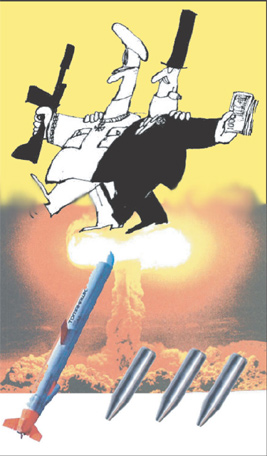
For the military-industrial complex it (Vietnam) was a successful war. And they learned lessons from it.
For them the war ended too early. Profits fell.
In the words of George Orwell in the book 1984, “The war is not meant to be won, it is meant to be continuous.”
Moreover, it is meant to be far away and beyond the attention of the citizenry.
The military-industrial complex keeps learning and profiting. Now it’s remote warfare instead of boots on the ground.
Successes in Afghanistan and Vietnam, Crispin Hull, http://www.crispinhull.com.au/2021/08/20/afghan-and-vietnam-successes/?utm_source=mailpoet&utm_medium=email&utm_campaign=crispin-hull-column-16-nov-2019_99
When US Secretary of State Antony Blinken said this is “not Saigon”, everyone rightly scoffed. It was a mirror image right down to near identical photos of US helicopters evacuating the embassy in Kabul just as in Saigon 46 years earlier – another delusional re-run of a failed US foreign policy. When will they ever learn?
But there is another way of looking at this. Vietnam, Afghanistan and Iraq were highly successful missions. If just depends on whose eyes you are looking through.
The big mistake is to imagine that the US mission in these countries was to ensure peace, liberty, democracy and prosperity for their people.
Some US entities learned a lot from Vietnam and applied it in Afghanistan and Iraq.
This might sound a little off the planet, but we must go back to 1961 to get a clearer picture and quote Republican President Dwight Eisenhower’s farewell address:
“Until the latest of our world conflicts [World War II], the United States had no armaments industry. [Now] we have been compelled to create a permanent armaments industry of vast proportions . . . .
“Now this conjunction of an immense military establishment and a large arms industry is new in the American experience. The total influence – economic, political, even spiritual – is felt in every city, every Statehouse, every office of the Federal government. We recognize the imperative need for this development. Yet, we must not fail to comprehend its grave implications. Our toil, resources, and livelihood are all involved. So is the very structure of our society.
“In the councils of government, we must guard against the acquisition of unwarranted influence, whether sought or unsought, by the military-industrial complex. The potential for the disastrous rise of misplaced power exists and will persist. We must never let the weight of this combination endanger our liberties or democratic processes. We should take nothing for granted.
Only an alert and knowledgeable citizenry can compel the proper meshing of the huge industrial and military machinery of defense with our peaceful methods and goals, so that security and liberty may prosper together.”
Alas, those in the “councils of government” did not heed the warning. To the contrary, they fell under the spell of the military-industrial complex. Subsequent Presidents, up to but not including Trump, have done its bidding and enriched the management and shareholders of the weapons makers and the vast array of suppliers of equipment, food, clothes and shelter to the military.
Those Presidents were all supporters of big military spending. Meanwhile, the corporations with labyrinthal efficiency set up their manufacturing and supply chains in as many congressional districts as they could. They plied their influence in the Washington beltway. None in the councils of government dared defy them.
The military-industrial complex and those elected in both parties and those in the bureaucracy symbiotically egged each other on to ramp up the US military presence in Vietnam.
The US spent $US1 trillion in today’s money in Vietnam. A great deal of that went in profits to US corporations. Only 17 per cent went to nation-building in Vietnam, and much of that went to US contractors.
For the military-industrial complex it was a successful war. And they learned lessons from it.
For them the war ended too early. Profits fell.
The main lessons for them were that Vietnam was a television war. The cameras went everywhere. It also required conscription. Those two things undermine public apathy. And public apathy is essential for the prosecution of a profitable war.
TV and conscription made for, in Eisenhower’s words, “an alert and knowledgeable citizenry”. So, for the military-industrial complex, the Vietnam war was a dismally short war.
In the words of George Orwell in the book 1984, “The war is not meant to be won, it is meant to be continuous.”
Moreover, it is meant to be far away and beyond the attention of the citizenry.
Next time round, journalists would be embedded with (and controlled by) the military. There would be no conscription. There would be proud mothers and daughters, not angry ones. And the rest of the population would be oblivious, apathetic, inattentive and unknowledgeable.
The military-industrial complex had a very successful 20-year war in Afghanistan, greatly profiting from the $2 trillion the US spent there, and a similarly successful stint in Iraq.
The money did not go to the Vietnamese, the Iraqis or Afghans. It went to the likes of Lockheed and Halliburton.
The only President since Eisenhower to see and seek to stamp out the influence of the military-industrial complex was Trump.
Like Eisenhower, Trump did not come from the political establishment. He saw the wars as a waste of money and vowed to end them. When Obama tried to do the same in 2009, the military-industrial complex conned him into a “surge” of 17,000 more US troops.
Trump ended the Afghan war. It was about the only good thing he did in his presidency. It was never going to go smoothly. The military-industrial complex even conned President Joe Biden into believing that all the money it had wasted on training an Afghan army and police force would enable them to hold off the Taliban for a reasonable time for an evacuation. But there was nothing there.
At these times we shake our head and look at the “cost” and wonder how it took so long to get out. We should look at it the other way. Who profited from the wars and why did the US (and Australia) take such a short time to go in?
The military-industrial complex keeps learning and profiting. Now it’s remote warfare instead of boots on the ground.
The citizenry must get alert to this. It should demand that the US stop its arms exports and prosecution of continuous war. And Australia’s citizenry do likewise.
1 This Month


Pine Ridge Uranium is the real threat, not Tehran- Tell Burgum: Stop the Extraction.
Chernobyl: The Lost Tapes – A good documentary on Chernobyl on SBS available On Demand for the next 3 weeks– https://www.sbs.com.au/ondemand/tv-program/chernobyl-the-lost-tapes/2352741955560
To see nuclear-related stories in greater depth and intensity – go to https://nuclearinformation.wordpress.com
-
Archives
- April 2026 (288)
- March 2026 (251)
- February 2026 (268)
- January 2026 (308)
- December 2025 (358)
- November 2025 (359)
- October 2025 (376)
- September 2025 (257)
- August 2025 (319)
- July 2025 (230)
- June 2025 (348)
- May 2025 (261)
-
Categories
- 1
- 1 NUCLEAR ISSUES
- business and costs
- climate change
- culture and arts
- ENERGY
- environment
- health
- history
- indigenous issues
- Legal
- marketing of nuclear
- media
- opposition to nuclear
- PERSONAL STORIES
- politics
- politics international
- Religion and ethics
- safety
- secrets,lies and civil liberties
- spinbuster
- technology
- Uranium
- wastes
- weapons and war
- Women
- 2 WORLD
- ACTION
- AFRICA
- Atrocities
- AUSTRALIA
- Christina's notes
- Christina's themes
- culture and arts
- Events
- Fuk 2022
- Fuk 2023
- Fukushima 2017
- Fukushima 2018
- fukushima 2019
- Fukushima 2020
- Fukushima 2021
- general
- global warming
- Humour (God we need it)
- Nuclear
- RARE EARTHS
- Reference
- resources – print
- Resources -audiovicual
- Weekly Newsletter
- World
- World Nuclear
- YouTube
-
RSS
Entries RSS
Comments RSS
 nuclear-news