Fire, floods ravage Russia, threaten nuclear research site
Fire, floods ravage Russia, threaten nuclear research site https://www.dailysabah.com/world/europe/fire-floods-ravage-russia-threaten-nuclear-research-site, BY GERMAN PRESS AGENCY – DPA MOSCOW EUROPE AUG 08, 2021 AAfter reports of over 250 fires ravaging through Russia, blazes now threaten a nuclear research center in the city of Sarov, prompting a state of emergency, officials said on Sunday.
The danger level was boosted as fires near Nizhny Novgorod are spreading and the change in status makes it easier to mobilize extra firefighting forces, according to city officials.
But it is only one of 250 fires Russia is currently trying to extinguish throughout the country. The Siberian region of Sakha, in the country’s northeast, has been hit particularly hard. Dozens of houses have burned down and residents have been evacuated to safety.
Meanwhile, state TV showed images of cities in the Irkutsk and Krasnoyarsk regions enveloped in smoke.
Authorities said that, nationwide, about 3.5 million hectares are burning – about the combined area of Serbia and Montenegro. Weather experts and Greenpeace spoke of the worst fires in the history of Russian record keeping.
On the flip side, emergency crews in the Amur region, which borders China, are battling floods after heavy rainfalls. About 80 kilometers (about 50 miles) of streets and six bridges are underwater, with about 24 communities cut off from the outside world due to flooding along the Amur River said the regional transportation minister, Alexander Selenin.
The hard fought campaign continues – to ban nuclear weapons.
Public statement on the nuclear assassination of Hiroshima and Nagasaki https://www.pressenza.com/2021/08/public-statement-on-the-nuclear-assassination-of-hiroshima-and-nagasaki/07.08.21 – World without Wars and Violence It was a warm northern morning on 6 August 1945 in the city of Hiroshima, and despite the war, the atmosphere was somewhat normal, far from the scenes of war, with children going to school and the elderly going to work. Nothing foreshadowed the horror they would later experience when a powerful nuclear bomb would wipe out their lives forever. Neither children nor adults anywhere on earth ever imagined that anyone in this world would be capable of inflicting such an atrocity on their fellow human beings. Women and children burned, mutilated, their skin and eyes hanging out was the first Dantesque image of that horrific morning, then the effects of radiation that caused agony just as painful and prolonged.
World without Wars and Violence remembers with sadness one more year the fateful nuclear explosions of Hiroshima and Nagasaki 76 years ago, and does so in a hopeful attempt to ensure that such a horrific event can never happen again, in the naïve hope that the conscience of the human species has evolved enough not to do something so abhorrent again.
World without Wars and Violence, a member of the International Action Network on Nuclear Weapons (ICAN), a network that received the 2017 Nobel Peace Prize for its contribution to the drafting of a Treaty to Ban Nuclear Weapons. The Treaty was approved at the United Nations on 7 July 2017 with the approval of 122 nations, opened for signature on 20 September 2017, and finally entered into force on 22 January 2021 with 55 states having ratified it to date.
World without War argues that the campaign to ban nuclear weapons has been hard fought and wide-ranging, and will continue to be so until the vast majority of the world’s countries ratify the Treaty, including the nine nuclear weapons states, namely the United States, Russia, China, France, the United Kingdom, Israel, India, Pakistan and North Korea. Although these countries have not signed the Treaty, there are some that have indicated their willingness to do so if the others, especially the United States, do so. And while most European countries do not have them, they do have nuclear missile sites, being allies of the nuclear-weapon states in NATO.
Many efforts are being made at all levels, says World without Wars, to bring about a break with this Atlantic organisation, not only in terms of ratifying the ban on nuclear weapons, but also as an alliance, because it is considered a belligerent and expansionist organisation.
World without Wars also adds that campaigns are being carried out to get cities around the world to adhere to the idea of approving a treaty banning nuclear weapons, which has been very fruitful as more than a hundred cities around the world have given their support to the ban.
Similarly, a Network of Parliamentarians for the Prohibition of Nuclear Weapons has been formed and has been signed by hundreds of parliamentarians around the world. Not to mention the numerous professional organisations such as the Physicians for a Nuclear Ban, who are campaigning for support and holding events. It is worth noting that there are 607 ICAN member organisations in 106 countries, which shows the massiveness of the campaign for the abolition and elimination of these diabolical devices.
In this regard, Beatrice Fihn, ICAN’s executive director, upon receiving the Nobel Peace Prize, said forcefully: “Nuclear weapons as well as chemical weapons, biological weapons, cluster bombs and landmines are now illegal. Their existence is immoral. Their abolition is in our hands. The end is inevitable. But will that end be the end of nuclear weapons or the end of us? We must choose one. We are a movement for rationality, for democracy, for freedom from fear”.
Pope Francis, the leader of the Catholic world, also said: “We must never stop working in support of the major international legal instruments on nuclear non-proliferation and disarmament, including the Treaty on the Prohibition of Nuclear Weapons”.
Despite this enormous support from civil society around the world for the prohibition of nuclear weapons, there is a lack of political will on the part of first world leaders to eliminate nuclear weapons from their nuclear arsenals and to sustain the World without Wars, as they are clearly not respecting the will of the vast majority of the world’s population who want to get rid of them for good as a threat to their very survival. And even though recently at their meeting in Geneva the top representatives of nuclear power, Biden and Putin, declared that a nuclear war should never be started because no one would gain from it, it is not understood why they do not commit themselves to dismantling their arsenals. And the reasons may be, according to this organisation:
Mutual distrust that there is real disarmament between the adversaries.
The stubborn insistence that their existence has prevented a third conventional world war.
The high economic interests involved in the nuclear industry
Trillions of dollars continue to be invested in the maintenance and development of nuclear weapons, with no real commitment to their elimination. Thus, despite the fact that nuclear weapons are now illegal under the Treaty on the Prohibition of Nuclear Weapons (CTBT), the governments that possess them continue to go against the will of their people, their own citizens who elected them, argues World without Wars.
t is incomprehensible how the only country that has been the victim of a nuclear detonation, Japan, can have as a military ally the country that nuclear bombed it, just because it has a nuclear umbrella that is supposed to prevent a nuclear attack by China or North Korea, going against the will of the vast majority of the Japanese population who detest nuclear weapons with good reason.
One of the survivors (hibakusha) of the holocaust, Setzuko Thurlow said on receiving the Nobel Peace Prize in Oslo: “To all presidents and prime ministers of all nations I plead: join this Treaty, eradicate forever the threat of nuclear annihilation. As a thirteen-year-old girl, trapped in smoking rubble, I kept pushing and moving towards the light. I survived. Our light is now the Ban Treaty. To everyone in this room and to everyone listening in the world, I repeat those words I heard calling to me in the ruins of Hiroshima. Don’t give up. Keep pushing. Do you see the light? Crawl towards it.
World without Wars and Violence has taken up his call and is organising marches all over the world where the abolition and total elimination of nuclear weapons is among its cardinal objectives. Precisely on July 18 it launched its Latin American March which begins on September 15 and concludes in Costa Rica on October 2, the International Day of Nonviolence.
Undoubtedly, we must begin to do what has not been done for centuries, what has never been done in the history of humanity, which is to build and strengthen trust between all the countries of the world, to change the paradigm of competition for power and natural resources, of egoistic nationalism, for collaboration and mutual cooperation between all nations, for overcoming racial, religious and political antagonisms and building a Great Universal Human Nation in which the union and tolerance of all cultures prevails over all differences and a multilateralism of true United Nations working for a better common destiny for all the peoples of the earth is achieved.
We are at the final crossroads of our human civilisation, and we have a historic opportunity to move towards a wonderful future for the human species. It all depends on each one of us.
Costs of Ontario’s nuclear program will be the burden of the great-grandchildren of babies born in 2021.
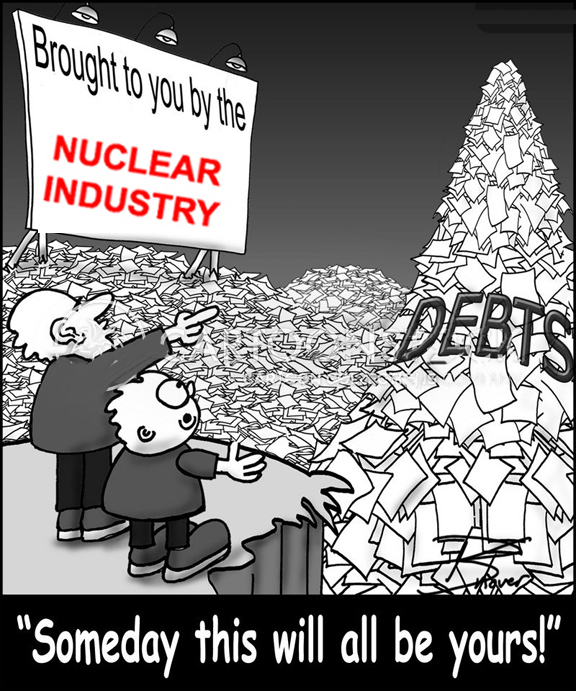
Ontario’s Unfunded Nuclear Decommissioning Liability Is In The $18–$27 Billion CAD Range Clean Technica, By Michael Barnard 8 Aug 21, Ontario’s nuclear program will be a fiscal burden on Ontarian’s to the tune of around $40 billion CAD which will be spent through roughly 2135, finally being paid off by the great-grandchildren of babies born in 2021.
Late last year I worked up the likely amount of public money that would have to be thrown at the nuclear industry in order to successfully and safely decommission the 100 operational reactors and the now shut down ones. Unsurprisingly, the nuclear industry had been very optimistic in its estimates of decommissioning costs and timeframes, when the global empirical averages were trending to a billion USD and 100 years per reactor.
Recently I was asked by an Ontario journalist what I thought the likely situation in Ontario would be, and whether the decommissioning trusts were equally underfunded. I was unsurprised to find that Canada is in the same boat as the US, with highly optimistic schedule and cost projections which belie Canadian empirical experience with the CANDU reactor, and that the fund had nowhere near the money necessary for the job. Let’s run the numbers.
Ontario Power Generation (OPG) is the chunk of the provincial utility that was carved apart in the late 1990s by the Mike Harris Conservatives to handle generation alone. It operates 18 aging CANDU reactors across three sites: Bruce, Pickering, and Darlington.
OPG has a nuclear decommissioning fund of about $5 billion CAD or US$4 billion right now. If the experience of other countries on the actual cost of a billion USD per reactor and an actual timeline of decommissioning of a century holds true, and I see no reason why it doesn’t, that means that there is currently a $17.5 billion CAD gap in Ontario, in addition to the existing $19.3 billion CAD in debt still being serviced from their construction. When the government of the era split up the utility, it moved all of the debt off of the components and into general debt. One of the many appropriate and sensible things that the McGuinty Administration did in the 2000s, in addition to shutting down coal generation entirely, was to move the debt back into the utility and set about servicing it from utility bills.
Most of the reactors at Bruce Nuclear are aging out, with several over 40 years old and the remainder approaching 40. Darlington’s are around 30, so they have a bit of runway. Pickering’s reactors are going to be shut down in 2024 and 2025 and start decommissioning in 2028. While refurbishment could bridge Ontario’s for another 20 years in many cases, that’s expensive and typically won’t pass any economic viability assessment compared to alternatives.
The likelihood is that all reactors in Ontario will reach end of life by 2035, and be replaced by some combination of renewable energy and HVDC transmission from neighboring jurisdictions, with both Manitoba and Quebec having excellent, low-carbon hydroelectric to spare…………
So yes, Ontario’s nuclear program will be a fiscal burden on Ontarians to the tune of around $40 billion CAD which will be spent through roughly 2135, finally being paid off by the great-grandchildren of babies born in 2021.
Nuclear, the gift that keeps on giving. https://cleantechnica.com/2021/08/06/ontarios-unfunded-nuclear-decommissioning-liability-is-in-the-18-27-billion-cad-range/
Now, in the times of the UN Nuclear Ban Treaty, nuclear deterrence continues, but becomes increasingly discredited
Nuclear deterrence is an idea that became a potentially lethal ideology, one that remains influential despite having been increasingly discredited…………….
Spectres Of Nuclear ‘MAD’ness: Between Deterrence And Survival – Eurasia Review August 8, 2021K.M. Seethi With the Treaty on the Prohibition of Nuclear Weapons (TPNW) in place, is there an optimistic scenario of a nuclear-weapon free world? This might certainly be a difficult but persistently challenging question the world has been grappling with ever since the cities of Hiroshima and Nagasaki were devastated by atomic bombs, way back in 1945.
Spectres of nuclear holocaust have been haunting political communities across the world even after the end of Cold War. While the world’s most powerful nuclear-weapon states (NWS) have been locked in a military logjam—often characterised as ‘Mutually Assured Destruction’ (MAD)—a few states in Asia (including threshold states like Iran) still get absorbed in the logic of ‘limited nuclear deterrence.’………………
Nukes Accumulation
Paradoxical it may seem, the Asian continent has again become a hotbed of global nuclear threats with several nuclear-weapon states now spanning fault lines running through East Asia, in the Korean Peninsula, China’s eastern and southern coastline and across the Himalayas in South Asia and West Asia–and all of them presently recalibrating their nuclear profiles. And the share of Asia in the ‘horizontal proliferation’ is quite significant. As per the data brought out by the Stockholm International Peace Research Institute (SIPRI), the NWS—the United States, Russia, the United Kingdom, France, China, India, Pakistan, Israel and North Kore—together have in their arsenal an estimated 13,080 nuclear weapons at the beginning of 2021. While Russia (6255) and the U.S. (5550) possess more than 90 per cent of the world’s nuclear weapons, China has 350 weapons in its inventory, followed by France (290), UK (225), Pakistan (165), India (156), Israel (90), and North.
Nuclear Ban Regime
The efforts seeking a legally mandatory instrument to ban nuclear weapons have long been underway. However, they have found a new relevance in the past decade with the increasing awareness about the humanitarian and environmental costs of use of nuclear arms. ……………… culminated in the passing of a resolution (71/258) by the UN General Assembly in 2017 to negotiate a legally binding instrument to ban nuclear weapons, leading towards their total elimination. And the Conference was held from 27 to 31 March and from 15 June to 7 July in New York which led to the TPNW. (Treaty for the Prohibition of Nuclear Weapons)
The Treaty envisages a broad set of regulations for prohibition on partaking in any nuclear weapon programmes and activities. These regulatory clauses stipulate that the signatories shall “not develop, test, produce, acquire, possess, stockpile, use or threaten to use nuclear weapons.” It also forbids “the deployment of nuclear weapons on national territory and the provision of assistance to any State in the conduct of prohibited activities.” The Treaty also makes it mandatory for the signatories “to provide adequate assistance to individuals affected by the use or testing of nuclear weapons, as well as to take necessary and appropriate measure of environmental remediation in areas under its jurisdiction or control contaminated as a result of activities related to the testing or use of nuclear weapons.”
TPNW was adopted (by a vote of 122 States in favour, with one vote against and one abstention) at the United Nations on 7 July 2017, and opened for signature by the Secretary-General on 20 September 2017. Following the deposit with the Secretary-General of the 50th instrument of ratification or accession of the Treaty on 24 October 2020, it entered into force on 22 January 2021 in accordance with its Article 15 (1).
‘Consensus’ For Opposition!
TPNW, which currently has 86 signatory states, has been totally ignored by the NWS and NATO member states. ‘Consensus’ among the NWS in regard to their opposition to the Treaty could also be a grim reminder. For example, in a joint statement made at the First Committee of the 73rd session of the UN General Assembly in October 2018, Russia, China, UK, U.S. and France had informed that they would not sign the TPNW. The statement says: “We will not support, sign or ratify this Treaty. The TPNW will not be binding on our countries, and we do not accept any claim that it contributes to the development of customary international law; nor does it set any new standards or norms. We call on all countries that are considering supporting the TPNW to reflect seriously on its implications for international peace and security.” ………………………..
Between Deterrence and Survival
In his The Evolution of Nuclear Strategy (1989), Lawrence Freedman says, “The Emperor Deterrence may have no clothes, but he is still Emperor.” David Barash adds: “Despite his nakedness, this emperor continues to strut about, receiving deference he doesn’t deserve, while endangering the entire world. Nuclear deterrence is an idea that became a potentially lethal ideology, one that remains influential despite having been increasingly discredited…………….
Way back in 1955, the well-known Russell-Einstein Manifesto had warned of the perils of nuclear weapons. This declaration put across what Bertrand Russell and Albert Einstein called “the stark and dreadful and inescapable” problem of the nuclear age: “Shall we put an end to the human race; or shall mankind renounce war?” Given the continuing proliferation tempo, both vertically and horizontally, peace loving people across the world can never abandon the dream of achieving the elimination of nuclear weapons from the face of the earth. The risk of catastrophic misuse of nuclear weapons, deliberately or―more likely―by accident or miscalculation, is as grave and immediate as it has ever been. And the existential threat nuclear weapons pose to life on this planet is as significant as those of climate change and global pandemic, and in many ways more immediate.
*The author is Director, Inter University Centre for Social Science Research and Extension (IUCSSRE), Mahatma Gandhi University, Kerala who also served as Dean and Professor of International Relations, MGU. He can be contacted at kmseethimgu@gmail.com https://www.eurasiareview.com/08082021-spectres-of-nuclear-madness-between-deterrence-and-survival-oped/
The ”Think Tanks” that get funding from nuclear weapons makers

The countries, companies and think tanks that support the deadly nuclear arms trade, From ICAN 8 Aug 21, ”’……………Think tank reported income from nuclear weapon producers
Atlantic Council: $835,000 – $1,724,998
Brookings Institution: $275,000 – $549,998
Carnegie Endowment for International Peace: $50,000 – 199,998
Center for New American Security: $1,085,000 – $1,874,991
Center for Strategic and International Studies: $1,530,000 – $2,794,997
Fondation pour la recherche stratégique (FRS): amount not specified
French Institute of International Relations: amount not specified
Hudson Institute: $170,000 – $350,000
International Institute of Strategic Studies: $800,640 – $1,146,744
Observer Research Foundation: $71,539
Royal United Services Institute: $610,210 – $1,445,581
Stimson Center: $50,500
Total $5 – 10 million
Headline photo: “Nuclear Nightmare – Open Your Eyes And Awake !” by Daniel Arrhakis is licensed under CC BY-NC 2.0 https://wordpress.com/read/feeds/72759838/posts/3488978062
more https://wordpress.com/read/feeds/72759838/posts/3488978062
Stockton Professor: Nuclear Power is “Terrible Neighbor
Stockton Professor: Nuclear Power is “Terrible Neighbor” https://ocnjdaily.com/stockton-professor-nuclear-power-terrible-neighbor/ By MediaWize – August 8, 2021 By DR. JOHN AITKEN Ph.D., Adjunct Professor of Physics, Stockton University
Opponents of the Ocean Wind turbine project spoke in favor of using nuclear power as an alternative to the wind power at the July 27 Michael Shellenberger presentation sponsored by Save Our Shores in Ocean City.
The speaker stated that that while climate change is indeed real, the only solution to reducing carbon emissions is nuclear power, contrary to the position of many environmental organizations.
His proposals to pursue solely nuclear power did not mention its disadvantages and costs. Nuclear power operates carbon free as do solar and wind power, but unlike them, nuclear generates large quantities of dangerous waste that are difficult to dispose of and costly to manage.
Nuclear power can supply an unlimited amount of power but creates an unlimited amount of hazardous nuclear waste requiring storage for at least 300 years. Nuclear power may be a useful servant but it is a terrible neighbor.
Take the example of the Oyster Creek nuclear plant 35 miles north of Atlantic City. After approximately 50 years of service it is being decommissioned due to its inability to compete with cheaper natural gas.
In the 1960s, Lacey Township signed up to host the plant. What they did not realize at the time was that they had signed a deal with devil. The town had traded its own long-term safety for the benefits of good paying jobs and reduced property taxes.
Due to environmental and transportation concerns, nuclear waste storage sites in Nevada or Washington state promised by the federal government never materialized, leaving local plants on their own to store their nuclear waste on site for decades if not centuries.
The costs associated with decommissioning the nuclear site, estimated between $800 million and $1.4 billion, are another legacy left by the plant. The original owner/operator of the plant, Exelon, sold the plant to another company who will execute the decommissioning plan. For the rest of this article I will refer to this decommissioning company as DC.
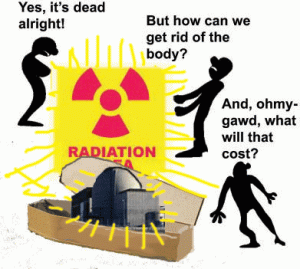
While the project is supported by a decommissioning fund, likely cost overruns will be paid by future generations through their utility bills. The costs cover the removal and deactivation of spent nuclear fuel, control rods, the reactor and associated buildings, which themselves have become radioactive from exposure to radiation.
But now, with decommissioning approaching, the township is paying the piper dearly for the good years. Oyster Creek Nuclear Plant has been shut down. The spent nuclear fuel and radioactive debris from the reactor and the associated buildings will be stored in 68 cylindrical casks, each 22 feet high and 11 feet in diameter, emitting low levels of radiation on the now-defunct site. The casks must remain intact for at least 300 years to allow the radioactivity of the waste inside to decay to handleable levels.
DC is now in charge of the decommissioning project. DC makes no commitment as to how long, decades or even centuries, these casks will have to remain on the Lacey Township site in close proximity to homes and schools.
Nor is there a guarantee that the casks, manufactured by DC, will remain intact during the 300-year storage period. Lacey Township at first sued DC to prevent the storage of these casks on the site. After a long legal battle, Lacey settled the lawsuit with them, acquiescing to the onsite storage on the condition that DC would build and assign another cask for emergency use by the township.
The Lacey Township decision shows it is a virtual prisoner of DC, which now owns the nuclear waste but is also the town’s only hope of restoring the site to radiation-free conditions.
Operating nuclear plants are also a continual hazard to the communities where they are sited. Nuclear plants do not pose a threat of nuclear explosion. Their Achilles heel is the plumbing, which brings water in and out of the reactor vessels.
The water pipes, degraded by the nuclear reactions, develop cracks and eventually leak water with radioactive contaminants. This water can leak into the local water supply and cause cancer or DNA damage to people who drink it.
As shown by the Oyster Creek experience, nuclear power is costly, dangerous and unmanageable. Those in favor of nuclear power should be ready to accept nuclear power stations in their own backyards and relive the Lacey Township experience. Nuclear power makes a terrible neighbor.
Bribing politicians pays off for weapons companies

The countries, companies and think tanks that support the deadly nuclear arms trade, From ICAN 8 Aug 21,
” ………….Company defence contract awards and defence lobby spending in 2020
Aerojet Rocketdyne: Awarded: $132 million Spent lobbying: $2.3 million
Airbus: Awarded: $170 million Spent lobbying: $6.1 million
BAE Systems: Awarded: $10.8 billion ($72.5 million for nuclear weapons) Spent lobbying: $5.6 million
Bechtel: Awarded: $2.9 billion Spent lobbying: $990,000
Boeing: Awarded: $50 billion ($105 million for nuclear weapons) Spent lobbying: $15.6 million
Constructions Industrielles de la Méditerranée (CNIM): Awarded: $39.1 million Spent lobbying: $17,226
Charles Stark Draper Laboratory: Awarded: $443.5 million ($342.3 million for nuclear weapons) Spent lobbying: $120,000
Fluor: Awarded: $3.9 billion Spent lobbying: $5.1 million
General Dynamics: Awarded: $39.4 billion ($10.8 billion for nuclear weapons) Spent lobbying: $13.9 million
Honeywell International: Awarded: $14 billion ($41.6 million for nuclear weapons) Spent lobbying: $7.4 million
Huntington Ingalls Industries: Awarded: $7.4 billion ($53 million for nuclear weapons); Spent lobbying: $5.2 million
Jacobs Engineering: Awarded: $2.6 billion Spent lobbying: $900,000
L3 Harris Technologies: Awarded: $5.6 billion ($60 million for nuclear weapons) Spent lobbying: $200,000
Leidos: Awarded: $10.8 billion Spent lobbying: $2.4 million
Leonardo: Awarded: $728.8 million Spent lobbying: $86,644
Lockheed Martin: Awarded: $124.5 billion ($2.1 billion for nuclear weapons) Spent lobbying: $15 million
Northrop Grumman: Awarded: 29.1 billion ($13.7 billion for nuclear weapons) Spent lobbying: $13.3 million
Raytheon Technologies Corporation: Awarded: $27.5 billion ($450 million for nuclear weapons) Spent lobbying: $15.2 million
Safran: Awarded: $12.3 million Spent lobbying: $382,211
Serco: Awarded: $896 million Spent lobbying: $420,000
Textron: Awarded: $1.8 billion ($3.2 million for nuclear weapons) Spent lobbying: $5.1 million
Total: Awarded: $332 billion ($27.7 billion for nuclear weapons) Spent lobbying: $117 million………
more https://wordpress.com/read/feeds/72759838/posts/3488978062
EU optimistic on nuclear deal despite Iran leadership change
EU optimistic on nuclear deal despite Iran leadership change
Agreement is “most likely scenario” says senior official Politico BY JACOPO BARIGAZZI, August 7, 2021 European Union negotiators are optimistic on the chances of reviving the nuclear deal with Iran, despite the election of hardliner Ebrahim Raisi as the country’s new president, a senior EU official said Saturday.
“We still think that the most likely scenario is an agreement. What I cannot tell you is when and [under] what conditions” said the senior official.
International negotiators have held six rounds of talks in Vienna to restore full compliance with the 2015 nuclear deal which has been on life support since the Trump administration’s decision to pull out in 2018. The deal curbed Tehran’s nuclear ambitions in exchange for sanctions relief.
Negotiations were paused following the election of Raisi in June. He was sworn in this week to replace the more moderate Hassan Rouhani.
Contacts this week with Iranian officials on the sidelines of Raisi’s inauguration have not clarified when talks on the nuclear deal will resume or who will be in Tehran’s negotiating team, said the EU official, who spoke on condition of anonymity due to the sensitivity of the talks……………….. https://www.politico.eu/article/eu-iran-nuclear-deal-leadership-vienna/
Towards a clean and sustainable energy system: 26 criteria nuclear power does not meet

Towards a clean and sustainable energy system: 26 criteria nuclear power does not meet https://eu.boell.org/en/2021/04/22/towards-clean-and-sustainable-energy-system-26-criteria-nuclear-power-does-not-meet
By Jan HaverkampRead our dossier “Nuclear Power in Europe: 35 Years After the Chernobyl Disaster“. Nuclear energy has been brought back into the European energy debate due to populist power. Currently, a complex debate is taking place within the EU about whether nuclear power should be part of the Taxonomy for Sustainable Activities. Nuclear energy does not meet a number of basic criteria that should be a requirement of technologies in a sustainable energy policy. It only became clear slowly after the introduction of the first nuclear power plants that nuclear energy does not meet these criteria. In the 1970s, however, this crystallised in a thorough nuclear energy critique on a technical, economic, social and political level. Over the last 50 years, the nuclear industry has not been able to overcome these problems. Certain ways of approaching them have changed, however: some risks have been counteracted by dint of expensive safety and security measures, so that the problem has shifted partly, but still not sufficiently, from risk to costs.
It is currently argued that we should keep existing nuclear power plants open longer to prevent a further exacerbation of the climate problem. It is also argued that we need to build new nuclear power plants to reduce greenhouse gas emissions. Work is currently underway on a few dozen new nuclear power plant designs that, according to protagonists of nuclear energy, should meet the criteria for a sustainable energy supply. However, these designs have not yet proven their worth in practice.
To determine whether nuclear energy can, or even should, play a role in future energy policy, it must fulfil basic criteria of sustainability.
Product detailsDate of Publication April 2021Publisher Heinrich-Böll-Stiftung European UnionNumber of Pages 34Licence CC-BY-NC-ND 4.0Language of publication EnglishTable of contents
Introduction
Sustainability criteria that nuclear energy does not meet
A. Technical criteria
B. Economic criteria
C. Social and political criteria
Delay in demolition of Three Mile Island Nuclear Station
Three Mile Island Nuclear Plant Demolition Delayed
WKOK Staff | August 8, 2021 MIDDLETOWN – Stateimpact Pennsylvania is reporting…The company responsible for decommissioning the Unit 2 reactor at the Three Mile Island nuclear plant is delaying demolition of the reactor’s two cooling towers, the project director said Wednesday. Frank Helin told the TMI-2 Community Advisory Panel that the towers will come down in 2022 instead of this fall.The decommissioner, TMI-2 Solutions, is a subsidiary of EnergySolutions, a Utah-based company that tries to turn a profit by dismantling inactive nuclear sites under budget. TMI-2 Solutions acquired the reactor’s license from FirstEnergy in December. The company plans to start removing what remains of TMI-2’s damaged core by mid-2022. It expects to complete the entire clean-up process by 2037. EnergySolutions spokesman Mark Walker said the delay in taking down the cooling towers does not affect the rest of the process…………
Eric Epstein, chair of the watchdog group Three Mile Island Alert, said that while he is not concerned about the cooling towers, he believes the reactor building may have more radioactive material than the company is prepared to deal with.
“Our concern is making sure that the plant is finally cleaned up 42 years later,” he said. “We don’t believe the company that owns TMI-2 has the technology, the expertise, or the resources to clean the plant up.” On its website, TMI-2 Solutions says it anticipates the project will cost $1.06 billion. It says the trust fund dedicated to the reactor’s decommissioning contains about $877 million, but that fund growth over time will provide enough money to cover the costs. https://www.wkok.com/three-mile-island-nuclear-plant-demolition-delayed/
Apocalyptic scenes hit Greece, as Athens besieged by fire
Little had prepared any of us on the Athens-bound flight for the sight of
the great fire-induced clouds that swept either side of the plane as it
made its descent on Friday. News of the extreme heat engulfing Greece had
spread beyond its borders all week, packaged in increasingly desperate
language.
Temperatures were breaking records few had ever imagined. If
Monday was bad, then Tuesday was worse. In some parts of the country, the
mercury had hit 47C (117F), with thermal cameras on drones recording the
ground temperature in downtown Athens at 55C.
By Wednesday, we were hearing
that entire tracts of suburban forest on the Greek capital’s northern
fringes had gone up in flames. Infernos seemingly redolent of Dante’s
hell had incinerated everything in their path; friends had lost homes;
thousands had been evacuated with residents and tourists fleeing blighted
zones by any means possible. Terraces, an Athenian’s respite against the
blazing heat, had been transformed into ash-laden no-go zones.
Guardian 7th Aug 2021
The world is getting “dangerously close” to running out of time to avert catastrophic climate change

The world is getting “dangerously close” to running out of time to avert catastrophic climate change, Cop26 President Alok Sharma has said. Mr Sharma – who is tasked with making a success of the upcoming climate talks in Glasgow – said failing to limit warming to 1.5C would be “catastrophic”.
In an interview with the Guardian, Mr Sharma said a report by the Intergovernmental Panel on Climate Change, due to be published on Monday, would be the “starkest warning yet” about what the future could hold. “You’re seeing on a daily basis what is happening across the world. Last year was the hottest on record, the last decade the hottest decade on record,” he said. He said Cop26 “has to be the moment we get this right”, adding: “We can’t afford to wait two years, five years, 10 years – this is the moment.”
Telegraph 8th Aug 2021
Global average temperature rise of 1.5c likely to be reached 10 years early

The planet is odds-on to hit 1.5C of global warming within 20 years, the world’s leading climate scientists will warn in a milestone report tomorrow. The paper, produced by the UN’s Intergovernmental Panel on Climate Change (IPCC), is the starkest warning yet about the speed and scale of warming. Experts said the report would paint a “devastating”
picture.
The document is predicted to trigger a “turning point” in the run-up to the Cop26 climate conference in Glasgow in November. Tomorrow’s report, produced by 200 scientists from 60 countries, is the first comprehensive assessment of the physical science of climate change since 2013. An interim report, published in 2018, said global warming was likely
to reach 1.5C between 2030 and 2052.
According to insiders who have seen the final document, the report brings this window forward by a decade to between 2021 and 2040. The report is expected to detail the risk of “tipping points”, in which climate change becomes hard to reverse. The melting of glaciers and ice sheets, for example, may create “feedback
loops” in which global warming spirals out of control. “That sensitivity means you can be too late,” Rivett-Carnac said.
“A lukewarm agreement [at Glasgow] that kicks the can down the road and solves some problems, has become, in a way, as much something to be avoided as not reaching the outcome you want.”
Times 8th Aug 2021
https://www.thetimes.co.uk/article/rise-of-1-5c-likely-to-be-reached-ten-years-early-l99rx5cmm
Whistleblower Exposes Sellafield Bullying – has Claim thrown out by Judge — RADIATION FREE LAKELAND

Many thanks to whistleblower Alison McDermott. Her brave actions in taking on Sellafield has exposed the decades long culture of bullying within the nuclear industry and within Sellafield.
Whistleblower Exposes Sellafield Bullying – has Claim thrown out by Judge — RADIATION FREE LAKELAND
August 8 Energy News — geoharvey

Opinion: ¶ “Five Key Things To Watch For In The UN Climate Report” • Filled with detail and tracing multiple future scenarios, the IPCC report is likely to run hundreds or even thousands of pages. New research, computer modeling, and data collection will make this report the most comprehensive yet. Here are five key things […]
August 8 Energy News — geoharvey
1 This Month
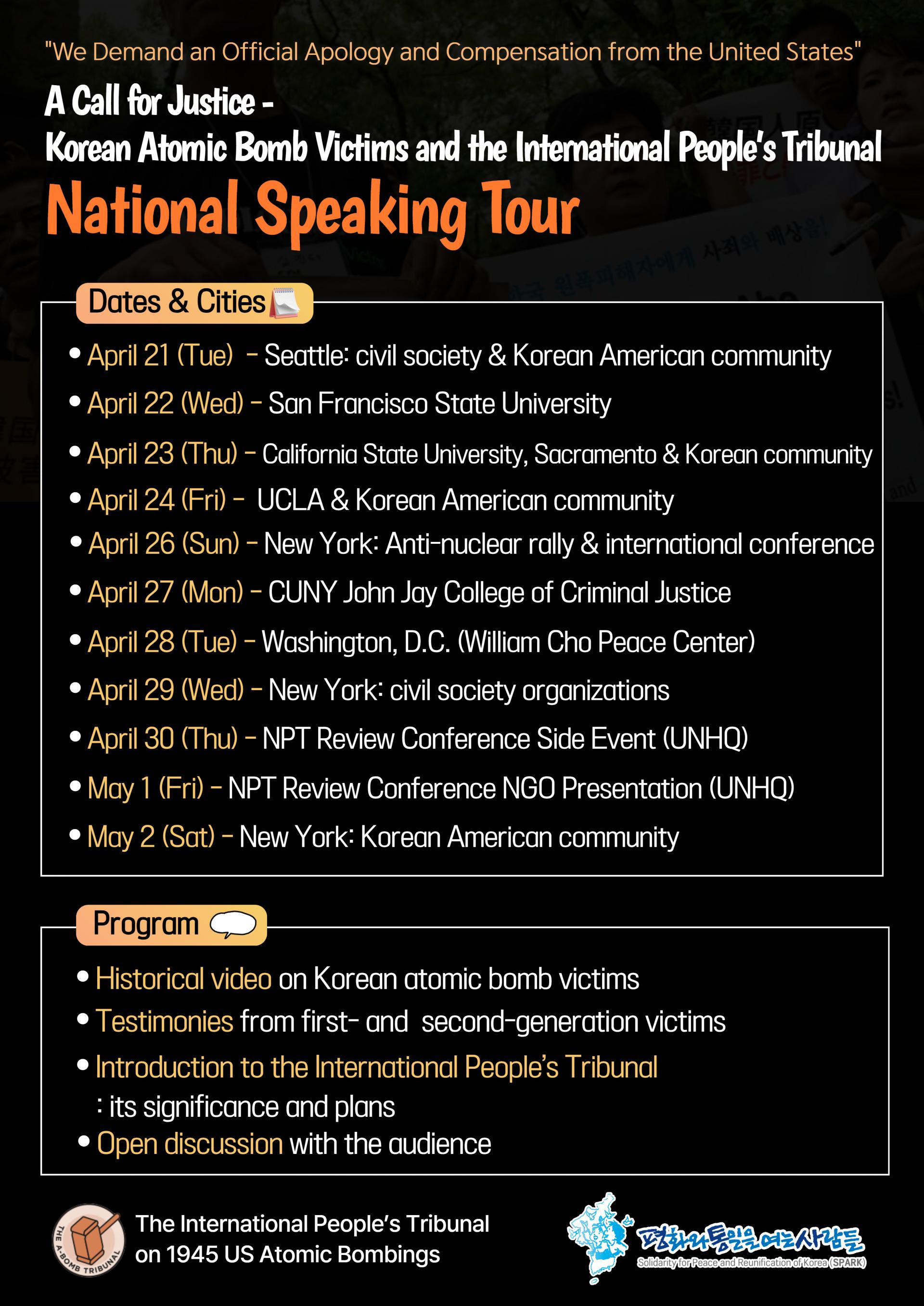
26 April – Chernobyl: Inside the Meltdown airs on National Geographic on Sunday 26th April from 4pm
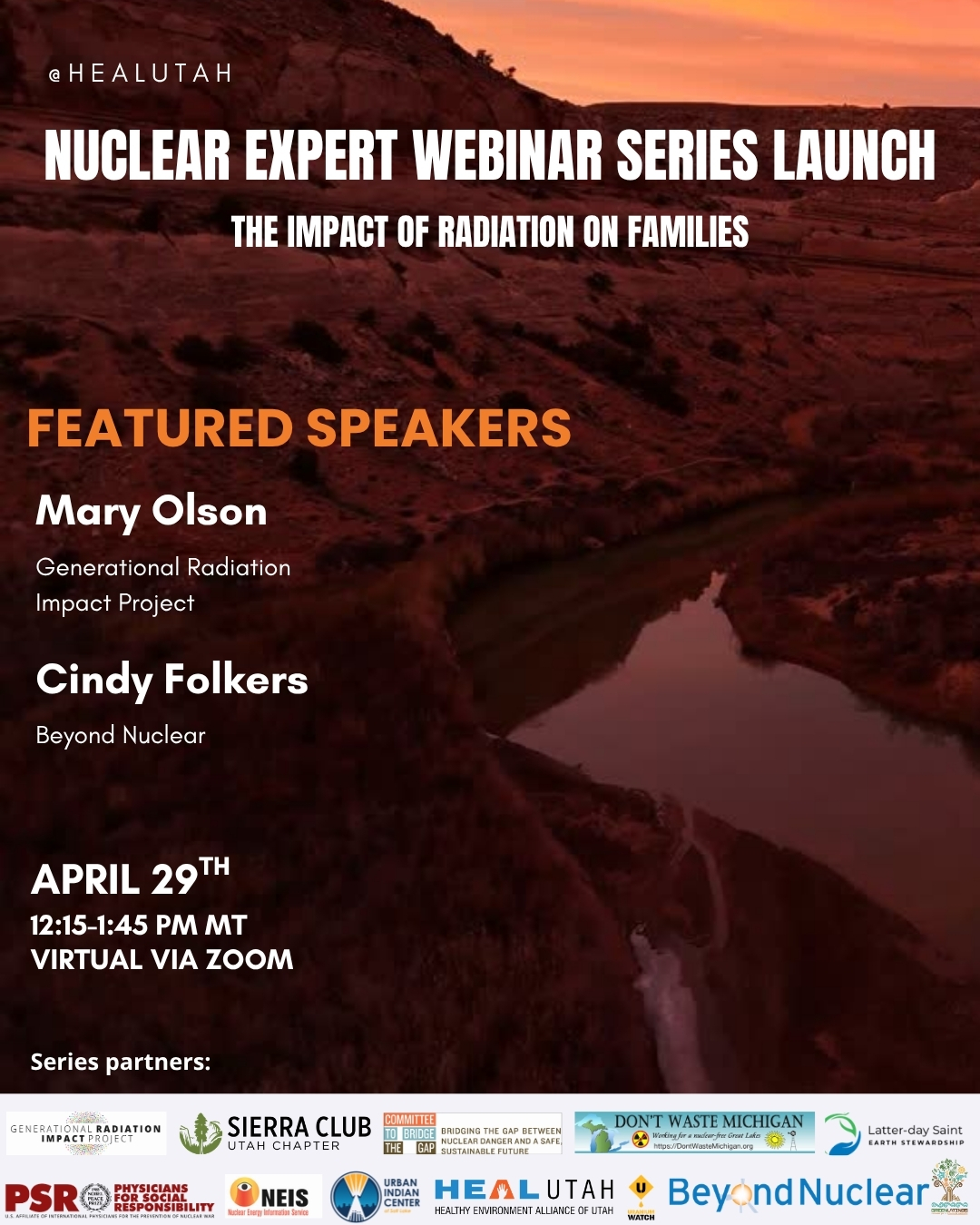
29 April – Nuclear Expert Webinar #1 – Radiation Impacts on Families with Mary Olson and Cindy Folkers
- 12:15 PM MT – 1:45 PM MT
- Location: Virtual – REGISTER TODAY

4 May -West Suburban Peace Coalition to discuss Iran war at May Educational Forum
Monday, May 4, 7:00 – 8:00 PM Central Standard Time
Title: : How Trump’s Narrative Tries to Shape the Reality of the War on Iran.
Contact Walt Zlotow, zlotow@hotmail.com 630 442 3045 for further information
14 May – online event From Bombs to Data Centres: the Face of Nuclear Colonialism

Pine Ridge Uranium is the real threat, not Tehran- Tell Burgum: Stop the Extraction.
Chernobyl: The Lost Tapes – A good documentary on Chernobyl on SBS available On Demand for the next 3 weeks– https://www.sbs.com.au/ondemand/tv-program/chernobyl-the-lost-tapes/2352741955560
To see nuclear-related stories in greater depth and intensity – go to https://nuclearinformation.wordpress.com
-
Archives
- April 2026 (288)
- March 2026 (251)
- February 2026 (268)
- January 2026 (308)
- December 2025 (358)
- November 2025 (359)
- October 2025 (376)
- September 2025 (257)
- August 2025 (319)
- July 2025 (230)
- June 2025 (348)
- May 2025 (261)
-
Categories
- 1
- 1 NUCLEAR ISSUES
- business and costs
- climate change
- culture and arts
- ENERGY
- environment
- health
- history
- indigenous issues
- Legal
- marketing of nuclear
- media
- opposition to nuclear
- PERSONAL STORIES
- politics
- politics international
- Religion and ethics
- safety
- secrets,lies and civil liberties
- spinbuster
- technology
- Uranium
- wastes
- weapons and war
- Women
- 2 WORLD
- ACTION
- AFRICA
- Atrocities
- AUSTRALIA
- Christina's notes
- Christina's themes
- culture and arts
- Events
- Fuk 2022
- Fuk 2023
- Fukushima 2017
- Fukushima 2018
- fukushima 2019
- Fukushima 2020
- Fukushima 2021
- general
- global warming
- Humour (God we need it)
- Nuclear
- RARE EARTHS
- Reference
- resources – print
- Resources -audiovicual
- Weekly Newsletter
- World
- World Nuclear
- YouTube
-
RSS
Entries RSS
Comments RSS
 nuclear-news