Nagasaki remembers the atomic bomb, Olympic officials refuse to allow a minute’s silence.

Nagasaki nuclear attack remembered https://www.taipeitimes.com/News/world/archives/2021/08/10/2003762363
ATOMIC BOMB ANNIVERSARY: Small turnout due to COVID-19 did not lessen the observance, also marking the first year of a mostly symbolic nuclear ban treaty
The Japanese city of Nagasaki yesterday commemorated the 76th anniversary of the detonation of a US atomic bomb over the city, with the mayor calling for the global community to build on a new nuclear ban treaty.
Nagasaki was hit by an atomic inferno that killed 74,000 people, three days after the nuclear bomb that hit Hiroshima.
The twin attacks brought forth the nuclear age and gave Japan the bleak distinction of being the only country to be struck by foreign atomic weapons.
Survivors and a handful of foreign dignitaries offered a silent prayer at 11:02am local time, the exact time the second — and last — nuclear weapon used in wartime was dropped. For a second year, the number of people attending was much smaller due to COVID-19 restrictions. The ceremony is the first since an international treaty banning nuclear weapons came into force last year.
“World leaders must commit to nuclear arms reductions and build trust through dialogue, and civil society must push them in this direction,” Nagasaki Mayor Tomihisa Taue said.
The treaty has not been signed by countries with nuclear arsenals, but activists believe it will have a gradual deterrent effect.
Japan has not signed it either, saying the accord carries no weight without being accepted by nuclear-armed states.
The country is also in a delicate position, as it is under the US nuclear umbrella, with US forces responsible for its defence.
As the only country that has suffered atomic bombings during the war, it is our unchanging mission to steadily advance the efforts of the international community, step by step, towards realization of a world free of nuclear weapons,” Japanese Prime Minister Yoshihide Suga said at the ceremony.
On Friday, Japan marked 76 years since the US dropped an atomic bomb on Hiroshima, killing around 140,000 people.
Barack Obama in 2016 became the first sitting US president to visit Hiroshima, but Washington has never acceded to demands for an apology for the bombings.
International Olympic Committee president Thomas Bach traveled to Hiroshima in July, before the start of the Tokyo Games, to mark the start of an Olympic truce — a tradition that calls for a halt to global conflict to allow the safe passage of athletes.
However, city officials were disappointed after the IOC refused a request to stage a minute of silence at the Games to mark Friday’s anniversary.
Rising seas and melting glaciers: these changes are now irreversible, but we have to act to slow them down — RenewEconomy

The underlying message remains the same. The longer we wait, the more devastating the consequences. The post Rising seas and melting glaciers: these changes are now irreversible, but we have to act to slow them down appeared first on RenewEconomy.
Rising seas and melting glaciers: these changes are now irreversible, but we have to act to slow them down — RenewEconomy
This is the most sobering report card yet on climate change and Earth’s future. What you need to know — RenewEconomy

Climate change is now affecting every continent, region and ocean on Earth, and every facet of the weather. Here are the key takeaway’s from the latest IPCC climate report. The post This is the most sobering report card yet on climate change and Earth’s future. What you need to know appeared first on RenewEconomy.
This is the most sobering report card yet on climate change and Earth’s future. What you need to know — RenewEconomy
French nuclear company EDF is postponing its decision on whether or not to go ahead with the Sizewell nuclear project in Britain
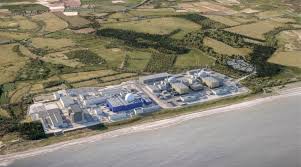
EDF delays final decision on Sizewell C. French energy giant now expects to leave it as late as 2023 before deciding whether to proceed with Suffolk nuclear power project. The timeline for EDF to decide whether to go ahead with the £20bn Sizewell C power station has slipped amid a lengthy planning approval process that is playing out as funding negotiations with ministers continue.
The French power giant now expects to make a final investment decision on the Suffolk plant at the end of 2022 or in 2023, compared to its previous expectations of mid-2022. EDF is in negotiations with the Government about a funding deal for Sizewell C and will also need external investors. Legislation is likely to be brought forward to allow developers to recoup costs during construction from household energy bills.
However, talks have been overshadowed in recent weeks by reports that ministers are seeking ways to block CGN from Sizewell and future UK nuclear projects. CGN has a 20pc development stake in Sizewell with an option to participate in the construction phase.
Telegraph 8th Aug 2021
https://www.telegraph.co.uk/business/2021/08/08/edf-delays-final-decision-sizewell-c/
Comparing the costs of nuclear and solar power
Solar challenging nuclear as potential climate change solution https://www.pv-magazine.com/2021/08/09/solar-challenging-nuclear-as-potential-climate-change-solution/
Research suggests that we can power 80% of the United States with wind, solar, and 12 hours of energy storage, but the replacement of nuclear power plants hasn’t been financially viable. Is that about to change?AUGUST 9, 2021 JOHN FITZGERALD WEAVER Nuclear power delivers almost 20% of all electricity in the United States, and about 50% [ if you don’t count the uranium-nuclear fuel chain] of all low-emission electricity. Moreover, the United States has almost 100 nuclear power units operating more than 90% of the time, providing a steady base of power generation.
But moving forward, it seems nuclear has lost its swagger. Price increases, project delays, and cancellations have caused what may prove to be generational damage to nuclear power’s reputation. pv magazine USA has previously reported on industry pricing models, showing nuclear’s lagging pricing.
Now, Georgia Power’s Vogtle Unit 3 and Unit 4 – the nation’s only nuclear generating units currently under construction – have announced further delays and price increases. Conservative cost estimates suggest the two 1.117 GW facilities will require at least $30 billion to complete, including $3 billion in finance costs and $27 billion in construction costs.
Solar+storage costs
As solar and energy storage professionals, we must be conscious of the limitations of the sun, and the cost of energy storage. As we all know, the sun also sets. And while research suggests we can power 80% of the U.S. with wind, solar, and 12 hours of energy storage, being able to replace a nuclear power plant that runs 24/7/365 in wind, rain, snow, and sleet simply hasn’t been financially viable.
But is it today?
The chart above [ on original] shows the price of solar panels from 1976 through the end of 2019. Here, we see prices fall by more than 99.8% from over $100 per watt down to nearly $0.20 per watt. Below, we see the price of battery packs starting in 2010 and ending in 2020, based on data from Bloomberg New Energy Finance. Here, we see costs fall from $1,191/kWh to $137/kWh – a price decrease of greater than 88%.
In both cases, we can expect prices to continue trending downward in both the middle and long term. And so, what can we expect to pay when we replace a nuclear power plant with solar power plus batteries?
Cash to spend
The chart above [ on original] shows the price of solar panels from 1976 through the end of 2019. Here, we see prices fall by more than 99.8% from over $100 per watt down to nearly $0.20 per watt. Below, we see the price of battery packs starting in 2010 and ending in 2020, based on data from Bloomberg New Energy Finance. Here, we see costs fall from $1,191/kWh to $137/kWh – a price decrease of greater than 88%.
In both cases, we can expect prices to continue trending downward in both the middle and long term. And so, what can we expect to pay when we replace a nuclear power plant with solar power plus batteries?
Cash to spend
In order to replace the two nuclear plants while the sun is down, the batteries would need to replicate two 1.117 GW power sources for 16 hours. The total energy storage capacity would be 39.3 GWh, after we add an extra 10% for safe measure.
Roughly speaking, the total cost of these solar+storage facilities would be:
- $8.4 billion for 10.55 GWdc of solar power, fully installed at $0.80/watt
- $527 million for hypothetical power grid upgrades at $0.05/watt
- $7.8 billion for 39.3 GWh of energy storage fully installed at $200/kWh
- Around $16.8 billion grand total, no incentives
So, Georgia, pv magazine USA just saved you more than $13 billion (as of today, anyway).
Some caveats
It’s almost certain that a solar facility of this magnitude – roughly 27,000 acres, or around 0.07% of Georgia’s land – would be split among many landowners in the state. If land lease rates in Georgia are comparable to what might be earned in Pennsylvania, the project could provide as much as $27 million per year in income to Georgia landowners for decades to come.
Furthermore, the solar power plants would start generating electricity and revenue within about three years of the first signature, and two years after groundbreaking. The new Vogtle reactors began construction in 2013 (planning began much earlier), and are projected to complete in 2022-23.
With these considerations in mind, the repowering costs to get a solar+storage facility to a 40 to 80-year lifetime would likely be offset by the fact that the solar facility will enter service at least eight years earlier than the equivalent nuclear site. Additionally, during the solar plant’s operating lifetime, it saves massive amounts of regular operations and maintenance costs,
as well as specialist engineer labor costs. The nuclear facility will easily last 40 years, and potentially as long as 80. However, the ongoing operations and maintenance costs are significant, as well as upgrades and equipment replacements that start to become necessary after 40 years. And sometimes, those $1 billion dollar upgrades go wrong, and a nuclear power plant gets trashed.
When we do repower the batteries and solar panels, they almost certainly will be cheaper, and operate at a higher efficiency, likely stretching the life of the solar facility to 50+ years. Again, this solar+storage facility would generate 20% more juice in the summer (when the power is needed most in Georgia) because we oversized it for the winter.
In the end, it would be best if we had a healthy ecosystem of clean energy generation systems that include nuclear [but nuclear is not clean]. However, if we’re going to debate the costs of nukes vs. solar, then it is no longer a discussion.
Why China is increasing its nuclear deterrence capacity
China needs to increase nuclear capacity to maintain minimum deterrence against rising US coercion, By Hu Xijin Global Times, Aug 07, 2021 On Friday, US Secretary of State Antony Blinken expressed his “deep concern” about the “rapid growth” of China’s nuclear arsenal with Southeast Asian foreign ministers. He accused Beijing of “sharply deviating from its decades-old nuclear strategy based on minimum deterrence.” This is the US’ official response from the highest level after various US think tanks over the past few months have claimed that China is building a great number of “new missile silos” in Yumen of Northwest China’s Gansu Province and in the Hami region in Northwest China’s Xinjiang Uygur Autonomous Region.
Chinese officials have not directly responded to these allegations made by US think tanks. They have neither confirmed nor denied them.It is important to note that China has never abandoned its minimum deterrence nuclear strategy. However, due to the comprehensive strategic threat that the US keeps posing to China, the nuclear capabilities Beijing needs to achieve “minimum deterrence” are now different from the past. As the potential risk stemming from US nuclear coercion against China is clearly increasing, China needs to have sufficient nuclear forces to contain such a risk
Even many ordinary Chinese people feel the urgency of strengthening China’s nuclear deterrent is common sense. We don’t know if those structures shown in the satellite photos in Yumen and Hami are silos or the foundations of wind power plants as some scholars have speculated. But if it does turn out that they really are silos, Chinese public opinion will definitely support the construction of them unconditionally.
Washington is in no moral position to accuse China of this. China has only a fraction of the number of nuclear warheads that the US has. China is also the only nuclear power that has pledged not to be the first to use nuclear weapons. The US has never indicated that it would consider making the same commitment.
There is no information from Beijing on whether it is strengthening its nuclear buildup in the face of a realistic threat from Washington. But even if we were doing that, it would have nothing to do with Southeast Asian countries, or even with Japan and Australia, because China’s nuclear policy also includes another firm commitment of not using or threatening to use nuclear weapons against any non-nuclear-weapon state.
Once China substantially strengthens its nuclear forces, its only purpose will be to deter the US. Since there is already no mutual trust between China and the US, Chinese society is fully convinced that the US’ ultimate strategic goal is to bring China down. While not giving up on maintaining peace between the two countries, we must be prepared for the possibility that a war could eventually occur in the Taiwan Straits or the South China Sea. One of China’s major strategic missions today is to make the most complete layout for that day…………….https://www.globaltimes.cn/page/202108/1230817.shtml
World careering towards irreversible climate impacts, top scientists warn
Landmark IPCC report provides wave of stark warning, but stresses that
rapidly putting the global economy on course to net zero emissions by 2050
could hugely reduce the escalating impacts that will result from a warmer
world.
Climate change is accelerating and intensifying across every region
of the planet, bringing with it increases in rainfall, flooding, drought,
heatwaves, and sea levels that are already having significant implications
for economies around the world.
That is the stark consensus of the world’s leading climate scientists in a landmark UN report today, which offers the
clearest picture yet of both the scale of global warming already being
experienced and the likely impacts of further temperature rises that are
set to play out over the coming decades.
The report concludes that the
world’s average surface land temperature currently stands at around 1.1C
above pre-industrial levels, and is likely to be reach 1.5C – the optimal
target set out in the Paris Agreement – within the next 20 years regardless
of potential actions taken to slash greenhouse gas emissions in the
meantime.
Business Green 9th Aug 2021
“Unequivocal:” The nine most important climate messages from IPCC report — RenewEconomy

The IPCC’s new assessment report is a detailed and comprehensive statement of climate science. Here are nine key takeaways. The post “Unequivocal:” The nine most important climate messages from IPCC report appeared first on RenewEconomy.
“Unequivocal:” The nine most important climate messages from IPCC report — RenewEconomy
Scientists issue desperate climate warning: Australia already at 1.4°C — RenewEconomy

IPCC says average temperatures in Australia have already risen 1.4°C, warns that each fraction of a degree of warming will take its toll. The post Scientists issue desperate climate warning: Australia already at 1.4°C appeared first on RenewEconomy.
Scientists issue desperate climate warning: Australia already at 1.4°C — RenewEconomy
China starting new nuclear power project, with technology from Russia
China started this week construction work on a new US$17-billion nuclear
power plant project, for which it will install Russian nuclear reactors at
the Xudabao project in northeastern China, World Nuclear News reports.
The Xudabao 3 unit is the first of four units at the plant to see the beginning
of construction. Russia’s Rosatom will design the nuclear island and will
provide equipment. The Russian firm will also provide commissioning
services for the equipment it will have supplied. The Russians will also
provide the construction and equipment for the Xudabao 4 unit, whose
construction is expected to begin in 2022. The two units are currently
expected to be commissioned in 2027 or 2028.
Oil Price 6th Aug 2021
August 9 Energy News — geoharvey

Opinion: ¶ “Why China’s Climate Policy Matters To Us All” • China’s carbon emissions are vast and growing, dwarfing those of other countries. Experts agree that without big reductions in China’s emissions, the world cannot win the fight against climate change. China’s President Xi Jinping has said his country will aim for its emissions to […]
August 9 Energy News — geoharvey
Rising seas and melting glaciers: these changes are now irreversible, but we have to act to slow them down — RenewEconomy
The underlying message remains the same. The longer we wait, the more devastating the consequences. The post Rising seas and melting glaciers: these changes are now irreversible, but we have to act to slow them down appeared first on RenewEconomy.
Rising seas and melting glaciers: these changes are now irreversible, but we have to act to slow them down — RenewEconomy
Hiroshima/Nagasaki week – nuclear news
I’m thinking of changing my name to ”Cassandra”.(Greek goddess of gloom and doom) The media in my country, and elsewhere, has been ecstatic about Olympic Games medals. I guess that’s a relief from the virus/vaccine focus. But it seems that nobody knows that this week has been the anniversary of the atomic bombing of Hiroshima and Nagasaki, and that Fukushima ”recovery” has not really happened. That the Japanese government, despite the pandemic, in fact did not have the power to cancel the Games – under the contract, only the IOC can do that. That vast sums were spent, and will leave the Japanese people with vast debt, right when they have a crippling health crisis. . That the extravagant arenas and buildings will become white elephants.That 430 athletes and others in the Olympic Village got Covid-19.
Similarly, in the news we heard some whispers about wildfires around the world, and catastrophic floods, too. You really need alternative media to put all this together. A leader in this is Radio Ecoshock – ”I’ve Seen Fire and I’ve Seen Rain”.
I’m thinking of changing my name to ”Cassandra”.(Greek goddess of gloom and doom) The media in my country, and elsewhere, has been ecstatic about Olympic Games medals. I guess that’s a relief from the virus/vaccine focus. But it seems that nobody knows that this week has been the anniversary of the atomic bombing of Hiroshima and Nagasaki, and that Fukushima ”recovery” has not really happened. That the Japanese government, despite the pandemic, in fact did not have the power to cancel the Games – under the contract, only the IOC can do that. That vast sums were spent, and will leave the Japanese people with vast debt, right when they have a crippling health crisis. . That the extravagant arenas and buildings will become white elephants.That 430 athletes and others in the Olympic Village got Covid-19.
Similarly, in the news we heard some whispers about wildfires around the world, and catastrophic floods, too. You really need alternative media to put all this together. A leader in this is Radio Ecoshock – ”I’ve Seen Fire and I’ve Seen Rain”.
BUT – just as I write this – up comes the UN Climate report 2021 – https://www.youtube.com/watch?v=PDSySmJChXgSurely this will wake up the mainstream media, even in Australia.Coronavirus – there’s still a surge in cases, worldwide, with a clear trend to the pandemic affecting the un-vaccinated.
Some bits of good news. Hard to find – but here’s a place – Empathy in the English Channel and A bird recovery programme, and Africa’s largest forest reserve in recovery.
Global average temperature rise of 1.5c likely to be reached 10 years early. The world is getting “dangerously close” to running out of time to avert catastrophic climate change.
Towards a clean and sustainable energy system: 26 criteria nuclear power does not meet .
Nuclear weapons cannot be used, but their danger persists. Now, in the times of the UN Nuclear Ban Treaty, nuclear deterrence continues, but becomes increasingly discredited. Renounce the use and further development of nuclear weapons. The hard fought campaign continues – to ban nuclear weapons.
The myth that the nuclear destruction of Hiroshima and Nagasaki was justified.
Complicit – The countries, companies and think tanks that support the deadly nuclear arms trade.
JAPAN.Hiroshima City remembers the sudden cruelty of the atomic bombing . https://www.youtube.com/watch?v=TWP3GWFI7nk Tokyo Olympics part of propaganda strategy to downplay Fukushima nuclear disaster, as Olympics have been previously used to downplay Hiroshima bombing. Tokyo Olympics were touted as a showcase for Fukushima nuclear recovery. That didn’t work.
RUSSIA. Fire, floods ravage Russia, threaten nuclear research site .
USA.
- .. David Swanson explodes the myths about why the USA nuclear bombed Hiroshima and Nagasaki. How the USA fabricated a movie, full of falsehoods about the nuclear bombing in 1945.
- Jesuit Steve Kelly has done jail time for protesting nuclear weapons. He’s willing to do it again
- Group of USA Republicans and Democrats united in $trillion Bill to subsidise the nuclear and carbon capture industries.
- Stalemate between environmentalists and unions on keeping Illinois nuclear reactors going. Exelon keeps up its drive for subsidies to keep uneconomic nuclear reactors going. While State and Federal governments hurry to subsidise nuclear power plants, Exelon is closing Illinois nuclear stations anyway.
- Delay in demolition of Three Mile Island Nuclear Station. Stockton Professor: Nuclear Power is “Terrible Neighbor.
- U.S. Nuclear Regulatory Commission to give OK for spent nuclear fuel storage in Texas.
- US Renewables Generated More Power Than Coal Or Nuclear In 2020 For First Time. US companies announce plans for nuclear-powered bitcoin mine.
- The nuclear industry is dying. Bitcoin to the rescue?
CANADA. Costs of Ontario’s nuclear program will be the burden of the great-grandchildren of babies born in 2021.
UK.
- Britain joins the craze for war in space – reviving the evil ”Skynet”?. The UK’s Nuclear Escalation Flagrantly Violates International Law.
- More Nuclear Power Isn’t Needed, So Why Do Governments Keep Hyping it? The impact of climate change on nuclear reactors should be a key part of COP26 Climate Summit.
- UK Taxpayer funding will pour in, to get Rolls Royce’s small modular nuclear reactors happening.
- Nuclear Free Local Authorities (NFLA) publishes analysis of report of-”Just Transition Commission in Scotland” – moving to renewables, while providing jobs.
- EDF’s plans to produce pink hydrogen at proposed 3.2GW nuclear plant are ‘daft’: argues influential independent analyst Liebreich.
- Housing market affected in Lincolnshire, as villagers react against UK government plans for a nuclear waste dump.
- Campaigners dismayed as application to dump Hinkley Point mud in the Bristol Channel is approved.
- British Navy secrecy over nuclear submarine crashes.
IRAN. EU optimistic on nuclear deal despite Iran leadership change. Problems continue for Iran nuclear talks as new Iran President takes office.
ISRAEL. Israel Says Iran Should ‘Never Become a Nuclear Power.’ But What if It Already Is One? Mainstream media ignores how Israel continues sabotaging the Iran nuclear deal .
GREECE. Apocalyptic scenes hit Greece, as Athens besieged by fire.
FRANCE. Framatome’s sub-standard nuclear fuel is threatening the survival of France’s nuclear company EDF . The incident that caused the shutdown of the Taishan nuclear power plant occurs regularly in France. France’s secrecy and censorship on the atomic bomb tests in the Pacific.
BELGIUM. Belgium’s mayors show solidarity with nuclear victims, support the UN nuclear weapons ban Treaty.
DENMARK, NORWAY. Russian nuclear submarine lost propulsion in Danish waters, sails submerged outside Norway now.
AUSTRALIA. People of the Pacific condemn Talisman Sabre Military Exercises.
The myth that the nuclear destruction of Hiroshima and Nagasaki was justified

Over the years, the myth that the “nuking” of two Japanese cities was justified, has lost much of its appeal on both sides of the Pacific
Mythmaking and the Atomic Destruction of Hiroshima and Nagasaki, CounterPunch BY JACQUES R. PAUWELS, 8 Aug 21, Myth: The war in the Far East only ended in the summer of 1945, when the US president and his advisors felt that, to force the fanatical Japanese to surrender unconditionally, they had no other option than to destroy not one but two cities, Hiroshima and Nagasaki, with atom bombs. This decision saved the lives of countless Americans and Japanese who would have perished if the war had continued and required an invasion of Japan.
Reality: Hiroshima and Nagasaki were destroyed to prevent the Soviets from making a contribution to the victory against Japan, which would have forced Washington to allow Moscow to participate in the postwar occupation and reconstruction of the country. It was also the intention to intimidate the Soviet leadership and thus to wrest concessions from it with respect to the postwar arrangements in Germany and Eastern Europe. Finally, it was not the destruction of Hiroshima and Nagasaki, but the Soviet entry into the war against Japan, which caused Tokyo to surrender.
With the German capitulation in early May 1945, the war in Europe was over. The victors, the Big Three,[1] now faced the complex and delicate problem of the postwar reorganization of Europe. The United States had entered the war rather late, namely in December 1941. And the Americans only started to make a major contribution to the victory against Germany with the landings in Normandy in June 1944, that is, less than one year before the end of the hostilities in Europe. When the war against Germany came to an end, however, Uncle Sam occupied a seat at the table of the victors, ready and eager to look after his interests, to achieve what one might call the American war aims. (It is a myth that the presumably deeply isolationist Americans just wanted to withdraw from Europe: the country’s political, military, and economic leaders had urgent reasons for maintaining a presence on the old continent.) The other big victorious powers, Britain and the Soviet Union, also looked to pursue their interests. It was clear that it would be impossible for one of the three to “have it all”, that compromises would have to be reached. From the American point of view, the British expectations did not present much of a problem, but Soviet aspirations were a concern. What, then, were the war aims of the Soviet Union?
As the country that had made the biggest contribution by far to the common victory over Nazi Germany and suffered enormous casualties in the process, the Soviet Union had two major objectives. First, hefty reparation payments from Germany as compensation for the huge destruction wrought by Nazi aggression, a demand similar to the French and Belgian demands for reparations payments from the Reich after World War I. Second, security against potential future threats emanating from Germany………………………….
on April 25, 1945, only days before the German capitulation, the president received electrifying news. He was briefed about the top-secret Manhattan Project, or S-1, the code name for the construction of the atom bomb. That new and powerful weapon, on which the Americans had been working for years, was almost ready and, if tested successfully, would soon be available for use. Truman and his advisors thus fell under the spell of what the renowned American historian William Appleman Williams has called a “vision of omnipotence”. They convinced themselves that the new weapon would enable them to force their will on the Soviet Union. The atomic bomb was “a hammer”, as Truman himself put it, that he would wave over the heads of “those boys in the Kremlin”.[3]
Thanks to the bomb, it would now be possible to force Moscow to withdraw the Red Army from Germany and to deny Stalin a say in its postwar affairs. It now also seemed a feasible proposition to install pro-Western and even anticommunist regimes in Poland and elsewhere in Eastern Europe, and to prevent Stalin from exerting any influence there. It even became thinkable that the Soviet Union itself might be opened up to American investment capital as well as American political and economic influence,………… Indeed, with the nuclear pistol on his hip, the American president did not feel that he had to treat “the boys in the Kremlin”, who did not have such a super-weapon, as his equals……….
Possession of a mighty new weapon also opened up all sorts of possibilities with respect to the ongoing war in the Far East and the postwar arrangements to be made for that part of the world, of great importance to the leaders of the US, as we have seen when dealing with Pearl Harbor. Nevertheless, playing that powerful trump card would only be possible after the bomb had been successfully tested and was available to be used………
Truman concluded that only an actual demonstration of the atomic bomb could persuade the Soviets to give way.
…………………The Americans thus knew only too well that the situation of the Japanese was hopeless. “Fini Japs when that comes about”, Truman wrote in his diary, referring to the expected Soviet intervention in the war in the Far East.[9]
…………….. In order to finish the war against Japan without having to make more sacrifices, Truman thus had a range of attractive options. He could accept the trivial Japanese condition, immunity for their emperor; he could also wait until the Red Army attacked the Japanese in China, thus forcing Tokyo into accepting an unconditional surrender after all; and he could have instituted a naval blockade that would have forced Tokyo to sue for peace sooner or later. But Truman and his advisors chose none of these options. Instead, they decided to knock Japan out with the atomic bomb.
This fateful decision, which was to cost the lives of hundreds of thousands of people, mostly civilians, offered the Americans considerable advantages.
………………… The atom bomb seemed to offer the American leaders an additional important advantage. Truman’s experience in Potsdam had persuaded him that only an actual demonstration of this new weapon would make Stalin pliable. Using the atom bomb to obliterate a Japanese city seemed to be the perfect stratagem to intimidate the Soviets and coerce them to make major concessions with respect to postwar arrangements in Germany, Poland, and elsewhere in Central and Eastern Europe. Truman’s secretary of state, James F. Byrnes, reportedly declared later that the atom bomb had been used because such a demonstration of power was likely to make the Soviets more accommodating in Europe.
To make the desired terrifying impression on the Soviets – and the rest of the world -, the bomb obviously had to be dropped on a big city. It is probably for this reason that Truman turned down a proposal, made by some of the scientists involved in the Manhattan Project, to demonstrate the power of the bomb by dropping it on some uninhabited Pacific island: there would not have been sufficient death and destruction. It would also have been extremely embarrassing if the weapon had failed to work its deadly magic; but if the unannounced atomic bombing of a Japanese city backfired, no one would have known and no one would have been embarrassed. A big Japanese city had to be selected, but the capital, Tokyo, did not qualify, since it was already flattened by previous conventional bombing raids, so that additional damage was unlikely to loom sufficiently impressive. In fact, very few cities qualified as the required “virgin” target. ……….
The atom bomb was ready just in time to be put to use before the USSR had a chance to become involved in the Far East………………
Already on August 10, 1945, just one day after the Soviet Union’s entry into the war in the Far East, a second bomb was dropped, this time on the city of Nagasaki. About this bombardment, in which many Japanese Catholics perished, a former American army chaplain later stated: “That’s one of the reasons I think they dropped the second bomb. To hurry it up. To make them surrender before Russians came”.[11] (The chaplain may or may not have been aware that among the 75,000 human beings who were “instantaneously incinerated, carbonized and evaporated” in Nagasaki were many Japanese Catholics as well an unknown number of inmates of a camp for allied POWs, whose presence had been reported to the air command, to no avail.)[12]
Japan capitulated not because of the atom bombs but because of the Soviet entry into the conflict. ………………………
Truman, however, wanted to use the bomb for a number of reasons, and not just to get the Japanese to surrender. He expected that dropping the atom bomb would keep the Soviets out of the Far East and terrorize that country’s leaders, so that Washington could impose its will on the Kremlin with respect to European affairs. And so, Hiroshima and Nagasaki were pulverized. Many American historians realize this only too well. Sean Dennis Cashman writes:
With the passing of time, many historians have concluded that the bomb was used as much for political reasons . . . Vannevar Bush [the head of the US Office of Scientific Research and Development] stated that the bomb “was also delivered on time, so that there was no necessity for any concessions to Russia at the end of the war”. Secretary of State James F. Byrnes [Truman’s secretary of state] never denied a statement attributed to him that the bomb had been used to demonstrate American power to the Soviet Union in order to make [the Soviets] more manageable in Europe.[16]
Truman himself, however, hypocritically declared at the time that the purpose of the two nuclear bombardments had been “to bring the boys home”, that is, to quickly finish the war without any further major loss of life on the American side. This explanation was uncritically broadcast in the American media and thus was born a myth eagerly propagated by them and by mainstream historians in the US and in the Western World in general, and of course by Hollywood.
The myth that two Japanese cities were nuked to force Tokyo to surrender, thus shortening the war and saving lives, was “made in USA”, but it was to be eagerly espoused in Japan, whose post-war leaders, vassals of the US, found it extremely useful for a number of reasons, as War Wilson has pointed out in his excellent article on the Bomb. First, the emperor and his ministers, who were in many ways responsible for a war that had caused so much misery for the Japanese people, found it extremely convenient to blame their defeat, as Wilson puts it, on “an amazing scientific breakthrough that no one could have predicted”. The blinding light of the atomic blasts made it impossible, so to speak, to see their “mistakes and misjudgments”. The Japanese people had been lied to about how bad the situation really was, and how the misery had dragged on so long just to save the emperor, but the Bomb provided the perfect excuse for having lost the war. No need to apportion blame; no court of enquiry need be held. Japan’s leaders were able to claim they had done their best. So, at the most general level the Bomb served to deflect blame from Japan’s leaders.
Second, the Bomb earned Japan international sympathy. Like Germany, Japan had waged a war of aggression and committed all sorts of war crimes. Both countries looked for ways to improve their image, seeking to exchange the mantle of perpetrator. for that of victim…………
Third, echoing the American notion that the Bomb had ended the war was certain to please Japan’s post-war American overlords. The latter would protect Japan’s upper class against the demands for radical societal change emanating from radical elements, including communists,………………..
Over the years, the myth that the “nuking” of two Japanese cities was justified, has lost much of its appeal on both sides of the Pacific……………
References: multiple sources are quoted . https://www.counterpunch.org/2021/08/06/mythmaking-and-the-atomic-destruction-of-hiroshima-and-nagasaki/
Complicit – The countries, companies and think tanks that support the deadly nuclear arms trade

The world spends $137,000 a minute on nuclear weapons
Complicit — Beyond Nuclear International 8 Aug 21, The countries, companies and think tanks that support the deadly nuclear arms trade
From ICAN
A new report from ICAN — Complicit: 2020 Global Nuclear Weapons spending — names names and produces some horrifying spending numbers, made all the more immoral by the desperate needs around the world due to the COVID-19 pandemic, along with the ever worsening conditions brought on by the climate crisis.
As the report notes, “In 2020, during the worst global pandemic in a century, nine nuclear-armed states spent $72.6 billion on their nuclear weapons, more than $137,000 per minute, an inflation adjusted increase of $1.4 billion from last year.”
It goes on to ask the obvious question: Why? The answer lies in the profits to be made by the world’s nuclear weapons companies, not to mention the funding flowing to a few think tanks, some of which have missions that should make taking this money unacceptable. “Not only does this report reveal the massive spending on nuclear weapons during the worst global pandemic in a century, it also shines a light on the shadowy connection between the private companies building nuclear weapons, lobbyists and think tanks,” wrote ICAN’s Susi Snyder in an email to launch the report.
She also narrates this short video above that explains the findings.
“The exchange of money and influence, from countries to companies to lobbyists and think tanks, sustains and maintains a global arsenal of catastrophically destructive weapons. Each person and organisation in this cycle is complicit in threatening life as we know it and wasting resources desperately needed to address real threats to human health and safety”, says the report’s executive summary. It goes on:
“The $72.6 billion spent on nuclear weapons was split between governmental departments and private companies. Companies in France, the United Kingdom and the United States received $27.7 billion from nuclear-weapon-related contracts in 2020, of which $14.8 billion was new.
“Those companies then funded think tanks that research and write about nuclear weapons policies. At least twelve major think tanks that research and write about nuclear weapons in India, France, the United Kingdom, and the United States received collectively between $5 million and $10 million from companies that produce nuclear weapons.
“The CEOs of companies that produce nuclear weapons sit on their advisory boards and are listed as ‘partners’ on their websites.
“And to make sure the enormous budgets are approved to pay for these contracts, those same companies hire lobbyists. In 2020, nuclear weapons producers spent $117 million in lobbying on defence. For every $1 spent lobbying, an average of $236 in nuclear weapon contract money came back.
“Nuclear-armed states spent an obscene amount of money on illegal weapons of mass destruction in 2020, while the majority of the world’s countries support a global nuclear weapons ban. But the story doesn’t stop there. Companies, lobbyists and think tanks are complicit and deserve to be held accountable for their role in building and shaping a world with more than 13,000 life- ending weapons. We need to call on them to cut it out.”
The executive summary of the report then calls out the names of the countries, companies and think tanks complicit in effectively planning the world’s destruction.
Country Spending On Nuclear Weapons In 2020
The United States: $37.4 billion; $70,881 / minute
China: $10.1 billion; $19,149 / minute
Russia: $8 billion; $15,222 / minute
The United Kingdom: $6.2 billion; $11,769 / minute
France: $5.7 billion; $10,786 / minute
India: $2.48 billion; $4,567 / minute
Israel: $1.1 billion; $2,059 / minute
Pakistan: $1 billion; $1,968 / minute
North Korea: $667 million; $1,265 / minute
2020 Total: $72.6 billion; $137,666 / minute
2019 Total: $71.2 billion* $135,424 / minute
*Adjusted for inflation…………………..
more https://beyondnuclearinternational.org/2021/08/08/complicit/
1 This Month
26 April – Chernobyl: Inside the Meltdown airs on National Geographic on Sunday 26th April from 4pm
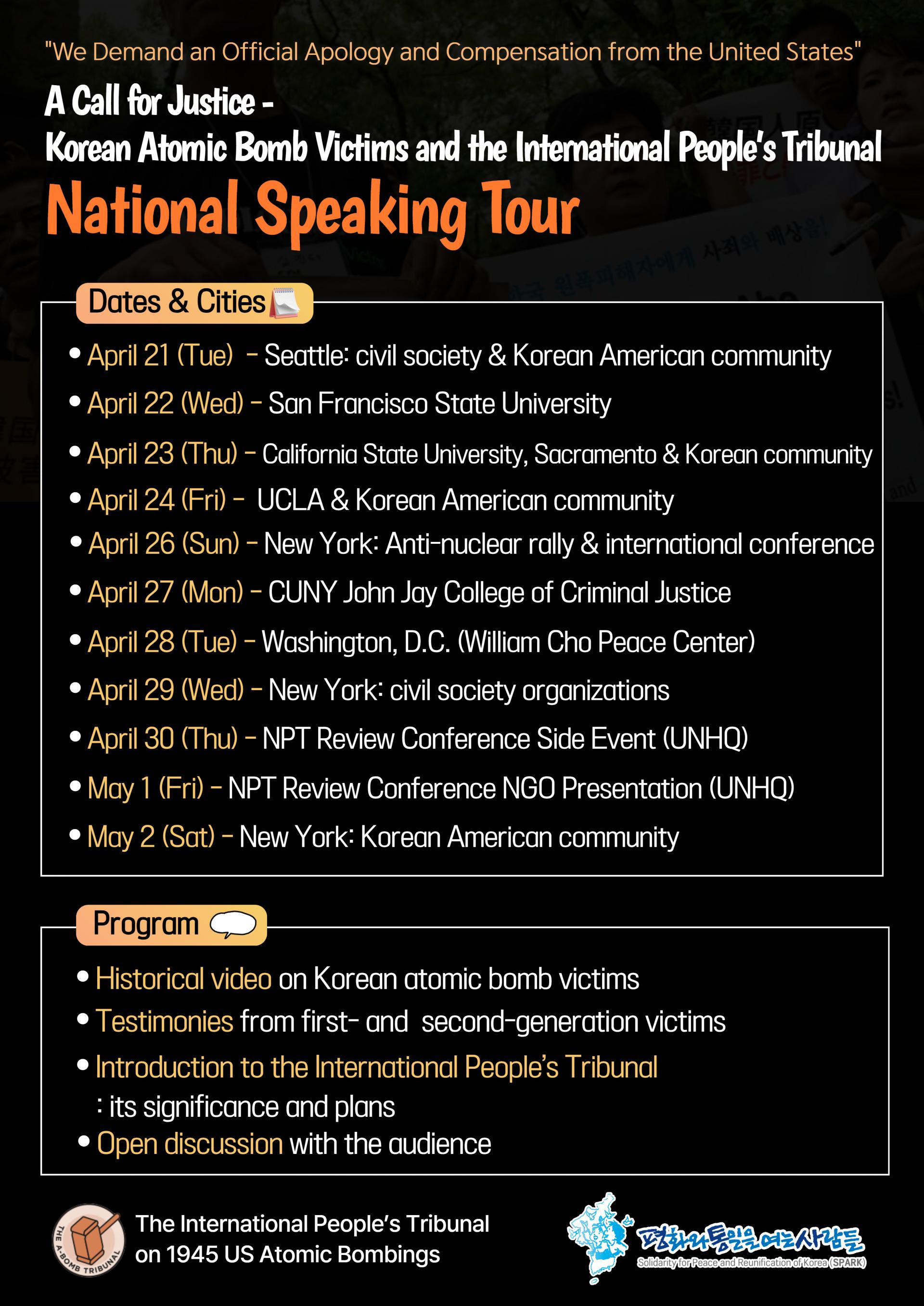
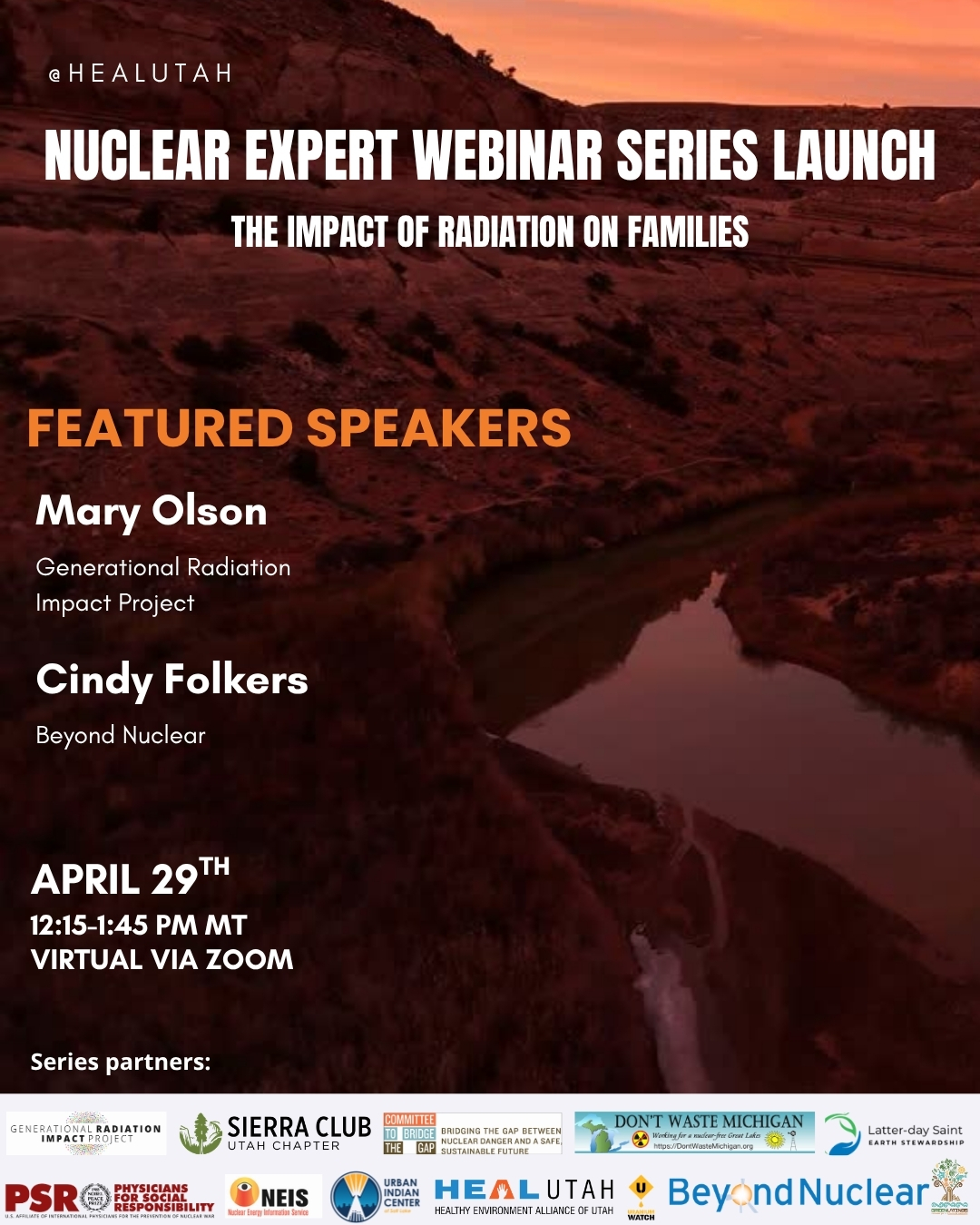
29 April – Nuclear Expert Webinar #1 – Radiation Impacts on Families with Mary Olson and Cindy Folkers
- 12:15 PM MT – 1:45 PM MT
- Location: Virtual – REGISTER TODAY

4 May -West Suburban Peace Coalition to discuss Iran war at May Educational Forum
Monday, May 4, 7:00 – 8:00 PM Central Standard Time
Title: : How Trump’s Narrative Tries to Shape the Reality of the War on Iran.
Contact Walt Zlotow, zlotow@hotmail.com 630 442 3045 for further information
14 May – online event From Bombs to Data Centres: the Face of Nuclear Colonialism

Pine Ridge Uranium is the real threat, not Tehran- Tell Burgum: Stop the Extraction.
Chernobyl: The Lost Tapes – A good documentary on Chernobyl on SBS available On Demand for the next 3 weeks– https://www.sbs.com.au/ondemand/tv-program/chernobyl-the-lost-tapes/2352741955560
To see nuclear-related stories in greater depth and intensity – go to https://nuclearinformation.wordpress.com
-
Archives
- April 2026 (288)
- March 2026 (251)
- February 2026 (268)
- January 2026 (308)
- December 2025 (358)
- November 2025 (359)
- October 2025 (376)
- September 2025 (257)
- August 2025 (319)
- July 2025 (230)
- June 2025 (348)
- May 2025 (261)
-
Categories
- 1
- 1 NUCLEAR ISSUES
- business and costs
- climate change
- culture and arts
- ENERGY
- environment
- health
- history
- indigenous issues
- Legal
- marketing of nuclear
- media
- opposition to nuclear
- PERSONAL STORIES
- politics
- politics international
- Religion and ethics
- safety
- secrets,lies and civil liberties
- spinbuster
- technology
- Uranium
- wastes
- weapons and war
- Women
- 2 WORLD
- ACTION
- AFRICA
- Atrocities
- AUSTRALIA
- Christina's notes
- Christina's themes
- culture and arts
- Events
- Fuk 2022
- Fuk 2023
- Fukushima 2017
- Fukushima 2018
- fukushima 2019
- Fukushima 2020
- Fukushima 2021
- general
- global warming
- Humour (God we need it)
- Nuclear
- RARE EARTHS
- Reference
- resources – print
- Resources -audiovicual
- Weekly Newsletter
- World
- World Nuclear
- YouTube
-
RSS
Entries RSS
Comments RSS
 nuclear-news