Secrecy, delays, budget problems as USA tries to clean up Hanford, the most radioactively polluted site in the nation.

Hanford has 56 million gallons of radioactive waste in those 177 underground tanks at this remote decommissioned nuclear production site near the Columbia River in Benton County.
Those leak-prone tanks are arguably the most radiologically contaminated place in the Western Hemisphere.
At least 1 million gallons of radioactive liquids have leaked into the ground, seeping into the aquifer 200 feet below and then into the Columbia River, roughly seven miles away. Since the mid-1990s, Hanford’s plans involve mixing the waste in the tanks with benign melted glass and then storing it in glass logs.
Today, the project’s budget is at least $17 billion, and the first glassification plant for low-activity waste is scheduled to start up in late 2023. So far, the federal government has spent $11 billion on the glassification project, according to the Government Accountability Office, the investigative agency of Congress.
That one plant, however, will only handle 40% to 50% of the low-activity wastes, depending on who is doing the estimating. A second low-activity waste plant or a stil-to-be-determined new approach is needed to the remaining wastes.is What will happen to the rest of the waste is still up for debate.
All of the single-shell tanks and the majority of the double-shell tanks are way past their design lives
Cleaning up nuclear waste at Hanford: Secrecy, delays and budget debates
A plan to turn radioactive waste into glass logs has raised a lot of questions, many of which don’t appear to have public answers. CrossCut, by John Stang, August 16, 2021 Stephen Wiesman has worked for about three decades on the Hanford Nuclear Reservation’s project to convert the radioactive waste in its huge underground tanks into safer glass logs.
Although he’s retired now and involved in an advisory capacity, he understands the project — and its ongoing challenges — better than almost anyone.
Wiesman sees this task with a mix of cautious optimism, frustration, sympathy for the people dealing with its complexities, and a deep belief that the tank wastes must be dealt with. “There isn’t an emotion that I haven’t felt,” he said.
The project faces a cluster of challenges: financial, technical and political. And the secrecy around the plans to solve these issues makes it difficult for anyone to gauge whether the most polluted spot in the nation will ever become a benign stain on the landscape of eastern Washington.
Continue readingFrozen conflicts and forever wars — John Quiggin
The chaotic scenes now playing out as the Taliban take over Afghanistan have unsurprisingly drawn comparisons to the collapse of the South Vietnamese government in 1975. But there have been many similar instances, though most were a little slower: the end of Indonesian rule in East Timor (now Timor L’Este), the French withdrawal from Algeria,…
Frozen conflicts and forever wars — John Quiggin
The tie between climate change and nuclear weapons
WCC reflection on climate change, nuclear weapons https://www.indcatholicnews.com/news/42850
- Daniel Högsta
 Aug 16th, 2021
Daniel Högsta is campaign coordinator for the International Campaign to Abolish Nuclear Weapons. In this interview with WCC he reflects on the tie between climate change and nuclear weapons, as well as on global progress toward a nuclear-free world.Would you highlight some of the ties between a nuclear weapons-free world and the climate emergency? How can we care for creation-instead of annihilating it?
Högsta: The nuclear weapons threat and the climate emergency are the two of the major existential challenges faced by humanity – and they are linked in several ways. First of all, a climate-stressed world is an even more dangerous place for nuclear weapons. Global warming and the potential for conflict that arises out of it could lead to the use of nuclear weapons.
Nuclear weapons also themselves threaten climatic disruptions – studies have shown that even a limited nuclear war would have devastating impacts on the whole planet, especially areas with populations who are already vulnerable to agricultural disruptions.
The investment in the continued maintenance of nuclear weapons comes at a huge cost – money that could be used to develop sustainable and green technologies.
Nuclear weapons also harm the environment long before they are being used. Uranium mining, nuclear waste dumps and of course testing of the actual bombs contaminate the earth, causing people to leave their homes.
The Treaty on the Prohibition of Nuclear Weapons addresses this issue in Art VI, obligating Sates to carry out environmental remediation and assistance to the victims of the use and testing of nuclear weapons.
What are your continued hopes for the ratification of the UN Treaty on the Prohibition of Nuclear Weapons? How can we hope to get the nuclear nations and their allies to sign? Is there any progress?
Högsta: The Treaty on the Prohibition of Nuclear Weapons has been ratified by 56 countries and signed by 88 countries. We expect several more signatures and ratification over the next weeks and months, since we’re seeing progress in the national legislative procedures in many countries. We’re also not discouraged (or surprised) by the obstinacy of the nuclear weapon-possessor governments and other nuclear weapon-complicit countries towards the treaty. There are clear signs of political progress among the reluctant: Sweden, Switzerland and Finland (who have close relations with NATO) have confirmed their participation at the first Meeting of States Parties as observers; in late 2020, the new Belgian government became the first NATO state to positively mention the treaty in a governing coalition agreement; there are indications that upcoming elections in Germany and Norway will lead to political shifts as it concerns the treaty; and finally, a letter of 56 former ministers from nuclear umbrella states – including two former secretaries-general of NATO (Javier Solana and Willy Claes) spoke out in favour of NATO states joining the treaty.
At the grassroots level, meaning churches and communities, families and individuals, what are some initiatives we can help lead? Why does every person make a difference?
Högsta: Lobbying national governments can at times be cumbersome. That’s why every individual can help the campaign by speaking to local members of parliament in their constituencies and get them to sign the parliamentary pledge. Through the pledge, parliamentarians can show their support for the treaty and promise to work on progress towards its ratification. Additionally, grassroots campaigners can reach out to the local councils of cities and towns to join the ICAN Cities appeal and make their cities nuclear weapons free zones and request the government to join the Treaty on the Prohibition of Nuclear Weapons. To take just a recent example – the effort to get the city of Winnipeg to join the Cities Appeal was led by two high school students who showed some great initiative and drive to get their city to vote in favour of supporting the treaty.
An expert explains that the Philippines’ nuclear power plant would be OK, but solar power would be faster and better.
Instead of nuclear power, why not solar power? https://opinion.inquirer.net/143165/instead-of-nuclear-power-why-not-solar-power Philippine Daily Inquirer August 17, 2021, Last July 8, Peter Wallace wrote in his column about nuclear power plants being safe and that there are many countries operating their nuclear power plants safely over the last 50 years: the United States, Germany, Taiwan, Japan. etc.
I agree about recommissioning the Bataan nuclear plant. As a chemical engineer, I can say that we have enough controls to operate it safely.
However, reviving the Bataan plant will take at least five years. Why not recommend the use of solar panels instead, per Republic Act No. 11285 or the Energy Efficiency and Conservation Act, which requires building owners to use renewable sources like solar? The Philippines is the only country in the world with 2,000 hours of sun per year.
Germany went on to use solar panel systems on roofs and, in a short period of time, four million houses have been generating power, resulting in the shutdown of many coal plants. In the United States, New York appointed an energy czar to speed up the use of renewable energy.
Australia gives incentives to households that use solar batteries. lberdrola Spain has made tremendous progress on the use of renewable energy, becoming one of the top five electric utility companies in the world. Portugal and Spain have invested in photovoltaic battery storage systems.
Strong local opposition to a proposed nuclear waste dump
People opposed to the building of a nuclear waste dump have gathered on
Mablethorpe beach in opposition to the move. Around 150 people were at the
beach on Saturday, August 14, to mark their opposition to the proposal –
which would affect the former Theddlethorpe Gas Terminal.
Radioactive Waste Management (RWM) has flagged the site as a potential geological disposal
facility where radioactive waste would be buried deep underground. One of
the organisers of yesterday’s event, who didn’t wish to be named, told
Lincolnshire Live: “There is a lot of anger about what has been done here.
“People have moved to this area because they wanted a quiet, countryside
life and so the idea of having a nuclear waste dump has upset pretty much
all local residents.
“A local estate agent even said that people
immediately started to pull out of house sales when the news about the
proposal first came out. “They think that just to get the spoil out of the
ground will mean about 20 lorries an hour going back and forth, which
doesn’t seem realistic on the roads around here. “We’re waiting to hear
more details at the moment because we’re still in the dark on this, but
we’re going to continue to protest against it.
Lincolnshire Live 15th Aug 2021
https://www.lincolnshirelive.co.uk/news/local-news/people-opposed-nuclear-waste-dump-5789940
August 16 Energy News — geoharvey

Opinion: ¶ “How Extreme Weather Makes Everything Harder, Except Climate-Risk Analysis” • The IPCC report has a clarity that is sobering. What does this newfound certainty mean for investors trying to hedge against climate risks? In the first half of this year, insured losses from catastrophes topped $42 billion, and they are growing. [Insurance Journal] […]
August 16 Energy News — geoharvey
This week – nuclear news
News – oh dear – it’s all too much. And a kind of lethargy sets in, in this uncertain time of pandemic. I’ve started to type in green bold just those items that I selected as particularly interesting.
The big news this week is the Afghanistan story.This USA -led futile military adventure comes to an end. We now prepare for the next one, as weapons industry leaders salivate in anticipation – will it be against Iran, North Korea, China …?
With the delta variant – the pandemic rages on.
Climate change news and views continue, with fires and floods, and following the IPCC Report. I’m finding that only Radio Ecoshock and climate scientist Paol Beckwith seem to put this all together, clearly. And someone raised the heretical suggestion that we should give up the system of endless economic growth via consumption.
Some bits of good news – Rainforest agriculture brings a climate-friendly system to Honduras and other South American nations. English moor transformed into ‘giant sponge’ to absorb CO2.
The War On Afghanistan Was A $2 Trillion Scam. U.S, costs to date for the war in Afghanistan in $ billions, 2001-2021. How War Profiteers Manufacture Consent.
NO SUPPORT for NUCLEAR in the new report from Intergovernmental Panel on Climate Change (IPCC). Urgency of the IPCC climate report makes it clear that new nuclear is not the answer. If nuclear power is adopted as the way ahead, the climate fight will be lost.
World careering towards irreversible climate impacts, top scientists warn.
A Day in the Death of British Justice – the case of Julian Assange.
The real photos of the Hiroshima bombing tell the story – no need for fictionalised ones.
JAPAN. Nagasaki remembers the atomic bomb, Olympic officials refuse to allow a minute’s silence. UN pledges full support to Nagasaki voices fuelling ‘powerful global movement’ against nuclear arms. Japanese teenager calls for nuke-free world at U.N. disarmament confab .
CHINA. China starting new nuclear power project, with technology from Russia. Why China is increasing its nuclear deterrence capacity.
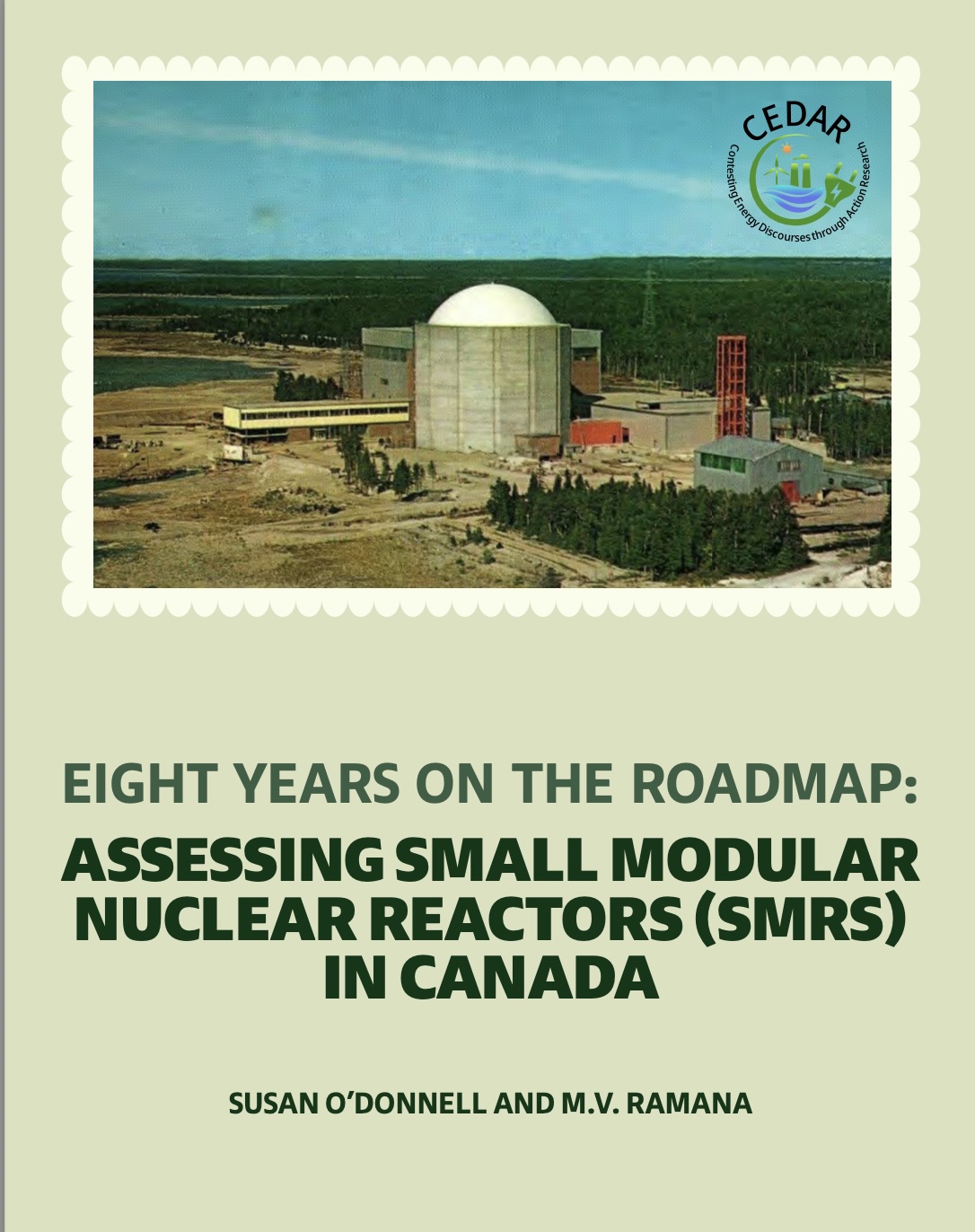
CANADA. Canada’s political leaders oblivious to the dangers in making plutonium accessible? Canada’s Moltex small nuclear reactor project -its plutonium process brings danger of nuclear weapons proliferation. Revell River Action Draws Attention to Nuclear Waste Burial Site, USA.
- Hidden in the U.S. Infrastructure Bill, a fat subsidy for the nuclear industry, and another $50 billion in the offing. Joe Biden’s Infrastructure Bill gives $50 billion to bail out the nuclear industry. Republican Congressman Adam Kinzinger champions inclusion of nuclear power incentive in U.S. Infrastructure Bill.
- New ”Natrium” nuclear reactors – a very risky gamble. Utah Taxpayers Association is very wary of Small Nuclear Reactors.
- Why Are We Still Building Nuclear Weapons? Follow the Money. America’s ground-based nuclear missile silos – expensive and unnecessary.Strong call for New York City to legislate against investment of pension funds into nuclear weapons production. Baltimore urged to strengthen its opposition to nuclear weapons.
- The importance of the Radiation Exposure Compensation Act and of coming to terms with USA’s nuclear history.
- Comparing solar and nuclear costs.
- Elon Musk to take part in a project to place advertising in space?
- Inventor of video games was also part of developing atomic bomb – later opposing it.
- Academies Panel to Consider Future of Revived DOE Low-Dose Radiation Program.
- Widening concrete cracks in Seabrook Nuclear Station.
UK.
- UK High Court sides with US against Assange. Jailing of a British blogger Should Worry Journalists on Both Sides of the Atlantic.
- Men, Conservative Party supporters and Brexit-backers more likely to support use of nuclear weapons.
- French nuclear company EDF is postponing its decision on whether or not to go ahead with the Sizewell nuclear project in Britain. Will Sizewell C nuclear project finish off UK’s Avocet bird species? . Rhetoric for Bradwell nuclear power project is far removed from reality.
- UK’s Radioactive Waste Management employs ”behavioural science” group to monitor online talk about nuclear waste dump plan. Nuclear waste – we don’t want that muck here!. Concern over plan to bury nuclear waste offshore.
- Limited consultation on UK’s commercial nuclear ships’ safety regulations.
IRAN. Iran’s research reactors prove the nuclear deal is still working. Hopes rise that Iran hardliner will rejuvenate nuclear deal.
NORTH KOREA. The Case for a New North Korean Nuclear Deal.
TURKEY. Turkey’s Akkuyu nuclear station a cause for anxiety in the Eastern Mediterranean,BELGIUM. Inconclusive findings on attempted sabotage of Belgian nuclear reactor.
AUSTRALIA. Seven vital questions about Australian Nuclear Science and Technology Organisation (ANSTO) and its nuclear wastes.,
The French nuclear complex — Macron’s love letter to the nuclear industry

Macron’s love letter to the nuclear industry
The French nuclear complex — Beyond Nuclear International The French nuclear complex https://beyondnuclearinternational.org/2021/08/15/the-french-nuclear-complex/
August 15, 2021 by beyondnuclearinternationa
The all too easy alliance between the civil and military sectors
From the Swiss Energy Foundation
...et sans nucléaire militaire, pas de nucléaire civile (“and without the military nuclear sector, no civilian nuclear sector”). These were the words of French head of state, Emmanuel Macron, during his visit at the end of the year to Le Creusot, a hotspot of the French nuclear industry. Indeed, the civil and military uses of nuclear energy were, are, and will remain, inextricably linked. This is exemplified by the French reactor research project NUWARD.
The year 2020 ended with a declaration of love from Emmanuel Macron to the French nuclear industry: “Our energy and ecological future depends on nuclear energy”. He added: “Our economic and industrial future depends on nuclear energy. ” Macron addressed these words in a well-received speech delivered at Le Creusot, Burgundy, the very heart of the nuclear industry. The industrial town of Le Creusot is an important production site for components for nuclear power plants as well as for nuclear weapons systems for military use.
The nuclear industry in crisis

However, the last few years have not been a time of joy for the French nuclear industry, but rather a time of crisis. To stay with Le Creusot: The reactor forge facility there, which among other things manufactures the safety-relevant components for nuclear power plants, drew attention to itself in 2016 with a series of irregularities: it emerged that, for years, there had been systematic forgeries. Faulty forged parts were produced. Instead of discarding the rejects, reports were falsified and quality assurance undermined. France’s new-build project, the Evolutionary Power Reactor (EPR), was also affected. The former showcase project sank steadily into a billion-dollar grave.
Along with the Le Creusot scandal, numerous other miscalculations and breakdowns cast a bad light on the French nuclear industry. The construction of the new EPR in Flamanville, as well as other construction projects abroad, made headlines with years of delays and cost explosions. The builder is the French quasi-state nuclear giant EDF. It did not want to bear the cost debacle alone, but also pointed the finger at EPR nuclear giant Areva. However, since 2018, Areva has ceased to exist.

To prevent bankruptcy, the state has virtually ransomed Areva by means of subsidies. The group was split into the state-owned company New Areva (now “Orano”), responsible for the fuel cycle business, and the reactor construction division Areva NP (now “Framatome”), which also includes the Le Creusot forge. Meanwhile, EDF, 80% of which is state-owned, is struggling with enormous debts —some 41 billion euros at the end of 2019, according to the French Ministry of Economy.
Nuclear DNA – French identity
So the task at hand is to shore up the once-radiant sector in crisis. And Macron’s assurances to Framatome and Co. came at the just right time. On the one hand, there are economic interests, as just explained with the problem child EDF, on the other hand, there is also the French identity and military capacity, founded on France’s nuclear power status. Since the post-war period, France’s self-image has been based to a large extent on the nuclear sector. In Le Creusot, Macron not only praised those present, he also announced the construction of a new aircraft carrier —nuclear-powered, of course.
The NUWARD project: an exemplary case

Among those present at Le Creusot, in addition to Framatome, were managers from EDF, Orano and the Naval Group defense contractor. All of the players are a hybrid of government and private funding, civilian and military exploitation interests. And with the exception of Orano, they are all involved in the new French Small Modular Reactor (SMR) project called NUWARD. The nuclear industry is pinning its hopes on “small modular reactors”.
The project for the French variant NUWARD started about ten years ago, when the contractors EDF, Naval Group (then DCNS), the state nuclear and energy research center CEA (Commissariat à l’énergie atomique et aux énergies alternatives) and the then Areva were commissioned with initial feasibility studies. TechnicAtome (formerly Areva TA), a specialist in marine nuclear propulsion systems, was also brought in for the pre-conceptual design. Finally, in September 2019, the partners presented their collaborative NUWARD project at the General Conference of the International Atomic Energy Agency in Vienna.
The parties involved emphasize the benefits of NUWARD as an export commodity in the global energy market: it is necessary to meet the increasing demand for energy in the context of rising population and climate policy challenges. To wit: Nuclear energy is again praised as a (supposedly) climate-friendly solution. The small NUWARD with a capacity of about 340 MW is intended as a complement to the EPR with a capacity of about 1700 MW.

But civilian applications are hardly ever the only ones. The new aircraft carrier, which is to replace the retired “de Gaulle” from 2038, will be nuclear-powered. The experts responsible for this are TechnicAtome and Naval Group. The new generation of French submarines, currently being developed under the so-called Barracuda program with the same stakeholders, also relies on nuclear propulsion. The suspicion is that TechnicAtome and Naval Group’s interests in NUWARD are aligned on this. According to ASAF, the French Army’s support association, the latter enjoys the opportunity to acquire knowledge that can later be applied in the military field.
From research to armament leader
A deeper look at the project partners involved and their activities shows that the mixture of civil-military engagement is by no means new. For example, the defense industry group Naval Group, the CEA and TechnicAtome are involved in the Barracuda project mentioned above. Naval Group itself, which calls itself the “European leader in naval defense”, is majority-owned by the French government and one-third by the defense contractor Thales Group (which in turn is about one-third owned by the government). In addition to its largely military projects, the group is also active in the civilian sector, as in the case of the EPR4 or through offshore wind energy projects.
Naval Group, meanwhile, is a 20% shareholder in TechnicAtome, whose core business is nuclear submarine propulsion. In addition, the corporation pursues civil nuclear activities. For example, it was responsible for safety systems at Hinkley Point (UK) at the EPR. TechnicAtome was spun off in the 1970s from the state research institute CEA, which remains a shareholder today, along with the state and EDF (itself 85% state-owned).
The CEA can be seen as a symbol of the interdependence of the military-civilian nuclear establishment. CEA, from the French acronym for Atomic Energy Commission, was founded after World War II and oversees all French nuclear research, both military and civilian. To this day, the research institution is wholly owned by the government. Of note are the unique privileges the CEA enjoys as a public agency: it is accountable for its decisions solely to the French president and is not subject to the same financial controls as other government agencies.
France Nucléaire – Quo vadis?
For the French head of state, abolishing the civil-military “double dimension” makes no sense at all. Rather, it illustrates the coherence between strategic autonomy and energy independence. And this is now being proudly presented in public again, as in Le Creusot.
It is therefore not only worthwhile for the French state to support the struggling civilian nuclear industry, but it seems almost imperative. It does so not only through share packages (see Areva). In addition, Macron is lobbying Brussels to give nuclear energy more prominence in the EU’s climate strategy, with the hope of receiving money from the Green New Deal pots. This would also help the enforcement of the planned national subsidies vis-à-vis the EU.
State aid en masse is thus intended to save civil nuclear power in France, because the French presidential palace cannot afford to — and will not — do away with the civilian part. As Macron revealed in his closing homage to nuclear power at Le Creusot: “Our strategic future, notre status de grande puissance, depends on nuclear energy”.
The original article in German, can be found here on the Swiss Energy Foundation (SES) website in its Focus France section. We are grateful to the SES for this translation.
Canada’s Moltex small nuclear reactor project -its plutonium process brings danger of nuclear weapons proliferation.
Diane Francis: Trudeau’s multi-million dollar nuclear deal called out by non-proliferation experts https://financialpost.com/diane-francis/diane-francis-trudeaus-multi-million-dollar-nuclear-deal-called-out-by-non-proliferation-experts ,
Scientists fear that the technology used to extract plutonium from spent fuel could be used to make nuclear bombs, Diane Francis Aug 12, 2021 In May, the Geneva-based International Campaign to Abolish Nuclear Weapons (ICAN) called out Prime Minister Justin Trudeau’s government over a deal he has approved and funded that critics say will undermine the goal of nuclear non-proliferation, according to an article published in the Hill Times and recently republished in the Bulletin of the Atomic Scientists.
Moltex Energy was selected by NB Power and the Government of New Brunswick to develop its new reactor technology and locate it at the Point Lepreau nuclear plant site by the early 2030s. Moltex is one of several companies that are promoting small, “next generation” nuclear reactors to replace fossil fuels in the production of electricity.
Moltex, a privately owned company that is based in the United Kingdom and has offices in Saint John, N.B., says it will “recycle nuclear waste” from New Brunswick’s closed Point Lepreau nuclear plant for use in its small-scale nuclear reactor. Federal funding and approval was announced on March 18 by Dominic LeBlanc, a New Brunswick MP who serves as minister of intergovernmental affairs.
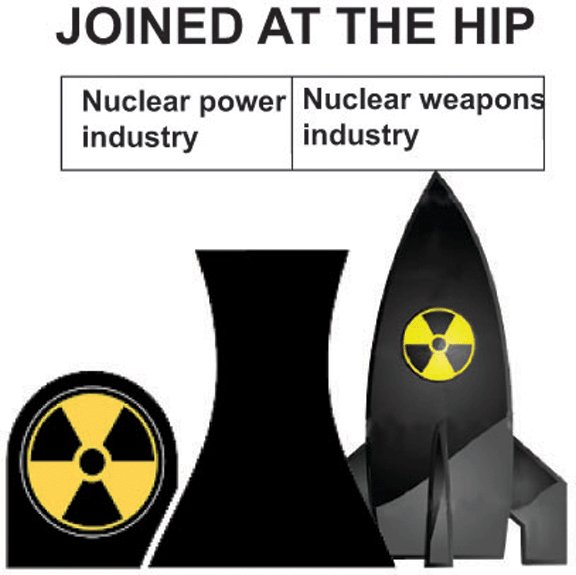
The scientists dispute the claim that this is “recycling” and are concerned because the technology Moltex wants to use to extract plutonium, a key ingredient in nuclear weapons, from spent fuel could be used by other countries to make nuclear bombs. Decades ago, the U.S. and many of its allies, including Canada, took action to prevent this type of reprocessing from taking place.
“The idea is to use the plutonium as fuel for a new nuclear reactor, still in the design stage. If the project is successful, the entire package could be replicated and sold to other countries if the Government of Canada approves the sale,” reads the article.
On May 25, nine high-level American non-proliferation experts sent an open letter to Trudeau expressing concern that by “backing spent-fuel reprocessing and plutonium extraction, the Government of Canada will undermine the global nuclear weapons non-proliferation regime that Canada has done so much to strengthen.”
The signatories to the letter include senior White House appointees and other government advisers who worked under six U.S. presidents and who hold professorships at the Harvard Kennedy School, Princeton University and other eminent institutions.
The issue of nuclear proliferation dates back to 1974, when Canada got a black eye after India tested its first nuclear weapon using plutonium that was largely extracted using the CIRUS reactor, which was supplied by Canada for peaceful uses. Shortly after, other countries attempted to repurpose plutonium from reactors and were stopped — except for Pakistan, which, like India, succeeded in creating atomic weapons.
The Hill Times pointed out that, “To this day, South Korea is not allowed to extract plutonium from used nuclear fuel on its own territory — a long-lasting political legacy of the 1974 Indian explosion and its aftermath — due to proliferation concerns.”
The letter to Trudeau concluded: “Before Canada makes any further commitments in support of reprocessing, we urge you to convene high-level reviews of both the non-proliferation and environmental implications of Moltex’s reprocessing proposal including international experts. We believe such reviews will find reprocessing to be counterproductive on both fronts.”
The scientists’ letter has not yet been answered by the government. However, Canadians deserve to be fully briefed on all this and its implications. They deserve to know who owns Moltex, what the risks are to non-proliferation and why taxpayers are sinking millions of dollars into a project that’s morally questionable and potentially hazardous.Read and sign up for Diane Francis’ newsletter on America at dianefrancis.substack.com.
Limited consultation on UK’s commercial nuclear ships’ safety regulations.
On 9 August 2021 the UK Maritime and Coastguard Agency (Agency) published a Consultation (Consultation) on the draft merchant shipping (nuclear ships) regulations 2021 (Regulations). The Consultation seeks views from interested parties (Consultees) on the proposed Regulations which will transpose the International Convention for the Safety of Life at Sea, 1974 (SOLAS Convention) into UK law.
The proposed Regulations only cover commercial ships with nuclear propulsion systems and do not cover barge-mounted reactors for power generation or floating nuclear plants. Responses to the Consultation will be accepted until the 5th of October 2021.
JDSupra 13th Aug 2021
https://www.jdsupra.com/legalnews/uk-issues-draft-regulations-governing-1636843/
Will Sizewell C nuclear project finish off UK’s Avocet bird species?

Will Sizewell C see off the avocet? There are many reasons why birds disappear — and why they return. The avocet, however, is probably the only one that owes its resurgence to the Nazis. After a 100-year hiatus in Britain, this elegant black and white wader reappeared after the second world war. Four pairs were found in Minsmere nature reserve and another four in Havergate Island, both along the Suffolk coast. These areas had been flooded to prevent a German invasion, making them ideal nesting grounds.
The avocet had taken flight from parts of Holland damaged by the Nazis, travelling 100 miles or so here across the North Sea. Today, visitors to Minsmere would be hard pressed not to see an avocet during the summer, and nationally they are no longer listed as endangered. But there are fears of a new danger to their continued success — the proposed Sizewell C nuclear power station. The ten-year construction of the plant will involve major disruption to water levels in the area, threatening a huge range of wildlife. So, despite avocets’ recent triumphs, the future
may not be so black and white for these beautiful monochrome birds.
Spectator 14th Aug 2021
https://www.spectator.co.uk/article/will-sizewell-c-see-off-the-avocet
America’s ground-based nuclear missile silos – expensive and unnecessary

New report questions the necessity of ICBM silos in Montana, Wyoming and North Dakota https://dailymontanan.com/2021/07/28/new-report-questions-the-necessity-of-icbm-silos-in-montana-wyoming-and-north-dakota/
Researchers question whether America can afford to spend money on new system
BY: DARRELL EHRLICK – JULY 28, 2021 A massive recent report by the Federation of American Scientists calls into question whether ground-based nuclear missiles, like the ones siloed in Montana, are still necessary to the country’s safety.
The question of nuclear missiles is not new, but lead author Matt Korda, a research associate at the Nuclear Information Project of the federation, said the issue needs revisiting since the war system that was created at the beginning of the Cold War has outlived the Soviet Union, and the world’s political system has rapidly changed.
Korda explained that new security threats have presented themselves, which means that America’s defenses must adapt. For example, terrorism from small groups instead of threats from countries are a reality that was unlikely during the height of the Soviet-America conflict. Also, economic inequality and social unrest within the country have also changed the conversation. Furthermore, global warming and the effects of climate change and the new threat of pandemics mean that America must re-think its priorities.
A massive recent report by the Federation of American Scientists calls into question whether ground-based nuclear missiles, like the ones siloed in Montana, are still necessary to the country’s safety.
The question of nuclear missiles is not new, but lead author Matt Korda, a research associate at the Nuclear Information Project of the federation, said the issue needs revisiting since the war system that was created at the beginning of the Cold War has outlived the Soviet Union, and the world’s political system has rapidly changed.
Korda explained that new security threats have presented themselves, which means that America’s defenses must adapt. For example, terrorism from small groups instead of threats from countries are a reality that was unlikely during the height of the Soviet-America conflict. Also, economic inequality and social unrest within the country have also changed the conversation. Furthermore, global warming and the effects of climate change and the new threat of pandemics mean that America must re-think its priorities.
Korda’s research questions whether the assumptions – like trying to make a snap-judgment decision – isn’t more of a liability than a strength.
“There’s a bias in this system toward launching them really quickly,” Korda said.
Moreover, because anyone looking to launch an attack on America wouldn’t necessarily know the location of bombers or submarines, it would make the stationary missiles in places like Montana a target.
“It would invite a devastating attack,” Korda said.
In other words, in the event of a nuclear attack, Montana, Wyoming and North Dakota may be the first places to be wiped off the map.
He said part of the report’s purpose was to dive into the theories that have become a sort of gospel in the defense world – that America’s enemies would be forced to attack the ground-based silos first before targeting larger population centers like Washington, D.C., Los Angeles or New York City.
He said with countries like China and North Korea developing nuclear missiles with quick flight times, the idea that they would target a place like Montana or Wyoming before more populated West Coast targets isn’t logical.
“We have always assumed that ground-based missiles would deter an attack, but there’s no evidence that would happen,” Korda said.
Instead, Korda argues in the report, the entire system and the next generation of missiles, estimated at a lifetime cost of more than $260 billion, is based on the idea that an enemy would have to target the ground-based system first.
Moreover, because of the quick launch decisions, the ability to recall the nuclear missiles would be nearly impossible, raising the chances that a false alarm could trigger an accidental nuclear war.
Korda’s study also calls into question whether as many nuclear warheads are necessary. For example, China currently has around 300, with plans not to exceed 600. Its current stockpile of nukes is less than 10 percent of the United States’ inventory. Korda said that if a threat like China only needs 600, then that would seem to indicate America may not need as many to be safe.
“The U.S. nuclear posture and policy kind of presumes that escalation (of a nuclear attack) can be controlled after they go off, but I don’t think that’s the case,” Korda said.
He pointed out that even the conservative-leaning RAND Corporation has stated that America’s nuclear arsenal is two to three times as much as the country likely needs.
The new study doesn’t just call into question the military strategy and history of the ground-based nuclear missiles, it also links it to an economic question: Whether America can afford to update and continue the program with emerging threats.
“Is the money better spent in missiles or would it be better to put it toward action on climate change or even disinformation?” said research assistant Tricia White.
The importance of the Radiation Exposure Compensation Act and of coming to terms with USA’s nuclear history.
When Nuclear Fallout Comes Home. Rep. Teresa Leger Fernández (NM03) spoke on the importance of the Radiation Exposure Compensation Act and coming to terms with our nuclear history. https://nationalinterest.org/blog/buzz/when-nuclear-fallout-comes-home-191720by Harry Tarpey Whether in New Mexico, Guam, or the Marshall Islands, the consequences of uranium mining, atmospheric testing, and nuclear weapons manufacturing continue to impact communities around the world, with little awareness from the international community.
I know people who have been impacted by uranium mining, and by the fallout and nuclear testing, so this is not abstract,” said Rep. Teresa Leger Fernández of New Mexico’s 3rd District, who recently sat down for an interview with Press the Button. “These are people I know, these are families I know—you can’t ignore it.”
Leger Fernández is a leading advocate in Congress for the extension and expansion of the Radiation Exposure Compensation Act (RECA), reforms that would establish a more robust and easier to navigate compensation program for the victims of nuclear radiation in the United States and its territories.
RECA is a federal statute established in 1990 as a mechanism to compensate individuals whose health or livelihood was affected by unintended radiation exposure due to our nuclear weapons complex. To date, it has compensated over $2.2 billion to tens of thousands of claimants suffering from health ailments caused by exposure to radiation.
These include atomic veterans, downwinders, and individuals working on atmospheric nuclear tests and in uranium mines.
Though many of these recipients have undoubtedly benefited from the program, Leger Fernández and her colleagues are recommending several improvements to the statute to expand its impact.
One such change she is championing is an increase in the amount of compensation provided per individual grant. “Right now, [RECA payments] are $50,000. That’s not sufficient, so we’re going to raise it to $150,000.” The legislation she will be co-sponsoring, if passed, would expand the limited scope of eligibility that RECA currently maintains to include geographic areas and age groups not currently covered by the statute.
When RECA was first designed, “it had a very limited area where, if you happen to be exposed in these certain counties, you got compensation. But we know that it’s not just a few counties that were impacted,” argues Leger Fernández, “we need to make sure they are all entitled to the compensation.”
Although this expansion would no doubt have a positive impact within her district, Leger Fernández views it as an issue that resonates well beyond her constituency: “I want to take on this fight because this impacts not just New Mexicans, but people elsewhere, who were exposed to radiation from testing, from the development of the weapons, through no fault of their own are
now suffering the consequences. We as a government who inflicted this harm cannot stand back and say ‘too bad’—we must act.”
With RECA set to either expire or be reauthorized in July 2022, Leger Fernández views the year ahead as an important opportunity to reassess and refine RECA to ensure its continued effectiveness. “We need to take this moment and re-authorize the act,” she told guest host Lily Adams, “but also, when we look at it, ask ‘where is [RECA] efficient, and what do we need to do to make it better?”
Inconclusive findings on attempted sabotage of Belgian nuclear reactor.
The seven-year-long investigation into an attempted sabotage of the Doel
nuclear power plant in 2014 has ended inconclusively.
The incident took place on 5 August 2014, when the reactor at the Doel 4 installation shut
down automatically. Inspections revealed a disturbance in the steam turbine
in a non-nuclear part of the complex. It soon became clear that the problem
was an act of sabotage: someone had manually opened a valve in the plant
evacuation system, intended to quickly evacuate the 65,000 litres of oil
used to lubricate the turbine to an emergency reservoir in the case of
fire.
No order had been given to open the valve, and operators Electrabel
filed a criminal complaint for sabotage with the prosecutor’s office in
Dendermonde in East Flanders. But when the possibility of a terrorist
motive was raised, the investigation moved to the federal prosecutor’s
office, where all terrorist cases are handled.
One of the first discoveries made by investigators was the dubious status of the plant’s own security
measures. There were no CCTV cameras in strategic places – like the
vicinity of the blue valve that set off the alarm – to check who had
opened it.
Brussels Times 13th Aug 2021
Japanese teenager calls for nuke-free world at U.N. disarmament confab
Japanese teenager calls for nuke-free world at U.N. disarmament confab https://english.kyodonews.net/news/2021/08/fbf868a14e17-japanese-teenager-calls-for-nuke-free-world-at-un-disarmament-confab.html
KYODO NEWS – Aug 13, 2021 A Japanese teenager on Thursday called for the abolition of nuclear weapons at a U.N. disarmament conference session that highlighted the importance of incorporating the voice of youth in its discussions.
“We must take a big step towards the total elimination of nuclear weapons,” said Rio Sasaki, an 18-year-old student at a senior high school in Hiroshima, which, along with Nagasaki, was one of the two Japanese cities devastated by U.S. atomic bombs in the final days of World War II.
Addressing the conference online, she related the physical and psychological pains suffered by her grandmother throughout her life as a victim of the atomic bomb and said that young people like herself bear a strong responsibility to eliminate nuclear weapons.
“I hope the world will respond to our call,” she said.
The session, which was dedicated to a discussion on youth and disarmament, was opened by U.N. High Representative for Disarmament Affairs Izumi Nakamitsu.
Nakamitsu highlighted in a video message the huge potential of youth to bring positive change in the world, including in the field of disarmament.
Noting that 40 percent of the world’s population is under the age of 25, Nakamitsu said that “inclusiveness is necessary to achieve the ultimate objectives of disarmament, nonproliferation and arms control, and for the effectiveness and sustainability of the agreements that we reach and the work that we do.”
Other youths who attended the meeting included those from Canada and Vietnam.
Sasaki is among Japan’s so-called high school student peace messengers who are selected each year to convey the messages of the two Japanese A-bombed cities.
The messengers have usually visited the European headquarters of the United Nations in Geneva, where disarmament conferences take place, and submitted signatures that they have collected to push for the abolition of nuclear weapons.
But this year, like last year, they have not been able to travel to Switzerland due to the coronavirus pandemic.
1 This Month
26 April – Chernobyl: Inside the Meltdown airs on National Geographic on Sunday 26th April from 4pm

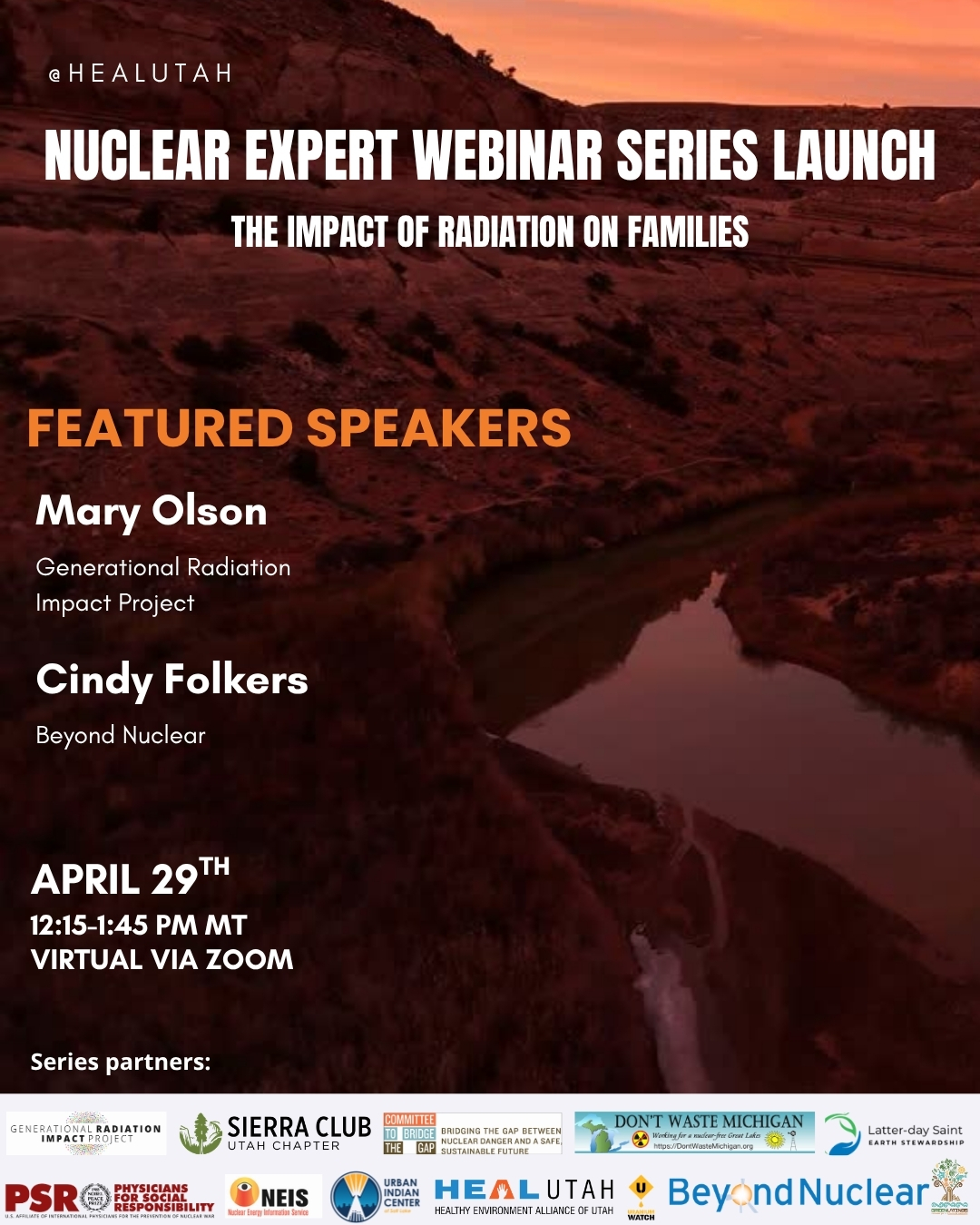
29 April – Nuclear Expert Webinar #1 – Radiation Impacts on Families with Mary Olson and Cindy Folkers
- 12:15 PM MT – 1:45 PM MT
- Location: Virtual – REGISTER TODAY

4 May -West Suburban Peace Coalition to discuss Iran war at May Educational Forum
Monday, May 4, 7:00 – 8:00 PM Central Standard Time
Title: : How Trump’s Narrative Tries to Shape the Reality of the War on Iran.
Contact Walt Zlotow, zlotow@hotmail.com 630 442 3045 for further information
14 May – online event From Bombs to Data Centres: the Face of Nuclear Colonialism

Pine Ridge Uranium is the real threat, not Tehran- Tell Burgum: Stop the Extraction.
Chernobyl: The Lost Tapes – A good documentary on Chernobyl on SBS available On Demand for the next 3 weeks– https://www.sbs.com.au/ondemand/tv-program/chernobyl-the-lost-tapes/2352741955560
To see nuclear-related stories in greater depth and intensity – go to https://nuclearinformation.wordpress.com
-
Archives
- April 2026 (288)
- March 2026 (251)
- February 2026 (268)
- January 2026 (308)
- December 2025 (358)
- November 2025 (359)
- October 2025 (376)
- September 2025 (257)
- August 2025 (319)
- July 2025 (230)
- June 2025 (348)
- May 2025 (261)
-
Categories
- 1
- 1 NUCLEAR ISSUES
- business and costs
- climate change
- culture and arts
- ENERGY
- environment
- health
- history
- indigenous issues
- Legal
- marketing of nuclear
- media
- opposition to nuclear
- PERSONAL STORIES
- politics
- politics international
- Religion and ethics
- safety
- secrets,lies and civil liberties
- spinbuster
- technology
- Uranium
- wastes
- weapons and war
- Women
- 2 WORLD
- ACTION
- AFRICA
- Atrocities
- AUSTRALIA
- Christina's notes
- Christina's themes
- culture and arts
- Events
- Fuk 2022
- Fuk 2023
- Fukushima 2017
- Fukushima 2018
- fukushima 2019
- Fukushima 2020
- Fukushima 2021
- general
- global warming
- Humour (God we need it)
- Nuclear
- RARE EARTHS
- Reference
- resources – print
- Resources -audiovicual
- Weekly Newsletter
- World
- World Nuclear
- YouTube
-
RSS
Entries RSS
Comments RSS
 nuclear-news