Avoiding an unintentional space war: Lessons from Cold War nuclear diplomacy

Avoiding an unintentional space war: Lessons from Cold War nuclear diplomacy, Bulletin of the Atomic Scientists By Maxwell Simon, Sam Wilson, May 13, 2021 In July of 2020, senior US and Russian officials held talks about space security and strategic stability, the first such talks between the two countries dedicated to these issues in seven years. The meetings came at a time when the domain of space has been becoming increasingly tense: Just a few weeks earlier, the US Space Command reported that Russia had tested a space-based weapon (US Space Command Public Affairs 2020a); almost a year earlier, the US Director of National Intelligence had reported that Russia and China were fielding new weapons that could put US space capabilities at risk (Coats 2019).
Tensions have not eased since then, and in December 2020, the US Space Command reported that Russia had tested as direct ascent anti-satellite weapon, its second such test of 2020 (US Space Commands Public Affairs 2020b). Meanwhile, both countries are blaming the other for weaponizing space. ….. (subscribers only) https://thebulletin.org/premium/2021-05/avoiding-an-unintentional-space-war-lessons-from-cold-war-nuclear-diplomacy/
Restarting nuclear power in Japan. Will the old ”Nuclear Village” bribery factor trump safety concerns?

Nuclear Power in Japan: Safety at Kashiwazaki-Kariwa Remains an Issue, Nippon.com Takino Yūsaku 14 May 21
……………….An illustration of the dilemma facing host communities is the decision of the mayors of Onagawa and Ishinomaki in Miyagi Prefecture to approve the restart of Unit 2 of Tōhoku Electric Power Company’s Onagawa Nuclear Power Station. Miyagi Governor Murai Yoshihiro also gave his endorsement and announced the decision in November 2020 after meeting with the two mayors, marking the first time a facility affected by the March 2011 earthquake and tsunami received the go-ahead to resume operation. Speaking at a press conference, the governor cited local employment opportunities and tax revenue as key factors in swaying the consensus of local leaders in favor of restarting the reactor, but stressed that the decision was a bitter one to make.
A similar dynamic is at play in the municipalities of Kashiwazaki and Kariwa, which jointly host the TEPCO power plant. As of January 1 of this year, the facility employs some 6,300 people, including utility personnel and staff of independent contractors, of whom around 3,500 are local residents. Factoring in family members potentially quadruples the number of people who rely on the power plant for their livelihoods, making the decision to restart a difficult one to oppose.
The two host municipalities are similarly dependent on revenue flowing into their coffers from the plant. This includes subsidies and grants from the national government, prefectural duties on nuclear fuel, a tax levied on spent fuel, and local property and income taxes. In 2018, Kashiwazaki received ¥3.4 billion in subsidies and other government funding and Kariwa ¥1.3 billion. If local taxes are factored in, Kashiwazaki’s revenue directly related to the nuclear power plant came to ¥8.0 billion and Kariwa’s ¥2.9 billion, around 15% and just over half of their annual income, respectively. This alone shows just how reliant the communities are on nuclear energy.
Like other host communities, the remote, cash-strapped municipalities saw nuclear energy as a lucrative endeavor. Kashiwazaki and Kariwa approved the plant in 1969, construction of the Unit 1 reactor began in 1978, and the facility went online in September 1985. TEPCO subsequently built six more reactors at the site, each bringing additional revenue to the municipalities. The last of these, Unit 7, was fired up in July 1997.
However, safety concerns have dogged the facility. In July 2007, the Chūetsu Offshore Earthquake sparked a fire and caused radiation leaks, forcing all the reactors offline for a time. After upgrades were made, several units were restarted, only to be halted indefinitely following the Great East Japan Earthquake and meltdowns at Fukushima Daiichi in March 2011.
The prolonged shutdown has seriously impacted the economic wellbeing of the communities. A visit to the shopping arcade next to Kashiwazaki Station and the town’s entertainment district reveals a startling number of shuttered businesses, a situation that has only been exacerbated by the pandemic. Kashiwazaki’s population, which was already rapidly graying, has shrunk from 90,000 in 2010 to 81,000 as of 2020. The demographic trend in the village of Kariwa can be assumed to be similarly bleak. As in Onagawa, objections residents may have to restarting the reactors will almost certainly take a back seat to the more pressing considerations of jobs and reviving the local economy.
Weighing the Cost of Safety
The results of elections in November 2020 indicate strong public approval for bringing the reactor back online. Residents of Kashiwazaki reelected Mayor Sakurai Masahiro, who supports the restart, to a second term in a landslide over an antinuclear challenger, while Kariwa voters handed pronuclear Mayor Shinada Hiroo a sixth term. The majority of local assembly members in both towns are likewise in favor of resuming operations at the plant.
In contrast, the prefectural government has taken a measured approach toward resuming operation of the Kashiwazaki-Kariwa plant, including establishing its own supervisory committee to verify the causes of the accident at Fukushima Daiichi and delaying debate on restarting Unit 7 until the body issues its final report. Barring one or more committee members expressing opposition, however, Niigata Governor Hanazumi Hideyo is expected to certify the restart before the gubernatorial election slated for June 2022 to prevent the issue from influencing the race. It remains to be seen to what degree the recently discovered safety flaws will affect this timeline.
The central government remains eager to get Kashiwazaki-Kariwa back up and running. As Japan slowly transitions from carbon-based fuels toward renewables to reduce CO2 emissions, it plans for nuclear power to provide 30% of the country’s energy needs.
In the end, the deciding factor will be safety. TEPCO so far has invested ¥1.2 trillion in upgrading the Kashiwazaki-Kariwa plant and has spent considerable time and energy touting its efforts. In clearing the NRA’s stringent regulations, the utility had seemingly demonstrated beyond a shadow of doubt that it was safe to bring the reactors back online. While there is no denying that the extensive safety measures the utility has put into place have boosted the facility’s resilience against known risks like natural disasters, there is not telling what new and unforeseen threats might be lurking around the corner. Such uncertainty makes it hard for many members of the public, me included, to trust completely in the safety of nuclear power.
It may turn out that the recent security failings, while egregious, on their own would not have allowed an intruder to infiltrate the plant undetected. However, they do illustrate the ongoing risks of neglect, bad judgement, procedural failures, and other human errors, factors that even the most stringent physical upgrades cannot guard against.
The government, despite considerable public uncertainty, is committed to pushing ahead with its plans to bring the country’s fleet of reactors back online. Faced with this reality, it is vital that citizens understand the state of nuclear energy in Japan and decide for themselves if it is something they can live with or choose to do without. https://www.nippon.com/en/in-depth/d00687/
Nuclear fusion is an energy mirage, and these are the reasons why .

Welsh councils warned over experimental nuclear fusion reactor plans https://nation.cymru/news/news-in-brief-welsh-councils-warned-over-experimental-nuclear-fusion-reactor-plans/14 May 2021 Two Welsh local authorities that are considering bids to host a nuclear fusion reactor have been warned of concerns about the proposals being put forward by the UK Atomic Energy Authority.
In recent weeks, councillors from the Vale of Glamorgan and Pembrokeshire County Council have shown public interest in potentially putting a site forward to host an experimental fusion reactor.
The UKAEA has been provided with £200 million of initial funding from the UK Government to create a plant that will harness electricity from fusion and has written to councils suggesting ‘billions’ of pounds will be invested in the project with an aim to help deliver nuclear fusion within the next 30 years.
Fusion technology is still in its infancy and no fusion reactor has ever created more power than it consumes. But scientists say it could be cleaner and safer than fission, the nuclear technology currently used to generate electricity.
Nuclear Free Local Authorities, a body that seeks to increase local accountability over national nuclear policy and identify the impact of national nuclear policy on local communities, has written to both councils highlighting the experimental nature of the project and warning of the environmental and economic consequences of the project.
The conclusions of the NFLA briefing provided to the councils include:
Nuclear fusion, like nuclear fission, still produces significant quantities of radioactive waste.
Radioactive tritium emissions would be released as part of the fusion process into the environment.
A large water source for cooling would be required.It costs huge sums of money that the public exchequer cannot afford after this pandemic.
Any local jobs are a long way off. The target is to have a demonstration plant developed around 2040, so any local construction jobs would not take place for at least 15 years.
As with fission, in operation, the number of jobs working on such a reactor would be small and highly specialist. Those jobs that come will likely be from staff at the existing site in Oxfordshire moving to the new plant.
The site requires a large footprint, with over 100 hectares being requested by the UKAEA. This takes away a large amount of land that could be used for other useful activity, such as developing new renewable energy technology, energy storage or smart energy endeavours.
- Given the technology will also not make any energy (if at all) till the late 2040s, it will provide the local council or the country with no low carbon benefit in the next two decades, when tackling the climate emergency is required now.
“I can understand why the Vale of Glamorgan and Pembrokeshire Council is considering putting an interest in hosting a nuclear fusion reactor, as any call at present which dangles the prospect of money and jobs will interest any council in these difficult economic times,” NFLA Welsh Forum Chair, Councillor Ernie Galsworthy said.
“However, nuclear fusion is an energy mirage. For seven decades it has been worked upon, and it still remains a distant prospect that fusion will ever be developed successfully. The climate emergency though needs to be sorted out now, not in some distant future.
Councils should be given support to develop their critical work in mitigating it, not having their time wasted on a project that could well be a white elephant. I call on councillors to not express an interest in these proposals and call instead for more central government support to them in developing decentralised energy.”
In April, Syrian missile landed near Dimona nuclear reactor, interception failed.
Syrian missile lands near Dimona nuclear reactor, interception fails
SA-5 flies from Syria all the way to Negev in the longest-range attack yet by Syria; Patriot missile activated in response. By ANNA AHRONHEIM, UDI SHAHAM, JERUSALEM POST STAFF APRIL 22, 2021 Israel and Syria exchanged missile attacks early on Thursday morning, after Damascus launched an advanced surface-to-air missile that landed in the Negev Desert.
Alarms sounded in Abu Qrenat near Dimona in the South.Syria fired the missile in response to what it claims was an Israeli Air Force bombing near Damascus. Israel frequently strikes Syria to prevent Iranian entrenchment in the country as well as weapons shipments to Hezbollah in Lebanon.Reports from across the country, including central Israel and Jerusalem, spoke of “loud explosions” that “shook the houses.”The IDF activated its air defense systems in an attempt to intercept the missile, but that attempt failed. The military is investigating why its air defenses failed to intercept the SA-5.
Early reports indicated that the explosion was the result of a Patriot missile defense system battery responding to the firing of the missile into Israel. Missile parts were located on Thursday morning in the swimming pool of the Negev community of Ashalim.
“Due to a surface to air missile entering Israeli territory, air defense systems were activated,” a statement by the IDF read, noting that the military was still investigating the incident. The SA-5 reportedly landed close to Dimona, not far from the location of Israel’s reportedly secret nuclear reactor………… https://www.jpost.com/breaking-news/alarms-sound-in-south-of-israel-665953
The possession of nuclear weapons is not about war. It’s all about power, status and money

The possession of nuclear weapons is not about war. It’s all about power, status and money, Herald Scotland, David J Crawford, Glasgow, 14 May,21, ……. The fact is that other than the United States using two devices against a beaten Japan in the Second World War, but in reality to demonstrate its power to the USSR, nobody has ever used one in anger; this despite US armed forces being involved in conflicts on almost every continent ever since then. Since the US is no longer unique as a nuclear power and we have a “Nuclear Nine”, the weapon has been rendered pointless as the idiotic concept of “mutual destruction” is not a vote-winner.
The power of nuclear weapons is not as a weapon of war it’s all about power, status and money, India is the perfect example of this. The country is currently being ravaged by the viral pandemic, its health service is in collapse, medicines and oxygen are in scarce supply and ordinary people are dying in their tens of thousands yet India has spent billions on nuclear weapons and a space programme rather than on public services.
Here in the UK the Establishment has the same skewed priorities, public services suffer cutbacks yet we are upgrading and expanding a nuclear weapons system that has no defensive capability. Nobody is allowed to question the billions that are siphoned from the public purse into corporate pockets, spent on something that will never be used and if someone was ever stupid enough to do so the best that the general public could hope for is to be killed outright in the first wave. https://www.heraldscotland.com/news/19301495.letters-possession-nuclear-weapons-not-war-power-status-money/
USA govt to delay removing plutonium nuclear waste from the decommissioned Hanford nuclear reservation
Washington State Nuclear Site to Delay Moving Waste Off-Site https://www.usnews.com/news/best-states/washington/articles/2021-05-13/washington-state-nuclear-site-to-delay-moving-waste-off-site
The U.S. Department of Energy and its regulators have proposed extending the deadline to ship waste contaminated with plutonium off the decommissioned Hanford nuclear reservation in Washington state.
By Associated Press|May 13, 2021, RICHLAND, Wash. (AP) — The U.S. Department of Energy and its regulators have proposed extending the deadline to ship waste contaminated with plutonium off the decommissioned Hanford nuclear reservation in Washington state.
The proposal moves the deadline back 20 years — from 2030 to 2050 — to ship the waste to a national repository in New Mexico for permanent disposal, the Tri-City Herald reported Wednesday.
“We realized that the existing milestone dates were unachievable,” said John Price, a manager with the state Department of Ecology, which is a regulator for the nuclear site.
The Hanford nuclear reservation produced plutonium for nuclear weapons during the Cold War and World War II, leaving 56 million gallons (212 million litres) of radioactive waste in underground tanks. The 580-square-mile (1,500-square-kilometer) site is located in Richland, Washington about 200 miles (322 kilometers) southeast of Seattle.
Price also said there were some newly proposed deadlines that the Department of Ecology “enthusiastically” supports, including a commitment by the Department of Energy’s to start shipping some waste as early as 2028.
The federal agency and its regulators — the Department of Ecology and the Environmental Protection Agency — set waste cleanup plans and deadlines for the nuclear site.
The latest proposed deadlines cover suspected transuranic waste, or debris contaminated with plutonium, including about 11,000 containers stored at a Hanford complex.
Waste with artificially-made elements above uranium on the periodic table is also classified as transuranic.
A public meeting to discuss the latest proposed changes and answer questions was scheduled for Thursday.
Japanese government and TEPCO planning release of radioactive water, via a pipeline to the Pacific Ocean
Japan Times 12th May 2021, Japan and Tepco studying release of Fukushima water 1 kilometer from coast.
Tokyo Electric Power Company Holdings Inc. and the government are
considering a plan to release treated radioactive water from the crippled
Fukushima No. 1 nuclear power plant into the sea about 1 kilometer from the
coast, informed sources said Tuesday.
The plan calls for a pipeline to be set up at the bottom of the ocean, according to the sources. Tepco, the
government and the Nuclear Regulation Authority are expected to kick off
full-fledged talks next month to decide whether to release the water
directly from the coast near the power plant or offshore through a
pipeline, the sources said. As tritium cannot be removed with existing
technology, the levels of the radioactive substance will be diluted to
about 1/40 of the state-set standard before the release of the treated
water into the ocean.
https://www.japantimes.co.jp/news/2021/05/12/national/release-fukushima-water-study/
Particle accelerators likely to take over from nuclear reactors, for production of medical radioisotopes.

Greg Phillips , Nuclear Fuel Cycle Watch Australia, 14 May 21
Lest we forget. The majority of the radioactivity they want to send to South Australia/Kimba is from the production of medical isotopes using a method that should be replaced by much cleaner/safer/reliable accelerator/cyclotron methods:”Pallas’s original business case was mainly based on the production of technetium-99m, which is obtained from molybdenum-99 via a generator. Despite the initially favorable forecasts for this reactor isotope, the business case ultimately did not hold up. This is partly due to the rise of the cyclotron, the linear particle accelerator (linac), and the advent of new large-scale production techniques, based on systems or reactors driven by particle accelerators, such as SHINE.
In the current market, the major role of research reactors is mainly determined by the production of technetium-99m, a SPECT isotope and by far the most widely used medical isotope in radiodiagnostics. But new suppliers will soon be entering the market, including SHINE, producers with cyclotrons, and a series of suppliers with linacs.More important than the future production of technetium-99m is the amazing innovative power of the accelerator technology.
For example, the PET isotope rubidium-82 has been marketed fairly recently for measuring the blood flow in the heart muscle. However, this treatment will soon face competition from the even more efficient PET drug fluorine-18 Flurpiridaz.
Although these treatments are more expensive than traditional technetium-99 (SPECT) treatment, they can compete because the imaging is very accurate and takes place in “real time”. This means that one treatment suffices, saving costs.
Pallas’ latest business case focuses mainly on the production of therapeutic isotopes for the treatment of cancer and tumors, with beta-emitter isotopes such as lutetium-177 and yttrium-90 in particular determining the picture in this growing market. But here too the question applies: can Pallas really withstand the innovative power of accelerator technology? Then it is not so much about SHINE, which can certainly become a formidable competitor of reactor manufacturers for the production of lutetium-177 (and later also yttrium-90), but mainly about the advance of new generations of therapeutic accelerator isotopes. For example, alpha emitters, and a new class of beta emitters, will conquer an increasing part of the current beta emitter market. …” more https://www.technischweekblad.nl/opinie-analyse/pallas-versus-de-innovatiekracht-van-versnellertechnologie?fbclid=IwAR2T6Ns_xt27fPBsbTHP0BkNG6x0Xk3x-nbaSJshNSQrZ2W5Q21C4GdvwY0 https://www.facebook.com/groups/1021186047913052
Human intervention may be required at Chernobyl as radiation levels spike
Unilad 13th May 2021, Scientists monitoring increased radiation levels at Chernobyl Nuclear Power Plant are considering whether human intervention may be required to prevent a further catastrophe.
It was reported last week that sensors in one of the basement rooms containing solidified fuel (FCMs) from the remains of the destroyed nuclear reactor had been picking up increased levels of neutrons over the past four years, signalling the nuclear fission process has restarted. Nuclear scientists monitoring the activity say they aren’t
sure why the reactions are increasing, and they can’t rule out the possibility of an accident should levels continue to rise. Now, authorities are working to figure out a solution.
Biden administration promises progress on nuclear waste
Escape From Yucca Mountain: Biden Administration Promises Progress on Nuclear Waste
Energy Department expects to announce next steps in coming months, WSJ, By Gabriel T. Rubin, May 14, 2021
THE ENERGY DEPARTMENT TAKES ON the politically radioactive issue of nuclear-waste disposal, which the past several administrations have tried and failed to resolve. The only federally designated long-term disposal site for waste from the nuclear power industry is at Yucca Mountain in Nevada (there is also a site near Carlsbad, N.M., for waste generated by the government’s nuclear weapons program). But sustained political pushback from Nevada officials has prevented the Yucca Mountain site from becoming operational. It’s a top issue for Nevada Sen. Catherine Cortez Masto, who Mr. Biden considered picking as his running mate and who is up for re-election next year.
Ms. Cortez Masto has extracted promises from Energy Secretary Jennifer Granholm that Yucca Mountain won’t be part of the administration’s planning for nuclear-waste disposal. But Ms. Granholm seems eager to still make progress on the issue, telling a House Appropriations panel last week that she anticipated announcing the department’s next steps “in the coming months.” Former President Donald Trumptried to restart the process, but after an outcry from Nevadans he reversed himself—tweeting, “Nevada, I hear you on Yucca Mountain”—and promised “innovative solutions” that didn’t come to fruition.
In a letter this month to Ms. Granholm, the American Nuclear Society and other industry groups urged her to establish an office to be the “focal point” of engagement on the waste issue with Congress and outside stakeholders. Congress appropriated money for such an office in its year-end funding deal in December. The office also would coordinate with the private sector on interim storage facilities.
n hopes of preventing presidents present and future from unilaterally establishing a Yucca Mountain-type plan, all the Democratic members of the Nevada congressional delegation co-sponsored legislation in March that would require the federal government to first receive permission from the governor and local officials before moving nuclear waste into a state
It’s anyone’s guess how concrete the Energy Department’s next steps might be ….(subscribers only) https://www.wsj.com/articles/escape-from-yucca-mountain-biden-administration-promises-progress-on-nuclear-waste-11620984602
Safety and security issues at Kashiwazaki-Kariwa nuclear power station
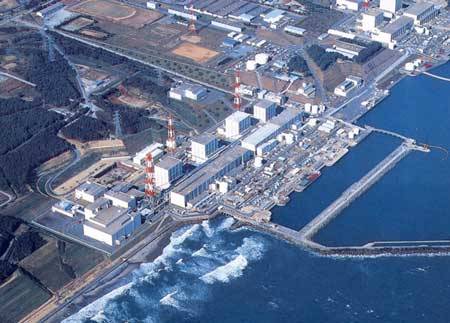
Nuclear Power in Japan: Safety at Kashiwazaki-Kariwa Remains an Issue, Nippon.com Takino Yūsaku 14 May 21
The Fukushima Daiichi accident forced Japan to bolster regulations for its fleet of nuclear reactors. After undergoing significant upgrades, the Kashiwazaki-Kariwa plant in Niigata Prefecture is on track to restart, although recent security issues have come to light that raise new concerns about the safety of nuclear power……..
Over the last several years, utilities looking to restart idled reactors have heavily invested in upgrading facilities to meet rigorous new regulations. So far, though, only a handful of plants have come back online.
Security issues recently uncovered at the Kashiwazaki-Kariwa Nuclear Power Station operated by Tokyo Electric Power Company illustrate the difficulty of passing the Nuclear Regulatory Authority’s stringent safety measures. TEPCO had poured resources into the facility in Niigata Prefecture with the goal of restarting the Unit 6 and 7 reactors at the site, but the NRA has ordered that further improvements be made before authorizing the utility to begin the refueling process. Below I assess the major upgrades made at the Kashiwazaki-Kariwa plant under the new NRA regulations released in July 2013.
Safeguarding Against Tsunami
,,,,,,,,,,,, In the wake of the incident, protecting reactors from tsunami has become a priority. The NRA assessment of the Kashiwazaki-Kariwa plant estimates a tidal wave as high as 6.8 meters could reach the coastline where the facility sits. Learning from Fukushima, TEPCO chose to exceed the regulatory body’s requirement and built a seawall towering 15 meters above the surf. Using existing topography to its advantage, it constructed a 10-meter steel-reinforced concrete barrier for the low-lying Units 1–4 and a 3-meter earth embankment at Units 5–7, which are perched higher above the sea……….
Blackout Response
In an emergency, keeping cooling systems functioning is of utmost importance. To prepare for an event where the seawall and smaller barriers fail or that the power goes out at the Niigata plant, TEPCO installed four sets of mobile gas-fired generators and switchboards on high ground and stationed a fleet of 20 generator cars as backup.
…………… TEPCO faced major challenges in bringing the plant in line with the NRA’s new regulations, considered the strictest in the global nuclear industry. Along with tsunami measures, the utility had to meet stringent antiterrorism guidelines, including developing a response to attackers flying an airplane into the facility. The government completed an inspection of Unit 7 in October 2020 and the bulk of construction was completed in January of this year. TEPCO was confident it had covered all bases, but the discovery that individuals had used an employee ID card to enter the central control room without authorization and that an intruder detection system had not been functioning for an extended period have led the NRA to halt plans for restarting the reactor. The security problems also throw into question whether residents will agree to bringing the plant back online.
Community Considerations
Along with meeting NRA regulations, utilities aiming to restart reactors must win the approval of residents of the towns and cities where plants are located. Debate is often fraught as host communities weigh the economic benefits of nuclear power, including jobs and revenue from government subsidies and local taxes, against safety concerns. Money pouring into construction industries from huge projects to upgrade facilities has only complicated the issue………………..https://www.nippon.com/en/in-depth/d00687/
Opportunities for US-Russian collaboration on the safe disposal of nuclear waste
Opportunities for US-Russian collaboration on the safe disposal of nuclear waste, Bulletin of the Atomic Scientists By Cameron Tracy, Sulgiye Park, Maria Plevaka, Ekaterina Bogdanova, May 13, 2021
Russia and the United States share a common legacy of nuclear waste production and a common need to safely and effectively manage this waste. Both have operated nuclear reactors for more than six decades.
……. . This nuclear energy is unavoidably accompanied by the production of vast quantities of nuclear wastes. The United States possesses approximately 80,000 metric tons of civilian high-level radioactive waste; Russia possesses about 24,000 metric tons (Laverov 2016; Nuclear Energy Institute 2019). Much of this is in the form of spent fuel composed largely of uranium, as well as transmutation productions (e.g., plutonium, neptunium, and americium) and fission products (e.g., cesium, strontium, and iodine) produced during the irradiation of fuel (Bruno and Ewing 2006). Low level wastes resulting from nuclear energy generation, including contaminated clothing or equipment exposed to neutron irradiation, constitute another nuclear waste stream (Yim and Simonson 2000).
Alongside these civilian inventories, Russia and the United States possess the vast majority of the world’s weapons plutonium and highly enriched uranium—fissile materials from which nuclear weapons are constructed (International Panel on Fillile Materials 2015). Much of this material has been declared excess to military needs and must be disposed of. Furthermore, the past production of these fissile material stockpiles and of nuclear arsenals has yielded large quantities of radionuclide-contaminated wastes. This totals 340,000 metric tons of material in the United States, and likely similar quantities in Russia (US Department of Energy 1997)……… (subscribers only) https://thebulletin.org/premium/2021-05/opportunities-for-us-russian-collaboration-on-the-safe-disposal-of-nuclear-waste/
If Bitcoin is virtual, why are there environmental concerns?
Why does Elon Musk say Bitcoin is bad for the environment? ABC, By Jordan Hayne, 14 May 21,
……………If Bitcoin is virtual, why are there environmental concerns?
The issue is that all these computer farms working overtime to mine bitcoin use up a lot of real-world energy.The grunt work of adding to the block chain has computers run guessing games involving an astronomically large number of guesses each second.
To be more precise, the network is currently estimated as being able to handle 176,000,000,000,000,000,000 (that’s 176 quintillion) computations every single second.
All those numbers are energy intensive, so the power consumption of the Bitcoin network is huge.
According to the University of Cambridge’s Centre for Alternative Finance, the estimated annualised consumption of electricity by the Bitcoin network is 149.6 terawatt hours and growing.
That’s more than countries like Sweden, Pakistan and Malaysia, and about 61 per cent of Australia’s total energy consumption…. https://www.abc.net.au/news/2021-05-14/why-is-bitcoin-bad-for-the-environment-elon-musk/100139280
Nuclear industry survives on its false claim that it helps the fight against climate change

April 28th, 2021, by Paul Brown, The nuclear industry’s unfounded claims let it rely on “dark arts”, ignoring much better ways to cut carbon emissions.
Nuclear industry’s unfounded claims let it survive, https://climatenewsnetwork.net/nuclear-industrys-unfounded-claims-let-it-survive/
– It is the global nuclear industry’s unfounded claims – not least that it is part of the solution to climate change because it is a low-carbon source of electricity – that allow it to survive, says a devastating demolition job by one of the world’s leading environmental experts, Jonathan Porritt.
In a report, Net Zero Without Nuclear, he says the industry is in fact hindering the fight against climate change. Its claim that new types of reactor are part of the solution is, he says, like its previous promises, over-hyped and illusionary.
Porritt, a former director of Friends of the Earth UK, who was appointed chairman of the UK government’s Sustainable Development Commission after years of campaigning on green issues, has written the report in a personal capacity, but it is endorsed by an impressive group of academics and environmental campaigners.
His analysis is timely, because the nuclear industry is currently sinking billions of dollars into supporting environmental think tanks and energy “experts” who bombard politicians and news outlets with pro-nuclear propaganda.
Porritt provides a figure of 46 front groups in 18 countries practising these “dark arts”, and says it is only this “army of lobbyists and PR specialists” that is keeping the industry alive.
First he discusses the so-called levelized cost of energy (LCOE), a measure of the average net present cost of electricity generation for a generating plant over its lifetime.
“The case against nuclear power is stronger than it has ever been before”
n 2020, the LCOE of producing one megawatt of electricity in the UK showed huge variations:
- large scale solar came out cheapest at £27 (US$38)
- onshore wind was £30
- the cheapest gas: £44
- offshore wind: £63
- coal was £83
- nuclear – a massive £121 ($168).
Porritt argues that even if you dispute some of the methods of reaching these figures, it is important to look at trends. Over time wind and solar are constantly getting cheaper, while nuclear costs on the other hand are rising – by 26% in ten years.
His second issue is the time it takes to build a nuclear station. He concludes that the pace of building them is so slow that if western countries started building new ones now, the amount of carbon dioxide produced in manufacturing the concrete and steel needed to complete them would far outweigh any contribution the stations might make by 2050 to low carbon electricity production. New build nuclear power stations would in fact make existing net zero targets harder to reach.
“It is very misleading to make out that renewables and nuclear are equivalently low-carbon – and even more misleading to describe nuclear as zero-carbon, as a regrettably significant number of politicians and industry representatives continue to do – many of them in the full knowledge that they are lying”, he writes.
He says that the British government and all the main opposition political parties in England and Wales are pro-nuclear, effectively stifling public debate, and that the government neglects the most important way of reducing carbon emissions: energy efficiency.
Also, with the UK particularly well-endowed with wind, solar and tidal resources, it would be far quicker and cheaper to reach 100% renewable energy without harbouring any new nuclear ambitions.
The report discusses as well issues the industry would rather not examine – the unresolved problem of nuclear waste, and the immense time it takes to decommission nuclear stations. This leads on to the issue of safety, not just the difficult question of potential terrorist and cyber attacks, but also the dangers of sea level rise and other effects of climate change.
Failed expectations
These include the possibility of sea water, particularly in the Middle East, becoming too warm to cool the reactors and so rendering them difficult to operate, and rivers running low during droughts, for example in France and the US, forcing the stations to close when power is most needed.
Porritt insists he has kept an open mind on nuclear power since the 1970s and still does so, but that they have never lived up to their promises. He makes the point that he does not want existing nuclear stations to close early if they are safe, since they are producing low carbon electricity. However, he is baffled by the continuing enthusiasm among politicians for nuclear power: “The case against nuclear power is stronger than it has ever been before.”
But it is not just the politicians and industry chiefs that come in for criticism. Trade unions which advocate new nuclear power because it is a heavily unionised industry when there are far more jobs in the renewable sector are “especially repugnant.”
He also rehearses the fact that without a healthy civil nuclear industry countries would struggle to afford nuclear weapons, as it is electricity consumers that provide support for the weapons programme.
The newest argument employed by nuclear enthusiasts, the idea that green hydrogen could be produced in large quantities, is one he also debunks. It would simply be too expensive and inefficient, he says, except perhaps for the steel and concrete industries.
Porritt’s report is principally directed at the UK’s nuclear programme, where he says the government very much stands alone in Europe in its “unbridled enthusiasm for new nuclear power stations.”
This is despite the fact that the nuclear case has continued to fade for 15 years. Instead, he argues, British governments should go for what the report concentrates on: Net Zero Without Nuclear. – Climate News Network
UK’s Magnox nuclear reprocessing plant to close, leaving world’s largest stockpile of separated civil plutonium

Plutonium Policy, No2NuclearPower, No 132 May 2021, Update Introduction ..The Nuclear Decommissioning Authority (NDA) now expects the Magnox Reprocessing Plant at Sellafield to close this year (2021) – one year later than previously planned. The newer Thermal Oxide Reprocessing Plant (THORP) was shut in November 2018. Reprocessing, which has always been unnecessary, is the chemical separation of plutonium and unused uranium from spent nuclear waste fuel.
When reprocessing ends there will be around 140 tonnes of separated civil plutonium stored at Sellafield – the world’s largest stockpile of separated civil plutonium. (1) In 2008 the NDA launched a consultation on options (2) for dealing with this embarrassing stockpile – it is highly toxic, poses a permanent risk of proliferation, and will cost taxpayers around £73 million a year to store for the next century. (3) Today, after almost a decade and a half of dithering, the UK Government has failed to make any decisions, but still appears to favour the re-use option, which would probably involve transporting weapons useable plutonium or MoX fuel to reactor sites, such as Hinkley Point C and Sizewell B (and C if it is ever built) with an armed escort.
The NDA itself said in 2008 that deciding soon could save money by removing the need to build further plutonium stores. And the Government’s refusal to admit that using the plutonium as fuel for new reactors is not only extremely technically challenging but also probably unaffordable, means funds are being spent developing both re-use and immobilisation options thus maximising the cost of plutonium disposition at the same time maximising the cost of plutonium storage.
The story so far When reprocessing ends in 2021 there will be around 140 tonnes of separated civil plutonium stored at Sellafield. About 23 tonnes of this is foreign-owned, largely but not exclusively by Japanese utilities, and is managed under long-term contracts. (4) The UK’s stockpile of plutonium has been consolidated at Sellafield by transporting material at the former fast reactor site at Dounreay in Caithness down to Cumbria. The NDA says it has been working with the UK government to determine the right approach for putting this nuclear material beyond reach. (5) The options it is considering are all predicated on the development of a Geological Disposal Facility (GDF). Radioactive Waste Management Ltd (RWM) – a subsidiary of the NDA – is assuming that a GDF will be available to receive its first waste in the late 2040s. Then it will take around 90 years to emplace all existing waste before it can begin emplacing other materials such as immobilised plutonium or spent plutonium fuel. And there are no guarantees this timetable will be achieved. In Sweden, for example, which is perhaps one of the countries most advanced in its development of an underground repository, nuclear utilities have warned reactors may have to close early because of delays in the approval of the repository. (6)
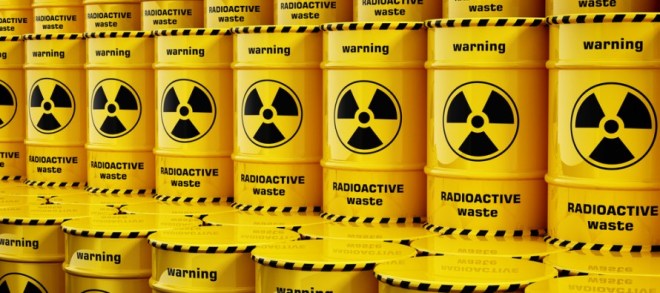
The Options Options considered for dealing with plutonium include using it as a fuel called Mixed Oxide Fuel (MoX) in nuclear reactors (followed by storage as spent fuel pending disposal in a Geological Disposal Facility (GDF)).
Storage Problems Meanwhile plutonium will have to continue to be stored at Sellafield. The NDA’s 2008 report said “If a decision were taken today on a solution for the inventory, there could still be a requirement to provide storage for around 40 years.” (17) Continued long-term storage of civil plutonium is not as easy as it sounds nor is it cheap, and there are many technical challenges. ……………..
The NDA considers some of the older plutonium packages and facilities used in early production to be amongst the highest hazards on the Sellafield site. Therefore, it is aiming to gradually transfer all plutonium to a new store, the Sellafield Product and Residue Store (SPRS) which opened in 2010……..
A proportion of the plutonium canisters at Sellafield are decaying faster than the NDA anticipated. A leak from any package would lead to an ‘intolerable’ risk as defined by the Office for Nuclear Regulation (ONR). The NDA has therefore decided to place the canisters more at risk in extra layers of packaging until SRP is operational. ………..
In 2014, the House of Commons Public Accounts Committee reported that the Government did not have a strategy in place for the plutonium stored at Sellafield. 7 years later, it has still not decided between the two options available to it: readying the plutonium stockpile for long-term storage in a geological disposal facility (that has yet to be constructed); or reusing it as fuel in new nuclear power stations. (25)
Conclusion The Government’s preferred option for the disposition of plutonium still appears to be to use the majority of the stockpile to fabricate Mixed Oxide Fuel for use in Light Water Reactors. This could mean transporting weapons-useable plutonium on our roads or rail network to Sizewell and Hinkley Point. These transports would need to be accompanied by armed police.
This is despite the fact that a plutonium immobilisation plant would be required in any case to immobilise that portion of the plutonium stockpile which is not suitable for use in MoX fuel.
Meanwhile, the Nuclear Decommissioning Authority needs to continue its programme of modernising Sellafield’s plutonium storage facilities, which will involve the construction extensions to the Sellafield Product and Residue Store (SPRS) and retreating and repacking some of the existing canisters which are considered unsuitable for storage in a modern store. This will also involve construction the Sellafield (Product and Residue store) Retreatment Plant (SRP).
Had the Government decided soon after the publication of the NDA’s options report to immobilise the UK plutonium stockpile, as advised by environmentalists and proliferation specialists, it is likely that savings could have been made by removing the requirement for one or both of the plutonium store extensions. Indeed, if a decision is taken soon, it may still be possible to avoid the cost of building the second store extension. of two
In short, Government policy appears to be maximising the cost of plutonium disposition by requiring both a MoX fuel fabrication plant AND a plutonium immobilisation plant, and at the same time maximising the cost of plutonium storage. Under this policy MoX fuel containing weapons useable plutonium would have to be transported under armed guard around the country. https://www.no2nuclearpower.org.uk/wp/wp-content/uploads/2021/05/nuClearNewsNo132.pdf
1 This Month





PLEASE OPPOSE HR 8255 AND S.3639 – bills would accelerate satellite deployment, with no environmental review or safeguards – https://ncstd5li.quorum.us/campaign/169331/
To see nuclear-related stories in greater depth and intensity – go to https://nuclearinformation.wordpress.com
-
Archives
- October 2026 (74)
- September 2026 (339)
- August 2026 (330)
- July 2026 (355)
- June 2026 (287)
- May 2026 (306)
- April 2026 (356)
- March 2026 (251)
- February 2026 (267)
- January 2026 (308)
- December 2025 (358)
- November 2025 (359)
-
Categories
- 1
- 1 NUCLEAR ISSUES
- business and costs
- climate change
- culture and arts
- ENERGY
- environment
- health
- history
- indigenous issues
- Legal
- marketing of nuclear
- media
- opposition to nuclear
- PERSONAL STORIES
- politics
- politics international
- Religion and ethics
- safety
- secrets,lies and civil liberties
- spinbuster
- technology
- Uranium
- wastes
- weapons and war
- Women
- 2 WORLD
- ACTION
- AFRICA
- Atrocities
- AUSTRALIA
- Christina's notes
- Christina's themes
- culture and arts
- Events
- Fuk 2022
- Fuk 2023
- Fukushima 2017
- Fukushima 2018
- fukushima 2019
- Fukushima 2020
- Fukushima 2021
- general
- global warming
- Humour (God we need it)
- Nuclear
- RARE EARTHS
- Reference
- resources – print
- Resources -audiovicual
- Weekly Newsletter
- World
- World Nuclear
- YouTube
-
RSS
Entries RSS
Comments RSS

