NuScale’s small nuclear reactor dream – dead on arrival?
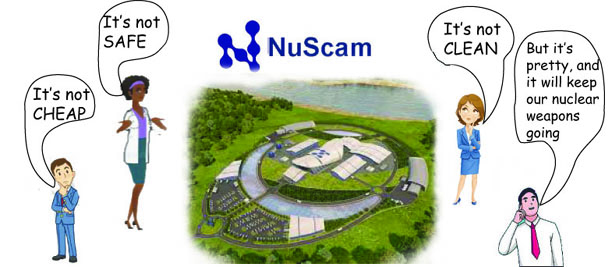
in order to make advanced reactors accessible within the next few decades—even relatively simple reactors, like NuScale’s—the government would need to provide hundreds of billions of dollars in subsidies …… the nuclear dream looks dead on arrival….
Biden’s Other Nuclear Option, Smaller nuclear reactors might be the bridge to a carbon-free economy. But are they worth it? Mother Jones, 22 Feb 21, BOYCE UPHOLT ”………..
But are these investments worth the money—and the risks? New designs or not, nuclear plants face daunting issues of waste disposal, public opposition, and, most of all, staggering costs. We must ramp up our fight against climate change. But whether nuclear is a real part of the solution—or just a long-shot bid to keep a troubled industry alive—is a debate that will come to the fore in the short window we have to overhaul the nation’s energy portfolio.
Few issues divide us as cleanly as nuclear power. According to a 2019 Pew Research Center poll, 49 percent of Americans support opening new plants, while 49 percent are opposed.
The popular argument against nuclear power can be summed up in a few names: Chernobyl. Fukushima. Three Mile Island. Nuclear dread is palpable. Some formerly pro-nuclear countries, like Germany, began phasing out plants in the wake of the 2011 disaster in Japan. The dangers begin well before nuclear fuel arrives at a plant, and persist long afterward; the rods that fuel today’s plants remain radioactive for millennia after their use. How to ethically store this waste remains a Gordian knot nobody has figured out how to cut.
The argument in favor of nuclear power boils down to the urgent need to combat climate change. [Ed, but nuclear does not really combat climate change.]
But if nuclear power is going to help us mitigate climate change, a lot more reactors need to come online, and soon. Eleven nuclear reactors in the United States have been retired since 2012, and eight more will be closed by 2025. (When nuclear plants are retired, utility companies tend to ramp up production at coal- or natural gas–fired plants, a step in the wrong direction for those concerned about lowering emissions.) Since 1970, the construction of the average US plant has wound up costing nearly three-and-a-half times more than the initial projections. Developers have broken ground on just four new reactor sites since Three Mile Island. Two were abandoned after $9 billion was.. sunk into construction; two others, in Georgia, are five years behind schedule. The public is focused on risks, but “nuclear power is not doing well around the world right now for one reason—economics,” says Allison Macfarlane, a former commissioner of the Nuclear Regulatory Commission.
Until Three Mile Island, public support was strong. Dozens of plants came online. In the 1970s, Reyes, seeing an industry full of promise, decided to pursue a degree in nuclear engineering.
……… Utah Associated Municipal Power Systems, a state-owned agency that sells electricity across six Western states aims to offer its members the choice of fully carbon-free power, sees NuScale as the best available option for undergirding its existing wind and solar plants. In 2015, UAMPS announced a plan to build 12 NuScale reactors at the federally run Idaho National Laboratory. NuScale projected total construction costs at $3 billion—nearly a third less than the most recently completed US reactor, which came online in 2016 at a cost of $4.7 billion (though it will supply more power). And the next plant should cost even less, since NuScale’s small reactors will be built on an assembly line, rather than on-site. But the price will drop only if more customers buy them. “Taxes are more popular than nuclear power,” jokes Doug Hunter, the CEO of UAMPS.
To change that perception, Hunter and his team have spent the last few years visiting towns and utility companies that buy power from UAMPS, explaining the potential role of nuclear power and the safety of NuScale’s design. His persistence paid off. By 2020, the majority had signed on to the NuScale project—though only as long as they had plenty of chances to back out if the project went south……….
Even with new technology, we will need to mine uranium—a process that has leached radioactive waste into waterways—and find somewhere to put the spent fuel. (The current practice, which persists at Trojan and will be employed at NuScale’s plants, is to hold waste on-site. This is intended to be a temporary measure, but every attempt to find a permanent disposal site has been stalled by geological constraints and local opposition.) Lloyd Marbet, Director of the non-profit Oregon Conservancy Foundation believes we need to transition away from coal and gas immediately. But he worries that nuclear is too expensive, and a new round of investment might pull money away from more effective, and cleaner, solutions. ……….
These days, he’s watching the industry creep back. A Republican state senator named Brian Boquist has proposed a bill three times that would permit city or county voters to exempt themselves from the 1980 law, allowing a nuclear facility to be built within their borders. (The bill has failed twice; the latest version is with the senate committee.) Boquist does not seem particularly committed to fighting climate change: He and other members of the Republican minority refused to show up to vote on a cap-and-trade bill in early 2020, causing the Senate to fall short of a quorum. (When Gov. Kate Brown threatened to retrieve legislators using state troopers, Boquist said to “send bachelors and come heavily armed.”)
In 2017, as the legislature debated Boquist’s first pro-nuclear bill, Marbet testified that NuScale was making “an end run around [voters] in their quest for corporate profit.” He also noted the company’s ties to the Fluor Corporation. The Texas-based multinational engineering firm that has been NuScale’s majority owner since 2011 has invested $9.9 million in campaign contributions over the past 30 years, with nearly two-thirds going toward Republican candidates. (Fluor is currently under investigation by the Securities and Exchange Commission due to allegedly sloppy accounting practices.)
Marbet admits his view of the industry is jaundiced, but his experiences make him skeptical of NuScale and its claims. He worries, too, that if small reactors take off, operators will revert to old habits, cutting corners to make a buck. He points to a draft rule approved last year by the Nuclear Regulatory Commission, over the objections of FEMA, that would reduce the size of the emergency planning zone around nuclear plants: Rather than a 10-mile-wide circle, a plant would only need an evacuation plan for the space within its fence lines. NRC commissioner Jeff Baran opposed the change, noting it is based on assumptions about small reactors, like NuScale’s, that remain on the drawing board, and might open the door to weakening safety standards for existing plants.
Old-line environmental groups like Greenpeace and the Sierra Club remain staunchly opposed to nuclear power, but politicians have been more open to it.
President Barack Obama was an outspoken proponent of nuclear’s potential. For 2020, the Senate Appropriations Committee unanimously agreed to spend more than President Trump requested on nuclear research, and the Senate is currently considering a bipartisan bill that will streamline the permitting process and establish a national uranium reserve.
Now, as part of his $2 trillion climate plan, Biden is calling for a federal research agency that would pursue carbon-free energy sources, including small reactors. Biden’s was the first Democratic Party platform in 48 years that explicitly supported an expansion of nuclear energy. His pick to lead the Department of Energy—which devotes the majority of its budget to nuclear projects—is former Michigan Gov. Jennifer Granholm, who has little experience in the field. Gina McCarthy, the former EPA administrator who is Biden’s chief domestic climate coordinator, has said that nuclear could play a key role in baseload power supply but indicated that waste disposal issues ought to be resolved before the technology is widely adopted.
A major hurdle for any advanced nuclear product is the regulatory process. NuScale spent more than $500 million developing its licensing application. The path to approval has consumed 12 years already, and it’s not over yet. In the months after my visit to NuScale, the Nuclear Regulatory Commission noted “several potentially risk-significant” questions that remain unanswered about the company’s reactor design, especially about its new version of a steam generator. Nonetheless, the NRC granted its initial approval of the design at the end of the summer; now NuScale awaits official, final certification by the commissioners, which is expected sometime this year. But further analysis of the generators will be required before a license is granted to actually build a plant.
A decade ago, NuScale suggested it might have a plant in operation by 2018. Now construction won’t begin until 2025 at the earliest. The plant at Idaho National Laboratory won’t be fully operational until 2030. Factoring in interest and other costs not included in NuScale’s $3 billion estimate, UAMPS expects a total 40-year lifetime cost of $6 billion for the plant. Some critics see this as the same old story: grand, early promises—a “dog and pony show,” as Marbet calls NuScale’s PR—followed by cost overruns and delays. Reyes intentionally used materials familiar to regulators, so as to speed along the process. But other advanced reactor designs, which use new kinds of fuel and coolant, may face an even slower and more expensive journey.
Recently, nine towns—more than a quarter of the subscribed members—pulled out of UAMPS’s project after changing their minds about their energy needs or worrying that it was becoming a financial sinkhole. (Meanwhile, one new town signed on.) The plant’s economics depend on running near full capacity, which will only happen if utilities outside of UAMPS also buy some of its power. The Department of Energy says it will chip in nearly $1.4 billion over the next nine years, which should help bring down the cost of the plant’s energy. But the projected price—$55 per megawatt-hour—is still above the current costs for solar and wind projects. And the federal money will require annual congressional approval. It’s possible that other new ideas might pop up, competing for limited dollars.
Biden’s climate plan hinges on a massive expenditure on research. What his administration will have to quickly decide, though, is how to divvy that pot. Allison Macfarlane, the former NRC commissioner, told me other industries deserve far more of our resources and attention than nuclear. Batteries, in particular, could steady out the uneven flow of renewables. They may even work better, since nuclear plants are difficult to power up or down in response to changing conditions. Once a pie-in-the-sky idea, battery storage now offers costs at least “in the ballpark” of nuclear, says Stan Kaplan, a former US Energy Information Administration analyst. Prices have dropped 70 percent in the past few years and are projected to drop another 45 percent before NuScale’s plant comes online. California—which also has a moratorium on nuclear builds—is rapidly expanding its storage capacity. Within 10 years, the niche that NuScale is aiming for might already be filled.
……. For nuclear to persist as a hedge, it all but requires government assistance, given the enormous upfront costs of R&D. Another challenge is vetting which projects have real promise. “You have all these reactor vendors pitching their wares, and making all sorts of outrageous and false claims,” says Edwin Lyman, the director of nuclear power safety with the Union of Concerned Scientists. These claims have also been the basis of lowering safety standards, which offers a large indirect subsidy for operators. There needs to be a stronger peer-review process, he says, to make sure the government is only sponsoring truly worthwhile projects.
A recent study from Princeton found that even without nuclear power, the relative cost of a decarbonized energy system in 2050 could be about the same as in 2015, which at the time was a historic low. The study found nuclear could reduce costs even further—if it becomes as cheap as its advocates hope. But Abdulla, the UC San Diego researcher, has calculated that in order to make advanced reactors accessible within the next few decades—even relatively simple reactors, like NuScale’s—the government would need to provide hundreds of billions of dollars in subsidies and substantially simplify the regulatory process. Abdulla believes nuclear energy should have been “an arrow in our quiver.” But given the economics, he says, “I fear the arrow has broken.”
 if money were no object—if we could snap our fingers and scatter reactors across the landscape—…… But if Abdulla’s numbers are right, the nuclear dream looks dead on arrival…. https://www.motherjones.com/environment/2021/02/nuclear-energy-climate-change-nuscale-green-power-uranium/
 A great article. Just one problem. The whole article runs with the assumption that nuclear power is effectively ”low carbon”. Yet this assumption is not challenged. There are several ways in which nuclear power is actually quite high carbon. Just for one comparison with reneewable energy: wind and solar power are delivered directlly to the turbines and panels – with no digging up of fuel required, no regular transport by road, rail etc. The entire nuclear fuel chain with all its steps – mining, milling, conversion, fuel fabrication, reactor, waste ponds, waste canisters , deep repositaory … all this is carbon emitting.
What would go into the Chalk River Mound? — Concerned Citizens of Renfrew County and Area

December 2020 Canadian taxpayers are paying a consortium (Canadian National Energy Alliance) contracted by the federal government in 2015, billions of dollars to reduce Canada’s $16 billion nuclear liabilities quickly and cheaply. The consortium is proposing to construct a giant mound for one million tons of radioactive waste beside the Ottawa River upstream of Ottawa-Gatineau. […]
What would go into the Chalk River Mound? — Concerned Citizens of Renfrew County and Area
There is considerable secrecy about what would go into the mound; the information that follows has been derived from the proponent’s final environmental impact statement (EIS) (December 2020) which lists a partial inventory of radionuclides that would go into the gigantic five-to-seven story radioactive mound (aka the “NSDF”). The EIS and supporting documents also contain inventories of non-radioactive hazardous materials that would go into the dump.
Here is what the consortium says it is planning to put into the Chalk River mound (according to the final EIS and supporting documents)
1) Long-lived radioactive materials
Twenty-five out of the 30 radionuclides listed in Table 3.3.1-2: NSDF Reference Inventory and Licensed Inventory are long-lived, with half-lives ranging from four centuries to more than four billion years.
To take just one example, the man-made radionuclide, Neptunium-237, has a half-life of 2 million years such that, after 2 million years have elapsed, half of the material will still be radioactive. At the time of emplacement in the mound, the neptunium-237 will be giving off 17 million ( check, 1.74 x 10 to the 7th) radioactive disintegrations each second, second after second.
The mound would contain 80 tonnes of Uranium and 6.6 tonnes of thorium-232.
2) Four isotopes of plutonium, one of the most deadly radioactive materials known, if inhaled or ingested.
John Gofman MD, PhD, a Manhattan Project scientist and former director of biomedical research at the DOE’s Lawrence Livermore Laboratory, stated that even one-millionth of a gram of plutonium inhaled into the lung, will cause lung cancer within 20 years. Sir Brian Flowers, author of the UK Royal Commission Report on Nuclear Energy and the Environment, wrote that a few thousands of a gram, inhaled into the lungs, will cause death within a few years because of massive fibrosis of the lungs, and that a few millionths of a gram will cause lung cancer with almost 100% certainty.
The four isotopes of plutonium listed in the NSDF reference inventory are Plutonium-239, Plutonium-240, Plutonium-2441 and Plutonium-242. According to Table 3.3.1-2 (NSDF Reference Inventory and Licensed Inventory) from the EIS, The two isotopes 239 and 240 combined will have an activity of 87 billion Bq when they are emplaced in the dump. This means that they will be giving off 87 billion radioactive disintegrations each second, second after second.
3) Fissionable materials
Fissionable materials can be used to make nuclear weapons.
The mound would contain “special fissionable materials” listed in this table (avove) extracted from an EIS supporting document, Waste Acceptance Criteria, Version 4, (November 2020)
4) Large quantities of Cobalt-60
The CNL inventory also includes a very large quantity of cobalt-60 (990 quintillion becquerels), a material that gives off so much strong gamma radiation that lead shielding must be used by workers who handle it in order to avoid dangerous radiation exposures. The International Atomic Energy Agency considers high-activity cobalt-60 sources to be “intermediate-level waste” and specifies that they must be stored underground. Addition of high-activity cobalt-60 sources means that hundreds of tons of lead shielding would be disposed of in the mound.
5) Very Large quantities of tritium
The mound would contain 890 billion becquerels of tritium, a radioactive form of hydrogen. Tritium readily combines with oxygen to form radioactive water. It moves readily through the environment and easily enters all cells of the human body where it can cause damage to cell structures including genetic material such as DNA and RNA.
Because it is part of the water molecule, removal of tritium from water is very difficult and expensive. There are no plans to remove tritium from the mound leachate. Instead the consortium plans to pipe the contaminated water directly into Perch Lake which drains into the Ottawa River.
6) Carbon-14The mound would contain close to two billion becquerels of Carbon-14, an internal emitter that is hazardous in similar ways to tritium. Carbon is a key element in all organic molecules. When it is inhaled or ingested it can become incorporated into all manner of organic molecules and cellular components including genetic material.
7) Many other man-made radionuclides
Radionuclides such as caesium-137, strontium-90, radium, technetium, nickel-59, americium-243 are listed in the partial inventory of materials that would go into the dump. See the partial inventory here: https://concernedcitizens.net/2020/12/17/cnls-partial-inventory-of-radionuclides-that-would-go-into-the-chalk-river-mound/
8) Non-radioactive hazardous materials
Hazardous materials destined for the dump according to the final EIS and Waste Acceptance Criteria include asbestos, PCBs, dioxins, mercury, up to 13 tonnes of arsenic and hundreds of tonnes of lead. (Reference)
9) Large quantities of valuable metals that could attract scavengers
According the the final EIS, the mound would contain 33 tonnes of aluminum, 3,520 tonnes of copper, and 10,000 tonnes of iron. It is well known that scavenging of materials occurs after closure of facilities. Scavengers who would be exposed to high radiation doses as they sought to extract these valuable materials from the dump.
10) Organic Materials
80,339 tonnes of wood and other organic material are destined for the mound. These materials would decompose and cause slumping in the mound, therefore potentially compromising the integrity of the cap.
Most of the radioactive and hazardous material would get into the air and water, some sooner, some later. Some would get into ground and surface water during creation of the mound, such as tritium which is very mobile and cannot be removed by the proposed water treatment plant. Others would get into the air, during construction and could be breathed by workers. Some materials would leach slowly into groundwater. Still others would be released when the mounds deteriorates over time and eventually disintegrates several hundreds of years into the future. For details on the expected disintegration of the mound in a process described as “normal evolution” see this po
The mound would actually get more radioactive over time
See the submission entitled “A Heap of Trouble” by Dr. Gordon Edwards, president of the Canadian Coalition for Nuclear Responsibility for a chilling description of this process. http://www.ccnr.org/Heap_of_Trouble.pdf. Here is a quote from the submission:
The Near Surface Disposal Facility (NSDF) project is presented not as a temporary, interim
storage facility but as a permanent repository that will ultimately be abandoned. We are
dealing with a potentially infinite time horizon. The proponent seeks approval not just for a
few decades, but forever. Such permission has never before been granted for post-fission
radioactive wastes in Canada, nor should it be granted. Long-lived radioactive waste
should not be abandoned, especially not on the surface beside a major body of water.“The facility will remain a significant hazard for in excess of 100,000 years.“
This point was raised by Dr. J.R. Walker, a retired AECL radioactive waste expert in his submission on the draft environmental impact statement. You can read his full submission here: https://www.ceaa.gc.ca/050/documents/p80122/119034E.pdf
This dump would not not meet international safety standards for radioactive waste management.
The dump would not meet provincial standards for hazardous waste disposal.“There is no safe level of exposure to any man-made radioactive material.“
“There is no safe level of exposure to any man-made radioactive material. All discharges, no matter how small, into our air and water can cause cancer and many other diseases as well as genetic damage and birth defects.”
~ Dr. Eric Notebaert, Canadian Association of Physicians for the Environment.
Fukushima nuclear station seismometers not functioning when latest earthquake happened
Fukushima nuclear plant operator: Seismometers were broken
The operator of the wrecked Fukushima nuclear power plant says two seismometers at one of its three melted reactors have been out of order since last year and did not collect data when a powerful earthquake struck the area earlier this month https://abcnews.go.com/Technology/wireStory/fukushima-nuclear-plant-operator-seismometers-broken-76044179
By MARI YAMAGUCHI Associated Press, 23 February 2021, TOKYO — The operator of the wrecked Fukushima nuclear power plant said Monday that two seismometers at one of its three melted reactors have been out of order since last year and did not collect data when a powerful earthquake struck the area earlier this month.
The acknowledgement raised new questions about whether the company’s risk management has improved since a massive earthquake and tsunami in 2011 destroyed much of the plant.
The malfunctioning seismometers surfaced during a Nuclear Regulation Authority meeting on Monday to discuss new damage at the plant resulting from a magnitude 7.3 quake that struck the region on Feb. 13. Cooling water and pressure levels fell in the Unit 1 and 3 reactors, indicating additional damage to their primary containment chambers.
The operator, Tokyo Electric Power Co., has repeatedly been criticized for coverups and delayed disclosures of problems at the plant.
Regulatory officials asked TEPCO at the meeting why it did not have seismological data from the Unit 3 reactor for Saturday’s quake, and utility officials acknowledged that both of its seismometers had failed — one in July and the other in October — and had never been repaired.
TEPCO also said that seismometers at all but two of the reactor buildings that survived the 2011 disaster were submerged by water from the tsunami and have never been replaced.
During Monday’s meeting, regulatory officials said they were concerned about the declining water levels and pressure in the Unit 1 and 3 primary containment chambers because of the possibility that the quake had expanded the existing damage or opened new leakage paths, and urged the utility to closely check for any increased radiation levels in the ground water surrounding the reactor buildings.
TEPCO said no abnormality has been detected in water samples so far.
New damage could further complicate the plant’s already difficult decommissioning process and add to the large amounts of contaminated water being stored at the plant.
Since the 2011 disaster, cooling water has been escaping constantly from the damaged primary containment vessels into the basements of reactor and turbine buildings, where the volume increases as groundwater seeps in. The water is pumped up and treated, then part of it is reused as cooling water, while the rest is stored in about 1,000 tanks.
TEPCO initially reported there was no abnormality at the plant from Saturday’s earthquake. But on Monday, it said about 20 of the tanks had slid slightly due to the quake, a storage container carrying radioactive waste had tilted, and asphalt pavement at the plant was cracked. AT TOP https://abcnews.go.com/Technology/wireStory/fukushima-nuclear-plant-operator-seismometers-broken-76044179
IAEA and Iran strike three-month deal over nuclear inspections
 IAEA and Iran strike three-month deal over nuclear inspections https://www.theguardian.com/world/2021/feb/21/iran-pushes-ahead-plan-cut-un-nuclear-inspections
Agreement paves way for diplomatic talks between Tehran and the US over sanctions, Patrick Wintour Diplomatic editor, Mon 22 Feb 2021
The UN’s nuclear inspectorate has struck a three-month deal with Iran giving it sufficient continued access to verify nuclear activity in the country, opening the space for wider political and diplomatic talks between Tehran and the US.
Iran will go ahead with its threat to withdraw this week from the additional protocol, the agreement that gives inspectors from the International Atomic Energy Agency (IAEA) intrusive powers.
However, following a weekend of talks with officials in Tehran, the IAEA’s director general, Rafael Grossi, announced that he had struck what he described as “a temporary bilateral technical understanding” that will mitigate the impact of Iran’s withdrawal from the protocol, and give the IAEA confidence that it can continue to verify Iran’s nuclear activity.
Grossi added that the move “salvages the situation” and avoids the position of the inspectors “flying blind”. He said the agreement, from which either side can withdraw, gave space for wider diplomatic discussions between the US and Iran to go ahead.
He said the law suspending Iran from the additional protocol had been passed by its parliament and now “exists and is going to be applied. There is less access, let’s face it.”
However, Grossi made clear he felt the new bilateral agreement sufficiently mitigated the impact of the reduced inspections regime, so it was therefore worthwhile for his team’s verification work continuing, at least on a temporary basis. “This is a temporary solution that allows us to continue to give to the world the assurances of what is going on there in the hope that we can return to a fuller picture.”
The IAEA director general added that there would be no reduction in the number of inspectors, and that not all snap inspections would be banned.
Iranian officials have said the agreement will mean that the inspectors will only have 70% of the access they now enjoy, but Grossi declined to put a percentage on the loss of access.
The deal, released late on Sunday night, was met with an immediate backlash in Iran, where furious hardliners convened an emergency session of parliament to demand more details. Some claimed it effectively overrode the law passed by parliament two months ago cutting back on inspections.
Iran’s atomic energy association said it would continue to use cameras to record and maintain information at its nuclear sites for three months, but would retain the information exclusively. If the US sanctions are lifted completely within that period, Iran will provide this information to the IAEA, otherwise it will be deleted forever.
Grossi will have to report the details of his understanding to the other signatories of the nuclear deal, including France, Germany and the UK. All three had warned Iran of the serious consequences of withdrawing from the protocol, and they will need to be satisfied by the IAEA director on the value of the technical understanding.
All sides are involved in brinkmanship designed to bring about direct talks between the US and Iran leading to the US, on the one hand, lifting economic sanctions and returning to the deal, and Iran coming back into compliance with the agreement. Iran has not left the deal, but over the past year lessened its commitments on critical issues such as levels of uranium enrichment and the use of advanced centrifuges.
Iran’s foreign minister, Javad Zarif, said in an interview with the state-owned Press TV that Iran was waiting for action from the US, not promises, and said the cutback in inspections had been mandated by Iran’s parliament and could not be overridden until sanctions were lifted. “We need concrete actions, not words,” he said.
The US has offered to attend an informal diplomatic meeting hosted by the EU, also attended by Russia and China, the other signatories to the deal. The US state department has hinted that at this meeting the US would map out an offer on how sanctions and other economic restrictions could be lifted or suspended if Iran returned to compliance with the nuclear deal, including over uranium enrichment stocks and use of advanced centrifuges.
Zarif said Iran would need to know how, if the US returned to the deal, it would not simply walk out again. He said the issue of compensation for the $1tn (£710bn) damage inflicted on the Iranian economy would also have to be discussed.
Hardliners are demanding that any sanctions suspension would need to be verified, something that would prolong a complex process.
The Iranian parliament’s speaker, Mohammad Baqer Qalibaf, a likely candidate for president, suspended its normal business on Monday to examine the new agreement and MPs 221 to 6 to refer it to the judiciary. He said any side agreement with the IAEA had to be approved by parliament.
The foreign ministry spokesman, Saeed Khatibzadeh, insisted parliament had been sidestepped in the weekend agreement. The power struggle is not just critical to the prospect of talks with the US, but also how the Iranians may view the presidential elections.
The chairman of parliament’s national security committee, Mojtaba Zolnour, said “the government has no right to decide and act arbitrarily. This arrangement is an insult to parliament.”
Ohio House and Senate wrestle with Bills about the nuclear bailout law
 Ohio Lawmakers Consider More Bills To Repeal Or Revise Nuclear Bailout Law WOSU Ohio Lawmakers Consider More Bills To Repeal Or Revise Nuclear Bailout Law WOSU
By ANDY CHOW, 22 Feb 21, Several bills have been introduced in the Ohio House and Senate to tackle the controversial nuclear power plant bailout law. The measures range from a partial repeal to a complete revoking of HB6, which is currently at the center of a $61 million federal bribery investigation.
Several bills have been introduced in the Ohio House and Senate to tackle the controversial nuclear power plant bailout law. The measures range from a partial repeal to a complete revoking of HB6, which is currently at the center of a $61 million federal bribery investigation………
While the investigation into HB6 is ongoing, some legislators say Stein’s bill doesn’t go far enough. State Rep. David Leland (D-Columbus) is proposing HB10, which eliminates the nuclear and solar subsidies, along with a measure that guaranteed a certain amount of subsidies for two coal plants.
There are other pieces of legislation, HB18 and HB57, that would repeal all of HB6, which would mean the revival of Ohio’s green energy standards. Republican leadership in the House and Senate have signaled a willingness to move on bills that address the nuclear and solar subsidies. https://radio.wosu.org/post/ohio-lawmakers-consider-more-bills-repeal-or-revise-nuclear-bailout-law#stream/0 |
|
The role of the Churches in promoting the U.N. Nuclear Weapons Ban Treaty
 Tomasi: treaty an important first step towards a world free of nuclear arms, https://www.vaticannews.va/en/church/news/2021-02/cardinal-tomasi-holy-see-nuclear-weapons-treaty-disarmement.html In an interview with the World Council of Churches the former Permanent Observer to the UN and Other International Organizations in Geneva and to the World Trade Organization reflects on how Churches can get involved in the goal of freeing the world of nuclear weapons. Tomasi: treaty an important first step towards a world free of nuclear arms, https://www.vaticannews.va/en/church/news/2021-02/cardinal-tomasi-holy-see-nuclear-weapons-treaty-disarmement.html In an interview with the World Council of Churches the former Permanent Observer to the UN and Other International Organizations in Geneva and to the World Trade Organization reflects on how Churches can get involved in the goal of freeing the world of nuclear weapons.
By Lisa Zengarini “The Treaty on the Prohibition of Nuclear Weapons heralds in a new era in international law and increasingly in public opinion” Cardinal Silvano M. Tomasi, has said. In an exclusive interview with the World Council of Churches (WCC) the former Permanent Observer to the UN and Other International Organizations in Geneva and to the World Trade Organization reflects on the positive impact of the Treaty (TPNW) and how Churches can get involved in the goal of freeing the world of nuclear weapons. The TPNW was adopted by the United Nations on 7 July 2017 and entered into force on 22 January 2021. For those nations who signed it, the Treaty prohibits the development, testing, production, stockpiling, stationing, transfer, use and threat of use of nuclear weapons, as well as assistance and encouragement to the prohibited activities. For nuclear armed states joining the treaty, it provides for a time-bound framework for negotiations leading to the verified and irreversible elimination of its nuclear weapons program. Acknowledging that “moral declarations alone will lead to disarmament”, in the interview Cardinal Tomasi, notes that the newly enacted norms “can support and even drive complex negotiations, hopefully toward achieving the goal of a world free from nuclear weapons”, stressing the need for non-nuclear weapons states to make their voices heard on this issue. He also emphasizes the role of civil society actors and of Churches and religious communities: “In this area, religions and all denominations can converge and amplify together the same moral message for believers and non-believers alike”, he says, adding that “local initiatives are very important for moving towards total disarmament” and that “local actors can make their voices heard at higher levels, by contacting their representatives and networking online”. Reminding that “the mere existence of nuclear weapons is a constant risk” and that “the pandemic has brought to light and intensified the extreme inequalities present in our societies”, the former Nuncio reaffirms that the establishment of a World Fund to address human development with the money previously invested in the military and weapons “is primary” in relation to the socio-economic issues we face today: “Pope Francis has recognized that the pandemic brings to light our true priorities and needs as a human family, and has encouraged deep reflection and active changes towards a world more committed to building just systems at the service of the people. It is not only a worthy goal, but a moral good”, he stresses. “Increased investments in arms arise from a feeling of insecurity, but a society can never be secure if the essential needs of its people are not met”, he explains. According to cardinal Tomasi, the present pandemic could act as a “catalyst” toward this ambitious goal: “In economically difficult times for all states – including the great powers – being able to release funds to revive the economy is essential. Decreasing the funds allocated to the arms race and dedicating them to economic recovery is actually a strategic choice for those states that wish to maintain their preeminence within the international system. Their influence and power will soon be judged based on their ability to recover from the crisis”, he concludes. |
|
Iran lawmakers call for president’s prosecution over IAEA deal
 Iran lawmakers call for president’s prosecution over IAEA deal
Motion passed on Monday signals the biggest rift in years between Iran’s moderate government and its hardline parliament. Aljazeera, By Maziar Motamedi, 22 Feb 2021
In a public vote on Monday, an overwhelming majority of lawmakers voted to send a report by the National Security and Foreign Policy Commission on the agreement reached with the International Atomic Energy Agency (IAEA) to the judiciary for review.
The report asserts that the deal struck on Sunday between the IAEA and the Atomic Energy Organisation of Iran (AEOI) constitutes a “clear violation” of a law passed by Parliament in December.
As per the law, the government of President Hassan Rouhani must stop the voluntary implementation of the Additional Protocol, which gives broad authorities to IAEA inspectors, from Tuesday.
In a statement, the AEOI said the implementation of the Additional Protocol will be completely halted from Tuesday, in accordance with the law, and no access will be given to the UN’s nuclear watchdog beyond those laid out in a principal safeguards agreement aimed at ensuring nuclear non-proliferation.
However, detractors have said the agreement reached after IAEA Director General Rafael Grossi visited Tehran violates the December law, in that Iran would unilaterally record the monitoring data the nuclear watchdog’s inspectors would normally be able to access under the Additional Protocol, but would not share the data.
The arrangement will remain in place for three months, at the end of which the data will be destroyed if all United States sanctions, imposed on Iran since 2018 after former President Donald Trump unilaterally withdrew from Iran’s 2015 nuclear deal with world powers, are not lifted.
Iran’s foreign ministry spokesman Saeed Khatibzadeh said the talks “resulted in a very significant diplomatic achievement and a very significant technical achievement … within the framework of the parliament’s binding law”.
Iran’s Supreme National Security Council also said in a statement on Monday the IAEA agreement falls in compliance with the parliament’s law.
‘President on the way to court!’
Instead of their scheduled work on the annual budget bill that had been delayed for months amid a spat with the government, they held a meeting behind closed doors to review the IAEA deal and drafted a motion to involve the judiciary.
Several lawmakers delivered fiery speeches in condemnation of the deal in a public session held afterwards.
But angry parliamentarians held a different view………………
Members of the assembly will meet Supreme Leader Ayatollah Ali Khamenei later on Monday, https://www.aljazeera.com/news/2021/2/22/iran-parliament-call-for-president-be-punished-for-iaea-agreement
Iran talks ‘avert’ impact of nuclear inspection deadline
|
Iran talks ‘avert’ impact of nuclear inspection deadline, BBC News 22 Feb 20, Iran and the global nuclear watchdog, the IAEA, have agreed to temporary measures to offset Iran’s decision to restrict access to inspectors.
These would enable the agency to retain the “necessary degree of monitoring and verification work”, IAEA chief Rafael Grossi said, without going into detail. The move comes ahead of a deadline set by Iran to stop intrusive checks of sites unless US sanctions are lifted……… Iran nuclear crisis: The basicsIran has nuclear power: But some countries have long suspected that it also has secret ambitions to build a nuclear bomb – Iran denies this. So a deal was struck: In 2015 a major agreement between Iran and six other countries meant Iran accepted limits on its nuclear activities in return for an end to harsh penalties, or sanctions, that hurt its economy. What is the problem now? Iran restarted banned nuclear activities after former US President Donald Trump pulled out of the deal and restored sanctions. Even though President Joe Biden wants to rejoin, both sides say the other must be the first to change course. Has the crisis now eased?The “temporary technical” arrangement reached between Iran and the International Atomic Energy Agency (IAEA) “salvages the situation”, Mr Grossi told reporters on Sunday after a visit to Iran. “We were able to retain the necessary degree of monitoring and verification work,” he said, without elaborating, but added: “There is less access [to Iranian sites], let’s face it.” Under the plan, for the next three months Iran would hold recordings from monitoring equipment installed at sites by the IAEA but would not release the information unless sanctions were lifted within that timeframe, the Atomic Energy Organisation of Iran (AEOI) said. If sanctions remained, the data would be erased, it added. Cameras and other apparatus have been put in place by the IAEA to help verify that Iran does not carry out nuclear activities prohibited under the deal. However, Iran and the US are at loggerheads over the removal of sanctions. Washington insists Tehran must return to full compliance with the 2015 deal first, while Tehran says that will only happen once sanctions are lifted. ‘This deal buys some precious time’Analysis by Paul Adams, BBC Diplomatic correspondent The IAEA’s boss, Rafael Grossi, called this “a good result”. It certainly seems likely to defuse a mounting sense of crisis surrounding Iran’s nuclear activities and efforts to breathe new life into the 2015 nuclear deal, known as the Joint Comprehensive Plan of Action, or JCPOA. Crucially, it significantly reduces the impact of a new Iranian law, due to come into effect on Tuesday, which would have seriously hampered the IAEA’s ability to do its work. Iran will still suspend implementation of the so-called Additional Protocol, which gives the IAEA substantially enhanced tools with which to carry out inspections. But Mr Grossi clearly believes the “temporary bilateral technical understanding” reached after talks in Tehran this weekend will allow his inspectors to continue doing their job to a satisfactory degree…………. https://www.bbc.com/news/world-middle-east-56030497 |
|
Some Iranians and Israelis in full agreement on wanting to stop Iran nuclear deal
or sworn enemies, Iran and Israel have much in common. Both are regional powers, projecting their interests beyond their borders. Both are beholden, in different ways, to shifting US policy. Both have secretive nuclear programmes. And both are heading towards national elections – in Israel next month, in Iran in June – that could decide whether cold-hearted enmity turns into hot-blooded war.
The stand-off over Iran’s alleged attempts, which are always denied, to acquire atomic bomb-making capacity has gone on for so long that its dangers are often underestimated. Yet the coming days are crucial. Iran has set 21 February as a deadline for an easing of unilateral US sanctions. If it is ignored, Tehran is threatening to ban snap UN inspections of its nuclear facilities and further ramp up proscribed atomic activities……….
The escalating crisis has brought a flurry of diplomatic activity in recent days, involving Germany and Qatar who are acting as go-betweens. Crucially, the US accepted an EU invitation to join talks with Iran on returning to mutual compliance with the deal. In its response on Friday, Iran’s foreign ministry stuck to its previous position that all sanctions must be lifted before talks can begin
This will not be the last word. But it is a reminder of the sobering – and alarming – reality that powerful individuals and factions on both sides are doing all they can to ensure the 2015 deal definitively collapses. In Iran, hardline candidates and members of the Majlis (parliament), focused on June’s presidential poll, oppose any kind of rapprochement with America.
They include leading presidential hopeful Hossein Dehghan. He reportedly has the backing of Iran’s ultra-conservative supreme leader, Ayatollah Ali Khamenei, who has sworn never to talk to America. Dehghan accuses Biden of bad faith. “We still see the same policies … as we did from the Trump team: not lifting the oppressive sanctions against the Iranian people,” he told the Guardian
Such scepticism reflects genuine distrust, and fear of another Trump-style stab in the back. But it is also the result of calculation, suggested analyst Saeid Jafari . “Biden’s victory [over Trump] came as a big disappointment to hardliners seeking to undermine Rouhani’s last-ditch effort to save the nuclear accord,” he wrote. They may try to scupper any talks……..
Strong opposition to the deal, however Biden plays it, is evident in Israel, where the hard-right prime minister and close Trump ally, Benjamin Netanyahu, is fighting for his political life. Netanyahu encouraged Trump to ditch the pact, even as Israel has expanded its own nuclear facilities. He vehemently warns against resurrecting it as he woos Jewish supremacist parties in Israel’s fourth election in two years……..
Against all this must be set common sense. Trump’s maximum pressure policy failed miserably. It did not mitigate regional tensions or reduce proxy attacks. Rather, illegal US and Israeli assassinations of high-profile figures increased them. Sanctions have hurt Iranians, but did not topple the regime or change its behaviour. Iran is closer now to a nuclear weapon than in 2016.
Biden’s instinct to try to break this impasse and find a diplomatic way through – supported by the UK, Germany and France – is the right one. But words are not enough. As a sign of good faith, he should swiftly relax some sanctions and unfreeze Iran’s Covid-related $5bn IMF loan request.
Time is short. Proving peace works may be the only way to halt the fatal advance of warmongers in Israel and Iran. https://www.theguardian.com/commentisfree/2021/feb/21/hawks-in-iran-and-israel-agree-bidens-bid-to-salvage-nuclear-deal-must-not-succeed
Opposition to nuclear dump plan for upstream at Chalk River
 Nuclear waste dump opponents press City of Ottawa to reject the upstream project at Chalk River, Ottawa Citizen, Jon Willing, Feb 22, 2021 A proposal to build a nuclear waste disposal facility upstream from the City of Ottawa could have council soon deciding if the municipality should oppose the project. Nuclear waste dump opponents press City of Ottawa to reject the upstream project at Chalk River, Ottawa Citizen, Jon Willing, Feb 22, 2021 A proposal to build a nuclear waste disposal facility upstream from the City of Ottawa could have council soon deciding if the municipality should oppose the project.
The planned “near surface disposal facility” at the Chalk River nuclear research site, about 200 kilometres west of Ottawa, has opponents calling on councillors to state the city’s objection…….. “I look back on my years of taking my kids to the river to swim and how important the river is in Ottawa as part of our lifestyle, and it’s the source of all of our drinking water,” said Eva Schacherl, a volunteer with the Ottawa chapter of the Council of Canadians. “I want to know that we really look after the nuclear waste we’ve created, that we do it as safely as possible and away from our watershed.” The project by Canadian Nuclear Laboratories (CNL) would create an engineered disposal mound with room for one million cubic metres of solid “low-level” waste regulated by the Canadian Nuclear Safety Commission. The waste would include contaminated soil, building fragments from demolition activity and personal protective equipment. The disposal facility would be in operation for 50 years and the mound would have a life of 550 years under the proposed design. The project includes a wastewater collection and treatment system…… Schacherl said it’s time for the City of Ottawa, as the closest major city downstream, to weigh in on the project and comment on possible impacts to the drinking water. The City of Gatineau signalled its opposition to the project in 2017, followed by mayors of Montreal-area municipalities in 2018. Ottawa council’s environment committee received an update last week on the city’s drinking water protection program and Coun. Catherine McKenney asked staff about the potential impacts of the CNL’s proposed disposal facility. Tessa Di Iorio, a city risk management official and inspector, told the committee that the Chalk River nuclear laboratories are identified as a potential risk in the Mississippi Valley source protection plan and staff are keeping an eye on the disposal project. The city does radiological monitoring of the water at the intake locations for the Britannia and Lemieux Island purification plants. Di Iorio said the city provided some comments on the project “and we’re monitoring the situation.” Ole Hendrickson, who has a doctorate in ecology and is a member of the Concerned Citizens of Renfrew County and Area, said the chances of major accident causing a radioactive release is small, but the consequences are huge. A site close to the Ottawa River just isn’t a good location for a radioactive waste facility, he said. “We don’t want to turn the Ottawa River into a sewer for nuclear waste for the federal government,” Hendrickson said. https://ottawacitizen.com/news/local-news/nuclear-waste-dump-opponents-press-city-of-ottawa-to-reject-the-upstream-project-at-chalk-river |
|
|
1 This Month


Tell the Ukrainian Government to Drop Prosecution of Peace Activist Yurii Sheliazhenko

Petition to revoke the licensing of the Near Surface Nuclear Disposal Facility (NSDF) at Chalk River. https://www.ourcommons.ca/petitions/en/Petition/Details?Petition=e-7247


of the week – STOP SMALL MODULAR REACTORS IN CANADA
To see nuclear-related stories in greater depth and intensity – go to https://nuclearinformation.wordpress.com
-
Archives
- March 2026 (204)
- February 2026 (268)
- January 2026 (308)
- December 2025 (358)
- November 2025 (359)
- October 2025 (376)
- September 2025 (258)
- August 2025 (319)
- July 2025 (230)
- June 2025 (348)
- May 2025 (261)
- April 2025 (305)
-
Categories
- 1
- 1 NUCLEAR ISSUES
- business and costs
- climate change
- culture and arts
- ENERGY
- environment
- health
- history
- indigenous issues
- Legal
- marketing of nuclear
- media
- opposition to nuclear
- PERSONAL STORIES
- politics
- politics international
- Religion and ethics
- safety
- secrets,lies and civil liberties
- spinbuster
- technology
- Uranium
- wastes
- weapons and war
- Women
- 2 WORLD
- ACTION
- AFRICA
- Atrocities
- AUSTRALIA
- Christina's notes
- Christina's themes
- culture and arts
- Events
- Fuk 2022
- Fuk 2023
- Fukushima 2017
- Fukushima 2018
- fukushima 2019
- Fukushima 2020
- Fukushima 2021
- general
- global warming
- Humour (God we need it)
- Nuclear
- RARE EARTHS
- Reference
- resources – print
- Resources -audiovicual
- Weekly Newsletter
- World
- World Nuclear
- YouTube
-
RSS
Entries RSS
Comments RSS
 nuclear-news