How the USA and Soviet Union planned to use nuclear radiation as a weapon.
 This was initially seen as a great idea – you could kill all the people while leaving the omfrastructure intact for your own use.
For decades, the thought of radiological weapons has conjured terrifying images of cities covered in “death dust.” Classified as a weapon of mass destruction — alongside chemical, biological, and nuclear weapons — it has remained a point of mystery as to why these devastatingly indiscriminate weapons were not pursued in earnest by more state and non-state actors alike.
What did early radiological weapons (RW) programs look like? How and why did they arise, and what accounts for their ultimate demise? Aside from a handful of known cases, why have RW programs not proliferated with the same alacrity as other weapons programs?
Thanks to the rigorous and rich historical work of Samuel Meyer, Sarah Bidgood, and William Potter of the Middlebury Institute of International Studies at Monterey, we now have more answers. Focusing on the United States and Soviet Union in the 1940s and 1950s, the authors, in a recent study published in the journal International Security, trace the unique origins of these RW programs, as well as explain why they were subsequently abandoned. Their study, “Death Dust: The Little-Known Story of U.S. and Soviet Pursuit of Radiological Weapons,” reveals a fascinating web of causes, including organizational and bureaucratic politics, international competition, economic and technological constraints, and even the powerful initiatives of well-placed individuals.
While the authors’ work examines the past, it speaks directly to the present and future trajectory of RW programs. If you are interested in military innovation, the history of weapons of mass destruction, the sociology of technology, and science fiction (yes, science fiction!), the exchange featured below is for you.
Samuel Meyer, Sarah Bidgood, and William C. Potter: We define a radiological weapon as one intended to disperse radioactive material in the absence of a nuclear detonation. ……..
……….. May 1941 — the first reference to RW appeared in a U.S. government document: the Report of the Uranium Committee. The report identified three possible military aspects of atomic fission, the first of which was “production of violently radioactive materials … carried by airplanes to be scattered as bombs over enemy territory.” (The other two possible applications noted in the report were “a power source on submarines and other ships” and “violently explosive bombs.”) ………
Technological advances were among the major drivers of RW programs in both the U.S. and the Soviet Union, and RW were initially pursued in tandem with nuclear weapons and chemical weapons (CW) programs. The anticipated promise of RW as a weapons innovation, however, never materialized in either country due to a combination of factors, including technical difficulties in the production and maintenance of the weapons, diminution in the perceived military utility of RW relative to both CW and nuclear weapons, and low threat perceptions about adversary RW capabilities. ……..
the parallelism in many respects between the rise and demise of the U.S. and Soviet RW programs; and (5) the serious but ultimately unsuccessful effort by the United States and the Soviet Union to secure a draft convention at the Conference on Disarmament prohibiting radiological weapons.
MK: Are radiological weapons a thing of the past or do they remain an attractive option for some countries and non-state actors today?
The authors: We are encouraged that no country has either used RW in war or has incorporated them into a national military arsenal. We are concerned, however, that the Russian Federation, despite its own unsuccessful history with RW, has shown renewed interest in advanced nuclear weapons that seek to maximize radioactive contamination. We also worry that some countries may conclude that RW serve their perceived national interests, especially in the absence of international legal restraints. It therefore is important, we believe, to revive U.S.-Russian cooperation to ban radiological weapons and strengthen the norm against their use.
Morgan L. Kaplan is the Executive Editor of International Security and Series Editor of the Belfer Center Studies in International Security book series at the Belfer Center for Science and International Affairs at the Harvard Kennedy School. https://thereader.mitpress.mit.edu/death-dust-the-little-known-story-of-radiological-weapons/
How the nuclear industry avoids a proper safety analysis
 The Nuclear Industry’s Really Bad Safety Analysis, Clean Technica. December 31st, 2020 by George Harvey
Before we allow small modular reactors, mini reactors on barges, reactors for making hydrogen, reactors to be set up on the Moon, or just about any nuclear reactors to be built, we should get an explanation from the nuclear industry of why some of its calculations have been so bad. I am talking about numbers that are so bad, off by an order of magnitude, that they are functionally deceptive. And if they are not intentionally deceptive, that is not an excuse. They fool people into thinking things are true when they are not, and they are very much to the advantage of the nuclear industry.
In my experience, nuclear industry numbers come in three flavors. The first of these is just about spot-on, just about 100% of the time. These numbers relate to such things as calculations of energy potentials. If a company says a reactor can provide 1,000 MW of power, you can count on it that the output of that plant will be 1,000 MW.
There is a second type of calculation that the industry provides. This relates to the costs and timelines for construction of new reactors. Calculations in these areas seem to underestimate both by about half. If the figure for a new reactor is $5 billion and its construction is to take 5 years, I would figure on a $10 billion cost and a 10-year timeline. I acknowledge that I have not done a careful study of this, but I have often noted that real world results that were double what was estimated, and I only remember one that was correct. (I am speaking of US and UK reactors here, not those that are built in China, with which I am much less familiar.)
It is the third type of number that really bothers me, however, and this is something I have studied since the Fukushima Disaster. For some purposes regarding safety, the industry numbers are off by an order of magnitude, with its calculations appearing to make the reactors ten times as safe as they are.
I admit that some safety numbers are controversial. There is huge disagreement about how many people died as a result of the Chernobyl Disaster, for example. I will start with that.
got an email some time back from a nuclear industry advocate. In it he said the explosion of a reactor at Chernobyl proved that nuclear energy was safer than coal or other fossil fuels. I will grant you that our use of coal has caused a large number of deaths, both in the mines and among the general public. But the email was revealing in its very specific number. How it was calculated, I don’t know, but the figure given was 17 deaths.
Though that was the lowest I have seen, other figures from nuclear advocates are equally specific. A list at Wikipedia says provides the old Soviet Union’s official list of 31 people who were killed. I have seen that figure used recently. Elsewhere in the same article, however, it is stated that a total of 60 people died, according to a later source, including later deaths of radiation-induced cancer. Again, the same article speaks of UN estimates of 4,000 people who might have died of health effects in the Ukraine, Belarus, and Russia, with a total of 16,000 when other parts of Europe are factored in, and maybe as many as 60,000 when worldwide effects are considered. Greenpeace has projected death tolls possibly going up to a million.
So what are we to believe? To answer that question, I will say we should not believe any specific figure, but instead note that the low figures from the nuclear industry and the high figures from anti-nuclear activists differ by over four orders of magnitude.
I would also note that the figures from the nuclear industry are not believable, because they do not even admit the possibility of more deaths than the low numbers they specify. And I will not say the high figures are unbelievable in quite the same way, though I would not believe them just because they come from Greenpeace. The point is that the differences themselves are disturbing…………..
The Fukushima Daiichi plant was protected by a 5.7 meter (18.7 feet) sea wall. The Tohoku tsunami that hit it, which arose from the most powerful earthquakes ever recorded in Japan, was 14.5 meters (47.6 feet) tall at the plant. To get a grasp on what this means, remember that a tsunami of this type is not an ordinary wave that quickly crashes and withdraws, it is a rise in the water level than keeps going on for a period of time, possibly several minutes. So for a period that must have felt terrifyingly long to those who witnessed it, water kept rising until it was nearly 8.8 meters (28.9 feet) higher than the sea wall. Videos of the Tohoku tsunami show the effect.
The nuclear industry’s response to this could be summed up in the question: Who could have predicted such a thing? But that fails utterly to recognize some facts. The sea wall was clearly too low, based on the region’s history.
To start with, the earthquake was the most powerful on record, but the records only go back to 1900. The 14.5-meter wave at Fukushima Daiichi was not the highest that the tsunami produced. The highest wave it had was 40.5 meters (133 feet) in Iwate Prefecture. But we should recognize this was not really the unique event it seemed. Limiting our look to other tsunamis on the northeastern coast of Japan, we could count the 1896 Sanriku Earthquake, which had waves of up to 30 meters (100 feet), and the 1933 Sanriku Earthquake, which had waves of up to 28.7 meters (94 feet).
Both of these events happened less than 100 years before the Fukushima power plant was designed in the early 1970s. They should have been taken into account for construction of sea walls. In fact, they were taken into account for building a 15.5-meter (51 feet) flood gate at Fudai, Iwate, a village of roughly 2,600 people. The waves were higher there than at Fukushima Daiichi, but they barely topped the flood gate, and no one it protected was killed.
So why did Fukushima Daiichi have a 5.7-meter sea wall? I would say it was clearly a matter of human failure. Though I have to admit that reality might have been very different, I can picture someone walking into a room with a group of engineers in it, and asking how tall the sea wall was going to be. And the answers comes back as a question, “What is the budget?”
I have never seen the nuclear industry address the question of why their safety analysis calculations are off by an order of magnitude. Until they do, and I think it should include a gigantic mia culpa, my own choice would be not to allow any of their fantastical designs to be built. https://cleantechnica.com/2020/12/31/the-nuclear-industrys-really-bad-safety-analysis/
New delay in planning decision for £16bn Wylfa nuclear development on Anglesey
months for talks with potential new investors to continue. Japanese
multi-national Hitachi announced in September they were pulling out of
funding the £16bn nuclear development on Anglesey. At that point BEIS
Secretary of State Alok Sharma delayed the Development Consent Order (DCO)
decision for the application to December 31. Now following a letter from
Duncan Hawthorne, chief executive of Wylfa developer Horizon Nuclear Power,
that date has been extended to April 30.
Sisters, aged 9 and 11, plead to UK PM to save environment from Sixewell C nuclear project
East Anglian Daily Times 31st Dec 2020,’I will never see the stars again’ – Sizewell sisters ask PM to stop
construction of power station. Two young girls have written to the Prime
Minister with their concerns about the creation of a new nuclear power
station in Suffolk. Eleven-year-old Evelyn Fairhurst and her nine-year-old
sister Merran wrote letters to Boris Johnson about the proposed £20billion
project. The sisters live in Sizewell hamlet and are concerned about the
impact that Sizewell C could have on their surroundings, including RSPB
Minsmere, where their mum Katie works. The girls were asked by local
campaigners if they would like to voice their concerns by writing a letter
to Mr Johnson. “The kids were really keen to do it,” said Mrs Fairhurst.
https://www.eadt.co.uk/news/sizewell-sisters-say-no-to-sizewell-c-6876800?s=09
Non violent anti-nuclear action – the Clamshell Alliance model for success
Know Your Nonviolent History: In 1976 Clamshell Alliance Launches Mass Demonstrations https://www.riverasun.com/know-your-nonviolent-history-in-1976-clamshell-alliance-launches-mass-demonstrations/August 18, 2016, by Rivera Sun On August 1st, 1976, the first nonviolent mass demonstration of the Clamshell Alliance took place at the proposed site of the Seabrook Nuclear Energy Facility in New Hampshire. The Clamshell Alliance was a group of anti-nuclear activists who worked to stop nuclear power plant construction at a time when President Nixon’s “Project Independence” had proposed the construction of over 1,000 nuclear power plants throughout the nation. Although the Clamshell Alliance was only partially successful in halting the Seabrook facility, their mass mobilizations deterred the plans for other plants and changed the landscape of nuclear energy forever. If not for the Clamshell Alliance, it is possible that we would be living in the nuclear nightmare of President Nixon’s vision of a thousand plants by the year 2000.
|
The Clamshell Alliance used a model of affinity groups of 6-20 people, and a spokes council system that functioned on consensus decision-making by all members. In July 1976, the Clamshell Alliance adopted a Declaration of Nuclear Resistance and by August 1st had mobilized their first protest of 200-600 people. Later in August, a second protest and civil disobedience action occupied the Seabrook construction site for 75 minutes, singing songs and planting trees. Nearly all of the 200 participants were arrested. In April of 1977, the Clamshell Alliance mobilized 2,000 people for a demonstration. 1,400 participants were arrested, most refusing to post bail. They were held in jails and National Guard armories for up to two weeks. The activists used this time for training and networking, and subsequently, the detention of the activists was seen as a blunder on the part of Governor Meldrim Thomson. In 1978, the Clamshell Alliance successfully organized another series of mass demonstrations and arrests. From June 23-26th, the alliance accepted an agreement to legally protest on the site for three days. Some sources claim this protest was one of the largest on-site protests in the history of the anti-nuclear movement, citing over 20,000 participants and very few arrests. On March 29th, 1979, the meltdown of the Three Mile Island reactor in Harrisburg, Pennsylvania, propelled the dangers of nuclear power to the forefront of national concern. In collaboration with other groups, a huge anti-nuclear energy rally was organized in Washington, D.C. on May 6, 1979. Between 50,000 and 120,000 people gathered to protest nuclear power and demand safe alternatives. These demonstrations played a major role in slowing and stopping the rush toward nuclear energy. Although Unit 1 of Seabrook Power Plant went online in 1990, Unit 2 was cancelled altogether. The project cost seven times the original billion-dollar estimate and was completed 14 years later than anticipated. In that time, hundreds of other proposals were dropped, due to the high social and fiscal costs encountered by the Seabrook Power Plant. For decades after the inception of the Clamshell Alliance and other similar groups, no new nuclear power facilities were proposed or constructed. The Clamshell Alliance left a lasting legacy in its organizing structure, movement practices, consensus model, and strategies for change. These are all tools and resources that can be used by current movements for change. This article is from Rivera Sun’s book of nonviolent histories that have made our world. Click here for more information. |
|
December 31 Energy News — geoharvey

Opinion: ¶ “If We Want Hydrogen To Live Up To Its Promise, Let’s Get It Right From The Start” • There is broad consensus that “green” hydrogen will be needed to avoid even more dangerous climate change, and it can help us achieve a net-zero emissions global economy by midcentury. But hydrogen has its limits. […]
December 31 Energy News — geoharvey
1 This Month
23 April – WEBINAR – Why new nuclear reactors are the wrong tools for decarbonization Thursday, April 23 • 1 AM – 2 AM AEST
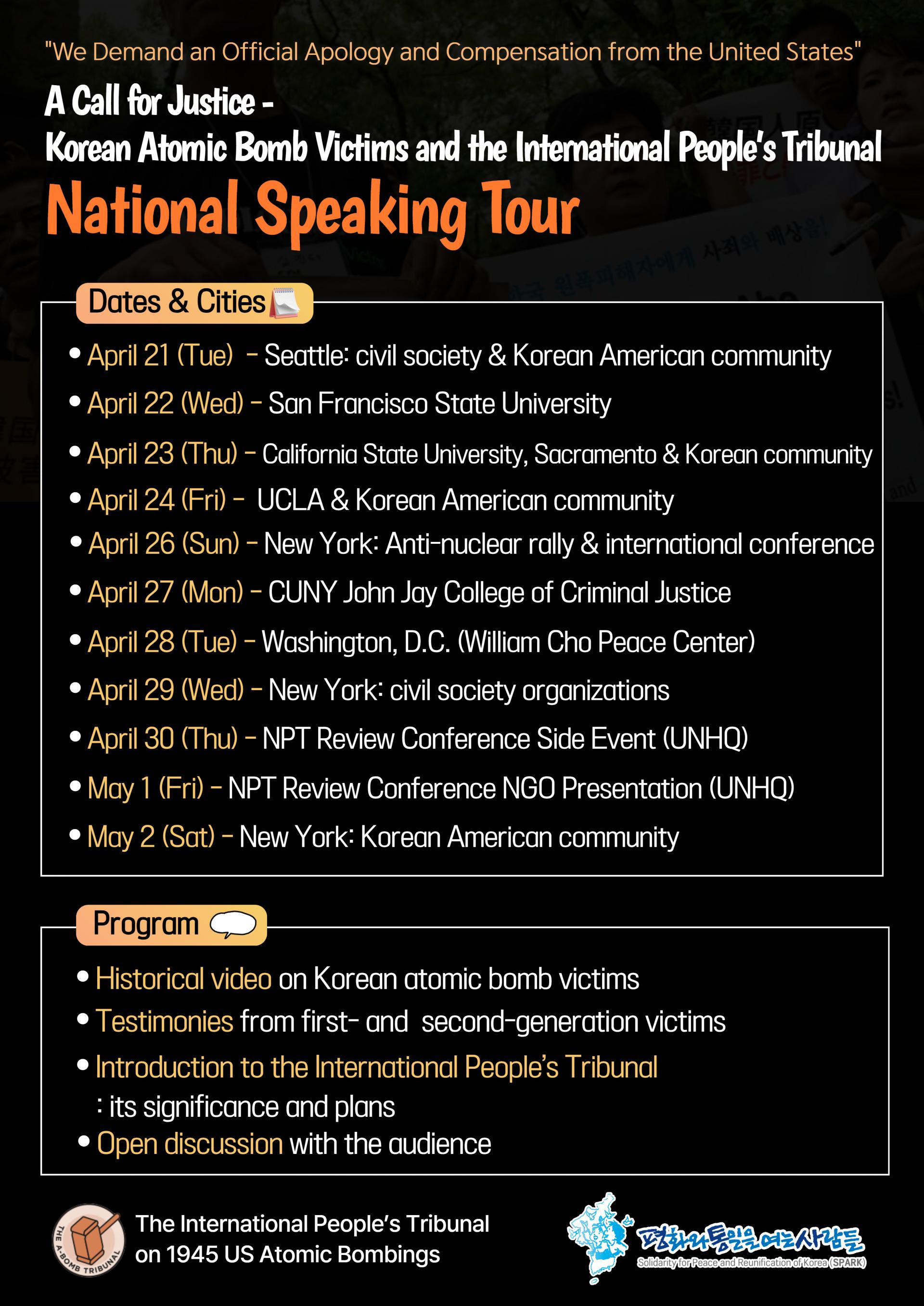
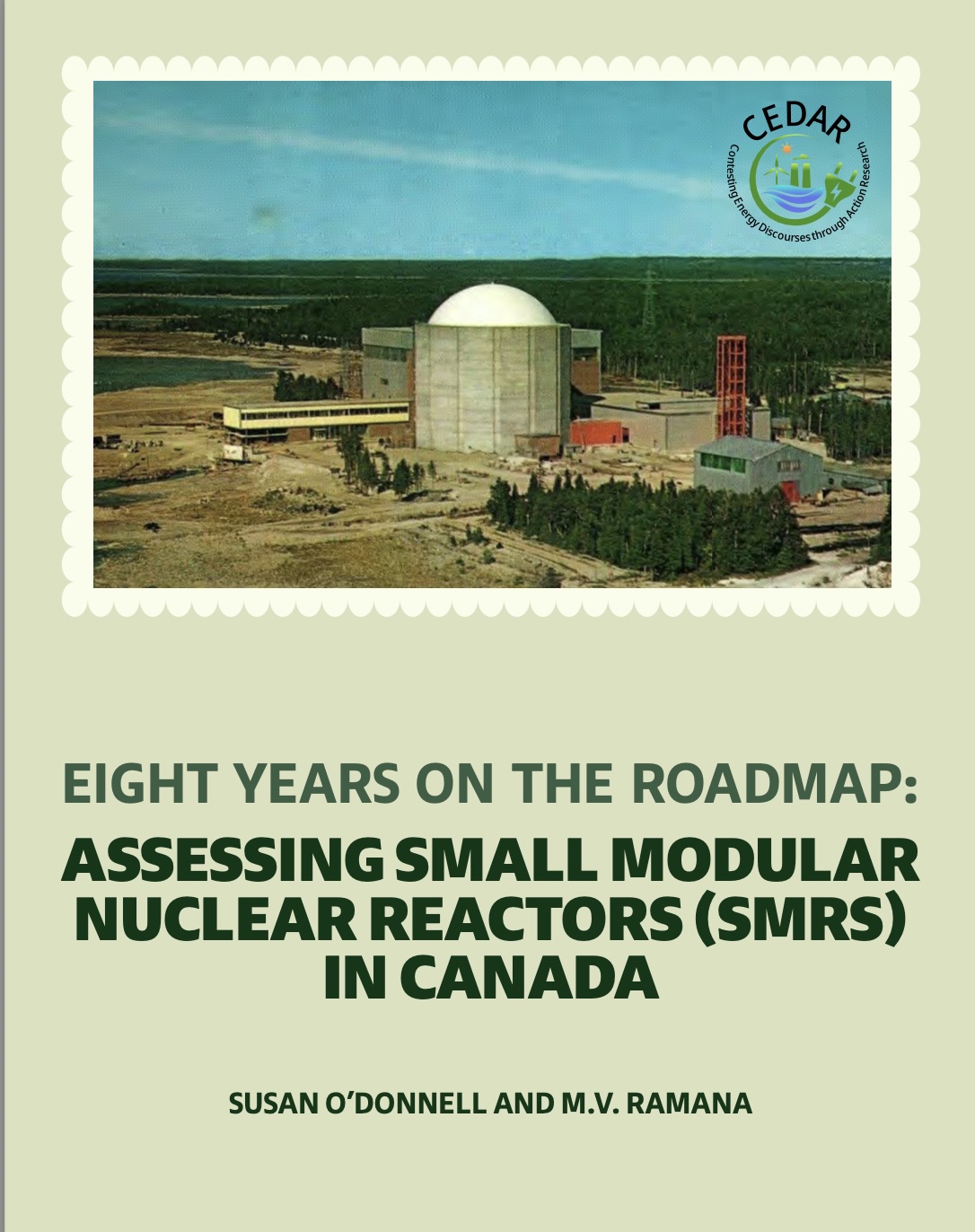

Pine Ridge Uranium is the real threat, not Tehran- Tell Burgum: Stop the Extraction.
Chernobyl: The Lost Tapes – A good documentary on Chernobyl on SBS available On Demand for the next 3 weeks– https://www.sbs.com.au/ondemand/tv-program/chernobyl-the-lost-tapes/2352741955560
To see nuclear-related stories in greater depth and intensity – go to https://nuclearinformation.wordpress.com
-
Archives
- April 2026 (275)
- March 2026 (251)
- February 2026 (268)
- January 2026 (308)
- December 2025 (358)
- November 2025 (359)
- October 2025 (376)
- September 2025 (257)
- August 2025 (319)
- July 2025 (230)
- June 2025 (348)
- May 2025 (261)
-
Categories
- 1
- 1 NUCLEAR ISSUES
- business and costs
- climate change
- culture and arts
- ENERGY
- environment
- health
- history
- indigenous issues
- Legal
- marketing of nuclear
- media
- opposition to nuclear
- PERSONAL STORIES
- politics
- politics international
- Religion and ethics
- safety
- secrets,lies and civil liberties
- spinbuster
- technology
- Uranium
- wastes
- weapons and war
- Women
- 2 WORLD
- ACTION
- AFRICA
- Atrocities
- AUSTRALIA
- Christina's notes
- Christina's themes
- culture and arts
- Events
- Fuk 2022
- Fuk 2023
- Fukushima 2017
- Fukushima 2018
- fukushima 2019
- Fukushima 2020
- Fukushima 2021
- general
- global warming
- Humour (God we need it)
- Nuclear
- RARE EARTHS
- Reference
- resources – print
- Resources -audiovicual
- Weekly Newsletter
- World
- World Nuclear
- YouTube
-
RSS
Entries RSS
Comments RSS
 nuclear-news