Climate Change – Hubris or Nemesis for Nuclear Power?
BANNG (accessed) 3rd Nov 2020, Climate Change – Hubris or Nemesis for Nuclear Power? By Andy Blowers.
Article for Town & Country Planning Association. Proposals for new nuclear
power installations are often presented as integral to solutions to climate
change, but the dangers of sites in low-lying coastal areas only add to a
range of threats to security and the environment posed by nuclear power
https://www.banng.info/wp/wp-content/uploads/2020/11/AB_TCP_Sept_Oct_2020.pdf
Europe still without a final disposal solution for its most dangerous nuclear waste
Le Monde 4th Nov 2020, Europe still without a final disposal solution for its most dangerous
nuclear waste. The first edition of the World Report on Nuclear Waste,
published Wednesday in its French version, provides elements of comparison
of management methods in different countries.
Warning to UK government on Sizewell nuclear power project – is it value for money?
|
New Civil Engineer 4th Nov 2020 Energy and Climate Intelligence Unit head of analysis Jonathan Marshall has urged caution as the government looks increasingly likely to approve plans for the Sizewell C nuclear power station.
According to the BBC, talks between the government and Sizewell contractor EDF have “intensified in recent weeks”. However, Marshall emphasised that renewable energy solutions offer more flexibility than nuclear. “If you look at the amount of money involved in building nuclear power stations, it’s pretty easy to come up with something renewables-based that’s as firm and moreflexible,” he said. “There are not many people saying we should have loads of nuclear apart from the nuclear industry. There’s also the risk that by the time power stations are built the grid is running in a different way because they take so long to build.”
|
Anxieties, memories of Chernobyl, as Belarus launches new nuclear power station
|
Chernobyl fears as Belarus launches new nuclear power station: Lithuania distributes iodine tablets to 500,000 close to border over safety concerns
Daily Mail, RACHAEL BUNYAN FOR MAILONLINE and AFP , 4 Nov 20, Belarus today launched its controversial Russia-built nuclear power station despite safety concerns from neighbouring Baltic states three decades after the Chernobyl nuclear disaster. Lithuania’s Foreign Minister Linas Linkevicius criticised the launch saying it had gone ahead despite unresolved safety issues The government in the Lithuanian capital, Vilnius, has also offered free iodine tablets to around half a million people living close to the Belarus border to help protect them from radiation in case of an accident The Astravets nuclear power plant, Belarus’s first nuclear station, is just 30 miles away from Vilnius. ……… Lithuania’s Foreign Minister Linas Linkevicius criticised the launch saying it had gone ahead despite unresolved safety issues and described the energy project as ‘geopolitical’. The EU and the international community ‘simply cannot stay indifferent to such cynical ignorance,’ Linkevicius wrote on Twitter. Lithuania said it had immediately stopped electricity imports from Belarus and neighbouring Latvia said it had also blocked imports of energy generated at the plant.…….. https://www.dailymail.co.uk/news/article-8909665/Chernobyl-fears-Belarus-launches-new-nuclear-power-station-despite-safety-concerns.html |
|
The world needs, and awaits, a reasonable and decent American Presidency, under Joe Biden
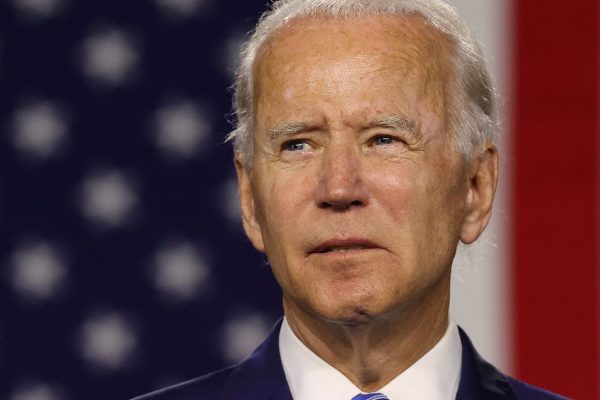
I am hopeful that Joe Biden and the Democratic Party will win this American election.

Christina Macpherson’s websites & blogs
What has this got to do with this website, which is dedicated to issues of nuclear and cimate?
Everything!
That is because the human race has got to solve these global horrors – with reasonableness, decency and fairness. That demands thoughfulness, considerateness of others, co-operation, and global effort.
The United States of America used to be a global leader – up until recently, when it has been cursed with the presidency of a narcicisstic bully, Donald Trump. Four years of a government run by this sociopath have impeded the world’s effort to slow, preferably to stop, global heating. Trump has been a willing servant of the nuclear weapons industry , indeed an investor, profiting from it. He contines to foster distrust, hatred, and division among people.
I have not been a great fan of Joe Biden. But he does bring a decency and reasonableness to politics – qualities that are essential for America and the world to face the big problems. The Democratic Party does bring a mode of co-operation, and an intelligent respect for fair and legal processes.
A historic moment of threat to American democracy
Don’t underestimate the threat to American democracy at this moment Corey Brettschneider https://www.theguardian.com/commentisfree/2020/nov/04/american-democracy-election-threat-trump–5 Nov 20
|
Even if Biden does win and the results are accepted, we will have lived through a moment that showed our democracy is less stable than we assumed. n the early morning hours after election day, the president of the United States showed his authoritarian ambitions. He launched an attack on our democratic system at a moment when it is at its most fragile in recent memory. His lies about the results of the election erode trust in the fairness of the democratic process and risk provoking violence. Now we are dependent on media, especially the outlets most popular with Donald Trump’s base, to rein in the chaos he is encouraging. This grave threat comes from the president’s false declaration of victory, despite no evidence that he had won the election, and with millions of valid votes yet to be counted. He referred to any suggestion that he had lost as “a fraud on the American public”. In one breath, he declared that “we want all voting to stop” and that “we don’t want any ballots to be found at four in the morning.” This conflation of voting after election day and counting votes after election day – a standard practice in every election – is deeply misleading and deeply dangerous. In this respect, its damage is far worse than many of the many fibs Trump has made while in office. His suggestion is a direct lie, one that comes while millions of voters look to him to understand who our legitimate president will be. In past elections, the media – specifically TV networks – served as the main gatekeepers of results, but this president communicates directly to his base through social media, avoiding the reputable news organizations that could factcheck him in real time. This means that his unsubstantiated claims of victory – and of electoral fraud perpetrated by Democrats – are being fed directly to his base. Many will believe him, undermining confidence in the ultimate legitimate results and sowing discord and potentially violence. The problem of Trump’s unfiltered reach coupled with his blatant lying is compounded by social media executives’ inadequate handling of the situation. Facebook and its irresponsible CEO, Mark Zuckerberg, refused to directly challenge the president, even while receiving credit from some observers for reminding voters that “final results” may take days. They did not call Trump’s statement a lie or take strong steps to counter it. Twitter went far enough to say that the president’s message might be “misleading”, but it too failed to take a strong and definitive stand on a statement that is not just possibly, but indisputably, incorrect. Surprisingly, Fox News might be the media outlet that holds the country together. The network called Arizona for Joe Biden around the same time as the Associated Press and has insisted on reporting real numbers, with its reputable non-partisan news anchors leading the coverage. Ultimately, a large number of Trump voters might turn to Fox to decide whether to trust official results or their president, who has told them that those disputing his victory are committing fraud. If Fox continues to say that any early declaration of victory is incorrect, viewers might be more likely to have the patience required to wait for what might be days, with twists and turns as more ballots are reported, until a winner is declared. Still, it is not only the media outlet that should be tasked with maintaining the public’s confidence in our electoral machinery. Part of Trump’s pattern of deception to his base involves invoking bizarre and completely erroneous legal claims. On Tuesday night, Trump promised to take up his concerns about ongoing ballot counting to the US supreme court. However, if ballots are received on or before election day, there is no serious legal claim to support Trump’s seeming contention that any ongoing ballot counting after the election is fraudulent. Indeed, in a decision the president disparaged on Twitter, the US supreme court refused to undo the Pennsylvania supreme court’s decision that even ballots that arrived three days after election day would count as long as they were postmarked by election day. I cannot overstate the danger of this moment. Right now, it is essential that Republican members of Congress and the vice-president make it clear that the ballots need to be counted. Both candidates and parties should be modeling respect for our democratic process, patiently waiting for the legitimate results, and encouraging all Americans to do the same. Instead, Trump’s claims risk sowing violence, confusion and an erosion of faith in the bedrock principles of American democracy. Amid this chaos, what is left for us to do? Americans who believe that every person’s ballot should count in an election must insist on truth and spread this message as widely as possible on social media, at our dinner tables and, if need be, through peaceful demonstrations. That is the only way to counteract Trump’s lies and his threat of upending our democracy. Even if Biden does win and the results are accepted, we will have lived through a moment that showed our democracy is less stable than we assumed. Strengthening it and reinforcing its protections must be a priority of a Biden presidency.
|
|
The nuclear launch authorizer’s guide to staying calm at election times
|
The nuclear launch authorizer’s guide to staying calm on election night, Bulletin of the Atomic Scientists By Matt Field | November 3, 2020 Their thumbs are calloused from refreshing Nate Silver’s twitter feed too many times. Their nerves are frayed from too much time spent figuring out what’s going on in places like Lackawanna County. (I know you know where it is.) Americans are heading into this Election Day full of anxiety and stress. For many, the stakes of today’s contest between President Donald Trump and Joe Biden couldn’t be higher. Anxiety-inducing information will be arriving in social media feeds, on TV screens, and on news websites at a furious pace later today. But it’s important for people to take a moment to breathe, a second to ease their worried minds. Perhaps they might consider a few tips from the annals of nuclear weapons history, insights from times when people, through relatively calm rationality, were able to avert the worst in the highest of high stress situations.
“The sirens sounded very loudly, and I just sat there for a few seconds staring at the screen with the word ‘launch’ displayed in bold red letters,” Petrov told the BBC in 2013. Petrov watched as his systems warned him of another four launches—for a total of five incoming Minuteman intercontinental ballistic missiles. Only minutes remained before they would reach their targets. “The computers changed their alerts from launch to missile strike.” But Petrov decided not to trust the computer. He reported a false alarm to his superiors, forestalling a possible Soviet retaliatory strike. “But I myself was not sure until the very last moment,” he said. Making an educated guess, Petrov decided that the alerts were wrong. In a real war, the United States would launch a massive attack on Soviet defenses, Petrov had been told. “When people start a war, they don’t start it with only five missiles,” he told The Washington Post. Petrov, who died in 2017, is often credited with preventing a nuclear war. The Cuban Missile Crisis and bad advice. For a little over a month in the fall of 1962, the world stood on edge as the United States and the Soviet Union engaged in a standoff over Soviet nuclear missiles in Cuba–just 90 miles from the United States. Coming a little more than a year after the ill-conceived Bay of Pigs invasion, in which US-trained Cubans made a miserably failed attempt to overthrow Cuban leader Fidel Castro, the Cuban Missile Crisis happened at a time of sky-high tensions between the Cold War enemies. When US spy plane photos showed Soviet missile installations in Cuba, President John F. Kennedy had to do something. He’d taken a tough line on Cuba and the Soviet Union as a presidential candidate, after all. Kennedy’s advisors, including his brother Robert Kennedy, had a lot of suggestions. The advisors developed proposals, including a strike on the Soviet missile facilities or a full-on invasion of the island involving tens of thousands of troops. Luckily for the world, Kennedy didn’t invade, which could have ignited a nuclear war. He didn’t go with his brother’s idea to stage a false-flag attack on a US base to justify an invasion, either. According to a review of his book in The New Yorker, historian Martin J. Sherwin believes Adlai Stevenson, the US representative to the United Nations and a two-time presidential candidate, successfully urged Kennedy to negotiate. The Soviets pulled their missiles off the island, and the United States agreed not to try and invade Cuba again and pulled its own missiles from Turkey………. Tip: The web will be flooded with election-related disinformation today. There could be false claims about voting irregularities such as ballots being thrown away, or of people voting twice. Trump himself has been making false claims about a rigged election or voter fraud for much of the election cycle. When you see something that causes you to break out in cold sweats, check another source. The presidential elections are a high stakes event. It’s understandable to be nervous. But remember that first reports can be and often are incorrect. Through it all, try to maintain the calm of a Stanislav Petrov and the wisdom of Adlai Stevenson. You may not save the world from Armageddon, but just maybe, you’ll preserve your own sanity. https://thebulletin.org/2020/11/the-nuclear-launch-authorizers-guide-to-staying-calm-on-election-night/ |
|

The US election is a vote on climate change for the whole world
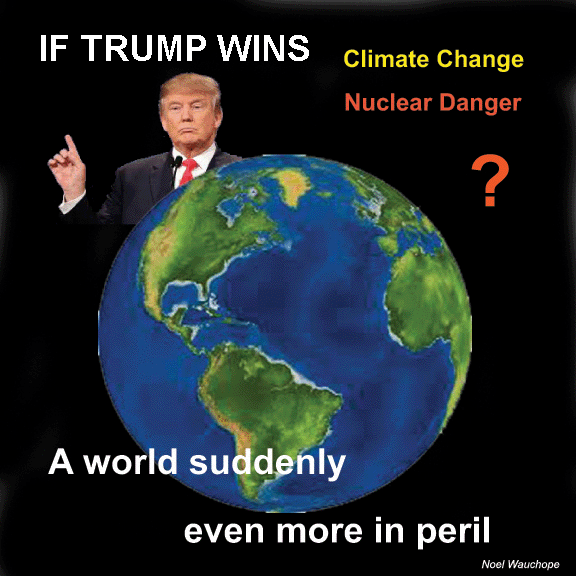 “Covid will be overcome, the climate crisis cannot be overcome unless we have American leadership.”
The US election is a vote on climate change for the whole world, By Helen Regan, Ivana Kottasová and Drew Kann, CNN, November 2, 2020 The climate crisis has become a key issue not just for American voters in this US election — but people across the world.
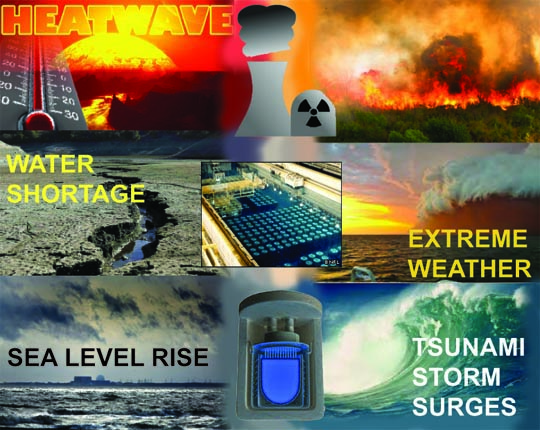 It’s too late to stop all the impacts of climate change. They are already happening. Wildfires have torched homes across the Western US this year, unprecedented floods have inundated large swathes of Asia, and the past decade — — featuring deadly heatwaves and droughts — was the hottest ever recorded. The ice caps that bookend our planet are also seeing rapid loss and glacial melt.
 Why Paris matters

Global momentum
315 nuclear bombs and ongoing suffering: the shameful history of nuclear testing in Australia and the Pacific
315 nuclear bombs and ongoing suffering: the shameful history of nuclear testing in Australia and the Pacific, https://theconversation.com/315-nuclear-bombs-and-ongoing-suffering-the-shameful-history-of-nuclear-testing-in-australia-and-the-pacific-148909, Tilman Ruff, Associate Professor, Education and Learning Unit, Nossal Institute for Global Health, School of Population and Global Health, University of Melbourne, Dimity Hawkins, PhD Candidate, Swinburne University of Technology
November 3, 2020 The Treaty on the Prohibition of Nuclear Weapons received its 50th ratification on October 24, and will therefore come into force in January 2021. A historic development, this new international law will ban the possession, development, testing, use and threat of use of nuclear weapons.Unfortunately the nuclear powers — the United Kingdom, France, the United States, Russia, China, Israel, India, Pakistan and North Korea — haven’t signed on to the treaty. As such, they are not immediately obliged to help victims and remediate contaminated environments, but others party to the treaty do have these obligations. The shifting norms around this will hopefully put ongoing pressure on nuclear testing countries to open records and to cooperate with accountability measures.
For the people of the Pacific region, particularly those who bore the brunt of nuclear weapons testing during the 20th century, it will bring a new opportunity for their voices to be heard on the long-term costs of nuclear violence. The treaty is the first to enshrine enduring commitments to addressing their needs.
From 1946, around 315 nuclear tests were carried out in the Pacific by the US, Britain and France. These nations’ largest ever nuclear tests took place on colonised lands and oceans, from Australia to the Marshall Islands, Kiribati to French Polynesia.
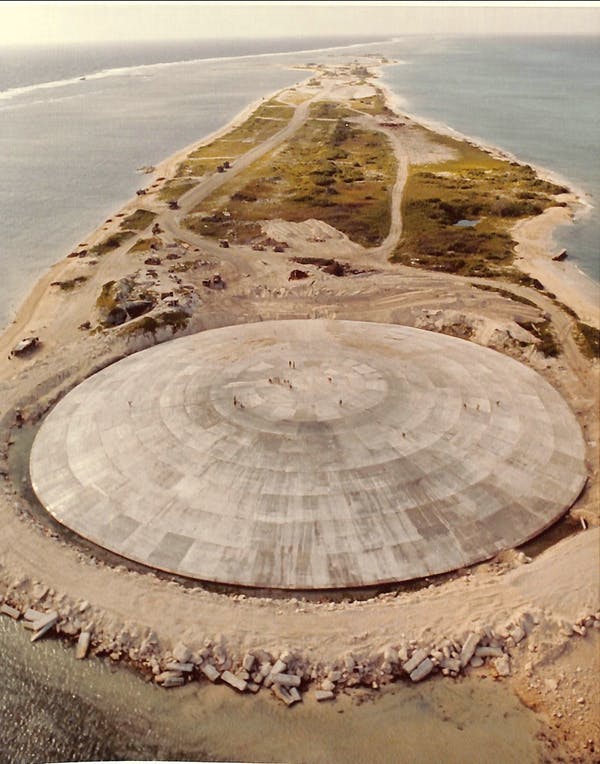
The impacts of these tests are still being felt today.
All nuclear tests cause harm
Studies of nuclear test workers and exposed nearby communities around the world consistently show adverse health effects, especially increased risks of cancer.
The total number of global cancer deaths as a result of atmospheric nuclear test explosions has been estimated at between 2 million and 2.4 million, even though these studies used radiation risk estimates that are now dated and likely underestimated the risk.
The number of additional non-fatal cancer cases caused by test explosions is similar. As confirmed in a large recent study of nuclear industry workers in France, the UK and US, the numbers of radiation-related deaths due to other diseases, such as heart attacks and strokes, is also likely to be similar.
Britain conducted 12 nuclear test explosions in Australia between 1952 and 1957, and hundreds of minor trials of radioactive and toxic materials for bomb development up to 1963. These caused untold health problems for local Aboriginal people who were at the highest risk of radiation. Many of them were not properly evacuated, and some were not informed at all.
We may never know the full impact of these explosions because in many cases, as the Royal Commission report on British Nuclear Tests in Australia found in 1985: “the resources allocated for Aboriginal welfare and safety were ludicrous, amounting to nothing more than a token gesture”. But we can listen to the survivors.
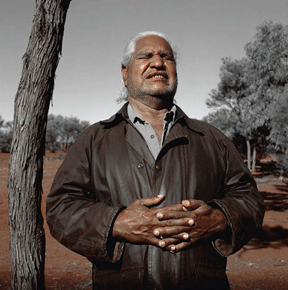 The late Yami Lester directly experienced the impacts of nuclear weapons. A Yankunytjatjara elder from South Australia, Yami was a child when the British tested at Emu Field in October 1953. He recalled the “Black Mist” after the bomb blast:
It wasn’t long after that a black smoke came through. A strange black smoke, it was shiny and oily. A few hours later we all got crook, every one of us. We were all vomiting; we had diarrhoea, skin rashes and sore eyes. I had really sore eyes. They were so sore I couldn’t open them for two or three weeks. Some of the older people, they died. They were too weak to survive all the sickness. The closest clinic was 400 miles away.
His daughter, Karina Lester, is an ambassador for the International Campaign to Abolish Nuclear Weapons in Australia, and continues to be driven by her family’s experience. She writes:
For decades now my family have campaigned and spoken up against the harms of nuclear weapons because of their firsthand experience of the British nuclear tests […] Many Aboriginal people suffered from the British nuclear tests that took place in the 1950s and 1960s and many are still suffering from the impacts today.
More than 16,000 Australian workers were also exposed. A key government-funded study belatedly followed these veterans over an 18-year period from 1982. Despite the difficulties of conducting a study decades later with incomplete data, it found they had 23% higher rates of cancer and 18% more deaths from cancers than the general population.
An additional health impact in Pacific island countries is the toxic disease “ciguatera”, caused by certain microscopic plankton at the base of the marine food chain, which thrive on damaged coral. Their toxins concentrate up the food chain, especially in fish, and cause illness and occasional deaths in people who eat them. In the Marshall Islands, Kiritimati and French Polynesia, outbreaks of the disease among locals have been associated with coral damage caused by nuclear test explosions and the extensive military and shipping infrastructure supporting them.
Pacific survivors of nuclear testing haven’t been focused solely on addressing their own considerable needs for justice and care; they’ve been powerful advocates that no one should suffer as they have ever again, and have worked tirelessly for the eradication of nuclear weapons. It’s no surprise independent Pacific island nations are strong supporters of the new treaty, accounting for ten of the first 50 ratifications.
Negligence and little accountability
Some nations that have undertaken nuclear tests have provided some care and compensation for their nuclear test workers; only the US has made some provisions for people exposed, though only for mainland US residents downwind of the Nevada Test Site. No testing nation has extended any such arrangement beyond its own shores to the colonised and minority peoples it put in harm’s way. Nor has any testing nation made fully publicly available its records of the history, conduct and effects of its nuclear tests on exposed populations and the environment.
These nations have also been negligent by quickly abandoning former test sites. There has been inadequate clean-up and little or none of the long-term environmental monitoring needed to detect radioactive leakage from underground test sites into groundwater, soil and air. One example among many is the Runit concrete dome in the Marshall Islands, which holds nuclear waste from US testing in the 1940s and 50s. It’s increasingly inundated by rising sea levels, and is leaking radioactive material.
The treaty provides a light in a dark time. It contains the only internationally agreed framework for all nations to verifiably eliminate nuclear weapons.
It’s our fervent hope the treaty will mark the increasingly urgent beginning of the end of nuclear weapons. It is our determined expectation that our country will step up. Australia has not yet ratified the treaty, but the bitter legacy of nuclear testing across our country and region should spur us to join this new global effort.
No guarantee that Britain’s £20 billion Sizewell nuclear project will actually go ahead
 Planet Radio 1st Nov 2020, No one should assume Sizewell C is now a foregone conclusion’. Campaign group Stop Sizewell C say there are still many obstacles to overcome, following reports that the Government is ‘close’ to giving the project the green light. The group say they’ve written to the Business, Energy and Industrial Strategy Secretary of State, Alok Sharma, to seek assurances about the due process behind the Sizewell C project.
https://planetradio.co.uk/greatest-hits/norfolk/news/sizewell-not-a-forgone-conclusion/
Before the UK’s govt White Paper, approval to be given for Sizewell nuclear development
 UK to approve new nuclear plant at Sizewell C ahead of White Paper: report, S and P Global Author, Henry Edwardes-Evans Editor, Norazlina Jumaat 3 Nov 20, UK to approve new nuclear plant at Sizewell C ahead of White Paper: report, S and P Global Author, Henry Edwardes-Evans Editor, Norazlina Jumaat 3 Nov 20,
HIGHLIGHTS EDF’s second UK twin reactor EPR plant Details of new funding model awaited 10-point plan and White Paper imminent London — The UK government is close to approving Sizewell C, the 3.2 GW EPR nuclear power station project proposed by EDF Energy in Suffolk, England, the BBC reported late Oct. 30…… Key to the new project would be the funding model, RBC said. “It may be that the government takes a direct stake in the project, and that the construction will be remunerated under some form of RAB [regulated asset base] model with a “regulated” return,” the bank said. RAB modelThe government has been working on a RAB-based funding model for new nuclear plants, but a proposal due last summer has yet to materialize. Under a RAB model, energy regulator Ofgem would establish an estimated allowable cost for the project and set a fixed rate of return for investors. Payments from UK retail power consumers would be made during construction and operation to a project company, with payments increasing over the construction period in line with cumulative spending.Sizewell C could generate power at a cost of GBP40-GBP60/MWh if construction was funded via a RAB model, Sizewell C’s finance director Julia Pyke said on Oct. 21. The final cost of power within the estimated range would be “determined by how government allocates risk in terms of the cost of money,” she said.
Further details on a funding model for Sizewell C were likely to be included in the government’s Energy White Paper, Pyke said.In October, 2015, EDF and China’s CGN signed a heads of terms agreement to develop two 1.65 GW EPR reactors at Sizewell C — EDF taking 80% and CGN 20% during the development phase.
Europe’s first EPRs, being built in Finland and France, are many years behind schedule and billions of euros over budget.,…… https://www.spglobal.com/platts/en/market-insights/latest-news/electric-power/110220-uk-to-approve-new-nuclear-plant-at-sizewell-c-ahead-of-white-paper-report |
|
Nuclear wastes from Sellafield UK to arrive in Germany
A ship carrying six containers of waste from the Sellafield reprocessing plant in England docked in the early morning in Nordenham, news agency dpa reported. From there, it is to be transported by train to the now-closed Biblis nuclear power plant south of Frankfurt, several hundred kilometres (miles) away.
Germany has a strong anti-nuclear movement and waste transports have often drawn large protests. Activists question the safety of the waste containers and storage sites.
Following the Fukushima nuclear disaster in Japan nine years ago, Germany decided to phase out its own nuclear power generation by the end of 2022. The Biblis plant is one of several that was taken offline in 2011, but the site remains in use as a provisional storage facility for nuclear waste.
Germany recently launched a new search for a permanent site to store its most radioactive waste. A final decision is slated for 2031 and the aim is to start using the selected site in 2050.
Bill Gates and ORANO (formerly the bankrupt AREVA) aim to start nuclear shipping, despite its history of failures.
UK-Based Startup Proposes a Renaissance for Nuclear-Powered Shipping, The Maritime Executive 11-02-2020, A UK-based startup with backing from some of the biggest names in nuclear energy has applied to the U.S. Department of Energy for cost-sharing support for the development of a new generation of nuclear power for commercial ship propulsion.Nuclear-powered civilian shipping had a small heyday during the Cold War, when the United States, the Soviet Union and Japan invested in demonstration vessels that could operate for years without refueling. In the U.S., the Eisenhower administration conceived of a nuclear-powered “peace ship” that would carry passengers and cargo in small quantities to serve as a demonstration of the potential for civilian nuclear energy projects. The result, the NS Savannah, entered service in 1962 and operated until 1972, when the Maritime Administration decommissioned her over cost concerns.
Japan’s entrant, the freighter Mutsu, entered service in 1974. She suffered a minor reactor shield fault on her maiden voyage, which led to a wave of negative publicity, and her operators had to negotiate with port communities in order to find her a new berth. She was not fully repaired until 1982 and did not set sail again until 1991. She was decomissioned one year later, and her reactor core was removed so that she could be converted into a conventionally-powered oceanographic research vessel.
The Soviet-built icebreaking LASH vessel Sevmorput is the only remaining nuclear-powered merchant cargo ship in civilian use. Operated by Atomflot, the agency charged with running Russia’s nuclear-powered icebreaker fleet, Sevmorput carries containerized cargo and project cargo along Russia’s Northern Sea Route (NSR). Shortly after she entered service in 1988, four Russian ports in the Siberian Far East refused to allow her to enter over fears that her nuclear reactor posed a public safety hazard. Similar concerns have been raised by foreign port operators, and she has generally been deployed on domestic intra-Russian routes only; however, this year she was dispatched to resupply Russia’s Antarctic research station. (As of Monday, she was broadcasting restricted maneuverability  and moving north at a slow bell off the port of Luanda, Angola.)
Despite the past difficulties encountered by nuclear vessel operators, nuclear innovation company TerraPower – chaired by Microsoft founder and serial entrepreneur Bill Gates – has decided to partner with utility firm Southern Company and nuclear tech company Orano USA to back a new reactor designed to power commercial ships. The reactor’s developer, UK-based Core Power, sees molten salt reactor (MSR) nuclear “batteries” as a sustainable alternative for decarbonizing the world’s merchant fleet in the decades ahead. ….. https://www.maritime-executive.com/article/uk-based-startup-proposes-a-renaissance-for-nuclear-powered-shipping
84% of Finland’s population support signing up to the U.N. Nuclear Weapons Ban Treaty
 It is time to end our reliance on nuclear weapons Nuclear non-proliferation is a fundamentally European issue which is not yet part of any EU agenda https://ecfr.eu/article/it-is-time-to-end-our-reliance-on-nuclear-weapons/, Erkki Tuomioja, – View from the Council 2 November 2020, Finland did not participate in the negotiations leading up to the treaty, and it did not vote for it. Public opinion is, however, in favour of the treaty, with one poll showing that 84 per cent of Finns would support signing up. Three parties in Finland’s coalition government also want the country to join. Foreign ministry officials have argued in hearings of the Finnish parliament’s Foreign Relations Committee that joining would weaken the Non-Proliferation Treaty (NPT) – a faulty reasoning that the Committee unanimously rejected.
“The prohibition treaty is an important reinforcement to the half-century-old Non-Proliferation Treaty, which, though remarkably successful in curbing the spread of nuclear weapons to more countries, has failed to establish a universal taboo against the possession of nuclear weapons. The five nuclear-armed nations that had nuclear weapons at the time of the NPT’s negotiation — the United States, Russia, Britain, France and China — apparently view it as a licence to retain their nuclear forces in perpetuity. Instead of disarming, they are investing heavily in upgrades to their arsenals, with plans to retain them for many decades to come. This is patently unacceptable.”
It is precisely the frustration at the lack of progress with nuclear disarmament – to which the nuclear weapons states committed themselves in the grand bargain to get the non-nuclear countries to accept the NPT treaty signed in 1968 – that gave decisive impetus to the prohibition treaty. Obviously, without the participation of the nuclear weapons states, not one nuclear weapon will be dismantled. But without pressure from the non-nuclear weapons states in the form of this treaty, neither will they engage in serious efforts at disarmament. Nuclear weapons states will instead continue the present trend of modernising existing and developing new nuclear weapons systems.
Support in NATO countries for doing away with all weapons of mass destruction is growing, as evidenced by the signatories to the statement above. This is important because one argument made in Finland and Sweden, although it is rarely made in public, for opposing joining the prohibition treaty is the displeasure the US would show at such a step, which could hinder the deepening of these countries’ partnership relations with NATO. Given the growing demand in non-nuclear NATO countries to sign the treaty this is just as spurious as the NPT argument against joining.
The time has come for all states in the world to bring an end to the misguided, illegitimate, and immoral reliance on nuclear weapons. An all-out nuclear war is a threat to human life as a whole and would immediately bring about all the disasters we are trying to avoid with our efforts to curtail climate change and implement the Sustainable Development Goals of Agenda 2030.
No responsible leader disputes this. Yet we continue to conduct exercises in preparation for a nuclear war. The risk of accidental or miscalculated nuclear weapon use may today be even greater than at the height of the cold war. The Treaty on the Prohibition of Nuclear Weapons is, as the statement quoted says, “a beacon of hope in a time of darkness”.
There is one nuclear weapons state in the EU (formerly two) and 21 EU member states in NATO, but nuclear weapons and related issues have never formed part of the EU’s agenda. This is a fundamentally European issue, given the likelihood that Europe would face the greatest level of destruction in the event of a conflict and because of the European preference for achieving change through rules-based processes. All EU member states should address it and join the treaty banning all nuclear weapons. Three member states in the EU have already done so; others should follow them.
Erkki Tuomioja is ECFR member and former Minister for Foreign Affairs in Finland.
Cuban missile crisis -a reminder that nuclear war could so easily still happen
Yes, nuclear war could still happen https://thehill.com/opinion/white-house/523951-yes-nuclear-war-could-still-happen, BY JOHN DALE GROVER, — 11/02/20 The recent anniversary of the Cuban Missile Crisis should be a reminder to American citizens and policymakers that nuclear war is not impossible. For 13 days from Oct. 16, 1962, to Oct. 28, 1962, America and the Soviet Union nearly killed each other in a nuclear war. Today, the passing of that anniversary should warn us that through a crisis that spirals out of control, sheer accident, or miscommunication, Washington could still find itself in a nuclear exchange with Moscow, Beijing, or Pyongyang.
Today, relations with China are strained and tensions with North Korea — though on an uneasy pause — will likely resume sooner rather than later. America’s relationship with Russia is also contentious and only one arms control treaty remains in place between Washington and Moscow. The 2011 New Strategic Arms Reduction Treaty (New START) is set to expire in February 2021, but last-minute negotiations are underway to extend that treaty for another year.
Kennedy considered many options, including bombing the missile sites or invading Cuba, but thankfully decided against military action. Instead, he ordered a “quarantine” of Cuba. While America enforced its de-facto blockade, negotiations commenced, and a secret agreement was made: Moscow would remove its nuclear missiles from Cuba if Washington removed its Jupiter missiles from Turkey. However, Washington kept its end of the deal quiet to make it look as if Moscow had backed down — a decision which has incorrectly given the impression to later generations of policymakers that hard power is all that matters when facing a crisis.
The Cuban Missile Crisis nearly spiraled into a nuclear war as accidents, errors, and miscommunication was commonplace. For example, the CIA incorrectly estimated that only around 12,000 Soviet troops were in Cuba. In reality, there were over 40,000 and if any of them had died, Moscow would surely have retaliated.
Kennedy considered many options, including bombing the missile sites or invading Cuba, but thankfully decided against military action. Instead, he ordered a “quarantine” of Cuba. While America enforced its de-facto blockade, negotiations commenced, and a secret agreement was made: Moscow would remove its nuclear missiles from Cuba if Washington removed its Jupiter missiles from Turkey. However, Washington kept its end of the deal quiet to make it look as if Moscow had backed down — a decision which has incorrectly given the impression to later generations of policymakers that hard power is all that matters when facing a crisis.
The list goes on. Shortly after being ordered to Defcon 2, General Thomas Powers, commander of America’s nuclear bombers and intercontinental ballistic missiles (ICBMs) dangerously broadcast some of his orders without code and out in the open. America also conducted a routine ICBM test even though such a move may have looked like an attack.
A guard at Duluth Air Base mistook a bear for a saboteur and pulled an alarm, which accidentally rang the nuclear attack warning at Volks Field in Wisconsin. The nuclear-armed fighter jets nearly took off but were halted by an officer who drove onto the runway with his lights flashing.
There were also not one — but two — simultaneous U-2 spy plane incidents. One American spy plane accidentally got lost over the Soviet Union for at least an hour and a half, while another U-2 over Cuba was actually shot down by Russian troops that acted unilaterally without authorization from Moscow.
1 This Month

of the week – Shut Down Drone Warfare!


Tell the Ukrainian Government to Drop Prosecution of Peace Activist Yurii Sheliazhenko

Petition to revoke the licensing of the Near Surface Nuclear Disposal Facility (NSDF) at Chalk River. https://www.ourcommons.ca/petitions/en/Petition/Details?Petition=e-7247
To see nuclear-related stories in greater depth and intensity – go to https://nuclearinformation.wordpress.com
-
Archives
- April 2026 (44)
- March 2026 (251)
- February 2026 (268)
- January 2026 (308)
- December 2025 (358)
- November 2025 (359)
- October 2025 (376)
- September 2025 (257)
- August 2025 (319)
- July 2025 (230)
- June 2025 (348)
- May 2025 (261)
-
Categories
- 1
- 1 NUCLEAR ISSUES
- business and costs
- climate change
- culture and arts
- ENERGY
- environment
- health
- history
- indigenous issues
- Legal
- marketing of nuclear
- media
- opposition to nuclear
- PERSONAL STORIES
- politics
- politics international
- Religion and ethics
- safety
- secrets,lies and civil liberties
- spinbuster
- technology
- Uranium
- wastes
- weapons and war
- Women
- 2 WORLD
- ACTION
- AFRICA
- Atrocities
- AUSTRALIA
- Christina's notes
- Christina's themes
- culture and arts
- Events
- Fuk 2022
- Fuk 2023
- Fukushima 2017
- Fukushima 2018
- fukushima 2019
- Fukushima 2020
- Fukushima 2021
- general
- global warming
- Humour (God we need it)
- Nuclear
- RARE EARTHS
- Reference
- resources – print
- Resources -audiovicual
- Weekly Newsletter
- World
- World Nuclear
- YouTube
-
RSS
Entries RSS
Comments RSS
 nuclear-news