Japanese Only Operational Nuclear Reactor Shut
Japanese Only Operational Nuclear Reactor Shut, Increasing Fuel Costs, By Tsvetana Paraskova for Oilprice.com A Japanese high court has ordered local utility Shikoku Electric Power Company to continue idling its only operational nuclear reactor until the company provides a satisfactory proof that the reactor is safe.The extended shutdown of the nuclear reactor would lead to higher fuel costs for the Japanese utility.
Shikoku Electric Power’s only operational reactor at the Ikata nuclear plant in western Japan was taken offline at the end of December for regular maintenance. The utility planned to restart the reactor within two months, but the Hiroshima High Court has just ruled that the utility had not provided sufficient guarantees that the reactor would be safe in case of earthquakes or volcano eruptions……..
Public opposition to nuclear energy is creating uncertainty about how much nuclear generation capacity Japan will restore.
Japan spent an additional annual average of around US$30 billion for fossil fuel imports in the three years after the Fukushima accident, according to EIA estimates.
The country is also looking at alternative energy sources, including hydrogen, in order to reduce its fossil fuels import bill as the future of many of its nuclear reactors is still uncertain. https://oilprice.com/Latest-Energy-News/World-News/Japanese-Only-Operational-Nuclear-Reactor-Shut-Increasing-Fuel-Costs.html
Nuclear reactors for the gulf region could be an even worse threat than global heating
|
Could UAE nuclear reactors imperil the Gulf? https://www.aljazeera.com/ajimpact/uae-nuclear-reactors-imperil-gulf-200117180846816.html
Reactor due to come online in March could elevate risk of an arms race and environmental catastrophe, says analyst. When it comes to safeguarding the wellbeing of planet Earth, fossil fuels are an increasingly controversial energy source. Nuclear is arguably more so, given the experience of Chernobyl and the potential to convert civilian nuclear technology to military uses. Those risks become even more ominous when a nuclear power plant is introduced into a tinderbox of geopolitical rivalries like the Arabian Peninsula. But that’s where the region is headed. This week, the world learned that after years of delays, the United Arab Emirates is set to bring the first of four nuclear reactors in the Al Dhafra Region of Abu Dhabi online by the end of March. The UAE’s nuclear power plant is named Barakah – Arabic for “divine blessing”. That is how UAE Minister of State Sultan bin Ahmad Sultan Al Jaber spun it at the Abu Dhabi Sustainability Week conference, telling reporters earlier this week “we will become the first country in the region to deliver safe, commercial and peaceful nuclear power”. But some nuclear experts are not so sanguine, and are warning of the potential curse that could be unleashed by Barakah, from a nuclear arms race to environmental catastrophe. ‘Significant questions’ about relative safetyA recent report by Paul Dorfman, chair of the non-profit Nuclear Consulting Group, titled Gulf Nuclear Ambition: New Reactors in the United Arab Emirates, highlights myriad risks inherent in Barakah’s design. Among the most prominent red flags is the firm that won the contract to build Barakah – Korea Electric Power Corporation (KEPCO), which clinched the deal with a bid that was “spectacularly low, about 30% lower than the next cheapest bid,” the report says. That bargain-basement price was made possible, the report notes, thanks to a lack of “key improved safety design features” normally expected on new European reactors but missing from those built by KEPCO. Such features include a so-called “core catcher” to prevent the nuclear reactor core from breaching the containment building in the event of a meltdown and other defences to guard against a significant radiation release in the event of an accident or deliberate attack on the facility. Further compounding these omissions, says the report, is “the discovery of cracking in all 4 reactor containment buildings” and the installation of faulty valves – all of which cast doubt over the UAE’s ability to provide “adequate nuclear regulation”. The UAE is the only country that has purchased a KEPCO reactor. But if it proves unable to contain radioactive fallout resulting from an accident or attack, this won’t just be a problem for the Emirates. Radioactive fallout travels, and the UAE’s neighbours are already voicing concerns. In March, Qatar’s foreign affairs ministry reportedly sent a letter to the International Atomic Energy Agency saying that a radioactive plume from an accidental discharge could reach its capital, Doha, within five to 13 hours – and a radiation leak could devastate the Gulf’s water supply due to the region’s heavy reliance on desalination plants. Regional tensions and broader security issuesDespite the UAE’s insistence that its nuclear ambitions are peaceful, concerns about the potential for proliferation abound given the geopolitical rifts between neighbouring Gulf countries and the recent ratcheting up of tensions in the Middle East. This month, fears of a military escalation engulfing the Middle East were heightened after the United States assassinated Iranian General Qassem Soleimani in an air attack and Tehran retaliated with missile attacks on US airbases in Iraq. Qatar is currently the subject of an ongoing diplomatic, trade and transport blockade by the UAE, Saudi Arabia and Egypt over allegations that Doha supports “terrorism” and is too close to Iran. Qatar has rejected such claims. In September, a drone attack on Saudi Aramco’s oil facilities raised serious concerns about the vulnerability of the region’s energy infrastructure to assaults. “As recent military strikes against Saudi oil refineries infer, nuclear safety revolves around the broader issue of security,” notes Dorfman in his report, “especially since belligerent armed groups may view UAE military operations as a reason to target nuclear installations or intercept enriched uranium fuel or waste transfers nationally or regionally.” Such warnings have not deterred the UAE from pressing ahead and sticking to the script. Abu Dhabi continues to say its nuclear programme is grounded in transparency, safety, security, sustainability and international cooperation. The region can only hope those principals are enforced as the Arabian Peninsula is pulled across the nuclear threshold. |
|
|
EDF’s dubious plan to finance Sizewell C nuclear build will actually increase costs
problems and costs, not savings.
https://realfeed-intariffs.blogspot.com/2020/01/why-edfs-argument-that-they-cut-costs.html
Power creates hubris; and the United States of America is one of nine nations inflicted with nuclear hubris
If an attack of any sort kills “hundreds of thousands or even millions” of people—their deaths are instantly belittled if they aren’t Americans. Common Dreams, by Robert C. Koehler, 17 Jan 2020
When I do so, an internal distress signal starts beeping and won’t stop, especially when the issue under discussion is war and mass destruction, i.e., suicide by nukes, which has a freshly intense relevance these days as Team Trump plays war with Iran.
What doesn’t matter, apparently, is any awareness that we live in one world, connected at the core: that the problems confronting this planet transcend the fragmentary “interests” of single, sovereign entities, even if the primary interest is survival itself.
The question for me goes well beyond democracy—the right of the public to have a say in what “we” do as a nation—and penetrates the decision-making process itself and the prevailing definition of what matters . . . and what doesn’t. What doesn’t matter, apparently, is any awareness that we live in one world, connected at the core: that the problems confronting this planet transcend the fragmentary “interests” of single, sovereign entities, even if the primary interest is survival itself.
I fear that this country’s geopolitical thinking and decision-making are incapable of stepping beyond the concept of violent (including thermonuclear) self-defense, or even, indeed, acknowledging that consequences emerge from such actions that go well beyond the strategic considerations that summon them.
Recently, for instance, the Bulletin of the Atomic Scientists, keeper of the annually updated Doomsday Clock, which serves as an international warning signal on the state of global danger from nuclear war and climate change, published an essay by James N. Miller, former undersecretary of Defense for Policy in the Obama administration, defending the fact that the U.S. government maintains a policy that allows “first use” of nuclear weapons under certain circumstances. ……..
Miller’s essay, titled “No to No First Use—for Now,” set off, as I say, an internal distress signal that wouldn’t shut up, beginning with the fact that the essay addressed simply this country’s self-granted permission to use nuclear weapons first, before the other guy did, under “extreme circumstances,” if it so chose. What was missing from this essay was any suggestion that nuclear disarmament—no use ever—deserved consideration. This was not up for discussion. ……..
let me make an introduction. James Miller, meet Beatrice Fihn, executive director of the International Campaign to Abolish Nuclear Weapons, the organization that won the Nobel Peace Prize in 2017.
“At dozens of locations around the world—in missile silos buried in our earth, on submarines navigating through our oceans, and aboard planes flying high in our sky—lie 15,000 objects of humankind’s destruction,” Fihn said during her acceptance speech. “Perhaps it is the enormity of this fact, perhaps it is the unimaginable scale of the consequences, that leads many to simply accept this grim reality. To go about our daily lives with no thought to the instruments of insanity all around us. . . .
“As fellow Nobel Peace Laureate, Martin Luther King Jr, called them from this very stage in 1964, these weapons are ‘both genocidal and suicidal.’ They are the madman’s gun held permanently to our temple. These weapons were supposed to keep us free, but they deny us our freedoms.
“It’s an affront to democracy to be ruled by these weapons. But they are just weapons. They are just tools. And just as they were created by geopolitical context, they can just as easily be destroyed by placing them in a humanitarian context.”
And I return to that question I posed earlier: Why?
Why is this level of thinking not present at the highest levels of our government? Power is an enormous paradox. We’re the greatest military superpower on the planet, and this fact is consuming our ability to think and act in a rational and humane manner. Power creates hubris; and the United States of America is one of nine nations inflicted with nuclear hubris. We can tell other nations (e.g., Iran) what to do, but we’re not about to do it ourselves.
Feel safe yet? https://www.commondreams.org/views/2020/01/16/nuclear-hubris
 |
ReplyForward
|
In UK, energy bosses bullying locals into submission over Sizewell nuclear build?
East Anglian Daily Times 16th Jan 2020, Villagers whose properties would be affected by a bypass included in Sizewell C plans, claim energy bosses are trying to pressure them into submission.
A group of households in Farnham claim EDF Energy’s valuers
have attempted to hold complex discussions over financial mitigation
related to the new section of the A12 with little notice and no time to
prepare.
https://www.eadt.co.uk/news/farnham-residents-criticse-edf-over-a12-bypass-route-1-6468545
INTERNATIONAL BONHOEFFER SOCIETY CALLS FOR ‘ENDING DONALD TRUMP’S PRESIDENCY’ IN ‘STATEMENT OF CONCERN’ — limitless life

INTERNATIONAL BONHOEFFER SOCIETY CALLS FOR ‘ENDING DONALD TRUMP’S PRESIDENCY’ IN ‘STATEMENT OF CONCERN’ BY JIM WALLIS JAN 16, 2020 SHARE Two years ago, Sojourners magazine released our February 2018 cover story, asking the question, “Is This a Bonhoeffer Moment?” This week, the board of directors of the International Bonhoeffer Society — an organization dedicated to research and […]
Europe’s Just Transition Mechanism excludes nuclear from the European Green Deal
|
Nuclear ‘excluded’ from EU’s new Just Transition Fund, By Beatriz Rios reporting from Strasbourg | EURACTIV.com, Jan 15, 2020 The EU’s regional policy Commissioner Elisa Ferreira revealed on Tuesday (14 January) details of the €100 billion Just Transition Mechanism, a key financial component of the European Green Deal that should make the bloc climate neutral by 2050.
“Nuclear energy is excluded from the Just Transition Mechanism,” Ferreira told a small group of journalists ahead of the college meeting of the European Commission that approved the proposal for the fund aimed at supporting poorer EU regions achieve climate neutrality. EU leaders agreed in December on a bloc-wide objective of reaching climate neutrality by 2050. In order to convince Hungary and the Czech Republic to sign up, they also reaffirmed the right of countries to decide on their own energy mix, including nuclear. Poland refused to sign up, saying it needed more EU funding to help phase out coal. The Just Transition Fund is intended to support regions that will be particularly affected by the changes brought by ‘greening’ the economy. Ferreira confirmed “no country or region” will be excluded but the objective is to concentrate on those areas facing the most dramatic challenges. The Commission will, therefore, take into account the intensity of greenhouse gas emissions of the industrial sector compared to the EU average and the impact in terms of employment of the transition for these industries. The relative prosperity of the country will also be considered. ……… The fund in detail The Fund will provide financial aid to countries in their work towards climate neutrality. Within a wider mechanism, the Commission aims to provide technical assistance and ease state aid rules for green investments. The fund will be based on €7.5 billion of “fresh money”, to be topped up with financing from the European Regional Development Fund and the European Social Fund Plus, both part of the EU’s cohesion policy, but its use will be limited to a 20% of the total allocation. Ferreira admitted the money is not huge but hoped it could help leverage up to €100 billion for the period 2021-2027 in investments through the support of private investors. …….. https://www.euractiv.com/section/economy-jobs/news/nuclear-excluded-from-eus-new-just-transition-fund/ |
|
|
The highly controversial question of how to fund UK’s nuclear build
|
Momentum Builds for UK Government to Self-Fund New Nuclear Plants https://www.greentechmedia.com/articles/read/momentum-builds-for-uk-government-to-fund-new-nuclear-itself
The U.K. government wants new nuclear capacity. How it will be funded remains a highly contentious question. JOHN PARNELL JANUARY 15, 2020 When the U.K. government unveiled its contract for difference with EDF’s 3.2-gigawatt Hinkley Point C nuclear power station in 2012, it proudly proclaimed that the arrangement proved new nuclear did not need direct subsidy.
Since then, three other U.K. projects have been put on an indefinite pause after Hitachi and Toshiba said their respective ventures had failed to attract investors. While the 35-year contract for difference (CFD) awarded to EDF is considered generous at £92.50 ($120) per megawatt-hour, the French energy giant is on the hook for overrun costs — no small concession. A 2014 study found that of a global sample of 180 nuclear power plants, 97 percent ended up over budget. There is an acceptance in the nuclear industry and at the government level that the CFD approach won’t be used for nuclear again in the U.K. Yet all but one of the country’s 15 working reactors are going offline by 2030, and the process of replacing them is behind schedule. A new approach is needed — and quickly. Sizewell C is the next active nuclear project in the U.K. pipeline. It will be a carbon copy of EDF’s Hinkley C, offering project savings and a readymade supply chain. The plan is to switch the workforce from one site to the other. How Sizewell C will be funded, however, remains an open question. The government launched a consultation in July 2019 on a new method that could be used for Sizewell C. That process closed in October, but between Brexit and an election, there has been no response from the government since. EDF has reportedly become twitchy about the timeline, telling the government it needs to know how Sizewell C will be funded by the end of the year if it’s to have any chance of starting construction in 2022. The Department for Business, Energy & Industrial Strategy told GTM it would follow up on the consultation’s responses “in due course.” RAB: Nuclear’s next top model?The government is seeking feedback on one possible new approach for Sizewell C known as regulated asset base (RAB), which is already in use for other big infrastructure projects. The RAB model basically gives the project developer a means to recover its investment through consumer bills under the watchful gaze of a regulator — including payments during the construction phase. It’s the model used by the country’s water monopolies to pay for their infrastructure. But pipes and pumps are generally simpler and cheaper than new nuclear. The biggest RAB deal in the U.K. so far is the £13.5 billion extension of Heathrow Airport. The most conservative estimate for Sizewell C is £20 billion ($26 billion). (Its forerunner Hinkley Point C is sitting at £22 billion and counting.) Taking this approach would be a first for the energy sector and a first for RABs. An entirely new entity, within or outside current regulator Ofgem, would have to step up to monitor how funds were being recouped from bills. EDF and other nuclear developers wouldn’t be paid if projects never make it to financial close, potentially leaving them exposed to the predevelopment costs. But clarity is still needed on which entities would be exposed to various other risks, and there is danger that in the event of project costs rising, billpayers would be stuck with the tab. Another option: State-backed nuclear funding?Meanwhile, a number of respondents to the government’s consultation say the government should take another, more controversial route: stepping in to build new nuclear itself, then quickly selling completed plants to the private sector. The U.K. government celebrated the fact that it wasn’t sinking state money into Hinkley Point C when the CFD was awarded. But after all, that project is being developed by two other state-run companies, albeit ones from France and China. In its response to the government’s consultation on funding options, the independent Nuclear Energy Consulting Group called for a new nuclear Crown Corporation, a state-backed investment vehicle, to step in to build nuclear projects. “This new entity would act as an owner or funder of new [nuclear power] projects from inception to commercial operation, with project risks and benefits during development and construction remaining with [HM government],” write authors Edward Kee, Ruediger Koenig, Paul Murphy and Xavier Rollat. In an email to GTM, Edward Kee, the CEO of Nuclear Energy Consulting Group, shared the group’s reservations about the RAB model. “We have doubts that developing and implementing a nuclear power RAB framework would happen fast enough. It is also unclear that the RAB approach would deliver the needed nuclear power investment, even when put into place,” said Kee. The International Project Finance Association, whose members include the World Bank, the U.S. Treasury and many major investors, agreed that the U.K. government should consider funding nuclear projects. “An alternative structure would be for government to procure construction on the balance sheet (so that the government would own the project and pay for construction as the costs are incurred), and then look to sell the project to the private sector once operational,” the IPFA suggested in its response. Energy Systems Catapult, a not-for-profit innovation center established by the government itself, also backs using the national balance sheet to build new nuclear at the lowest cost. The potential funding pool for new nuclear in Europe shrank in December when the EU published a definitive list of what can be considered for “sustainable finance.” Nuclear power did not make the grade, and nuclear won’t be financed as part of the EU’s recently announced Green Deal. Whether financial institutions follow the EU’s lead remains to be seen. The government declined to comment on its position toward directly funding and owning new nuclear power assets. “New nuclear has an important role to play in providing reliable, low-carbon power as part of our future energy mix as we aim to eliminate our contribution to climate change by 2050,” a spokesperson said. “However, we are clear that any energy project must offer value for money for consumers.” Does the U.K. need new nuclear at all?Other influential groups remain open or even supportive of the RAB model for funding new nuclear. The union Unite is receptive to a RAB framework but began its own response by saying it “favors a policy of state ownership of the energy sector.” The union also warned against letting what it views as inevitable cost overruns be passed on to energy-intensive consumers, which might then take their operations and jobs elsewhere. Trade body EnergyUK said it supports the development of an RAB model but added that it views a levy on consumer bills as a more regressive approach to funding than using general taxation. At the same time, other groups are questioning the government’s commitment to new nuclear. Citizens Advice, the powerful consumer watchdog, said it does not believe RAB would deliver good value. The union Unite is receptive to a RAB framework but began its own response by saying it “favors a policy of state ownership of the energy sector.” The union also warned against letting what it views as inevitable cost overruns be passed on to energy-intensive consumers, which might then take their operations and jobs elsewhere. Trade body EnergyUK said it supports the development of an RAB model but added that it views a levy on consumer bills as a more regressive approach to funding than using general taxation. At the same time, other groups are questioning the government’s commitment to new nuclear. Citizens Advice, the powerful consumer watchdog, said it does not believe RAB would deliver good value. “Several of the government’s own advisors, including both the Committee on Climate Change and the National Infrastructure Commission, are less definitive on the case for new nuclear than it is,” the group states in its response to the consultation. “If new nuclear is an option rather than a necessity, its economics come more sharply into play, and they are challenging when compared to a range of other low-carbon options.” Citizens Advice said it wants to see a detailed business case for new nuclear prior to any contracts being signed. It claims the value-for-money assessment on Hinkley C was published after the deal was legally binding and was only three pages long. The group also pointed out the elephant in the room: Brexit. To date, the investor pool for new U.K. nuclear has been largely populated by firms backed by foreign governments, including those that we may need to strike trade deals with in the coming years, meaning that there are political as well as economic considerations at play,” it wrote. “These factors would make it extremely hard for any regulator to take any steps that might result in the abandonment of a new nuclear project, even if costs were to escalate significantly. This would dilute their ability to act in consumers’ best interests.” |
|
The injustice of the prosecution of Julian Assange
The international witch-hunt of Julian Assange, World Socialist Website, Eric London and Thomas Scripps, 14 January 2020 The prosecution of WikiLeaks founder Julian Assange at London’s Westminster Magistrates Court is a travesty of justice that will forever stain the governments of the United States, the United Kingdom, Australia, Sweden and Ecuador, as well as all the individuals involved.Appearing alongside Assange in court Monday morning, Assange’s attorneys revealed that they had been given only two hours to meet with their client at Belmarsh prison to review what lawyer Gareth Peirce called “volumes” worth of evidence.
Expressing the practiced cynicism of British class justice, District Judge Vanessa Baraitser said this was “not an unreasonable position,” citing a lack of space in the prison interview room. With the bang of her gavel, Baraitser sent Assange back to his dungeon at Belmarsh, where he awaits his February extradition hearing under conditions UN Rapporteur Nils Meltzer has called “torture.”
At this stage in the near decade-long international witch-hunt of Assange, nobody should be surprised by such shameless lawlessness on the part of the world’s most powerful governments. Ever since Swedish, British and American prosecutors conspired in 2010 to issue a warrant for Assange’s arrest in connection with an investigation into bogus sexual misconduct allegations, these “advanced democracies” have trampled on their own laws and traditions, subjecting the journalist to a pseudo-legal process that would have been deemed unfair even by the standards of the Middle Ages.
Monday’s mockery of justice is an escalation of the attack on Assange’s right to counsel. It takes place after the Spanish newspaper El País published a detailed account of how a security firm, UC Global, secretly spied on Assange’s privileged discussions with his lawyers and fed the illegally obtained surveillance to the CIA. UC Global also shared footage from cameras it installed throughout the Ecuadorian Embassy in London, where Assange was forced to seek refuge from 2012 to 2019 to avoid US extradition. El País’ reporting showed that UC Global recorded every word Assange spoke and live-streamed these conversations to the CIA.
o 2019 to avoid US extradition. El País’ reporting showed that UC Global recorded every word Assange spoke and live-streamed these conversations to the CIA.
Despite the support of a criminally compliant media, it is becoming increasingly difficult for the US and British governments to downplay the profoundly anti-democratic precedents they intend to set through the Assange prosecution.
In an opinion article published Monday in the Hill, titled “Will alleged CIA misbehavior set Julian Assange free?” American attorney James Goodale wrote a scathing attack on the CIA’s spying on Assange’s privileged attorney-client communications.
Goodale is among the most prominent and well respected attorneys in the US, best known for representing the New York Times when the newspaper was sued by the Nixon administration for publishing the Pentagon Papers in 1971. The Pentagon Papers were leaked by RAND Corporation analyst Daniel Ellsberg, who has also called for the release of Assange and whistleblower Chelsea Manning.
The Pentagon Papers revealed how the US government for years lied to the public in expanding the Vietnam War, which led to the deaths of 55,000 US soldiers and 3 million Vietnamese people. Their publication triggered an explosion of public anger and fueled anti-war protests.
Goodale wrote: “Can anything be more offensive to a ‘sense of justice’ than an unlimited surveillance, particularly of lawyer-client conversations, livestreamed to the opposing party in a criminal case? The alleged streaming unmasked the strategy of Assange’s lawyers, giving the government an advantage that is impossible to remove. Short of dismissing Assange’s indictment with prejudice, the government will always have an advantage that can never be matched by the defense.”
Goodale explained that “the Daniel Ellsberg case may be instructive.”
Ellsberg, like Assange, was prosecuted under the Espionage Act for leaking documents to the Times and the Washington Post. During the trial, Nixon’s “plumbers” broke into the office of Ellsberg’s psychiatrist and wiretapped his phone. In that case, Judge William Matthew Byrne ruled that the surveillance had “incurably infected the prosecution” and dismissed the charges, setting Ellsberg free.
Goodale wrote that “for similar reasons, the case against Assange should be dismissed.”……https://www.wsws.org/en/articles/2020/01/14/pers-j14.html
Climate change increases the risk of wildfires confirms new review
Climate change increases the risk of wildfires confirms new review https://www.sciencedaily.com/releases/2020/01/200114074046.htm, January 14, 2020, Source: University of East Anglia
- Summary:
- Human-induced climate change promotes the conditions on which wildfires depend, increasing their likelihood — according to a review of research on global climate change and wildfire risk.
-
In light of the Australian fires, scientists from the University of East Anglia (UEA), Met Office Hadley Centre, University of Exeter and Imperial College London have conducted a Rapid Response Review of 57 peer-reviewed papers published since the IPCC’s Fifth Assessment Report in 2013.
All the studies show links between climate change and increased frequency or severity of fire weather — periods with a high fire risk due to a combination of high temperatures, low humidity, low rainfall and often high winds — though some note anomalies in a few regions.
Rising global temperatures, more frequent heatwaves and associated droughts in some regions increase the likelihood of wildfires by stimulating hot and dry conditions, promoting fire weather, which can be used as an overall measure of the impact of climate change on the risk of fires occurring Observational data shows that fire weather seasons have lengthened across approximately 25 per cent of the Earth’s vegetated surface, resulting in about a 20 per cent increase in global mean length of the fire weather season.
The literature review was carried out using the new ScienceBrief.org online platform, set up by UEA and the Tyndall Centre for Climate Change Research. ScienceBrief is written by scientists and aims to share scientific insights with the world and keep up with science, by making sense of peer-reviewed publications in a rapid and transparent way.
- Dr Matthew Jones, Senior Research Associate at UEA’s Tyndall Centre and lead author of the review, said: “Overall, the 57 papers reviewed clearly show human-induced warming has already led to a global increase in the frequency and severity of fire weather, increasing the risks of wildfire.
“This has been seen in many regions, including the western US and Canada, southern Europe, Scandinavia and Amazonia. Human-induced warming is also increasing fire risks in other regions, including Siberia and Australia.
“However, there is also evidence that humans have significant potential to control how this fire risk translates into fire activity, in particular through land management decisions and ignition sources.”
At the global scale, burned area has decreased in recent decades, largely due to clearing of savannahs for agriculture and increased fire suppression. In contrast, burned area has increased in closed-canopy forests, likely in response to the dual pressures of climate change and forest degradation.
Co-author Professor Richard Betts, Head of Climate Impacts Research at the Met Office Hadley Centre and University of Exeter, said: “Fire weather does occur naturally but is becoming more severe and widespread due to climate change. Limiting global warming to well below 2?C would help avoid further increases in the risk of extreme fire weather.”
Professor Iain Colin Prentice, Chair of Biosphere and Climate Impacts and Director of the Leverhulme Centre for Wildfires, Environment and Society, Imperial College London, added: “Wildfires can’t be prevented, and the risks are increasing because of climate change. This makes it urgent to consider ways of reducing the risks to people. Land planning should take the increasing risk in fire weather into account.”
Further information: https://sciencebrief.org/topics/climate-change-science/wildfires
Over 32,000 potassium iodide pills ordered in 2 days after Pickering nuclear power plant alert error
|
Typically, between 100 and 200 orders are placed per month, CBC News · January 15 Tens of thousands of people have placed orders for free potassium iodide pills in the days following a false alert from the province about an incident at a nuclear plant in Pickering, Ont. Sunday’s alert, which was sent to mobile phones across Ontario, shocked those within a 10-kilometre radius of the Durham Region plant and even those living farther away. About an hour after the 7:24 a.m. ET alert, Ontario Power Generation (OPG), the plant’s operator, tweeted without explanation that the warning “was sent in error.” The Ontario government also later acknowledged the mistake, blaming human error, and issued an apology. Although the mistake left some people fuming, others stepped up their planning for a real emergency. Between Sunday morning and Monday afternoon, 32,388 orders were placed for potassium iodide tablets through Durham Region’s Prepare To Be Safe website, which is jointly managed by the City of Toronto and OPG. Typically, OPG says, between 100 and 200 orders are placed per month. ……https://www.cbc.ca/news/canada/toronto/potassium-iodide-pills-nuclear-power-plant-pickering-1.5426044 |
|
The world is planning next step for renewables, while Australia looks backwards — RenewEconomy

It is an avoidable tragedy that the only presence Australia had at the world congress on renewables was as a harbinger of the planet’s worst case scenarios. The post The world is planning next step for renewables, while Australia looks backwards appeared first on RenewEconomy.
via The world is planning next step for renewables, while Australia looks backwards — RenewEconomy
European Parliament endorses $1.6 trillion investment plan for Green New Deal — RenewEconomy

EU parliament endorses €1 trillion investment plan to accelerate efforts to decarbonise economy and support a just transition to a zero carbon economy. The post European Parliament endorses $1.6 trillion investment plan for Green New Deal appeared first on RenewEconomy.
via European Parliament endorses $1.6 trillion investment plan for Green New Deal — RenewEconomy
“Incompatible” Coal Mine : Bravo to the authors of New Report.. —

Originally posted on Keep Cumbrian Coal in the Hole: ? Bravo to the authors of a new report which concludes that the Cumbrian coal mine is incompatible with the UK’s climate ambition. “The proposed mine is clearly incompatible with the UK’s climate ambitions and the need for a clean energy future,” said Rebecca Willis, co-author…
via “Incompatible” Coal Mine : Bravo to the authors of New Report.. —
Deleted Facebook Post About Saudi Terrorists & Saudis on the 45th Floor of Trump World Tower Appears Largely True — Mining Awareness +

According to PolitiFact, Facebook flagged (and apparently deleted) a January 6th 2020 Facebook post which said that “Saudi terrorists has killed more Americans on our soil than any other nation. They rent the entire 45th floor of Trump Tower, And pay him in cash.” https://archive.li/p3GUf Politifact calls this mostly false, but it’s actually mostly true […]
1 This Month
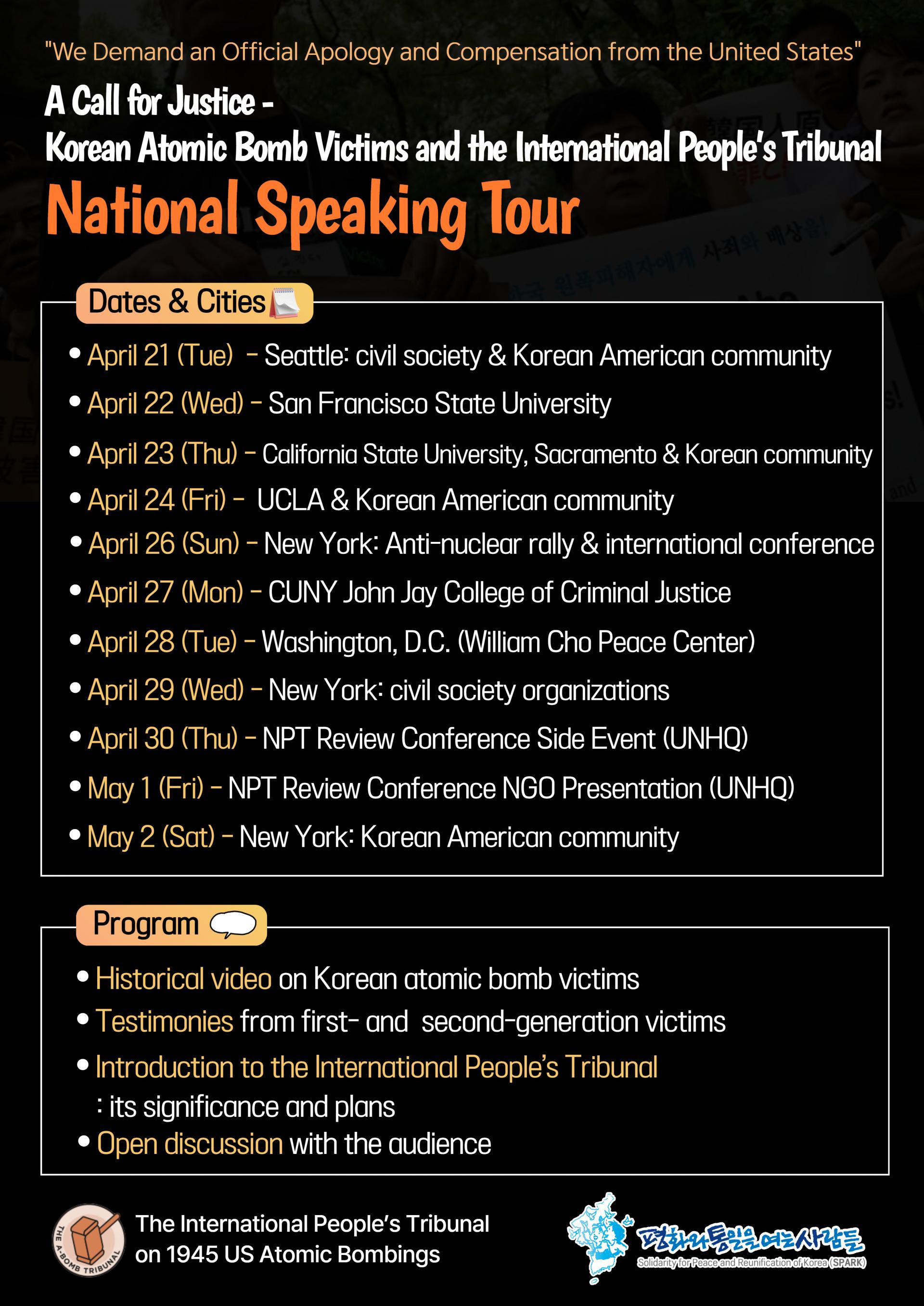
26 April – Chernobyl: Inside the Meltdown airs on National Geographic on Sunday 26th April from 4pm
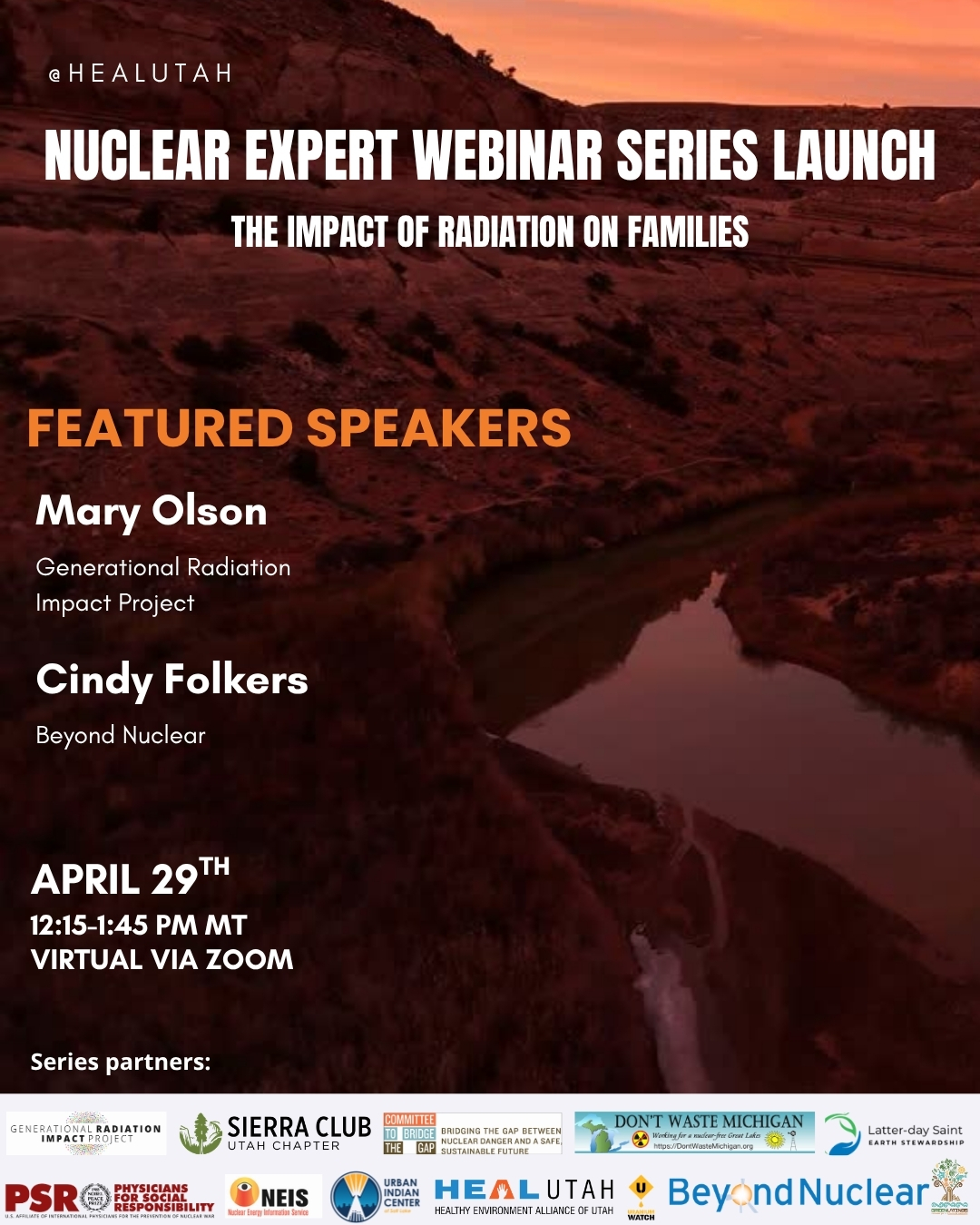
29 April – Nuclear Expert Webinar #1 – Radiation Impacts on Families with Mary Olson and Cindy Folkers
- 12:15 PM MT – 1:45 PM MT
- Location: Virtual – REGISTER TODAY

4 May -West Suburban Peace Coalition to discuss Iran war at May Educational Forum
Monday, May 4, 7:00 – 8:00 PM Central Standard Time
Title: : How Trump’s Narrative Tries to Shape the Reality of the War on Iran.
Contact Walt Zlotow, zlotow@hotmail.com 630 442 3045 for further information
14 May – online event From Bombs to Data Centres: the Face of Nuclear Colonialism

Pine Ridge Uranium is the real threat, not Tehran- Tell Burgum: Stop the Extraction.
Chernobyl: The Lost Tapes – A good documentary on Chernobyl on SBS available On Demand for the next 3 weeks– https://www.sbs.com.au/ondemand/tv-program/chernobyl-the-lost-tapes/2352741955560
To see nuclear-related stories in greater depth and intensity – go to https://nuclearinformation.wordpress.com
-
Archives
- April 2026 (317)
- March 2026 (251)
- February 2026 (268)
- January 2026 (308)
- December 2025 (358)
- November 2025 (359)
- October 2025 (376)
- September 2025 (257)
- August 2025 (319)
- July 2025 (230)
- June 2025 (348)
- May 2025 (261)
-
Categories
- 1
- 1 NUCLEAR ISSUES
- business and costs
- climate change
- culture and arts
- ENERGY
- environment
- health
- history
- indigenous issues
- Legal
- marketing of nuclear
- media
- opposition to nuclear
- PERSONAL STORIES
- politics
- politics international
- Religion and ethics
- safety
- secrets,lies and civil liberties
- spinbuster
- technology
- Uranium
- wastes
- weapons and war
- Women
- 2 WORLD
- ACTION
- AFRICA
- Atrocities
- AUSTRALIA
- Christina's notes
- Christina's themes
- culture and arts
- Events
- Fuk 2022
- Fuk 2023
- Fukushima 2017
- Fukushima 2018
- fukushima 2019
- Fukushima 2020
- Fukushima 2021
- general
- global warming
- Humour (God we need it)
- Nuclear
- RARE EARTHS
- Reference
- resources – print
- Resources -audiovicual
- Weekly Newsletter
- World
- World Nuclear
- YouTube
-
RSS
Entries RSS
Comments RSS
 nuclear-news