Fukushima Daiichi contaminated exhaust stack disassembled

Fukushima Nuclear Power Plant Contaminated Exhaust Chimney Disassembled
April 30, 2020
The disassembly work on the radioactively contaminated exhaust chimney of the Fukushima nuclear power plant is finally complete after 9 months of work. But the complete decontamination of the plant is expected to take decades.
Contaminated exhaust stack at Fukushima plant finally cut in half
 A contaminated exhaust stack at the Fukushima No. 1 nuclear power plant in Okuma, Fukushima Prefecture, is dismantled on April 29.
April 30, 2020
OKUMA, Fukushima Prefecture–Work to dismantle the upper half of an exhaust stack at the crippled Fukushima No. 1 nuclear power plant finished on April 29, the first time a structure highly contaminated by radiation was dismantled at the plant.
The chimney, which is 120 meters tall and about 3 meters in diameter, was used for the No. 1 and No. 2 reactors of the plant, operated by Tokyo Electric Power Co.
On the morning of April 29, workers spent an hour to lower sliced parts of the stack to the ground from a height of about 60 meters. With its upper half removed, the chimney now stands 59 meters high.
“I think there are still many things left that local companies can do,” said Isamu Okai, 52, a board member of local construction company Able Co., which carried out the work. “We want to continue our involvement in the decommissioning of the plant by making use of the expertise we gained from the dismantling work.”
When the nuclear disaster occurred at the plant in March 2011, vapor containing highly radioactive substances was released through the stack. But it raised concerns that the unstable chimney could collapse.
During the dismantling project, which started in August, workers remotely operated cutting equipment hoisted by a huge crane to reduce their exposure to radiation. They carried out the operation at a remote control room set up in a large remodeled bus on a hill about 200 meters from the site.
They faced many problems during the project. Rotary blades attached to the equipment wore out faster than expected, and telecommunications between the equipment and the control room frequently disconnected. The work had to be suspended every time a problem occurred.
As a result, it took a month to slice the uppermost part of the stack, which is about 2 meters high and weighs around 4 tons. That work was initially planned to be completed in a day.
In December, the rotary blades stopped working, forcing workers to be lifted on a gondola to slice the stack with an electric power tool at about 110 meters above the ground.
The work, however, went smoothly from the middle stage of the project. Workers replaced the blades with more durable ones and improved the way they sliced the stack as well as the stability of telecommunications.
Chairman of Tepco, owner of Fukushima nuclear plant, to resign
 Future of utility uncertain as Takashi Kawamura, 80, steps aside
Takashi Kawamura, the chairman of Tepco has held the post since 2017. However, he has expressed his intention to step down, partly due to age.
April 28, 2020
TOKYO — The chairman of Tokyo Electric Power Co. Holdings will resign, Nikkei learned on Tuesday.
Takashi Kawamura, 80, has held the post since 2017. However, he has expressed his intention to step down partly due to age. Indications at this point are that a successor will not immediately be named.
The Japanese government has asked a number of industry leaders to assume the post, but no one has so far accepted. Without a chairman, the outlook for the company in the continuing aftermath of the Fukushima nuclear accident appears challenging.
Tepco will soon hold a board of directors’ meeting and officially approve Kawamura’s resignation. A new management arrangement will start in June.
Kawamura also held the position of chairman of the board. Shoei Utsuda, ex-chairman of Mitsui & Co., and unaffiliated director at Tepco, will take over that post.
Kawamura succeeded Fumio Sudo, former president of JFE Holdings. Before assuming Tepco’s chairmanship, Kawamura worked for Hitachi for most of his career, contributing to the industrial conglomerate’s recovery as president following the 2008 financial crisis. At Tepco, Kawamura worked to raise employees’ awareness of the company’s difficulties in the wake of the Fukushima meltdown.
The chairman plays an important role in overseeing Tepco, especially because the power company has effectively been under government supervision since the nuclear disaster. With the chairmanship vacant, it is uncertain how much control the company will be able to exercise over its own governance.
Fukushima Daiichi buildings pose safety risks

April 27, 2020
Tokyo Electric Power Company plans to draw up safety measures for workers after finding that some of the buildings at the Fukushima Daiichi nuclear plant are in bad condition due to the 2011 accident.
TEPCO on Monday reported to the Nuclear Regulation Authority the results of its survey of about 580 buildings in the compound.
The company says the condition of around 10 buildings, including the one that houses the No.4 reactor, have deteriorated due to the tsunami that triggered the accident and subsequent hydrogen explosions.
The NRA argues that the walls or other structures of these buildings could collapse in the event of an earthquake and injure people engaged in decommissioning work.
TEPCO says it will announce by the end of May how and when it will address the problem.
The utility also says it has inspected 340,000 pieces of equipment at the plant, and found that 36,000 of them lack devices that prevent leaks of radioactive materials as well as leak detectors.
GE Avoids Japanese Plaintiffs’ Suit Over Fukushima Damages
 General Electric Co. logos are displayed on the outside of enclosed jet engine test tunnels at the GE Aviation Test Operations facility in Peebles, Ohio, on April 14, 2015.
April 24, 2020
General Electric Co. won’t have to face Japanese plaintiffs’ suit stemming from the 2011 tsunami and Fukushima nuclear meltdown, the First Circuit said in affirming dismissal Friday.
A district court in Massachusetts properly found the plaintiffs have an adequate alternative forum in Japan, even though GE can’t be sued there because of a Japanese law that makes plant operator Tokyo Electric Power Co. solely liable, the U.S. Court of Appeals for the First Circuit said.
Torture would await Assange in the US prison system
 From the frying pan into the fire. The torture that awaits Julian Assange in the US.https://www.thecanary.co/uk/analysis/2020/05/10/from-the-frying-pan-into-the-fire-the-torture-that-awaits-julian-assange-in-the-us/
Tom Coburg 10th May 2020 WikiLeaks founder Julian Assange is currently held in Belmarsh prison awaiting hearings that could see him extradited to the US to face prosecution for alleged espionage-related offences.
Award-winning US journalist Chris Hedges described the torture that would await Assange in the US prison system, adding “they will attempt to psychologically destroy him”. If extradited, Assange would likely be detained in accordance with ‘Special Administrative Measures’ (SAMs). One report equates this to a regime of sensory deprivation and social isolation that may amount to torture.
Journalists speak out
US journalist Chris Hedges spoke about the treatment Assange is likely to receive in the US. He argues that the US authorities will “psychologically destroy him” and that conditions imposed could see him turned into a ‘zombie’ to face life without parole:
Australian journalist John Pilger agrees:
If Julian is extradited to the US, a darkness awaits him. He’ll be subjected to a prison regime called special administrative measures… He will be placed in a cage in the bowels of a supermax prison, a hellhole. He will be cut off from all contact with the rest of humanity.
From the frying pan…
Assange is already in a precarious position, alongside all other UK prisoners. Belmarsh is a high-security Category A facility and, as with all other prisons in the UK, inmates there are at risk to infection from coronavirus (Covid-19).
On 28 April, the BBC reported that there were “1,783 “possible/probable” cases of coronavirus – on top of 304 confirmed infections across jails in England and Wales”. Also that there were “75 different “custodial institutions”, with 35 inmates treated in hospital and 15 deaths”.
Vaughan Smith, who stood bail for Assange, reported that the virus was “ripping through” Belmarsh:
We know of two Covid-19 deaths in Belmarsh so far, though the Department of Justice have admitted to only one death. Julian told me that there have been more and that the virus is ripping through the prison.
Assange has a known chronic lung condition, which could lead to death should he become infected with coronavirus. Assange’s lawyers requested he is released on bail to avoid succumbing to the virus, but that request was rejected.
As for the psychological effects of segregation, a European Committee for the Prevention of Torture and Inhuman or Degrading Treatment or Punishment report argued that it can “can have an extremely damaging effect on the mental, somatic and social health of those concerned”.
…and into the fire
It’s likely that Assange will be placed under SAMs if he is extradited to the US. The Darkest Corner, a report authored by the Allard K. Lowenstein International Human Rights Clinic and The Center for Constitutional Rights, describes how SAMs work.
In its summary, the report explains that:
SAMs are the darkest corner of the U.S. federal prison system, combining the brutality and isolation of maximum security units with additional restrictions that deny individuals almost any connection to the human world. Those restrictions include gag orders on prisoners, their family members, and their attorneys, effectively shielding this extreme use of government power from public view.
It continues:
SAMs deny prisoners the narrow avenues of indirect communication – through sink drains or air vents – available to prisoners in solitary confinement. They prohibit social contact with anyone except for a few immediate family members, and heavily regulate even those contacts. And they further prohibit prisoners from connecting to the social world via current media and news, limiting prisoners’ access to information to outdated, government-approved materials. Even a prisoner’s communications with his lawyer – which are supposed to be protected by attorney-client privilege – can be subject to monitoring by the FBI.
It ominously adds that: “Many prisoners remain under these conditions indefinitely, for years or in some cases even decades”. Moreover, these conditions can be used as a weapon to force a prisoner to plead guilty:
In numerous cases, the Attorney General recommends lifting SAMs after the defendant pleads guilty. This practice erodes defendants’ presumption of innocence and serves as a tool to coerce them into cooperating with the government and pleading guilty.
The report provides further details on how SAMs incorporate sensory deprivation and social isolation measures that “may amount to torture”. Also, it argues that the SAMs regime contravenes both US and international laws.
ECHR article 3
Should the UK courts agree to extradite Assange, he could face months, if not decades, of psychological torture. However, Article 3 of the European Court of Human Rights states clearly: “No one shall be subjected to torture or to inhuman or degrading treatment or punishment”. Under that article, the US extradition request should be rejected by the UK courts.
For a publisher to be subjected to such a nightmare scenario would be intolerable.
How much radioactive waste is stored on our planet?
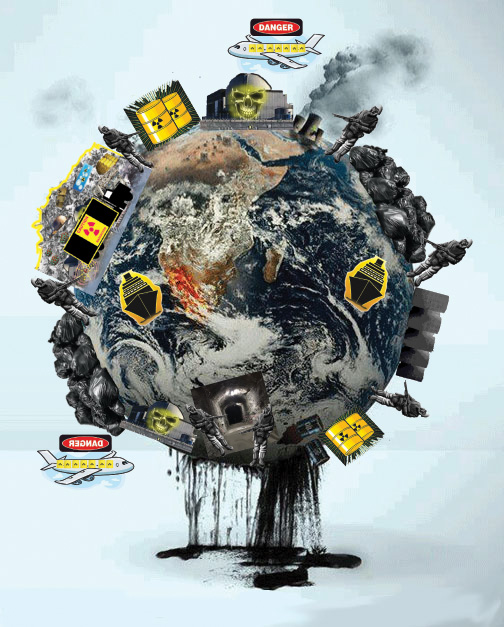 The black boxes of nuclear waste strategy https://wiseinternational.org/nuclear-monitor/882/black-boxes-nuclear-waste-strategy
How much radioactive waste is stored on our planet? According to the world’s first nuclear waste report, we don’t really know. We do know that nearly seven decades of civil and military reactor programmes have led to large stockpiles of waste, and that its volume is growing; we also know that our ignorance is vast, and there appears to be no responsible solution to the problem.
The systems delivering management strategies vary tremendously from one country to another, as do the range of authorities responsible for their management; so establishing volumes, risks and costs is no small task. When we add to this complexity national variations in both terminology and conceptual frameworks, a cross-country comparison becomes a Gordian knot. States don’t just differ in their classification systems ‒ they also follow different regulatory and safety procedures; the same applies to funding schemes, accounting measures, inventory reports and liability strategies. The European Commission is reportedly not able to make sense of the member state reports it receives, due to the extent of the anomalies. The commission has stated that it would consider taking measures to harmonize inventory reporting; it also expressed interest in finding ways to encourage states to secure appropriate financing options to pay for waste management.1 Nuclear Waste Directive implementation failures have led to the launch of infringement procedures against 25 out of 28 member states.2
While Russia offers practially no useful information about its nuclear waste inventory, the data from Belgium and the Netherlands are out of date, and the quality of Slovakia’s reports are so bad that they couldn’t be used for the WNWR report. Together with Euratom and national supervisory bodies, the Commission may wish to look into the codification of reporting methodologies in order to loosen the Gordian knot somewhat. The question of safety is ultimately a matter of implementation, and one of the functions of EU bodies is to indicate where implementation problems lie.
Criteria: the basis for informed decision-making
The World Nuclear Waste Report 2019 – Focus Europe (WNWR) offers criteria by which some of the evident lapses in reporting and departures from minimum obligations can be identified and remedied.3 Continue reading
‘Small Modular Nuclear Reactor’ entrepreneurs trying to revive dangerous ‘plutonium economy’ dream.

It seems that these two SMNR entrepreneurs in New Brunswick, along with other nuclear “players” worldwide, are trying to revitalize the “plutonium economy” — a nuclear industry dream from the distant past that many believed had been laid to rest because of the failure of plutonium-fuelled breeder reactors almost everywhere, including the US, France, Britain and Japan.
The phrase “plutonium economy” refers to a world in which plutonium is the primary nuclear fuel in the future rather than natural or slightly enriched uranium. Plutonium, a derivative of uranium that does not exist in nature but is created inside every nuclear reactor fuelled with uranium, would thereby become an article of commerce.
The proposed SMNR prototype from ARC Nuclear in Saint John is the ARC-100 reactor (100 megawatts of electricity). It is a liquid sodium-cooled SMNR, based on the 1964 EBR-2 reactor – the Experimental Breeder Reactor #2 in Idaho. Its predecessor, the EBR-1 breeder reactor, had a partial meltdown in 1955, and the Fermi-1 breeder reactor near Detroit, also modelled on the EBR-2, had a partial meltdown in 1966.
Admiral Hyman Rickover, who created the US fleet of nuclear-powered submarines, tried a liquid-sodium-cooled reactor only once, in a submarine called the Sea Wolf. He vowed that he would never do it again. In 1956 he told the US Atomic Energy Commission that liquid sodium-cooled reactors are “expensive to build, complex to operate, susceptible to prolonged shutdown as a result of even minor malfunctions, and difficult and time-consuming to repair.”
The ARC-100 is designed with the capability and explicit intention of reusing or recycling irradiated CANDU fuel. In the prototype phase, the proposal is to use irradiated fuel from NB Power’s Point Lepreau Nuclear Generating Station. Lepreau is a CANDU-6 nuclear reactor.
The other newly proposed NB SMNR prototype is the Moltex “Stable Salt Reactor” (SSR) — also a “fast reactor”, cooled by molten salt, that is likewise intended to re-use or recycle irradiated CANDU fuel, again from the Lepreau reactor in the prototype phase.
The “re-use” (or “recycling”) of “spent nuclear fuel”, also called “used nuclear fuel” or “irradiated nuclear fuel,” is industry code for plutonium extraction. The idea is to transition from uranium to plutonium as a nuclear fuel, because uranium supplies will not outlast dwindling oil supplies. Breeder reactors are designed to use plutonium as a fuel and create (“breed”) even more plutonium while doing so.
It is only possible to re-use or recycle existing used nuclear fuel by somehow accessing the unused “fissile material” in the used fuel. This material is mainly plutonium. Accessing this material involves a chemical procedure called “reprocessing” which was banned in the late 1970s by the Carter administration in the US and the first Pierre Elliot Trudeau administration in Canada. South Korea and Taiwan were likewise forbidden (with pressure from the US) to use this chemical extraction process.
Why did both the US and Canada ban this recycling scheme? Two reasons: 1) it is highly dangerous and polluting to “open up” the used nuclear fuel in order to extract the desired plutonium or U-233; and 2) extracting plutonium creates a civilian traffic in highly dangerous materials (plutonium and U-233) that can be used by governments or criminals or terrorists to make powerful nuclear weapons without the need for terribly sophisticated or readily detectable infrastructure.
Argonne Laboratories in the US, and the South Korean government, have been developing (for more than 10 years now) a new wrinkle on the reprocessing operation which they call “pyroprocessing.” This effort is an attempt to overcome the existing prohibitions on reprocessing and to restart the “plutonium economy.”
Both New Brunswick projects are claiming that their proposed nuclear reactor prototypes would be successful economically. To succeed, they must build and export the reactors by the hundreds in future.
On the contrary, however, the use of plutonium fuel is, and always has been, much more expensive than the use of uranium fuel. This is especially true now, when the price of uranium is exceedingly low and showing very little sign of recovering. In Saskatchewan, Cameco has shut down some of its richest uranium mines and has laid off more than a thousand workers, while reducing the pay of those still working by 25 percent. Under these conditions, it is impossible for plutonium-fuelled reactors to compete with uranium-fuelled reactors.
And to make matters worse for the industry, it is well known that even uranium-fuelled reactors cannot compete with the alternatives such as wind and solar or even natural-gas-fired generators. It is an open question why governments are using public funds to subsidize such uneconomical, dangerous and unsustainable nuclear technologies. It’s not their money after all – it’s ours!
Dr. Gordon Edwards, a scientist and nuclear consultant, is the President of the Canadian Coalition for Nuclear Responsibility. He can be reached at: ccnr@web.ca Note from the NB Media Co-op editors: Dr. Edwards visited New Brunswick in March for a series of public talks on the development of so-called Small Modular Nuclear Reactors. The story of his talk in Saint John can be accessed here. The video of the webinar presentation scheduled for Fredericton can be accessed here.
Killer heat and humidity already with us
 Map: Killer heat and humidity is spiking decades sooner than we feared https://www.fastcompany.com/90503692/map-killer-heat-and-humidity-is-spiking-decades-sooner-than-we-feared
At a ‘wet bulb’ temperature of 35 degrees Celsius, a human can’t survive for more than six hours, even in shade and with water. We’re starting to see those conditions more and more frequently. BY ADELE PETERS 13 May 20
If heat and humidity cross a certain extreme threshold—a “wet bulb” temperature of 35 degrees Celsius—the human body can’t survive long outside. It’s a scenario that some researchers had predicted becoming common later in the century, when climate change may make some regions essentially unlivable. But a new study suggests that dangerous, previously unprecedented levels of heat and humidity are already beginning to occur. Continue reading
World’s Sixth Largest Economy, Going Nuclear-Free
Diablo Canyon nuclear plant to be shut down, power replaced by renewables, efficiency, storage https://foe.org/news/2016-06-diablo-canyon-nuclear-plant-to-be-shut-down/ California, World’s Sixth Largest Economy, Going Nuclear-Free, BERKELEY, CALIF. – An historic agreement has been reached between Pacific Gas and Electric, Friends of the Earth, and other environmental and labor organizations to replace the Diablo Canyon nuclear reactors with greenhouse-gas-free renewable energy, efficiency and energy storage resources. Friends of the Earth says the agreement provides a clear blueprint for fighting climate change by replacing nuclear and fossil fuel energy with safe, clean, cost-competitive renewable energy. Continue reading
$41 billion for Hanford high level nuclear waste clean-up. Fiasco of Pretreatment Facility

Hanford strategy for worst nuclear waste criticized. Plant estimates skyrocket to $41 billion, Tri City Herald BY ANNETTE CARY, MAY 13, 2020 The Department of Energy’s strategy for pretreating high-level waste at Hanford is “unclear” 20 years after construction of a massive glassification plant began, while costs continue to soar, says a new federal report.
The Government Accountability Office released a report to Congress this week focusing on the plant’s Pretreatment Facility, where construction stopped seven years ago because of technical issues.
The issues involved safety concerns to prevent a possible explosion or radioactive waste leak.
U.S. taxpayers have spent $11 billion on the Hanford glassification plant, but the Pretreatment Facility is unlikely to be finished on schedule or as designed, the report said.
Under one scenario being studied, some of the worst waste at Hanford could be shipped across the nation to South Carolina to be stabilized for disposal.
Since construction stopped in late 2012 on the pretreatment plant, $752 million has been spent, with construction not ready to restart anytime soon, the GAO report indicated.
DOE also has spent $428 million developing alternatives for some of the work expected to be done at the pretreatment plant.
There is no cost estimate for completing the Pretreatment Facility, the largest facility at the plant, the GAO report said.
Completing the entire vitrification plant could cost $19 billion to $30 billion more than the $11 billion already spent, the GAO said.
That would put the total cost at $30 billion to $41 billion.
The plant, named the Hanford Waste Treatment Plant, is being built to to glassify much of the 56 million gallons of radioactive waste in underground tanks, turning it into a stable form for disposal.
The waste is left from the past production of plutonium at Hanford in Eastern Washington for the nation’s nuclear weapons program from World War II through the Cold War.
2023 WASTE TREATMENT FOCUS
When Bechtel National was awarded a contract to build and start the plant in 2000, plans called for waste from the tanks to be sent first to the largest facility at the plant, the Pretreatment Facility
It stands about 12 stories high and covers an area larger than a football field.
There waste retrieved from underground tanks was to be separated into low activity radioactive waste and high level radioactive waste for glassification at separate facilities at the vitrification plant.
But after technical issues were raised in 2012 related to how well the pretreatment plant could handle the high level portion of the tank waste, DOE proposed a new plan.
It would first start vitrifying the low activity radioactive waste by developing other methods to separate that waste from tank waste.
A federal court judge agreed to the plan in 2016 but set a deadline for DOE to start vitrifying that waste by the end of 2023. The plant must be fully operational in 2036, the judge ordered.
DOE has since been focused on meeting the 2023 court-enforced deadline, including spending about $428 million developing those alternative pretreatment approaches, rather than on facilities that will handle high level waste, the GAO report said.
When construction stopped on the pretreatment plant it was about 40 percent complete.
WASTE ISSUES RESOLVED?
DOE has spent about $323 million to resolve technical issues at the facility since late 2012, with the rest of the $752 million spent on the plant during those years paying for overhead, project management, facility maintenance and DOE oversight………
Local DOE officials said they will not develop a cost for completing the Pretreatment Facility until there is a decision about the future of the facility and any updated design changes for it, according to the GAO report……
ECOLOGY’S PRETREATMENT CONCERNS
The issue is further complicated by concerns of the Washington state Department of Ecology, a Hanford regulator………. https://www.tri-cityherald.com/news/local/hanford/article242680951.html
$73 billion world spent in 2019 on nuclear weapons, half of it by USA
 World nuclear arms spending hit $73bn last year – half of it by US https://www.theguardian.com/world/2020/may/13/nuclear-weapons-world-record-spending
-
- Spending by nine nuclear-armed states rose 10%
- Trump boosted nuclear funding but cut pandemic prevention Julian Borger in Washington
-
-
- The world’s nuclear-armed nations spent a record $73bn on their weapons last year, with the US spending almost as much as the eight other states combined, according to a
-
- .
-
The new spending figures, reflecting the highest expenditure on nuclear arms since the height of the cold war, have been estimated by the International Campaign to Abolish Nuclear Weapons (Ican), which argues that the coronavirus pandemic underlines the wastefulness of the nuclear arms race.
The nine nuclear weapons states spent a total of $72.9bn in 2019, a 10% increase on the year before. Of that, $35.4bn was spent by the Trump administration, which accelerated the modernisation of the US arsenal in its first three years while cutting expenditure on pandemic prevention.
“It’s clear now more than ever that nuclear weapons do not provide security for the world in the midst of a global pandemic, and not even for the nine countries that have nuclear weapons, particularly when there are documented deficits of healthcare supplies and exhausted medical professionals,” Alicia Sanders-Zakre, the lead author of the report, said.
The report comes at a time when arms control is at a low ebb, with the last major treaty limiting US and Russian strategic nuclear weapons, New Start, due to expire in nine months with no agreement so far to extend it.
Russia, which has announced the development of an array of new weapons – including nuclear-powered, long-distance cruise missiles, underwater long-distance nuclear torpedoes and a new heavy intercontinental ballistic missile – spent $8.5bn on its arsenal in 2019, according to Ican’s estimates. China, which has a much smaller nuclear force than the US and Russia but is seeking to expand, spent $10.4bn.
Those expenditures were far overshadowed by the US nuclear weapons budget, which is part of a major upgrade also involving new weapons, including a low-yield submarine-launched missile, which has already been deployed.
According to the Congressional Budget Office, the cost of the US programme over the coming decade will be $500bn, an increase of nearly $100bn, about 23%, over projections from the end of the Obama administration.
Congressional Democrats failed in an attempt to curb the administration’s nuclear ambitions, but Kingston Reif, the director for disarmament and threat reduction policy at the Arms Control Association, said budgetary constraints in a coronavirus-induced recession, could succeed where political opposition failed.
“There’s going to be significant pressure on federal spending moving forward, including defense spending,” Reif said. “So, the cost and opportunity cost of maintaining and modernizing the arsenal, which were already punishing, will become even more so.”
Nuclear waste plan divides South Bruce community

 residents still have concerns about a high-level nuclear waste DGR in their community.
“The folks in South Bruce, who I would consider the key and primary stakeholders in all of this, are concerned about … health and safety, and the stigma that will be attached to” nuclear waste, Grant explawelined. These stakeholders are also worried about “the value of land and businesses in the immediate vicinity as l as along the transportations route from where the high-level nuclear waste is currently stored into the community.”
The siting process has disrupted families’ property values and farm planning and decision making.
We’ve invested 25 years into this property,” Stein said. And “people aren’t interested in moving into an area that might have all of Canada’s high-level nuclear waste.”
A Change.org petition against the DGR has accumulated over 1,300 signatures as of early May, and community members have formed a group called Nuclear Tanks No Thanks to counter the NWMO’s plans
South Bruce divided over nuclear waste, Farms.com Community members clash over the site selection for a high-level nuclear waste deep geologic repository By Jackie Clark, Staff Writer Farms.com Bryon Mckee |May 12 2020
South Bruce is an Ontario municipality that boasts “rolling hills, scenic highways and warm-hearted people,” on its website. However, over the last several months, a debate over a plan to build an underground nuclear waste facility has divided the community.
Proposals in Bruce County…….
……….The DGR would require about 250 acres or the surface facilities and 1,500 acres for the underground repository. ……..some residents have not found the community engagement to be satisfactory. Continue reading
USA’s record $3.7 trillion budget gap threatens Pentagon’s costly nuclear plans
 Huge federal deficits may threaten Pentagon nuclear modernization program Market Watch May 12, 2020, By Associated Press
The deficit may lead to a lack of big defense spending on projects like rebuilding the nation’s nuclear arsenal. WASHINGTON (AP) — The government’s $3 trillion effort to rescue the economy from the coronavirus crisis is stirring worry at the Pentagon. Bulging federal deficits may force a reversal of years of big defense spending gains and threaten prized projects like the rebuilding of the nation’s arsenal of nuclear weapons.
Defense Secretary Mark Esper says the sudden burst of deficit spending to prop up a damaged economy is bringing the Pentagon closer to a point where it will have to shed older weapons faster and tighten its belt.
“It has accelerated this day of reckoning,” Esper said in an Associated Press interview.
It also sets up confrontations with Congress over how that reckoning will be achieved. Past efforts to eliminate older weapons and to make other cost-saving moves like closing under-used military bases met resistance. This being a presidential election year, much of this struggle may slip to 2021. If presumptive Democratic nominee Joe Biden wins, the pace of defense cuts could speed up, if he follows the traditional Democratic path to put less emphasis on defense buildups.
After Congress passed four programs to sustain the economy through the virus shock, the budget deficit — the gap between what the government spends and what it collects in taxes — will hit a record $3.7 trillion this year, according to the Congressional Budget Office. By the time the budget year ends in September, the government’s debt — its accumulated annual deficits — will equal 101% of the U.S. gross domestic product.
Rep. Ken Calvert of California, the ranking Republican on the House Appropriations defense subcommittee, says defense budgets were strained even before this year’s unplanned burst of deficit spending…….. https://www.marketwatch.com/story/huge-federal-deficits-may-threaten-pentagon-nuclear-modernization-program-2020-05-12
UK’s nuclear weapons programmes $1.67 billion over budget
 Three British nuclear programs are $1.67 billion over budget https://www.defensenews.com/global/europe/2020/05/12/three-british-nuclear-programs-are-167-billion-over-budget/ By: Andrew Chuter LONDON — Critical programs aimed at updating Britain’s nuclear weapons infrastructure have been hit by long delays and huge cost increases, according to the parliamentary Public Accounts Committee.
Poor management on three nuclear projects involving warhead assembly, core reactor production and submarine building have resulted in combined cost increases of £1.35 billion (U.S. $1.67 billion) as well as delays of between 1.7 and 6.3 years, the committee revealed in a report scheduled for release May 12.
The cost overruns were caused in large part by avoidable mistakes, such as beginning construction work without mature designs, said the committee.
The cost increases and delays cited in the report could be the tip of the iceberg in the nuclear sector. The three programs investigated by the committee represent about a quarter, by initial value, of the 52 nuclear infrastructure programs that the Ministry of Defence is pursuing. A report on nuclear infrastructure late last year by the government’s financial watchdog, the National Audit Office, said the initial value of all the projects was almost £5 billion.
The parliamentary committee said the MoD admitted that costs on the three projects “could keep rising, as its poor contract design has left the taxpayer to assume financial risk, while doing little to incentivize contractors to improve their performance.
The report said the MoD has poorly managed the three programs, failed to learn from past mistakes and agreed to poorly designed contracts with the major companies that have a stranglehold on Britain’s defense nuclear sector. The contracts did not allow the ministry to share the financial risk with contractors, which meant the government bore the full impact of cost increases, including those of subcontractors.
“To utterly fail to learn from mistakes over decades, to spectacularly repeat the same mistakes at huge cost to the taxpayer — and at huge cost to confidence in our defense capabilities — is completely unacceptable,” said Member of Parliament Meg Hillier, who chairs the Public Accounts Committee.
“We see too often these same mistakes repeated,” she added. “The department [MoD] knows it can’t go on like this. It knows it must change and operate differently. The test now is to see how it will do that, and soon.”
South Korea, Germany to bolster ties in transition towards renewable energy
S. Korea, Germany to bolster ties in transition towards renewable energy
The cooperation came as a follow-up to an agreement reached by Industry Minister Sung Yun-mo and German counterpart Peter Altmaier in Berlin last year, in which they vowed to bolster cooperation in the energy segment.
Seoul and Berlin will especially focus efforts on cooperating deeper on their shift towards renewable energy, while phasing out nuclear energy…….
The two countries are both making efforts to reduce their coal-based power generation as well, with Germany planning to break away from the resource by 2038. South Korea also vowed to “significantly reduce” its consumption of coal. https://en.yna.co.kr/view/AEN20200512003700320?fbclid=IwAR1RpCGPA8_id6MKRdp3q4xHlK6-BjaQOf5lbJL5TIhbKP6kHqekyrZmMagcolin@yna.co.kr
1 This Month
23 April – WEBINAR – Why new nuclear reactors are the wrong tools for decarbonization Thursday, April 23 • 1 AM – 2 AM AEST


Pine Ridge Uranium is the real threat, not Tehran- Tell Burgum: Stop the Extraction.
Chernobyl: The Lost Tapes – A good documentary on Chernobyl on SBS available On Demand for the next 3 weeks– https://www.sbs.com.au/ondemand/tv-program/chernobyl-the-lost-tapes/2352741955560
To see nuclear-related stories in greater depth and intensity – go to https://nuclearinformation.wordpress.com
-
Archives
- April 2026 (241)
- March 2026 (251)
- February 2026 (268)
- January 2026 (308)
- December 2025 (358)
- November 2025 (359)
- October 2025 (376)
- September 2025 (257)
- August 2025 (319)
- July 2025 (230)
- June 2025 (348)
- May 2025 (261)
-
Categories
- 1
- 1 NUCLEAR ISSUES
- business and costs
- climate change
- culture and arts
- ENERGY
- environment
- health
- history
- indigenous issues
- Legal
- marketing of nuclear
- media
- opposition to nuclear
- PERSONAL STORIES
- politics
- politics international
- Religion and ethics
- safety
- secrets,lies and civil liberties
- spinbuster
- technology
- Uranium
- wastes
- weapons and war
- Women
- 2 WORLD
- ACTION
- AFRICA
- Atrocities
- AUSTRALIA
- Christina's notes
- Christina's themes
- culture and arts
- Events
- Fuk 2022
- Fuk 2023
- Fukushima 2017
- Fukushima 2018
- fukushima 2019
- Fukushima 2020
- Fukushima 2021
- general
- global warming
- Humour (God we need it)
- Nuclear
- RARE EARTHS
- Reference
- resources – print
- Resources -audiovicual
- Weekly Newsletter
- World
- World Nuclear
- YouTube
-
RSS
Entries RSS
Comments RSS
 nuclear-news