Environmentalists, political groups, companies demand that Facebook crack down on climate denialism
Everybody’s entitled to their opinion – but not their own facts’: The spread of climate denial on Facebook
‘The arguments are that people can’t trust scientists, models, climate data. It’s all about building doubt and undermining public trust in climate science’ Independent, Louise Boyle, New York @LouiseB_NY, 24 July, 20.
“………The pushbackOn 1 July, a coalition of environmental and political groups sent a letter to Facebook’s oversight board demanding a crackdown on climate denial and to close the “giant” opinion loophole that allows climate misinformation to be posted as an opinion. “Facebook is allowing the spread of climate misinformation to flourish, unchecked, across the globe. Instead of heeding the advice of independent scientists and approved fact-checkers from Climate Feedback, Facebook sided with fossil fuel lobbyists by allowing the CO2 Coalition to take advantage of a giant loophole for “opinion” content. The loophole has allowed climate denial to fester by labelling it “opinion,” and thus, avoiding the platform’s fact-checking processes,” they wrote. More than 500 companies including Coca-Cola, Dunkin’ Donuts, Verizon, and this week Disney, according to WSJ, have slashed or suspended ad spends on Facebook as part of the “Stop Hate for Profit” boycott, a move by civil rights groups to try to force the social media giant to address hate speech and misinformation. An independent audit of Facebook earlier this month reached harsh conclusions on the social media giant, reporting that it was allowing hate speech and disinformation to proliferate. Separately, Generation Progress, the youth-centered research and advocacy group, on Thursday launched a “Get The Facts Out Campaign” website aimed at debunking myths on the climate crisis and calling out climate deniers across Congress and the Trump administration, with a focus on the interwoven issues of climate and racial justice. “Black Americans have been fighting for clean air and water in their communities for years. Our legislators must understand the importance of addressing these inequities, not deny their existence,” the group said. And earlier this month, two senators introduced legislation to reform Section 230 of the 1996 Communications Decency Act, Reuters reported. The legislation, titled the Platform Accountability and Consumer Transparency Act, or PACT, from Democratic Senator Brian Schatz and Senate Republican John Thune, aims to provide more accountability and transparency for large tech platforms with respect to content moderation decisions……… Climate experts were sceptical of tech platforms’ ability, or desire, to enact meaningful change, and said that public action was key. For Dr Mann that means political overhaul. “Americans must vote in a Democratic president and Congress in the next US election. Unlike Trump and Congressional Republicans, who appear beholden to both Russia and fossil fuel interests, will be willing to crack down on Zuckerberg/Facebook’s nefarious activities,” he said. Dr Cook is working with machine-learning researchers on a system to detect and categorise climate misinformation in real-time. He acknowledged that social media platforms would have to be incentivised to use such a model, as it “would basically be taking money out of their pockets” in terms of ad revenue. Just as important, he says, is “building public resilience against misinformation” – teaching people how to spot misleading or rhetorical techniques and logical fallacies in climate denial arguments. “We found that when you explain techniques, that not only neutralises and inoculates people against that myth, but also against other topics like the tobacco industry and anti-vaxxer misinformation,” he said. Dr Cook and his team have created a smart-phone app for public use and for schools. He added: ”We need to look at technological solutions but ultimately we need to make ourselves un-hackable.” Additional reporting from Reuters https://www.independent.co.uk/environment/climate-crisis-denial-facebook-global-warming-denier-social-media-a9595546.html |
|
SEPTEMBER 3 & 4 – NEW SENTENCING DATES FOR KINGS BAY PLOWSHARES 7
We are still urging people to write to Judge Wood not so much to ask for leniency but for justice and not a death sentence. Details are on the website: https://kingsbayplowshares7.org/2020/05/letters-to-judge-wood/
UK public has been misled over plans for nuclear reactors in Essex
 Mersea Island Environmental Alliance 22nd July 2020, Mersea Island Environmental Alliance have been investigating discrepancies between the National Policy Statement for Bradwell in Essex and what is ‘proposed’ by CGN/EDF in their Consultation document. CGN/EDF Consultation
proposal is for two reactors and in that document, they state that:
“Parts of the Project which are not likely to be influenced by the
consultation include:
station on land adjacent to the existing Bradwell power station (as a
matter of Government policy)…and…Technical details including the
proposed deployment of two reactors”.
Alliance working with The Environmental Law Foundation sought legal
opinion. This is the Barrister’s opinion having reviewed the Consultation
document: “Arguably this is highly misleading as the National Policy
Statement does not set out government policy support for a two-reactor
station, which was not assessed as part of the NPS. Consultees (the public
included) may not be aware that they are entitled to make representations
on this.
alternative option, and consultees should be made aware that they are
entitled to comment on this: see R. (Moseley) v LB Haringey [2014] UKSC 56.
Section 104(3) of the Planning Act 2008 states: “The Secretary of State
must decide the application in accordance with any relevant national policy
statement, except to the extent that one or more of subsections (4) to (8)
applies.”
process of preparing a new NPS for nuclear power). This states at paragraph
4.1.1 that Bradwell is a site “that the Government has determined are
potentially suitable for the deployment of new nuclear power stations in
England and Wales before the end of 2025”
engage in a mockery of a consultation held at the peak of the Pandemic. To
make matters worse Government are clearly aware of the CGN/EDF remit. The
public have been deliberately mislead! The site selection process for one
reactor and the NPS are being ignored both by the developer and Government.
The public are illegally excluded from comment on the two-reactor proposal.
The latter exclusion courtesy of CGN/EDF who are just the contractor! The
intriguing side to this is how despite the initial enthusiasm from my media
contacts over the developing story it hits the buffers of the editorial
desks and goes no further.
https://www.facebook.com/Stop-Nuclear-Dumping-In-Blackwater-Estuary-1473134316325437
Virtual tours planned at Hiroshima Peace Memorial Museum and the Nagasaki Atomic Bomb Museum
Virtual tours planned at atomic bomb museums, https://www3.nhk.or.jp/nhkworld/en/news/20200721_43/?fbclid=IwAR2KZ-D8gWm-K1Yl8WVBDpUyobELxvI6Hm-DiWxtZYPBmyS8mo9BOneLd2E 21 Jul 20, Two Japanese museums dedicated to documenting the 1945 atomic bombings of Hiroshima and Nagasaki plan to offer virtual tours online in cooperation with an international NGO devoted to the elimination of nuclear weapons.They are planning the events as the number of international visitors to these museums has dropped sharply due to the coronavirus pandemic.
Kawasaki Akira, a member from the International Campaign to Abolish Nuclear Weapons, or ICAN, unveiled the plan online on Monday.
The exhibits at the Hiroshima Peace Memorial Museum and the Nagasaki Atomic Bomb Museum will be shown live on Instagram. Volunteers and researchers from universities will explain the displays in English.
The Hiroshima museum will hold the virtual tour on Wednesday for about 30 minutes after closing time, between 6:30 p.m. and 7p.m. Japan time.
The Nagasaki museum will hold it on Friday for about 30 minutes before opening time, between 8:00 a.m. and 8:30 a.m. Japan time.
Kawasaki said his group and the museums want to do everything possible online as various activities have been canceled due to the coronavirus pandemic.
He said he wants to offer young people abroad an opportunity to find out about the damage and aftereffects of the atomic bombings of the two cities.
Problems in planned nuclear waste dump at Chalk River
 New nuclear waste guidelines could lead to ‘massive dump’ upstream from Ottawa if approved, CapitalCurrent , By Bailey Moreton, 23 July 20,
New nuclear waste guidelines set to undergo public consultation this fall could clear the way for a much-debated, large, above-ground waste disposal mound to be built at Chalk River, the national nuclear research facility 180 kilometres northwest of Ottawa.
The proposed guidelines would frame the way nuclear companies dispose of waste, including the creation of deep ground repositories. Under the guidelines, companies would present waste disposal safety cases — a set of justifications for a planned disposal strategy — which are then assessed by the Canada Nuclear Safety Commission.
But one longtime critic of the Chalk River site says the guidelines would give too much flexibility to operators of nuclear facilities. Ole Hendrickson, a former scientist with Environment Canada and a researcher with the Concerned Citizens of Renfrew County Area, says the guidelines need to be more stringent.
“In my view, what they say is, ‘Let’s make these reg docs as flexible as possible and non-prescriptive’ — and the CNSC actually uses those terms, non-prescriptive and flexible, to describe its regulatory approach,” he said. “That may work for industry, but for us members of the public, it raises a lot of concerns.”
In the minutes of a CNSC meeting on June 18, Ramzi Jammal, executive vice-president of the commission, said the safety cases allow for performance-based assessment and for the regulatory documents to be adaptable to future conditions.
“With performance-based you’re always achieving and applying the new standards as they become available. The same thing applies for the new technology,” Jammal said at the meeting. “As you are looking at enhancement for safety, you always take into consideration the new available information.”
But what is defined as low-level waste is flexible and depends on the safety cases presented to the CNSC, said Richard Cannings, NDP MP for South Okanagan-West Kootenay and the party’s natural resources critic.
“That’s a problem. That’s not how it’s done elsewhere in the world,” he said. “They did it in Ottawa’s backyard.”
In the June 18 meeting, Karine Glenn, director of the wastes and decommissioning division for the CNSC, said low-level waste would mostly involve medical materials, but each safety case would be reviewed by the CNSC.
In Chalk River’s case, critics such as Eva Schacherl, a volunteer with the Coalition Against Nuclear Dumps on the Ottawa River, say they believe the “massive waste dump” would fail to manage the nuclear waste safely and that operators are failing to meet international standards at the site……….
both Schacherl and Hendrickson said they are concerned the site — which is within a little more than a kilometre of the Ottawa River, according to Hendrickson — could spread contamination.
“Waste has piled up at Chalk River, and there’s no long-term way of dealing with it,” said Hendrickson. “There would be a lot of leaching that would flow back into the Ottawa River.”
“Most countries with large quantities of nuclear waste have an independent federal nuclear waste agency,” said Hendrickson. “It’s not run by the industry like the Nuclear Waste Management Organization. It’s definitely not run by the nuclear regulator.”
Cannings agreed, adding that he was worried what impact having the NWMO responsible for the deep ground repositories could have for safety.
“There’s risks with everything. But the assessment of risks to a project by the proponent, by the industry — they’re going to be much more favourable, they’re going to accept more risk than the public because they’re protecting themselves,” said Cannings.
Two Ontario sites — South Bruce, near London, and Ignace, a three-hour drive northwest of Thunder Bay, are the only two communities still vying for the deep-ground repository project. Both proposals have been met with resistance from local residents………
Critics noted that several organizations and advocacy groups had requested but were denied permission to be present at the June meeting where the regulatory documents were presented via video conference. ……… https://capitalcurrent.ca/new-nuclear-waste-guidelines-could-lead-to-massive-dump-upstream-from-ottawa-if-approved/
Why the nuclear whistleblower exposing AQ Khan was ignored
The CIA’s failure to stop him in 1975 “was the first monumental error”, Robert Einhorn, who worked on nonproliferation in the Clinton and Obama administrations, told Frantz and Collins. The Americans asked the Dutch “to inform them fully but not take any action”, Lubbers recalled, laughing. He said he “found it a bit strange”, but also thought, “‘OK, it’s American business.’ We didn’t feel . . . safeguarding the world against nuclear proliferation as a Dutch responsibility.” The business of the Netherlands was business. The CIA would watch Khan for decades.
Nuclear power: Still a rip-off after all these years
But Nevada politicians, industries, and people have expended untold jillions of FTE hours fighting Yucca Mountain over more than three decades.
So Nevadans may be interested to know that the industry trying to ram that waste down our throats is at the heart of this week’s FBI arrest of the Speaker of the Ohio House of Representatives on a racketeering charge.
Recap (cribbed from the Current’s sibling, the Ohio Capital Journal): A now-bankrupt utility called FirstEnergy Solutions paid $61 million into a “dark money” PAC controlled by Ohio state Rep. Larry Householder, who then showered the money on fellow Republican legislators, who then selected Householder as House Speaker, and next thing you know Ohio lawmakers passed (and Ohio’s governor signed) a $1.2 billion bailout for FirstEnergy’s economically failing nuclear power plants.
Nevadans may like to take a perverse pride in their state as a very interesting, anything-goes sort of place where a uniquely craven politics is unusually rife with shady shenans and sweetheart deals.
To which Ohio is entitled to say, hold my beer.
I mean, sure, Ohio’s population is about four times bigger than Nevada’s. But $61 million? That’s pretty impressive.
The $1.2 billion public subsidy for a private company, on the other hand, is not particularly outlandish by Nevada standards. Nevada shelled out as much in “incentives” for Tesla, and ladled $750 million to the Raiders.
At least when Nevada elected officials recklessly steered public resources away from public services and to the private sector, it got a battery factory and Mid-Air Engine Failure Field. All Ohio got was a pair of old nuclear power plants that Ohio already had.
Leaving aside for the moment Ohio’s policy decision, ludicrous in design and corrupt in execution, to force electricity customers to rescue a power company, you may be wondering, Why would an electric utility need $1.2 billion to keep some old reactors reacting in the first place?
Glad you asked!
When nuclear power was new on the scene, which is to say about the same time charming mid-mod houses were being built east of the Strip & south of Desert Inn, it came with the promise nuclear energy would be “too cheap to meter.”
A half-dozen decades and countless cost overruns, skyrocketing maintenance expenses and public bailouts later, the financial sector won’t touch nuclear power with a 13-foot spent fuel rod assembly.
The Bush-Cheney administration was hot for nuclear power. Early in Bush’s first term, Cheney stacked a panel with nuclear industry representatives to prepare a plan to build more plants, part of of what people sometimes back then called “a nuclear renaissance.” At the time I was working for Public Citizen, writing about nuclear power (we were against it) and I will never forget one surprisingly candid phrase from the report: “economic viability for a nuclear power plant is difficult to demonstrate.”
Even then, the price per kilowatt was more expensive than coal, let alone gas. It still is, of course. And nearly 20 years later, nuclear can be almost three times as expensive as solar or wind.
Finance is only one industry that wants nothing to do with nuclear power. There’s another: Insurance.
That’s why there is U.S. law called the Price-Anderson Act. If/when a nuclear power plant has, you know, an “incident” that causes economic as well as ecological devastation, taxpayers will foot the bill, even in cases of private sector negligence or misconduct.
As businesses today clamor for protection against covid-related liability, perhaps they’ll point to the no-fault insurance model Congress pioneered in the Price-Anderson Act. If protection from liability is a good idea for nuclear power plants, why wouldn’t it be a good idea for casinos and retailers who put their employees in impossible and risky situations by failing to protect them from the rona?
About the same time Bush and Cheney were firing up their nuclear revival scheme, Nevada Gov. Kenny Guinn was disapproving the Bush administration’s official designation of Yucca Mountain as a nuclear waste dump.
“Nevada is not anti-nuclear and does not oppose nuclear power,” Guinn wrote.
To which you might ask, Why not?
The answer I always got had nothing to do with the desirability, expense or calamitous risk of nuclear power, but the politics of nuclear waste: If Nevada, including and especially its congressional delegation, were against nuclear power, it would make it all the more difficult to win support of congressional colleagues in other states in the effort to keep waste out of Nevada.
It’s a legitimate concern, one on display as recently as last year, when Trump’s plan to fund the dump were supported not only by all the Republicans in the U.S. House (except Mark Amodei), but a whole lot of Democrats, too. But in the end Nancy Pelosi backed Nevada, and Trump’s Yucca wishes fizzled.
Gregory Jazcko was a nuclear policy staffer for Harry Reid, a position where he probably had to draw distinctions between opposing Yucca Mountain, but not nuclear power, on an almost daily basis. In fact, Jazcko would later become chairman of the Nuclear Regulatory Commission, which has never been a habitat for people who oppose nuclear power.
But after leaving that job, Jazcko wrote a book describing nuclear power as “a failed technology” that “is more hazardous than it’s worth,” and “will lead to catastrophe.”
Thankfully earlier this year, Trump proclaimed to Nevada via twitter that the tiny Trump palm had gone to the orange Trump forehead so he no longer wanted to dump nuke waste in Nevada. And if he wins a second term, well, everyone knows how trustworthy and consistent the president is.
In other words, during a second term, maybe Trump will put a revived Yucca project under the direction of former Ohio House Speaker Larry Householder.
New CT scan method lowers radiation exposure
New CT scan method lowers radiation exposure, Science Daily
- Date: July 23, 2020
- Source: University College London
- Summary:
- A CT scan technique that splits a full X-ray beam into thin beamlets can deliver the same quality of image at a much reduced radiation dose, according to a new study. The technique, demonstrated on a small sample in a micro CT scanner, could potentially be adapted for medical scanners and used to reduce the amount of radiation millions of people are exposed to each year.
-
A CT scan technique that splits a full X-ray beam into thin beamlets can deliver the same quality of image at a much reduced radiation dose, according to a new UCL study.
The technique, demonstrated on a small sample in a micro CT scanner, could potentially be adapted for medical scanners and used to reduce the amount of radiation millions of people are exposed to each year.
A computerised tomography (CT) scan is a form of X-ray that creates very accurate cross-sectional views of the inside of the body. It is used to guide treatments and diagnose cancers and other diseases.
Past studies have suggested CT scans may cause a small increase in lifelong cancer risk because their high-energy wavelengths can damage DNA. Although cells repair this damage, sometimes these repairs are imperfect, leading to DNA mutations in later years……… https://www.sciencedaily.com/
Nuclear isn’t clean or renewable
 Nuclear isn’t clean or renewable , https://www.newtimesslo.com/sanluisobispo/nuclear-isnt-clean-or-renewable/Content?oid=9943058 Marty Brown, Atascadero 24 July 20
Many people in this county who are joining community choice energy options in order to use and support advancing clean energy sources will be very upset when they learn our Assembly member, Jordan Cunningham, has introduced AB 2898 to amend California’s Renewables Portfolio Standard Program allowing nuclear power to be named as a carbon free and renewable resource.
However, nuclear is neither carbon free nor renewable. There is a finite supply of uranium 235, which nuclear plants use to power their reactors. The ore is mined, processed, and enriched. The resulting material is manufactured into pellets and rods to contain them. All this industry and transport causes a lot of greenhouse gas emissions. Additionally, during the operation of nuclear plants, CO2 is emitted with water vapor, steam, and heat.
Another “renewable standard” states there is to be no waste. We certainly will have waste—thousands of tons of highly radioactive waste with nowhere to store it. The Central Coast deserves representatives who will be looking out for our health and dollars. One who will look beyond the dinosaur of nuclear power with its dangers, waste, and cost to embrace a future of truly clean sustainable power.
Plutonium Particles Scattered 200km From Fukushima Nuclear Disaster Site, Scientists Say
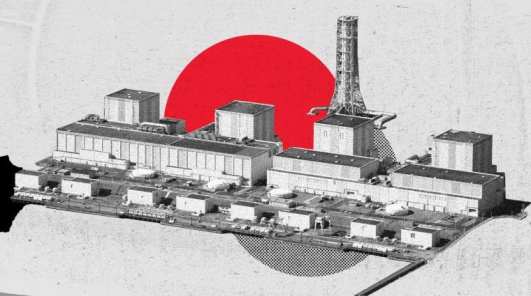
Jul 22, 2020
Plutonium fragments may have spread more than 200km via caesium microparticle compounds released during the 2011 Fukushima Daiichi nuclear power plant disaster in Japan. These findings are according to research done on the region’s soil samples, published in Science of The Total Environment, by an international group of scientists.
The Fukushima Nuclear disaster occurred when a massive tsunami crashed over the plant’s walls, causing three operating nuclear reactors to overheat and melt down. Simultaneously, reactions within the plant generated hydrogen gas that exploded as soon as it escaped from containment. During the disaster, caesium — a volatile fission product created in nuclear fuel — combined with other reactor materials to create caesium-rich microparticles (CsMPs) that were ejected from the plant.
CsMPs are incredibly radioactive, and scientists study them in an attempt to both measure their environmental impact and to gain insight into the nature and extent of the Fukushima disaster. In one such research process, scientists discovered tiny uranium and plutonium fragments within these micro-particles. The range of plutonium particle spread was previously estimated at 50km, and this research changes that number to 230km. This discovery is vital as it provides a reason to extend testing for plutonium poisoning in human-inhabited regions further than before, and helps scientists understand how to decommission the nuclear reactors in the plant. Decommissioning nuclear plants is extremely important after they cease to function, in order to reduce residual radioactivity in the region to safe levels.
With respect to immediate implications for health, scientists note that radioactivity levels of the plutonium are similar to global counts from nuclear weapons tests. While this means that radioactivity levels may not pose an urgent, critical danger, scientists also note that plutonium poisoning in food items remains a threat. If plutonium were ingested — a possibility in this region — it could create isotopes that significantly increase radioactivity doses, and poison the body.
Due to high radioactivity levels, humans are still unable to enter the Fukushima plant nine years after the disaster. Yet, scientists continue to work towards safely decommissioning the reactors within the plant from the outskirts. Though radiation levels post the Fukushima disaster were much lower than Chernobyl, individuals living near the region still suffer from the aftermath of everything the disaster put them through, fear of poisoning and psychological paranoia, as they attempt to bring life back to normal.
Fukushima may have scattered plutonium widely
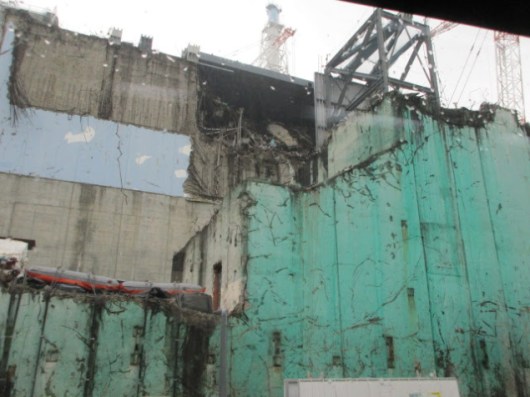 The upper side of the unit 3 reactor building at Fukushima Daiichi was damaged by a hydrogen explosion. This area housed the spent fuel pool and the fuel handling machines.
20 Jul 2020
Tiny fragments of plutonium may have been carried more than 200 km by caesium particles released following the meltdown at the Fukushima Daiichi nuclear power plant in Japan in 2011. So says an international group of scientists that has made detailed studies of soil samples at sites close to the damaged reactors. The researchers say the findings shed new light on conditions inside the sealed-off reactors and should aid the plant’s decommissioning.
The disaster at Fukushima occurred after a magnitude-9 earthquake struck off the north-east coast of Japan and sent a 14 m-high tsunami crashing over the plant’s seawalls. With low-lying back-up generators knocked out, the site’s three operating reactors overheated and melted down. At the same time, hot steam reacted with the zirconium cladding of the nuclear fuel, generating hydrogen gas that exploded when it escaped from containment.
Caesium is a volatile fission product created in nuclear fuel. During the Fukushima meltdown, it combined with silica gas created when melting fuel and other reactor materials interacted with the concrete below the damaged reactor vessel. The resulting glass particles, known as caesium-rich microparticles (CsMPs), measure a few microns or tens of microns across.
Satoshi Utsunomiya and Eitaro Kurihara at Kyushu University and colleagues in Japan, Europe and the US analysed three such particles obtained from soil samples dug up at two sites within a few kilometres of the Fukushima plant. They used a range of techniques to study the physical and chemical composition of these CsMPs, with the aim of establishing whether they contained any plutonium.
Mapping plutonium spread
To date, plutonium from the accident has been detected as far as 50 km from the damaged reactors. Researchers had previously thought that this plutonium, like the caesium, was released after evaporating from the fuel. But the new analysis instead points to some of it having escaped from the stricken plant in particulate form within fragments of fuel “captured” by the CsMPs.
Utsunomiya and colleagues used electron microscopy and synchrotron X-ray fluorescence to look inside the CsMPs. Based on these data, they were able to map the distribution of various elements coming from materials within the damaged reactors – including iron from stainless steel, zirconium and tin from the fuel cladding and zinc from cooling water. They also found uranium within one of the CsMPs, in the form of discrete uranium oxide particles less than 10 nm across.
However, the researchers were unable to find any traces of plutonium using these methods – probably due to interference from strontium, another fission product. Instead, they turned to X-ray absorption. To compensate for high levels of noise, they carried out the measurement at two different synchrotrons, transporting their roughly 20 µm diameter particle from Japan to be blasted with X-rays at the Diamond facility in the UK and the Swiss Light Source in Switzerland.
The researchers focused their attention on the three areas of the particle that generated the most fluorescence from uranium. They failed to detect plutonium at two of these locations, but succeeded at the third, with absorption spectra produced at both synchrotrons indicating the element’s presence. The low signal-to-noise ratio meant they couldn’t identify exactly which plutonium species were present, but the shape of the spectra told them that it probably existed as an oxide, rather than as a pure metal.
Utsunomiya and co-workers also used mass spectrometry to measure the relative abundance of different plutonium and uranium isotopes within the microparticles. They found that three ratios – uranium-235 to uranium-238, as well as plutonium-239 compared to both plutonium-240 and -242 – all agreed with calculations of the proportions that would have been present in the fuel at the time of the disaster. This agreement, coupled with the fact that the measured amount of uranium-238 was nearly two orders of magnitude greater than would be the case if it had simply evaporated from the melted fuel, led them to conclude that the uranium and plutonium existed as discrete fuel particles within the CsMPs.
Implications for decommissioning
The researchers note that previous studies have shown that plutonium and caesium are distributed differently in the extended area around Fukushima, which suggests that not all CsMPs contain plutonium. However, they say that the fact plutonium is found in some of these particles implies that it could have been transported as far afield as the caesium – up to 230 km from the Fukushima plant.
As regards any threat to health, they note that radioactivity levels of the emitted plutonium are comparable with global counts from nuclear weapons tests. Such low concentrations, they say, “may not have significant health effects”, but they add that if the plutonium were ingested, the isotopes that make it up could yield quite high effective doses.
With radiation levels still too high for humans to enter the damaged reactors, the researchers argue that the fuel fragments they have uncovered provide precious direct information on what happened during the meltdown and the current state of the fuel debris. In particular, Utsunomiya points out that the composition of the debris, just like that of normal nuclear fuel, varies on the very smallest scales. This information, he says, will be vital when it comes to decommissioning the reactors safely, given the potential risk of inhaling dust particles containing uranium or plutonium.
The research is reported in Science of the Total Environment.
https://physicsworld.com/a/fukushima-may-have-scattered-plutonium-widely/
Japan grows the world’s “sweetest” peach – in Fukushima
Frankly speaking you have to be either masochist or suicidal to play Russian roulette by eating those Fukushima peaches, their sweetness should never make you forget their potential radioactive contamination. There are many other countries where to buy sweet and safe peaches from.
That said I cannot believe the nerve that this journalist has to write such a “sweet” propaganda piece. I understand that these people need to make a living, but should they not consider their moral responsability towards the people whose health might be put at risk buying and eating their potentially radiation contaminated products? All done in the name of “holy reconstruction”…. There is no such a thing as a harmless low dose in internal radiation.
 Fifth generation peach farmer Koji Furuyama has been striving to decontaminate Fukushima’s reputation by growing the world’s sweetest peaches.
20 July 2020
Would you buy a $7000 peach? A fruit so juicy, so sweet, so perfect you just don’t care about the sticky nectar dribbling down your face?
What if it came from Fukushima, infamous for one of the worst nuclear accidents in modern memory?
Before the disaster, peaches from the area were prized for their exceptional taste and luscious texture, but on 11 March 2011 a massive earthquake and tsunami triggered one of the world’s worst accidents of the nuclear power age.
As radiation spewed from the Fukushima Daiichi plant, tens of thousands of residents were forced to flee their homes – some never to return.
While radiation levels have slowly dissipated, an inescapable stigma remains for the people of Fukushima.
Since then, fifth generation peach farmer Koji Furuyama has been striving to decontaminate the region’s reputation by growing the world’s sweetest peaches.
“Produce in Fukushima was recognised as the world’s most worthless and dangerous,” Koji said.
“I thought of doing the complete opposite by making the world’s most delicious or sweetest peaches.”
‘The sweetness will be from an unknown world’
There is a scientific measurement which confirms the intense sweetness of Koji’s peaches.
When you bite into a peach, you might notice if it’s sweet or tart or bland. Among farmers, this is known as Degrees Brix, and it measures the fruit’s sugar content.
The higher on the Brix scale, which goes up to 40, the sweeter the fruit.
Your average supermarket peach is usually somewhere between 11 and 15 Degrees Brix.
In comparison, the Guinness World Records certified a peach grown in Kanechika, Japan as the world’s sweetest, with a sugar content of 22.2
But on the Furuyama Fruit Farm in rural Fukushima, Koji has managed to grow a peach so sweet, it came in at a mouth-watering 32 Degrees Brix.
While Koji sold that delectably sweet peach for $7000 a few years ago, he’s not done yet.
He has already grown a peach at 35, and is now setting his sights on the most perfect peach ever, aiming to achieve that elusive 40 Degrees Brix.
“The sweetness will be from an unknown world,” he vowed.
“It will be the only one in the world. To put a price on that, I have to settle at $40,000.”
This might seem like a lot of money for something that literally grows on trees, but fruit can play a very different cultural role in Japan.
A bunch of grapes the size of Ping-Pong balls just sold for about $NZ18,500 at auction in Ishikawa on 16 July.
The pricey, individually wrapped fruits sold at department stores are precious gifts given as a sign of respect or thanks.
Going to a housewarming or visiting a friend in hospital? Grab a box of giant, blemish-free, juicy strawberries.
It’s not always just an everyday snack here, and if you pick the wrong melon without checking the price tag, you can receive quite the hip-pocket surprise when you get to the checkout.
It means Japanese farmers are meticulous in their production processes and is the reason why Koji is unyieldingly striving for perfection.
The recovery from the March 2011 disaster also gives him a reason to keep going.
A peach replaces the Olympic torch
Japan’s organisers of the 2020 Olympics won their bid with a pitch highlighting how the Games would be the “recovery games”, showing off just how far Japan’s north-eastern region had come.
The region was hosting the baseball and softball events and the prefecture was to mark the beginning of the torch relay and play a big part of it.
The food grown in this area, including Koji’s peaches, are safe to eat. He was banking on the Olympic Games showing that off.
“If this becomes known worldwide, the image of Fukushima would improve and I thought I could change it. That’s why I focus on making such sweet peaches,” Koji said.
 Japan’s Emperor Akihito and Empress Michiko visit a peach farmer in Fukushima.
When coronavirus restrictions forced Olympics organisers to delay the torch relay, Koji still ran his leg as if the Games were going ahead. Instead of a torch, he carried a peach.
Koji holds onto hope the Games will go ahead, and Fukushima will get a chance to shine, even if it is not fully recovered.
“It’s hard to return to what it was 10 years ago, before the disaster. There are many victims who have started new lives and it’s true that it’s recovering gradually,” he said.
But once the coronavirus pandemic passes, a ‘recovery’ Olympics will take on a special meaning for everyone who survived it.
“Recovery from coronavirus will apply to people around the world,” he said.
“I think it could have a deeper meaning: recovery in [this region] and recovery from coronavirus. I am thinking in a positive way.”
Inside Fukushima’s no-go zone
Not everyone shares Koji’s optimism in Fukushima. The nuclear disaster destroyed Nobuyoshi Ito’s farming business.
He regularly visits the exclusion zones and doesn’t believe the government is surveying enough radiation hotspots.
He believes the idea of the recovery Olympics is “inappropriate”.
“Which part has recovered? When 30,000 people can return to their previous lives it’s recovery. But the government … abandoned those people,” he said.
“It’s trying to host the Olympics only with the people who have recovered.”
Around Fukushima, many of the clocks on the walls stopped ticking moments after the quake struck in 2011.
Currently, 371 square kilometres of the prefecture is a no-go zone, and parts of it will never be habitable again.
Sadao Sugishita left his home of around 70 years when the nuclear meltdown happened. He and his wife Tokuko were forced to evacuate.
Nestled in the lush green mountains, their home is in the no-go zone – inaccessible to anyone but former residents.
Every few minutes, large trucks carrying giant black bags of radioactive soil hurtle down their narrow road.
The bags sit piled up across the road from their property along with piles of rubble, a sadly iconic feature throughout this vast region.
Sugishita and his wife will never again live in their home. They’ve just agreed to tear the house down.
He doesn’t feel the prefecture has recovered.
“All our neighbours and close friends have become separate and the life in the city is completely different to the life here in the village,” he said.
https://www.rnz.co.nz/news/world/421610/japan-grows-the-world-s-sweetest-peach-in-fukushima
Huge nuclear corruption case – Ohio House Speaker Larry Householder arrested
Ohio House Speaker Larry Householder arrested in $60 million bribery case https://www.cincinnati.com/story/news/2020/07/21/ohio-bribery-case-state-official-charged-federal-prosecutors/5477862002/
Sharon Coolidge, Dan Horn, Jessie Balmert Cincinnati Enquirer Marc Kovac, Randy Ludlow and Lucas Sullivan contributed to this report 21 Jul 20 CINCINNATI – Federal officials arrested Ohio House Speaker LarryHouseholder and four others Tuesday as part of a $60 million racketeering and bribery investigation that prosecutors describe as one of the largest public corruption cases in Ohio history.
All of the charges are tied to what federal prosecutors describe as a criminal enterprise dedicated to securing a bailout for two nuclear power plants in northern Ohio, which is expected to cost the state’s utility ratepayers $1 billion. A criminal complaint unsealed Tuesday describes the effort as “Householder’s Enterprise” and states that he and his associates sought to expand their political power, enrich themselves and conceal their criminal conspiracy. “This is likely the largest bribery, money laundering scheme ever perpetrated against the people of the state of Ohio,” said U.S. Attorney David DeVillers, whose office will lead the prosecution of the case. “This was bribery, plain and simple. This was a quid pro quo. This was pay to play.” Also charged Tuesday were four lobbyists and Republican operatives:
DeVillers said the arrests Tuesday will not end the investigation and that agents will continue to interview potential witnesses and execute search warrants in the coming days and weeks. “We’re not done with this case,” he said. “There are a lot of federal agents knocking on a lot of doors.” The criminal complaint accuses Householder of creating an enterprise to collect large sums of money for him and others involved in the conspiracy. “The millions paid into the entity were akin to bags of cash,” the complaint states. “Unlike campaign or PAC contributions, they were not regulated, not reported, not subject to public scrutiny — and the enterprise freely spent the bribe payments to further the enterprise’s political interests and to enrich themselves.” The arrests are the result of a nearly two-year FBI investigation that included undercover federal agents who met with Householder and Clark, as well as surveillance that allowed investigators to obtain text messages, emails and other communications between those who have been charged. …… According to the criminal complaint, the arrests are the result of a nearly two-year investigation into bribes and money laundering by the FBI. Householder oversaw the controversial, Republican-led bailout of the two nuclear plants, owned by FirstEnergy Solutions, of Akron. House Bill 6, signed by Gov. Mike DeWine in June, authorized using ratepayer fees for the $1 billion bailout. The fight to approve the money was long and costly, extending even after the bill was signed into law. An effort to overturn the bailout ultimately failed after it met fierce resistance from well-funded competition. One group was Generation Now, a 501(c)(4) “dark money” operation that was not required to disclose donors under federal law. The group hired blockers to stall signature collectors working for those opposed to the bailout. The second group, Ohioans for Energy Security, paid for millions of dollars in advertisements, including ones that warned Ohioans that the Chinese would take over Ohio’s power grid if voters repealed the bailout. FirstEnergy, which spun off FirstEnergy Solutions in bankruptcy proceedings, gave more than $1.1 million to Ohio politicians, including Householder, between 2017 and 2019. FirstEnergy Solutions was later renamed Energy Harbor Corp. Cespedes was listed by the state as a lobbyist last year for Energy Harbor and Borges works for the Columbus-based firm 17 Consulting Group, which contributed $90,000 to a pro-nuclear energy group called Ohio Clean Energy Jobs Alliance, which has ties to FirstEnergy Solutions. Disclosure: 17 Consulting advises The Enquirer on legislative activity affecting the media industry. The documents unsealed Tuesday afternoon did not name the companies involved, though they noted that “Company A entities paid Householder’s enterprise $60,886,835.86 in secret payments over the approximately three-year period in exchange for the billion-dollar-bailout. The enterprise concealed the payments … to receive the bribe money and then transferring the payments internally to a web of related entities and accounts.”……… Investigators allege the nonprofit used energy company money to back the campaigns of 21 different state candidates in the 2018 primary and general elections, including Householder. More than $1 million was spent on negative ads against those candidates’ opponents, with additional funds paying for Householder’s campaign staff, according to documents. Most of the backed candidates won in 2018, and all supported Householder’s election as Speaker, investigators said. Additionally, Householder received $400,000-plus in personal benefits, including funds to settle a personal lawsuit, to pay off credit card debt and for costs associated with his home in Florida, according to documents. |
|
|||||

Arms Control Today interviews Hiroshima Mayor Kazumi Matsui
 Freeing the World of Nuclear Weapons: Arms Control Today interviews Hiroshima Mayor Kazumi Matsui https://www.armscontrol.org/act/2020-07/features/freeing-world-nuclear-weapons-arms-control-today-interviews-hiroshima-mayor July/August 2020As the site of the first atomic bomb attack, Hiroshima has served as a vital center for education about nuclear weapons and their effects. The people of the city, along with those of Nagasaki, have been steadfast in their advocacy for abolishing nuclear weapons. The survivors of the U.S. atomic bombings on Japan, the hibakusha, have worked to communicate their experience to global citizens and leaders. Kazumi Matsui, Hiroshima’s mayor since 2011, has played a major role in that effort. He serves as president of Mayors for Peace, an assembly of thousands of cities worldwide devoted to protecting cities from the scourge of war and mass destruction. Freeing the World of Nuclear Weapons: Arms Control Today interviews Hiroshima Mayor Kazumi Matsui https://www.armscontrol.org/act/2020-07/features/freeing-world-nuclear-weapons-arms-control-today-interviews-hiroshima-mayor July/August 2020As the site of the first atomic bomb attack, Hiroshima has served as a vital center for education about nuclear weapons and their effects. The people of the city, along with those of Nagasaki, have been steadfast in their advocacy for abolishing nuclear weapons. The survivors of the U.S. atomic bombings on Japan, the hibakusha, have worked to communicate their experience to global citizens and leaders. Kazumi Matsui, Hiroshima’s mayor since 2011, has played a major role in that effort. He serves as president of Mayors for Peace, an assembly of thousands of cities worldwide devoted to protecting cities from the scourge of war and mass destruction.
In response to the coronavirus pandemic, Hiroshima is planning to scale back large gatherings and instead hold virtual events marking 75 years since the August 6, 1945, bombing. Matsui spoke with Arms Control Today on June 23. Arms Control Today: Seventy-five years after the first nuclear test explosion and the atomic bombings that destroyed your city and Nagasaki, what message do you, as the president of Mayors for Peace, and the people of Hiroshima, including the hibakusha, have for others around the world about living under the dark shadow of nuclear weapons? Mayor Kazumi Matsui: In August 1945, two single atomic bombs dropped on the cities of Hiroshima and Nagasaki instantly reduced them to rubble, taking more than 210,000 precious lives. With almost 75 years since the bombings, the hibakusha, those who barely survived, still suffer from the harmful aftereffects of radiation. While their minds and bodies are in pain, they, together with other members of the public, continue to make their appeal that “no one else should suffer as we have.” However, today, the nuclear-armed states possess about 13,000 nuclear warheads. The destructive power of every one of them is far above the atomic bombs dropped on Hiroshima and Nagasaki. These weapons could be used by accident or for terrorism. The current situation is far from what the citizens of Hiroshima, including the hibakusha, have been seeking for so long. This is because the nuclear-armed states and their allies consider nuclear deterrence as essential for their security assurance, prioritizing the pursuit of only their own misguided national interest. However, this poses a grave threat to the survival of us all, the whole of humanity. The current global coronavirus pandemic is a transboundary crisis that touches us all. We are experiencing firsthand that we can confront and defeat common threats through solidarity and cooperation. Based on what we have learned from this experience, we must build a robust global coalition of citizens everywhere to address and solve global security challenges, especially nuclear weapons. We must not take action based on self-centered nationalism. I sincerely hope that everyone in the world will share in the hibakusha’s message and join us in realizing a peaceful world free of nuclear weapons. ACT: There are now fewer and fewer hibakusha and fewer people who have witnessed the devastation of the atomic bombings. What can be done over the next 75 years to remind current and future generations of the experiences and the messages of the survivors of the Hiroshima and Nagasaki bombings and the health impacts of the use of nuclear weapons? Are we at risk of forgetting? Matsui: The average age of the hibakusha has exceeded 82. With their unshakable conviction that “no one else should suffer as we have,” they have conveyed their experiences and their desire for peace to younger generations. However, if we leave this important task of passing down to the future generations to the hibakusha alone, then unfortunately, sooner or later, there will no longer be anyone able to do so. In order to ensure that the hibakusha’s messages will be faithfully inherited and shared with future generations, the City of Hiroshima conducts various initiatives. The Hiroshima Peace Memorial Museum exhibits belongings and photos of victims along with the words of their bereaved family members. Each item conveys to visitors the memories, sentiments, and the pain and sorrow of the victims and the bereaved. In addition, displays on the harm caused by the radiation tell the world of the inhumane nature of nuclear weapons. We encourage all world leaders and their fellow citizens to visit this museum to see the long-term catastrophic effects of the atomic bombings for themselves. We also have a project to train A-bomb Legacy Successors, volunteers who pass down hibakusha experiences and their desire for peace on their behalf. Today, 131 successors are engaged in such activities. We also make videos of hibakusha testimonies and collect memoirs in collaboration with the government. We are translating these into many languages so that all can understand their tragic experiences. We intend to continue our efforts to enrich and expand these and make them available physically and online to share the messages of the hibakusha with the younger generation, who are the future of our society. ACT: You and others have noted that “vital nuclear arms control agreements are being abandoned, budgets for development and production of new nuclear weapons are growing, and the potential for nuclear weapons use is too dangerous to tolerate. We are badly off course in efforts to honor the plea of the hibakusha and end the nuclear threat.” On an international level, how can and should the world get back on track toward nuclear disarmament? Matsui: We see unilateralism is rising in the international community, and exclusivity and confrontational approaches have increased tensions between nations. Now, the international situation surrounding nuclear weapons is very unstable and uncertain. But why is that? Fundamentally, policymakers should tackle issues, even if they are rooted in local contexts, from a global perspective. However, they are more likely to jump to a short-term compromise, which results in the current international situation. In order to break the status quo of dependence on nuclear deterrence and get back on track toward nuclear disarmament, it is essential to mobilize civil society’s shared values and create a supportive environment to give world leaders the courage to shift their policies. Those shared values and desires of civil society aim at securing every citizen’s safety and welfare. As a nonpartisan organization made up of the very heads of local governments responsible for realizing that goal, Mayors for Peace implements a number of relevant initiatives. Specifically, by utilizing its network of more than 7,900 member cities in 164 countries and regions, Mayors for Peace conveys the realities of the atomic bombings and works to increase the number of people who share in the hibakusha’s message. In this way, we can build a consensus among global civil society that the elimination of nuclear weapons is key to the peaceful future we need. This consensus will serve as the foundation for a collaborative international environment in which policymakers around the world can take decisive steps forward toward the total elimination of nuclear weapons. I sincerely hope that all states, including the nuclear-armed ones, will engage in good-faith dialogue led by world leaders who wholeheartedly accept the earnest wish of the hibakusha, that is, the realization of nuclear weapons abolition as soon as possible. Through this, they will surely share wisdom and come up with an approach to make substantial progress in nuclear disarmament and nonproliferation. ACT: What more can be done at the local level, especially by the younger generations, wherever they may live, to support global efforts for nuclear nonproliferation and disarmament? Matsui: As I understand it, what civil society is sincerely seeking is to secure the public’s safety and welfare. But when it comes to big global challenges to the peaceful existence of humanity as a whole, such as the abolition of nuclear weapons, we should not limit our solutions to the framework of nation-states. Solutions should also be based on that sincere desire of civil society at the grass-roots level across the world. I believe that we should spread awareness of this throughout civil society. My hope for younger generations, the future of our society, is that they will start thinking about the preciousness of their daily lives, which are supported by rules based on mutual trust. Hopefully, they will then understand that this is exactly what peace is and think what they can do to preserve it and take action. In civil society, which is based on democracy, if every person develops such concepts of peace and takes action accordingly, it follows that policymakers will be elected who can realize our common wish. It is also not a dream for them to become policymakers themselves. If more people come to envisage a future different from the past and work to realize it, they will become the drive to change the world. Mayors for Peace puts emphasis on peace education aimed at raising awareness among younger generations as part of its intensified efforts. Through our various programs, we nurture young leaders who engage in peace activities proactively. ACT: What more can Japan’s national leadership do to move us closer to the peace and security of a world without nuclear weapons? Matsui: As the only country to have experienced the devastation caused by nuclear attacks, Japan has a responsibility to share the hibakusha’s sincere desire to abolish nuclear weapons with the world and take the lead on various initiatives to make that a reality. Japan has a role in international society as a “bridge” between the nuclear-armed states and the states-parties of the Treaty on the Prohibition of Nuclear Weapons to foster and promote dialogue and cooperation. To realize abolition as soon as possible, Japan can and should do even more to fulfil this role. I hope this will happen from the bottom of my heart. |
|
Plutonium particles from Fukushima a bigger problem than previously thought
 Plutonium Particles Scattered 200km From Fukushima Nuclear Disaster Site, Scientists Say https://theswaddle.com/plutonium-particles-scattered-200km-from-fukushima-nuclear-disaster-site-scientists-say/, By Aditi Murti, Jul 22, 2020 Plutonium fragments may have spread more than 200km via caesium microparticle compounds released during the 2011 Fukushima Daiichi nuclear power plant disaster in Japan. These findings are according to research done on the region’s soil samples, published in Science of The Total Environment, by an international group of scientists.
1 This Month

petition to oppose the rapid increase of space-military industry threatening Jeju Island and the region.
[Petition by April 19th (KST)] Stop the joint military-Hanwha Systems-Jeju Provincial Government Sea Launch!

Chernobyl: The Lost Tapes – A good documentary on Chernobyl on SBS available On Demand for the next 3 weeks– https://www.sbs.com.au/ondemand/tv-program/chernobyl-the-lost-tapes/2352741955560

of the week–London Campaign for Nuclear Disarmament

Tell the Ukrainian Government to Drop Prosecution of Peace Activist Yurii Sheliazhenko
To see nuclear-related stories in greater depth and intensity – go to https://nuclearinformation.wordpress.com
-
Archives
- April 2026 (194)
- March 2026 (251)
- February 2026 (268)
- January 2026 (308)
- December 2025 (358)
- November 2025 (359)
- October 2025 (376)
- September 2025 (257)
- August 2025 (319)
- July 2025 (230)
- June 2025 (348)
- May 2025 (261)
-
Categories
- 1
- 1 NUCLEAR ISSUES
- business and costs
- climate change
- culture and arts
- ENERGY
- environment
- health
- history
- indigenous issues
- Legal
- marketing of nuclear
- media
- opposition to nuclear
- PERSONAL STORIES
- politics
- politics international
- Religion and ethics
- safety
- secrets,lies and civil liberties
- spinbuster
- technology
- Uranium
- wastes
- weapons and war
- Women
- 2 WORLD
- ACTION
- AFRICA
- Atrocities
- AUSTRALIA
- Christina's notes
- Christina's themes
- culture and arts
- Events
- Fuk 2022
- Fuk 2023
- Fukushima 2017
- Fukushima 2018
- fukushima 2019
- Fukushima 2020
- Fukushima 2021
- general
- global warming
- Humour (God we need it)
- Nuclear
- RARE EARTHS
- Reference
- resources – print
- Resources -audiovicual
- Weekly Newsletter
- World
- World Nuclear
- YouTube
-
RSS
Entries RSS
Comments RSS
 nuclear-news