TEPCO’s fitness to operate nuke reactors still open to question
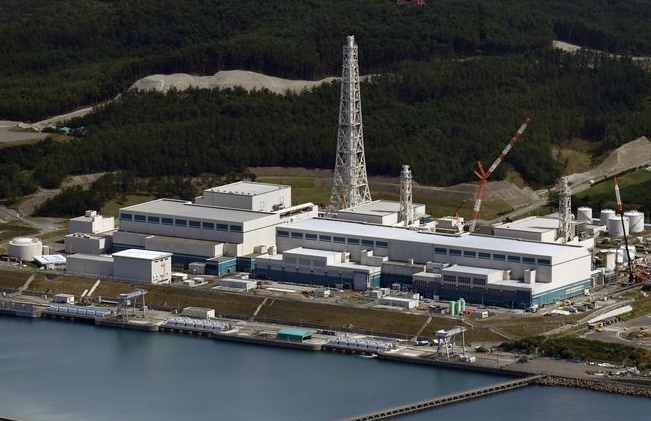
From left, the No. 5 to No. 7 reactors of the Kashiwazaki-Kariwa nuclear power plant in Niigata Prefecture
September 24, 2020
The Nuclear Regulation Authority has effectively endorsed Tokyo Electric Power Co.’s fitness to operate nuclear reactors in its safety screening of the utility’s plans to restart the No. 6 and No. 7 reactors at the Kashiwazaki-Kariwa nuclear power plant in Niigata Prefecture.
The nuclear watchdog’s endorsement, based on new legally binding safety rules the utility drafted and pledged to follow, has opened the door for the operator of the crippled Fukushima No. 1 nuclear power plant to start running reactors again.
But TEPCO’s actions concerning safety, the decommissioning of the destroyed Fukushima reactors and compensation for victims of the catastrophic accident have created a deep sense of distrust that is hard to brush off. The NRA’s decision is open to question.
Three years ago, when it cleared the No. 6 and No. 7 reactors under the tougher new reactor safety standards established in response to the Fukushima disaster, the NRA placed great importance on TEPCO’s “fitness” to run reactors.
This has led the utility to incorporate seven new principles into its safety code. They include the company’s commitment to carry through the decommissioning of the Fukushima No. 1 nuclear plant and hold its president responsible for reactor safety as well as its pledge not to put economic efficiency before safety.
The safety code is legally binding, with a violation potentially provoking an order to suspend operations.
This time, the NRA has examined TEPCO’s seven commitments and acknowledged that they are specific enough to allow the watchdog to identify and punish any violations.
But the seven principles still contain vague elements. It is difficult not to wonder whether they will effectively enable the NRA to monitor and check TEPCO’s operations for violations.
TEPCO, for example, has promised to follow through with the payment of compensation to victims of the Fukushima calamity. In fact, however, the company has rejected many proposed compensation agreements with local residents.
As for decommissioning the stricken plant, the company has left entirely to the government the vital challenge of disposing of radiation-contaminated water being generated by the plant.
These actions of the firm appear to be at odds with the safety code. What does the NRA think about them?
The real question is whether TEPCO’s basic attitude has really changed.
Asahi Shimbun editorials have questioned the company’s reliability to operate nuclear plants safely because it has failed to demonstrate the safety awareness and commitment required for the operator of a nuclear power plant.
TEPCO, for example, failed to report accurately the fact that an important facility at the Kashiwazaki-Kariwa plant does not have sufficient earthquake resistance.
It also avoided publishing voluntarily the fact that contaminated water from the Fukushima plant contains various radioactive materials whose levels are well above the safety standards after treatment. All these facts raised doubts about the firm’s ethical integrity.
Unless the utility changes its culture and behavior, it will be unable to win local support for its plans to restart the reactors.
TEPCO, as the operator of the Fukushima plant, has the responsibility to put the priority on decommissioning the reactors and paying compensation to people who have suffered from the accident.
It is doubtful whether the company will be able to operate reactors safely while grappling with the colossal challenge of decommissioning the plant, a process that will continue for decades.
There are legitimate concerns that the company could be unable to secure sufficient human and other resources for its efforts to ensure the safety of the Kashiwazaki-Kariwa plant.
Instead of sticking to its business strategy, which is focused on restoring its financial health by restarting the reactors at the plant in Niigata Prefecture so that it can bear the huge cost of decommissioning and compensation payments, TEPCO should start exploring carving out a viable future without nuclear power generation for itself.
As the utility’s virtual leading shareholder, the government should urge the firm to reconsider its business strategy.
No comments yet.
1 This Month

of the week – Shut Down Drone Warfare!


Tell the Ukrainian Government to Drop Prosecution of Peace Activist Yurii Sheliazhenko

Petition to revoke the licensing of the Near Surface Nuclear Disposal Facility (NSDF) at Chalk River. https://www.ourcommons.ca/petitions/en/Petition/Details?Petition=e-7247
To see nuclear-related stories in greater depth and intensity – go to https://nuclearinformation.wordpress.com
-
Archives
- March 2026 (251)
- February 2026 (268)
- January 2026 (308)
- December 2025 (358)
- November 2025 (359)
- October 2025 (376)
- September 2025 (257)
- August 2025 (319)
- July 2025 (230)
- June 2025 (348)
- May 2025 (261)
- April 2025 (305)
-
Categories
- 1
- 1 NUCLEAR ISSUES
- business and costs
- climate change
- culture and arts
- ENERGY
- environment
- health
- history
- indigenous issues
- Legal
- marketing of nuclear
- media
- opposition to nuclear
- PERSONAL STORIES
- politics
- politics international
- Religion and ethics
- safety
- secrets,lies and civil liberties
- spinbuster
- technology
- Uranium
- wastes
- weapons and war
- Women
- 2 WORLD
- ACTION
- AFRICA
- Atrocities
- AUSTRALIA
- Christina's notes
- Christina's themes
- culture and arts
- Events
- Fuk 2022
- Fuk 2023
- Fukushima 2017
- Fukushima 2018
- fukushima 2019
- Fukushima 2020
- Fukushima 2021
- general
- global warming
- Humour (God we need it)
- Nuclear
- RARE EARTHS
- Reference
- resources – print
- Resources -audiovicual
- Weekly Newsletter
- World
- World Nuclear
- YouTube
-
RSS
Entries RSS
Comments RSS
 nuclear-news
Leave a comment