Duke Energy’s shell game — Beyond Nuclear International

Despite “net zero” carbon claims, company will stick with nuclear and fossil fuels
Duke Energy’s shell game — Beyond Nuclear International
Iran a most transparent country for IAEA inspections
Tehran’s Nuclear Program Most Transparent Among IAEA Members, https://financialtribune.com/articles/national/105333/tehran-s-nuclear-program-most-transparent-among-iaea-members , 18 Sept 20, Iran’s permanent representative to Vienna-based international organizations said the Islamic Republic has the most transparent nuclear program among member states of the International Atomic Energy Agency, as proven through numerous inspections of the country’s nuclear sites by the UN agency.
“The fact that 22% of all global inspections done by the IAEA have been carried out in Iran proves that Iran enjoys the most transparent peaceful nuclear program among the member states of the agency,” Kazem Gharibabadi said in an address to the IAEA Board of Governors on Thursday, IRNA reported.
The envoy reminded that the high level of cooperation between Tehran and the agency had not come by easily to be “easily weakened as a result of a few parties’ myopic political interests”.
He was referring to the United States and the Israeli regime’s immense pressure on the agency to try and find fault with Tehran’s nuclear work.
Under pressure from Israel, the US’ most prominent regional ally, Washington quit a historic 2015 nuclear accord with Tehran and world powers two years ago. The US then returned sanctions that the deal, formally known as the Joint Comprehensive Plan of Action, had lifted, not even bothering to exempt food items and medicines from the illegal bans.
Still under Israeli pressure, the agency cited “concerns” earlier this year about two Iran-based sites. Iran first refused access to the sites, arguing that the alleged information provided to the IAEA had been cooked up by Israel’s spy agencies.
Tehran, however, later allowed access to the sites on a purely voluntary basis and only to honor its cooperation with the IAEA.
“In order for the agency’s integrity to be preserved, its members should seriously avoid exerting any pressure on it,” Gharibabadi said.
JCPOA’s “handful of enemies” came up with “baseless and unfounded” allegations about the Iranian sites after falling short of all pretexts to destroy the international agreement, he said, urging the agency and its board to avoid falling for their plots.
Double StandardsThe Iranian official also criticized the double standards applied by the agency’s members toward the Israeli regime and its nuclear activities. He pointed out two instances of singularity concerning Israel, the regime’s being the only Middle Eastern party that has refused to sign up to the nuclear Non-Proliferation Treaty and is the exclusive owner of nuclear weapons in the region. “Still thanks to the double-standard approaches adopted by some IAEA members, the regime has snubbed the entire international community and IAEA’s requests to fall in line with the agency’s safeguards and allow inspections by its experts,” the Iranian diplomat said. “Israel remains the biggest source of concern for regional security,” Iran’s ambassador stressed, noting that the regime possesses various types of weapons of mass destruction, evaded similar treaties addressing these weapons and has recurrently threatened and attacked neighboring countries. |
|
Biden would push for less US reliance on nukes for defense
 Biden would push for less US reliance on nukes for defense, Robert Burns, The Associated Press 20 Sep 20, WASHINGTON — Democrat Joe Biden leaves little doubt that if elected he would try to scale back President Donald Trump’s buildup in nuclear weapons spending. And although the former vice president has not fully detailed his nuclear priorities, he says he would make the U.S. less reliant on the world’s deadliest weapons…….. https://www.militarytimes.com/news/election-2020/2020/09/20/biden-would-push-for-less-us-reliance-on-nukes-for-defense/
US seeks to pressure Russia into nuclear weapons treaty concessions before election
|
US seeks to pressure Russia into nuclear weapons treaty concessions before election, By Kylie Atwood, CNN, September 18, 2020 Washington (CNN)The Trump administration is threatening Russia that they could increase the cost of extending the one remaining nuclear weapons treaty between the two countries if Moscow does not commit to meeting US demands, including agreeing to stronger verification measures, before the American presidential election in November.
The two countries have spent months negotiating over the renewal of the New START nuclear weapons treaty. Moscow has said it is open to renewing it for five years, while the Trump administration is seeking a new framework and will only renew the treaty if Russia makes additional commitments………
Billingslea’s declaration puts new pressure on Russia to come to the table before November, but Moscow is aware that the final outcome will be wholly dependent on who wins the election.
Some experts are skeptical that Russia will buckle under US pressure.
“The Trump administration is playing a risky game of chicken with the New START treaty, which has proven to be effective, which both sides are complying with and which is essential for US and Russian national security,” said Daryl Kimball, the executive director of the Arms Control Association. “I do not see the logic to Russia responding to this offer before November 3. They can see the polls. Why should they say yes to something right now when Trump may be out of office and they think they know the Biden administration will agree to an extension and follow on talks?”
Vice President Joe Biden has already said that he will sign off on renewing New START if he becomes president. The deadline for the extension is February 5, 2021 — which would give a possible Biden administration about two weeks to secure the extension.
The Trump administration suspended the Intermediate-Range Nuclear Forces Treaty last year, promptivng criticism that they are aiming to start a nuclear arms race. Billingslea and other Trump administration officials claim that is not the case…….
Trump has shown a keen interest in America’s nuclear arsenal, and appeared to share classified developments with journalist Bob Woodward, in an interview for his new book “Rage.” Trump states to Woodward: “I have built a nuclear — a weapons system that nobody’s ever had in this country before,” Trump said, according to a recording of their December 5, 2019, conversation, before going on to say: “We have stuff that Putin and Xi have never heard about before. There’s nobody. What we hae is incredible.”………….. https://edition.cnn.com/2020/09/18/politics/us-russia-nuclear-treaty/index.html
|
Utah lawmakers seek details on planned nuclear plant in Idaho
Cities and districts invested in the plant have until Oct. 31 — one of several so-called off-ramps — to bow out of the project.
During the committee hearing, Sen. Ron Winterton, R-Roosevelt, shared his concerns over the cities’ financial commitments.
“I want to feel warm and fuzzy” he said, but questioned the technology and potential risks…….
Under both the Obama and the Trump administrations, the NuScale project has received strong financial support, Squires said. The federal energy agency gave NuScale a competitive award of $226 million in 2013 to develop the technology. Two years later, the federal agency gave NuScale $16.7 million for licensing preparation. …….
Critics like the Utah Taxpayers Association, however, say the investment by Utah cities is too risky and they should not be acting as seed investors.
“We are not opposed to nuclear power, we are opposed to the financial risk,” said the association’s vice president, Rusty Cannon. ……….. https://www.deseret.com/utah/2020/9/19/21438026/news-nuclear-plant-in-idaho-lawmakers-seek-details-on-planned-nuscale-uamps
UK government to subsidise Sizewell nuclear power station?
 UK government could take stake in Sizewell nuclear power station, BBC, Simon Jack, Business editor@BBCSimonJackon16 September 2020
The collapse of a project to build a new nuclear power station at Wylfa, Wales may accelerate government approval of a new station at Sizewell, government and industry sources say.
The government is disappointed after Japan’s Hitachi pulled out but insists it is committed to new nuclear as way to decarbonise the UK power supply.
It is looking at options to replace China’s CGN as an investor in Sizewell.
That could include the government taking a stake in the plant.
Of six sites originally identified over a decade ago for replacements for the UK’s ageing nuclear fleet, only one is under construction, three have been abandoned and two are waiting approval.
One major sticking point over Sizewell has been the involvement of Chinese state-owned company China General Nuclear Power Group (CGN) in the UK’s new nuclear plans.
CGN already owns a 33% stake in Hinkley Point C in Somerset, currently under construction by French firm EDF, which owns the other two thirds.
The Chinese firm also took a 20% stake in the development phase of Sizewell on the understanding it would participate in the construction phase and then land the ultimate prize of building a reactor of its own design at Bradwell in Essex.
State aid rules
If CGN are excluded the government may choose to take a direct stake in Sizewell, according to people familiar with the matter.
There was a time when a Conservative government would have been very reluctant to take a direct stake in a commercial development. That time has passed.
Industry sources and within the government say Chinese involvement in designing and running its own design nuclear reactor on UK soil “looks dead”, given revived security concerns and deteriorating diplomatic relations after the government’s decision to phase out Chinese firm Huawei’s equipment from a new generation of telecommunication networks.
It’s no secret that Boris Johnson’s powerful adviser Dominic Cummings is a big fan of the idea of small nuclear reactors and EDF are telling him that big nuclear is an important stepping stone to small.
EDF has also been very vocal about the advantages of reproducing the design of Hinkley at Sizewell. Although a similar design of reactor ran into major cost and time overruns in France and Finland, EDF says they UK is poised to benefit from the lessons learned from those mistakes. It also points out that the UK will benefit from transferring high skilled jobs from one site to another.
There was a time, not so long ago, that government ministers talked enthusiastically about “a new nuclear age”. A fleet of brand new reactors producing reliable, low carbon (but expensive) electricity for decades to come.
Hinkley, Moorside, Wylfa, Oldbury, Bradwell and Sizewell were identified as the sites for the most significant national wave of new nuclear power construction anywhere in the world.
Of those six, only one is under construction, three have been abandoned, and two are still waiting for the green light.
The next couple of weeks could tell us which way the wind is really blowing on the government’s appetite for both nuclear energy and new levels of direct state investment.
If a mobile network is considered too sensitive, it’s hard to argue that a nuclear power station is not.
The next couple of weeks could tell us which way the wind is really blowing on the government’s appetite for both nuclear energy and new levels of direct state investment. https://www.bbc.com/news/business-54181748
September 20 Energy News — geoharvey

Opinion: ¶ “Clearly, Biden Has Grasp On Threat Climate Change Poses” • There is near universal consensus among scientists that human activity is warming the planet. While Trump has dismissed man-made climate change as a “hoax,” Biden has put forward a $2 trillion plan to have the electricity sector free of carbon pollution by 2035. […]
September 20 Energy News — geoharvey
Cesium in seawater rises 4.3 times due to typhoon, investigated by Fukushima University
20 September 2020
The fact that the concentration of cesium, a radioactive substance dissolved in seawater along the coast of Fukushima Prefecture, temporarily increased by 4.3 times due to Typhoon No. 19 last fall was a specially appointed associate professor at the Fukushima University Institute for Environmental Radioactivity (Ocean). It was found in the investigation by (Chemistry) et al. Sediment runoff due to heavy rain seems to be one of the causes.
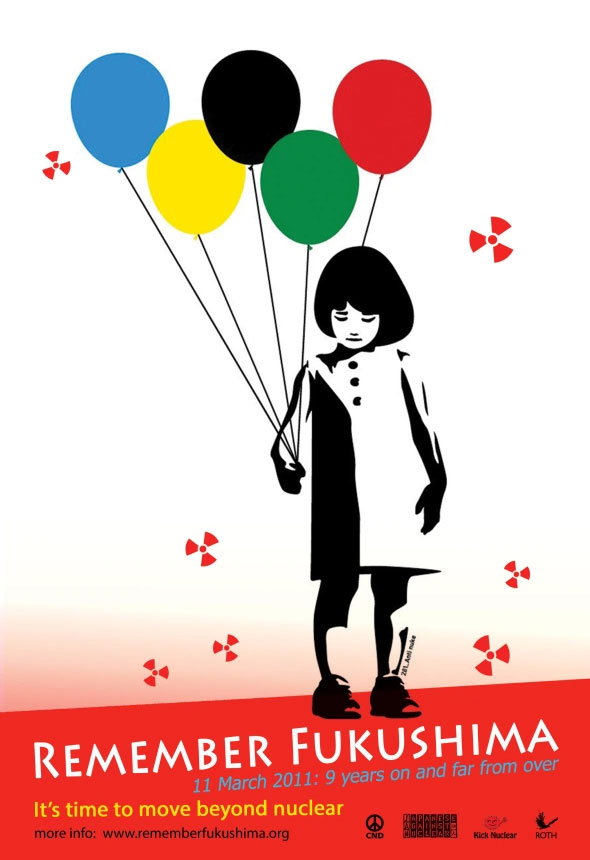
The research group collected seawater from June to October last year at a total of 25 locations near the mouth of rivers such as Tomioka Town and Iwaki City, along the coast, and offshore, and investigated the cesium concentration. In October after the typhoon passed, the average concentration at three locations near the mouths of the Tomioka, Natsui, Same, and Hikita rivers was 39 millibecquerels per liter, which was much higher than the average of 9 millibecquerels from June to September.
Cesium is attached to the sediment deposited on the bottom of the river. Associate Professor Takada analyzed that the record heavy rain caused by the typhoon caused sediment to flow out of the river into the sea, and cesium was dissolved in response to potassium ions in the seawater. It is estimated that about 30% of the increase in concentration is due to this mechanism.
Associate Professor Takada said, “Although there is a study that the amount of cesium discharged from the Fukushima Daiichi Nuclear Power Plant is decreasing year by year, there are many unclear points about the increase in concentration derived from typhoons. Collect data and dispel rumors. I want to connect to. “
The research was published in a magazine published by the Chemical Society of America in early August.
Source;
https://www.kahoku.co.jp/tohokunews/202009/20200903_63021.html
Why NuScam and other ”small” nuclear proposals just don’t make any sense
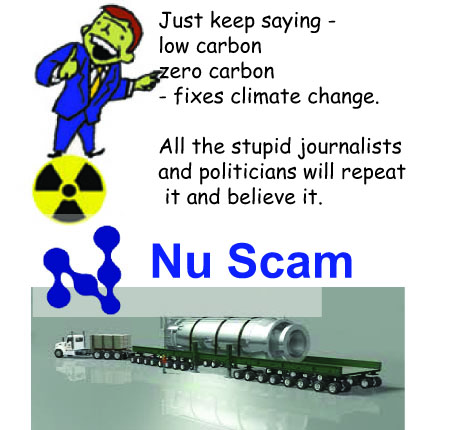
New nuclear projects, like this NuScale proposal, make no sense, Deseret, By Robert Davies, Contributor Sep 18, 2020, The debate over nuclear power has ramped up recently in Utah, with a number of the state’s municipal power agencies wrestling with continued participation in an experimental nuclear project in Idaho, the Utah Associated Municipal Power Systems/NuScale project.
Much has already been written about the project itself. Though proponents tout benefits of cost and reliability, two municipalities so far, Logan and Lehi, have recently opted out of further participation, citing mainly financial concerns over an experimental design with delays and cost overruns mounting rapidly. Still, this extremely expensive energy might be worth it ― if the environmental benefits, particularly for climate change, were significant.
Climate change is regarded within the full scientific community as a bona fide civilizational emergency ― that is, a situation requiring immediate, meaningful response to avoid catastrophic outcomes. For the climate emergency, meaningful response means cutting global carbon emissions at least in half in the next decade, and eliminating them entirely in the next two to three decades.
Electricity generation, as roughly a third of the current carbon emissions, is a large piece of the equation ― and it is on this point that nuclear power has been worth considering. Indeed, the project’s developers, having christened the endeavor the “Carbon Free Power Project,” are emphasizing the climate angle. And if the question were about building new nuclear generation versus new fossil (coal or natural gas) generation, they would have a point; the clear winner with respect to climate would be nuclear.
But this isn’t the question. In rapidly decarbonizing the electrical grid, the name of the game is replacing existing high-carbon (coal and gas) with new low-carbon, as quickly as possible.
……..proposed new nuclear makes no sense ― because it isn’t competing with fossils. Instead, new nuclear is competing with low-carbon renewables, chiefly solar and wind. And it simply can’t compete.
Investing in new nuclear projects to combat climate change is akin to the crew of the Titanic devoting time to building a whole new ocean liner instead of putting all their effort into loading the lifeboats; it steals time and resources from a much better alternative. Any money spent on new nuclear could buy us four to six times more wind and solar energy, available in months instead of a decade. And, remember, the next 10 years are critical.
Faced with this reality, UAMPS/NuScale proponents have said they want a mostly renewable grid, but supplemented by just a bit of nuclear for “baseload” ― and that this is necessary.
The refrain of 20th century-era power managers is that renewables like wind and solar aren’t reliable (“The wind doesn’t always blow, the sun doesn’t always shine … ”) and so constantly humming “baseload” is necessary for reliability. It sounds reasonable, but like most bumper-sticker wisdom, doesn’t hold up. In fact, it is objectively, demonstrably wrong.
The technologies of energy storage (utility-scale battery systems, for example) and demand management (when the energy is used) have transformed the landscape. Traditional “baseload” is no longer a necessary grid attribute. Anyone who says it is simply isn’t keeping up.
In Australia, for example, a 100-megawatt utility-scale battery system (about 1.5 times bigger than one of NuScale’s nuclear modules) is already proving more reliable and 90% cheaper than the “baseload” natural gas system it’s replacing. ………
new nuclear makes no sense whatsoever ― financially, or far more importantly, for addressing climate change.
The UAMPS/NuScale project is a poor choice for the planet, for our nation and for Utah’s independent municipal power companies. A bright future is possible if we’re smart and focused; the nuclear power trap is a distraction we can’t afford.
Robert Davies is an associate professor of professional practice in Utah State University’s department of physics. His work focuses on global change, human sustainability and critical science communication.https://www.deseret.com/opinion/2020/9/18/21400144/guest-opinion-nuscale-uamps-nuclear-project-power-utah-idaho-makes-no-sense
Nuclear energy CHEAP? Nuclear has drained Germany of more than €1trn to date

|
‘No higher cost energy’: nuclear has drained Germany of more than €1trn to date Subsidies tot up to €287bn since 1955, refuting atomic energy’s cheap power myth, says Forum for Ecological-Social Market Economy study https://www.rechargenews.com/transition/no-higher-cost-energy-nuclear-has-drained-germany-of-more-than-1trn-to-date/2-1-877313 17 September 2020 ,By Bernd Radowitz Development of the nuclear energy industry since the mid-1950s has led to more than €1trn ($1.18trn) in costs to the German society, and is wrongly portrayed as an inexpensive power source, according to a study by the Forum for an Ecological-Social Market Economy (FÖS) estimated.
FÖS calculated the support, which includes both state support, power prices and external costs, had been the most draining of all energy sources on the finances of the country, which is Europe’s largest economy. “No other energy source has caused costs as high as those of risky atomic power, which even after 65 years continues highly uneconomical,” said Sönke Tangermann, chairman of independent power provider Greenpeace Energy, which had commissioned the study. Germany by the end of 2022 is phasing out nuclear power. Since a first reactor started operations in 1955, the country had built more than 100 nuclear facilities, including power and research stations, and waste deposits. Other countries, such as Switzerland, have followed Germany’s lead and will also phase out nuclear power, while France at least wants to diminish the share of atomic power in its energy mix. But at the same time a new debate has started to build supposedly cheap mini nuclear reactors for power or hydrogen production. While none of these have been built yet, prices for the construction of conventional new nuclear plants in countries like France or Finland have ballooned into amounts several times the original cost estimate. Direct and indirect German government subsidies alone, including research grants and tax credits, since the mid-1950s have added up to €287bn, FÖS has calculated. Another €9bn were spent on other costs for the state, such as police operations during anti-nuclear protests, or follow-up costs from nuclear operations in former Eastern Germany. “Great part of these costs never had been included in the electricity price, which is why atomic energy wrongly was considered as a cheap power source,” Tangermann said, adding that the study for the overall costs of nuclear energy has included external costs that had been passed on to society for decades, such as the risk of accidents. Even after Germany’s nuclear exit, the country will face high costs, such as at least €7bn for the rehabilitation of the Morsleben nuclear storage facility and the Asse research storage facility as well as the Wismut uranium ore mine, or for the closure of former nuclear power plant sites. Tangermann said he hopes Berlin will resist current demands for an extension of Germany’s nuclear power plants, or investments into new ones, also as those would serve to discredit the expansion of renewables. “Given the enormous costs and aging infrastructure with ever greater risks, nuclear power cannot be a serious alternative to effectively tackling the climate crisis,” he said. |
|
|
Julian Assange aimed for ‘stringent redactions’, extradition court hears

 Julian Assange aimed for ‘stringent redactions’, extradition court hears, SMH, Latika Bourke. September 18, 2020 London: Julian Assange was “insistent” on redacting the names of Iraqi informants and even deployed software to remove Iraqi words from WikiLeaks cables which he later published in full, a prominent NGO told the Australian’s extradition hearing.John Sloboda who founded Iraq Body Count, a London-based non-government organisation that tallies civilian casualties gave evidence at London’s Old Bailey, on behalf of the defence.
he US Department of Justice wants Assange extradited to the United States so he can face 18 charges of computer hacking and for publishing the names of informants.
Sloboda, who worked with Assange and the WikiLeaks team on the Iraq war logs in 2010, said the Australian was determined to scrub sources’ names from the documents before publishing.
“It was impressed upon us that the aim was a very, very stringent redaction of the logs before publication.
“That was the aim of Mr Assange and WikiLeaks,” he told Assange’s lawyer.
Sloboda said it would have taken an “army of people” “a very long time” to redact the files by hand and that it was his colleague who came up with the idea of developing software that would scrub non-English words from the documents.
He said redactions of occupations were also carried out to stop informants’ identities being guessed.
He said this laborious process created tensions between WikiLeaks and the media outlets they were partnering with at the time, as the news organisations wanted to begin publishing documents they had already redacted. ………..
Assange has spoken out in court to deny he put lives in harm’s way. He faces a combined sentence of up to 175 years if convicted of all counts in the US. His extradition hearing is expected to run until October. https://www.smh.com.au/world/europe/julian-assange-aimed-for-stringent-redactions-extradition-court-hears-20200917-p55ws5.html
Julian Assange was offered a pardon, if he would name a source
Trump ‘associates’ offered Assange pardon in return for emails source, court hears
WikiLeaks founder was asked to reveal source of leak damaging to Hillary Clinton, hearing told, Guardian, Peter Beaumont in London, Sat 19 Sep 2020 Two political figures claiming to represent Donald Trump offered Julian Assange a “win-win” deal to avoid extradition to the US and indictment, a London court has heard.
Under the proposed deal, outlined by Assange’s barrister Jennifer Robinson, the WikiLeaks founder would be offered a pardon if he disclosed who leaked Democratic party emails to his site, in order to help clear up allegations they had been supplied by Russian hackers to help Trump’s election in 2016.
According to a statement from Robinson read out to the court, the offer was made by the then Republican congressman Dana Rohrabacher and Trump associate Charles Johnson at a meeting on 15 August 2017 at the Ecuadorian embassy in London where Assange was then sheltering. At the time he was under secret investigation by a US grand jury.
Robinson added: “The proposal put forward by Congressman Rohrabacher was that Mr Assange identify the source for the 2016 election publications in return for some kind of pardon, assurance or agreement which would both benefit President Trump politically and prevent US indictment and extradition.”
……….. The barrister added that Assange did not name the source of the emails.While Assange’s legal team first made the claim in February detailing a deal for a pardon in exchange for denying the source of the emails was Russia, Robinson’s statement – admitted as evidence by the court – provides substantial details of the meeting………
Robinson’s description of the offer suggests Trump was prepared to consider a pardon for Assange in exchange for information almost a year before a federal grand jury issued a sealed indictment against the WikiLeaks founder.
If it is confirmed that the approach did indeed have the approval of Trump, it would mark the latest in a number of interventions by the US president in relation to the investigation into Russian election interference.
In her statement, Robinson said Rohrabacher and Johnson “wanted us to believe they were acting on behalf of the president”.
“They stated that President Trump was aware of and had approved of them coming to meet with Mr Assange to discuss a proposal – and that they would have an audience with the president to discuss the matter on their return to Washington DC,” she said……
Appearing to confirm that the approach had been made, James Lewis QC, for the US government, said: “The position of the government is we don’t contest these things were said,” adding: We obviously do not accept the truth of what was said by others.” ……. https://www.theguardian.com/media/2020/sep/18/trump-offered-julian-assange-pardon-in-return-for-democrat-hacking-source-court-told
Julian Assange exposed “a very serious pattern of actual war crimes”
Speaking on the significance of the WikiLeaks releases, Ellsberg said, “It was clear to me that these revelations, like the Pentagon papers, had the capability of informing the public that they had been seriously misled about the nature of the [Iraq and Afghan] war[s], the progress of the war, the likelihood that it would be ended successfully or at all, and that this was information of the highest importance to the American public.”
Characterising the wars that WikiLeaks exposed, Ellsberg explained, “The Iraq war was clearly recognisable, even to a layman, as a crime against the peace, as an aggressive war.”
|
Assange exposed “a very serious pattern of actual war crimes,” Daniel Ellsberg tells extradition hearing https://www.wsws.org/en/articles/2020/09/17/ells-s17.html, By Thomas Scripps, 17 September 2020Daniel Ellsberg gave powerful testimony to the Julian Assange extradition hearing yesterday, speaking via videolink to London’s Old Bailey. Ellsberg’s release of the top-secret Pentagon Papers in 1971 exposed the US government’s lies and criminality in the Vietnam War. “[T]he Afghan war was immediately recognisable as what might be called ‘Vietnam-istan.’ It was a rerun of the Vietnam war despite the great differences in terrain, in religion, in language … [T]he basic nature of the war, as basically an invasion and occupation of a foreign country against the wishes of most of its inhabitants, was the same. And that meant the prospects were essentially the same, which were for an endless stalemate which we’ve now experienced in Afghanistan for 19 years. And it might have gone on that long in Vietnam had not truths that the government was trying to withhold been made public.” Referring to the brutality of these occupations which the WikiLeaks releases uncovered, Ellsberg said, “I saw for the first time in virtually forty years … since the Pentagon papers, the release of a sufficient quantity of documentation to make patterns of decision making [in the war] very evident, to show that there were policies at work and not merely aberrant incidents.” He drew special attention to how the documents had exposed “a very serious pattern of actual war crimes. … In the Afghan case the reports of torture and of assassination and death squads were clearly describing war crimes. I would have, by the way, been astonished to see such reports in Secret level communications [as opposed to Top Secret] in 1971 or 1964 in the Pentagon. They would have been much higher in classification. What these reports revealed was that in the intervening years, in the Iraq War and the Afghan War, torture had become so normalised, and death squads and assassination, that reports of them could be trusted to a network at the Secret level available to … people with low-level clearances.” Ellsberg said of the Iraq “Collateral Murder” video, “We were watching somebody pursue with his machine gun an unarmed man, wounded, crawling for safety. … I was very glad that the American public was confronted with this reality of our war.” Speaking on the significance of the WikiLeaks releases, Ellsberg said, “It was clear to me that these revelations, like the Pentagon papers, had the capability of informing the public that they had been seriously misled about the nature of the [Iraq and Afghan] war[s], the progress of the war, the likelihood that it would be ended successfully or at all, and that this was information of the highest importance to the American public.” Characterising the wars that WikiLeaks exposed, Ellsberg explained, “The Iraq war was clearly recognisable, even to a layman, as a crime against the peace, as an aggressive war.” Continue reading |
BHP betrays international safety efforts

Above – uranium tailings dam – Olympic Dam, South Australia
|
BHP betrays international safety efforts https://theecologist.org/2020/sep/15/bhp-betrays-international-safety-efforts, Dr Jim Green, David Noonan 15th September 2020, Mining giant BHP was complicit in the Samarco mining disaster in Brazil but the company has not learned from the experience. The world’s largest mining company BHP has betrayed international efforts to reform the mining sectors’ ongoing potential to cause catastrophic impacts though the failure of tailings dams. Operations at the Olympic Dam copper-uranium mine in South Australia show BHP has failed to learn key lesson’s regarding transparency, accountability and corporate responsibility following its complicity in the November 2015 disaster at the BHP and Vale joint venture Samarco iron ore mine in Brazil. Samarco was a corporate mining disaster which caused the loss of 19 lives and catastrophic environmental impacts with permanent pollution of native people’s land and rivers. Brazilian prosecutors say the company failed to take actions that could have prevented the disaster. Mine BHP now faces a $6.3 billion (US dollars) law-suit in the UK on behalf of 200,000 Brazilian people. The case alleges the Anglo-Australian mining giant BHP was “woefully negligent” in the run-up to the 2015 dam failure that led to Brazil’s worst environmental disaster. Mayors of two towns wiped out by the Samarco disaster assert that BHP has been using delaying tactics to avoid paying compensation to thousands of people affected by the flood of tailings waste. There have long been calls from environmentalists and others for Australian mining companies to be required to apply Australian standards to their overseas mining operations. The logic is sound given the often inadequate practices of Australian mining companies overseas. But the logic is also a little shaky given that mining standards in Australia leave much room for improvement. Olympic Dam is a case in point. BHP orchestrated approval in 2019 for a massive new tailings dam at Olympic Dam ‒ Tailings Storage Facility 6 (TSF6). This tailings dam is to be built in the same risky ‘upstream’ design that featured in both the Samarco disaster and the January 2019 Vale Brumadinho tailings dam disaster that killed over 250 people – mainly mine workers ‒ in Brazil. Community An internal 2016 report reveals that TSF6 has the potential to cause the death of 100 or more BHP employees and to cause “irrecoverable” environmental impacts from release of tailings waste. Yet, contrary to the recommendations of NGOs in Australia, Federal Environment Minister Sussan Ley granted approval for TSF6 without a comprehensive safety impact assessment and without setting any conditions on BHP to protect workers and the environment. TSF6 is to cover an area of nearly three sq km in tailings waste up to a height of 30 metres at the centre of the tailings pile, equivalent to the height of a nine-story building. BHP will leave this toxic mine waste there forever. Australian Prime Minister Scott Morrison has announced a “fast track” taskforce to further prioritise and accelerate approvals to BHP mining interests in a major Olympic Dam mine expansion process. BHP has clearly failed to learn the lessons of the disasters in Brazil. TSF6 represents an untenable risk to the lives of BHP employees and is unfit for community safety expectations in the 2020’s. Such approaches are clearly inconsistent with modern environmental practice and community expectations. Secret Radioactive tailings waste at Olympic Dam poses a significant long-term risk to the environment and must be isolated for over 10,000 years ‒ effectively forever. Continue reading |
Hitachi pulls out – halting two big UK nuclear projects. Renewables would be a fraction of their costs
With the Japanese conglomerate this week walking away from two new nuclear plants in the United Kingdom, project  developer Horizon Nuclear Power has confirmed all activities at both sites will cease. The facilities had struggled to secure funding despite offers from government. Horizon said it will ‘keep lines of communication open’ regarding the future of the sites. PV Magazine, SEPTEMBER 18, 2020 MARK HUTCHINS The former Wylfa nuclear power station was decommissioned in 2015. Plans for a new reactor on an adjacent site have been abandoned with the withdrawal of Hitachi from the project.
Japanese conglomerate Hitachi has pulled out of the construction of two U.K. nuclear projects with a total 5.8 GW of generation capacity, citing ongoing delays and an increasingly tough investment environment due to the Covid-19 pandemic.
The projects, on the Welsh Isle of Anglesey and at Oldbury on Severn, near the English city of Bristol, were taken on by Hitachi in 2012. Construction was suspended in January last year as funding could not be secured for the reactor at Wylfa Newydd, on Anglesey, and Hitachi’s U.K. subsidiary Horizon Nuclear Power has confirmed it will cease development at both sites, though it still hopes to revive the projects.
Hitachi said it would coordinate with government and other stakeholders as holder of the license to build nuclear reactors at the sites. The company posted losses last year from the suspended projects and said it does not expect the decision to further affect its finances……….
Renewables
Critics of nuclear power are likely to view the Hitachi decision as further evidence of the inherent cost and complexity problems associated with the technology, and will repeat arguments the U.K. and other regions would be better served by an energy transition focusing on renewables.
Mycle Schneider, lead author of the World Nuclear Industry Status Report told pv magazine: “Nuclear power plant projects frequently get abandoned even after construction has started. One in eight construction sites have been abandoned at various stages of advancement of construction. Some have been completed and never switched on, and there is absolutely no guarantee that Hinkley Point C will ever generate power,” said Schneider, in reference to a third planned nuclear plant in the southwest of England.
“It has become obvious that renewables, even unsubsidized, come in at a fraction of the cost of new nuclear power. In the U.K., onshore and offshore wind are less than half the cost of nuclear. If the U.K. government keeps planning for nuclear power plants, it’s not because there was no choice, and it has nothing to do with market-economy driven energy policy.”
Solar industry representatives also called on the government to recognize renewables’ potential to fill in gaps left by abandoned and delayed nuclear projects and to implement supportive policies, as well as an auctioning system to boost large-scale projects. “The UK is facing a significant low-carbon energy gap in the 2030s, resulting from the abandonment of new nuclear projects,” said Chris Hewett, Chief Executive of the Solar Trade Association. “Solar PV is well-positioned to help plug a significant portion of this, but the Government must step in to bring down the numerous barriers that are holding growth back, such as punitive business rates and a lack of prioritization of grid capacity for the technology.” https://www.pv-magazine.com/2020/09/18/hitachi-halts-5-8-gw-of-uk-nuclear-plans/
-
Archives
- February 2026 (228)
- January 2026 (308)
- December 2025 (358)
- November 2025 (359)
- October 2025 (376)
- September 2025 (258)
- August 2025 (319)
- July 2025 (230)
- June 2025 (348)
- May 2025 (261)
- April 2025 (305)
- March 2025 (319)
-
Categories
- 1
- 1 NUCLEAR ISSUES
- business and costs
- climate change
- culture and arts
- ENERGY
- environment
- health
- history
- indigenous issues
- Legal
- marketing of nuclear
- media
- opposition to nuclear
- PERSONAL STORIES
- politics
- politics international
- Religion and ethics
- safety
- secrets,lies and civil liberties
- spinbuster
- technology
- Uranium
- wastes
- weapons and war
- Women
- 2 WORLD
- ACTION
- AFRICA
- Atrocities
- AUSTRALIA
- Christina's notes
- Christina's themes
- culture and arts
- Events
- Fuk 2022
- Fuk 2023
- Fukushima 2017
- Fukushima 2018
- fukushima 2019
- Fukushima 2020
- Fukushima 2021
- general
- global warming
- Humour (God we need it)
- Nuclear
- RARE EARTHS
- Reference
- resources – print
- Resources -audiovicual
- Weekly Newsletter
- World
- World Nuclear
- YouTube
-
RSS
Entries RSS
Comments RSS
 nuclear-news