What a way to spend tax-payers’money! $13.3 billion to Northrop Grumman for new nuclear missiles
 Air Force awards Northrop Grumman $13.3 billion contract for new nuclear missiles, Market Watch Sept. 8, 2020 Air Force awards Northrop Grumman $13.3 billion contract for new nuclear missiles, Market Watch Sept. 8, 2020 By Associated Press Critics call project wasteful, but Esper says nuclear arsenal needs to be modernized Critics call the replacement project wasteful and dangerous. Democrat Joe Biden has not said whether he would, if elected in November, support the project, known officially as the Ground-Based Strategic Deterrent. The project has bipartisan support in Congress. The announcement came just one day after President Donald Trump assailed Pentagon leaders as eager to fight wars to generate profits for defense contractors. Trump at times has lamented the enormous cost of maintaining a big nuclear arsenal, but his defense budgets have supported nuclear modernization. Award of the contract to Northrop Grumman NOC, +1.45% is a big step in a project that is estimated to eventually cost at least $85 billion. …….. Critics, however, say the $13.3 billion sole-source contract for Northrop Grumman is driven more by political inertia than military necessity. “Our nation faces major security challenges, including a global pandemic that has killed almost 200,000 Americans, and we shouldn’t spend our limited resources on new nuclear weapons that we don’t need and make us less safe,” said William J. Perry, who served as defense secretary in the Clinton administration and has written extensively since then on the dangers posed by nuclear weapons. “The highest probability of starting a nuclear war is a mistaken launch caused by a false alarm and a rushed decision to launch nuclear-armed ICBMs,” Perry said in a written statement. “Instead of spending billions of dollars on new nuclear missiles we don’t need, we must focus on preventing accidental nuclear war.” https://www.marketwatch.com/story/air-force-awards-northrop-grumman-133-billion-contract-for-new-nuclear-missiles-2020-09-08 |
|
Ohio’s House Bill 60 – bailing out nuclear power, will not save consumers money.
Groups pushing for repeal of the bailout of Ohio’s two nuclear plants are challenging proponents of House Bill 6 who say the law will save consumers money. Instead, consumer and environmental groups say the legislation will add about $7 to a monthly bill.
Ohio environmentalists and consumer groups dispute the math that’s been used to justify the bailout of Ohio’s two nuclear power plants. They say House Bill 6, passed last summer, actually will increase the cost of the average monthly electric bill a family pays by about $7, not decrease it, as backers of the law say.
Efforts to repeal HB 6 have gained momentum since the indictment this summer of former House Speaker Larry Householder, who has been charged with four others in a $61 million federal bribery and racketeering scandal tied to the legislation.
“Supporters of House Bill 6 and those that are now arguing for no repeal or partial repeal are presenting similar cost savings information that is inaccurate and incomplete,” said Trish Demeter, chief of staff of the Ohio Environmental Council Action Fund……..
environmentalists and consumer groups said Wednesday that those numbers don’t tell the whole story.
Take energy efficiency, for example.
Those programs carried an average monthly fee of $3.36. The programs provide homeowners and small businesses with rebates and incentives to switch out aging appliances and upgrade old equipment that wastes energy.
When you account for the lost efficiency savings, consumers are much worse off,″ said Chris Neme, principal of Energy Futures Group, which has worked on energy efficiency programs.
Demeter said the $1.50-per-month fee to shore up the two coal plants is supposed to end in 2030, but utilities are allowed to defer costs to operate the plants, which can be recovered later from consumers.
“Millions upon millions more (will be) coming out of Ohioans’ pockets and going to into the coffers of Ohio utilities,” she said.
The groups are calling on the legislature to consider the true costs of the bill and then repeal it.
Demeter also said repeal of the bill is necessary to begin to restore the public trust in the legislative process that’s been hurt by the scandal.
“Not repealing the bill as soon as humanly possible is sending a message the legislature is not interested in restoring that trust,” she said. https://www.dispatch.com/business/20200909/savings-from-hb-6-nuclear-bailout-donrsquot-add-up-advocacy-groups-say
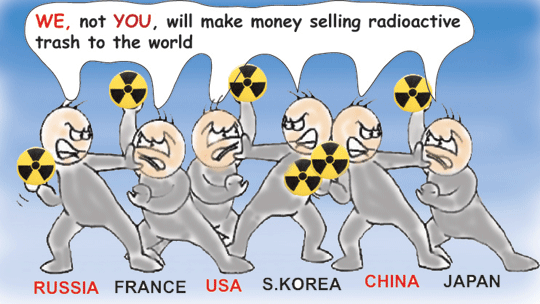
Nuclear powers battle each other to market nuclear reactors to Czech Republic
|
The Czech Republic Is Caught in a Nuclear Tug of War, FP,
Competition among China, Russia, and the West is taking the form of a battle to build reactors in Eastern Europe. BY TIM GOSLING SEPTEMBER 8, 2020”………………… The minority government of Czech Prime Minister Andrej Babis, who founded the ruling ANO 2011 party, has welcomed U.S. President Donald Trump’s embrace. But his stance looks less than certain as the country prepares to face one of its sternest geopolitical tests since the fall of communism 30 years ago: choosing a partner to expand its Soviet-built nuclear power capacity.
……….. Part of Pompeo’s mission to the Czech Republic was to convince Babis that it would pose a similar risk as Huawei should China or Russia win an upcoming tender to build a new 1.2-gigawatt reactor at the Dukovany nuclear power plant, at an estimated cost of over $7 billion. “If you choose one of these countries, it will jeopardize your freedom and sovereignty,” Pompeo reportedly stressed to the Czech leader.
However, Babis’s government is weak, and he faces building pressure at home and abroad to lean east. In turn, he has declined to exclude Chinese and Russian state-owned companies from bidding for the project and, despite welcoming Pompeo enthusiastically, demurred on signing a proffered cooperation agreement on nuclear energy………… Part of Pompeo’s mission to the Czech Republic was to convince Babis that it would pose a similar risk as Huawei should China or Russia win an upcoming tender to build a new 1.2-gigawatt reactor at the Dukovany nuclear power plant, at an estimated cost of over $7 billion. “If you choose one of these countries, it will jeopardize your freedom and sovereignty,” Pompeo reportedly stressed to the Czech leader. However, Babis’s government is weak, and he faces building pressure at home and abroad to lean east. In turn, he has declined to exclude Chinese and Russian state-owned companies from bidding for the project and, despite welcoming Pompeo enthusiastically, demurred on signing a proffered cooperation agreement on nuclear energy. The expansion of the country’s two nuclear power plants—Dukovany and Temelin—are at the center of the Czech Republic’s long-term energy strategy. However, the government has struggled for years to find a financing model agreeable to the minority shareholders at state-controlled energy group CEZ, which is tasked with building and running the nuclear energy infrastructure. The disagreement over funding saw plans to build two new units at Temelin scrapped in 2014. The two finalists in that race—which also brought a U.S. secretary of state to Prague—were the Russian state nuclear agency Rosatom and U.S.-based Westinghouse. They’ve sat in the background in Prague since, awaiting the starting gun for new projects. In the Dukovany showdown, they’re set to be joined by bidders from China, France, and South Korea……….. In the wake of Pompeo’s trip to Prague, lobbying around the nuclear plant will ramp up. “Russia has been extremely active in lobbying for the past couple of years,” Karaskova said. “The U.S., through Mike Pompeo’s comments, also showed a strong interest, probably the first time so openly and publicly.” Petr Trescak, an opposition MP, veteran of the nuclear sector, and member of the government committee for new nuclear plants said that he expects intense lobbying will soon start. Lipavsky said that the tender is already a regular topic with representatives of those countries that will bid, including the French and U.S. ambassadors. Public opinion is also key. Following Pompeo’s visit, Westinghouse launched a search for new senior PR operatives……… https://foreignpolicy.com/2020/09/08/czech-republic-nuclear-tug-of-war-china-russia-united-states/ |
|
Hinkley Point B nuclear station could close down early – EDF
 EDF Energy says UK’s Hinkley Point B nuclear plant could close earlier than planned
The 1 gigawatt (GW) plant in Somerset was due to be shut down permanently in early 2023. It began operation in 1976.
“It is possible we may need to move into defuelling within the next two years. We will review this decision in the same detailed way as we have with Hunterston B and expect to be able to confirm the outcome by the end of this year,” said a spokesman for EDF Energy, part of France’s EDF.
Last month, EDF Energy said it would start decommissioning its Hunterston B nuclear power plant in Scotland by January 2022 at the latest.
Both Hunterston B and Hinkley Point B have had issues with ageing, as cracks were found in graphite bricks which form reactor cores, prompting some industry experts to foresee their permanent closure soon.
Nearly all of Britain’s 9 GW nuclear fleet is composed of advanced gas-cooled reactors. A factor of ageing in that type of reactor is cracks in the graphite bricks.
Half of Britain’s eight operating nuclear power stations are due to move into decommissioning by March 2024, removing around 4 GW of power capacity…….. www.reuters.com/article/britain-nuclearpower/update-1-edf-energy-says-uks-hinkley-point-b-nuclear-plant-could-close-earlier-than-planned-idUSL8N2G65F8
Dominion Energy has filed to keep nuclear station in Virginia going for 80 years!
 Dominion files to keep Virginia’s North Anna nuclear plant operating 80 years, Utility Dive, 9Sep 20,
Dominion Energy announced on Friday it has filed with the U.S. Nuclear Regulatory Commission (NRC) for a 20-year extension of its license to operate two generating units at the North Anna nuclear power plant in Louisa County, Va.
The United States and its allies must learn how to live safely with a nuclear North Korea
On North Korea, Carnegie Endowment for International Peace,Toby Dalton, Co-director and Senior Fellow Nuclear Policy Program, 9 Sep 20,
The United States and its allies must learn how to live safely with a nuclear North
Three practical goals should inform a new U.S. policy toward North Korea:
- Prevent crises that could lead to war
- Cap North Korea’s arsenal of nuclear and long-range missiles and prevent their export
- Buffer the alliances with Japan and South Korea against likely North Korean provocations
Additional objectives—for instance, preventing illicit trafficking and improving human rights—are important but ultimately secondary. Though desirable, regime change is too risky and uncertain to pursue, as recent experiences in Iraq and Libya suggest.
Accomplishing these three goals will require new negotiations just to establish rules of the road. North Korean demands are bound to be distasteful, but the costs of a negotiated agreement would be far less than those incurred through war or through increased military deployments in East Asia and the construction of a more extensive missile defense shield.
The costs of a negotiated agreement would be far less than those incurred through war.
Reaching a deal will involve helping North Korea overcome its suspicious, hard-nosed attitude. But an even greater challenge will be changing how Washington thinks about detecting and addressing the Kim regime’s possible cheating on a deal……… https://carnegieendowment.org/2020/09/09/on-north-korea-pub-82524
Huge challenge to decontaminate Dounreay: ‘World’s deepest nuclear clean-up’.
 Dounreay: ‘World’s deepest nuclear clean-up’ to begin, The first work in a clean-up of a 1950s-built shaft at a nuclear power research complex is to begin this year. BBC News, 9 Sep 20, Dounreay: ‘World’s deepest nuclear clean-up’ to begin, The first work in a clean-up of a 1950s-built shaft at a nuclear power research complex is to begin this year. BBC News, 9 Sep 20,
The shaft plunges 65.4m (214.5ft) below ground and poses one of the biggest challenges in the demolition of Dounreay in Caithness.
Radioactive waste was disposed there from 1959 until 1977 when an explosion ended the practice.
Tackling the shaft has been described as the “world’s deepest nuclear clean-up”…….
A £7.5m contract has been awarded for the first steps in this work, due to begin in late autumn, and also to carry out similar engineering work at another site at Dounreay called the silo.
It is described as being like a swimming pool with a concrete roof and was also used for the disposing of radioactive waste.
Engineering firms Nuvia and Graham Construction have been awarded the contract for work that would eventually lead to the waste being removed.
David Hubbard, of Dounreay Site Restoration Ltd, said: “The shaft and silo contain solid waste and sludge which must be retrieved and repackaged for safe above-ground storage…..
Dounreay, near Thurso, was the UK site for the development of fast reactor research from 1955 to 1994.
The facility on the north Caithness coast is in the process of being closed down, demolished and cleaned up. https://www.bbc.com/news/uk-scotland-highlands-islands-54085592
|
|
United Arab Emirates’ unnecessary nuclear power push could bring dangerous, catastrophic consequences
|
UAE’s Nuclear Power Pivot Comes At A High Cost, OIl Price.com, By Viktor Katona – Sep 09, 2020, The United Arab Emirates have just become the first Arab nation to operate a nuclear plant as its 5.6GW Barakah nuclear plant achieved criticality on its Unit 1 in the first week of August. ………..The underlying question, however, is the cost thereof – was nuclear power a necessity for the Emirati economy?……..
************************************************
by late 2009 the UAE had set up its Nuclear Energy Corporation (ENEC) and subsequently selected KEPCO’s bid to build four APR1400 reactors at the Barakah site. The total value of the contract rose to some $24 billion, almost $4 billion more than initially presumed.
************************************************
The Barakah nuclear plant is located almost 300km from Abu Dhabi, much closer to the Qatari border than to major consumption centers in the UAE which would inevitably create some tension between the two states. Qatari media have reported on the Barakah plant’s lack of necessary safety measures, decrying the technological solutions chosen for it (amongst other things, no Generation III defence-in-depth reinforcements which could shield the object from potential missile attacks). Even before the September 2019 Abqaiq attack on Saudi Arabia, Qatar has filed a letter of compliant to the International Atomic Energy Agency (IAEA) claiming that the environmental risks of Barakah had not been assessed appropriately and that in case of a radioactive leak the plume would reach Doha in merely a couple of hours and would devastate the nation’s water supply.
************************************************
Qatari objections notwithstanding, the choice to develop nuclear energy in a country that seems to be ideally suited to develop renewable sources of energy, primarily solar and wind energy, remains a somewhat peculiar one. ……. It has to be noted, though, that as convincing as the emissions-curbing narrative is, developing renewable solar and wind energy would result in virtually zero emissions.
************************************************
For the South Korean consortium, bringing Barakah onstream without any substantial hiccup would be an issue of increased importance as it remains the only currently existing export order in KEPCO’s portfolio. Moreover, KEPCO owns 18% of the project company (Nawah Energy Co.), the remaining 82% belongs to the Emirates Nuclear Energy Corporation (ENEC), thus its interest in the profitability of the nuclear plant will go beyond the construction and commissioning phases. Last but not least, rumours that KEPCO has cut corners around enhanced safety designs for the nuclear reactors (what the French AREVA’s then-CEO compared to a “car without airbags”) to render its bid the most competitive ought to compel the South Korean firm to carry out Barakah’s commissioning in a seamless manner.
************************************************
The August 2020 commissioning of Barakah Unit 1 took place almost 3 years after the set deadline of 2017. Partially this is due to construction faults, mainly cracks in the reactor containment building, which were discovered first in Unit 3 in 2017 and then subsequently in all units in 2018. KEPCO has had similar problems with the same type of APR1400 nuclear design at home, not to speak of the 2012 South Korean forgery scandal which saw several control documents on provided nuclear components falsified by suppliers. Luckily there were no major issues heretofore with heat exchangers and condensers – one of the crucial parts of the reactor, considering that UAE seawater is around 33-34°C. It was against this background that the Emirati nuclear corporation has concluded its deals on nuclear fuel supply with France’s AREVA, Russia’s TENEX, Canada’s Uranium One and the Anglo-Australian Rio Tinto. ****************************************************** Beyond the realm of pure economics and unit price profitability, one of the main reasons why the Middle East boasts little to no nuclear assets (Iran is the only Middle Eastern country to operate a nuclear plant) lies in others’ nations concerns that such developments might spur a nuclear race in a region which has historically been beset by conflict. Following the Barakah plant’s commissioning, several regional countries have joined the club of “peaceful nuclear energy” – Turkey will start up its Akkuyu nuclear plant in 2023, Egypt’s El Dabaa plant is expected to be up and running by 2026-2027 and Saudi Arabia intends to build up a 17 GW nuclear portfolio by 2040. Should intra-regional fissures lead to another attack on energy infrastructure akin to the Abqaiq attacks, the consequences might be even more devastating. https://oilprice.com/Alternative-Energy/Nuclear-Power/UAEs-Nuclear-Power-Pivot-Comes-At-A-High-Cost.html |
|
Donald Trump’s claim to have a new secret new weapon system, blowing a defense secret!
 Trump Claims To Have Built A New, Secret Nuclear Weapons System, Forbes, Nicholas Reimann, 9 Sep 20. Trump Claims To Have Built A New, Secret Nuclear Weapons System, Forbes, Nicholas Reimann, 9 Sep 20.
President Donald Trump claimed to journalist Bob Woodward that he had overseen the creation of a new U.S. nuclear weapons system, saying, “We have stuff that you haven’t ever seen or heard about,”as the two discussed tensions between the United States and North Korea.
KEY FACTSIt’s not clear what Trump was referring to, but Woodward writes in his new book Rage that he later confirmed with sources that the U.S. military indeed had a secret new weapon system, and the sources said they were surprised Trump had disclosed the information, according to The Washington Post. It’s possible that Trump was referring to the W76-2 warhead, according to the defense publication Task & Purpose. That weapon was announced in Feb. 2018 as a relatively “low-cost” addition to the U.S. nuclear arsenal, and has a smaller explosive yield than the atomic bombs dropped on Hiroshima and Nagasaki. Trump made the comments to Woodward during one of 18 on-the-record interviews the famed Watergate journalist had with the president between December and July for his for his upcoming book, which is billed as providing an inside look at the Trump White House. CRITICAL QUOTE“I have built a nuclear — a weapons system that nobody’s ever had in this country before. We have stuff that you haven’t even seen or heard about. We have stuff that Putin and Xi have never heard about before. There’s nobody — what we have is incredible,” Trump said. KEY BACKGROUNDTrump reportedly made the comments when reflecting on how close the U.S. came to war with North Korea in 2017, near the beginning of his presidency……… https://www.forbes.com/sites/nicholasreimann/2020/09/09/trump-claims-to-have-built-a-new-secret-nuclear-weapons-system/#4dcea85f1a1e |
|
|
The impediments to India’s nuclear power dream
India’s Ambitious Nuclear Power Plan – And What’s Getting in Its Way, The country has an ambitious three-stage nuclear power production plan. The Diplomat, By Niharika Tagotra, September 09, 2020 As India embarked on its commercial nuclear power production in 1969, its nuclear power program was conceived to be a closed fuel cycle, to be achieved in three sequential stages. These stages feed into each other in such a way that the spent fuel generated from one stage of the cycle is reprocessed and used in the next stage of the cycle to produce power. This kind of a closed fuel cycle was designed to breed fuel and to minimize generation of nuclear waste. The stage at which India is currently at in its nuclear power production cycle will be a major determinant of the future of nuclear power in India.
Additionally, the nuclear power sector in India has witnessed its share of controversies and protests over issues of land ownership, location, as well as the safety and security of power plants in the event of natural or man-made disasters. These have also contributed to the time and cost overruns of India’s nuclear power projects. Another very important contributing factor to the state of nuclear energy in India has been the global retrenchment in the sector following the Fukushima Daiichi nuclear disaster of 2011. That event led to a situation where countries rolled back significantly on their nuclear power programs and global nuclear majors like Areva and Westinghouse declared bankruptcy………… https://thediplomat.com/2020/09/indias-ambitious-nuclear-power-plan-and-whats-getting-in-its-way/
1 This Month
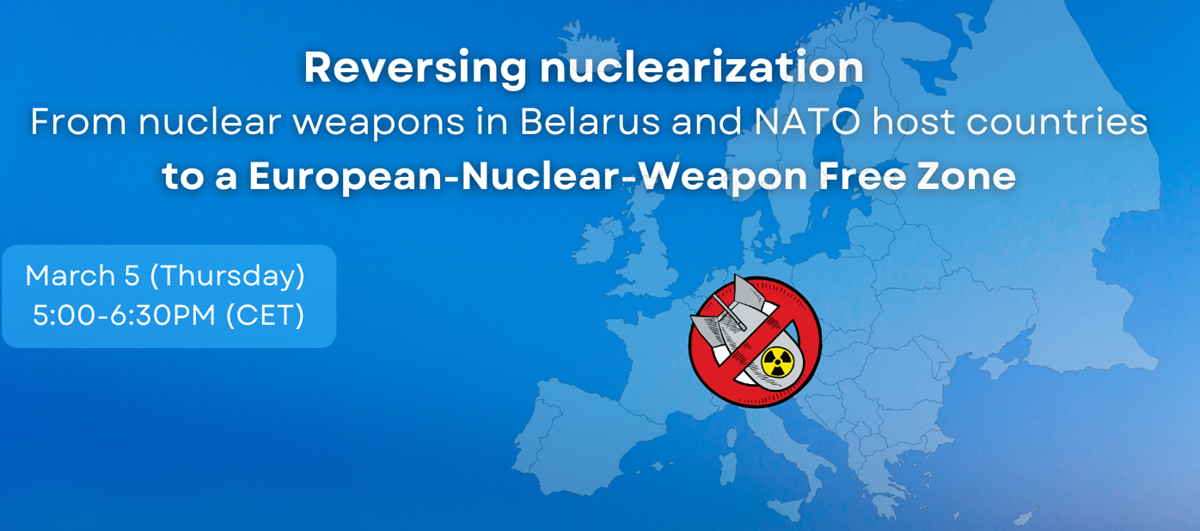
5 March -Online – Reversing nuclearization:
From nuclear weapons in Belarus and NATO host countries to a European-Nuclear-Weapon Free Zone
11am-12:30pm Eastern Time USA / 5pm-6:30pm CET

of the week – Advocating for a
nuclear free beach – https://www.samuellawrencefoundation.org/
The Samuel Lawrence Foundation advocates for a Nuclear Waste Free Beach at San Onofre, join us and take action!
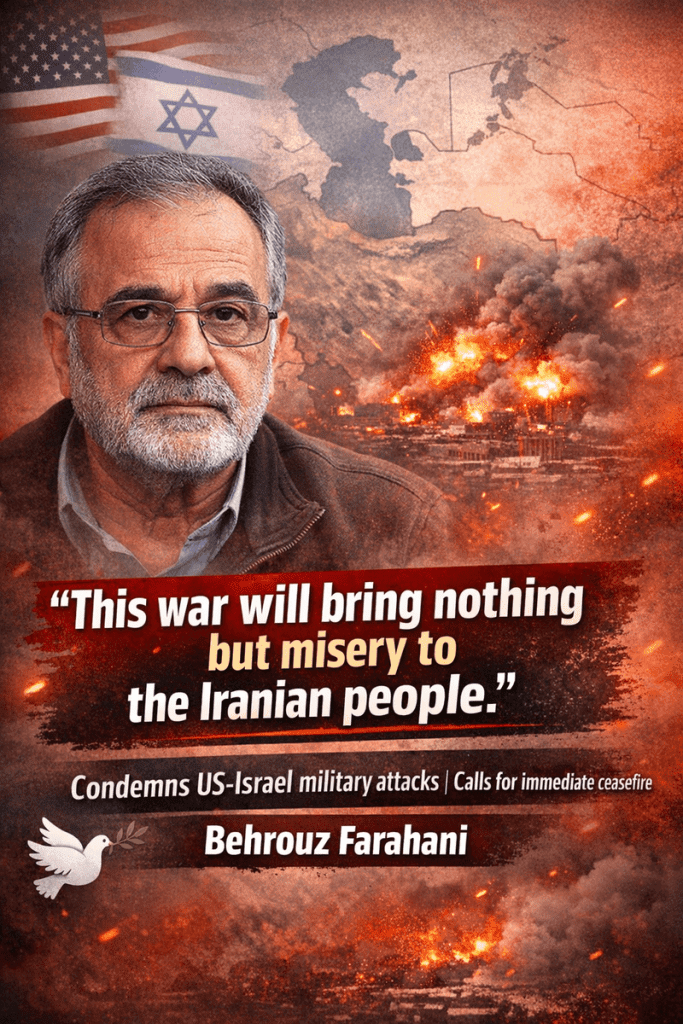
10 March A LIVE WEBINAR THE REAL EFFECTS OF NUCLEAR POWER
What the Industry Isn’t Telling Us
1:00 PM Mountain, 2 pm Central, 3 pm Eastern. Live on the Keepers of the Water Facebook page

18 March Webinar @ 1 PM EST: An Assessment of SMR Projects: The Case of Canada
register for the zoom:
https://us02web.zoom.us/webinar/register/WN_o8BIIOUvQ2ONJR1nta65DQ#/registration

of the week – STOP SMALL MODULAR REACTORS IN CANADA
To see nuclear-related stories in greater depth and intensity – go to https://nuclearinformation.wordpress.com
-
Archives
- March 2026 (51)
- February 2026 (268)
- January 2026 (308)
- December 2025 (358)
- November 2025 (359)
- October 2025 (376)
- September 2025 (258)
- August 2025 (319)
- July 2025 (230)
- June 2025 (348)
- May 2025 (261)
- April 2025 (305)
-
Categories
- 1
- 1 NUCLEAR ISSUES
- business and costs
- climate change
- culture and arts
- ENERGY
- environment
- health
- history
- indigenous issues
- Legal
- marketing of nuclear
- media
- opposition to nuclear
- PERSONAL STORIES
- politics
- politics international
- Religion and ethics
- safety
- secrets,lies and civil liberties
- spinbuster
- technology
- Uranium
- wastes
- weapons and war
- Women
- 2 WORLD
- ACTION
- AFRICA
- Atrocities
- AUSTRALIA
- Christina's notes
- Christina's themes
- culture and arts
- Events
- Fuk 2022
- Fuk 2023
- Fukushima 2017
- Fukushima 2018
- fukushima 2019
- Fukushima 2020
- Fukushima 2021
- general
- global warming
- Humour (God we need it)
- Nuclear
- RARE EARTHS
- Reference
- resources – print
- Resources -audiovicual
- Weekly Newsletter
- World
- World Nuclear
- YouTube
-
RSS
Entries RSS
Comments RSS
 nuclear-news