France’s state auditor questions the wisdom of EDF’s Hinkley Point nuclear project in UK

Telegraph 11th July 2020, Doubts cast on EDF’s ability to build power stations on time and budget.
French auditor questions wisdom of state-owned utility’s involvement in building the new Hinkley Point C power station in Somerset.
France’s state auditor has questioned the ability of the company building Britain’s next nuclear power plant to construct new reactors within “acceptable” costs and timeframes. State-owned EDF has already said that its Flamanville nuclear plant in Normandy will now cost €12.4bn due to the expense of fixing 66 faulty welds. On top of that, the project will cost another €6.7bn, according to France’s Court of Accounts in a new report.
EDF has also said the plant’s start date will be delayed until the end of 2022. Flamanville was originally due to cost €3.3bn and start operations in 2012.
Presenting the damning 148-page report this week, Court of Accounts chief Pierre Moscovici said: “There is still uncertainty on the ability of the French nuclear industry, despite its current strong efforts, to build new nuclear reactors within a time frame and costs that remain acceptable.”
The criticism follows a £3bn surge in costs at the Hinkley Point C reactor EDF is building in Somerset. The bill for the project will now be £22.5bn – £2.9bn more than previously forecast – with overruns paid for by EDF. The energy giant has faced lags at its other projects, including Finland’s Olkiluoto 3 nuclear reactor, which is running more than
a decade behind schedule.
In its report, the state auditor questioned the wisdom of involvement in Hinkley Point C, saying its construction was
“weighing heavily” on the financial situation of EDF, whose net debt hit €41bn at the end of last year.
Rally opposes proposal for Fukushima wastewater
|
Rally opposes proposal for Fukushima wastewater https://www3.nhk.or.jp/nhkworld/en/news/20200713_04/ 13 July 20, Dozens of young people in Japan’s Fukushima Prefecture have rallied against a government panel’s proposal on how to dispose of radioactive wastewater stored at the crippled Daiichi nuclear power plant.About 50 people, including fisheries workers, marched through Koriyama City on Sunday. The demonstration was organized by a group of Fukushima residents in their 20s and 30s, who said detrimental rumors about the prefecture may circulate if the wastewater is disposed of improperly. Group representative Sato Taiga said a survey shows that most respondents do not know about the issue. He added that he hopes the group’s activities will raise awareness among people, including the younger generation. Water used to cool molten nuclear fuel from the 2011 accident at the plant has most of the radioactive materials removed before being stored in tanks. But the treated water still contains tritium and some other radioactive substances. The amount stored has reached some 1.2 million tons. The plant’s operator, Tokyo Electric Power Company, expects to reach capacity around the summer of 2022. In February, a government panel compiled a report that says a realistic solution is releasing the wastewater into the sea or air after diluting it in compliance with environmental and other standards. The government is in the process of hearing opinions from local governments and relevant organizations before making its final decision on how to dispose of the treated water. |
|
UK Ministers losing enthusiasm for small nuclear reactors developed with China
DBD, a Cheshire-based engineering firm, was working with China’s Institute of Nuclear and New Energy Technology to build a fleet of gas-cooled small reactors, and had hoped to win government funds. However, ministers have awarded £10m each to three rival projects — including an experimental plan for a fusion reactor. A version of the DBD reactor has already been built in China. DBD declined to comment……. (subscribers only) https://www.thetimes.co.uk/article/ministers-cool-on-chinese-nuclear-reactors-k2m8j76qf
Senators urge US Development Finance Corp not to fund ‘risky’ overseas nuclear projects
 US senators urge agency not to allow funding of ‘risky’ nuclear projects, S and P Global Platts, Author Joniel Cha , Editor Keiron Greenhalgh 12 July 20
HIGHLIGHTS
DFC proposes to reverse prior policy
Lawmakers say nuclear not cost competitive
- Washington — Senators Edward Markey, Democrat-Massachusetts, and Bernie Sanders, Independent-Vermont, in a July 10 letter jointly urged US Development Finance Corp., not to “waste American tax dollars on risky international nuclear projects.”
DFC proposed June 10 to revise its policy so that the federal agency could provide financing for nuclear power projects, beginning a 30-day public comment period ending July 10.
The agency was created in 2019 through the consolidation of Overseas Private Investment Corp. and the US Agency for International Development’s Development Credit Authority.
OPIC and USAID both had bans in place prohibiting them from supporting nuclear reactor projects.
The senators said international nuclear power projects “are not a cost-competitive form of zero-carbon energy, remain unproven, will divert funds from higher-priority low-income countries, and are not supported by other development banks.” ……..
- The senators said: “DFC should not be dedicating its limited financing to unproven technologies that present both safety and security risks. Pushing experimental research and development is not part of the DFC’s mandate.”
DFC has a total investment limit of $60 billion……..
The senators requested a response from DFC by July 31.
The American Nuclear Society and advocacy group Clear Path, along with 40 other organizations and individuals, submitted comment letters to DFC July 2 and 9, respectively, supporting the removal of the ban.
DFC did not respond to requests for comment July 9.https://www.spglobal.com/platts/en/market-insights/latest-news/electric-power/071020-us-senators-urge-agency-not-to-allow-funding-of-risky-nuclear-projects
Movement in Japan to suspend Olympic Games
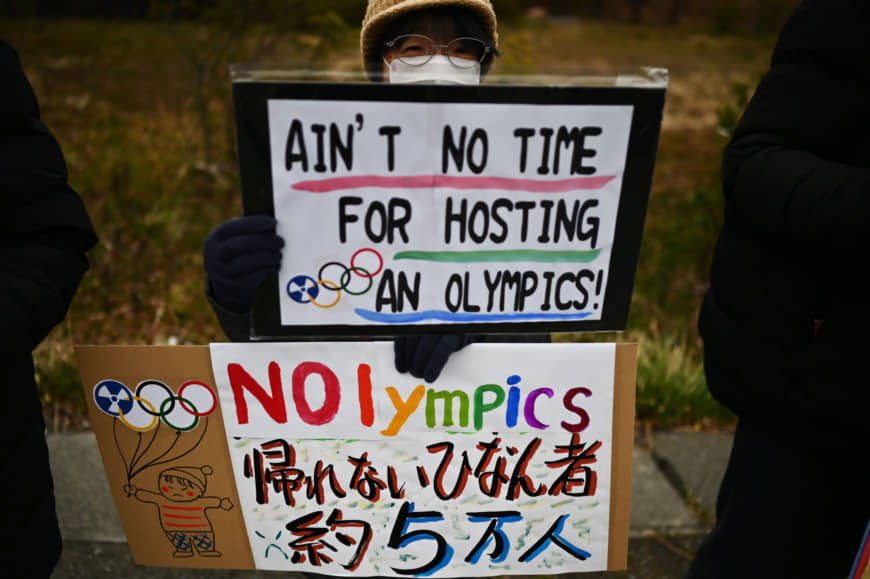
(FILES) This file photo taken on February 29, 2020 shows a protester holding placards during a demonstration against the Olympics, Prime Minister Shinzo Abe and nuclear energy, near the “J-Village” which will host the start of the Olympic torch relay in Naraha, Fukushima prefecture. – The Olympic torch relay that begins in Japan this month will start from Fukushima, emphasising what the government dubs the “Recovery Olympics”, but not everyone in the region will be cheering. (Photo by CHARLY TRIBALLEAU / AFP) / TO GO WITH nuclear-Fukushima-Oly-2020-JPN-Japan,FOCUS by Karyn NISHIMURA
Increasing voices in Japan for the cancellation of the Tokyo Olympics https://wordpress.com/read/feeds/2663585/posts/2804625668
On 7th June Mr Yukio Hatoyama, former Prime Minister of Japan, addressed me a message, expressing his views on the Tokyo Olympics : ”I always thought that instead of spending money on the Tokyo Olympics, the state should use these funds for the decontamination of the affected areas and to compensate the Fukushima nuclear disaster victims.“
He has expressed deep sympathy for the athletes placed in unbearable uncertainties preparing for the postponed Olympics. He urges that the sooner the decision the better for the athletes, since we all know that the Corona pandemic will oblige the Tokyo Olympic Games to be cancelled.
This message has given rise to reactions both in Japan and abroad.As an example,I am sharing with you a mail sent to me by a Japanese living in Germany.
In addition to the Covid-19 crisis, Japan is being cruelly assailed by natural disasters, unprecedented rainfalls and subsequent floods and landslides among others.
Japan faces a national crisis.
With warmest and highest regards,
Mitsuhei Murata
(Former Japanese Ambassador to Switzerland)
——– Forwarded Message ——–Dear Dr Alex Dear Dr Jörg Schmid;
cc: Mr Mitsuhei Murata, Mr Etsuji Watanabe
Recently I have acquired interesting information from Mr Mitsuhei Murata, former Japanese Ambassador to Switzerland, and Mr Etsuji Watanabe, a member of the ACSIR (Association for Citizens and Scientists Concerned about Internal Radiation Exposures), who are two of the leading lights in the anti-nuclear movements in Japan, that there is increasing support within the Japanese society for the complete cancellation, rather than postponement of the Tokyo Olympic Games.
On 7th June Mr Yukio Hatoyama, former Prime Minister of Japan, wrote to Mr Mitsuhei Murata, expressing his views on the Tokyo Olympics : ”I always thought that instead of spending money on the Tokyo Olympics, the state should use these funds for the decontamination of the affected areas and to compensate the Fukushima nuclear disaster victims.“
Subsequently Mr Murata wrote to Mr Thomas Bach, President of the IOC in order to convey this important message :
Dear President Thomas Bach,
Please allow me to inform you of a message a sent to me yesterday from former Japanese Prime Minister Yukio Hatoyama.
He has expressed deep sympathy for the athletes placed in unbearable uncertainties preparing for the postponed Olympics. He urges that the sooner the decision the better for the athletes, since we all know that the Corona pandemic will oblige the Tokyo Olympic Games to be cancelled.
In a press interview article published in January 2016,he made public his plea to consecrate maximum efforts to bringing Fukushima under control.
He has proven himself to be far-sighted. His vision for the future is in conformity with the dawning new world.
With highest and warmest regards,
Mitsuhei Murata
(Former Japanese Ambassador to Switzerland)
Mr Etsuji Watanabe told me that an overwhelming number of anti-nuclear activists are calling for the immediate cancellation of the Olympics. There will be demonstrations on 24th July, on which the 2020 Tokyo Olympic games were to commence, in Kyoto, Osaka and Tokyo. They will be demanding to stop the Olympic Games.
Best regards,
Rie
Book: Doom With A View: Historical and Cultural Contexts of the Rocky Flats Nuclear Weapons Plant.
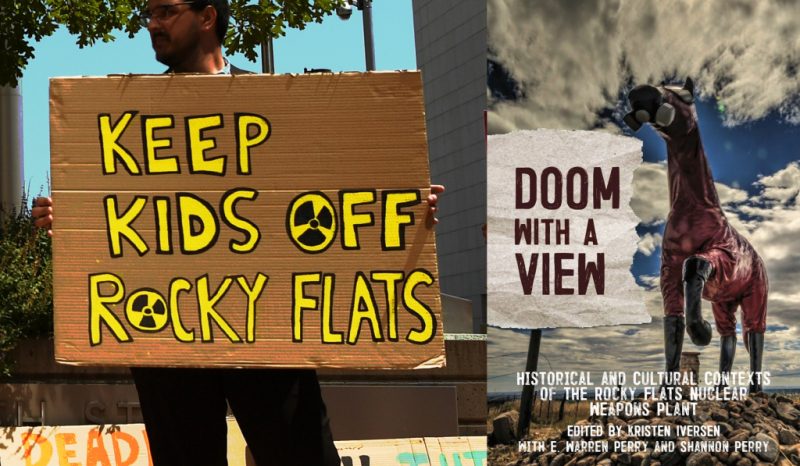
The Grieving Landscape, LONGREADS, Heidi Hutner | Fulcrum Publishing | June 2020 | 16 minutes (4,305 words)
We’re delighted to bring you an excerpt by Heidi Hutner from the anthology Doom With A View: Historical and Cultural Contexts of the Rocky Flats Nuclear Weapons Plant. Edited by Kristen Iverson, with E. Warren Perry and Shannon Perry, the anthology arrives from Fulcrum Publishing in August, 2020.
At thirty-five, I was diagnosed with Hodgkin’s lymphoma. One year before my diagnosis, my mother died from complications after heart surgery. At the time of her death, my mother had cancer — lymphoma. Five years prior to Mom’s death, my father passed away from a brain tumor, a metastasis from the cancer melanoma.
Two years after I had completed my chemotherapy treatment for cancer, I gave birth to Olivia. My miracle baby.
At first, I was ecstatic about the pregnancy. I had always wanted children, and with my cancer, I feared this would never happen. My doctors said I was lucky to give birth to a biological child after chemotherapy (my treatment left me with a 50 percent chance of remaining fertile afterward). But now, a mother-to-be, I was also afraid. How could I protect my child from our family cancer blight?
My desire to protect my daughter from a future cancer diagnosis drove me into a rabbit hole of reading and learning about the reasons for my family’s affliction. I began with Rachel Carson’s Silent Spring and moved forward to more recent literature by Sandra Steingraber, Theo Colburn, and numerous others, including the President’s Cancer Panel Report. I learned that the cancer rates today are off the charts: one in two men and one in three women will get cancer in their lifetimes. Carson predicted this plague in 1963. She warned us of humankind’s “hubris” in carelessly polluting our earth with toxic chemicals and ionizing radiation. The epidemiologist Alice Stewart’s study on the grave danger of X-rays on babies in the womb in the 1950s, sounded the alarm about ionizing radiation as well. Today, our world swirls with pollutants — these carcinogens penetrate mothers’ wombs and breasts. Mother’s milk is a toxic cocktail. Newborns today are born with hundreds of synthetic chemicals in their umbilical cord blood. Synthetic chemicals and ionizing radiation change our makeup, harm our genes, and cause mutagenetic damage. More than 80,000 unregulated pollutants fill our environment.
We are guinea pigs.
Fast forward about eleven years: one summer day, in 2009, on the Upper West Side of Manhattan, at lunch with a close friend (and cousin) of my deceased mother, Phyllis Resnick, I stumbled upon a story about my mom that I had never heard before. The tale Phyllis told would radically change my life. My then-preteen daughter, Olivia, was by my side. She listened rapt with me as we learned of our maternal nuclear legacy.
Phyllis described how in the early 1960s, my mother and she, along with their good friend Thalia Stern Broudy, had been a members of Women Strike for Peace (WSP), an antinuclear group led by Dagmar Wilson and the future congresswoman, Bella Abzug. During the Cold War 1950s and early 60s, the U.S. had detonated one hundred above-ground nuclear test bombs in the Nevada desert and one hundred and six atmospheric test bombs in the South Pacific. The government claimed these test bombs posed no harm and the fallout had not spread, but scientists and medical professionals were concerned. A team of experts in St. Louis, MO, directed by Dr. Louise Reiss, initiated a survey to determine the extent of the impact of the bomb testing. With a chemical makeup similar to calcium, strontium-90, a radioisotope found in fallout, is easily absorbed in teeth and bones. Thousands of baby teeth from across the U.S. were collected between 1958 and 1971 for the St. Louis Baby Tooth Survey. In 1961, preliminary results showed high levels of strontium-90 in baby teeth of children born after 1945 and these levels increased over the time period, as the test-bombing continued. When the mothers of Women Strike for Peace learned the results of the survey, they banded together to stop atmospheric bomb testing. 50,000 WSP members from across the U.S. wrote letters, gathered petitions, lobbied congressional representatives, initiated lawsuits, and protested through marches and street demonstrations. My mother and her cohort of 15,000 WSP members traveled to D.C. to protest, lobby, and meet with their legislators November, 1961. In 1963, the United States, the U.K., and the Soviet Union signed the Partial Nuclear Test Ban Treaty, an agreement to halt atmospheric, under water, and outer space bomb testing. The signing of this treaty has been attributed to the efforts of WSP.
The government claimed these test bombs posed no harm and the fallout had not spread, but scientists and medical professionals were concerned.
After discovering this remarkable story about WSP, I became obsessed with feminist nuclear history. I wondered: Why had I never been told this tale when my mother was alive? What other vital nuclear histories involving women had been buried? So began my journey of exploring women’s antinuclear tales, traveling to nuclear disaster sites, and meeting with members of impacted communities. On this path, I met Kristen Iversen, the author of Full Body Burden, an investigative memoir about growing up next door to Rocky Flats, the former nuclear weapons facility in Arvada, Colorado. Kristen invited me to visit her in Colorado. She would introduce me to experts, scientists, and community members there. I brought my then eighteen-year-old daughter, Olivia, with me. She was about to leave for college. I wanted to share our maternal antinuclear and activist legacy with her before she left home. ………….
Operating from 1952 to 1992, the Rocky Flats nuclear weapons facility was located approximately 15 miles northwest of Denver, a city built by an influx of miners during the gold rush in the nineteenth century. During the years of its operation, the plant constructed more than 70,000 triggers for nuclear bombs. Rocky Flats would be the site of two major secret plutonium fires, blowing radioactive poison into sections of Arvada and Denver in 1957 and 1969. Hundreds of smaller fires also took place, as well as regular leaks, spills, and atmospheric plutonium releases. Plutonium clouds blew over houses, swimming pools, schools, churches, farms, fields, and streams. Rocky Flats is known for powerful Chinook winds — winds that would blow plutonium dust into local neighborhoods. Locals did not know that Rocky Flats was a weapons factory for most of its years of operation. Workers employed there were forbidden to speak of their work and often didn’t comprehend the full extent of the factory’s activities.
By 1989, The FBI and EPA suspected criminal negligence at Rocky Flats, which led to a raid, led by FBI agent Jon Lipsky.
A federal grand jury began an investigation, a settlement was negotiated, the court documents were sealed, and the plant closed. The story of this federal grand jury is fraught and complex, and cover-ups are suspected in the sealing of the documents and lack of full prosecution. The Rocky Flats cleanup was officially completed in 2004; however, numerous scientists, nuclear experts, local citizens, and antinuclear activists argue the cleanup is far from finished. Unknown but large amounts of plutonium and other contaminants remain on the land in what has been turned into a Superfund site, a designation made under the Comprehensive Environmental Response, Compensation, and Liability Act of 1980. The primary industrial site (the Superfund area — 485 acres) was never completely remediated. There is a buffer zone, also heavily contaminated, although the EPA claims this area is fully remediated. The surrounding area, now called a National Wildlife Refuge, was not remediated. Significant contamination has been detected there in the soil and groundwater. Many other toxic and radioactive contaminants have also been found at Rocky Flats in addition to plutonium: americium, uranium, cadmium, PCBs, beryllium, and more. A 2019 study found plutonium “hot particles” in the soil frighteningly close to the homes abutting the Flats………
Rocky Flats is “a national sacrifice zone,” says Robert Alvarez, associate fellow at the Institute for Policy Studies and former senior policy advisor to the secretary at the US Department of Energy. “That’s what it is, although no one will say so officially. How much remains buried there? A tremendous amount — plutonium doesn’t go away. No one has done this yet — it’s costly and complex — but someone needs to go into those houses nearby in Arvada and take samples. We don’t know how much plutonium is in them.”…….. https://longreads.com/2020/06/30/the-grieving-landscape/amp/
“The Hanford Plaintiffs: Voices from the Fight for Atomic Justice”- Book Review

Book Review: Voices From a Slow-Moving Nuclear Calamity, Undark,
BY LUCY TIVEN07.10.2020
In “The Hanford Plaintiffs,” Trisha T. Pritikin gives voice to the downwinders of the notorious Hanford nuclear plant. HE WORLD’S FIRST full-scale plutonium production reactor sits on the 586-square-mile Hanford site in eastern Washington, an erstwhile Manhattan Project complex and the United States’ most contaminated repository of nuclear waste. After coming online in 1944, the Hanford plant supplied the plutonium for the Nagasaki bomb and almost two-thirds of the nation’s Cold War nuclear arsenal, all while depositing radioactive I-131 into the Columbia River and nearby tri-cities of Richland, Kennewick, and Pasco.
Aided by local weather patterns, the plumes eventually reached neighboring counties in Oregon and Idaho; it was only when the site’s clandestine operations became public in the late 1980s that the federal government acknowledged that thousands of civilians downwind were caught in the path of the fallout.
In “The Hanford Plaintiffs: Voices from the Fight for Atomic Justice,” Trisha R. Pritikin, a lawyer and anti-nuclear advocate, presents 24 of their testimonies and provides a definitive history of the 1991 personal injury litigation Hanford downwinders brought against the government. The firsthand accounts painstakingly detail radiation exposure and its harrowing lifelong health effects, and Pritikin’s careful study of the case links the testimonies and anchors them within the larger chronology of the Manhattan Project. Moving between the Pacific Northwest and the Nevada desert, “The Hanford Plaintiffs” also compares the experiences and litigation efforts of exposed populations and maps the geography of Cold War era nuclear weapons production through the downwinders’ tangles with legislatures and federal courts.
Other histories of Hanford have appeared in recent years, including John Findlay and Bruce Hevly’s 2011 “Atomic Frontier Days: Hanford and the American West” and Michele Gerber’s 1992 “On the Home Front.” But “The Hanford Plaintiffs”most closely echoes Kate Brown’s 2013 “Plutopia: Nuclear Families, Atomic Cities, and the Great Soviet and American Plutonium Disasters,” a study of Richland and its Russian counterpart, Ozersk. While Brown’s analysis links the plutonium project to the invention of the American suburb, Pritikin’s history speaks in intimate snapshots of life downwind and downriver of Hanford, detailing the devastating cost of the plant’s culture of secrecy in the words of exposed people.
Tracing the site’s history from the end of World War II to the present, “The Hanford Plaintiffs” chronicles how the victims sought justice in court and documents their lengthy legal battle against the government and its nuclear contractors. The In Re Hanford personal injury litigation dragged on for two and a half decades of costly studies, as legal fees mounted and the downwinders’ health declined. Out of over 3,000 downwinders who joined the 1991 lawsuit, only six representative “bellwether plaintiffs” ever received jury trials. The lawsuit finally came to a close in 2015, as the last of the plaintiffs reached confidential settlement agreements or dropped their claims. (The filing does not disclose the precise number of downwinders to settle or how much they were compensated, though the agreements have been characterized as pithy and widely derided by the plaintiffs and their attorneys over the years).
Pritikin explains that an advantage for the contractors and government of having 24 years of litigation was that the public forgot about the downwinder’s stories. The public had barely heard from any one, other than the bellwethers in 2005.
The case’s resolution foreclosed the opportunity for most of the exposed to put their stories on the record in court proceedings, which numerous downwinders interviewed by Pritikin say was in part what motivated them to join the suit as plaintiffs.
The heart of the book lies in these narratives, which detail the grueling long-term effects of radiogenic disease as well as the downwinders’ recollections of Hanford and the court proceedings. The illnesses discussed include numerous cancers and thyroid disorders, autoimmune disease, neurological disorders, infertility, miscarriages, stillbirths, and neonatal deaths. The compensation scheme agreed upon in the case’s 2015 resolution was narrow: Individuals were eligible only if they suffered from thyroid cancer or other thyroid disorders related to exposure…………
She contends that exposed communities were essentially the “guinea pigs” of the nuclear era, a comparison borne out in gruesome accounts of radiation’s effects on animals. “The tragedies of sheep and lamb deaths in Cedar City in 1953 and the farmlands downwind from Hanford in 1961 were early warnings of what was to come for the downwinders,” writes Pritikin of the plant’s secret experimental animal farm, referencing documents declassified in the late 1980s.
Particularly chilling testimony comes from Brenda Weaver, a plaintiff whose daughter was born with a birth defect she first observed in exposed livestock. “On the night they call the ‘Night of the Little Demons,’ our lambs were born without eyes, with feet missing, without mouths, some with legs grown together; baby lambs with all kinds of horrible deformities,” she recounts. “Only a few years later, while I was still living in the Hanford area, my first child, Jamie, was born without eyes.”……….
Unlike Hanford’s nuclear workers, nearby civilians were not monitored medically, so the In Re Hanford case relied on dose estimates calculated retroactively in the Department of Energy funded Hanford Environmental Dose Reconstruction project……..
While the book is a definitive history of the In Re Hanford litigation, Pritikin also urges a broader reconsideration of the Manhattan Project from the vantage point of those typically relegated to its margins — a history that is as much about public health as it is about nuclear weapons “The Hanford Plaintiffs” offers readers a timely and valuable contribution to the project as well as a much-needed reminder of the staggering costs of nuclear secrecy. https://undark.org/2020/07/10/book-review-the-hanford-plaintiffs/
Court reveals that EDF deceived UK about the true financial risks of Hinkley Point nuclear project

EDF boss suppressed report calling Hinkley Point ‘risky’Adam Sage, The Times, 10 July 20, thetimes.co.uk/article/edf-boss-suppressed-report-calling-hinkley-point-risky-gd5vcdhrx
The Times reports that the chief executive of the French company building the UK’s new nuclear reactors won boardroom approval for the project after suppressing an internal review labelling it as risk-laden. In a “highly critical report on the European Pressurised Reactors”, France’s Court of Audit said that the Hinkley Point project in Somerset, led by EDF, represented a “high financial risk” for the French state electricity group, the Times adds.
The court uncovered that the risks had been pointed out in a 2015 review that warned there “were not efficient enough to guarantee that risks would be controlled”. The Times continues: “The court said that Jean-Bernard Lévy, EDF’s executive chairman, had ‘refused to transmit the full report’ to directors or the government, even though the state has an 83.7% stake. They received only a synopsis.” The project received approval from the EDF board in 2016. The court also said that EDF must establish the financing and profitability of nuclear reactors before launching projects, reports Reuters, “dealing a blow to the state-owned utility’s ambitions to build new units”. And Reuters also reports that nuclear power generation at its reactors in France plunged 25.1% in June (compared to 2019) due to the effects of the coronavirus pandemic.
Meanwhile, writing in the Daily Telegraph, Sir Iain Duncan-Smith – MP and former leader of the Conservative Party – argues that the UK should “unwind its dependence on China” for “cheap goods and nuclear power”. He says: “The UK has enormous home grown tidal power potential, yet both tidal and hydrogen seem to have been brushed aside in favour of our growing dependence on large Chinese-run nuclear projects.” He concludes: “From Huawei to hydrogen and Hong Kong, we need to recognise the strategic threat China poses and, together with our allies, decide what we will do to reduce it, otherwise we risk repeating the failed lessons of the past.” And also in the Daily Telegraph, chief city commentator Ben Marlow says that the government should be stimulating manufacturing demand to contain the damage caused by Covid-19 to Rolls Royce – “Britain’s most illustrious engineering company”. He says: “It should start with nuclear where enlisting the expertise of Rolls-Royce in building so-called mini-nukes would help to solve its current geo-political nightmare with China. It would make it easier to ditch China General Nuclear Power Group from the plans to build giant new plants at Sizewell on the Suffolk coast and Bradwell in Essex, or scrap the proposals altogether.” These decisions would “also offer a greener and cheaper alternative to a technology that looks decidedly out of date already, and it would create jobs at a company in desperate need of a leg up – three birds with one stone”.
90 Coronavirus cases among India’s nuclear workers, most at Rooppur Nuclear Power Plant
Rooppur Nuclear Power Plant: Rising infections among workers, Daily Star, Ahmed Humayun Kabir Topu, 10 July 20, More and more workers of different sub-contracting firms at Rooppur Nuclear Power Plant in Ishwardi upazila are getting infected with the novel coronavirus.
Upazila Health Officer Dr AFM Asma Khatun said 103 people in the upazila have been diagnosed with the virus till July 6. Of them, around 90 workers were infected with Covid-19 in the last three days. The majority of the workers who tested positive for coronavirus work at Paharpur Cooling Tower Ltd, a sub-contracting firm of the Rooppur project.
The number of Covid-19 patients has increased as over 800 employees of the sub-contracting firms at the plant gave samples to the labs of different government and private institutions for Covid-19 testing in the last few days, said the doctor, adding that the number of infected workers is increasing every day.
Most of the Covid-19 patients are the workers of Paharpur Cooling Tower Ltd, a sub-contracting firm of the plant, said Dr Asma Khatun, adding that the authorities of different sub-contracting firms at Rooppur Nuclear Power Plant have collected samples of several hundred workers and sent those to the lab of a private institution in Dhaka for coronavirus testing but they are yet to get copy of the test reports from the private institution. …… https://www.thedailystar.net/city/news/rooppur-nuclear-power-plant-rising-infections-among-workers-1927965
Explosion at Iran’s nuclear facility probably caused by Israel
What caused the explosion at a nuclear facility in central Iran?, The Strategist 10 Jul 2020|, Connor Dilleen It seems increasingly likely that the 2 July explosion at the Iran Centrifuge Assembly Centre, located near the Natanz Pilot Fuel Enrichment Plant, was the result of sabotage. And, despite initial speculation that it was the result of a cyberattack against critical operational control systems—and thus of a similar vein to the Stuxnet attack that took down multiple centrifuge cascades at Natanz in 2010—the simpler and more plausible explanation is that the explosion was caused by a bomb.
Despite claims of responsibility by a previously unknown group calling itself the Homeland Cheetahs that supposedly comprises disgruntled Iranian former military and security services personnel, it now appears widely accepted that Israel was behind the attack. There has been further speculation that Israel was also behind other curious incidents that have occurred at Iranian facilities in recent weeks—including explosions at the gas storage area near the Khojir missile facility at Parchin, at a medical facility in Tehran, and at a factory south of Tehran—although there is as yet no evidence of foul play in these events.
Multiple media outlets—including the New York Times and the Washington Post—have referenced intelligence officials attributing the Natanz attack to Israel. And while Tehran was slow in apportioning blame, on 7 July it accused Israel of being behind the attack, saying it was ‘a “wake-up call” meant to deter Iran amid advancements in its nuclear program, and … [that] those who planted the explosives had significant insight into the country’s nuclear program’.
Israel has form in using lethal force against high-value nuclear targets in the Middle East. Between 2010 and 2012, Israeli agents murdered four Iranian nuclear scientists. Earlier, Israel launched military strikes that destroyed the Iraqi nuclear reactor at Osirak in 1981 and the Syrian Al Kibar reactor in 2007, the two most obvious manifestations of the Begin doctrine, which stipulates that Israel cannot allow any of its regional adversaries to develop a nuclear weapons capability.
However, two key issues remain unresolved. First, it’s not clear that the explosion at the centrifuge assembly centre will be a significant a setback for Iran’s enrichment capabilities. Second, if it is accepted that Israel was behind the incident, it’s difficult to assess whether the Natanz attack was merely a warning to Tehran or represents a new stage in Israeli efforts to curtail Tehran’s nuclear program. It’s possible that the attacks were also intended to provoke a reaction from Tehran that would justify more punitive and definitive military strikes against Iranian nuclear facilities by either Israel or the US…….. https://www.aspistrategist.org.au/what-caused-the-explosion-at-a-nuclear-facility-in-central-iran/
The massive task of transporting a massive dead nuclear reactor

|
Spent Nuclear Reactor Passes On Its Way To Disposal, JULY 8, 2020 BY VROBISON By CHARLENE PAUL, The Progress
A huge convoy carrying a low-level nuclear reactor is making its way through Nevada. Last week it passed through the Coyote Springs Valley via U.S. Highway 93. PHOTO BY CHARLENE PAUL/The Progress. A nuclear reactor vessel from southern California’s decommissioned San Onofre Nuclear Generating Station slowly made it’s way through the Coyote Springs Valley on Monday, June 29……… Once the load arrived at Apex, it took a couple of weeks for cranes to lift the reactor from the train car and put it on a 45-axle, 180-tire trailer for the trip to northern Utah. Experts with the Nevada Department of Transportation (NDOT) worked long and hard to ensure that the state’s roads wouldn’t be damaged as the load passes through. Two railway tunnels east of Caliente along with rock outcroppings that are too tight to allow the reactor to be shipped by rail to Salt Lake City and then on to Clive, made travel on the highway a necessity. “It would be, by far, the biggest object ever moved on a road in [Nevada],” said NDOT spokesman Tony Illia. “Our people have been scratching their heads for months to figure out a route that could work. It won’t move until the transportation department issues a permit 24 hours before hitting the highway.” “The record-sized move over state highways marks the culmination of over a year of planning and coordination across three states,” Illia said. “At 2.4 million total pounds, it’s the heaviest load to ever cross Nevada roadways.” Making such a massive shipment in summer months is a much bigger issue than it would be in colder months. Asphalt or other road surfaces could easily buckle under the over 1.5-million-pound reactor plus a shipping skid that adds seven tons to the total weight. For the load to be transported safely, drainage structures along the way needed to be reinforced. “The structures would get crushed like a soda can because the load is so heavy,” said Illia. “Heavy equipment operators with Emmert International [among the world’s biggest movers of heavy equipment] plan to use heavy-duty hydraulic jacks to support culverts when the vehicle hauling the reactor passes over.” To keep the load off Interstate 15 and Interstate 80, the travel route will follow U.S. Highway 93 and State Route 318 before crossing into Utah. Interestingly, the route passes by the Yucca Mountain Nuclear Waste Repository. The mountain was to be the nation’s nuclear waste repository, but the plan was terminated in 2008 amid a political battle over its safety. When the San Onofre plant is completely dismantled, all of its low-level waste will be buried in Utah. The extreme weight of the super-load is dispersed across 460 total tires to prevent damage to state roads and bridges. Pilot cars and Nevada Highway Patrol (NHP) vehicles are escorting the rig. The full convoy is almost two miles long, including extra trucks, mechanics, and project managers. Because of the weight, travel averages four to six miles per hour, and the 400-mile trip is estimated to take eight days. On the first day of the trip, the convoy stopped at the Coyote Springs turn-off on Highway 93. On July 1, the convoy stopped just south of Alamo, Nevada, and did not travel from July 2 through July 5 to minimize impacts on travel over the Fourth of July holiday weekend. Mobile messaging signs will be used to inform drivers of delays and detours. http://mvprogress.com/2020/07/08/spent-nuclear-reactor-passes-on-its-way-to-disposal/ |
|
Warning of serious brain disorders in people with mild coronavirus symptoms
 Warning of serious brain disorders in people with mild coronavirus symptoms
UK neurologists publish details of mildly affected or recovering Covid-19 patients with serious or potentially fatal brain conditions, Guardian, Ian Sample Science editor, @iansample, Wed 8 Jul 2020 Doctors may be missing signs of serious and potentially fatal brain disorders triggered by coronavirus, as they emerge in mildly affected or recovering patients, scientists have warned.
Neurologists are on Wednesday publishing details of more than 40 UK Covid-19 patients whose complications ranged from brain inflammation and delirium to nerve damage and stroke. In some cases, the neurological problem was the patient’s first and main symptom.
A dozen patients had inflammation of the central nervous system, 10 had brain disease with delirium or psychosis, eight had strokes and a further eight had peripheral nerve problems, mostly diagnosed as Guillain-Barré syndrome, an immune reaction that attacks the nerves and causes paralysis. It is fatal in 5% of cases.
“We’re seeing things in the way Covid-19 affects the brain that we haven’t seen before with other viruses,” said Michael Zandi, a senior author on the study and a consultant at the institute and University College London Hospitals NHS foundation trust.
“What we’ve seen with some of these Adem patients, and in other patients, is you can have severe neurology, you can be quite sick, but actually have trivial lung disease,” he added. …….
The cases add to concerns over the long-term health effects of Covid-19, which have left some patients breathless and fatigued long after they have cleared the virus, and others with numbness, weakness and memory problems……..
The cases, published in the journal Brain, revealed a rise in a life-threatening condition called acute disseminated encephalomyelitis (Adem), as the first wave of infections swept through Britain. At UCL’s Institute of Neurology, Adem cases rose from one a month before the pandemic to two or three per week in April and May. One woman, who was 59, died of the complication……… https://www.theguardian.com/world/2020/jul/08/warning-of-serious-brain-disorders-in-people-with-mild-covid-symptoms?CMP=share_btn_tw
New research shows serious health effects from Three Mile Island nuclear accident.

ncluding erythema, hair loss, nausea, and vomiting5. Researchers later correlated more than a dozen verified reports of medical impacts to simultaneous meteorological conditions
large-scale epidemiological investigations have uncovered health decrements including breast and lung cancer, heart disease, and early mortality among the exposed population within ten miles7 and five miles8,9,10 of the TMI facility.
the emissions from the accident should be considered causative for the observed excess incidence of cancer in the surrounding ten-mile area
Radiobiological shot noise explains Three Mile Island biodosimetry indicating nearly 1,000 mSv exposures Aaron M. Datesman Scientific Reports volume 10, Article number: 10933 (2020)
Abstract ………
IntroductionThe 1979 accident at the Three Mile Island (TMI) nuclear power station in Pennsylvania released a large quantity of the radioactive noble gas xenon-133 into the surrounding environment. Although it is well-established that gamma ray exposures to the affected population were comparable to or smaller than the annual dose due to background radiation (around 1 mSv), the topic of health effects relating to the accident has always been controversial. The Report of the President’s Commission on the Accident at Three Mile Island (known as the Kemeny Commission Report, after its chairman) asserted that any health or medical impacts affecting the population living within twenty miles of the accident site were due to mental distress1. On the basis of what is known about the accident and the nature of the exposure suffered by those nearby, it is therefore not conventionally believed that any discernible impact to human health caused by exposure to ionizing radiation has been observed2,3,4.
However, contrary evidence does exist, and ought not to be summarily dismissed. For instance, contemporaneous accounts from hundreds of local residents describe symptoms consistent with significant exposure to ionizing radiation, including erythema, hair loss, nausea, and vomiting5. Researchers later correlated more than a dozen verified reports of medical impacts to simultaneous meteorological conditions at the TMI facility6, , at least suggesting the presence of the radioactive plume at the location of the individuals making the reports. Because the persons affected in some cases were not aware that a radiological release from the TMI facility had occurred following an accident, and in most or all cases may not have been knowledgeable regarding the medical impacts of radiation poisoning, a diagnosis of mental distress as an explanation for the acute effects observed is difficult to accept.
Furthermore, large-scale epidemiological investigations have uncovered health decrements including breast and lung cancer, heart disease, and early mortality among the exposed population within ten miles7 and five miles8,9,10 of the TMI facility. Because the doses suffered by the exposed population were small and because the discernible health impacts were not those expected for the nature of the exposure, among other reasons, most investigators have been unwilling to interpret these epidemiological results as convincing evidence relating the observed health impacts to exposure to ionizing radiation. Due in part to their results showing a clear dose response for lung cancer, however, a group of researchers from the University of North Carolina at Chapel Hill contended that the emissions from the accident should be considered causative for the observed excess incidence of cancer in the surrounding ten-mile area11. In order to justify their conclusion, the UNC researchers hypothesized that the doses to the affected population may have been much higher than generally accepted. There is little corroborating evidence for the claim. The Kemeny Commission, for instance, concluded that the greatest exposure to any individual due to the accident was only about 0.7 mSv.
The present article engages specifically with one piece of evidence cited by the UNC team supporting their view: the results of the cytogenetic analysis of 29 individuals, living near TMI at the time of the accident, who reported symptoms consistent with radiation poisoning contemporaneous with the accident12. The analysis produced dose estimates in the range of 600–900 mSv, orders of magnitude larger than the gamma ray doses estimated by the Kemeny Commission, the Nuclear Regulatory Commission13,14, experienced nuclear industry consultants15,16, or the Three Mile Island Public Health Fund17. While the results of the cytogenetic analysis have been published in the open scientific literature and are freely available, the existence of this information does not appear to be widely known.
While the dose estimate based upon cytogenetic analysis is sufficient to explain contemporaneous reports of acute effects, then, it contradicts firmly established estimates of the gamma dose to affected individuals. Because those gamma ray dose estimates are anchored to actual, physical measurements taken by dosimeter at the time of the accident, the cytogenetic results are difficult to explain. Although the conflict seems irreconcilable, in fact its existence illuminates a fundamental oversight in the health physics body of knowledge18 While the phenomenon of shot noise19 deriving from the discrete nature of electrical charge has long been known to apply to biological systems at least in the context of nerve-muscle junctions20 and membrane conduction21, its application to radiobiology has up until the present time been neglected.
It will be shown (contrary to the assertions of authorities) that the gamma ray doses suffered by those in the path of the Xe-133 plume were far from the most significant exposures that occurred. The results of cytogenetic analysis are instead consistent with the effects of internal exposure to beta radiation. Correcting a fundamental oversight in the health physics body of knowledge—relating to shot noise in the context of radiobiology—resolves the apparent paradox
The finding should motivate a comprehensive re-evaluation of the conventional understanding of the 1979 accident at the Three Mile Island nuclear power station, especially regarding its impact upon the population of the surrounding area.Materials and methods……….. ….. https://www.nature.com/articles/s41598-020-67826-5#disqus_thread
Paul Ehrlich warns overpopulation and overconsumption are driving us over the edge
Paul Ehrlich: ‘Collapse of civilization is a near certainty within decades’ MAHB, Damian Carrington | July 9, 2020 This interview was first published in The Guardian on March 22, 2018
Fifty years after the publication of his controversial book The Population Bomb, biologist Paul Ehrlich warns overpopulation and overconsumption are driving us over the edge
A shattering collapse of civilisation is a “near certainty” in the next few decades due to humanity’s continuing destruction of the natural world that sustains all life on Earth, according to biologist Prof Paul Ehrlich.
In May, it will be 50 years since the eminent biologist published his most famous and controversial book, The Population Bomb. But Ehrlich remains as outspoken as ever.
The world’s optimum population is less than two billion people – 5.6 billion fewer than on the planet today, he argues, and there is an increasing toxification of the entire planet by synthetic chemicals that may be more dangerous to people and wildlife than climate change.
Ehrlich also says an unprecedented redistribution of wealth is needed to end the over-consumption of resources, but “the rich who now run the global system – that hold the annual ‘world destroyer’ meetings in Davos – are unlikely to let it happen”.
Anniversary of nuclear bomb test on Mururoa Atoll
ACE Nuclear-Free Collective No Nuclear Waste Dump Anywhere in South Australia, 2 July 20
This day on July 2nd 1966, the first French nuclear test took place at Mururoa Atoll. [Image description: slides with blue and orange text on black background with text that reads, On this day in history, an orange radioactive mushroom cloud ruptured Pacific skies, seas and engulfed the atoll of Mururoa. It was the beginning of a toxic reign of radioactive negligence by the French in the Pacific region. The French President who upon witnessing the July 2nd detonation remarked, “It’s beautiful”.
The colonial power had been testing in Algeria, but as their independence became more evident, the French moved into the atolls of Polynesia. From 1966 to 1996, the French conducted 193 tests on the atoll; some of the explosions 200 times the strength of the bombs dropped on Hiroshima and Nagasaki. Information on safety, and the lasting impacts for environment and human health, was scarce if not, misleading. The sovereign peoples were led to believe testing was not only safe but would benefit their communities through military-based economic opportunity. People who worked only 15kilometres away from test sites often had no more protection than the shorts and t-shirts on their backs.
French testing, was a theatrical power display, an assertion of their priority to grasp tight to global dominance rather than world peace. Resistance to testing was prominent from the outset. Pouvanaa a Oopa, a fierce and enduring anti colonial leader, led the first protection action in 1950, collecting signatures for the Stockholm Peace Appeal. He remained an important leader and agitator, even throughout his political imprisonment and exile to France.
During the thirty years of French testing, condemnation swelled internally and across Pacific nations including Aotearoa and so called Australia. Mass protests, demonstrations, flotilla solidarity, trade union bans and boycotts on French products took place. “If it is safe to test, test it in Paris” was a phrase used by key collective, The Nuclear Free and Independent Pacific.
The radioactive fall out has had devastating impacts on both environment and human health. Tahiti the most populated island was exposed to 500 times the maximum accepted levels of radiation. Tahitian socialist, Richard Tuheiava outlines the continuing struggle for justice, ”The fact is since the nuclear testing most of the diseases were cancer, leukaemia. Most of the diseases were as a result of the nuclear testing, so we collectively also put a request for the state of France, the colonial power to not only compensate directly the veterans, but also compensate this fund, this public health care fund.”
Today, July 2nd 2020, we honour the ongoing impacts of nuclear colonialism in the Polynesia, and the enduring fight for justice, truth and accountability.] https://www.facebook.com/groups/1314655315214929/
1 This Month


Pine Ridge Uranium is the real threat, not Tehran- Tell Burgum: Stop the Extraction.
Chernobyl: The Lost Tapes – A good documentary on Chernobyl on SBS available On Demand for the next 3 weeks– https://www.sbs.com.au/ondemand/tv-program/chernobyl-the-lost-tapes/2352741955560
To see nuclear-related stories in greater depth and intensity – go to https://nuclearinformation.wordpress.com
-
Archives
- April 2026 (288)
- March 2026 (251)
- February 2026 (268)
- January 2026 (308)
- December 2025 (358)
- November 2025 (359)
- October 2025 (376)
- September 2025 (257)
- August 2025 (319)
- July 2025 (230)
- June 2025 (348)
- May 2025 (261)
-
Categories
- 1
- 1 NUCLEAR ISSUES
- business and costs
- climate change
- culture and arts
- ENERGY
- environment
- health
- history
- indigenous issues
- Legal
- marketing of nuclear
- media
- opposition to nuclear
- PERSONAL STORIES
- politics
- politics international
- Religion and ethics
- safety
- secrets,lies and civil liberties
- spinbuster
- technology
- Uranium
- wastes
- weapons and war
- Women
- 2 WORLD
- ACTION
- AFRICA
- Atrocities
- AUSTRALIA
- Christina's notes
- Christina's themes
- culture and arts
- Events
- Fuk 2022
- Fuk 2023
- Fukushima 2017
- Fukushima 2018
- fukushima 2019
- Fukushima 2020
- Fukushima 2021
- general
- global warming
- Humour (God we need it)
- Nuclear
- RARE EARTHS
- Reference
- resources – print
- Resources -audiovicual
- Weekly Newsletter
- World
- World Nuclear
- YouTube
-
RSS
Entries RSS
Comments RSS
 nuclear-news