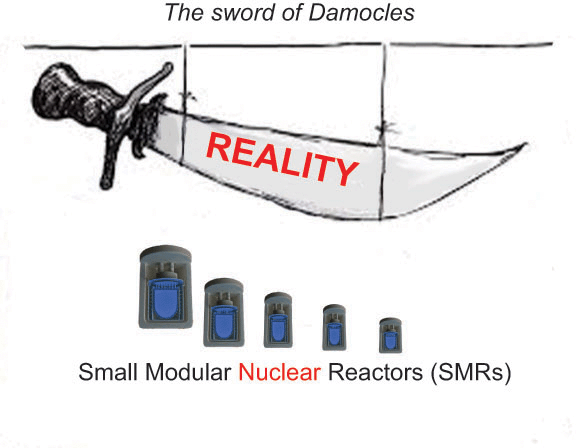
Reality bats last The economic claims of SMR enthusiasts are sharply contradicted by real-world data.

Large numbers of SMRs being built? Not according to expert opinion. A 2017 Lloyd’s Register report was based on the insights of almost 600 professionals and experts from utilities, distributors, operators and equipment manufacturers, who predicted that SMRs have a “low likelihood of eventual take-up, and will have a minimal impact when they do arrive”.
A 2014 report produced by Nuclear Energy Insider, drawing on interviews with more than 50 “leading specialists and decision makers”, noted a “pervasive sense of pessimism” about the future of SMRs.
Small modular reactor rhetoric hits a hurdle https://reneweconomy.com.au/small-modular-reactor-rhetoric-hits-a-hurdle-62196/ Jim Green, 23 June 2020, The promotion of ‘small modular reactors’ (SMRs) in Australia has been disrupted by the Commonwealth Scientific and Industrial Research Organisation (CSIRO) and the Australian Energy Market Operator (AEMO).
The latest GenCost report produced by the two agencies estimates a hopelessly uneconomic construction cost of A$16,304 per kilowatt (kW) for SMRs. But it throws the nuclear lobby a bone by hypothesising a drastic reduction in costs over the next decade.
The A$16,304 estimate has been furiously attacked by, amongst others, conservative politicians involved in a federal nuclear inquiry last year, and the Bright New World (BNW) nuclear lobby group.
The estimate has its origins in a commissioned report written by engineering company GHD. GHD provides the estimate without clearly explaining its origins or basis. And the latest CSIRO/AEMO report does no better than to state that the origins of the estimate are “unclear”.
Thus nuclear lobbyists have leapt on that muddle-headedness and filled the void with their own lowball estimates of SMR costs.
Real-world data
Obviously, the starting point for any serious discussion about SMR costs would be the cost of operational SMRs – ignored by CSIRO/AEMO and by lobbyists such as BNW.
There is just one operational SMR, Russia’s floating plant. Its estimated cost is US$740 million for a 70 MW plant.
That equates to A$15,200 per kW – similar to the CSIRO/AEMO estimate of A$16,304 per kW.
Over the course of construction, the cost quadrupled and a 2016 OECD Nuclear Energy Agency report said that electricity produced by the Russian floating plant is expected to cost about US$200 (A$288) per megawatt-hour (MWh) with the high cost due to large staffing requirements, high fuel costs, and resources required to maintain the barge and coastal infrastructure.
Figures on costs of SMRs under construction should also be considered – they are far more useful than the estimates of vendors and lobbyists, which invariably prove to be highly optimistic.
The World Nuclear Association states that the cost of China’s high-temperature gas-cooled SMR (HTGR) is US$6,000 (A$8,600) per kW.
Costs are reported to have nearly doubled, with increases arising from higher material and component costs, increases in labour costs, and increased costs associated with project delays.
The CAREM SMR under construction in Argentina illustrates the gap between SMR rhetoric and reality. In 2004, when the reactor was in the planning stage, Argentina’s Bariloche Atomic Center estimated an overnight cost of USS$1,000 per kW for an integrated 300-MW plant (while acknowledging that to achieve such a cost would be a “very difficult task”).
When construction began in 2014, the cost estimate was US$15,400 per kW (US$446 million / 29 MW). By April 2017, the cost estimate had increased US$21,900 (A$31,500) per kW (US$700 million / 32 MW).
To the best of my knowledge, no other figures on SMR construction costs are publicly available. So the figures are:
A$15,200 per kW for Russia’s light-water floating SMR
A$8,600 per kW for China’s HTGR
A$31,500 per kW for Argentina’s light-water SMR
The average of those figures is A$18,400 per kW, which is higher than the CSIRO/AEMO figure of A$16,304 per kW and double BNW’s estimate of A$9,132 per kW.
The CSIRO/AEMO report says that while there are SMRs under construction or nearing completion, “public cost data has not emerged from these early stage developments.” That simply isn’t true.
BNW’s imaginary reactor
BNW objects to CSIRO/AEMO basing their SMR cost estimate on a “hypothetical reactor”. But BNW does exactly the same, ignoring real-world cost estimates for SMRs under construction or in operation.
BNW starts with the estimate of US company NuScale Power, which hopes to build SMRs but hasn’t yet begun construction of a single prototype. BNW adds a 50% ‘loading’ in recognition of past examples of nuclear reactor cost overruns.
Thus BNW’s estimate for SMR construction costs is A$9,132 per kW.
Two big problems: NuScale’s cost estimate is bollocks, and BNW’s proposed 50% loading doesn’t fit the recent pattern of nuclear costs increasing by far greater amounts.
NuScale’s construction cost estimate of US$4,200 per kW is implausible. It is far lower than Lazard’s latest estimate of US$6,900-12,200 per kW for large reactors and far lower than the lowest estimate (US$12,300 per kW) of the cost of the two Vogtle AP1000 reactors under construction in Georgia (the only reactors under construction in the US).
NuScale’s estimate (per kW) is just one-third of the cost of the Vogtle plant – despite the unavoidable diseconomies of scale with SMRs and despite the fact that independent assessmentsconclude that SMRs will be more expensive to build (per kW) than large reactors.
Further, modular factory-line production techniques were trialled with the twin AP1000 Westinghouse reactor project in South Carolina – a project that was abandoned in 2017 after the expenditure of at least US$9 billion, bankrupting Westinghouse.
Lazard estimates a levelised cost of US$118-192 per MWh for electricity from large nuclear plants. NuScale estimates a cost of US$65 per MWh for power from its first plant. Thus NuScale claims that its electricity will be 2-3 times cheaper than that from large nuclear plants, which is implausible.
And even if NuScale achieved its cost estimate, it would still be higher than Lazard’s figures for wind power (US$28-54) and utility-scale solar (US$32-44). BNW claims that the CSIRO/AEMO levelised cost estimate of A$258-338 per MWh for SMRs is an “extreme overestimate”.
But an analysis by WSP / Parsons Brinckerhoff, prepared for the SA Nuclear Fuel Cycle Royal Commission, estimated a cost of A$225 per MWh for a reactor based on the NuScale design, which is far closer to the CSIRO/AEMO estimate than it is to BNW’s estimate of A$123-128 per MWh with the potential to fall as low as A$60.
Cost overruns
BNW proposes adding a 50% ‘loading’ to NuScale’s cost estimate in recognition of past examples of reactor cost overruns, and claims that it is basing its calculations on “a first-of-a-kind vendor estimate [NuScale’s] with the maximum uncertainly associated with the Class of the estimate.” Huh?
The general pattern is that early vendor estimates underestimate true costs by an order of magnitude, while estimates around the time of initial construction underestimate true costs by a factor of 2-4.
Here are some recent examples of vastly greater cost increases than BNW allows for:
* The estimated cost of the HTGR under construction in China has nearly doubled.
The cost of Russia’s floating SMR quadrupled.
* The estimated cost of Argentina’s SMR has increased 22-fold above early, speculative estimates and the cost increased by 66% from 2014, when construction began, to 2017.
* The cost estimate for the Vogtle project in US state of Georgia (two AP1000 reactors) has doubled to more than US$13.5 billion per reactor and will increase further. In 2006, Westinghouse said it could build an AP1000 reactor for as little as US1.4 billion – 10 times lower than the current estimate for Vogtle.
* The estimated combined cost of the two EPR reactors under construction in the UK, including finance costs, is £26.7 billion (the EU’s 2014 estimate of £24.5 billion plus a £2.2 billion increase announced in July 2017). In the mid-2000s, the estimated construction cost for one EPR reactor in the UK was £2 billion, almost seven times lower than the current estimate.
* The estimated cost of about €12.4 billion for the only reactor under construction in France is 3.8 times greater than the original €3.3 billion estimate.
* The estimated cost of about €11 billion for the only reactor under construction in Finland is 3.7 times greater than the original €3 billion estimate.
Timelines
BNW notes that timelines for deployment and construction are “extremely material” in terms of the application of learning rates to capital expenditure.
BNW objected to the previous CSIRO/AEMO estimate of five years for construction of an SMR and proposed a “more probable” three-year estimate as well as an assumption that NuScale’s first reactor will begin generating power in 2026 even though construction has not yet begun.
For reasons unexplained, CSIRO/AEMO also assume a three-year construction period in their latest report, and for reasons unexplained the operating life of an SMR is halved from 60 years to 30 years.
None of the real-world evidence supports the arguments about construction timelines:
* The construction period for the only operational SMR, Russia’s floating plant, was 12.5 years.
* Argentina’s CAREM SMR was conceived in the 1980s, construction began in 2014, the 2017 start-up date was missed and subsequent start-up dates were missed.
If the current schedule for a 2023 start-up is met it will be a nine-year construction project rather than the three years proposed by CSIRO/AEMO and BNW for construction of an SMR.
Last year, work on the CAREM SMR was suspended, with Techint Engineering & Construction asking Argentina’s National Atomic Energy Commission to take urgent measures to mitigate the project’s serious financial breakdown. In April 2020, Argentina’s energy minister announced that work on CAREM would resume.
* Construction of China’s HTGR SMR began in 2012, the 2017 start-up date was missed, and if the targeted late-2020 start-up is met it will be an eight-year construction project.
* NuScale Power has been trying to progress its SMR ambitions for over a decade and hasn’t yet begun construction of a single prototype reactor.
* The two large reactors under construction in the US are 5.5 years behind schedule and those under construction in France and Finland are 10 years behind schedule.
* In 2007, EDF boasted that Britons would be using electricity from an EPR reactor at Hinkley Point to cook their Christmas turkeys in December 2017 – but construction didn’t even begin until December 2018.
Learning rates
In response to relentless attacks from far-right politicians and lobby groups such as BNW, the latest CSIRO/AEMO GenCost report makes the heroic assumption that SMR costs will fall from A$16,304 per kW to as little as A$7,140 per kW in 2030, with the levelised cost anywhere between A$129 and A$336 per MWh.
The report states that SMRs were assigned a “higher learning rate (more consistent with an emerging technology) rather than being included in a broad nuclear category, with a low learning rate consistent with more mature large scale nuclear.”
But there’s no empirical basis, nor any logical basis, for the learning rate assumed in the report. The cost reduction assumes that large numbers of SMRs will be built, and that costs will come down as efficiencies are found, production capacity is scaled up, etc.
Large numbers of SMRs being built? Not according to expert opinion. A 2017 Lloyd’s Register report was based on the insights of almost 600 professionals and experts from utilities, distributors, operators and equipment manufacturers, who predicted that SMRs have a “low likelihood of eventual take-up, and will have a minimal impact when they do arrive”.
A 2014 report produced by Nuclear Energy Insider, drawing on interviews with more than 50 “leading specialists and decision makers”, noted a “pervasive sense of pessimism” about the future of SMRs.
Last year, the North American Project Director for Nuclear Energy Insider said that there “is unprecedented growth in companies proposing design alternatives for the future of nuclear, but precious little progress in terms of market-ready solutions.”
Will costs come down in the unlikely event that SMRs are built in significant numbers? For large nuclear reactors, the experience has been either a very slow learning rate with modest cost decreases, or a negative learning rate.
If everything went astonishingly well for SMRs, it would take several rounds of learning to drastically cut costs to A$7,140 per kW. Several rounds of SMR construction by 2030, as assumed in the most optimistic scenario in the CSIRO/AEMO report?
Obviously not. The report notes that it would take many years to achieve economies, but then ignores its own advice:
“Constructing first-of-a-kind plant includes additional unforeseen costs associated with lack of experience in completing such projects on budget. SMR will not only be subject to first-of-a-kind costs in Australia but also the general engineering principle that building plant smaller leads to higher costs. SMRs may be able to overcome the scale problem by keeping the design of reactors constant and producing them in a series. This potential to modularise the technology is likely another source of lower cost estimates. However, even in the scenario where the industry reaches a scale where small modular reactors can be produced in series, this will take many years to achieve and therefore is not relevant to estimates of current costs (using our definition).”
Even with heroic assumptions resulting in CSIRO/AEMO’s low-cost estimate of A$129 per MWh for SMRs in 2030, the cost is still far higher than the low-cost estimates for wind with two hours of battery storage (A$64), wind with six hours of pumped hydro storage (A$86), solar PV with two hours of battery storage (A$52) or solar PV with six hours of pumped hydro storage (A$84).
And the CSIRO/AEMO high-cost estimate for SMRs in 2030 ($336 per MWh) is more than double the high estimates for solar PV or wind with 2-6 hours of storage (A$90-151).
Reality bats last
The economic claims of SMR enthusiasts are sharply contradicted by real-world data.
And their propaganda campaign simply isn’t working – government funding and private-sector funding is pitiful when measured against the investments required to build SMR prototypes let alone fleets of SMRs and the infrastructure that would allow for mass production of SMR components.
Wherever you look, there’s nothing to justify the hype of SMR enthusiasts.
Argentina’s stalled SMR program is a joke. Plans for 18 additional HTGRs at the same site as the demonstration plant in China have been “dropped” according to the World Nuclear Association.
Russia planned to have seven floating nuclear power plants by 2015, but only recently began operation of its first plant. South Korea won’t build any of its domestically-designed SMART SMRs in South Korea – “this is not practical or economic” according to the World Nuclear Association – and plans to establish an export market for SMART SMRs depend on a wing and a prayer … and on Saudi oil money which is currently in short supply.
‘Reality bats last’, nuclear advocate Barry Brook used to say a decade ago when a nuclear ‘renaissance’ was in full-swing.
The reality is that the renaissance was short-lived, and global nuclear capacity fell by 0.6 gigawatts last year while renewable capacity increased by a record 201 gigawatts.
Dr. Jim Green is the national nuclear campaigner with Friends of the Earth Australia and editor of the Nuclear Monitor newsletter.
USA financing nuclear projects abroad – but what if Small Nuclear Reactors are a flop?
 Daily on Energy, presented by API: Inside the new US policy on financing nuclear abroad, Washington Examiner, by Josh Siegel, Energy and Environment Reporter & Abby Smith, Energy and Environment Reporter | June 22, 2020
INSIDE NEW POLICY ON FINANCING NUCLEAR ABROAD: The U.S. International Development Finance Corporation mostly had small nuclear reactors in mind when it proposed this month lifting its ban on funding nuclear projects overseas. But a senior official from the DFC – a greatly expanded successor to the Overseas Private Investment Corporation – says the agency also envisions select situations for funding traditional large reactors, despite recent projects being delayed or canceled by cost overruns……..
The official cited a move by Congress a year after lawmakers passed the BUILD Act in 2018, which authorized the DFC, that called on the U.S. government to support energy diversification projects in Europe as a counter to Russia’s “energy dominance.”
The DFC offers direct equity financing, loans, and political risk insurance, while Ex-Im can only offer credit or lending. The DFC has a total investment limit of $60 billion, amounting to about a $1 billion maximum per project, the official said.
“I am not aware we have anyone on staff who has built a nuclear power plant,” the official said. “What we do have is very strong policies and procedures and frameworks to look at big complicated projects.” https://www.washingtonexaminer.com/policy/energy/daily-on-energy-presented-by-api-inside-the-new-us-policy-on-financing-nuclear-abroad
UK’s planning inspectorate should shut down the plan for Sizewell nuclear power, vulnerable to climate change
Times 23rd June 2020, Alistair Osborne: Exciting times. Tomorrow’s the deadline for the planning inspectorate to allow or reject the application from France’s EDF and China’s CGN to build Sizewell C: the nuclear disaster planned for the Suffolk coast.
Spoiler alert: it’ll be a miracle if the project falls at that hurdle, radioactive though it is. It just starts the planning
process. Yet at least it means EDF and CGN will have to make public their detailed plans for the 3,200-megawatt nuke. And that’ll include their view of the risk of the plant being marooned in the sea, thanks to climate change and coastal erosion. Some experts reckon Sizewell C is at “high risk” of flooding.
They include Nick Scarr, from the Nuclear Consulting Group, a collection of academics and experts. The consulting engineer believes Sizewell C is in a “dangerous location”, a position set out in a peer-reviewed paper. But, when his views were reported here almost a fortnight ago, EDF dismissed them. It claimed his analysis of th protective effects of the offshore Sizewell-Dunwich bank and a coralline crag was both confused and wrong. EDF made its point in a background briefing, since when it has repeatedly refused to provide any on-the-record statement to back its opinion.
So, having given the company plenty of time, here’s one conclusion to draw. That Mr Scarr is bang-on. As he points
out, “all the spent fuel generated by Sizewell C will be stored onsite in a high-risk flood zone”, potentially for more than a century. EDF will have to respond to this in its planning application. So there’s no reason for its high-handed carry-on.
How untrustworthy does it want to look? Big nuclear’s already toxic enough: exploding costs, endless delays, pricey
electricity and lethal waste. To that, Sizewell C adds China and flood risk. The inspectorate should really save everyone the trouble and can the project now.
https://www.thetimes.co.uk/article/shabby-treatment-of-go-outdoors-staff-nwst5btnl
Julian Assange’s fiancé calls on the Australian government to secure his freedom
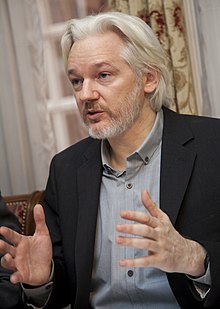
Julian Assange’s fiancé calls on the Australian government to secure his freedom, https://www.wsws.org/en/articles/2020/06/22/assa-j22.html, By Oscar Grenfell, 22 June 2020Stella Morris, the fiancé of Julian Assange and mother of his two young children, issued a powerful call last night for the Australian government to secure the WikiLeaks founder’s freedom and prevent his extradition to the US, where he faces life imprisonment for exposing American war crimes.
Morris was featured on Channel Nine’s “60 Minutes” program. The 24-minute segment provided an objective account of Assange’s decade-long arbitrary detention, first in Ecuador’s London embassy where he was a political refugee, and since April 2019 in the maximum-security Belmarsh Prison.
The program, presented by Tara Brown, was the first substantive examination of Assange’s plight by the Australian media since the coronavirus pandemic began.
Despite the fact that he is an Australian journalist being persecuted by the most powerful governments in the world for his publishing activities, corporate media outlets have maintained an effective D-notice on Assange for more than three months. This has dovetailed with the refusal of the Australian government, the Labor opposition and all of the official parties to defend the WikiLeaks founder.
Morris warned that Assange’s incarceration in Belmarsh, which she noted has been dubbed the “UK’s Guantanamo Bay,” is exacerbating physical and psychological health issues stemming from his protracted persecution.
“He’s very unwell and I’m very concerned for his ability to survive this,” she said. “Now he’s in the UK’s worst prison. It’s a high-security prison. One in five prisoners are murderers. He shouldn’t be there. He’s not a criminal, he’s not a dangerous person, he’s a gentle intellectual thinker and a journalist. Those people are not the people who belong in prison.”
Morris stated that she was “very worried” about Assange’s circumstances. She has been unable to visit him since February, as a result of coronavirus lockdown measures. Despite widespread infections throughout the British penitentiary system, including in Belmarsh, and Assange’s vulnerability to the virus as a result of a chronic lung condition, he has been refused bail.
“If you’re separated from your family and you’re alone in a tiny, dark room for 23-hours a day, with no control over your surroundings, I think people can imagine what that is like,” Morris said.
Brown stated that in such circumstances, “most people would probably go mad.” Morris responded: “I think any person would get very severely depressed and he is very depressed.” “60 Minutes” showed Morris and her two young children speaking with Assange on the phone. The older of the two asked Assange when he was coming home.
Morris, a 37-year-old lawyer, recounted the circumstances of her relationship with Assange. They had grown close when she was working on his legal cases after he had successfully sought political asylum in the Ecuadorian embassy.
When the couple’s two children were born in 2017 and 2018, the new Ecuadorian government had initiated closer relations with the US and was increasingly hostile to Assange. UC Global, a Spanish firm contracted to manage the embassy’s security, was surveilling every aspect of Assange’s life and was passing the the material gathered to the US Central Intelligence Agency.
When she fell pregnant, Morris informed Assange by writing the news on a piece of paper. They were fearful that any conversation about their personal life would be picked up by the audio recording devices placed throughout the embassy by UC Global. Morris sought to hide her pregnancies from the embassy staff and after the children were born, a friend of Assange pretended to be their father and brought them to the embassy.
“The real issue was I thought that our family would be targeted by the same people that were trying to harm Julian,” Morris stated. The program featured news clips of senior US government figures denouncing Assange in hysterical terms and calling for him to be silenced. Morris noted that UC Global had considered stealing the diaper of one of her children to confirm his paternity, and had even discussed plans to kill Assange or allow American agents to kidnap him.
Morris commented that it would be difficult for many people to appreciate the lawlessness that had characterised Assange’s persecution. “There’s incredible criminality that has been going on in order to gather information about Julian’s lawyers, and his family, and journalists who were visiting him,” she said. “I’ve been in a permanent state of fear for years and now it’s slowly playing out.”
Significantly, the politically-motivated character of Swedish sexual misconduct allegations against Assange was made clear in the program. The allegations were concocted by that country’s police and judiciary, in the midst of a frenzied US campaign against WikiLeaks’ exposure of war crimes in Iraq and Afghanistan.
Brown noted that Assange had never been charged with a crime in Sweden, and that the Swedish investigation had been dropped. Australian independent parliamentarian Andrew Wilkie pointed out that documents had shown that the British government used the allegations to enforce Assange’s arbitrary detention in the Ecuadorian embassy. The British authorities had been aware that the Swedish claims were a smokescreen for plans to dispatch Assange to his US persecutors.
The program concluded with an appeal from Morris to the Australian government. She said: “I want people to understand that we’re being punished as a family. It’s not just Julian in the prison. The kids are being deprived of their father. I need Julian and he needs me.”
Morris declared: “I’d like to ask [Australian Prime Minister] Scott Morrison to do everything he can to get Julian back to his family. If Australia doesn’t step in I’m very fearful this wrong won’t be righted. It’s a nightmare.”
Tellingly, Brown stated that Morrison, Foreign Minister Marise Payne and Christian Porter refused to be interviewed.
This was in line with the ten-year collaboration of Australian governments in the US-led vendetta against Assange. Beginning with the Greens-backed Labor government of Julia Gillard, they have rejected calls to defend the WikiLeaks’ founder, instead participating in the campaign against him.
The official hostility to Assange is bound up with the Australian ruling elite’s unconditional support for the US military alliance and all of American imperialism’s illegal wars and military preparations and dovetails with a domestic assault on democratic rights, including attacks on press freedom and laws increasing punishments for whistleblowers. It is facilitated by the refusal of the Greens, the pseudo-left groups and the unions to mount any campaign for Assange’s rights.
This underscores the fact that the fight for Assange’s freedom and for the defence of all civil liberties requires the mobilisation of the working class. The international protests over recent weeks against police violence have demonstrated the objective basis for building such a movement.
President’s nuclear fantasy threatens Nevadans’ health, national security

President’s nuclear fantasy threatens Nevadans’ health, national security https://lasvegassun.com/news/2020/jun/22/presidents-nuclear-fantasy-threatens-nevadans-heal/
Monday, June 22, 2020 Blocking President Donald Trump from nuking Nevada or dumping radioactive materials here is an unpleasant task that rears its head with annoying regularity. It’s like scraping irradiated gum off the bottom of your shoe.
So here’s a show of respect and gratitude to Nevadans who are safeguarding the state.
That includes Rep. Dina Titus, who last week introduced a bill aimed at stopping Trump from conducting nuclear bomb tests at the Nevada National Security Site. Titus and Nevada Rep. Steven Horsford, who co-sponsored the bill, jumped into action after The Washington Post reported this month that senior officials in the Trump administration had dusted off the idea of live testing, an insane plan that had first been reported in 2018 but then seemingly vanished.
The bill would circumvent testing by denying federal funding for it. As Titus explained, targeting the funding was the most effective approach due to the Trump administration’s opposition to ratifying an international nuclear testing ban that was adopted by the United Nations but remains unratified by the U.S. and seven other countries — China, Iran, Israel, Egypt, India, Pakistan and North Korea.
The lack of a treaty leaves Nevada vulnerable to testing, since the federal government owns and operates the security site. And Trump apparently believes that blowing up a bomb here would give the U.S. a stronger hand in negotiations with China and Russia on national security. In other words, Nevadans would be used as pawns in geopolitical saber-rattling.
The bill is a responsible piece of legislation. Resuming nuclear bomb testing is a slice of Dr. Strangelove-esque lunacy that would ratchet up tensions between nuclear nations and for no good reason. Due to technological advances, live testing is no longer needed to ensure that nuclear stockpiles are effective and secure.
Experts like Hans Kristensen, director of the nuclear information project at the Federation of American Scientists, say Trump is off the rails.
“That’s completely nuts,” Kristensen told The Guardian. “They must be getting desperate. Instead, what it certainly would do is push China and all the other nuclear-armed states to test as well. How can someone in their right mind think that would be in the security interest of the United States or its allies?”
For Nevadans and downwinders, testing poses unacceptable health and environmental dangers. We sacrificed more than enough during the decades of testing here, when more than 1,000 bombs were exploded at the test site, just 60 miles north of Las Vegas.
Nevada shouldn’t have to endure more punishment just so the always insecure Trump can seem like a tough guy.
As the bill begins its way through Congress, Southern Nevada’s delegation sent Trump and federal officials a letter expressing opposition to testing.
“Not only would such an action compromise the health and safety of Nevadans, degrade vital water resources and harm the surrounding environment, but it would also undermine future stockpile stewardship efforts, undercut our nuclear nonproliferation goals and further weaken strategic partnerships with our global allies,” read the letter, signed by Sens. Catherine Cortez Masto and Jacky Rosen, along with Titus, Horsford and Rep. Susie Lee.
While the delegation fights off the nuclear test, a group of Native American leaders, environmentalists and outdoor-recreation advocates recently won a preliminary battle in its efforts to block a massive expansion of the bombing range at Naval Air Base Fallon in central Nevada.
Last week, the Senate Armed Services Committee shot down the proposed expansion by writing it out of the 2021 National Defense Authorization Act. Although the committee’s version of the NDAA isn’t final, the Senate leaders’ opposition to the plan is encouraging.
The plan is horrific for Nevada, and is supported by Nevada’s lone Republican congressional delegate, Mark Amodei, who would rather grovel before national GOP leaders than defend the interests of his constituents. It would serve up more than 600,000 acres of public land for bombing and other training purposes, causing a harmful impact on the environment and ancestral Native American lands. It also contains land conveyance provisions that would allow vast amounts of public lands to be developed for residential, industrial and commercial purposes.
Combined with the existing acreage on the base, the expansion would permit bombing on about 750,000 acres. While the Navy says more space is needed due to technological advances that allow weapons to be deployed from increasingly long distances, the expansion is too much to ask from Nevada. Kudos to those fighting this overreach.
Nevadans must defend ourselves from a president who clearly loathes our state and thinks we’re only good as a dumping ground for his bad ideas and worst impulses, starting with the administration’s push for the resurrection of the Yucca Mountain nuclear waste repository. No sooner had that effort been snuffed out than the Defense Department secretly sent a shipment of highly radioactive plutonium to the state, forcing Nevada leaders to go to court in hopes of getting it removed and preventing future dark-of-night incursions.
With at least six months remaining in Trump’s presidency, Nevada must keep watching the radar closely. But the vigilance of our leadership — and by that we mean not only in Washington and Carson City but in Native American communities and advocacy organizations — has been commendable.
To 23 June – the week in nuclear/climate news
With a record world increase in coronavirus cases, Brazil and North America in the spotlight – media attention has been rightly focussed on the pandemic. FAIR exposes the false claims about China and COVID-19 . At the same time, global heating seems to be at a runaway pace, affecting the Northern Hemisphere, and especially the Arctic. To protect our planet – we need to transform, not grow, the economy.
Global nuclear news is mainly just the same old collection of handouts from the nuclear industry, faithfully regurgitated by journalists who want to keep their jobs. Otherwise, not much is happening.
A bit of good news – Coronavirus more than 1500 treatment studies are underway world-wide.
Now, the nuclear arms race has become even worse.
Joint Project Nuclear Risk and Public Control.
Explaining ionising radiation -a film about nuclear fallout
COVID-19, nuclear war, and global warming: lessons for our vulnerable world.
Covid-19 pandemic – ‘fire drill’ for effects of climate crisis. COVID-19 recovery plans – excellent opportunity for global renewable energy development.
USA.
- Time to act on Dr King’s call to tackle evils of racism, economic exploitation, and war. Why we must stop investing in nuclear weapons.
- How much did USA’s failed plutonium project cost? Now a giveaway sale of MOX equipment.
- Donald Trump’s extraordinary ignorance on which countries are nuclear powers. Let them eat weapons: Trump’s bizarre arms race . BOLTON BOOK: Trump Endorsed Israeli Airstrike On Iranian Nuclear Reactors. Scientists urge US not to resume nuclear tests.
- USA taxpayers’ money can now go to private companies overseas building nuclear reactors!
- Heaviest load ever through Nevada, the 770-ton reactor pressure vessel from dead SanOnofre nuclear station.
- South Carolina Electric and Gas lawyers and executives could face gaol for fraud. Massachusetts officials have dropped a lawsuit against Holtec over $1B Nuclear cleanup.
- Nuclear industry encroaching further into USA education, thanks to DOE funding.
- USA’s secret plan for “dominance”by exploding a nuclear bomb on the moon. False fright: religious group advertisement claims “Islam” about to make nuclear strike.
RUSSIA. The ‘chemical fingerprint’ of a 2017 nuclear explosion. Anti-nuclear resistance in Russia: problems protests, reprisals. Siberia’s alarming prolonged heat wave.
UK. UK’s Nuclear Future in Doubt amid Diplomatic Fallout over Huawai. EDF’s failing nuclear reactors in UK. Covid-19 pandemic being used to prevent proper public consultation on Bradwell nuclear project. Bradwell nuclear project “unsustainable, unsuitable and unacceptable” – and not a done deal. Sizewell nuclear power station could become a dangerous nuclear island. Sizewell C nuclear project threatens nationally important landscapes, habitats and species of the Suffolk coast.
PACIFIC ISLANDS. Pacific leaders do not want the coronavirus pandemic to distract from work on climate change.
FRANCE. Nuclear power sales heavily affected by COVID-19 in France: legal battles to follow.
SOUTH AFRICA. Financially ruinous coal and nuclear power proposals – will muck up post-Covid-19 recovery. South Africa’s environmental watchdogs warn government against new nuclear power. Renewable energy for South Africa – cost-efficient and quick – forget coal and nuclear.
SOUTH KOREA. Kim Jong Un’s cyberwar preparations. U.S. – China talks may cover North Korea nuclear issue
BULGARIA. French, American, Russian nuclear companies join forces to build Bulgarian nuclear station.
INDIA. Explaining the India-China conflict.
JAPAN. COVID-19 sheds doubts on Tokyo Olympics 2021.
IRAN. Europe’s effort to save Iran nuclear deal.
BRAZIL. 35 years in construction, Brazil’s very costly Angra 3 nuclear plant to be delayed yet again.
TURKEY. Environmental problems, and legal holdup for Russia’s $20 billion nuclear power project in Turkey.
1 This Month

of the week – Shut Down Drone Warfare!


Tell the Ukrainian Government to Drop Prosecution of Peace Activist Yurii Sheliazhenko

Petition to revoke the licensing of the Near Surface Nuclear Disposal Facility (NSDF) at Chalk River. https://www.ourcommons.ca/petitions/en/Petition/Details?Petition=e-7247
To see nuclear-related stories in greater depth and intensity – go to https://nuclearinformation.wordpress.com
-
Archives
- April 2026 (7)
- March 2026 (251)
- February 2026 (268)
- January 2026 (308)
- December 2025 (358)
- November 2025 (359)
- October 2025 (376)
- September 2025 (257)
- August 2025 (319)
- July 2025 (230)
- June 2025 (348)
- May 2025 (261)
-
Categories
- 1
- 1 NUCLEAR ISSUES
- business and costs
- climate change
- culture and arts
- ENERGY
- environment
- health
- history
- indigenous issues
- Legal
- marketing of nuclear
- media
- opposition to nuclear
- PERSONAL STORIES
- politics
- politics international
- Religion and ethics
- safety
- secrets,lies and civil liberties
- spinbuster
- technology
- Uranium
- wastes
- weapons and war
- Women
- 2 WORLD
- ACTION
- AFRICA
- Atrocities
- AUSTRALIA
- Christina's notes
- Christina's themes
- culture and arts
- Events
- Fuk 2022
- Fuk 2023
- Fukushima 2017
- Fukushima 2018
- fukushima 2019
- Fukushima 2020
- Fukushima 2021
- general
- global warming
- Humour (God we need it)
- Nuclear
- RARE EARTHS
- Reference
- resources – print
- Resources -audiovicual
- Weekly Newsletter
- World
- World Nuclear
- YouTube
-
RSS
Entries RSS
Comments RSS
 nuclear-news