COVID-19, nuclear war, and global warming: lessons for our vulnerable world — IPPNW peace and health blog
The COVID-19 pandemic teaches lessons we must embrace to overcome two additional existential threats: nuclear war and global warming.
COVID-19, nuclear war, and global warming: lessons for our vulnerable world — IPPNW peace and health blog
The COVID-19 pandemic teaches lessons we must embrace to overcome two additional existential threats: nuclear war and global warming.
This week in nuclear and climate news
News is, by its nature, all about bad stuff. Whatever is normal, reasonable, decent, is ordinary, and just not news, – a fact that we need to remind ourselves of, in these uncertain Covid-19 days. There’s a lot of good will for changing society’s trajectory towards ruining our planet. Half of the Earth’s ice-free land is still free from human impact. Post-pandemic packages could green up our energy systems for environmental and economic benefit. Some seemingly small ideas can have surprisingly large successes – for example, fast-growing mini-forests springing up in Europe are helping the climate. https://www.youtube.com/watch?v=ZO0IWAgJdlk
Another bit of good news – Elders Around the World in Their 80s, 90s, and 100s Are Bouncing Back From Virus – and Sharing Advice.
Our existential threat – our extinction.
Cloud studies indicate that global heating may be more alarming than anticipated. Global heating to bring more frequent, more extreme, ocean waves. Seeking ways to remove carbon from the air.
The last major treaty for nuclear weapons control now hangs in the balance.
USA.
- USA’s reckless nuclear spending as coronovirus hits the nation. Bernie Sanders, and moving the money away from militarism. Sanders Proposes Slashing Pentagon Budget by 10% to Reinvest Funds in Communities ‘Devastated by Poverty and Incarceration’.
- As pandemic costs rise, USA plans costly,dangerous nuclear weapons tests. USA – resuming nuclear tests would wreck the Nuclear Non-Proliferation Treaty (NPT), with no military or strategic benefit. 80 Lawmakers Demand Trump Ditch Any Thought of Resuming ‘Dangerously Provocative’ Nuclear Tests – dangerous brinkmanship. Top Democrats demand answers.
- Trump wants costly armed nuclear ice-breakers – where will the money come from ?
- In U.S. Congress, a Bill to prohibit Trump’s possible plan to use nuclear weapons on hurricanes.
- USA’s International Development Finance Corp will remove its ban on financing exports of US nuclear technologies. Plan for USA’s taxpayers to fund nuclear power exports. USA offers to build Britain’s nuclear reactors.
- U.S. nuclear industry looks for salvation to hydrogen production – clutching at straws?
- USA’s failing nuclear industry will not be saved by new plan to stockpile uranium. Nuclear Regulatory Commission will prepare a full environmental impact statement (EIS) on nuclear license renewal for Columbia Fuel Fabrication Facility.
- Continuing court battle against proposed nuclear waste site near Carlsbad.
JAPAN.
- Fukushima’s radioactive waste problem. Fukushima: Japan Must Not Ignore Human Rights Obligations On Nuclear Waste Disposal – UN Experts. Japan extends 2011 disaster recovery agency’s work by 10 years. Evacuation orders to be lifted even before radiation purged.
- Government, nuclear industry badly in need of a reality check. ¥10 trillion reserve to combat pandemic branded Abe’s ‘pocket money’ .
- A housewife will run as candidate for Iwaki City Election 2020: “I want to protect Iwaki’s children”.
- Tepco and Toshiba join forces to upgrade Kashiwazaki-Kariwa nuclear plant.
- Japan should end its nonsensical effort to recycle nuclear fuel.
- Tracing Individual Perceptions of Media Credibility in Post-3.11 Japan.
- Island of Iwaishima‘s 30 year fight to stop nuclear reactors.
TAIWAN. Taiwan green groups urge Japan not to discharge radioactive water.
FRANCE. Fire on French submarine – luckily its nuclear reactor, nuclear fuel, had been removed for overhaul Risk of fire on a nuclear submarine. France’s lucky escape, due to reactor being removed for overhaul. French nuclear watchdog demands EDF fix faults at 5 reactors.
RUSSIA. Russia: commentary on its nuclear deterrence principles.
EUROPE. Radioactive cloud over Europe in 2017 came from a civilian nuclear reactor.
INDIA. India will follow with nuclear weapons testing, if USA resumes testing.
UK. Investigative journalism – Will Sellafields nuclear waste waft to Ireland? Or waft somewhere else? Why doesn’t debt-ridden EDF cut its losses and close its uneconomic UK nuclear reactors. Sellafield waste will stay on site after 2021, Cumbria County Council agrees. Grave climate risks to Sizewell C nuclear project – all too close to the sea.
NORTH KOREA. North Korea Vows to Boost Nuclear Program, Saying U.S. Diplomacy Failed.
SOUTH AFRICA. South African activists threaten to sue over nuclear plan.
CANADA. Canada’s proposed radioactive waste disposal rules are weak and industry-friendly. Delay to community vote on nuclear waste dump for South Bruce, Ontario.
ARMENIA. Armenia Rejects Russian Funding For Nuclear Plant Upgrade.
BELGIUM. Wallonia rejects nuclear waste disposal suggestion.
LUXEMBOURG. Greenpeace Luxembourg Protests against Belgian Nuclear Waste. No feasible solution found between Belgium and Luxembourg on nuclear waste disposal.
BRAZIL. Brazil government approves plan to complete third nuclear plant.
AUSTRALIA. Australia’s govt rushes nuclear waste Bill through Lower House, but this story is not over.All Users
Bernie Sanders, and moving the money away from militarism
For many years now, the Congressional Delegate from Colonized Washington D.C., Eleanor Holmes Norton, has introduced a resolution to move funding from nuclear weapons to useful projects. At some point, bills like that one need to rise to the top of our agenda. But Sanders’ amendment is a current priority, because it can be attached this month to a bill that the supposedly partisan and divided and gridlocked U.S. Congress has consistently and harmoniously passed with overwhelming majorities every year since time immemorial.
We need this step now and it is obtainable. Get out there and demand
|
Bernie, Amendments, and Moving the Money, Senator Bernie Sanders has finally done something that some of us thought would give his presidential campaign a big boost four years ago, and again this past year. He’s proposed to introduce legislation to move a significant amount of money from militarism to human and environmental needs (or at least human needs; the details aren’t clear, but moving money out of militarism is an environmental need).Better late than never! Let’s make it happen with an overwhelming show of public support! And let’s make it a first step!
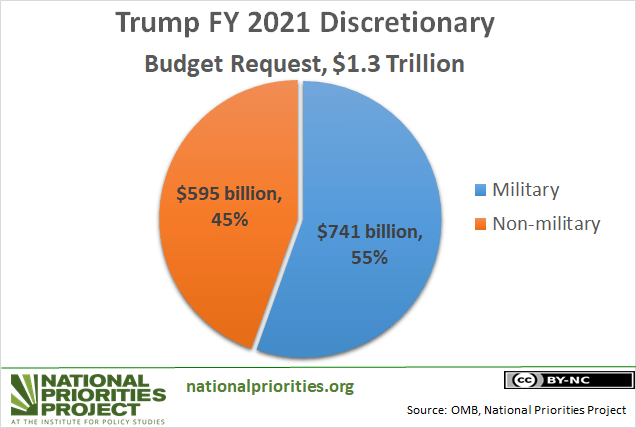
Technically, back in February, Bernie buried in a fact-sheet about how he would pay for everything he wanted to do, an $81 billion annual cut to military spending. While his current proposal is even smaller at $74 billion, it is a straightforward proposal to move the money; it’s not buried in a long document seeking to pay for transformative change almost entirely by taxing the wealthy; it’s already been covered at least by progressive media; it connects with a current burst of extraordinary activism, and Sanders has tweeted this: “Instead of spending $740 billion on the Dept. of Defense, let’s rebuild communities at home devastated by poverty and incarceration. I’ll be filing an amendment to cut the DoD by 10% and reinvest that money in cities and towns that we’ve neglected and abandoned for far too long.” And this: “Instead of spending more money on weapons of mass destruction designed to kill as many people as possible, maybe—just maybe—we should invest in improving lives right here in the United States of America. That’s what my amendment is all about.” One reason for this move by Sanders is almost certainly the current activism demanding that resources be moved from armed policing to useful expenses. The grotesque diversion of local budgets into militarized police and prisons is of course far outstripped in absolute numbers, in proportions, and in the suffering and death created, by Congress’s diversion of the federal discretionary budget into war and preparations for more war — which is of course where the weaponry and warrior training and a lot of the destructive attitudes and the troubled misguided veterans in local policing come from. Trump’s 2021 budget request varies little from past years. It includes 55% of discretionary spending for militarism. That leaves 45% of the money Congress votes on for everything else: environmental protections, energy, education, transportation, diplomacy, housing, agriculture, science, disease pandemics, parks, foreign (non-weapons) aid, etc., etc. The priorities of the U.S. government have been wildly out of touch with both morality and public opinion for decades, and have been moving in the wrong direction even as awareness of the crises facing us has inched upward. It would cost less than 3% of U.S. military spending, according to UN figures, to end starvation on earth, and about 1% to provide the world with clean drinking water. Less than 7% of military spending would wipe out poverty in the United States. Continue reading |
Climate predictions not serious enough – new research on clouds

Climate worst-case scenarios may not go far enough, cloud data shows https://www.theguardian.com/environment/2020/jun/13/climate-worst-case-scenarios-clouds-scientists-global-heating Modelling suggests climate is considerably more sensitive to carbon emissions than thought, Jonathan Watts Sat 13 Jun 2020 Worst-case global heating scenarios may need to be revised upwards in light of a better understanding of the role of clouds, scientists have said.Recent modelling data suggests the climate is considerably more sensitive to carbon emissions than previously believed, and experts said the projections had the potential to be “incredibly alarming”, though they stressed further research would be needed to validate the new numbers.
Modelling results from more than 20 institutions are being compiled for the sixth assessment by the United Nations Intergovernmental Panel on Climate Change, which is due to be released next year.
Compared with the last assessment in 2014, 25% of them show a sharp upward shift from 3C to 5C in climate sensitivity – the amount of warming projected from a doubling of atmospheric carbon dioxide from the preindustrial level of 280 parts per million. This has shocked many veteran observers, because assumptions about climate sensitivity have been relatively unchanged since the 1980s.
“That is a very deep concern,” Johan Rockström, the director of the Potsdam Institute for Climate Impact Research, said. “Climate sensitivity is the holy grail of climate science. It is the prime indicator of climate risk. For 40 years, it has been around 3C. Now, we are suddenly starting to see big climate models on the best supercomputers showing things could be worse than we thought.”
He said climate sensitivity above 5C would reduce the scope for human action to reduce the worst impacts of global heating. “We would have no more space for a soft landing of 1.5C [above preindustrial levels]. The best we could aim for is 2C,” he said.
Worst-case projections in excess of 5C have been generated by several of the world’s leading climate research bodies, including the UK Met Office’s Hadley Centre and the EU’s Community Earth System Model
Timothy Palmer, a professor in climate physics at Oxford University and a member of the Met Office’s advisory board, said the high figure initially made scientists nervous. “It was way outside previous estimates. People asked whether there was a bug in the code,” he said. “But it boiled down to relatively small changes in the way clouds are represented in the models.”
The role of clouds is one of the most uncertain areas in climate science because they are hard to measure and, depending on altitude, droplet temperature and other factors, can play either a warming or a cooling role. For decades, this has been the focus of fierce academic disputes.
Previous IPCC reports tended to assume that clouds would have a neutral impact because the warming and cooling feedbacks would cancel each other out. But in the past year and a half, a body of evidence has been growing showing that the net effect will be warming. This is based on finer resolution computer models and advanced cloud microphysics.
“Clouds will determine humanity’s fate – whether climate is an existential threat or an inconvenience that we will learn to live with,” said Palmer. “Most recent models suggest clouds will make matters worse.”
In a recent paper in the journal Nature, Palmer explains how the new Hadley Centre model that produced the 5+C figure on climate sensitivity was tested by assessing its accuracy in forecasting short-term weather. This testing technique had exposed flaws in previous models, but in the latest case, the results reinforced the estimates. “The results are not reassuring – they support the estimates,” he wrote. He is calling for other models to be tested in a similar way.
“It’s really important. The message to the government and public is, you have to take this high climate sensitivity seriously. [We] must get emissions down as quickly as we can,” he said.
The IPCC is expected to include the 5+C climate sensitivity figure in its next report on the range of possible outcomes. Scientists caution that this is a work in progress and that doubts remain because such a high figure does not fit with historical records.
Catherine Senior, head of understanding climate change at the Met Office Hadley Centre, said more studies and more data were needed to fully understand the role of clouds and aerosols.
“This figure has the potential to be incredibly alarming if it is right,” she said. “But as a scientist, my first response is: why has the model done that? We are still in the stage of evaluating the processes driving the different response.”
While acknowledging the continued uncertainty, Rockström said climate models might still be underestimating the problem because they did not fully take into account tipping points in the biosphere.
“The more we learn, the more fragile the Earth system seems to be and the faster we need to move,” he said. “It gives even stronger argument to step out of this Covid-19 crisis and move full speed towards decarbonising the economy.”
Half of the Earth’s ice-free land is still free from human impact

|
Half the earth relatively intact from global human influence https://www.eurekalert.org/pub_releases/2020-06/uoc–hte061120.php Study presents clear opportunities to conserve what remains, UNIVERSITY OF CALIFORNIA – DAVIS 14 June 20 Roughly half of Earth’s ice-free land remains without significant human influence, according to a study from a team of international researchers led by the National Geographic Society and the University of California, Davis.The study, published in the journal Global Change Biology, compared four recent global maps of the conversion of natural lands to anthropogenic land uses to reach its conclusions. The more impacted half of Earth’s lands includes cities, croplands, and places intensively ranched or mined. “The encouraging takeaway from this study is that if we act quickly and decisively, there is a slim window in which we can still conserve roughly half of Earth’s land in a relatively intact state,” said lead author Jason Riggio, a postdoctoral scholar at the UC Davis Museum of Wildlife and Fish Biology. The study, published June 5 on World Environment Day, aims to inform the upcoming global Convention on Biological Diversity — the Conference of Parties 15. The historic meeting was scheduled to occur in China this fall but was postponed due to the coronavirus pandemic. Among the meeting’s goals is to establish specific, and higher, targets for land and water protection. Approximately 15 percent of the Earth’s land surface and 10 percent of the oceans are currently protected in some form. However, led by organizations including Nature Needs Half and the Half-Earth Project, there have been bold global calls for governments to commit to protecting 30 percent of the land and water by 2030 and 50 percent by 2050. Intact natural lands across the globe can help purify air and water, recycle nutrients, enhance soil fertility and retention, pollinate plants, and break down waste products. The value of maintaining these vital ecosystem services to the human economy has been placed in the trillions of U.S. dollars annually. CONSERVATION AND COVID-19 The coronavirus pandemic now shaking the globe illustrates the importance of maintaining natural lands to separate animal and human activity. The leading scientific evidence points to the likelihood that SARS-CoV2, the virus that causes the disease COVID-19, is a zoonotic virus that jumped from animals to humans. Ebola, bird flu and SARS are other diseases known to have spilled over into the human population from nonhuman animals. “Human risk to diseases like COVID-19 could be reduced by halting the trade and sale of wildlife, and minimizing human intrusion into wild areas,” said senior author Andrew Jacobson, professor of GIS and conservation at Catawba College in North Carolina. Jacobson said that regional and national land-use planning that identify and appropriately zone locations best suited to urban growth and agriculture could help control the spread of human development. Establishing protections for other landscapes, particularly those currently experiencing low human impacts, would also be beneficial. FROM THE TUNDRA TO THE DESERT Among the largest low-impact areas are broad stretches of boreal forests and tundra across northern Asia and North America and vast deserts like the Sahara in Africa and the Australian Outback. These areas tend to be colder and/or drier and less fit for agriculture. “Though human land uses are increasingly threatening Earth’s remaining natural habitats, especially in warmer and more hospitable areas, nearly half of Earth still remains in areas without large-scale intensive use,” said co-author Erle Ellis, professor of geography at the University of Maryland-Baltimore County. Areas having low human influence do not necessarily exclude people, livestock or sustainable management of resources. A balanced conservation response that addresses land sovereignty and weighs agriculture, settlement or other resource needs with the protection of ecosystem services and biodiversity is essential, the authors note. “Achieving this balance will be necessary if we hope to meet ambitious conservation targets,” said Riggio. “But our study optimistically shows that these targets are still within reach.” |
|
Post-pandemic packages could green up our energy systems for environmental and economic benefit.

message was a grim, possibly self-serving, prediction, that sun, wind and water power would only ever meet four per cent of the country’s needs.
Climate helped by Europe’s fast-growing mini-forests
Fast-growing mini-forests spring up in Europe to aid climate
Miyawaki forests are denser and said to be more biodiverse than other kinds of woods, Guardian, Hannah Lewis, Sat 13 Jun 2020 Tiny, dense forests are springing up around Europe as part of a movement aimed at restoring biodiversity and fighting the climate crisis.
Often sited in schoolyards or alongside roads, the forests can be as small as a tennis court. They are based on the work of the Japanese botanist Akira Miyawaki, who has planted more than 1,000 such forests in Japan, Malaysia and elsewhere.
Advocates for the method say the miniature forests grow 10 times faster and become 30 times denser and 100 times more biodiverse than those planted by conventional methods. This result is achieved by planting saplings close together, three per square metre, using native varieties adapted to local conditions. A wide variety of species – ideally 30 or more – are planted to recreate the layers of a natural forest.
Scientists say such ecosystems are key to meeting climate goals, estimating that natural forests can store 40 times more carbon than single-species plantations. The Miyawaki forests are designed to regenerate land in far less time than the 70-plus years it takes a forest to recover on its own.
“This is a great thing to do,” said Eric Dinerstein, a wildlife scientist who co-authored a recent paper calling for half of the Earth’s surface to be protected or managed for nature conservation to avoid catastrophic climate change. “So this could be another aspect for suburban and urban areas, to create wildlife corridors through contiguous ribbons of mini-forest.”
The mini-forests could attract migratory songbirds, Dinerstein said. “Songbirds are made from caterpillars and adult insects, and even small pockets of forests, if planted with native species, could become a nutritious fast-food fly-in site for hungry birds.”……. https://www.theguardian.com/environment/2020/jun/13/fast-growing-mini-forests-spring-up-in-europe-to-aid-climate
Fukushima: Japan Must Not Ignore Human Rights Obligations On Nuclear Waste Disposal – UN Experts,
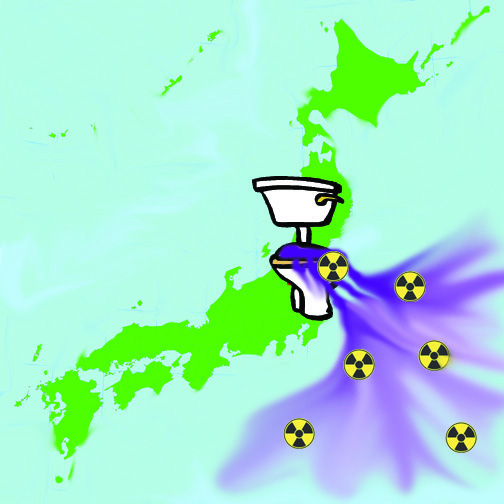 Fukushima: Japan Must Not Ignore Human Rights Obligations On Nuclear Waste Disposal – UN Experts, https://www.scoop.co.nz/stories/WO2006/S00057/fukushima-japan-must-not-ignore-human-rights-obligations-on-nuclear-waste-disposal-un-experts.htm Wednesday, 10 June 2020, UN Special Procedures – Human Rights UN human rights experts* today urged the Japanese Government to delay any decision on the ocean-dumping of nuclear waste water from the reactors at Fukushima Daiichi until after the COVID-19 crisis has passed and proper international consultations can be held.“We are deeply concerned by reports that the Government of Japan has accelerated its timeline for the release of radioactive waste water into the ocean without time or opportunity for meaningful consultations,” the independent experts said. Credible sources indicate the postponement of the 2020 Olympics enabled the Government’s new decision-making process for release of the waste. Fukushima: Japan Must Not Ignore Human Rights Obligations On Nuclear Waste Disposal – UN Experts, https://www.scoop.co.nz/stories/WO2006/S00057/fukushima-japan-must-not-ignore-human-rights-obligations-on-nuclear-waste-disposal-un-experts.htm Wednesday, 10 June 2020, UN Special Procedures – Human Rights UN human rights experts* today urged the Japanese Government to delay any decision on the ocean-dumping of nuclear waste water from the reactors at Fukushima Daiichi until after the COVID-19 crisis has passed and proper international consultations can be held.“We are deeply concerned by reports that the Government of Japan has accelerated its timeline for the release of radioactive waste water into the ocean without time or opportunity for meaningful consultations,” the independent experts said. Credible sources indicate the postponement of the 2020 Olympics enabled the Government’s new decision-making process for release of the waste.
They said the Government’s short extension for the current public consultation was grossly insufficient while COVID-19 measures limited opportunities for input from all affected communities in Japan, as well as those in neighbouring countries, including indigenous peoples.
|
|
Risk of fire on a nuclear submarine. France’s lucky escape, due to reactor being removed for overhaul
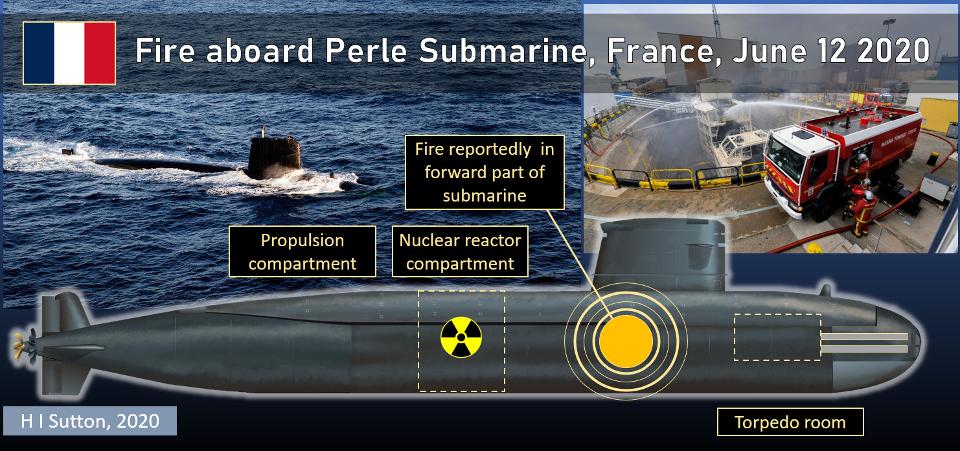
Why The Catastrophic Fire On A Nuclear Submarine Is Nothing To Gloat About https://www.forbes.com/sites/hisutton/2020/06/14/why-the-catastrophic-fire-on-a-nuclear-submarine-is-nothing-to-gloat-about/#ef9667d2ffd0
As details emerge of the fire aboard the French submarine Perle on Friday, it seems unlikely to me that the boat will be returned to service. Whichever way you look at it, the fire is a terrible blow for the French Navy (Marine Nationale). Their submarine fleet is already stretched. But France’s misfortune brings home a basic reality that it could happen to any navy.
The cause of the fire, which took most of Friday to extinguish, has yet to be determined. Florence Parly, Minister of the Armed Forces, was reported by Naval News as saying on June 13 that the “cause for such a strong (and rapid) fire is still unknown.” She also said that if the boat turns out to be fixable, everything will be done to repair it. Any hint of optimism in this statement may point to the terrible predicament that it will leave the French Navy in if it cannot be repaired.
No Reason To Gloat
You will not find many in the defense community laughing at France’s expense. When a Russian or Chinese warship suffers a similar accident, many casual observers are quick to make jokes. Less so the defense community.
For example on April 13 a Chinese Type-075 assault carrier caught fire in Shanghai. That ship, the first of its type, was being fitted out before delivery. The types of work done during refit are similar to the deep overhaul that Perle was being subject to. Or in December last year a Russian aircraft carrier caught fire.
But the Western defense community is very aware that these accidents could equally apply to their home navies. Overhauling ships and submarines is ‘hot work’ and fires can easily occur.
The fire took 14 hours to put out, from 10.35am until 00.50 am the next morning. This may sound like a long time, but the U.S. Navy had a similar experience dealing with a fire aboard the Los Angeles class submarine USS Miami in 2012. That fire, which was also during an overhaul, lasted 12 hours and caused so much damage that the boat had to be written off. In the American case it turned out that the fire had been started deliberately by a dockyard worker hoping that the alarm would get him off work early.
In general, fires aboard submarines can be harder to put out. This is because of the cramped spaces aboard, and also because there are very few openings into the submarine. And they can be more devastating than a similar fire aboard a surface vessel because the heat can deform the steel hull. On a surface vessel this can be repaired more easily, but with a submarine it can make the hull weaker so that it is no longer safe to dive. This is why I am not optimistic that she will be repairable.
The fire was not as bad as it could have been. Fortunately the nuclear reactor had apparently already been removed. So the fire has not been categorized as a nuclear accident. And the torpedoes and missiles had also been unloaded so there was no risk of them exploding.
Many core systems, such as the combat system and sonar, had also been removed. So if the hull can be saved, then returning her to service is at least feasible. But everything seems to depend on whether the hull itself has been weakened.
1 This Month
Chernobyl: The Lost Tapes – A good documentary on Chernobyl on SBS available On Demand for the next 3 weeks– https://www.sbs.com.au/ondemand/tv-program/chernobyl-the-lost-tapes/2352741955560

of the week–London Campaign for Nuclear Disarmament

Tell the Ukrainian Government to Drop Prosecution of Peace Activist Yurii Sheliazhenko
To see nuclear-related stories in greater depth and intensity – go to https://nuclearinformation.wordpress.com
-
Archives
- April 2026 (126)
- March 2026 (251)
- February 2026 (268)
- January 2026 (308)
- December 2025 (358)
- November 2025 (359)
- October 2025 (376)
- September 2025 (257)
- August 2025 (319)
- July 2025 (230)
- June 2025 (348)
- May 2025 (261)
-
Categories
- 1
- 1 NUCLEAR ISSUES
- business and costs
- climate change
- culture and arts
- ENERGY
- environment
- health
- history
- indigenous issues
- Legal
- marketing of nuclear
- media
- opposition to nuclear
- PERSONAL STORIES
- politics
- politics international
- Religion and ethics
- safety
- secrets,lies and civil liberties
- spinbuster
- technology
- Uranium
- wastes
- weapons and war
- Women
- 2 WORLD
- ACTION
- AFRICA
- Atrocities
- AUSTRALIA
- Christina's notes
- Christina's themes
- culture and arts
- Events
- Fuk 2022
- Fuk 2023
- Fukushima 2017
- Fukushima 2018
- fukushima 2019
- Fukushima 2020
- Fukushima 2021
- general
- global warming
- Humour (God we need it)
- Nuclear
- RARE EARTHS
- Reference
- resources – print
- Resources -audiovicual
- Weekly Newsletter
- World
- World Nuclear
- YouTube
-
RSS
Entries RSS
Comments RSS
 nuclear-news