World’s Sixth Largest Economy, Going Nuclear-Free
Diablo Canyon nuclear plant to be shut down, power replaced by renewables, efficiency, storage https://foe.org/news/2016-06-diablo-canyon-nuclear-plant-to-be-shut-down/ California, World’s Sixth Largest Economy, Going Nuclear-Free, BERKELEY, CALIF. – An historic agreement has been reached between Pacific Gas and Electric, Friends of the Earth, and other environmental and labor organizations to replace the Diablo Canyon nuclear reactors with greenhouse-gas-free renewable energy, efficiency and energy storage resources. Friends of the Earth says the agreement provides a clear blueprint for fighting climate change by replacing nuclear and fossil fuel energy with safe, clean, cost-competitive renewable energy. Continue reading
$41 billion for Hanford high level nuclear waste clean-up. Fiasco of Pretreatment Facility

Hanford strategy for worst nuclear waste criticized. Plant estimates skyrocket to $41 billion, Tri City Herald BY ANNETTE CARY, MAY 13, 2020 The Department of Energy’s strategy for pretreating high-level waste at Hanford is “unclear” 20 years after construction of a massive glassification plant began, while costs continue to soar, says a new federal report.
The Government Accountability Office released a report to Congress this week focusing on the plant’s Pretreatment Facility, where construction stopped seven years ago because of technical issues.
The issues involved safety concerns to prevent a possible explosion or radioactive waste leak.
U.S. taxpayers have spent $11 billion on the Hanford glassification plant, but the Pretreatment Facility is unlikely to be finished on schedule or as designed, the report said.
Under one scenario being studied, some of the worst waste at Hanford could be shipped across the nation to South Carolina to be stabilized for disposal.
Since construction stopped in late 2012 on the pretreatment plant, $752 million has been spent, with construction not ready to restart anytime soon, the GAO report indicated.
DOE also has spent $428 million developing alternatives for some of the work expected to be done at the pretreatment plant.
There is no cost estimate for completing the Pretreatment Facility, the largest facility at the plant, the GAO report said.
Completing the entire vitrification plant could cost $19 billion to $30 billion more than the $11 billion already spent, the GAO said.
That would put the total cost at $30 billion to $41 billion.
The plant, named the Hanford Waste Treatment Plant, is being built to to glassify much of the 56 million gallons of radioactive waste in underground tanks, turning it into a stable form for disposal.
The waste is left from the past production of plutonium at Hanford in Eastern Washington for the nation’s nuclear weapons program from World War II through the Cold War.
2023 WASTE TREATMENT FOCUS
When Bechtel National was awarded a contract to build and start the plant in 2000, plans called for waste from the tanks to be sent first to the largest facility at the plant, the Pretreatment Facility
It stands about 12 stories high and covers an area larger than a football field.
There waste retrieved from underground tanks was to be separated into low activity radioactive waste and high level radioactive waste for glassification at separate facilities at the vitrification plant.
But after technical issues were raised in 2012 related to how well the pretreatment plant could handle the high level portion of the tank waste, DOE proposed a new plan.
It would first start vitrifying the low activity radioactive waste by developing other methods to separate that waste from tank waste.
A federal court judge agreed to the plan in 2016 but set a deadline for DOE to start vitrifying that waste by the end of 2023. The plant must be fully operational in 2036, the judge ordered.
DOE has since been focused on meeting the 2023 court-enforced deadline, including spending about $428 million developing those alternative pretreatment approaches, rather than on facilities that will handle high level waste, the GAO report said.
When construction stopped on the pretreatment plant it was about 40 percent complete.
WASTE ISSUES RESOLVED?
DOE has spent about $323 million to resolve technical issues at the facility since late 2012, with the rest of the $752 million spent on the plant during those years paying for overhead, project management, facility maintenance and DOE oversight………
Local DOE officials said they will not develop a cost for completing the Pretreatment Facility until there is a decision about the future of the facility and any updated design changes for it, according to the GAO report……
ECOLOGY’S PRETREATMENT CONCERNS
The issue is further complicated by concerns of the Washington state Department of Ecology, a Hanford regulator………. https://www.tri-cityherald.com/news/local/hanford/article242680951.html
$73 billion world spent in 2019 on nuclear weapons, half of it by USA
 World nuclear arms spending hit $73bn last year – half of it by US https://www.theguardian.com/world/2020/may/13/nuclear-weapons-world-record-spending
-
- Spending by nine nuclear-armed states rose 10%
- Trump boosted nuclear funding but cut pandemic prevention Julian Borger in Washington
-
-
- The world’s nuclear-armed nations spent a record $73bn on their weapons last year, with the US spending almost as much as the eight other states combined, according to a
-
- .
-
The new spending figures, reflecting the highest expenditure on nuclear arms since the height of the cold war, have been estimated by the International Campaign to Abolish Nuclear Weapons (Ican), which argues that the coronavirus pandemic underlines the wastefulness of the nuclear arms race.
The nine nuclear weapons states spent a total of $72.9bn in 2019, a 10% increase on the year before. Of that, $35.4bn was spent by the Trump administration, which accelerated the modernisation of the US arsenal in its first three years while cutting expenditure on pandemic prevention.
“It’s clear now more than ever that nuclear weapons do not provide security for the world in the midst of a global pandemic, and not even for the nine countries that have nuclear weapons, particularly when there are documented deficits of healthcare supplies and exhausted medical professionals,” Alicia Sanders-Zakre, the lead author of the report, said.
The report comes at a time when arms control is at a low ebb, with the last major treaty limiting US and Russian strategic nuclear weapons, New Start, due to expire in nine months with no agreement so far to extend it.
Russia, which has announced the development of an array of new weapons – including nuclear-powered, long-distance cruise missiles, underwater long-distance nuclear torpedoes and a new heavy intercontinental ballistic missile – spent $8.5bn on its arsenal in 2019, according to Ican’s estimates. China, which has a much smaller nuclear force than the US and Russia but is seeking to expand, spent $10.4bn.
Those expenditures were far overshadowed by the US nuclear weapons budget, which is part of a major upgrade also involving new weapons, including a low-yield submarine-launched missile, which has already been deployed.
According to the Congressional Budget Office, the cost of the US programme over the coming decade will be $500bn, an increase of nearly $100bn, about 23%, over projections from the end of the Obama administration.
Congressional Democrats failed in an attempt to curb the administration’s nuclear ambitions, but Kingston Reif, the director for disarmament and threat reduction policy at the Arms Control Association, said budgetary constraints in a coronavirus-induced recession, could succeed where political opposition failed.
“There’s going to be significant pressure on federal spending moving forward, including defense spending,” Reif said. “So, the cost and opportunity cost of maintaining and modernizing the arsenal, which were already punishing, will become even more so.”
Nuclear waste plan divides South Bruce community

 residents still have concerns about a high-level nuclear waste DGR in their community.
“The folks in South Bruce, who I would consider the key and primary stakeholders in all of this, are concerned about … health and safety, and the stigma that will be attached to” nuclear waste, Grant explawelined. These stakeholders are also worried about “the value of land and businesses in the immediate vicinity as l as along the transportations route from where the high-level nuclear waste is currently stored into the community.”
The siting process has disrupted families’ property values and farm planning and decision making.
We’ve invested 25 years into this property,” Stein said. And “people aren’t interested in moving into an area that might have all of Canada’s high-level nuclear waste.”
A Change.org petition against the DGR has accumulated over 1,300 signatures as of early May, and community members have formed a group called Nuclear Tanks No Thanks to counter the NWMO’s plans
South Bruce divided over nuclear waste, Farms.com Community members clash over the site selection for a high-level nuclear waste deep geologic repository By Jackie Clark, Staff Writer Farms.com Bryon Mckee |May 12 2020
South Bruce is an Ontario municipality that boasts “rolling hills, scenic highways and warm-hearted people,” on its website. However, over the last several months, a debate over a plan to build an underground nuclear waste facility has divided the community.
Proposals in Bruce County…….
……….The DGR would require about 250 acres or the surface facilities and 1,500 acres for the underground repository. ……..some residents have not found the community engagement to be satisfactory. Continue reading
USA’s record $3.7 trillion budget gap threatens Pentagon’s costly nuclear plans
 Huge federal deficits may threaten Pentagon nuclear modernization program Market Watch May 12, 2020, By Associated Press
The deficit may lead to a lack of big defense spending on projects like rebuilding the nation’s nuclear arsenal. WASHINGTON (AP) — The government’s $3 trillion effort to rescue the economy from the coronavirus crisis is stirring worry at the Pentagon. Bulging federal deficits may force a reversal of years of big defense spending gains and threaten prized projects like the rebuilding of the nation’s arsenal of nuclear weapons.
Defense Secretary Mark Esper says the sudden burst of deficit spending to prop up a damaged economy is bringing the Pentagon closer to a point where it will have to shed older weapons faster and tighten its belt.
“It has accelerated this day of reckoning,” Esper said in an Associated Press interview.
It also sets up confrontations with Congress over how that reckoning will be achieved. Past efforts to eliminate older weapons and to make other cost-saving moves like closing under-used military bases met resistance. This being a presidential election year, much of this struggle may slip to 2021. If presumptive Democratic nominee Joe Biden wins, the pace of defense cuts could speed up, if he follows the traditional Democratic path to put less emphasis on defense buildups.
After Congress passed four programs to sustain the economy through the virus shock, the budget deficit — the gap between what the government spends and what it collects in taxes — will hit a record $3.7 trillion this year, according to the Congressional Budget Office. By the time the budget year ends in September, the government’s debt — its accumulated annual deficits — will equal 101% of the U.S. gross domestic product.
Rep. Ken Calvert of California, the ranking Republican on the House Appropriations defense subcommittee, says defense budgets were strained even before this year’s unplanned burst of deficit spending…….. https://www.marketwatch.com/story/huge-federal-deficits-may-threaten-pentagon-nuclear-modernization-program-2020-05-12
UK’s nuclear weapons programmes $1.67 billion over budget
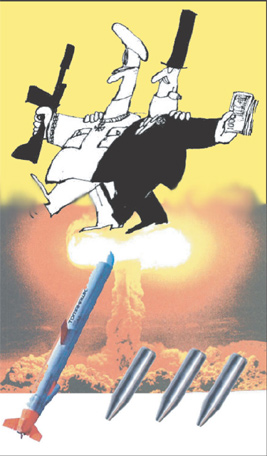 Three British nuclear programs are $1.67 billion over budget https://www.defensenews.com/global/europe/2020/05/12/three-british-nuclear-programs-are-167-billion-over-budget/ By: Andrew Chuter LONDON — Critical programs aimed at updating Britain’s nuclear weapons infrastructure have been hit by long delays and huge cost increases, according to the parliamentary Public Accounts Committee.
Poor management on three nuclear projects involving warhead assembly, core reactor production and submarine building have resulted in combined cost increases of £1.35 billion (U.S. $1.67 billion) as well as delays of between 1.7 and 6.3 years, the committee revealed in a report scheduled for release May 12.
The cost overruns were caused in large part by avoidable mistakes, such as beginning construction work without mature designs, said the committee.
The cost increases and delays cited in the report could be the tip of the iceberg in the nuclear sector. The three programs investigated by the committee represent about a quarter, by initial value, of the 52 nuclear infrastructure programs that the Ministry of Defence is pursuing. A report on nuclear infrastructure late last year by the government’s financial watchdog, the National Audit Office, said the initial value of all the projects was almost £5 billion.
The parliamentary committee said the MoD admitted that costs on the three projects “could keep rising, as its poor contract design has left the taxpayer to assume financial risk, while doing little to incentivize contractors to improve their performance.
The report said the MoD has poorly managed the three programs, failed to learn from past mistakes and agreed to poorly designed contracts with the major companies that have a stranglehold on Britain’s defense nuclear sector. The contracts did not allow the ministry to share the financial risk with contractors, which meant the government bore the full impact of cost increases, including those of subcontractors.
“To utterly fail to learn from mistakes over decades, to spectacularly repeat the same mistakes at huge cost to the taxpayer — and at huge cost to confidence in our defense capabilities — is completely unacceptable,” said Member of Parliament Meg Hillier, who chairs the Public Accounts Committee.
“We see too often these same mistakes repeated,” she added. “The department [MoD] knows it can’t go on like this. It knows it must change and operate differently. The test now is to see how it will do that, and soon.”
South Korea, Germany to bolster ties in transition towards renewable energy
S. Korea, Germany to bolster ties in transition towards renewable energy
The cooperation came as a follow-up to an agreement reached by Industry Minister Sung Yun-mo and German counterpart Peter Altmaier in Berlin last year, in which they vowed to bolster cooperation in the energy segment.
Seoul and Berlin will especially focus efforts on cooperating deeper on their shift towards renewable energy, while phasing out nuclear energy…….
The two countries are both making efforts to reduce their coal-based power generation as well, with Germany planning to break away from the resource by 2038. South Korea also vowed to “significantly reduce” its consumption of coal. https://en.yna.co.kr/view/AEN20200512003700320?fbclid=IwAR1RpCGPA8_id6MKRdp3q4xHlK6-BjaQOf5lbJL5TIhbKP6kHqekyrZmMagcolin@yna.co.kr
Judge Puts Hold on Move to Drop Flynn Case
 “Judge Puts Hold on Move to Drop Flynn Case more https://wordpress.com/read/feeds/4410547/posts/2701189215
By VOA News
May 12, 2020 11:53 PM
There is another stunning development in the case of President Donald Trump’s former National Security Adviser Michael Flynn.
The federal judge overseeing the case has put the Justice Department’s move to drop the criminal charges against Flynn on hold to give outside legal experts a chance to argue against the department’s decision.
Judge Emmet Sullivan said late Tuesday that “friends of the court” will be able to file briefs and that he will set up a time to hear those arguments “at the appropriate time.”
Sullivan could decide to call witnesses to testify and answer questions about the Justice Department’s extraordinary move last week to drop the charges against Flynn, and possibly reopen the entire case months before a presidential election.
Flynn pleaded guilty to charges of lying to the FBI about his talks with the Russian ambassador to the U.S. about easing U.S. sanctions during the transition period between the Obama and Trump administrations – a crime that carries a maximum five-year prison sentence.
The charges against Flynn were part of Special Counsel Robert Mueller’s investigation into Russian meddling in the 2016 presidential election.
Sullivan told Flynn at his 2018 sentencing that lying to the FBI was a “very serious offense.”
Flynn initially said he was guilty, that no one had talked him into admitting his crime and that he had no intention of taking back his plea.
But as his sentencing day approached, Flynn appealed to the court for a postponement, claiming that prosecutors set him up.
The Justice Department, led by Attorney General William Barr, shocked and angered the legal community last week when it said the case against Flynn should be dropped…
The decision opened the floodgates of criticism of Barr and the Justice Department that it is politically motivated and carrying out Trump’s wishes…
There has been no reaction to Sullivan’s decision so far from Barr or the White House. https://www.voanews.com/usa/us-politics/judge-puts-hold-move-drop-flynn-case http://archive.vn/7TiRw
A summary of Flynn’s Russia connections – showing why anyone who is sane would be suspicious of him.
https://miningawareness.wordpress.com/2020/05/08/general-michael-flynn-fired-from-the-dia-summary-2/
South Carolina nuclear fuel plant treatment pool leaking, polluting groundwater?
Now, the lagoon liner is wearing out. And that’s a concern.
Recent research suggests radioactive pollution has seeped through the synthetic barrier that was supposed to protect soil and groundwater in the Congaree River flood plain. Soil below the liner is suspected of being polluted with waste from the east lagoon, according to a new report for the plant’s operator, Westinghouse Nuclear.
’“It is expected that some contamination will exist in the soil underlying the east lagoon liner, given the long operating history of the lagoon and the potential for a liner system leak,’’ the May 8 report for Westinghouse says.
If the soil below the lagoon is polluted, as Westinghouse suspects, it could indicate that groundwater flowing away from the property and toward the Congaree River has been contaminated.
No one knows the extent of the contamination yet, but Westinghouse has a plan to dig radioactive sludge from the lagoon and haul it across the country for disposal in the Idaho desert.
Once the company has removed the mucky sludge and the lagoon’s 1980s era liner, it plans to test the soil below the waste pond to see how much contamination may be in the earth.
The new Westinghouse consulting report, released by the U.S. Nuclear Regulatory Commission, says sludge in the east lagoon at Westinghouse is contaminated with low enriched uranium and technetium-99, nuclear materials generated as part of production of fuel rods at the 51-year-old factory.
Exposure to sufficient amounts of uranium can cause kidney damage in adults and children. Technetium 99, which concentrates in the thyroid and gastrointestinal tract, can increase a person’s chances of cancer if exposed to certain amounts………
For now, Westinghouse is moving forward with cleanup efforts. Although the company doesn’t plan to clean up some pollution until it closes the plant in future decades, Westinghouse has agreed to get rid of other contamination sooner. …….
The tainted material that would be shipped to Idaho, likely next year, includes 45,000 cubic feet of sludge, soil and debris from the east lagoon, a 160-foot long pond behind the plant on Bluff Road.
Radioactive pond sludge would be hauled away on railroad cars to a U.S. Ecology site in the Owyhee Desert near Grand View, Idaho, according to plans filed with the U.S. Nuclear Regulatory Commission. Contaminated cylinders and a polluted sludge pile also will be carted away from the site for disposal……. https://www.thestate.com/news/local/environment/article242667201.html
Corona and nuclear power
|
Ann Darling: Corona and nuclear power, https://www.gazettenet.com/Darling-letter-34192441 13 May 20, Here’s a new twist on the pandemic. It has to do with nuclear power.That may seem an unlikely pairing, but nuclear reactors have workers, and they can get sick just like everyone else. Every day these essential workers are in facilities that, by their radioactive nature, can create great environmental and economic harm if they are not managed very carefully.
What is happening at nuclear reactors in the midst of the pandemic? Right now there are 30 nuclear power stations in a refueling phase in which the reactor is shut down, maintenance and safety inspections are completed, and new fuel is placed in the reactor. This requires bringing in hundreds of contract workers, who then travel on to the next refueling reactor. Yet, the Nuclear Regulatory Commission (NRC) is not requiring coronavirus screening or quarantining of workers prior to beginning work. Conditions in nuclear power plants make social distancing difficult, with large work crews, confined spaces, and frequent contact with equipment surfaces. At some sites, workers have complained about lack of social distancing, sanitation, PPE, and testing. Further, since March, the NRC has granted exemptions to nuclear power generating stations to increase limits on the number of hours employees can be required to work, and to postpone scheduled safety inspections and maintenance. Eighty-six organizations, organized by the Nuclear Information and Resource Service (NIRS, nirs.org), have sent a letter to Vice President Mike Pence, chair of the Coronavirus Task Force, and six federal agencies outlining the failure of the NRC to act responsibly in the fact of this pandemic. The groups call for an immediate, multi-agency, industrywide response to protect workers and reactor host communities, and to ensure nuclear safety is not compromised. We at the Citizens Awareness Network feel a responsibility to let you know what’s happening and what’s being done by active citizens to try to protect us here in the Pioneer Valley, where the Indian Point and Seabrook reactors are just 120 miles away, and Millstone only 75. Your federal tax dollars subsidize nuclear power, and we thought you’d want to know. |
|
Water loss in northern peatlands threatens to intensify fires, global warming
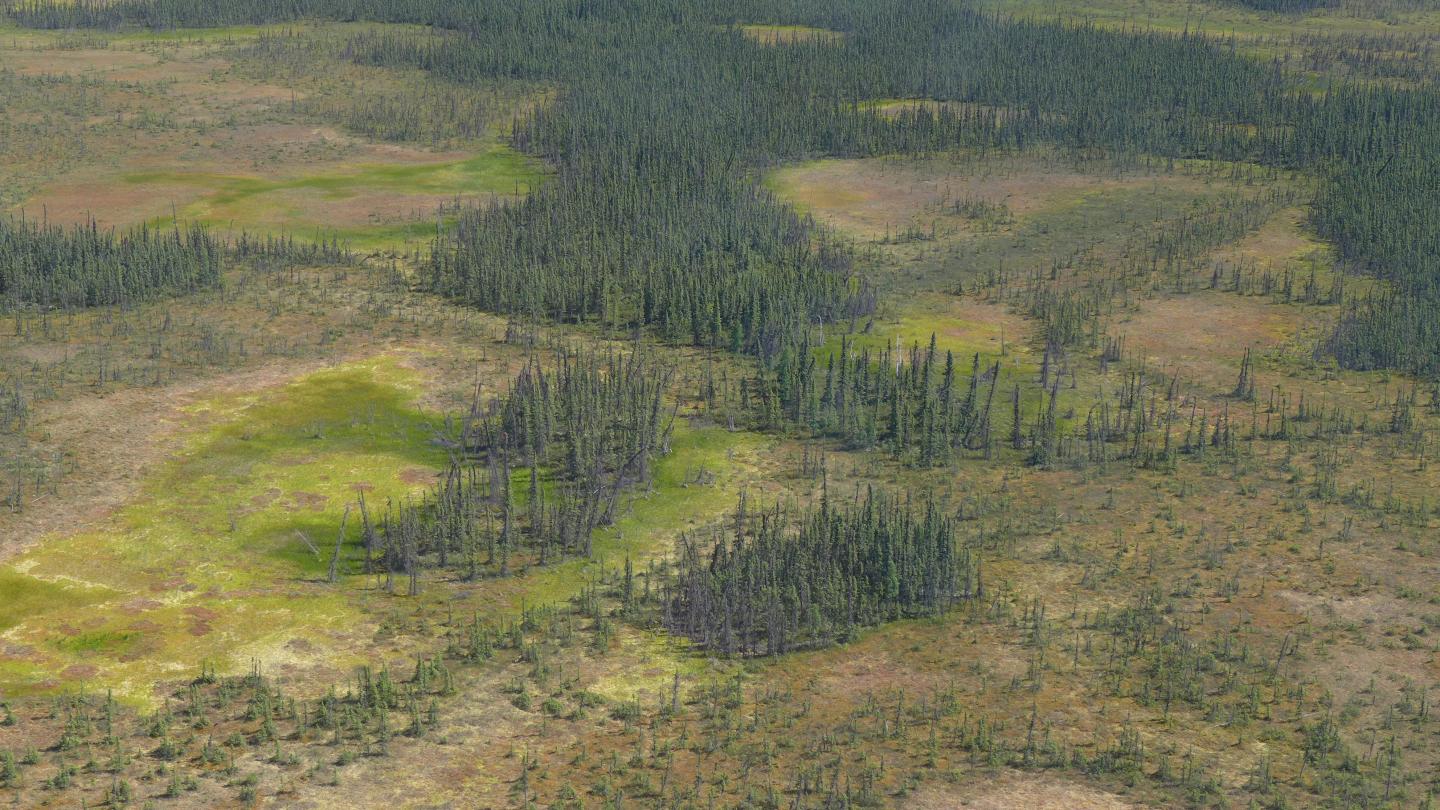 Water loss in northern peatlands threatens to intensify fires, global warming
https://www.eurekalert.org/pub_releases/2020-05/mu-wli050820.php Boreal climate change study features 59 authors, MCMASTER UNIVERSITY HAMILTON, ON, MAY 11, 2020 – A group of 59 international scientists, led by researchers at Canada’s McMaster University, has uncovered new information about the distinct effects of climate change on boreal forests and peatlands, which threaten to worsen wildfires and accelerate global warming.Manuel Helbig and Mike Waddington from McMaster’s School of Geography and Earth Sciences gathered observational data from collaborators in countries across the boreal biome. Their study of how ecosystems lose water to the atmosphere appears today in the journal Nature Climate Change.
The unprecedented detail of their work has highlighted dramatic differences in the ways forests and peatlands regulate water loss to the atmosphere in a warming climate, and how those differences could in turn accelerate the pace of warming.
Most current global climate models assume the biome is all forest, an omission that could seriously compromise their projections, Helbig says.
“We need to account for the specific behavior of peatlands if we want to understand the boreal climate, precipitation, water availability and the whole carbon cycle,” he says.
“Peatlands are so important for storing carbon, and they are so vulnerable.”
Until now, Helbig says, it had not been possible to capture such a comprehensive view of these water-cycle dynamics, but with the support of the Global Water Futures Initiative and participation from so many research partners in Canada, Russia, the US, Germany and Scandinavia, new understanding is emerging.
As the climate warms, air gets drier and can take up more water. In response to the drying of the air, forest ecosystems – which make up most of the world’s natural boreal regions – retain more water. Their trees, shrubs and grasses are vascular plants that typically take up carbon dioxide and release water and oxygen through microscopic pores in their leaves. In warmer, dryer weather, though, those pores close, slowing the exchange to conserve water.
Together with lakes, the spongy bogs and fens called peatlands make up the remainder of the boreal landscape. Peatlands store vast amounts of water and carbon in layers of living and dead moss. They serve as natural firebreaks between sections of forest, as long as they remain wet.
Peatland mosses are not vascular plants, so as warming continues, they are more prone to drying out. Unlike forests, they have no active mechanism to protect themselves from losing water to the atmosphere. Dehydration exposes their dense carbon stores to accelerated decomposition, and turns them from firebreaks into fire propagators, as shown in previous research from Waddington’s ecohydrology lab.
Drier peatlands mean bigger, more intense fires that can release vast amounts of carbon into the atmosphere, accelerating global warming, Helbig says.
“It’s crucial to consider the accelerated water loss of peatlands in a warming climate as we project what will happen to the boreal landscape in the next 100 to 200 years,” he says.
If You Like Covid-19, You’ll Love Nuclear War
 Might this unsteady and unseemly American president soon become subject to still more serious forms of personal dissemblance and/or psychological debility? Leaving aside Trump’s largely unprecedented and breathtaking venality,[5] his open indifference to history and above all his continuing malfeasance and shameless dishonesty, should he still be allowed to decide whether we Americans should live or die?
It also reveals his incapacity to feel even a scintilla of human empathy for other human beings.
What does all this really mean? In what specific policy directions should we Americans now be propelled? Continue reading
Russia proposes 3 year extension of Strategic Arms Reduction Treaty (Start-3): USA silent
 Russia proposes five-year extension of nuclear weapons treaty, https://www.plenglish.com/index.php?o=rn&id=55581&SEO=russia-proposes-five-year-extension-of-nuclear-weapons-treaty Temas Relacionados: 11Moscow, May 11 (Prensa Latina) Russia proposed on Monday to extend for another five years the validity of the Strategic Arms Reduction Treaty (Start-3), amid the silence of the United States to refer to that possibility.
In the course of five years, a new mechanism for controlling weapons of mass destruction can be developed, said Russian Deputy Foreign Minister Sergei Riabkov.
Contacts between Moscow and Washington in the area of strategic weapons are maintained on a permanent basis, stressed the Russian deputy foreign minister, who admitted the absence for now of any intention from the White House to seek an extension of the agreement, without conditions.
I believe that Start-3 has worked and produced results over the past decade and can be sought to be extended for another five years to achieve a new agreement or to improve the existing one in that important area, the official said.
Riabkov described the American hopes that the so-called Chinese factor might have some influence on the Russian position as unrealistic. One cannot unite in a single discussion issues, the content of which is lacking in common, he said.
For the Russian diplomat, it is truly cumbersome to overload the already difficult relations between Russia and the United States with new problems and concerns.
On the 50th anniversary of the signing of the Nuclear Non-Proliferation Treaty, it would be wise to show the utmost responsibility for keeping Start-3, signed in Prague in April 2010, he observed. That compromise expires next year.
The Nuclear Non-Proliferation Treaty- its promise and its failure
 Now, nuclear disarmament is at a standstill, existing treaties have either been dismantled or at risk, development in underway of new types of nuclear weapons with new missions and lowered threshold of use, and threats of use of nuclear weapons have been sounded.
|
25 Years After the Indefinite Extension of The Nuclear Non-Proliferation Treaty: A Field of Broken Promises and Shattered Visions InDepth News, By Tariq Rauf 11 May 20, VIENNA (IDN) – “I long ago took to heart the words of Omar Bradley, spoken virtually a half century ago, when he observed, having seen the aftermath of the bombs on Hiroshima and Nagasaki, thus: ‘We live in an age of nuclear giants and ethical infants. We live in a world that has achieved brilliance without wisdom, power without conscience. We’ve unlocked the mysteries of the atom and forgotten the lessons of the Sermon on the Mount. We know more about war than we know about peace, more about killing than we know about living’.”
These remarks were made by General George Lee Butler, the last Commander of the United States Strategic Air Command (SAC) in a speech in Ottawa, Canada, on 11 March 1999. “Why a country that makes atomic bombs would ban fireworks”, asked a child at the United Nations kindergarten in New York. ………..Decision on the Indefinite Extension of the NPT The momentous decision to extend the NPT indefinitely was taken on Thursday, 11 May 1995, in the 17th plenary meeting of the review and extension conference starting at 12:10 PM New York time. The President of the 1995 NPT Review and Extension Conference (NPTREC), Ambassador Jayantha Dhanapala (Sri Lanka), began the meeting by saying that, “I apologize to all delegations for the delay in convening this meeting, but I assure them that it was for very good reasons. Consultations were taking place amongst delegations to ensure that our work should progress smoothly. We also commence a little after high noon to intensify the drama of the occasion”. Dhanapala informed the delegates that three proposals were on the table regarding options for the extension of the Treaty, these were: (1) a proposal by Mexico, calling for indefinite extension along with a number of procedural elements; (2) a proposal submitted by Canada on behalf of 103 States parties and subsequently sponsored by eight additional States parties, calling for the indefinite extension with no added elements; and (3) a proposal submitted by Indonesia and 10 States parties and subsequently sponsored by three additional States parties; calling for an extension for rolling fixed periods of twenty-five years with a review and extension conference at the end of each fixed period to conduct an effective and comprehensive review of the operation of the Treaty, and for the Treaty to be extended for the next fixed period of twenty-five years unless the majority of the parties to the Treaty decided otherwise at the review and extension conference………. The principles and objectives contained recommendations and actions covering all three pillars of the NPT: (1) nuclear disarmament; (2) nuclear-non-proliferation; and (3) peaceful uses of nuclear technologies. Continue reading |
Climate, nuclear, coronavirus news this week

An unidentified member of AIM Native American woman sits with her rifle at ready on steps of building in Wounded Knee, South Dakota, March 2, 1973. Indians still have control of town having seized it on Tuesday. Eleven hostages they had taken were finally released. (AP Photo/Jim Mone)
The movement is on, in many countries, to return things to”normal” as the infection “curve” is reported to be “flattening”. But as lockdown rules are eased, in Germany and South Korea, infection rates go up again. With 4 million confirmed cases globally, there is no slowdown in the rate of infection. USA’s death toll is 80,000, while Russia’s and Brazil’s are thought to be soaring. COVID-19 is such a strange disease. Like climate denialism, – is a form of coronavirus denial going on?
A potential US extradition of Julian Assange poses existential threats to democracy..
Tiny killer agents – Cornaviruses, and also, Nuclear Radiation. As with viruses, containment of atomic weapons may be good, but eradication is best. .
International co-operation – essential for Coronavirus action, and for Climate action . Can Covid-19 response be a model for climate action?. Climate change – a bigger still challenge follows coronavirus. A small window of opportunity to stave off rapid global heating.
2020 hurtles toward the warmest year milestone –Heat+ humidity – global heating has already made parts of the world too hot for humans.
Trilateral Track 2 Nuclear Dialogues Consensus Statement.
USA.
- As U.S. military is plagued by COVID-19, Trump could end America’s endless losing wars, but will he? Pandemic may force USA to cut back on bloated spending on nuclear weapons. Raytheon selected to Build New Nuclear Cruise Missile [ Trump has shares].
- Survivors of nuclear radiation exposure are at greater risk from COVID-19.
- U.S. Congress kept in the dark about government nuclear negotiations with Saudi Arabia.
- Trump plans to divert development aid for poor countries, to promoting the nuclear industry.
- Nuclear Regulatory Commission plans a dangerous deregulation of radioactive waste. Concern growing over plan for high level nuclear waste storage in West Texas. Time extended by 60 days for comment on planned New Mexico nuclear waste dump. NRC rejects contentions raised by Beyond Nuclear and others against nuclear waste proposed site.
- Alabama joins Kentucky, South Dakota and West Virginia to criminalize fossil fuel protests.
- Close to 100 USA Environmental Rules now removed by Trump govt: here’s the list.
- Investigative journalism – “Get the Hell Off”: The Indigenous Fight to Stop a Uranium Mine in the Black Hills.
- $25 million settlement coming, over failed V.C. Summer nuclear project, with no SCANA admission of wrongdoing.
- “Stand-down” of activities at Michigan nuclear reactor, due to certain number of COVID-19 workers. Workers at ‘most toxic place in America’ – Hanford nuclear site – in fear of coronavirus. Indian Point nuclear power station – Unit 2 permanently closed.
- Surprise surprise. USA Justice Dept drops charges against Michael Flynn. General Michael Flynn Fired From The DIA – Russia Connections: A Summary. (From the archives – The plot thickens, as Michael Flynn’s shady nuclear deals are exposed. Michael Flynn’s involvement in shady nuclear deals with Saudi Arabia )
- Planet of the Humans – Film Review
- America’s very dangerous $multibillion plan for a nuclear-powered fighter plane.
UK. Wide and growing coalition of real concern about EDF’s Sizewell C nuclear project. Delay in preparations for Wylfa nuclear plant. Barrow, UK – hub of nuclear weapons work and nuclear transport. As UK’s Torness nuclear power station deteriorates, – cheaper to build renewables than to repair aging reactors. UK’s Ministry of Defence (MoD) gags staff on subject of Trident nuclear weapons in Scotland..
BAHRAIN. Bahrain’s new environmental bill – strict laws against nuclear waste dumping.
JAPAN. More delay for Japan to open Onagawa nuclear power plant Unit 2: Unit 1 to be closed.
NORTH KOREA. Satellite images reveal North Korean leader Kim Jong-un’s new nuclear facility.
RUSSIA. The pandemic is a direct threat to Russia’s secret nuclear cities – says Rosatom chief.
INDIA. Lockdown in Tamil Nadu: 800 guest workers stage protest at Kudankulam Nuclear Power Plant, attack cops .
SOUTH AFRICA. South Africa’s financially difficult nuclear ambitions.
BOSNIA. Bosnia aims to stop Croatia’s plan for radioactive waste dump close to the border.
LITHUANIA. Lithuania presses Belarus to delay use of nuclear fuel, for safety reasons.
UKRAINE. Ukraine’s Energy ministry limits operations of nuclear power plants. Looking back to May 1986 – the exodus from Kiev, after the Chernobyl nuclear catastrophe.
SOUTH KOREA. South Korea sticking to its policy of phasing out nuclear power, switching to renewables.
FRANCE. France’s Strategic Nuclear Forces. Big drop in France’s nuclear power generation..
SPAIN. The search for the 4th hydrogen bomb dropped over Palomares, Spain.
GERMANY. SPD, junior partner in Germany’s coalition government, calls to withdraw US nuclear arms.
AUSTRALIA. Bogus claims and dodgy Fed govt nuclear waste dumps process. Tilman Ruff: the Australian government has not made the case for Kimba nuclear waste site: a transparent public review is needed.
-
Archives
- February 2026 (228)
- January 2026 (308)
- December 2025 (358)
- November 2025 (359)
- October 2025 (376)
- September 2025 (258)
- August 2025 (319)
- July 2025 (230)
- June 2025 (348)
- May 2025 (261)
- April 2025 (305)
- March 2025 (319)
-
Categories
- 1
- 1 NUCLEAR ISSUES
- business and costs
- climate change
- culture and arts
- ENERGY
- environment
- health
- history
- indigenous issues
- Legal
- marketing of nuclear
- media
- opposition to nuclear
- PERSONAL STORIES
- politics
- politics international
- Religion and ethics
- safety
- secrets,lies and civil liberties
- spinbuster
- technology
- Uranium
- wastes
- weapons and war
- Women
- 2 WORLD
- ACTION
- AFRICA
- Atrocities
- AUSTRALIA
- Christina's notes
- Christina's themes
- culture and arts
- Events
- Fuk 2022
- Fuk 2023
- Fukushima 2017
- Fukushima 2018
- fukushima 2019
- Fukushima 2020
- Fukushima 2021
- general
- global warming
- Humour (God we need it)
- Nuclear
- RARE EARTHS
- Reference
- resources – print
- Resources -audiovicual
- Weekly Newsletter
- World
- World Nuclear
- YouTube
-
RSS
Entries RSS
Comments RSS
 nuclear-news