Another world is possible — Beyond Nuclear International
Rick Wayman’s “shameless idealism” and quest for peace
via Another world is possible — Beyond Nuclear International
Released from silence — Beyond Nuclear International
Emotions fill the words of atomic veterans forced to witness Nevada blast
Can Covid-19 response be a model for climate action?
 Some governments are already flagging the need to alter environmental standards to boost economic activity. But business groups are suggesting that the rebuilding of virus-rattled economies can be done hand-in-hand with the transition to net-zero emissions. Perhaps climate policy – historically relegated to the “too-hard” basket – stands a chance in the new world.
|
Can Covid-19 response be a NOAH YIM NATASHA KASSAM Mass behaviour change, policies guided by science, acting In 2020, the world will see the largest annual drop in carbon dioxide emissions in history. The havoc wreaked by the coronavirus and its accompanying lockdowns has seen fleets of planes grounded and factories shudder to a halt. Levels of mobility in the world’s largest cities have fallen below 10% of usual traffic. The International Energy Agency predicts that Covid-19 could wipe out international demand for coal, oil, and gas, with only renewable energy showing resilience. The preliminary data from some of the world’s biggest economies shows that global emissions are in for a sharp, if temporary, decline. Early numbers from Europe suggest that the continent could see a 24% drop in EU Emissions Trading Scheme (ETS) emissions for the whole year. Global emissions will likely only fall by 5% – a reminder that most of the world’s emissions do not come from transportation. But economies around the world are lifting their lockdowns. China, the world’s largest carbon emitter, saw a 25% decrease in emissions over its four-week lockdown. Factories in China are back online, and as in previous economic disruptions, stimulus packages and increased targets could outweigh the short-term impacts on energy and emissions. Publics recognise the challenge ahead. In China, 87% say that climate change is as serious a crisis as Covid-19 in the long term. While the number in Australia is much lower, the majority – 59% – agree. Given the significant personal and economic sacrifices many publics have made to combat Covid-19, will these concerns finally translate into real progress in addressing climate change, once the current crisis has subsided? The prospects look good. Covid-19 has put science front and centre. Continue reading |
Heat+ humidity – global heating has already made parts of the world too hot for humans
 Climate change has already made parts of the world too hot for humans, New Scientist 8 May 2020, By Adam Vaughan Global warming has already made parts of the world hotter than the human body can withstand, decades earlier than climate models expected this to happen.
Jacobabad in Pakistan and Ras al Khaimah in the United Arab Emirates have both repeatedly crossed a deadly threshold for one or two hours at a time, an analysis of weather station data found.
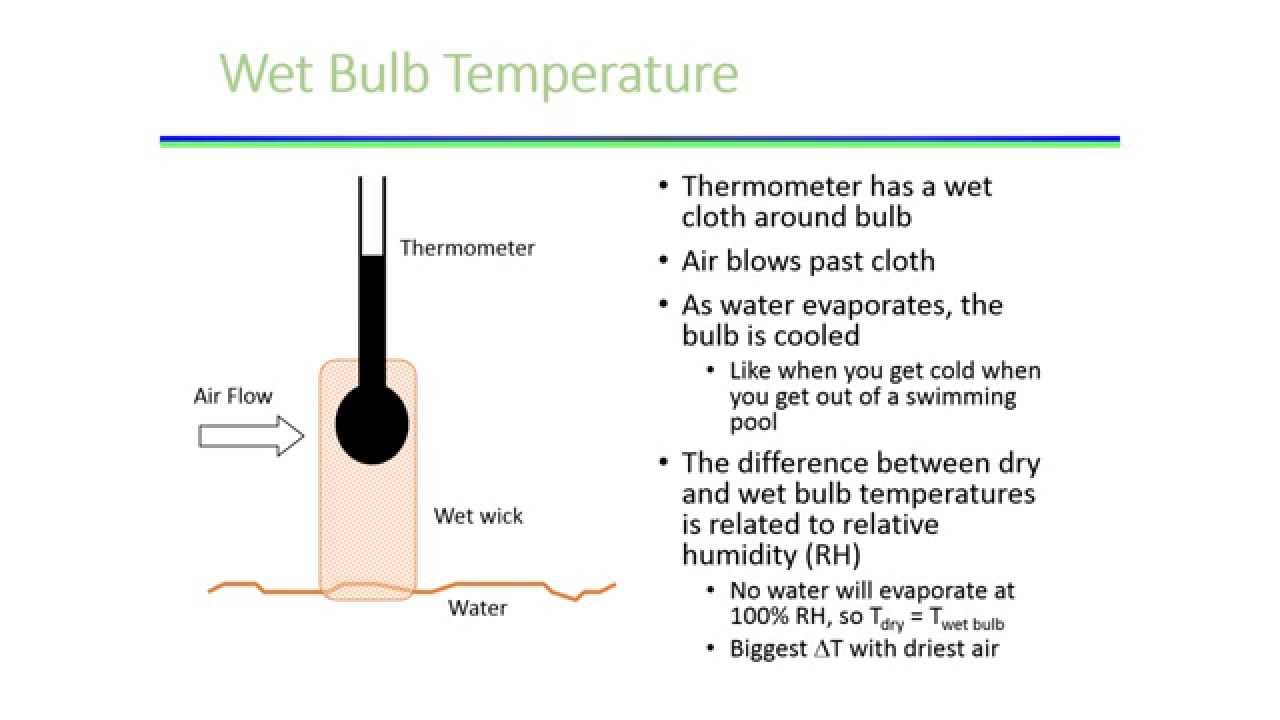
Wet bulb temperature (TW) is a measure of heat and humidity, taken from a thermometer covered in a water-soaked cloth. Beyond a threshold of 35°C TW the body is unable to cool itself by sweating, but lower levels can still be deadly, as was seen in the 2003 European heatwave that killed thousands without passing 28°C TW.
A US-UK team analysed weather station data across the world, and found that the frequency of wet bulb temperatures exceeding temperatures between 27°C TW and 35°C TW had all doubled since 1979. Though 35°C TW is thought of as a key threshold, harm and even death is possible at lower temperatures, so the team included these in their analysis.
Most of the frequency increases were in the Persian gulf, India, Pakistan and south-west North America. But at Jacobabad and Ras al Khaimah, 35°C TW appears to have been passed, the first time the breach has been reported in scientific literature.
“The crossings of all of these thresholds imply greater risk to human health – we can say we are universally creeping close to this magic threshold of 35°C. The tantalising conclusion is it looks like, in some cases for a brief period of the day, we have exceeded this value,” says Tom Matthews at Loughborough University in the UK……….: https://www.newscientist.com/article/2242855-climate-change-has-already-made-parts-of-the-world-too-hot-for-humans/#ixzz6M5ow6Dlr
Alabama joins Kentucky, South Dakota and West Virginia to criminalize fossil fuel protests
In March, Kentucky, South Dakota and West Virginia passed laws restricting pipeline protests. Alabama is poised to become the fourth.
By Alexander C. Kaufman 10 May 20 Alabama lawmakers this week advanced legislation to add new criminal penalties to nonviolent protests against pipelines and other fossil fuel projects, setting a course to become the fourth state to enact such measures amid the chaos of the coronavirus pandemic.
Kentucky, South Dakota and West Virginia enacted similar measures in March, just as states started implementing lockdowns to contain the outbreak of COVID-19, the respiratory illness caused by the virus.
The Alabama Senate passed the bill on March 12, just befohe Alabama Senate passed the bill on March 12, just before state officials, alarmed at the spread of the virus, postponed legislative hearings for a month. When the capitol reopened in Montgomery on May 4, state Democrats remained in their home districts, but enough Republican lawmakers returned to restart work on the legislation. On Monday, the House version of the bill was introduced and referred to the committee that oversees utilities and infrastructure. Continue reading
Climate change – a bigger still challenge follows coronavirus
 After coronavirus, focus on the climate emergency https://www.theguardian.com/world/2020/may/10/after-coronavirus-focus-on-the-climate-emergency Signatories including Dr Wolfgang Knorr say it is game over for preventing climate change, Colin Hines says a green infrastructure should be prioritised in a post-Covid-19 world, and Andy Radford on why we should consider permanent changes to the way we live
11 May 2020 Last month, the Guardian quoted Fatih Birol, executive director of the International Energy Agency, saying if we put post-pandemic bailout money in the wrong place “we will lock ourselves in a dirtier energy system, making it much more difficult to reach our climate targets” (‘Coronavirus profiteers’ condemned as polluters gain bailout billions, 17 April).
We beg to differ. It is game over for preventing dangerous climate change now that governments are planning the cheapest and quickest return to consumption. Riding on the wave of cheap oil and fossil-fuel bailouts is incompatible with keeping the average global temperature rise below 2C, let alone 1.5C.
Even if the world agreed to maintain all the pandemic-enforced restrictions on travel and consumption, the emissions saved would amount to almost nothing, compared with what’s needed to achieve the Paris agreement’s climate targets. Yet whether it’s to discourage mass fatalism, or prevent the very worst of what the future threatens, those of us with this knowledge still cling to “yes we can”. In this story, it is always five to midnight; it is always the last chance to prevent disaster. In contrast, collective action on climate can only grow out of complete honesty. It is time to acknowledge our collective failure to respond to climate change, identify its consequences and accept the massive personal, local, national and global adaptation that awaits us all.
Dr Wolfgang Knorr Department of Physical Geography and Ecosystem Science, Lund University, Prof Eric Rignot University of California, Irvine, Prof Rik Leemans Wageningen University and Research, Prof Andy Morse School of Environmental Sciences, University of Liverpool, Prof Dennis Baldocchi Department of Environmental Science, Policy and Management, University of California, Berkeley, Prof Thomas Hickler Senckenberg Biodiversity and Climate Research Centre, Prof Francis E Putz Department of Biology, University of Florida, Prof Maarten Krol Wageningen University, Dr Alberte Bondeau Institut Méditerranéen de Biodiversité et d’Ecologie, Aix-Marseille Université, CNRS, Prof Wolfgang Cramer Institut Méditerranéen de Biodiversité et d’Ecologie, Aix-Marseille Université, CNRS, Prof Paul Palmer University of Edinburgh, Dr James G Dyke Global Systems Institute, University of Exeter
Oxford University’s call for a green stimulus for the economy and Polly Toynbee’s demand for a dramatically fairer reversal of the impact of “wealth on health” could both be addressed by a nationwide Green New Deal programme (Poverty kills people: after coronavirus we can no longer ignore it, 5 May).
This would allow a way out of the economic collapse caused by coronavirus, while rebuilding our social infrastructure and tackling the climate emergency. It can also provide new jobs and huge opportunities for businesses. At its heart must be a labour-intensive social infrastructure that rebuilds our austerity battered public services. The prioritisation of green infrastructure will require a shift of economic priorities towards more decentralised local economies that reduce carbon emissions and air pollution, minimise the throughput of raw materials, provide long-term food security and protect biodiversity.
This radically new approach will involve listening to climate experts, funding the transition needed through massive government borrowing and introducing policies to curb our “freedoms” to travel, eat and consume in ways that threaten the planet. It is a Green New Deal imperative to tackle both the social and climate crisis that must emerge as the exit strategy from coronavirus.
Colin Hines
Convenor, UK Green New Deal Group
It is not only whales that are enjoying the opportunity for improved “conversations” presented by the current drop in manmade noise levels (Silence is golden for whales as lockdown reduces ocean noise, 27 April). From insects to fish, nature is booming as human activity intrudes less during lockdown. In our gardens, birdsong is more noticeable without a constant soundtrack of traffic noise. When our activities increase post-lockdown, we should reflect on the joy these sounds have given us and consider more permanent changes to the way we share the planet with our wildlife, for the benefit of all.
Andy Radford
Professor of behavioural ecology, University of Bristol
Barrow, UK – hub of nuclear weapons work and nuclear transport
Close Capenhurst 10th May 2020, Barrow is best known as the place where BAE Systems build Trident nukiller submarines. The company is also building the Astute-class submarines.
What is less well know is that the ships which transport nukiller waste around the globe go out of the port of Barrow. Neither do most people realise just what else goes on in the town. Pacific Nuclear Transport Limited, a subsidiary of International Nuclear Services, is based at Barrow. The
company website boast that it is ‘the world’s most experienced shipper of nuclear cargoes’. Barrow is also the home port for James Fisher & Sons, which works for the military, and built its first ship suitable fortransporting irradiated nuclear fuel in the 1960s. The company also provides Nukiller equipment and services.
wide and growing coalition of real concern about EDF’s Sizewell C nuclear project
 East Anglian Daily Times 9th May 2020. NFLA, Cllr David Blackburn Councillors are right, EDF should delay its Sizewell C application. I warmly welcome the joint letter of opposition
councillors on Sizewell County Council calling on the Government to halt
EDF moving forward with a Development Consultation Order for Sizewell C
(EADT, 28th April).
The letter mirrors our own concerns noted last week in
our own letter to the EADT, and that of many parish, town and East Suffolk
District Councillors as well. Democratic discussions have to be put on hold
at the moment as the country deals with the worst public health emergency
in living memory.
It suggests an arrogance and a desperation within EDF to
want to move forward with the Sizewell C development at the moment. The
four rounds of local consultation on EDF’s Sizewell C plans showed a large
level of concern and opposition from across local government, much of which
stating that EDF have not provided adequate information to explain how they
would mitigate many of the harmful environmental effects of the
development. Indeed, all local environmental groups have raised huge
concern on its impact, particularly to the likes of wildlife gems like the
RSPB Minsmere site.
Just today, 60 prominent local people have added
similar concerns in a joint letter to The Times. It is clear there is a
wide and growing coalition of real concern about Sizewell C. EDF should not
just halt the DCO application, it should listen to local opinion and cancel
the project altogether. There is no need for Sizewell C. It is time EDF
listened to its critics and halted it.
$25 million settlement coming, over failed V.C. Summer nuclear project, with no SCANA admission of wrongdoing

Dominion Energy, which bought SCANA Corp. and South Carolina Electric & Gas in 2019, could soon reach a $25 million settlement with stock market regulators over the failed V.C. Summer nuclear project that the acquired businesses abandoned nearly three years ago.The proposed deal would allow Dominion to remove itself from a high-profile civil case that the U.S. Securities and Exchange Commission filed in February. That lawsuit alleges that SCANA, the majority owner of the two partially built reactors in Fairfield County, “repeatedly deceived” investors and furthered a “historic” case of securities fraud. Dominion Energy South Carolina, the successor of SCE&G, was named in the lawsuit. Richmond, Va.-based Dominion inherited the company’s legal liability, along with all of SCE&G’s ratepayers in South Carolina, when it sealed its takeover of SCANA early last year. When the SEC filed the case in February, Dominion called the lawsuit a “disappointing development.” Since then, the utility giant has worked behind the scenes to cut a deal with the federal agency. The company announced the potential settlement with the SEC as part of a quarterly earnings report this week. Dominion’s leaders said they struck the $25 million deal with officials at the agency’s Division of Enforcement in April. The company emphasized the settlement would still need to be finalized by the SEC and a federal judge in South Carolina. According to Dominion, the deal would allow the company to settle the case without admitting any wrongdoing by SCANA over the course of the failed V.C. Summer expansion project. |
|
Lockdown in Tamil Nadu: 800 guest workers stage protest at Kudankulam Nuclear Power Plant, attack cops
TIRUNELVELI: A section of construction workers at……Read more at:
http://timesofindia.indiatimes.com/articleshow/75647668.cms?utm_source=contentofinterest&utm_medium=text&utm_campaign=cpp
Ukraine’s Energy ministry limits operations of nuclear power plants
Energy ministry limits operations of nuclear power plants UNIAN Information Agency 9 May 20 Ukraine “…..This week, the issue of a nuclear power units’ shutdown widely reverberated in a public discourse. From May 5, only 10 of 15 nuclear power units have been operating in Ukraine (four were put on scheduled repairs and one was put into reserve mode). According to the operating schedule for 2020, nine nuclear power units will operate at limited capacities. The government decided to take such a step in connection with the drop in electricity consumption caused by quarantine and record generation from renewables.
The search for the 4th hydrogen bomb dropped over Palomares, Spain
|
Who Do You Call When Nuclear Weapons Go Missing? Mathematicians. Here’s What You Need To Remember: With no witnesses, no debris and a search area in the least understood part of the world’s ocean, there’s little even mathematical wizards can do. But even then, few thought 50 years ago that the lost bomb of Palomares would ever turn up. National Interest, 10 May 20
When a routine Cold War operation went terribly wrong, two planes and seven men died, a village got contaminated and a hydrogen bomb disappeared.
The search and cleanup required 1,400 American and Spanish personnel, a dozen aircraft, 27 U.S. Navy ships and five submarines. It cost more than $120 million and a lot of diplomatic capital. And it made an obscure 18th-century mathematical theorem a practical solution to finding veritable needles in haystacks. Around 10 a.m. on Jan. 17, 1966, two B-52Gs of the 31st Bomb Squadron based out of North Carolina approached two KC-135 tankers over the Spanish coast southwest of Cartagena.
The bombers each carried four 1.5-megaton B-28 hydrogen bombs as part of Operation Chrome Dome, a U.S. deterrence mission that placed nuclear-armed bombers on the Soviet Union’s doorsteps. The resulting breakup destroyed the tanker in a fireball of blazing jet fuel. All four crew on board the tanker died. One hundred tons of flaming wreckage fell upon the arid hamlet of Palomares, near the Mediterranean Sea.
Three of the four H-bombs aboard the bomber fell there, too. Within 24 hours, a U.S. Air Force disaster team arrived from Torrejon Air Base near Madrid. Specialists from the Los Alamos and Sandia weapons labs — and Air Force logistics units — descended on the tiny rural town.
The search teams found the three H-bombs within a day. One landed on a soft slope, its casing relatively intact. The high explosives within the other two bombs detonated on impact, blowing 100-foot-wide craters in the dry soil and scattering plutonium, uranium and tritium across the landscape. The region’s long history of human habitation complicated the land search. Almeria, the province where Palomares sits, hosted a mining industry for more than 5,000 years. Countless mine shafts, diggings and depressions pepper its dry landscape made famous by the spaghetti westerns filmed there. ,,,,,,, https://nationalinterest.org/blog/buzz/who-do-you-call-when-nuclear-weapons-go-missing-152441
|
|
America’s very dangerous $multibillion plan for a nuclear-powered fighter plane
|
America Really Wanted A Nuclear-Powered Fighter (Flying Chernobyl, Anyone?) Does great reward really come with great risk? National Interest, by Steve Weintz 10 May 20, Here’s What You Need To Remember: Looking back a half century to an era of greater faith in nuclear energy, it’s easy to shake one’s head in wonder. What were they thinking? Surely crashes, combat and carelessness were going to keep it all from ending well. Ah, the Atomic Age, when nuclear energy seemed the ticket to a future of limitless possibilities. For a generation after 1945 the United States explored all kinds of nuclear propulsion concepts. Some, like naval power plants for subs and ships, proved both revolutionary and effective. Others proved possible to develop but impractical to pursue.
Of these concepts the nuclear-powered aircraft now seems the most fanciful, but billions of dollars and years of top-flight research sunk into the Aircraft Nuclear Propulsion (ANP) program chased the idea before its demise. Between the end of World War II and the dawn of Camelot American engineers figured out how to fit a reactor in an airplane and make it generate thrust without frying the crew. American leaders couldn’t figure out how to pay for it or why they needed it.
Today the ANP program is remembered as an Atomic Age boondoggle whose only remains consist of three-story-tall experimental units and giant hangars with six-foot-thick walls. ……. https://nationalinterest.org/blog/america-really-wanted-nuclear-powered-fighter-flying-chernobyl-anyone-152496 |
|
South Africa’s financially difficult nuclear ambitions
South Africa to develop plan for new 2,500 MW nuclear plant, CAPE TOWN, May 7 (Reuters) – South Africa will soon start developing a plan for a new 2,500 megawatt (MW) nuclear power plant, the energy ministry told lawmakers on Thursday.
Africa’s most industrialised economy, which operates the continent’s only nuclear power plant near Cape Town, said last year that it was considering adding more nuclear capacity in the long term, after abandoning in 2018 a massive nuclear expansion championed by former president Jacob Zuma.
Analysts had expressed serious concern about Zuma’s project for a fleet of nuclear plants totalling 9,600 MW because it would have put massive additional strain on public finances at a time of credit rating downgrades. …..
The presentation showed South Africa wanted to complete the procurement of the new nuclear plant by 2024 but gave no indication as to when it wanted construction of the plant to start or for when the plant would come online……
financing those nuclear ambitions could be difficult at a time that the country’s recession-hit economy is being hammered by the coronavirus pandemic, with this year’s budget deficit expected to stretch into double digits.
Answering questions, Energy Minister Gwede Mantashe said on Thursday that the government would first “test the market” and hear what potential investors or consortia had to say about building the new nuclear facility…… https://af.reuters.com/article/southAfricaNews/idAFL8N2CP8M8
France’s Strategic Nuclear Forces
|
Is France’s Nuclear Shield Big Enough to Cover All of Europe? Modern Diplomacy
Alexander Yermakov 10 May 20, At the end of the third year of his presidency, Emmanuel Macron delivered his long-awaited policy speech on the country’s defence and deterrence strategy. The long-awaited indeed: many have been expecting France to step up its nuclear role in recent years, including heading up the establishment of the EU Nuclear Forcete. Did the President deliver on these expectations? Yes and no. From the get-go, Macron has been keen to play up the historical significance of his February 7 speech. The eighth president of the Fifth Republic noted that the last head of state to visit the École de Guerre in Paris was Charles de Gaulle himself, who delivered his famous speech on the creation of the Force de frappe, or the French Strategic Nuclear Forces (SNF), here on November 3, 1959.
The previous resident of the Élysée Palace, François Hollande, delivered his address on the nuclear deterrence at the Istres-Le Tubé Air Base on February 19, 2015, where one of the French Air Force’s two nuclear squadrons was stationed at the time. Macron’s predecessor gave a speech that was rather typical of the French nuclear policy, reminding his fellow countrymen that the world is still full of threats and that, despite the commitment to nuclear disarmament (someday, like other powers), it was vital to “keep the powder dry.” The President reiterated the promise to not use nuclear weapons against those countries that had signed and honoured the Nuclear Non-Proliferation Treaty (NPT). According to Hollande, the French Strategic Nuclear Forces contribute to the pan-European security, yet remain ‘sovereign:’ Paris will neither, as a matter of principle, be part of the NATO Nuclear Planning Group nor will it participate in the NATO’s Nuclear Sharing [1]. Notwithstanding European solidarity and the special nuclear cooperation that France enjoys with the United Kingdom, Hollande stressed that, “our [France’s] deterrence is our own; it is we who decide, we who evaluate our vital interests.”……. Thermonuclear Assets What does France have to offer to Europe? According to conservative estimates, the third largest nuclear arsenal in the world after that of Russia and the U.S., no less, with almost 300 warheads (the actual number is not known:….. The French Strategic Nuclear Forces currently consist of two components: an airborne and a seaborne. …… much of France’s nuclear potential is concentrated on a hidden yet permanently combat-ready component of its Strategic Nuclear Forces, namely its fleet of Triomphant-class nuclear-powered missile submarines…… Of course, Macron did not utter these exact words, but he did make an extremely important message that most commentators have missed: “France’s vital interests now have a European dimension.” This is not a throw-away sentence, because according to France’s military doctrine, a perceived threat to the country’s “vital interests” is an enough reason to resort to the nuclear force [10]. Macron could not have made a more explicit offer to extend his country’s nuclear umbrella to cover the rest of the European Union as he suggested opening a strategic dialogue on this issue.,,,,,,,, https://moderndiplomacy.eu/2020/05/10/is-frances-nuclear-shield-big-enough-to-cover-all-of-europe/ |
|
1 This Month


Tell the Ukrainian Government to Drop Prosecution of Peace Activist Yurii Sheliazhenko

Petition to revoke the licensing of the Near Surface Nuclear Disposal Facility (NSDF) at Chalk River. https://www.ourcommons.ca/petitions/en/Petition/Details?Petition=e-7247


of the week – STOP SMALL MODULAR REACTORS IN CANADA
To see nuclear-related stories in greater depth and intensity – go to https://nuclearinformation.wordpress.com
-
Archives
- March 2026 (204)
- February 2026 (268)
- January 2026 (308)
- December 2025 (358)
- November 2025 (359)
- October 2025 (376)
- September 2025 (258)
- August 2025 (319)
- July 2025 (230)
- June 2025 (348)
- May 2025 (261)
- April 2025 (305)
-
Categories
- 1
- 1 NUCLEAR ISSUES
- business and costs
- climate change
- culture and arts
- ENERGY
- environment
- health
- history
- indigenous issues
- Legal
- marketing of nuclear
- media
- opposition to nuclear
- PERSONAL STORIES
- politics
- politics international
- Religion and ethics
- safety
- secrets,lies and civil liberties
- spinbuster
- technology
- Uranium
- wastes
- weapons and war
- Women
- 2 WORLD
- ACTION
- AFRICA
- Atrocities
- AUSTRALIA
- Christina's notes
- Christina's themes
- culture and arts
- Events
- Fuk 2022
- Fuk 2023
- Fukushima 2017
- Fukushima 2018
- fukushima 2019
- Fukushima 2020
- Fukushima 2021
- general
- global warming
- Humour (God we need it)
- Nuclear
- RARE EARTHS
- Reference
- resources – print
- Resources -audiovicual
- Weekly Newsletter
- World
- World Nuclear
- YouTube
-
RSS
Entries RSS
Comments RSS
 nuclear-news