Increased Strontium in Sardines since Fukushima Accident?
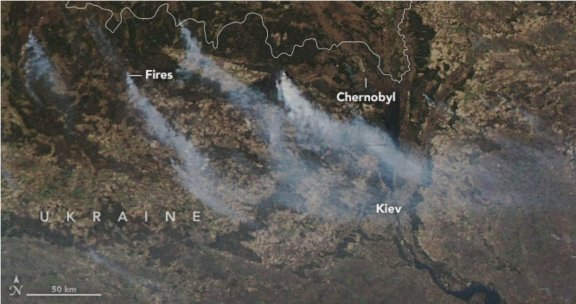
As the Chernobyl forest fires seem to be releasing Strontium 90 into the atmosphere, I thought I would remind people of the little known story of Strontium 90 in JAPAN.. READ ON

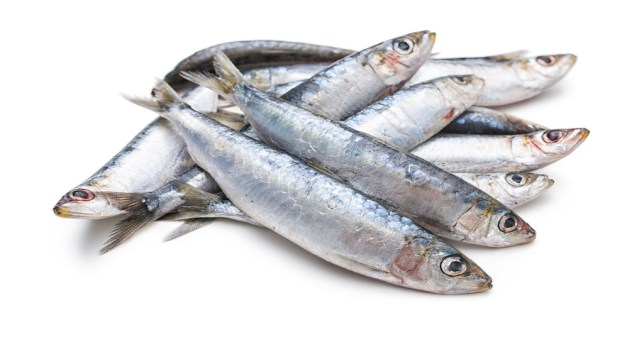
Dogs fed sardines show high Strontium levels
by Dr. Peter Dobias, DVM
Why you might want to cut out small fish from your dog’s diet
I have had two dog patients with severely elevated levels of the element strontium. The interesting part is that these two dogs were fed a high amount of sardines and I highly suspect that strontium is coming from this source.
Strontium acts in the body the same way as calcium and deposits in bones. Sardines and other small fish are eaten whole with the bones and that is why they are more likely a source of this toxic element.
The reason why I am concerned is that the radioactive isotope strontium 90 is a toxic carcinogen and it has been released in Japan’s Fukushima disaster.
Here is an example of the results:
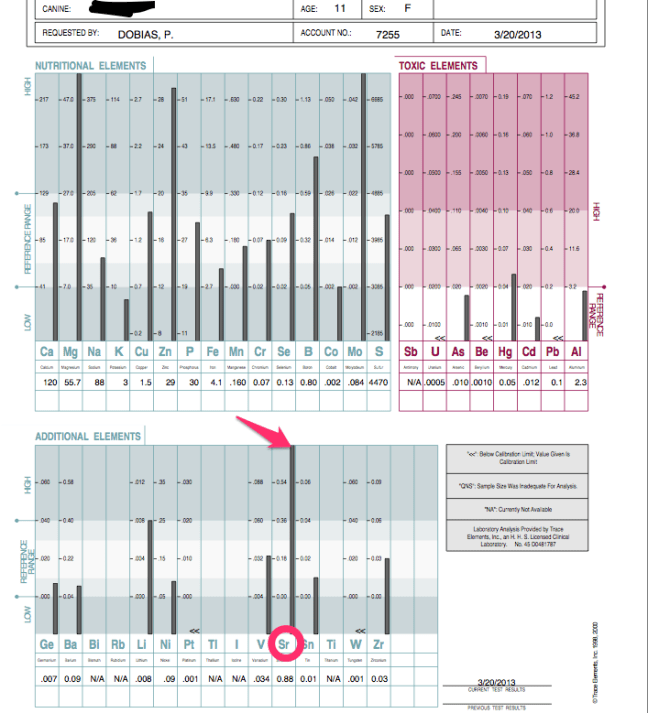
As a veterinarian, I source from almost three decades of experience, but still I like…
View original post 130 more words
What is causing the Chernobyl Wildfires? Year on Year, mostly in the Summer. Fukushima forests future?
Hint….
- Global change ecology – Original research
- Published:
Highly reduced mass loss rates and increased litter layer in radioactively contaminated areas
Oecologia volume 175, pages429–437(2014)
Abstract
The effects of radioactive contamination from Chernobyl on decomposition of plant material still remain unknown. We predicted that decomposition rate would be reduced in the most contaminated sites due to an absence or reduced densities of soil invertebrates. If microorganisms were the main agents responsible for decomposition, exclusion of large soil invertebrates should not affect decomposition. In September 2007 we deposited 572 bags with uncontaminated dry leaf litter from four species of trees in the leaf litter layer at 20 forest sites around Chernobyl that varied in background radiation by more than a factor 2,600. Approximately one quarter of these bags were made of a fine mesh that prevented access to litter by soil invertebrates. These bags were retrieved in June 2008, dried and weighed to estimate litter mass loss. Litter mass loss was 40 % lower in the most contaminated sites relative to sites with a normal background radiation level for Ukraine. Similar reductions in litter mass loss were estimated for individual litter bags, litter bags at different sites, and differences between litter bags at pairs of neighboring sites differing in level of radioactive contamination. Litter mass loss was slightly greater in the presence of large soil invertebrates than in their absence. The thickness of the forest floor increased with the level of radiation and decreased with proportional loss of mass from all litter bags. These findings suggest that radioactive contamination has reduced the rate of litter mass loss, increased accumulation of litter, and affected growth conditions for plants.
Source ; https://link.springer.com/article/10.1007/s00442-014-2908-8
Will this happen in the forests of Fukushima as well?
More Independent analysis from a French NGO that is monitoring the situation in Ukraine with an unbiased and with authoritative risk assessment for the public. Link to CRIIRAD report here;
David Lowry: Covid-19 spread shows up vulnerability at heart of nuclear programmes


programmes, with resilience of UK critical national infrastructures undermined. The coronavirus’ effects act as threat multiplier, as David Lowry explains.
regulatory oversight to continue effectively across the UK? And, if this situation arose, what executive regulatory decision would be required if all operating nuclear facilities could no longer be simultaneously regulated to a legal standard?
plans should they fall below these levels, to enable them to remain in control of activities that could impact on nuclear safety under all foreseeable circumstances throughout the life cycle of the facility. In addition, licensees need minimum staffing levels to comply with their on-site and off-site emergency plans.
https://energytransition.org/2020/04/corona-crisis-hits-nuclear-sector/
The Coronavirus and Climate Change: How We’re Making the Same Mistakes

The Coronavirus and Climate Change: How We’re Making the Same Mistakes, medium.com Charles Kutscher 12 Apr 20, We Americans are now experiencing the tragic consequences of our slow, uncoordinated response to the coronavirus pandemic. While this experience will surely help us respond better to future health crises, it’s important we apply the hard lessons learned to even greater disasters. In particular, there are many parallels between the coronavirus pandemic and the climate change crisis. We need to recognize that we’re making the same mistakes with climate change and correct them before it’s too late. Below are some of these key blunders.
Failure to heed the warnings
Scientific experts warned us for months about COVID-19, just as they have warned us for decades about climate change. The rapid spread and deadly impact of the disease in other countries, especially in Italy, should have given us plenty of advance warning that we were headed down a similar path. In the case of climate change, we have witnessed countless warnings. As the result of a 1°C temperature rise to date, we have seen unprecedented wildfires in California and Australia, record heat waves and drought across the globe, more powerful storms, and more frequent major floods, to list but a few. In fact, while no direct connection has been made between COVID-19 and climate change, the changing climate is accelerating the incidence of other deadly diseases, such as the West Nile virus. Within the next 50 years, climate change could subject a billion more people to serious vector-borne diseases. It’s critical that we recognize the enormous impacts climate change is already having and heed the warnings of climate scientists who have painted a clear picture of what the future holds if we don’t act aggressively.
Failure to comprehend the delay between the problem and its consequences……..
Being misled by disinformation
With both the coronavirus and climate change, our sluggish response is largely the result of human denial. Both the Chinese and U.S. governments downplayed the threat of the virus. In the case of climate change, the oil and gas industry has a strong financial motive to discount the impact of fossil fuel emissions, and it has long funded an extensive campaign to make light of the effects of climate change. …….
Lack of federal leadership
In the absence of federal action, the governors of states such as Washington and California have had to play leadership roles in limiting the spread of the virus and expanding hospital capability to care for the victims. But relying on individual states has resulted in a competitive, patchwork approach that has proven to be a costly, inefficient means to address a national crisis……
Moreover, with both crises, the federal government has actually been moving in exactly the opposite direction from what is needed. In 2018 the current administration weakened the White House pandemic response capability, leaving us less prepared to face the coronavirus. In the case of climate change, the administration is simultaneously withdrawing from the Paris climate agreement and scaling back automobile fuel efficiency standards, as just two examples. Furthermore, the federal government continues to provide generous subsidies for fossil fuels — the very cause of climate change.
Looking ahead
It’s important we recognize that the blunders we’ve made in addressing the coronavirus are the same ones we’re making in addressing the much bigger climate change crisis. Climate change impacts have greatly worsened over time, but we have continued to ignore the warnings. The delay between our burning of fossil fuels and the environmental consequences has lulled us into a state of inaction, and this has been exacerbated by an ongoing disinformation campaign. We’ve been scaling back — and even reversing — federal action at the exact time we should be accelerating it.
Our experience with COVID-19 will almost certainly prepare us better for the next pandemic. But there is no second chance when it comes to climate change. It’s not as if we can let the ice sheets melt this time and protect them better when they return in the future. With climate change, we’ve got one shot at thinking ahead and addressing this crisis — one shot at understanding what scientists have long been telling us about how bad a 3°C or 4°C temperature rise will be. As with the coronavirus pandemic, climate change is an international crisis that calls for a comprehensive federal commitment to address it. Let’s stop making the same mistakes we’ve made with COVID-19. https://medium.com/@chuck.kutscher/the-coronavirus-and-climate-change-how-were-making-the-same-mistakes-2cd01cce2295
More workers infected with coronavirus at Georgia Power’s Vogtle nuclear project
Coronavirus expands foothold at Georgia Power’s Vogtle nuclear project, AJC, By Matt Kempner, The Atlanta Journal-Constitution 10 Apr 20 The new coronavirus has infected several more workers on Georgia Power’s nuclear expansion of Plant Vogtle, described as the largest construction project in the state.
Georgia Power said Friday that a total of six of the roughly 9,000 workers assigned to the project have been confirmed to have COVID-19. It had reported the first confirmed case there less than a week ago.
Nearly 170 other workers are under quarantine because they were in close proximity to workers who had pending COVID-19 tests, company spokesman John Kraft wrote in an email to The Atlanta Journal-Constitution…….
The company did not disclose what parts of the project the workers were assigned to. Nor did it say whether any of the infected workers have been hospitalized……https://www.ajc.com/news/state–regional/coronavirus-expands-foothold-georgia-power-vogtle-nuclear-project/Ly2Ua2dOBn9mzxb7XwHlBL/
Julian Assange family finally speak out!
During Julian Assanges trial the threat of publishing Julians private family details for public scrutiny was used (and could yet be upheld) in the UK courtroom.

Now his family decide to break their privacy to let us all know more of the full ramifications of the persecution of Julian Assange. Watch this video, it is now part of our shared history.
CRIIRAD monitoring Kiev nuclear risk of Chernobyl radioactive plumes #Strontium90 #Plutonium #Cesium137/134
Fires in contaminated areas
Still no worries for France but the situation is getting worse around Chernobyl
Next report Tuesday 14th 2020

The fires in the highly contaminated area of Polesskoye, located some 50 km west of
the Chernobyl nuclear power plant, are still active, but other fires have developed during the week, in the heart of the 30 kilometer zone. The fire in the Korogodsky forest is thus located only a few kilometers from the damaged reactor (see illustration above).
Besides the resuspension in the atmosphere of cesium 137 accumulated in the biomass (and probably also plutonium and strontium 90), questions arise about the safety of nuclear installations. The April 9, Ukrainian authorities 1 said: “Large-scale fires can threaten security in the region as well as the facilities located in the exclusion zone where the radioactive waste, used nuclear fuel and the Chernobyl nuclear power plant ”and“ Due to the heavy smoke, it is impossible to precisely determine the area affected by the fire, which, according to preliminary, may be 100 ha ‘.
According to the DAZV agency, the State Agency in charge of the Management of the Forbidden Zone 2, the gamma dose rates measured by sensors located in areas close to fires have fluctuation levels usual.
But the concentration of cesium 137 in the air in the heart of the prohibited area is high. The maximum value of 54 microbecquerels per cubic meter published on April 9 by this agency corresponds to a measurement on a sensor which is not necessarily the most exposed. The theoretical values for cesium 137 calculated by modeling 3 could indeed exceed a priori by place the 30 Bq / m 3. The agency said on April 9 that the admissible doses would not be exceeded for firefighters, provided that they wear protective respiratory gear.
.


As indicated in our previous press release 4, the contaminated plumes first headed for the
south towards the city of Kiev. According to the models carried out by the Ukrainian services, the increases theoretical maximum point doses of the activity of cesium 137 in air had been evaluated at 2 mBq / m 3
for April 8. The samples taken in Kiev on April 8 by the Ukrainian services 5 showed values between 5 and 7 mBq / m 3 between 12.25pm and 4.35pm. These are values several hundred times higher than laughs at the level of background noise. The induced doses remain effectively low for the inhabitants of Kiev.
But the impact is cumulative and the fires are not extinguished.
The models of the contaminated plumes put online by the Ukrainian specialized services indicate trajectories towards north 6 of Ukraine from 9 to 10 April, then again towards Kiev 7, from 10 to April 11. Extracts from the official models are reproduced below (activity of cesium 137 in air).
Plume simulations contaminated by cesium 137 (extracts) – Source: OSTC
CRIIRAD is monitoring the situation closely.
In France, as expected, the measurements carried out live by the warning beacons operated by CRIIRAD in Rhône valley (for example in Montélimar) did not show an increase in the radioactivity of atmospheric dust. The gamma probe located in Geneva did not reveal any anomalies.
The CRIIRAD proceeded however this morning April 10 to a sample of aerosol filter on one of the beacons in order to verify, with much higher precision than live measurements allow, as the concentration of cesium 137 in the air masses potentially impacted by the first fires remains very low (this as indicated by the models).
The results will be posted online on Tuesday at https://balises.criirad.org/
Source for blogpost (In French) content;
Click to access 2020-04-10_CPCRIIRAD_Incendies_Tchernobyl2.pdf
1 This Month


Tell the Ukrainian Government to Drop Prosecution of Peace Activist Yurii Sheliazhenko

Petition to revoke the licensing of the Near Surface Nuclear Disposal Facility (NSDF) at Chalk River. https://www.ourcommons.ca/petitions/en/Petition/Details?Petition=e-7247


of the week – STOP SMALL MODULAR REACTORS IN CANADA
To see nuclear-related stories in greater depth and intensity – go to https://nuclearinformation.wordpress.com
-
Archives
- March 2026 (204)
- February 2026 (268)
- January 2026 (308)
- December 2025 (358)
- November 2025 (359)
- October 2025 (376)
- September 2025 (258)
- August 2025 (319)
- July 2025 (230)
- June 2025 (348)
- May 2025 (261)
- April 2025 (305)
-
Categories
- 1
- 1 NUCLEAR ISSUES
- business and costs
- climate change
- culture and arts
- ENERGY
- environment
- health
- history
- indigenous issues
- Legal
- marketing of nuclear
- media
- opposition to nuclear
- PERSONAL STORIES
- politics
- politics international
- Religion and ethics
- safety
- secrets,lies and civil liberties
- spinbuster
- technology
- Uranium
- wastes
- weapons and war
- Women
- 2 WORLD
- ACTION
- AFRICA
- Atrocities
- AUSTRALIA
- Christina's notes
- Christina's themes
- culture and arts
- Events
- Fuk 2022
- Fuk 2023
- Fukushima 2017
- Fukushima 2018
- fukushima 2019
- Fukushima 2020
- Fukushima 2021
- general
- global warming
- Humour (God we need it)
- Nuclear
- RARE EARTHS
- Reference
- resources – print
- Resources -audiovicual
- Weekly Newsletter
- World
- World Nuclear
- YouTube
-
RSS
Entries RSS
Comments RSS
 nuclear-news