Satellite Imagery of Chernobyl Fires April 8 & 9 2020 – NASA
#NASA images show continuing spread of fires in high-radiation #Chernobyl zone from April 8 to April 9
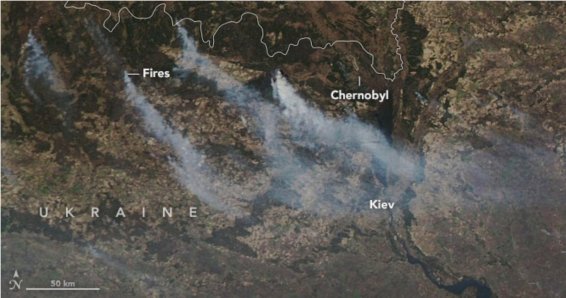
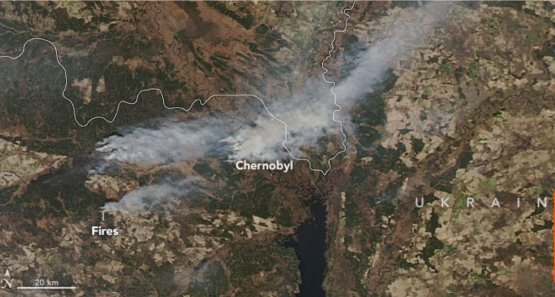
Source; https://earthobservatory.nasa.gov/images/146561/fires-burn-in-northern-ukraine
Pandemic makes a nuclear disaster more likely than ever
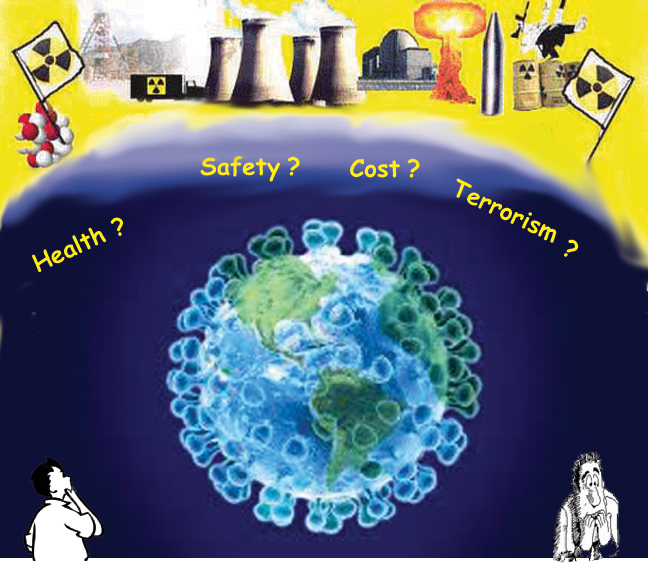 Terrified Atomic Workers Warn That the COVID-19 Pandemic May Threaten Nuclear Reactor Disaster https://www.commondreams.org/views/2020/04/10/terrified-atomic-workers-warn-covid-19-pandemic-may-threaten-nuclear-reactor
Nuclear safety cannot be shortchanged—especially in the midst of an outbreak like what the nation is now experiencing, by Harvey Wasserman 10 Apr 20,
Nationwide, with falling demand and soaring prices for nuke-generated electricity, the pandemic casts a dark shadow over reactor operations and whether frightened neighbors will allow them to be refueled and repaired.
America’s 96 remaining atomic reactors are run by a coveted pool of skilled technicians who manage the control rooms, conduct repairs, load/unload nuclear fuel. Because few young students have been entering the field, the corps of about 100,000 licensed technicians has been—like the reactors themselves—rapidly aging while declining in numbers. Work has stopped at the last two US reactors under construction (at Vogtle, Georgia) due to the pandemic’s impact, which includes a shrinking supply of healthy workers.
Every reactor control room requires five operators at all times. But the physical space is limited there and in plant hot spots that need frequent, often demanding repairs. Social distancing is virtually impossible. Long shifts in confined spaces undermine operator safety and performance.
Of critical importance: every 18-24 months each reactor must shut for refueling and repairs. Itinerant crews of 1000 to 1500 technicians travel to 58 sites in 29 states, usually staying 30-60 days. They often board with local families, or in RVs, hotels, or Air B&Bs.
Some 54 reactors have been scheduled for refuel/repairs in 2020. But there is no official, organized program to test the workers for the Coronavirus as they move around the country.
As the pandemic thins the workforce, older operators are being called out of retirement. The Trump-run Nuclear Regulatory Commission recently certified 16-hour work days, 86-hour work weeks, and up to 14 consecutive days with 12-hour shifts.
Long-time nuclear engineer Arnie Gundersen warns of fatigued operators falling asleep on the job. He recalls at least one exhausted worker falling into the highly radioactive pool surrounding the high-level fuel rods. Operator fatigue also helped cause the 1979 melt-down that destroyed Pennsylvania’s Three Mile Island Unit Two.
The industry is now using the coronavirus pandemic to rush through a wide range of deregulation demands. Among them is a move to allow radioactive waste to be dumped into municipal landfills.
The NRC may also certify skipping vital repairs, escalating the likelihood of major breakdowns and melt-downs. Nearly all US reactors were designed and built in the pre-digital age, more than 30 years ago. Most are in advanced decay. Atomic expert David Lochbaum, formerly with the NRC, warns that failure risks from longer work hours and deferred repairs could be extremely significant, and could vary from reactor to reactor depending on their age and condition.
The industry has also been required to maintain credible public health response plans should those reactors blow. But pandemic-stricken U.S. hospitals now have zero spare capacity, multiplying the possible human fallout from an increasingly likely disaster.
Industry-wide the pandemic has brought working conditions to the brink of collapse. At Pennsylvania’s Limerick Generating Station, workers say they are “terrified” that the plant has become a “breeding ground…a complete cesspool” for the coronavirus. “I’m in a constant state of paranoia,” one technician told Carl Hessler, Jr., of MontcoCourtNews.
Others say social distancing is non-existent, with “no less than 100 people in the training room” and “people literally sitting on top of each other…sitting at every computer elbow to elbow.” Shift change rooms, Hessler was told, can be “standing room only.” At least two Limerick workers are confirmed to have carried the virus. COVID rates in the county are soaring.
Gundersen, a nuclear engineer, warns that limited control room floorspace and cramped conditions for maintenance can make social distancing impossible. “Some component repairs can involve five workers working right next to each other,” he says.
Because reactor-driven electricity is not vital amidst this pandemic downturn, the demand for atomic workers to “stay home” is certain to escalate. “I am concerned with Exelon & Limerick Nuclear Generating Station’s handling of the scheduled refueling—which has required bringing in workers from across the country during this pandemic,” says US Rep. Madeleine Dean in a statement likely to be repeated at reactor sites around the country.
“The potential increase of COVID-19 cases from 1,400 new workers not observing social distancing is staggering,” says epidemiologist Joseph Mangano of the Radiation and Health Project. “The Limerick plant should be shut until the COVID-19 pandemic is over.”
Indian Point Unit One, north of New York City, will shut permanently on April 28. Iowa’s Duane Arnold will close in December.
But Ground Zero may be Pacific Gas & Electric’s two 35-year-old reactors at Diablo Canyon. PG&E is bankrupt for the second time in two decades, and recently pleaded guilty to 85 felonies from the fires its faulty wires sent raging through northern California, killing 84 people. In 2010 a faulty PG&E gas line exploded in San Bruno, killing eight people.
Surrounded by earthquake faults, Diablo’s construction prompted more than 10,000 civil disobedience arrests, the most at any US reactor. PG&E now admits its two Diablo nukes will lose more than $1.2 billion this year, more than $3.4 million per day.
Amidst its bitterly contested bankruptcy, PG&E may be taken over by the state. But more than a thousand workers are slated in early October to refuel and repair Unit One, which the NRC says is dangerously embrittled.
Whether local residents concerned about both a nuclear accident and the spread of the coronavirus will let them into the county remains to be seen. So is whether they’ll be still operating by then.
With the future of the nuclear industry at stake—along with the possibility of more reactor mishaps—the whole world will be watching.
The unsafety of Ukraine’s nuclear reactors: Ukrainian Association of Veterans of Atomic Energy and Industry fear “another Chernobyl”

Ukrainian Nuclear Industry Workers Sound Alarm About Threat of ‘Another Chernobyl’ https://sputniknews.com/europe/202004101078906091-ukrainian-nuclear-industry-workers-sound-alarm-about-threat-of-another-chernobyl/ RIA Novosti . Alexei Furman 10.04.2020
Ukrainian firefighters reported that radiation levels at the Chernobyl Exclusion Zone spiked to over 16 times their normal level this week as wildfires continue to ravage the desolate, forested area. The fires are said to have unleashed radioactive elements previously trapped in soil and plants into the atmosphere, carrying them into the wind.
The Ukrainian Association of Veterans of Atomic Energy and Industry, a collective of retired officials including several former heads of nuclear power plants, have declared that the country’s nuclear energy sector is in a critical state and that there is a danger of “another Chernobyl.”
“A dire situation is taking shape in the country’s nuclear energy sector,” association members warn in a letter addressed to President Volodymyr Zelensky, the prime minister and speaker of parliament, and published by local media.
The letter alleges that Energoatom, operator of Ukraine’s nuclear power plants, has not had permanent managers working based on the relevant safety permits from nuclear regulators over a space of several months now. This, they say, means that “legally, no one is responsible for the safety of nuclear power plants.”
“Is it really the case that Chernobyl was not enough for us, and we are trying to repeat it again?” the appeal urges.
The letter also warns that Energoatom faces a critical shortage of financial resources necessary to ensuring the safe operation of plants and the procurement of fuel, and asks authorities if they understand what a forced shutdown of the country’s nuclear power plants could lead to (Ukraine depends on its nuclear power plants for about half of all the electricity generated in the country).
Complaining about what they say are ongoing efforts to have individuals with no knowledge of nuclear energy placed in senior positions at Energoatom, the retired nuclear industry workers ask whether authorities “realize that all of this is a gross violation of the international nuclear safety regime.”
Ultimately, the association says they are “not asking” nor urging, “but insisting” that authorities “stop the practice of [running Energoatom by] acting heads, stop the financial discrimination of Energoatom, and prevent the country from sliding toward another Chernobyl!”
The appeal was written by senior former industry officials, including Vladimir Bronnikov, former director of the Zaporizhzhia nuclear power plant, Vladimir Korovkin, former director of the Rivne nuclear plant, and Nikolai Shteynberg, former chief engineer of the Chernobyl nuclear power plant.
Ukraine’s Nuclear Power Plants
The Ukrainian nuclear power industry operates four power plants and 15 reactors, and has the seventh-largest nuclear power-generating capacity in the world. Starting in the mid-2010s, Ukraine began turning away from Russia’s Rosatom to US nuclear power company Westinghouse for its nuclear fuel rods. However, observers have expressed concerns over the safety of the US equipment, including amid reports that its nuclear fuel rods literally didn’t initially fit into Ukraine’s Soviet-era reactors.
In popular consciousness, Ukraine’s nuclear power sector is probably most commonly associated with the Chernobyl nuclear catastrophe, which took place on the night of April 26, 1986. The disaster was the result of an experiment simulating a power outage carried out by deputy chief-engineer Anatoly Dyatlov. The test saw the blatant violation of numerous safety regulations, with Dyatlov ordering the shutdown of multiple computerized and manual safety systems to proceed with the test. Ultimately, the ‘experiment’ led to an uncontrolled reaction and steam explosion, followed by a graphite fire. 54 people died in the disaster’s immediate aftermath and cleanup operation, with 4,000 more perishing from cancers and other illnesses in the two decades that followed, according to World Health Organization figures. The disaster also contaminated some 50,000 square kilometers of land across northern Ukraine, and up to 20 percent of the total land area of neighbouring Belarus.
Over three decades on, the fallout from Chernobyl continues to cause problems for Ukraine and its neighbours. This week, Ukraine’s emergency services reported that out of control fires in the forests of the Chernobyl Exclusion Zone had spread to cover at least 35 hectares of territory, leading to a massive spike in local radiation levels.
With coronavirus problem, Hinkley Point C nuclear project should be paused

until the Covid-19 public health emergency is under full control. This repeated call comes from the NGOs and NFLA following intensive lobbying of the UK Government, the Office for Nuclear Regulation (ONR) and the Somerset local authorities responsible for the Hinkley Point C site by many of these groups, including the local Stop Hinkley group.
There have been improved efforts as well to enforce social distancing, though it remains to be seen if earlier poor practice in this area on and around the site could lead to increased infection rates in North Somerset and areas where the workforce originate from, such as South Wales and the Bristol area.https://www.nuclearpolicy.info/news/joint-statement-concerned-anti-nuclear-ngos-uk-ireland-nuclear-free-local-authorities-ongoing-construction-work-hinkley-point/
To help future generations, Fukushima mothers have become radiation scientists

Fukushima mothers record radiation for future generations, Japan Times ,BY YUKA NAKAO, KYODO IWAKI, FUKUSHIMA PREF 10 Apr 20, . – A group of more than 10 mothers set up a citizen-led laboratory to monitor radiation levels in Fukushima communities only months after a massive earthquake and tsunami caused meltdowns at a nuclear power plant in the prefecture nine years ago.Since the foundation of the institute on Nov. 13, 2011, it has been recording and disclosing radiation data on foodstuffs and soil it collected or were brought in by people from different parts of the prefecture, as well as seawater off the Fukushima No. 1 nuclear power plant.
“If the risks of nuclear power had been thoroughly verified by the previous generations, I think the disaster would not have happened,” Kaori Suzuki, 54, an executive of Mothers’ Radiation Lab Fukushima, based in Iwaki, said in a recent interview.
“But since it did occur, what we must do now is record our measurements and changes in the environment so we won’t make the same mistake,” said Suzuki, one of the founding members. “Passing down something that will be useful when major decisions must be made is the only thing we can do.”
The laboratory of 18 staff members, many of them mothers who mostly had no prior experience in measuring radiation, have trained themselves with support from scientists, and they now gauge levels of cesium 134, cesium 137, tritium and strontium 90 with five types of machines.
Samples they have measured include dust in vacuum cleaners, vegetables grown in home gardens, seasonal mushrooms picked in mountains and soil gathered in parks.
They have occasionally detected radiation above safety levels, and reports the lab releases every month on its website have specified which machine is used and other details for each outcome to make their activities as transparent as possible.
Their efforts have made academic contributions as well, with their measuring methods and results published in scientific journals such as Applied Radiation and Isotopes in 2016.
Suzuki said they started the initiative out of desperation to protect their children.
“We had to measure and eat. It was a matter of life and death,” the mother of two said. ….
As time goes by, Tanaka has found that fewer people are discussing radiation effects.
The number of samples brought in by citizens last year was 1,573, up 131 from the year before, but it is showing a decreasing trend overall compared to years before, according to the lab.
“The Olympic Games are coming, and there are fewer media reports on radiation levels than before,” she said.
Officials have dubbed the Tokyo Summer Games the “Reconstruction Olympics,” with the hope of showcasing the country’s recovery from the 2011 catastrophe.
Because of that concept, the starting point of the Japan leg of the torch relay for the Olympics, which were recently put off for a year to the summer of 2021 due to the global coronavirus pandemic, was a soccer training center in Fukushima Prefecture that served as a front-line base in the battle against the nuclear disaster.
Tanaka said logging accurate data and keeping them publicly available are all the more important. “To protect children, having information is essential in deciding what to eat or where to go,” she said, adding that judgments based on correct data will also prevent any discrimination…….
Kimura said she feels that the fears people have toward the new coronavirus are similar to those toward radiation, as they are both invisible.
“Everyone forgets about (radiation) because its effects in 10 or 20 years are uncertain, unlike the new coronavirus that shows pneumonia-like symptoms in a couple of weeks,” she said. “I realized again that people in affected areas like us have been living every day with the same feelings toward the coronavirus pandemic.”
“It’s exhausting,” she said, adding her daughters must have had a hard time as she made them do things differently from their friends, such as wearing masks. “But I felt I was not wrong when my daughter said to me recently, ‘I was being protected by you, mom.’”
In addition to conducting surveys on radiation readings in the environment and food items, the lab in May 2017 opened a clinic with a full-time doctor to provide free medical checkups on internal exposure.
“I think it’s necessary to keep checking children’s health as they grow up, rather than drawing a conclusion saying there won’t be any problem with this level of radiation exposure,” said Misao Fujita, 58, a doctor who is a native of Tochigi Prefecture.
Fujita said the amount of radiation exposure dosage and risks of health damage differ among children even if they live in the same area, depending on such factors as their location and behavior in the days after the nuclear disaster, whether they evacuated and what they eat now.
Those who underwent Fujita’s medical checkups when they were children include a woman who now takes her own child to the clinic, in addition to a number of young decontamination workers.
“The nuclear disaster is something that’s carried on to coming generations. That’s what we have left,” Fujita said. “We must also not forget that about 30,000 people are still unable to return to their hometowns in the prefecture. The disaster isn’t over yet.” https://www.japantimes.co.jp/news/2020/04/10/national/social-issues/fukushima-mothers-record-radiation/#.XpESi_gzbIU
Sellafield nuclear construction stalled – paus in construction extended to April 27
|
I
  n Cumbria 9th April 2020, Sellafield has announced it is extending the pause of construction work n Cumbria 9th April 2020, Sellafield has announced it is extending the pause of construction workacross its nuclear site. Initially the firm has announced it would halt construction work until April 8. But now it has been extended to April 27.
A company spokesman said: “Our pause on construction work has been extended
while we continue to identify the key work that needs to continue and which of our key workers and supply chain are needed on site. “The pause includes all construction work currently being undertaken by the Projects Delivery Directorate and most other project work on-site, with some key exceptions where stopping work could impact on nuclear safety. https://www.in-cumbria.com/news/18369742.sellafield-extends-pause-work/ |
|
Ukrainian firefighters continue to struggle with Chernobyl are fires, amid radiation fears
|
Chernobyl fires: Radiation fears as firefighters struggle to contain blazes in radioactive zone, 9 News, By AAP, Apr 10, 2020 Ukrainian firefighters are in their sixth day of battling fires within the Chernobyl exclusion zone amid concerns over radiation that has remained in the area since the nuclear disaster more than three decades ago.
More than 300 firefighters aided by several firefighting aircraft were working to contain the blazes, which in recent days have been exacerbated by high winds.
Authorities have more than doubled the number of firefighters in the area since Monday. The extent of the blazes has not been disclosed for the past two days.
Ukrainian firefighters are in their sixth day of battling fires within the Chernobyl exclusion zone amid concerns over radiation that has remained in the area since the nuclear disaster more than three decades ago.
More than 300 firefighters aided by several firefighting aircraft were working to contain the blazes, which in recent days have been exacerbated by high winds.
Authorities have more than doubled the number of firefighters in the area since Monday. The extent of the blazes has not been disclosed for the past two days….. https://www.9news.com.au/world/chernobyl-fires-radiation-concerns-radioactive-ash-nuclear-disaster-zone/3d363469-536e-4f57-b224-1b6e27810315?fbclid=IwAR2e2d7oM4XzrapuNt_VlpZ-4Js0kwG0OdMSwp5WiwebBux7javXyTWqoYk
|
|
New START treaty must be extended, a U.S. – Russia nuclear arms race an intolerable threat to the whole world
 Extend New START — The World Can’t Afford a U.S.-Russia Nuclear Arms Race Too, JUST SECURITY, by Kingston Reif and Shannon Bugos, April 10, 2020 The unrelenting and rapid spread of the novel coronavirus underscores the cost of neglect and indecision by the Trump administration in the face of serious threats to U.S. and global security. This reckless abandonment of leadership also characterizes America’s response to other transnational challenges, including the potential for conflict on the European continent and the threat posed by nuclear weapons.
For example, The Guardian reported on April 5 that the Trump administration may withdraw the United States from the Open Skies Treaty this fall. The treaty allows for short-notice, unarmed, observation flights over the territory of treaty parties to collect data on military forces and activities, and is staunchly supported by U.S allies. Nothing screams the U.S. absence in a world starving for leadership during a pandemic than moving forward with plans to withdraw from a treaty that continues to benefit U.S. and European security and that our allies want us to continue to support.
In addition, and even more consequentially, the New Strategic Arms Reduction Treaty (New START), which was signed a decade ago this week, expires in just 10 months. New START is the only remaining arms control agreement limiting the world’s two largest nuclear arsenals. However, as the novel coronavirus emerged earlier this year, the administration continued to stiff-arm Russian overtures to prolong the life of the agreement by five years, as permitted by the accord. Instead, the administration has pursued the idea of striking an entirely new, trilateral arms control agreement that would include China in addition to Russia.
The chances of successfully negotiating such a new, complex deal were already slim before the coronavirus pandemic. Now, in the midst of what clearly will be an extended crisis, the odds are nigh nonexistent……
Extending New START will maintain a cap on the Russian nuclear arsenal and is a necessary condition for follow-on talks with Russia and new negotiations with China. As the world girds for a long fight against the coronavirus pandemic, the preservation of New START represents the best immediate option that Trump has to reduce the risks of instability and insecurity posed by the still-bloated and dangerous U.S. and Russian nuclear arsenals. https://www.justsecurity.org/69613/extend-new-start-the-world-cant-afford-a-u-s-russia-nuclear-arms-race-too/
Confusion over which American military satellites are “nuclear” and which are “nonnuclear.”
 Space-Based Nuclear Command and Control and the ‘Non-Nuclear Strategic Attack’ Space-Based Nuclear Command and Control and the ‘Non-Nuclear Strategic Attack’Counterspace capabilities may meet dual-purpose command and control assets to create new risks. The Diplomat, By Ankit Panda, April 08, 2020 The Trump administration’s 2018 Nuclear Posture Review (NPR) drew much attention for the inclusion of language expanding the scope under which the United States might employ nuclear weapons. Specifically, the document observed that certain “extreme circumstances,” which “could include significant non-nuclear strategic attacks,” would rise to the level of meriting a nuclear response. In remarks delivered during an online video conference this week, Christopher Ford, U.S. assistant secretary at the State Department’s Bureau of International Security and Nonproliferation, discussed this language in the context of space security. Ford emphasized that for the purposes of parsing that bit of the 2018 NPR, American adversaries should understand that U.S. space-based dual-use (nuclear and nonnuclear) command and control assets qualified as what the 2017 National Security Strategy had dubbed a “vital U.S. interest.” Accordingly, Ford continues: “I need hardly point out — but I will nonetheless, for emphasis — that the U.S. National nuclear Command, Control, and Communications (NC3) architecture depends to some extent upon space-based systems.” He is clear therefore that nonnuclear attacks on this architecture would potentially rise to the level of a nuclear response: “Any harmful interference with or attacks upon such components of our space architecture at any time, even if undertaken only with non-nuclear tools, thus starts to move into ‘significant non-nuclear strategic attack’ territory, and would lead to a significant and potentially drastic escalation of a crisis or conflict.” Much of what Ford says here is not new or surprising, but his remarks offer one of the starker presentations of these ideas by a U.S. official in recent years — at least since the release of the 2018 NPR. The problem that arises is one of “entanglement,” where a crisis might escalate to the nuclear level inadvertently if an adversary — say China — is attempting to degrade U.S. conventional operations by taking aim at certain space-based assets. Though the United States openly acknowledges the role of space-based assets in nuclear command and control, there is no explicit tabulation of which American military satellites are “nuclear” and which are “nonnuclear.”….. https://thediplomat.com/2020/04/space-based-nuclear-command-and-control-and-the-non-nuclear-strategic-attack/ |
|
|
Microbes in nuclear fuel ponds slow down the decommissioning process
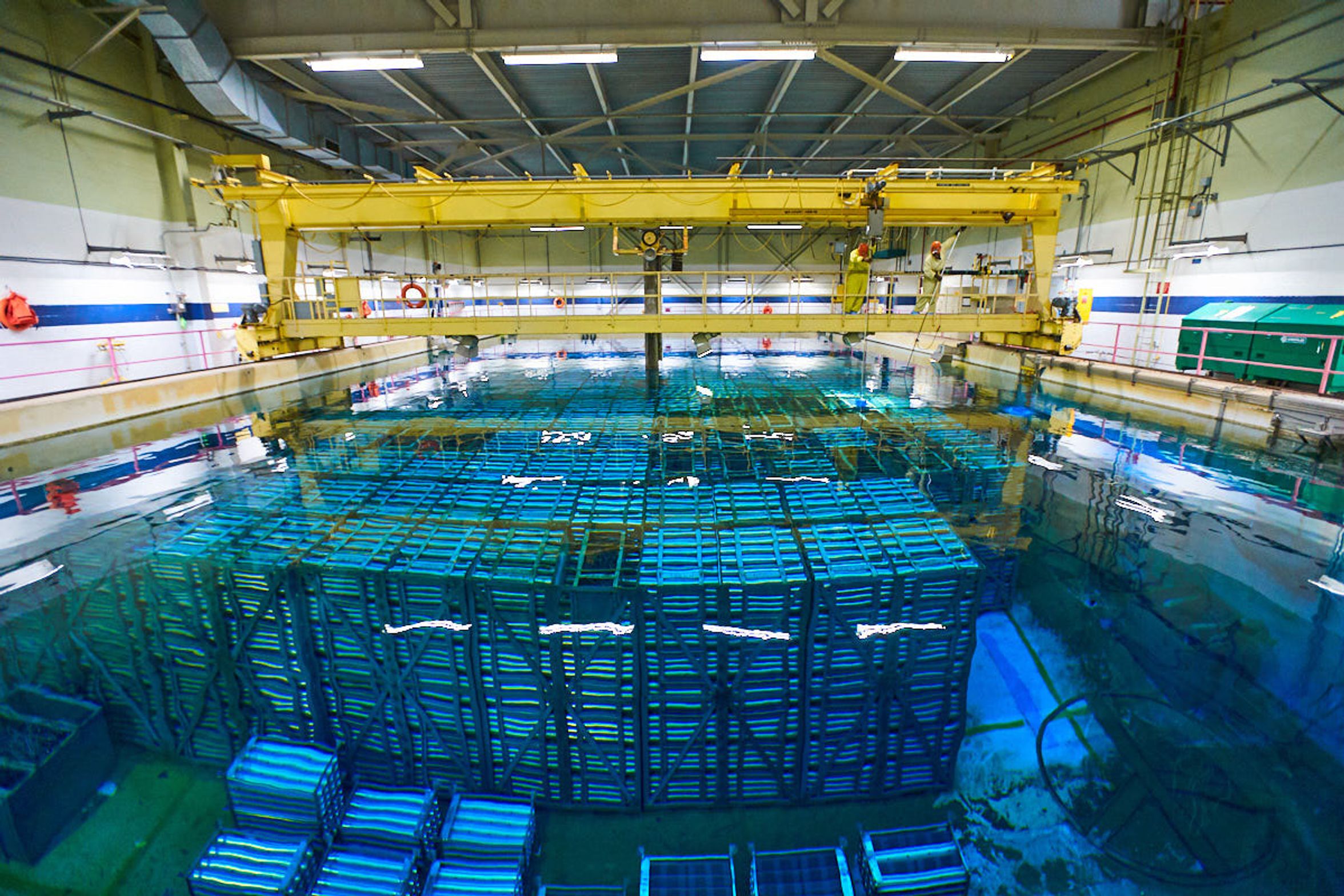 Manchester University 8th April 2020,Two new research papers from The University of Manchester, working with colleagues at Sellafield Limited and the National Nuclear Laboratory show that microbes can actively colonise some of the most intensively radioactive waste storage sites in Europe. When nuclear facilities such as
Sellafield were designed and built more than 50 years ago, it was sensible to assume that the conditions in the pond would prevent microbial life from taking hold, but now new research shows that this is not the case. The growth of microbial life in nuclear facilities can cause uncertainty or problems. Understanding how microbial life can inhabit environments such as
fuel storage ponds is vital to progress nuclear decommissioning work such as at Sellafield. Microbes are a group of organisms that, including bacteria and algae, are known to inhabit a wide range of habitats on Earth. Improvements in detection technology in recent years has allowed microorganisms to be detected in environments previously thought to be inhospitable to life. It is now becoming clear that some microorganisms are capable of withstanding surprisingly high doses of radiation, at levels significantly greater than seen in natural environments. Power Technology 8th April 2020, University of Manchester researchers have discovered microbial life can
Geomicromicrobiologists studied microbes that can cause summer blooms in
nuclear fuel storage ponds, slowing down the decommissioning process of retired nuclear plants. Summer blooms reduce visibility and disrupt fuel retrieval. University of Manchester microbiology professor Jonathan Lloyd
said: “Our research focused on Sellafield’s First Generation Magnox Storage Pond (FGMSP), which is a legacy pond that has both significant levels of radioactivity in conjunction with a highly alkaline pH (11.4), equivalent to domestic bleach. “The ultimate aim of this work was to identify the microbes that can tolerate such an inhospitable environment, understand how they tolerate high radiation levels, and help site operators control their growth. “The growth of the microorganisms in the FGMSP inhibits the operations in the pond, which is currently a priority for decommissioning. “ |
|
|
Nuclear Free Local Authorities (NFLA) call for more stringent safety measures, and the closure of EDF’s old nuclear reactors
|
Ardrossan Herald 8th April 2020, Six safety incidents have been reported at Hunterston including concerns about the nuclear plant’s cooling systems, fuelling machine and cracks in the reactors’ graphite core. The UK government’s safety watchdog, the Office for Nuclear Regulation, said that Hunterston had “failed to adequately account for” radioactive materials last October. The Scottish Environment Protection Agency (SEPA) also disclosed that unauthorised radioactive “debris” was found in a supposedly empty fuel flask that had been returned to Hunterston from the Sellafield site. The Nuclear Free Local Authorities (NFLA) are calling for North Ayrshire Council to take more stringent measures regarding the plant and for EDF to close down old reactors. NFLA Scotland Convenor, Councillor Feargal Dalton said: “These
incidents confirm in our view that these aging reactors would be better being closed and the workers transferred into the long-term process of decommissioning Hunterston B.” |
|
Finally, they might investigate America’s most fatal nuclear submarine disaster
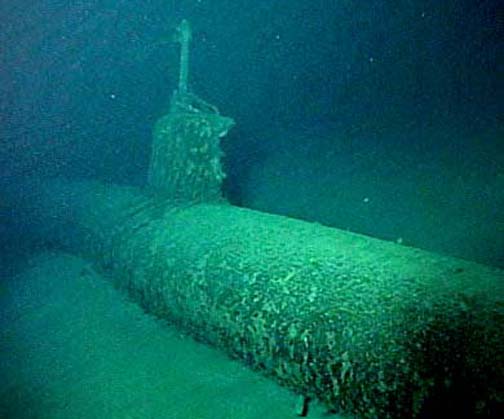
CTY Pisces – Photos of a Japanese midget submarine that was sunk off Pearl Harbor on the day of the attack. There’s a hole at the base of the conning tower where an artillery shell penetrated the hull, sinking the sub and killing the crew. Photos courtesy of Terry Kerby, Hawaii Undersea Research Laboratory. August 2003.
 seven-years-later-americas-worst-nuclear-submarine-disaster, By Robert Eatinger, Friday, April 10, 2020, Fifty-seven years ago today, America suffered its first, and in terms of fatalities its worst, loss of a nuclear-powered submarine. Yet, much of the information about that disaster and the Navy’s subsequent investigation has remained outside of public view. That may change this year.
In February this year, Judge Trevor N. McFadden of the U.S. District Court for the District of Columbia ordered the Navy to review 300 pages of documents a month starting April 30 and by the end of every month thereafter, and to begin rolling productions of documents starting on or before May 15 and every month thereafter.
Call to stop construction at Hinkley C nuclear project, due to coronavirus risk
Allan Jeffrey of Stop Hinkley talks to the Extinction Rebellion Radio Show. Rebel Radio 7th April 2020
https://www.mixcloud.com/XR_RebelRadio/rebel-despatches-hinkley-point-07042020/
BBC Points West 8th April 2020, Bus drivers carrying workers to Hinkley Point C construction site are
worried their lives are being put at risk. Every day a fleet of vehicles drops of and picks up hundreds of staff. The bus company says its putting in screens to protect the drivers, but work hasn’t been complete yet.
Bus drivers are calling for construction to stop. For the safety of everybody it makes more sense to close the site down. They are showing no regard for human life and potentially putting everyone in a situation where people
could die. Drivers are expressing their concern on social media and sending pictures which seems to show lack of social distancing. There are concerns too about the movement of workers who come from outside the area.
https://www.bbc.co.uk/iplayer/episode/m000h59p/points-west-late-news-08042020
Gamma radiation found ineffective in sterilizing N95 masks
Gamma radiation found ineffective in sterilizing N95 masks
Nuclear scientists and biomedical researchers team up to investigate whether treatment with gamma radiation could make N95 masks more reusable. MIT News, Leda Zimmerman | Department of Nuclear Science and Engineering, April 10, 2020“………….“The sterilized masks lost two-thirds of their filtering efficiency, essentially turning N95 into N30 masks,” says Cramer. But why the deterioration?
“Our hypothesis is that ionizing radiation of whatever kind likely decharges the electrostatic filtration of the mask,” says Gupta. “The mechanical filtration of gauze can trap some particles, but radiation interferes with the electrostatic filter’s ability to repel or capture particles of 0.3 microns.”……” http://news.mit.edu/2020/gamma-radiation-found-ineffective-in-sterilizing-n95-masks-0410
1 This Month

10 March A LIVE WEBINAR THE REAL EFFECTS OF NUCLEAR POWER
What the Industry Isn’t Telling Us
1:00 PM Mountain, 2 pm Central, 3 pm Eastern. Live on the Keepers of the Water Facebook page

18 March Webinar @ 1 PM EST: An Assessment of SMR Projects: The Case of Canada
register for the zoom:
https://us02web.zoom.us/webinar/register/WN_o8BIIOUvQ2ONJR1nta65DQ#/registration


of the week – STOP SMALL MODULAR REACTORS IN CANADA
To see nuclear-related stories in greater depth and intensity – go to https://nuclearinformation.wordpress.com
-
Archives
- March 2026 (18)
- February 2026 (268)
- January 2026 (308)
- December 2025 (358)
- November 2025 (359)
- October 2025 (376)
- September 2025 (258)
- August 2025 (319)
- July 2025 (230)
- June 2025 (348)
- May 2025 (261)
- April 2025 (305)
-
Categories
- 1
- 1 NUCLEAR ISSUES
- business and costs
- climate change
- culture and arts
- ENERGY
- environment
- health
- history
- indigenous issues
- Legal
- marketing of nuclear
- media
- opposition to nuclear
- PERSONAL STORIES
- politics
- politics international
- Religion and ethics
- safety
- secrets,lies and civil liberties
- spinbuster
- technology
- Uranium
- wastes
- weapons and war
- Women
- 2 WORLD
- ACTION
- AFRICA
- Atrocities
- AUSTRALIA
- Christina's notes
- Christina's themes
- culture and arts
- Events
- Fuk 2022
- Fuk 2023
- Fukushima 2017
- Fukushima 2018
- fukushima 2019
- Fukushima 2020
- Fukushima 2021
- general
- global warming
- Humour (God we need it)
- Nuclear
- RARE EARTHS
- Reference
- resources – print
- Resources -audiovicual
- Weekly Newsletter
- World
- World Nuclear
- YouTube
-
RSS
Entries RSS
Comments RSS
 nuclear-news