Reporters Without Borders urges Japan to stop pressuring the media on Fukushima-related topics
March 6, 2020
As Japan commemorates the 9th anniversary of the Fukushima disaster, Reporters Without Borders (RSF) urges the authorities to let journalists freely report on the topic.
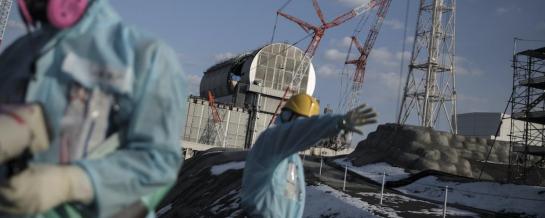
On Wednesday, March 11th, Japan will commemorate the 9th anniversary of the Fukushima Daiichi nuclear plant accident, the worst atomic disaster after Chernobyl, caused by a tsunami and collectively resulting in 18,500 dead and missing, 160,000 evacuees and a continuous release of massive amounts of radioactive materials until today. Since the accident, the media have consistently encountered pressure and censorship attempts when trying to investigate the topic.
Reporters Without Borders (RSF) urges the Japanese authorities to ensure that the media can freely report on the Fukushima-related topics and requests a full access for all journalists, including foreign correspondents and freelancers, to the contaminated sites and to all raw data available.
“It is essential for the public to access independent information on the accurate radiation levels,” says Cédric Alviani, RSF’s East Asia bureau head. “The government is currently encouraging the remaining evacuees to settle back to the contaminated areas, but it must be fully transparent on the health hazard residents would be exposed to.”
Many Japanese journalists denounce heavy self-censorship in the media, which they attribute to the government and nuclear lobby’s efforts at concealing information seen as giving a “negative image” of Japan and hindering the preparation of the 2020 Olympic Games, set in Tokyo this summer.
A senior TV reporter who formerly worked for a major news program and wishes to remain anonymous recalls “intense pressure from the government and advertisers” to discourage his team from reporting on the long-term effects of the radioactive substances released by the plant. “We even heard of phone calls from Prime Minister Shinzo Abe’s cabinet asking our management to move some journalists they disliked to another department.”
In 2014, the board of daily newspaper The Asahi Shimbun even had to make a public apology for having published an article pointing out that 90% of the nuclear plant’s employees were offsite during the accident, drawing the government’s ire. The authors, award winning journalists Hideaki Kimura and Tomomi Miyazaki, were transferred to a non-writing section and later forced to resign.
Martin Fackler, who served as the New York Times Tokyo bureau chief from 2009 to 2015, considers that the authorities “clearly lack transparency” and believes that the Asahi Shimbun’s retraction case “successfully deterred other big media from investigating Fukushima-related stories.”
UN Special Rapporteur on Freedom of Expression David Kaye has expressed serious concerns about freedom of the press in Japan in 2017, and noted a further erosion in 2019.
Japan ranked 67th out of 180 in the 2019 World Press Freedom Index.
https://rsf.org/en/news/rsf-urges-japan-stop-pressuring-media-fukushima-related-topics
No comments yet.
1 This Month


18 March Webinar @ 1 PM EST: An Assessment of SMR Projects: The Case of Canada
register for the zoom:
https://us02web.zoom.us/webinar/register/WN_o8BIIOUvQ2ONJR1nta65DQ#/registration


of the week – STOP SMALL MODULAR REACTORS IN CANADA
To see nuclear-related stories in greater depth and intensity – go to https://nuclearinformation.wordpress.com
-
Archives
- March 2026 (129)
- February 2026 (268)
- January 2026 (308)
- December 2025 (358)
- November 2025 (359)
- October 2025 (376)
- September 2025 (258)
- August 2025 (319)
- July 2025 (230)
- June 2025 (348)
- May 2025 (261)
- April 2025 (305)
-
Categories
- 1
- 1 NUCLEAR ISSUES
- business and costs
- climate change
- culture and arts
- ENERGY
- environment
- health
- history
- indigenous issues
- Legal
- marketing of nuclear
- media
- opposition to nuclear
- PERSONAL STORIES
- politics
- politics international
- Religion and ethics
- safety
- secrets,lies and civil liberties
- spinbuster
- technology
- Uranium
- wastes
- weapons and war
- Women
- 2 WORLD
- ACTION
- AFRICA
- Atrocities
- AUSTRALIA
- Christina's notes
- Christina's themes
- culture and arts
- Events
- Fuk 2022
- Fuk 2023
- Fukushima 2017
- Fukushima 2018
- fukushima 2019
- Fukushima 2020
- Fukushima 2021
- general
- global warming
- Humour (God we need it)
- Nuclear
- RARE EARTHS
- Reference
- resources – print
- Resources -audiovicual
- Weekly Newsletter
- World
- World Nuclear
- YouTube
-
RSS
Entries RSS
Comments RSS
 nuclear-news
Leave a comment