The week to 11 February in climate and nuclear news
I never want to minimise the nuclear perils. But, it is a dying industry, and can look irrelevant as news about the climate crisis continues to be revealed.
One thing about nuclear power – the mainstream media continues to mindlessly hype the industry as the climate solution, while in fact nuclear is the third highest carbon emitter after coal-fired plants and natural gas. Even if they were “zero carbon”, nuclear reactors would never be installed in time to make a difference.
CLIMATE – where to start? Combined environmental crises could trigger ‘global systemic collapse‘, scientists warn. Some climate modelling is now predicting an unprecedented and alarming spike in global temperatures — perhaps as much as 5 degrees Celsius. Ya know that things are getting serious when it hits industry and markets – The northern hemisphere winter has been unusually mild: That’s making life difficult for oil and gas traders,
Antarctica posts a record high temperature. Arctic ice melt is changing ocean currents . Coronavirus likely to be connected to climate change – bats the likely first vector. Fires and floods: Australia already seesaws between climate extremes – and there’s more to come. Delhi’s disaster – disappearing water supplies.
A little bit of good news – Nuclear energy exhibit to be closed, turned into clinic for doctor-hungry Yamaguchi town
Climate emergency plans must have a ‘no new nuclear’ clause.
Nuclear power went backwards in 2019, and the outlook is bleak.
Nuclear power and harm to animals.
Permafrost thawing -“fast and dramatic, affecting landscapes in unprecedented ways.
MALAYSIA. Malaysia – a definite NO to nuclear power.
USA. Trump’s budget – slashes foreign aid, but $billions more for nuclear weapons. Presidential nuclear decision by Twitter: Trump confuses about policy on Yucca for waste dump. Rep. Newhouse and Trump at odds after tweets about dangerous nuclear waste disposal . Sea-level rise – an Unmanaged climate risks to spent fuel from U.S. nuclear power plants..
NORWAY. Norways Nuclear Naughtiness – Censored Secrets and Haldens Hurtful History.
SPAIN. Spain scraps controversial nuclear waste facility.
POLYNESIA. Polynesian MP calls on France for “vast project” to withdraw radioactive waste in Mururoa.
FRANCE. French President Emmanuel Macron seeks leading role in post-Brexit EU nuclear strategy.
JAPAN. The ” task force” stage of Olympic cancellation ? Fukushima and the 2020 Olympics. High-level radiation at Fukushima Daiichi No.2 reactor.
RUSSIA. Russia ready to discuss nuclear weapon restrictions. Russian Orthodox Church rethinks its practice of blessing nuclear weapons.
CANADA. Ontario Power Generation says ‘no’ to proposed nuclear waste disposal site following opposition from Saugeen FN.
TAHITI. France drags its heel over nuclear compensation claims from Tahiti.
Coronovirus, bats, and the Climate Change connection
 The Wuhan Coronavirus, Climate Change, and Future Epidemics…...TIME, 10 Feb 2020,
Nuclear power went backwards in 2019, and the outlook is bleak

| Jim Green, RenewEconomy, 11 Feb 2020
https://reneweconomy.com.au/nuclear-power-went-backwards-in-2019-and-the-outlook-is-bleak-61834/ Nuclear power went backwards last year with the permanent shutdown of nine power reactors and the startup (grid connection) of six. Startups were concentrated in Russia (three) and China (two), with one in South Korea. The shutdowns were spread across eight countries. Worse still for the industry – much worse – is the paucity of reactor construction starts. There were just three construction starts in 2019: one each in China and Russia, and Bushehr-2 in Iran which faces an uncertain future. No countries entered the nuclear power club in 2019 (construction starts or grid connections). The average age of the global reactor fleet passed 30 years in 2019. That’s an old fleet, increasingly prone to accidents, large and small; increasingly prone to extended outages and thus increasingly uncompetitive in electricity markets. As a result of the ageing of the reactor fleet, the International Atomic Energy Agency (IAEA) anticipates the closure of up to 139 GW from 2018‒2030 – more than one-third of current global capacity of 395 GW (including idle reactors in Japan). Based on IAEA figures, the industry will need about 10 new reactors (10 GW) each year just to match shutdowns. The industry did indeed average nearly 10 construction starts from 2008‒13. But the number has sharply declined in the aftermath of the Fukushima disaster and catastrophic cost overruns. There were more construction starts in 2010 (16) than in 2016‒19 combined (15). This table captures the birth, mid-life crisis (Fukushima) and death of the nuclear power mini-renaissance:
Diana Ürge-Vorsatz, Vice-Chair of an Intergovernmental Panel on Climate Change Working Group, notes in the foreword to the World Nuclear Industry Status Report 2019: “Trend indicators in the report suggest that the nuclear industry may have reached its historic maxima: nuclear power generation peaked in 2006, the number of reactors in operation in 2002, the share of nuclear power in the electricity mix in 1996, the number of reactors under construction in 1979, construction starts in 1976. As of mid-2019, there is one unit less in operation than in 1989.” The number of power reactors under construction has been falling slowly but steadily in recent years, from 68 in 2013 to 46 as of Jan. 2020 (52 according to the IAEA). The Era of Nuclear Decommissioning Currently, nuclear power reflects two contradictory dynamics. The earlier mini-renaissance is evident but will subside by the mid-2020s. The Era of Nuclear Decommissioning is in its infancy (with nine reactor closures, historians may mark 2019 as the beginning of this qualitatively new era) and will be in ever-sharper focus by the mid-2020s. The Era of Nuclear Decommissioning will be characterised by a decline in the number of operating reactors; an increasingly unreliable and accident-prone reactor fleet as aging sets in; countless battles over lifespan extensions for aging reactors; an internationalisation of anti-nuclear opposition as neighbouring countries object to the continued operation of aging reactors; and escalating battles over and problems with decommissioning and waste disposal. Until such time as the rot sets in, the nuclear industry can console itself with these 10-year figures indicating a marginal increase or decrease depending on whether reactors in long-term outage (most of them in Japan) are included or excluded. Including reactors in long-term outage is “misleading” and “clearly ridiculous” according to former World Nuclear Association executive Steve Kidd, because many of them may never operate again.
Pro-nuclear spin So how are the nuclear industry and its supporters responding to the industry’s miserable state? Mostly with denial and delusion. Here are the ‘top 6 nuclear power achievements‘ of 2019 according to the executive editor of POWER magazine. 1. World’s first EPR nuclear power plant enters commercial operation with the Sept. 2019 commencement of commercial operation of the second of two EPR reactors in Taishan, China. The original 2013/14 startup dates for Taishan 1 and 2 were missed by five years due to construction problems and safety concerns (including the extraordinary Creusot Forge scandal in France). Excavation work for the Taishan reactors began in 2008 and construction of the two reactors formally began in 2009 and 2010. China General Nuclear Power Corporation acknowledged a cost increase of 40 percent for the two Taishan reactors to US$11 billion. As a result of delays and cost overruns, the market for EPRs in China has all but evaporated. The EPR reactor under construction at Flamanville, France, is 10 years behind schedule: construction began in Dec. 2007, the planned startup date was 2012, and EDF now says that commercial operation cannot be expected before the end of 2022. The current cost estimate of €12.4 billion (US$13.7 billion) is 3.8 times greater than the original estimate of €3.3 billion (US$3.6 billion). The EPR reactor under construction at Olkiluoto, Finland, is 10 years behind schedule: construction began in April 2005, startup was anticipated in 2010, and startup is now scheduled in 2020. The current cost estimate of about €11 billion (US$12.2 billion) is 3.7 times greater than the original €3 billion (US$3.3 billion) price tag. The estimated combined cost of the two EPR reactors under construction at Hinkley Point, UK, including finance costs, is £26.7 billion (US$35.0 billion) (the EU’s 2014 estimate of £24.5 billion plus a £2.2 billion increase announced in July 2017). A decade ago, the estimated construction cost for one EPR reactor in the UK was almost seven times lower at £2 billion. The UK National Audit Office estimates that taxpayer subsidies for Hinkley Point will amount to £30 billion (US$39.4 billion), while other credible estimates put the figure as high as £50 billion (US$65.6 billion). Undeterred, POWER magazine claims that a 6-unit EPR project in India will be the world’s largest nuclear power plant “if completed as planned”. It would be a miracle if the project is completed as planned; indeed it would be a minor miracle if it even begins given funding constraints. 2. World’s first ACPR-1000 nuclear power plant begins commercial operation in China Grid connections of ACPR-1000 reactors in China in 2018 and 2019 mark a significant achievement. But the broader picture is highly uncertain. There has only been one reactor construction start in China in the past three years. The number of reactors under construction has fallen sharply from 20 in 2017 to 10 currently. No-one knows whether or not the Chinese nuclear program will regain momentum. Wind and solar combined generated nearly double the amount of electricity as nuclear in 2018. 3. Akademik Lomonosov connects to grid Estimated construction costs for Russia’s floating nuclear power plant (with two 32-MW ice-breaker-type reactors) increased more than four-fold and eventually amounted to well over US$10 million / megawatt (US$740 million / 64 MW). A 2016 OECD Nuclear Energy Agency report said that electricity produced by the plant is expected to cost about US$200 / MWh, with the high cost due to large staffing requirements, high fuel costs, and resources required to maintain the barge and coastal infrastructure. The primary purpose of Russia’s floating nuclear power plant is to help exploit fossil fuel reserves in the Arctic – fossil fuel reserves that are more accessible because of climate change. That isn’t anything to celebrate; it is disturbing and dystopian. 4. Vogtle nuclear expansion progresses Construction of the twin-AP1000 project in the US state of Georgia began in 2013 and the planned startup dates were April 2016 and April 2017. The project is 5.5 years behind schedule and it is unlikely that the revised completion dates of Nov. 2021 and Nov. 2022 will be met. In 2006, Westinghouse claimed it could build one AP1000 reactor for as little as US$1.4 billion. The current cost estimate for the two Vogtle reactors – US$27‒30+ billion – is 10 times higher. The Vogtle project only survives because of mind-boggling, multi-billion dollar taxpayer subsidies including US$12+ billion in loan guarantees, tax credits and much else besides. Westinghouse declared bankruptcy in 2017, largely as a result of its failed AP1000 projects in South Carolina (abandoned after the expenditure of at least US$9 billion) and Georgia, and Westinghouse’s parent company Toshiba was almost forced into bankruptcy and survives as a shadow of its former self. 5. NRC approves Clinch River nuclear site for small modular reactors (SMRs) 6. NuScale’s SMR design clears Phase 4 of NRC review process But who will pay for SMRs? Industry won’t budge without massive taxpayer subsidies. A 2018 US Department of Energy report states that to make a “meaningful” impact, about US$10 billion of government subsidies would be needed to deploy 6 gigawatts of SMR capacity by 2035. And the pro-nuclear authors of a 2018 article in the Proceedings of the National Academy of Science argue that for SMRs to make a significant contribution to US energy supply, “several hundred billion dollars of direct and indirect subsidies would be needed to support their development and deployment over the next several decades”. The prospects for SMRs are just as bleak in other countries. And as the AEMO/CSIRO GenCost 2019-20 report notes, SMRs in Australia would be 2-4 times more expensive per kW than wind and solar. Dr. Jim Green is the national nuclear campaigner with Friends of the Earth Australia and editor of the Nuclear Monitor newsletter.
|
Malaysia – a definite NO to nuclear power
 Malaysia won’t use nuclear power, says PM https://www.nst.com.my/news/government-public-policy/2020/02/564295/malaysia-wont-use-nuclear-power-says-pm By Nor Ain Mohamed Radhi – February 10, 2020 Malaysia won’t use nuclear power, says PM https://www.nst.com.my/news/government-public-policy/2020/02/564295/malaysia-wont-use-nuclear-power-says-pm By Nor Ain Mohamed Radhi – February 10, 2020
CYBERJAYA: Malaysia will not use nuclear power as a renewable energy source as the country’s knowledge in the field is inadequate, said Prime Minister Tun Dr Mahathir Mohamad. He said to date, the world has yet to find the best and safest way to dispose of radioactive waste generated. “If you have a nuclear power plant, you will accumulate nuclear waste, which is radioactive, and until now they do not know how to reverse the process. “That is why we cannot use nuclear materials because it stays on for a million years. We do not want this country to be full of such waste thrown all over the place and affecting people. “That is why, until we discover a way of reversing the process, we should not use nuclear materials,” he told reporters after a dialogue session with the French business community in Malaysia here, today. The event was organised by the Chamber of Commerce and Industry France Malaysia. Dr Mahathir during the dialogue was asked on Malaysia’s vision on renewable energy sources, after a pledge by Energy, Science, Technology, Environment, and Climate Change Minister Yeo Bee Yin in September to have Malaysia increase its renewable energy use to 20 per cent by 2025. Dr Mahathir said the country was working on reducing the usage of traditional energy sources namely oil, gas, and coal to lessen the amount of pollution in the air. |
|
Trump’s budget – slashes foreign aid, but $billions more for nuclear weapons
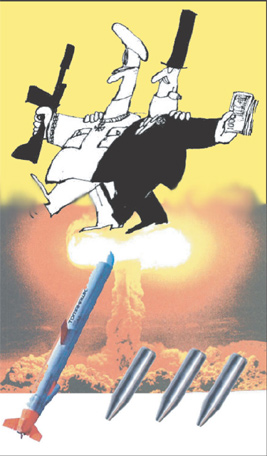 The 2 most controversial national security items in Trump’s new budget The 2 most controversial national security items in Trump’s new budget
Trump wants to gut foreign aid and beef up America’s nuclear force. Vox, By Alex Ward@AlexWardVoxalex.ward@vox.com Feb 10, 2020 President Donald Trump is about to propose a budget that leans much more heavily on military might — including new spending on modernized nuclear weapons — than diplomatic prowess, funding a muscular foreign policy some worry could lack the necessary finesse to deal effectively with global crises. The White House’s FY 2021 budget — standing at a whopping $4.8 trillion — is already making waves for deep cuts to social safety net programs like Medicare and Medicaid. Since Congress has to sign off on government spending, the full request is likely dead on arrival due to Democrats’ control of the House. And with no agreed-upon budget, there is no agreed-upon spending. It’s almost guaranteed, then, that the next few months will be filled with partisan fighting and wrangling over how to use taxpayer funds. Which means the White House’s budget document really serves more as a statement of principles and priorities — the budget, as some say, is policy. When it comes to defense and foreign policy, Trump has once again shown a preference for a stronger military partly at the expense of a weaker diplomatic and development tools. The two main national security takeaways from the budget’s expected toplines:
The problem, however, is that this foreign aid funding isn’t just charity: Taking nearly $12 billion out of the foreign aid budget would severely harm US diplomatic efforts. For one, giving nations money they need to keep volatile situations stable enhances global security, and could actually prove cost-effective to the US if the money helps prevent catastrophe at home or abroad down the line……….. In years past, Republicans and Democrats have pushed back against these draconian slashes to foreign aid, and they are likely to do so again. But the president’s insistence on tearing down America’s assistance programs to bare bones — even though they hover at only around 1 percent of the federal budget — shows how misguided he is about their outsize impact. Trump’s decision to modernize America’s nuclear arsenal is costlyThe United States has the second-largest nuclear arsenal in the world, behind Russia, but with many of these systems dating back to the Cold War, keeping warheads, bombs, and delivery systems up to date is extremely expensive. In 2017, the nonpartisan Congressional Budget Office estimated that modernizing the nuclear arsenal would cost $1.2 trillion over 30 years. That would require a herculean effort on behalf of multiple, subsequent administrations — not to mention the continued patience of taxpayers — to ensure it was completed. Trump’s proposed billions, championed by Republicans and criticized by Democrats, is one step in that direction……. Kingston Reif of the Arms Control Association, says “The administration’s nuclear weapons spending plans are unnecessary and unsustainable,” he told me. “The costs and opportunity costs of the plans are real and growing, and the biggest nuclear modernization bills are just beginning to hit.” Reif offered an alternative: “Scaling back the plans for new delivery systems, warheads, and infrastructure would make the modernization effort easier to execute and reduce the threat to other defense programs while still leaving a devastating deterrent.” It’s worth noting that Trump has pulled the US out of a massive arms control treaty with Russia, and it may not extend another vital one next year. Some experts worry that could lead to an arms race, causing the US to spend even more on nuclear systems down the line. …………https://www.vox.com/2020/2/10/21131273/trump-budget-fy2021-foreign-aid-nuclear |
|
Some climate models now predict unexpected , unprecedented spike in global temperatures

A few climate models are now predicting an unprecedented and alarming spike in temperatures — perhaps as much as 5 degrees Celsius, Business Insider, CONNOR PERRETT FEB 9, 2020
- A handful of climate projections are predicting much higher rise in global temperatures than scientists have seen in the models before.
- While there’s concern over the number, some scientists hope the latest projections are outliers.
- A 2-degree rise in temperature could lead sea level to jump, coral reefs to die, and water to become dangerously scarce in some parts of the world. Some models right now predict a 5-degree rise.
The startling anomaly first appeared in models from the National Centre for Atmospheric Research (NCAR), which suggested that if Earth’s atmospheric carbon-dioxide concentration doubles (as it’s expected to do by the end of the century), the planet could wind up 5.3 degrees hotter. That’s 33% higher than the group’s previous estimate.
Scientists hope the models are an “overshot,” Bloomberg reported. It will take scientists a significant amount time – at least months – to figure out how to interpret the results.
The climate models estimate “climate sensitivity,” which tells scientists how much warmer the planet will get as a result of rising CO₂ concentrations. For four decades, the expected temperature rise if CO2 levels double has been about 3 degrees.
These models have a proven track record of accurately forecasting climate change. A recent study from the American Geophysical Union found that climate projections over the past five decades have largely been accurate – actual climate observations aligned with the models’ predictions.
Australian government happy to criminalise those who speak the truth
 Bravo Alison Broinowski and Independent Australia . I am utterly fed up with the Australian government, and the mainstream media’s abject failure to even consider the plight of Australian citizens speaking truth – especially re Julian Assange. I did admire Ita Buttrose’s spirited defence of the freedom of the press – UP TO A POINT. But she, and the rest of the media pack were completely hypocritical in pretending that the persecution of Julian Assange had nothing to do with them.
|
Assange, Collaery, Snowden, Smethurst: criminalising truth https://independentaustralia.net/life/life-display/assange-collaery-snowden-smethurst-criminalising-truth,13573#.XkDpbKeRTRw.twitter By Alison Broinowski | 9 February 2020 Truth-tellers and whistleblowers need our support in Australia and across the globe, says Dr Alison Broinowski.
ENOUGH IS ENOUGH. You’ve often heard that from leaders clutching at their last straw. Australia, you would think, has had enough this year and it’s only February. Enough of a scorched, smoky summer. Enough eviscerating loss of family. Enough people fleeing for their lives from infection. Enough inaction in the face of existential threats. Enough excuses made. Enough blind eyes turned. Enough lies. But no. There’s more to come. In Australia, telling the truth is now a crime. At least four Australians who did so face secretive trials in the coming weeks, three of them in Canberra. Another is imprisoned in the ACT without you knowing what for or at whose orders. You aren’t allowed to know his name, nor the name of Witness K. You are familiar with the other two: Bernard Collaery, K’s lawyer, and Annika Smethurst, a Newscorp journalist whose home was raided by police last July. The fourth Australian is in pre-extradition detention in London’s high-security Belmarsh prison, also for telling the truth. Evidently, this is now a crime in your allies’ system as well, even though the U.S. has its First Amendment and the UK has a Bill of Rights. Revealing the embarrassing truth is what Chelsea Manning is back in a U.S. gaol for, what Edward Snowden is exiled in Russia for, and what Julian Assange did in 2010 when WikiLeaks published documents selected from more than 700,000 U.S. diplomatic cables, assessment files of Guantánamo Bay detainees, military incident logs, and videos from Iraq and Afghanistan. That’s why Assange, having been in diplomatic exile for seven years in London, faces 175 more years for espionage in a U.S. gaol. The absurdity of such a sentence, when the worst war criminals get 45 years, reflects the fury of the U.S. security state at being caught out and the subservience of its UK colleagues. Those on both sides of the Atlantic determined to get Assange are unrelenting and his extradition hearing begins on 24 February. Almost too late, the Guardian has re-discovered its editorial conscience and begun opposing extradition, not wanting justice for Assange, but press freedom. Professor Nils Melzer, the UN Special Rapporteur on Torture supports that, but has gone further, deploring Assange’s mental and physical state. He has written to the UK and U.S. governments pointing out their responsibility for his treatment. He is to raise Assange’s case this week with Sir Richard Dearlove, who was head of MI6 during the Iraq invasion. Good luck with that. Since Kevin Rudd, Australian prime ministers have been silent if not virulently negative about Assange. In recent months prominent individuals, including Bob Carr and Dick Smith, have pointed to the urgency of his case and advocated his release. In November the Greens’ Peter Whish-Wilson presented a petition with 200,000 signatures to the Senate, calling for Assange to be brought back from the UK to Australia. Late last year, Tasmanian Independent Andrew Wilkie formed the “Bring Assange Home” Friendship Group, which he co-chairs with George Christensen of the Liberal-National Party. It has no Liberal Party member. Wilkie and his supporters are seeking appointments in London this week to make the case for Assange. He says UK Prime Minister Boris Johnson, Australian Prime Minister Scott Morrison, and U.S President Donald Trump have made Assange their “political plaything”. Why can’t Morrison ask Trump, as a favour, to ‘do the right thing by this Australian’? |
|
Delhi’s disaster – disappearing water supplies
|
Delhi is facing a water crisis. Ahead of day zero, the city’s residents have turned to the mafia and murder https://www.abc.net.au/news/2020-02-08/delhi-water-crisis-leads-to-mafia-murder-and-mutiny/11931208
By South Asia correspondent James Oaten and Som Patidar
On a crisp Delhi morning, dozens of women, men and children in one of the city’s poorest areas gather on the side of the road holding plastic bottles and buckets. They’re waiting for a water truck to arrive, clearly identifiable with its large tank on the back and hoses sprouting from the top like tentacles. When it does, the residents will have just a few minutes to fill their containers as much as possible to hopefully secure enough water for the day. In winter, when Delhi is cool, the situation is relatively calm. But in summer, when temperatures surge past 40 degrees Celsius, the situation becomes much more desperate. Fights have broken out. People have been killed. What it’s like to live with limited access to waterWe are getting water now as it is winter, but the crisis deepens in summer,” mother-of-three Babli Singh explained. The Delhi government has in recent years tried to supply water to unauthorised colonies by drilling water bores, but this is a short-term solution that exacerbates a bigger problem. Elsewhere, private enterprises — known locally as the “water mafia” — have been able to profit from the despair by building their own bores. The activity is illegal, but there has been little to nothing done to crack down on the practice. The ABC saw one such private enterprise drilling in a street, and the workers explained they were digging deeper than ever in an effort to find new water. Locals have been forced to borrow money to pay for waterMs Singh is one of the many families that had to pay the so-called water mafia to get their home connected to an illegal bore water supply. Her father-in-law, Inder Dev Singh, said he feels forgotten. “We are not getting any help from the government,” he explained. “The government has been promising us a water pipeline for a long time. We paid for our own private pipeline.” “We have to run behind water tankers. Sometimes I do not get water.” Ms Singh and her family of nine live in what’s considered Asia’s largest “unauthorised colony,” Sangam Vihar — which is home to well over 1 million residents and is located in Delhi’s southern outskirts. The buildings and infrastructure here were never designed or approved by a government agency. Rather, residents simply built their homes on a small plot of land with whatever resources they could muster, mostly concrete and brick. It’s a claustrophobic environment, with dusty roads so congested and narrow that cars often cannot enter. Essential services are also lacking, with the vast majority of residents relying on tanker water for drinking and groundwater for cleaning and washing. But with reserves so low, there’s real concern underground supplies will run dry in just a few months. “Our children go to school without a bath for four or five days,” Ms Singh said. “We are suffering. Life is very hard.” The rise of the ‘water mafia’ Delhi is one of 21 Indian cities that could run out of groundwater this summer, according to a 2018 government thinktank report. If and when this happens, it will be known as “day zero”. The water woes are a product of years of booming population growth, drought and mismanagement. During the summer, that pipe is only turned on for two hours, giving the family a small but crucial window to fill up a large underground tank they installed themselves. The water is drinkable if it is boiled first, he explained. Buying extra water is an option, but in an area where work is infrequent and wages are low, people often need to borrow money to buy extra allocations. “Water is supposed to be free,” Mr Singh explained. “[The private providers] do not want us to get a [government] water by pipeline as they are earning lot of money by providing water by tankers. “There will be a time when there will be no water.
A man was shot in a dispute over waterThe issue of water often only gets attention during the summer, when the situation becomes amplified. In the summer of 2018, a man was shot in Sangam Vihar during a dispute over water. In the same year, in another part of Delhi, a group of men and a juvenile were arrested for beating to death a father and son in another water dispute. Videos of skirmishes and violence also regularly emerge in summer on social-media application WhatsApp. This year, the issue is getting unseasonal attention as Delhiites head to the polls for local government elections. Political candidates, keen on securing votes from the city’s poorest, have made sweeping promises to build pipes to deliver water to every house in Delhi. “It does not get the respect it deserves,” explained Jyoti Sharma, who heads up the water security not-for-profit organisation, FORCE. “Water is central to everything we do. But everybody takes it for granted. So, it does not get the attention it deserves. It’s just these few election days that it’s being talked about.” Ms Sharma says there have been some positive steps in recent years, including forcing large homes to capture rainwater, and directing recycled water into rivers and ponds to recharge underground reserves. But it’s not enough to reverse the depleting trend. She worries about “day zero” but thinks it won’t occur this summer. “I am an Indian,” she explains.
“I’m hoping day zero will not happen. I am hoping it will not happen.” |
|
1 This Month
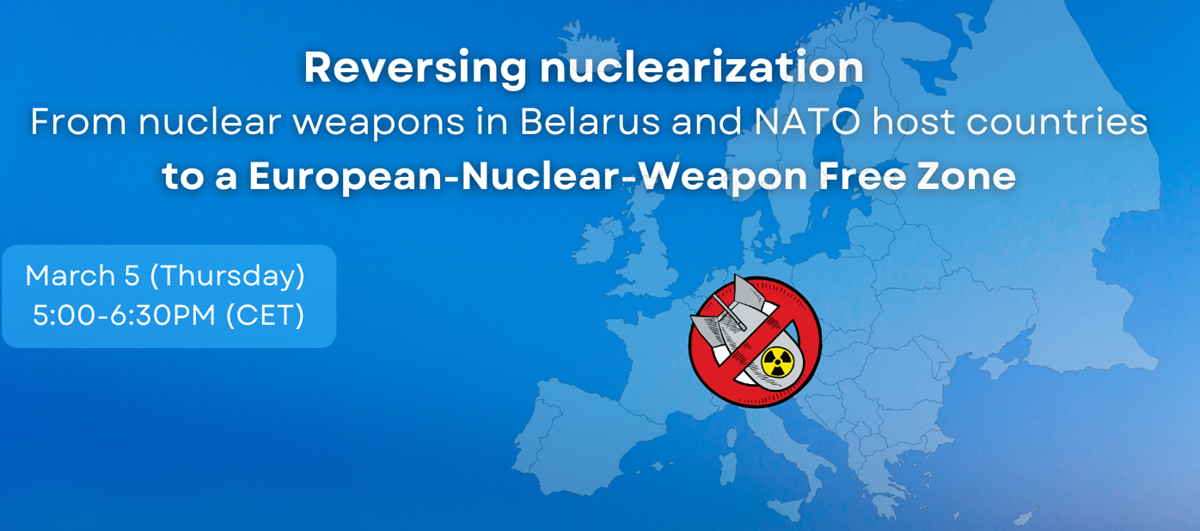
5 March -Online – Reversing nuclearization:
From nuclear weapons in Belarus and NATO host countries to a European-Nuclear-Weapon Free Zone
11am-12:30pm Eastern Time USA / 5pm-6:30pm CET

of the week – Advocating for a
nuclear free beach – https://www.samuellawrencefoundation.org/
The Samuel Lawrence Foundation advocates for a Nuclear Waste Free Beach at San Onofre, join us and take action!

10 March A LIVE WEBINAR THE REAL EFFECTS OF NUCLEAR POWER
What the Industry Isn’t Telling Us
1:00 PM Mountain, 2 pm Central, 3 pm Eastern. Live on the Keepers of the Water Facebook page

18 March Webinar @ 1 PM EST: An Assessment of SMR Projects: The Case of Canada
register for the zoom:
https://us02web.zoom.us/webinar/register/WN_o8BIIOUvQ2ONJR1nta65DQ#/registration

of the week – STOP SMALL MODULAR REACTORS IN CANADA
To see nuclear-related stories in greater depth and intensity – go to https://nuclearinformation.wordpress.com
-
Archives
- March 2026 (38)
- February 2026 (268)
- January 2026 (308)
- December 2025 (358)
- November 2025 (359)
- October 2025 (376)
- September 2025 (258)
- August 2025 (319)
- July 2025 (230)
- June 2025 (348)
- May 2025 (261)
- April 2025 (305)
-
Categories
- 1
- 1 NUCLEAR ISSUES
- business and costs
- climate change
- culture and arts
- ENERGY
- environment
- health
- history
- indigenous issues
- Legal
- marketing of nuclear
- media
- opposition to nuclear
- PERSONAL STORIES
- politics
- politics international
- Religion and ethics
- safety
- secrets,lies and civil liberties
- spinbuster
- technology
- Uranium
- wastes
- weapons and war
- Women
- 2 WORLD
- ACTION
- AFRICA
- Atrocities
- AUSTRALIA
- Christina's notes
- Christina's themes
- culture and arts
- Events
- Fuk 2022
- Fuk 2023
- Fukushima 2017
- Fukushima 2018
- fukushima 2019
- Fukushima 2020
- Fukushima 2021
- general
- global warming
- Humour (God we need it)
- Nuclear
- RARE EARTHS
- Reference
- resources – print
- Resources -audiovicual
- Weekly Newsletter
- World
- World Nuclear
- YouTube
-
RSS
Entries RSS
Comments RSS
 nuclear-news