The road to Armageddon — our two existential threats and the 2020 US presidential race — IPPNW peace and health blog

As we begin this new decade, our world faces great peril from two intertwined existential threats: climate change and nuclear war. Failing to solve these two issues may lead to the end of life as we know it. This year’s US presidential campaign has had no significant questioning or dialogue on the risk of nuclear war. We must demand responses from presidential candidates as to their understanding of the threat posed by the continued existence of nuclear weapons.
Trump “Peace Plan” Leaves ~ 15 Jewish Settler Ghetto Enclaves Within Palestinian Territory; Israel Would Maintain “Overriding Security Responsibility for the State of Palestine”; Control Air Space — Mining Awareness +
One need only look at the map and see that this won’t work. Reading the details it’s even worse. Trump’s supposed “Peace Plan” leaves approximately 15 Jewish settler enclave-exclave ghettos within Palestinian Territory. Israel would maintain “overriding security responsibility for the State of Palestine“. Furthermore, it allows for “punitive demolitions following acts of terrorism“, by […]
Nuclear waste dump proposal has many Ontario First Nations worried – Canada
Published: January 24, 2020 By Cory Bilyea
Follow this blog for updates. There will be updates in coming days
Nuclear waste dump proposal has many Ontario First Nations worried
Ontario Power Generation (OPG) is running out of time to find a permanent solution for storing radioactive nuclear waste.
Dry storage containers, the current method of storing contaminated items, have a minimum life span of fifty years and is ‘80s technology, according to the Nuclear Waste Management Organization (NWMO), a non-profit overseen by the government.
A permanent dumpsite is needed for low and intermediate-level nuclear waste. The secure Bruce nuclear site in Kincardine, Ont., is the proposed location but it’s on the unceded territory of the Saugeen Ojibway Nation (SON).
The items, including contaminated worker clothing and tools, could be radioactive for 100 years while resins, filters and used reactor components could be toxic for 100,000 years, according to NWMO.
These items need to be buried in something called a deep geologic repository (DGR), which will be buried 680 metres underground, deeper than the CN Tower is tall.
A ratification vote has been called by the SON and will be held collectively on Chippewas of Saugeen First Nations at the James Mason Memorial, Culture & Recreation Centre and on Chippewas of Nawash First Nation at the Cape Croker Community Centre on Jan. 31.
Talks with OPG and several information sessions have been held to date. A detailed information booklet is available for the nearly 4,000 band members who are eligible to vote.
The voting age has been lowered to 16 and there will be a special information session for young people on Jan. 25-26 at the Outdoor Education Centre, between Sauble Beach and Wiarton.
Two community members said concerns over the proposal have been heightened by the accidental emergency broadcast message that was sent to thousands of people from the Pickering nuclear plant early on Sunday, Jan. 12.
London resident Jane Meathrel said in a Facebook post, the waste site should be located “as far away as possible from the Great Lakes. I do not trust ‘the experts’ that it is not dangerous.”
Concerns about the adverse impacts on water quality are a key reason people around the power plant are saying no to nuclear waste being buried so close to their homes and livelihoods. Many rely on the fish from Lake Huron for food and income.
“We the people who live on this continent are well aware that we have the worlds greatest freshwater resources,” said Sue Boles, who leases land for a cottage in Neyaashiinigaaming. “We have a duty and an obligation to protect it for future generations and the world.”
Boles brings her grandson to the beach near her cottage to swim every year.
President and CEO of Bruce Power, Mike Rencheck, was not available for comment, but said on their website, “We recognize our role and work to ensure our decision-making process incorporates environmental, social, cultural and economic systems.”
Saugeen resident and band member Kim George is voting no and if she had a voice when the plant was first built, she would have said no then too.
“I think most of us have always had an underlying fear of the nuke plant,” she said. “The planned nuclear DGR is compounding that fear.”
Online voting has begun for off-reserve band members and will be open until Jan. 31.
Even with a yes vote, there will still be many years, possibly decades before the facility is built.
Ontario Power Generation has guaranteed that if the vote is no, they will abide by the decision and begin to look for another location.
Also see
Problems at the Poles – Climate Change effects on ice! Handy resource link
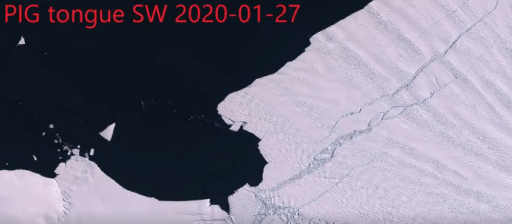
Pine Island Glacier Antarctica

Greenland Ice sheet

A spoon full of sugar helps the radioactive oatmeal go down
When MIT and Quaker Oats paired up to conduct experiments on unsuspecting young boys
When Fred Boyce and dozens of other boys joined the Science Club at Fernald State School in 1949, it was more about the perks than the science. Club members scored tickets to Boston Red Sox games, trips off the school grounds, gifts like Mickey Mouse watches and lots of free breakfasts. But Fernald wasn’t an ordinary school, and the free breakfasts from the Science Club weren’t your average bowl of cereal: the boys were being fed Quaker oatmeal laced with radioactive tracers.

The Fernald State School, originally called The Massachusetts School for the Feeble-Minded, housed mentally disabled children along with those who had been abandoned by their parents. Conditions at the school were often brutal; staff deprived boys of meals, forced them to do manual labor and abused them. Boyce, who lived there after being abandoned by his family, was eager to join the Science Club. He hoped the scientists, in their positions of authority, might see the mistreatment and put an end to it
We didn’t know anything at the time,” Boyce said of the experiments. “We just thought we were special.” Learning the truth about the club felt like a deep betrayal.
The boys didn’t find out the whole story about their contaminated cereal for another four decades. During a stretch between the late 1940s and early 1950s, Robert Harris, a professor of nutrition at the Massachusetts Institute of Technology, led three different experiments involving 74 Fernald boys, aged 10 to 17. As part of the study, the boys were fed oatmeal and milk laced with radioactive iron and calcium; in another experiment, scientists directly injected the boys with radioactive calcium.
The Fernald students’ experiment was just one among dozens of radiation experiments approved by the Atomic Energy Commission. Between 1945 and 1962, more than 210,000 civilians and GIs were exposed to radiation, often without knowing it. What seems unthinkable in today’s era of ethics review boards and informed consent was standard procedure at the dawning of the Atomic Age.
More here;
https://www.smithsonianmag.com/history/spoonful-sugar-helps-radioactive-oatmeal-go-down-180962424/
And a recent exploration by some Youtubers of one of the Schools (Fernald state school)
1 This Month


Petition to revoke the licensing of the Near Surface Nuclear Disposal Facility (NSDF) at Chalk River. https://www.ourcommons.ca/petitions/en/Petition/Details?Petition=e-7247


of the week – STOP SMALL MODULAR REACTORS IN CANADA
To see nuclear-related stories in greater depth and intensity – go to https://nuclearinformation.wordpress.com
-
Archives
- March 2026 (163)
- February 2026 (268)
- January 2026 (308)
- December 2025 (358)
- November 2025 (359)
- October 2025 (376)
- September 2025 (258)
- August 2025 (319)
- July 2025 (230)
- June 2025 (348)
- May 2025 (261)
- April 2025 (305)
-
Categories
- 1
- 1 NUCLEAR ISSUES
- business and costs
- climate change
- culture and arts
- ENERGY
- environment
- health
- history
- indigenous issues
- Legal
- marketing of nuclear
- media
- opposition to nuclear
- PERSONAL STORIES
- politics
- politics international
- Religion and ethics
- safety
- secrets,lies and civil liberties
- spinbuster
- technology
- Uranium
- wastes
- weapons and war
- Women
- 2 WORLD
- ACTION
- AFRICA
- Atrocities
- AUSTRALIA
- Christina's notes
- Christina's themes
- culture and arts
- Events
- Fuk 2022
- Fuk 2023
- Fukushima 2017
- Fukushima 2018
- fukushima 2019
- Fukushima 2020
- Fukushima 2021
- general
- global warming
- Humour (God we need it)
- Nuclear
- RARE EARTHS
- Reference
- resources – print
- Resources -audiovicual
- Weekly Newsletter
- World
- World Nuclear
- YouTube
-
RSS
Entries RSS
Comments RSS
 nuclear-news