Reviewing USA’s nuclear industry 2019 – Natural resources Defense Council
A Year in Review: The Nuclear Fuel Cycle, https://www.nrdc.org/experts/caroline-reiser/year-review-nuclear-fuel-cycle, December 17, 2019 Caroline Reiser
Part of NRDC’s Year-End Series Reviewing 2019 Climate & Clean Energy Developments
A surprising number of nuclear-related anniversaries happened this year. And yet these events are either so forgotten or have become so normalized, that they don’t seem to make much impact on the decisions we’re making today on the nuclear fuel cycle. Decades have passed since the worst nuclear accidents in the United States, and we’re no closer to cleaning up their legacy. The enduring risks and radiation contamination that persists from these disasters should remind us all why we need strong safety and environmental protection standards for the nuclear industry.
The 40th Anniversary of the Three Mile Island Meltdown
Probably the most famous commercial nuclear event in the United States is the Three Mile Island accident. On March 28, 1979, a nuclear reactor at the Three Mile Island plant in Pennsylvania partially melted down due to a combination of technical malfunction and human error.
The accident led to increased regulation of nuclear power plants. But that heightened care when it comes to commercial nuclear reactors has eroded over the years. This year, the Nuclear Regulatory Commission (NRC) granted the first subsequent license extension, which will allow the Turkey Point reactors to stay open an additional 20 years for an unprecedented total of 80 years.
If there is one plant that is likely to have some challenges functioning until the 2050’s, it’s this one. The Turkey Point plant sits on the coast south of Miami, an area scientist know is experiencing sea level rise faster than expected. Yet in granting the license, the NRC failed to consider realistically how climate impacts like sea-level rise and temperature will affect the plant’s future safety and environmental impacts.
Adding insult to injury, the NRC granted the license even though the review process is far from over. NRDC has been working with Friends of the Earth and Miami Waterkeeper to challenge the environmental impact statement required as part of the license renewal process. While the Atomic Safety and Licensing Board rejected all of our claims, we are in the process of appealing the decision to the full Nuclear Regulatory Commission. If we lose there, a court fight could follow. So while the NRC staff wants to pretend it can’t lose, we still have a lot of fight left.
The 40th Anniversary of the Church Rock Uranium Mill Spill
The largest radioactive accident in the United States had nothing to do with a nuclear reactor or bomb. Rather, it was caused by the first step in the nuclear fuel cycle, uranium mining. On July 16, 1979, a dam holding back a pond filled with uranium mining waste broke. It released 94 million gallons of acidic, radioactive liquid and approximately 1,000 tons of solid radioactive and heavy metal waste into a local river, which then took the acid, heavy metals, and radiation downstream through a wide swath of the Navajo Nation. Tribal members were not warned about the toxicity in their primary water source until days later and then were given the most minimal assistance.
The Church Rock uranium mill spill was a terrible, singular, and instantaneous disaster. But it’s not the only legacy of uranium mining. The pond that spilled at Church Rock was one of many similar unlined, dirt ponds storing radioactive and toxic waste. Over the lifecycle of these ponds, millions of gallons of toxic material leaked into the groundwater, polluting a precious resource in the desert West.
But that was then—right? Wrong.
Domestically, uranium now is largely produced through a process called in situ leach mining. Rather than dig uranium straight out of the earth, in situ leaching sends liquid underground to dissolve uranium directly off the underground ore. The liquid is then pumped back to the surface, carrying with it the dissolved uranium. The problem is, the law hasn’t kept up with the new technology. There are no specific rules to protect groundwater from this type of mining, so instead the NRC has cobbled together a mess of complicated and ineffective standards for protection of public health and the environment. These haphazard regulations theoretically require groundwater be cleaned up after the uranium mining is done, but effective cleanup and restoration to pre-mining water quality has never happened, not once.
The Environmental Protection Agency had prepared the first strong, protective standards for uranium mining, but the Trump administration withdrew them. Instead, in early 2019, the NRC said it will move to codify its existing inadequate rules. NRDC has interceded to halt NRC from moving forward, and we await NRC’s responses to our comments. Essentially, it is EPA’s duty to first update its regulations so that the NRC has rational standards to work from. Should the NRC proceed with this ill-advised rulemaking, it’s very likely to get even more contentious.
The 60th Anniversary of the Nuclear Reactor Meltdown at Santa Susana Field Laboratory
Twenty years before the Three Mile Island disaster, a test reactor at the Santa Susana Field Laboratory in Simi Valley, California had a partial meltdown. And this wasn’t the only accident at the site.
Today, Santa Susana remains one of the most contaminated site in California, even though Boeing, NASA, and the Department of Energy signed legally binding agreements with California to have cleanup finished by 2017. And this year NASA and the Energy Department are considering cleanup alternatives that would abandon the majority of the waste in place. NRDC is working closely with local organizations, community members, and the state of California to ensure that NASA and the Department of Energy don’t renege on their cleanup promises.
The 75th Anniversary of the Nuclear Industry
While many continue to perpetuate the myths about its promise, the vexing problems the nuclear fuel cycle poses are on vivid display at Hanford and the other the major Manhattan Project sites, including the Savannah River Site and the Idaho National Lab: millions of gallons of waste sit in leaky tanks with little to no progress on cleanup.
Looking back, we can see how nuclear energy and nuclear weapons pose unimaginable risks to our citizens, our water, and our landscape. Moving forward, we will keep fighting to ensure those risks are managed to the highest degree possible.
2 Comments »
Leave a reply to Ted Newsome Cancel reply
1 This Month
23 April – WEBINAR – Why new nuclear reactors are the wrong tools for decarbonization Thursday, April 23 • 1 AM – 2 AM AEST
World Nuclear Power. Reactors 1951-2026, 75 Years of Nuclear Power.
Interactive Map– https://dv.worldnuclearreport.org/
Chernobyl: The Lost Tapes – A good documentary on Chernobyl on SBS available On Demand for the next 3 weeks– https://www.sbs.com.au/ondemand/tv-program/chernobyl-the-lost-tapes/2352741955560

of the week–London Campaign for Nuclear Disarmament

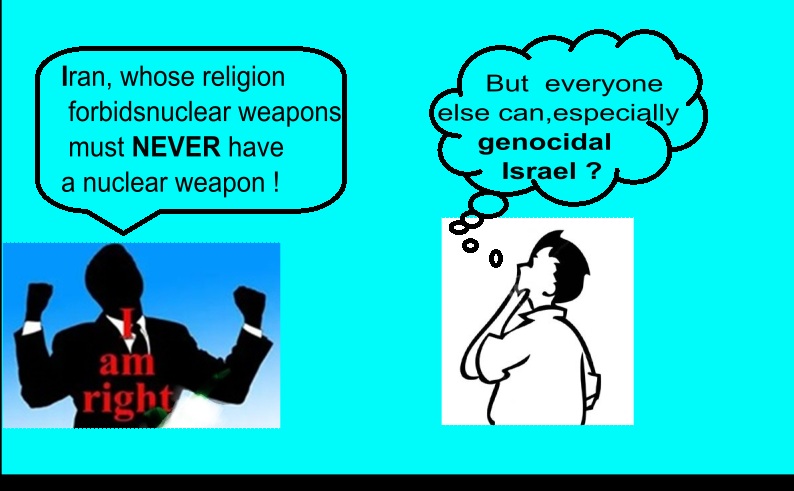
Tell the Ukrainian Government to Drop Prosecution of Peace Activist Yurii Sheliazhenko
To see nuclear-related stories in greater depth and intensity – go to https://nuclearinformation.wordpress.com
-
Archives
- April 2026 (231)
- March 2026 (251)
- February 2026 (268)
- January 2026 (308)
- December 2025 (358)
- November 2025 (359)
- October 2025 (376)
- September 2025 (257)
- August 2025 (319)
- July 2025 (230)
- June 2025 (348)
- May 2025 (261)
-
Categories
- 1
- 1 NUCLEAR ISSUES
- business and costs
- climate change
- culture and arts
- ENERGY
- environment
- health
- history
- indigenous issues
- Legal
- marketing of nuclear
- media
- opposition to nuclear
- PERSONAL STORIES
- politics
- politics international
- Religion and ethics
- safety
- secrets,lies and civil liberties
- spinbuster
- technology
- Uranium
- wastes
- weapons and war
- Women
- 2 WORLD
- ACTION
- AFRICA
- Atrocities
- AUSTRALIA
- Christina's notes
- Christina's themes
- culture and arts
- Events
- Fuk 2022
- Fuk 2023
- Fukushima 2017
- Fukushima 2018
- fukushima 2019
- Fukushima 2020
- Fukushima 2021
- general
- global warming
- Humour (God we need it)
- Nuclear
- RARE EARTHS
- Reference
- resources – print
- Resources -audiovicual
- Weekly Newsletter
- World
- World Nuclear
- YouTube
-
RSS
Entries RSS
Comments RSS
 nuclear-news
http://www.historic7thstreet.org/remembering/
Kathy Jordan’s Archive
There is an archive on this site go to the Hhyper link marked:
“1972 nuclear tests on Glade Park shook up earth, residents”
It is a pdf
I found this on the webpage of a deceased reporter, who worked for the Grand Junction Paper, in the seventies in and eighties. This was archived in her site. They were testing tactical nuclear weapons. More nuclear atrocities on americans by the government and corporations that few knew about, or if they did they did not understand the significance.
1972 nuclear tests on Glade Park shook up earth, residents
The explosion of 500 tons of TNT on Nov. 13, 1972, on Glade Park, as witnessed from the
observation area. Robert Grant photo collection
By Kathy Jordan
Operation Mixed Company sounds like a title for a movie .
It was not a movie but the name the Nuclear Defense Agency had given a series of eight nuclear
blasts scheduled to begin Thursday, June 1, 1972, at 11 a.m.
Grand Junction had been buzzing with talk about the nuclear test scheduled to take place on
Glade Park about 18 miles southwest of town.
According to a news report in The Daily Sentinel, the blast went off at exactly on schedule, and
within four seconds “a mushroomshaped, charcoalcolored cloud ascended against the blue sky
as the sound and a slight air blast were felt.
This blast was the first of eight scheduled by NDA to learn its effects on the sandstone
geological formations and a variety of structures that had been constructed at the site on Glade
Park.
People were curious, and most likely somewhat concerned about what effects a 20ton blast of
TNT would have on homes and businesses. While those in town waited to learn about aftereffects, about 50 people had gathered at an
observation area more than one mile from the blast site.
Some folks in the valley said they felt their houses shake a little, but, for the most part, no one
reported hearing or feeling anything.
The last of eight tests was done on Monday, Nov. 13. It was a 500ton blast. It left a crater 14
feet deep and 160 feet wide , which the military assured the landowner would be refilled with
dirt and planted with grass.
According to The Sentinel news story, various military equipment was included in this test to
gauge the air blast and groundshock affects.
Targets included parked helicopters, a remotely controlled flying helicopter, parked tanks and
personnel carriers, bunkers, an aircraft shelter and foxholes. The NDA was also quick to assure
the public that nearby water wells and springs would be checked for adverse affects.
There were reports of broken windows in the fivetosixmile range from ground zero, but these
repairs were quickly dealt with, according to military spokesmen. Some Glade Park residents
reported feeling the ground shake from the blast.
A friend of ours, who asked that I not use his name, watched the preparation for the tests from its
beginning.
He said that the last blast was the most interesting because it was the one in which they set off
500 tons of explosives. Watching the blast from the observation area, he said that as the shock
wave came across to the observation area, the sagebrush appeared to be rolling. As the shock
wave got to the observation area it felt like it was rolling through his body.
He said there had been three large concrete reenforced hangars built at the site and that the
plutonium trigger had been placed on a large tower in the middle of the hangars.
Before the blast, the hangars were filled with airplanes and helicopters to test the impact on
equipment. When the blast went off, the equipment was destroyed and the steel doors blew off
one hangar but the other two remained intact.
A new Army tank was placed at the blast site, and it was blown two and onehalf miles from
ground zero.
Our friend helped with the cleanup and said that at the end of each day a Geiger counter was
passed over the participants to test for radioactive exposure. After one such test he was told not
to have an Xray for five years.
Several of us working at the Sentinel on both mornings couldn’t contain our curiosity and
stepped outside hoping that we would see something of the blast. And we did. We could see the
dark mushroomshaped cloud as it appeared on the horizon in back of the monument. The cloud
from the last blast was somewhat larger than the cloud from the first one.
At the time it was an eerie feeling to me, as I stood there looking at the mushroom cloud. I had
visions of hiding under our desks in grade school as we went through the drill on what we were
supposed to do in case of a nuclear attack. I also remember thinking that I hoped we wouldn’t die
from exposure to radiation from that cloud.
I didn’t feel the earth move under my feet, but I did hear a noise like that of a sonic boom, and I
got to witness some Western Slope history.
This was not a prell mixed dynamite explosion. This was a tactical nuclear explosion, tested on a city with a population of 20 thousnd people in america like the bombs in nevada were tested on americans and the Green run radioctive iodine release at hanford was.
There are so many lies and hidden genocides of the american uclear security state. Far more than anyone will ever know. The united states has the most and worst radiation-radionuclide cancer clusters in the world . Most you will really never here about and the manys all prettied up and sold to the world and atupid americans as the acceptable collateral damage, death , and suffering of millions.
The United States is filled with hundreds if not thousands of nuclear atrocities the government and c.f. orporations committed against their own people and have gotten away with. The recent INL fire is another large example
More Nuclear Tests in Murica You never heard of. A small tactical nuclear weapons test recorded by grand junction paper reporter . The nuclear bomb was detonated 18 miles from her town
A great deal of the western united states is a nuclear sacrifice zone . The american people and many who live there are too stupid to know that