One small nation shows how to be nuclear- free and climate friendly – theme for November 19

Citizen Advocacy: The Achievements of New Zealand`s Peace Activism, Asia Pacific Journal Pinar Temocin and Noriyuki Kawano, October 1, 2019 Volume 17 | Issue 19 | Number 2Abstract
Aotearoa New Zealand provides an important example of successful citizen activism in the form of anti-nuclear peace advocacy. The collective efforts by peace actors over several decades resulted in the successful demand for a nuclear-free nation. This paper highlights the widespread participation and political support that facilitated the process and assesses its achievements.
Introduction New Zealand, a small and isolated country, is a rare example of a nation achieving nuclear-free status. The peace-seeking nation unified around an anti-war narrative, and moved from activism based on public awareness and engagement to the passage of laws that eliminated nuclear weapons through a number of stages: from the first generation of movements against the atomic bomb after 1945 to the response to French nuclear testing in the late 60`s to US and UK nuclear warship visits in the 70`s and the early 80`s. As part of this shift, the US-led military alliance with Australia and New Zealand (ANZUS) was redefined by New Zealanders from a guarantee of security to a threat that posed a security dilemma. As this essay shows, social consciousness and activism was ultimately successful in bringing fundamental change. The Labor Party, in particular, played a critical role in translating strong public participation on the part of a broad section of the population into a significant policy outcome: `the creation of a peaceful and nuclear-free nation`.
This mobilization involved persistent and substantial public pressure over decades. Public pressure to change the nation’s foreign policy also included opposition to involvement in the United States-led coalition in the Korean and Vietnam wars. As these wars came to an end, the matter of nuclear testing became a hot-button election issue forcing each political party to adopt a policy on nuclear weapons. The anti-nuclear argument was placed within a broader moral vision. New Zealand peace advocates problematized the threatening conditions and demanded a solution under the narratives of a `democratic, egalitarian, decolonized, independent, non-violent, non-militarist nation which is intrinsically based on `a peaceful nation`. A peaceful nation for them required a nuclear-free approach in its domestic and foreign policies. To achieve this, they organized actively, coordinated professionally, sustained effective campaigns, and engaged in the policy-formation and shaping process.
Since the end of the 60s, successful protest movements have established new modes of political participation in advanced democracies.1 In some democratic societies including New Zealand, social movements have benefitted from tolerant political structures. Their success depends further on specific configurations of resources, trustworthy institutional arrangements, and historical precedents for social mobilization that facilitate the development of protest movements.2
Strong democracies are conducive to positive engagements and interactions between citizen and the state. The strengthening of practices of participation, responsiveness to a majority, and the development of inclusive and cohesive societies are powerful components of the democratic decision-making process. Therefore, citizen participation in governance with a responsive, open, and tolerant state can produce positive effects based on popular consensus……https://apjjf.org/2019/19/Temocin.html
 New Zealand passes historic zero carbon bill with near unanimous bipartisan support – The New Zealand parliament has passed landmark legislation that enshrines the country’s commitment to the Paris Agreement into law, and will see the country achieve zero net carbon dioxide emissions by 2050 ….. https://reneweconomy.com.au/new-zealand-passes-historic-zero-carbon-bill-with-near-unanimous-bipartisan-support-33500/
Decommissioning Fukushima nuclear station – cost-cutting culture is causing mistakes

 Nuclear regulator says cost-cutting culture creating mistakes, delays at Fukushima plant, https://mainichi.jp/english/articles/20191107/p2a/00m/0na/025000c
November 8, 2019 (Mainichi Japan) TOKYO –– Decommissioning efforts following the disaster at the Fukushima Daiichi Nuclear Power Station have been hit by delays and a series of mistakes contravening safety rules relating to the operation of nuclear facilities.
In response to the issues, the Nuclear Regulation Authority (NRA) is carrying out a survey into whether operator Tokyo Electric Power Co. (TEPCO) has sufficient staffing numbers working on the project, and is seeking to have TEPCO’s board improve its preparations.
According to the secretariat of the NRA, this summer there were errors in the wiring of electrical cables to the No. 5 and 6 reactors, which caused problems when smoke started to emerge from equipment attached to the reactors.
Furthermore, drinking facilities are being continually installed in controlled zones with high levels of radioactivity where they are forbidden from being built, and it has emerged that workers have drunk water from those areas. In October, the NRA identified both incidents as contravening safety regulations.
Elsewhere, the continuation of work to remove spent nuclear fuel from storage pools at the No. 3 reactor has been delayed. NRA Chairman Toyoshi Fuketa said, “It appears the absolute number of such workers (who manage the work at the power station) is insufficient. If small mistakes continue, it creates the danger of leading to big mistakes.”
Ryusuke Kobayashi, head of the Fukushima Daiichi NRA Regional Office, attended a regular meeting of the NRA on Nov. 6. Regarding the situation at the power station, he said, “There’s a strong focus on cost-cutting at the site. It has an atmosphere which makes it difficult to speak out and say there are too few people working there.” At a press conference after the meeting, chairman Fuketa stressed that it was essential for more staff to be secured.
In response to the NRA, a representative at TEPCO said, “It’s believed an easing of vigilance at the site has been one reason (for the mistakes). The number of human errors has stayed at between 100 and 200 each year for the last five years. We want to proceed with a plan to resolve this considering the specific characteristics of the working environment at the site.”
(Japanese original by Yuka Saito and Suzuko Araki, Science & Environment News Department)
Planet in peril as world leaders ignore global heating’s catastrophes

|
Ignoring Climate Catastrophes, Counter Punch, by ROBERT HUNZIKER NOVEMBER 8, 2019, The planet is coming apart at the seams right before the eyes of scientists at work in remote fringe areas of the North where permafrost crumbles and collapses. It’s abrupt climate change at work in real time, but the governing leaders of the world either don’t care or don’t know. If they did, there would already be a worldwide Climate Marshall Plan to save civilization from early warning signals of utter chaos.“Across 9 million square miles at the top of the planet, climate change is writing a new chapter. Arctic permafrost isn’t thawing gradually, as scientists once predicted. Geologically speaking, it’s thawing almost overnight.” (Source: Arctic Permafrost Is Thawing Fast. That Affects Us All, National Geographic, September 2019 Issue) After all, collapsing permafrost is the leading edge of cataclysmal global warming as it precedes additional catastrophes that follow one after another, and then another. All of which happen unannounced, known as abrupt climate change events. The modern world’s First Near-Catastrophe, the Ozone Hole (1980s), was luckily avoided 40 years ago, more on this fascinating story later. It was the planet’s closest brush with nearly total extinction ever since the Permian-Triassic event took down 95% of all life 252 million years ago. Meanwhile, the concern is whether cascading permafrost will end up as the world’s Second Near-Catastrophe, meaning it gets attended to, or will it lead to something much worse, as in “catastrophes that follow one after another, and then another?” Cherskiy, Russia, which is home to the Northeast Science Station at 69°N, far above the Arctic Circle, is a year-round base for an international research station that studies Arctic biology and climate change. It is 60 miles inland from the East Siberian Sea (another high risk area in the Arctic). In January of 2018 something unheard of happened at Cherskiy. The topsoil that has maintained frozen permafrost for eons was not refreezing like it had every year for as long as records were kept. Whereas, January in Siberia is normally so brutally cold that human breath can freeze with a “tinkling sound” that locals refer to as “the whisper of stars.” “Three years ago, the temperature in the ground above our permafrost was minus 3 degrees Celsius (-27 degrees Fahrenheit),’ Sergey Zimov (an ecologist) said, ‘Then it was minus 2. Then it was minus one. This year, the temperature was plus 2 degrees,” Ibid. The aforementioned example of abrupt climate change in Siberia is a beckoning out of the North, warning that the past 10,000 years of the Holocene era, earmarked by a Goldilocks Wonder World “not too hot, not too cold,” has ended, as excessive heat tears apart regions of the planet, piece by piece. Thereby sounding the alarm and threatening comfy lifestyles in every country in existence today, but is it a warning signal with a short fuse or a long fuse? Human-generated greenhouse gases have kicked nature into high gear, competing with humanity by emitting tons of methane and carbon dioxide into the atmosphere, even in the winter in Siberia above the Arctic Circle. It’s earth-shattering news that should cause sleepless nights for world leaders, but it doesn’t alarm them. Otherwise, they’d already be taking emergency measures. They’re not! As it happens, world leadership is sacrificing their constituencies on the altar of fossil fuel profits and a brand of capitalism that recklessly consumes everything in site. Therefore emphasizing consequences such as, Alaska’s North Slope has seen temperatures spike 11°F in 30 years as temperatures hit 90°F 240 miles above the Arctic Circle, challenging Florida’s balmy weather. As the Intergovernmental Panel on Climate Change struggles to keep up with ever-faster climate change disaster scenarios that unfold right under their noses, the world’s leadership looks like a herd of deer frozen in headlights. Meanwhile, the risks of excessive global warming, or heat, is not properly understood by the public in the following ‘double-scary’ context:……. https://www.counterpunch.org/2019/11/08/ignoring-climate-catastrophes/?fbclid=IwAR2yyAMaH3W5EXqznrms5qWqG_Uku5YkE0ij8Qu93HvTnMZ6jyS2lff9CsE |
|
Frozen nuclear city to ‘seep radiation into environment’ as ice melts
CAMP CENTURY: CLIMATE AND ICE MONITORING
Next Chernobyl? Frozen nuclear city to ‘seep radiation into environment’ as ice melts
A FROZEN underground city could be threatening to seep radioactive materials into the environment as climate change forces the ice to melt. Express UK By CALLUM HOARE Nov 8, 2019
Project Icework was a top secret United States Army programme of the Cold War, aimed at building a network of mobile nuclear missile launch sites below the Greenland ice sheet due to its strategic location near the Soviet Union. To study the feasibility of working under the ice, a highly publicised “cover” project, known as Camp Century, was launched in 1960, but six years later it was cancelled due to unstable conditions. The nuclear reactor was removed before the site was abandoned, but hundreds of tonnes of toxic waste remain buried beneath the ice.
Now, climate change is threatening to expose it, as the ice melts at an alarming rate.
YouTube channel Seeker spoke to William Colgan, who is currently running The Camp Century Climate Monitoring Programme, in the hope of preventing the radioactive material from reaching the surface.
He said in 2018: “The people working at Camp Century did not have an understanding of climate change. “They didn’t have solid records, global climate models, these big data sets so you can see an overview of what’s happening to Earth’s climate.
The moving ice sheet started to destabilise the underground tunnels, prompting the US Army to abort Project Iceworm.
“When Camp Century was decommissioned, only the nuclear reactor was taken out for destructive testing, and the rest of the camp was left in place, and they closed the doors.
“It was abandoned on the assumption that climate wouldn’t change, and it would continue to snow at Camp Century forever and the perpetual snowfall would entomb all of the base infrastructures and eventually bury it.”
The narrator of the series explained why Dr Colgan is so invested in the project.
He said: “The climate has changed and temperatures have reached record highs in the Arctic and Greenland’s ice sheet is melting at an unprecedented rate, which could turn Camp Century’s abandoned waste into a major environmental risk.
So a team of scientists, including William, went back to the site.”
Dr Colgan explained what his team is doing.
He added: “In 2017, the government of Denmark, at the request of the government of Greenland, started the Camp Century Climate Monitoring Programme.
“We set up a bunch of instruments that are erected on the ice sheet surface and then we drill in and we put probes into the ice sheet.
“It keeps a real-time data stream coming from the Camp Century site where we monitor a bunch of things, mainly the temperature of the snow, the temperature of the ice and the air temperature…….https://www.express.co.uk/news/science/1201199/nuclear-warning-cold-war-camp-century-project-iceworm-radiation-climate-change-spt
Lawmakers right to hold off on nuclear waste bill
Lawmakers right to hold off on nuclear waste bill https://www.powelltribune.com/stories/lawmakers-right-to-hold-off-on-nuclear-waste-bill,22189, November 7, 2019 , By CJ Baker
Offer people enough money and they’ll put up with quite a bit.
So if the State of Wyoming was offered, say, billions of dollars a year, you might find some folks willing to hold their nose and let the federal government store a bit of nuclear waste in an isolated corner of the state.
But with the feds apparently offering relative peanuts to stash their waste in Wyoming, we’re pleased that state lawmakers are backing off the idea.
On Tuesday, the Legislature’s Joint Minerals, Business & Economic Development Committee decided not to sponsor a bill that would have called on the governor’s office to try negotiating a nuclear waste deal with the feds.
Lawmakers started exploring the idea of temporarily storing spent nuclear fuel rods back in July. Things got off on the wrong foot right away, as the Joint Management Council opted to look into the concept using an unannounced vote held by email; the discussion only became public when WyoFile, a nonprofit news service, learned of and wrote about it.
We wrote in this space back in July that, while the lack of transparency was frustrating, the idea was worth exploring. However, the price has to be right. State Sen. Jim Anderson, a Republican from Casper, told WyoFile in July that Wyoming could receive as much as $1 billion a year for storing the country’s nuclear waste. That could go a long way toward relieving some of Wyoming’s budget woes.
But when the Spent Fuel Rods Subcommittee actually heard testimony on the subject in September, federal officials suggested the state might only receive $10 million a year — and a chunk of that would go to local governments, according to reporting by the Casper Star-Tribune.
Further, it was suggested that Wyoming might have a fight on its hands to even get that funding, possibly needing Congress to pass legislation and potentially facing multiple lawsuits.
On top of that, the idea drew nearly unanimous opposition from dozens of members of the public who weighed in at the meeting and via online comments.
“Keep that crap out of my state,” was one representative remark from a Casper resident.
While we believe that nuclear waste could be safely transported to and stored in Wyoming, it’s almost certain that, regardless of whatever precautions are taken and assurances given, many residents will remain wary and fearful of the idea. That means accepting spent fuel rods at a new facility here would require ramrodding legislation through the Wyoming Legislature and Congress over the top of some staunch opposition.
There’s also little question that the move would create some bad PR for Wyoming — the “toxic waste dump” jokes basically write themselves — which is a concern for a state that relies on tourism.
All of that is to say that we were a bit dumbfounded to hear that going to all that trouble would net a mere pittance in revenue.
In an interview with the Casper Star-Tribune last month, Sen. Anderson acknowledged the U.S. Department of Energy hasn’t offered enough cash.
“… if they stick to that $10 million figure, we’re not even going to pursue it,” he said.
However, Anderson suggested to the Star-Tribune that the state could negotiate a much better rate that would get closer to the $1 billion mark.
Under the legislation drafted by the Minerals, Business & Economic Development Committee, Gov. Mark Gordon would have been called upon to strike a deal with the Department of Energy. But the committee announced Tuesday that they wouldn’t sponsor the bill, the Star-Tribune reported, with Anderson saying that the governor could open negotiations on his own.
However, a spokesman for Gordon told the Star-Tribune that the governor “remains uncertain that this proposal is the best way to generate revenue for the state.” And the governor told the Wyoming Tribune Eagle last week that, while open to hearing more about nuclear waste storage, “I don’t think it’s the best industry for Wyoming.”
We share Gov. Gordon’s uncertainty and don’t see any reason to move forward at this time — particularly because it seems awfully unrealistic to think the Department of Energy will agree to pay 100 times its initial offer. And when it comes to stashing nuclear waste in the ground, we can’t afford to take a pie-in-the-sky approach.
Big boys and their nuclear toys – Hello, omnicide
 A Tight Grip On Our Nuclear Toys, Hello, omnicide. Anti War.com
 by Robert Koehler November 08, 2019
“Everyone wants to play with the big boys, and the only way to become one of the big boys is to have nuclear toys.”
Attention Planet Earth! Attention Planet Earth! It is time to grow up.
The words are those of Mohamed ElBaradei, then director general of the International Atomic Energy Agency, from a 2005 interview, several months before he and the agency were awarded the Nobel Peace Prize. They remain eerily relevant in 2019, summing up as they do the puerile recklessness that is in the process of regaining its grip on geopolitics. Nuclear weapons treaties are withering on the vine and proliferation threatens a triumphant return.
Hello, omnicide. We may not be as lucky as we were in the Cold War era, when the consequences of nuclear accidents and political brinkmanship were relatively contained and the victims of nuclear development were limited to the people who lived near test areas like the Marshall Islands, Kazakhstan or the Nevada Test Site in the western United States. Nuclear stockpiles have shrunk, not grown, and nuclear-armed nations number nine.
This is still insane, of course. That number should – must – find its way to zero, as declared by the Treaty on the Prohibition of Nuclear Weapons, which was passed by a United Nations vote of 122-1 in 2017 but still awaits actual ratification by 50 countries (32 have ratified it so far). Hope-inspiring as that treaty is, the big boys – who boycotted the U.N. vote two years ago – still control the game, and led by the USA, they are pulling out of the treaties that constrain them. ……..
lobal leadership is adolescent in nature. Big boys rule and lust for power takes control of the brain, especially power in a competitive context. If you represent the interests of a nation-state, you could easily become consumed by the hostile environment in which those interests are trying to establish themselves. And the interests of the planet as a whole (e.g., survival, a future) could easily disappear as anything but idealistic, ignorable abstractions. Disarmament? Give me a break. Not when regional powers, as Erlanger also writes, are “challenging American hegemony.”
Add to this the transnational, corporate interest in militarism. There’s no money in peace, which is seen mostly as a black hole, the lull between wars. Money doesn’t start to flow until the bullets and the bombs start to fly. If you’re opposed to war, the real enemy isn’t Russia or China’ it’s the military-industrial complex (which can smell, for instance, the trillion-plus-dollars earmarked for an upgraded nuclear arsenal).
So what we have right now is a world in which the public’s natural desire for peace is diverted to the status of impossible, at least until we destroy our enemies and secure our hegemony; and the growing global peace movement remains utterly marginalized. How much time do you think will be devoted to the issue of denuclearization, let us say, in the looming presidential race?
All of which leads me back to the Kings Bay Plowshares 7, the seven courageous peace activists who were arrested last year after they cut through the fencing around the Kings Bay Naval Base, in St. Mary’s, Ga., the Atlantic home port of the country’s Trident nuclear missile-carrying submarines, and entered the base without permission. There, they poured out vials of blood (their own) on the grounds, hung up signs and issued an indictment of the U.S. military for violating the 1968 UN Nuclear Non-Proliferation Treaty.

Their trial, during which they were not allowed to present their case on the global danger of nuclear weapons, recently ended. To no one’s surprise, they were found guilty and await sentencing.
“. . . and they shall beat their swords into plowshares, and their spears into pruning hooks; nation shall not lift up sword against nation, neither shall they learn war anymore.”
And Isaiah 2:4, the 3,000-year-old cry for peace, remains irrelevant.
Robert Koehler is an award-winning, Chicago-based journalist and nationally syndicated writer. His new book, Courage Grows Strong at the Wound is now available. Contact him at koehlercw@gmail.com or visit his website at commonwonders.com. Reprinted with permission from PeaceVoice. https://original.antiwar.com/robert-koehler/2019/11/07/a-tight-grip-on-our-nuclear-toys/
In Tamil Nadu, Rooftop Solar Has the Potential to Outdo Nuclear Power
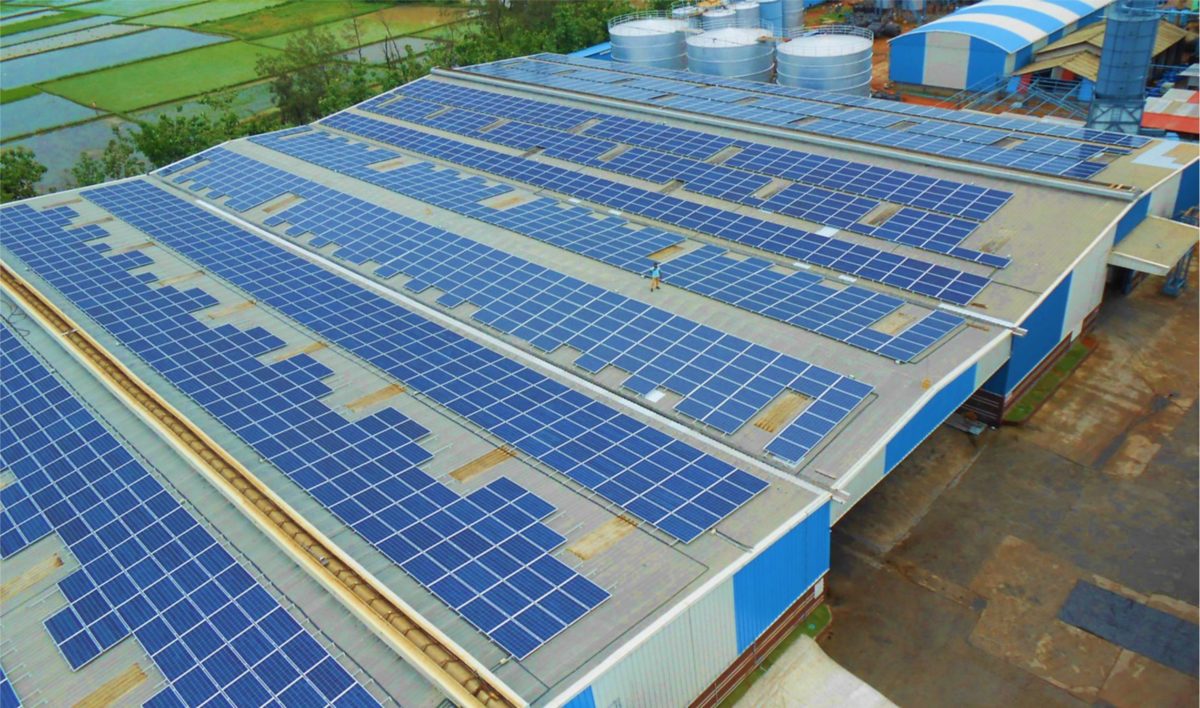
In Tamil Nadu, Rooftop Solar Has the Potential to Outdo Nuclear Power https://thewire.in/energy/tamil-nadu-rooftop-solar-nuclear-power Poonkuzhali 8 Nov 19,
Tamil Nadu has said its vision is to have an installed solar powergeneration capacity of 9,000 MW by 2023.
In September, India and Russia announced joint plans to set up 20 nuclear power units in the former over the next two decades.
India’s nuclear establishment believes that the use of nuclear energy can only be good for the country’s industrial development and prosperity. However, nuclear isn’t the only mode of power generation that can make such a claim.
Tamil Nadu is the only state in the country with two nuclear power plants: at Kalpakkam and Kudankulam.
The Kalpakkam complex, commissioned by 1986, has four operating units. Two of them are of 235 MW capacity and two of 600 MW capacity. The complex’s gross generation in 2017-2018 was 1,194 MU (at 64% availability; in 2015-2016, with an availability of 97%, it generated 1,861 MU).
The Kudankulam power plant is the single largest nuclear power station in India. It has two operational units of 932 MW (net) each. In 2018-2019, with an availability of 33%, it generated 2,797 MU.
Tamil Nadu isn’t the sole beneficiary of the power generated by these plants. In 2016, it required 100,319 MU. It received 99,691 MU from various sources, including state, central and private, and renewable and non-renewable. Of this, nuclear power plants supplied 4,999 MU.
As it turns out, it’s possible to generate this 4,999 MU from rooftop solar panels alone.
On March 31, 2017, Tamil Nadu had the highest installed capacity of grid-connected renewable power (10,562.39 MW), followed by a distant Maharashtra (7,647.60 MW), thanks to wind energy.
According to a 2014 book by S. Gandhi, former president of the Electrical Engineers’ Association of the Tamil Nadu Electricity Board, a 1-MW panel in Tamil Nadu produces 1.5 MU per year on average. This conversion accounts for various factors, including that power production happens only during the day and that production efficiency varies according to the season. Extrapolating from the book, to produce 4,999 MU, Tamil Nadu needs an installed capacity of 3,333 MW.
A 1-kW solar panel over 1,000 roofs can produce 1 MW, so to produce 3,333 MW, we need to install 1-kW solar panels over 3,333,000 roofs. A 1-kW rooftop panel requires about 100 sq. ft. According to state data, there are 2,392,457 buildings in town panchayats alone. Including the total area of all rooftops in Tamil Nadu’s urban centres, and assuming all roofs will generate 10 W/sq. ft., solar power should be easily able to provide the requisite 3,333 MW.
The Government of India and various state governments have consistently presented nuclear power as a safe, sustainable and preferable alternative to coal power. However, while nuclear power plants have very low carbon emissions and have historically caused the fewest fatalities, these advantages are substantially offset by the cost of disposing radioactive waste and an opaque administrative setup in India that has often disprivileged marginalised communities living around power generation complexes.
On the other hand, the biggest downsides of solar power generation are that solar panels lower the productivity of the land they’re setup on, and the batteries used to store power contain toxic materials whose extraction and processing has harmed people in other, often poorer, countries.
But both issues are quickly resolved in the current example. The question of land productivity doesn’t apply since the panels are to be installed on rooftops. Second, in its solar energy policy published in February 2019, the Tamil Nadu government declared it now has the technology to support grid-connected solar panels on a large scale. This means even domestic solar panels can be connected to the grid, obviating the need for power storage batteries.
According to its policy, the state government says its vision is to have an installed solar power generation capacity of 9,000 MW by 2023.
As of today, the Tamil Nadu government requires every new building erected in the state to be equipped with a rainwater harvesting system. If lawmakers issue a similar mandate vis-à-vis solar panels, at least for apartment complexes and non-residential buildings, Tamil Nadu could soon be self-sufficient about its energy needs, if not produce a surplus it can sell to its neighbours.
Poonkuzhali is a writer and activist based in Chennai.
Nuclear medicine has radiation dangers – a reminder to clinicians
 Clinicians Get Real on Radiation: ‘Don’t Do Dumb Things’
Awareness of surroundings and others in the room are key to proper cath-lab radiation safety, a VIVA “roundtable” concluded. TCTMD,
By L.A. McKeown November 07, 2019 S VEGAS, NV—Keeping cath lab staff as well as patients safe and within acceptable levels of radiation is a priority that operators can and should be doing on a daily basis, experts here agreed.
The most crucial message for clinicians is that “they are primarily responsible not only for their own personal safety and the patient’s safety, but of everyone in the room,” Mark Bates, MD, DSc (West Virginia University School of Medicine, Morgantown), told TCTMD. He co-moderated a roundtable at VIVA 2019 on radiation protection strategies that provided a glimpse of how the future might look.
“I think 10 years from now we’re going to be in a position where a lot of procedures in the vasculature are going to be done with minimal radiation exposure as we optimize the existing technology, as well as some of the new laser- or light-augmented three-dimensional imaging,” he added…….
he encouraged operators to be aware of their trainees and monitor them for excess radiation exposure.
“As experienced interventionists, we see anatomy that we know is going to be a challenge,” he explained, “[but] we watch our trainees move through the algorithm and change to different wires and different catheters much slower than what we’re used to doing because they need to learn how to do it. Not only are they taking on radiation, but the patients are taking on a lot of extra radiation, too. I think we need to control the time that we allow trainees to perform certain aspects of the procedure.”……
Communication, Visualization, and Behavior Change
Gray noted that while you may have adequate shielding in your cath lab, it won’t help if you don’t use it correctly. A side drape, for example, that gets in your way and is pushed aside out of annoyance may make a difference in exposure levels for everyone in the room.
“That’s really the dumbest thing you could do, so don’t do dumb things,” he said. Gray added that understanding the effects of scatter on yourself may be a simple as looking at your hands for loss of hair on the fingers and wrists. At his institution Geiger counters are used when X-ray badges indicate elevated radiation exposures for individual operators. “So, you have an auditory signal that’s telling you that you’re on the pedal,” he said, adding that it may help in situations where staff are reaching over the table and may not even realize they are being exposed…….. https://www.tctmd.com/news/clinicians-get-real-radiation-dont-do-dumb-things
Australia’s out of control bushfires (all along the region where the nuclear lobby wants to put reactors!)
‘Uncharted territory’: Dozens of out of control bushfires burn across  New South Wales and Queensland, https://www.sbs.com.au/news/uncharted-territory-dozens-of-out-of-control-bushfires-burn-across-new-south-wales-and-queensland Hot, windy conditions are wreaking havoc across New South Wales and Queensland.
Australian firefighters warned they were in “uncharted territory” as they struggled to contain dozens of out-of-control bushfires across the east of the country on Friday.
Around a hundred blazes pockmarked the New South Wales and Queensland countryside, around 19 of them dangerous and uncontained.
“We have never seen this many fires concurrently at emergency warning level,” New South Wales Rural Fire Service Commissioner Shane Fitzsimmons told the ABC. “We are in uncharted territory.”The RFS said on Friday afternoon it received multiple reports of people being trapped in their homes at several locations.
Homes have also been destroyed, the RFS added.
A mayor on New South Wales’ mid-north coast said on Friday the bushfires ripping through the region were “horrifying and horrendous beasts”.
MidCoast Council mayor David West said a fire near Forster threatened a council building on Thursday night.
“It was literally a wall of yellow, horrible, beastly, tormenting flames,” the mayor said.
The mayor was particularly concerned about an out-of-control fire burning near Hillville south of Taree.
Cybersecurity concerns complicate nuclear digital upgrades
|
As Dominion, others target 80-year nuclear plants, cybersecurity concerns complicate digital upgrades, Utility Dive , By Matthew Bandyk, Nov. 4, 2019,
At a lab on the campus of Purdue University, researchers are testing something that has never been done before in the U.S. energy industry, but has potentially huge implications for the future of nuclear power. They are attempting to demonstrate how to operate a nuclear reactor with all-digital, network-connected instruments and controls, while, at the same time, mitigating the cybersecurity risk of someone hacking into those digital systems.
Earlier this year, federal regulators granted Purdue University Reactor Number One, a research reactor that has been running since 1962, a license to go entirely digital, eschewing the analog wires and tubes that were state-of-the-art at the start of the atomic age and continue to dominate many of the nuclear power reactor fleet’s most important safety systems. While U.S. nuclear plants have been incorporating digital technology over time, many important systems designed to prevent the release of dangerous radiation are still typically analog. For cybersecurity reasons, the digital controls that do exist have to be “air gapped,” meaning they are physically isolated from outside networks. At Purdue, researchers are using the safety of the laboratory to take the exact opposite approach. The digital controls will have wireless connections that the researchers assume can be hacked so they can test how a digital control room can maintain the safety of the reactor even in the face of a cyber threat. “Can we detect that there was an intrusion and how does that affect the rest of the facility?” Clive Townsend, the reactor’s supervisor, explained to Utility Dive.
Extending nuclear livesThis research comes at a time when the U.S. nuclear industry is seeking to go further than they have before with digitization. The reactor fleet is getting old and, for the most part, not being replaced by new reactors. If nuclear power is going to continue generating anywhere near the more than half of U.S. CO2 emissions-free electricity that it provides now, extending the life of existing nuclear plants is necessary. As a result, the nuclear industry has been stressing the advantages of digital systems for life extension, including the ability to more easily replace digital equipment as it ages compared to analog equipment that may be decades-old and no longer available.
“It is urgent that we get on with this,” Doug True, the chief nuclear officer for the industry trade association the Nuclear Energy Institute (NEI), said at a May briefing on digital instrumentation and control before the U.S. Nuclear Regulatory Commission (NRC). “We have plants that are aging, we have plants that are making decisions about moving into subsequent license renewal where digital controls are important.” “By narrowing [the cybersecurity guidance for nuclear plants], you are assuming you know exactly what the adversary is going to do, and that’s a mistake.” Edwin Lyman, Acting Director of the Nuclear Safety Project, The Union of Concerned Scientists: – Last week the NRC approved a key milestone for Florida Power & Light’s application to renew its license for the Turkey Point nuclear plant for another 20 years, potentially allowing Turkey Point to be operate for a total of 80 years, something no U.S. nuclear plant has achieved.
One of the plants right behind Turkey Point in the application process for an 80-year license is Dominion Energy’s Surry Power Station in Virginia, where two reactors started operating in 1972 and 1973, respectively, and without license extensions, will have to retire by 2032 and 2033. “We are evaluating converting several analog systems to digital” at Surry, Dominion spokesman Kenneth Holt told Utility Dive. Those systems include the annunciators — the panels in the control room full of indicators that light up with warning signs about the reactor status — and the equipment that shows the position of control rods within the reactor core.
It is difficult to find replacement parts” for many of the analog systems, Holt said. In some cases, “the manufacturer went out of business 20 years ago.” Cyber challengesStrict rules on cybersecurity, however, pose a challenge to the goal of introducing more digital equipment into a plant. Any digital device or piece of software that the NRC has determined is connected to the systems meant to prevent radiological sabotage undergoes rigorous and continual scanning, updates and other actions to ensure it has not been and cannot be compromised by cybersecurity threats. In addition, any plant employee who has access to this equipment must undergo regular background checks, tests for reliability and trustworthiness and psychological assessments.
There has been some disagreement between the industry and regulators as to which digital equipment should be subjected to the highest level of scrutiny. The NRC’s broad application of its cybersecurity rules has “resulted in reactor licensees having to implement cyber security controls on hundreds to thousands of digital assets, most of which have no direct relationship to radiological sabotage,” like digital indicators on non-safety-related equipment, fax machines, hand-held calibration devices, radios, pagers and calculators NEI wrote in its petition. The group is asking the NRC to narrow its application to only those digital assets that, if compromised in a cyber attack, “would be inimical to the health and safety of the public.”
That change would lead to a “substantial reduction in burden” for plant operators’ use of digital equipment, while “maintaining adequate protection against cyber attacks,” the petition said. But NEI filed that petition in June 2014, kicking off an NRC review that is still ongoing. As reactors continue to age, the NRC is conducting cybersecurity inspections of the country’s nuclear plants. Those inspections will likely be likely wrapped up by the fourth quarter of 2020, according to a recent NRC update.
The NRC’s caution about changing the cybersecurity rules is appropriate, according to Edwin Lyman, the acting director of the Nuclear Safety Project at the Union of Concerned Scientists. In an interview, Lyman said the unpredictability of cybersecurity threats means that regulators should keep the guidance for what equipment is subject to the strongest cybersecurity protections as broad as possible. “By narrowing [the guidance], you are assuming you know exactly what the adversary is going to do, and that’s a mistake,” Lyman said. A piece of equipment that may not initially appear to be directly related to radiological sabotage could become critical if a cyber attack is combined with a physical attack, according to Lyman. For example, a hack of digital communications devices used by plant security could not lead to a radiological accident by itself, but if the devices were hacked while a physical attack threatened the reactor core, security’s ability to respond and prevent the attack could be compromised. …. despite the benefits, some plant operators have found these types of digital upgrades to be difficult to justify due to the upfront cost and the time and effort spent going through the regulatory process to get NRC approval for the changes. ……. NEI officials point out, however, that the test reactor is a tiny fraction of the size of an operating power reactor, so the results of its work with all-digital systems may not always apply to the industry at large. ……. https://www.utilitydive.com/news/as-nuclear-plants-look-to-digitize-controls-and-enhance-performance-cyber/566478/ |
|
Clearwater Appeals Decision On Nuclear Subsidies
 Clearwater Appeals Decision On Nuclear Subsidies, WAMC, Clearwater Appeals Decision On Nuclear Subsidies, WAMC,
By ALLISON DUNNE 8 Nov 19, Hudson River Sloop Clearwater and other plaintiffs are appealing a court decision against them. They say they have a case against the New York state Public Service Commission that challenges subsidies for upstate nuclear plants.
Clearwater and its co-petitioners — the Nuclear Information and Resource Service, the Indian Point Safe Energy Coalition and Goshen Green Farms — contend that nuclear subsidies divert ratepayer funds from renewables that could help meet New York’s climate goals, build a clean energy future and create permanent jobs. Clearwater initially sued at the end of 2016. It filed an appeal of the state Supreme Court’s October decision Tuesday.Seth Davis is a Clearwater board member. “First and most importantly, we think that the state’s approach towards subsidizing nuclear plants is just wrong, that they should be totally emphasizing the switch to renewable resources,” Davis says. He has another concern. “This is the Public Service Commission, administrative body, acting with disregard to the requirements of the Administrative Procedure Act and due process of law in effectively deciding that a shift from a $1 billion subsidy, which was laden with problems itself, the shift to a $7.6 billion, an increase of almost $7 billion, that’s billion with a ‘b,’ was not a significant change. And I think it’s really a stretch to find that such a change is not significant,” Davis says. “Why that’s important is that that change of significance would have required opening public comment, greater public participation in the decision-making process.”……. Clearwater supports the first two tiers of the Clean Energy Standard that provide subsidies for new and existing renewable energy. In July, New York Governor Andrew Cuomo signed the Climate Leadership and Community Protection Act, which requires the state to achieve a carbon-free electricity system by 2040 and reduce greenhouse gas emissions 85 percent below 1990 levels by 2050. Cuomo called it the most ambitious and comprehensive climate and clean energy legislation in the country. Davis applauds the legislation. “The state’s moving in the right direction but we just wish all parts of the state were moving in the same way,” Davis says. He says there is a contradiction between state policy and the subsidy…… Clearwater says the subsidies unfairly impact low-income ratepayers and those who opt into 100 percent renewable energy. Clearwater says the subsidies unfairly impact low-income ratepayers and those who opt into 100 percent renewable energy. https://www.wamc.org/post/clearwater-appeals-decision-nuclear-subsidies |
|
Farmers oppose plan for groundwater to be taken for nuclear power
 West Valley farmers fight APS attempt to take water for nuclear , RoseLawGroup Reporter, plant https://roselawgroupreporter.com/2019/11/west-valley-farmers-fight-aps-attempt-to-take-water-for-nuclear-plant/ Posted by Staff / November 6, 2019 By Ryan Randazzo | Arizona Republic Arizona Public Service Co. has applied to pump “poor-quality” groundwater from the West Valley that the company says Buckeye farmers are wasting. But the farmers say the water is neither poor nor wasted.
APS wants to take some of the high-saline water from underground and test whether it is cost effective to use at the Palo Verde Nuclear Generating Station about 50 miles west of Phoenix.
Unlike most nuclear facilities that use river or seawater to cool the reactors, Palo Verde uses treated effluent water.
Right now, it gets all of its water from the 91st Avenue Wastewater Treatment Plant. But the cost of that treated effluent water is going to increase over time, so the plant is seeking alternatives.
“If we don’t get some kind of innovative approach to water, 20 or 30 years down the road, the costs would just be prohibitive,” said Jack Cadogan, senior vice president of site operations at Palo Verde for APS. “We’ve always known we would be looking for innovative, cost-effective solutions for water.”…….
UK firms given £18m for mini nuclear power stations

|
Firms handed £18m for mini nuclear power stations, Construction Enquirer , Aaron Morby, 8 Nov 19,
A consortium including BAM Nuttall and Laing O’Rourke has netted Government match funding to develop the next generation of compact nuclear power stations. The new small-scale power stations are being designed to be manufactured in sections in regional factories, before being transported to existing nuclear sites for rapid assembly inside a weatherproof canopy…… Firms involved include: Assystem, BAM Nuttall, Laing O’Rourke, National Nuclear Laboratory, Rolls-Royce, Atkins, Wood, The Welding Institute and Nuclear AMRC. The consortium ultimately aims to generate a joint investment of £500m focused on designing a first-of-its-kind small modular reactor, which would form the core of the new compact plants…… https://www.constructionenquirer.com/2019/11/08/firms-handed-18m-for-mini-nuclear-power-stations/ |
|
Small nuclear power station consortium targeting Cumbrian sites
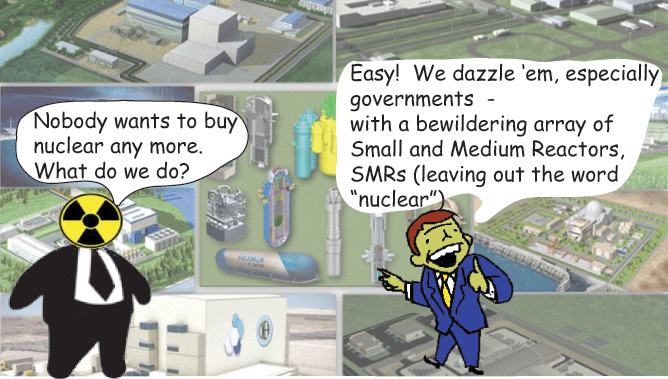 Small nuclear power station consortium targeting Cumbrian sites, The Mail 7th November, By Luke Dicicco @lukeadicicco Group business editor A consortium headed by engineering giant Rolls Royce has revealed it expects to develop its first-of-a-kind small nuclear reactors in Cumbria.
In July the Government said it will invest up to £18 million to support the design of the UK-made mini nuclear power stations. And this week UK Research and Innovation pledged to provide a further £18m, which will be matched by members of the consortium, to progress the project.
Both the Conservative Parliamentary Candidate for Copeland Trudy Harrison and Copeland Borough Council have vowed to up the ante on lobbying the Government to push for SMRs to be developed in Copeland, following the demise of plans for a large-scale nuclear power station at the Moorside site. ……
“We expect to build them on sites in Wales and particularly in Cumbria. That’s where we’re focusing, that’s where we’ll put our effort.”- Mr Woods …..
The SMRs are roughly the size of a one-and-a-half football pitches……..Construction is expected to take around four years per station, although the first unit would be longer, said Mr Woods.
The consortium says it is targeting a £1.8bn cost for each station…….
However, industry insiders still believe a large-scale plant is more suited to the vast Moorside site adjacent to Sellafield. And hopes remain high that a new development will come forward for the site once the Government unveils a new way of financially supporting new plants, with the most likely option a Regulated Asset Base Model. ……
“Unless you build a fleet, you will not do it. We want an industrial partnership between UK and China.” – Rob Davies, chief operating officer at CGN UK
CGN is already heavily involved in the UK’s nuclear new build plans.
It is a partner in the under-construction Hinkley Point C power station in Somerset, as well as planned developments for Bradwell B in Essex and Sizewell C in Somerset. https://www.nwemail.co.uk/news/18021450.small-nuclear-power-station-consortium-targeting-cumbrian-sites/
1 This Month



Tell the Ukrainian Government to Drop Prosecution of Peace Activist Yurii Sheliazhenko

Petition to revoke the licensing of the Near Surface Nuclear Disposal Facility (NSDF) at Chalk River. https://www.ourcommons.ca/petitions/en/Petition/Details?Petition=e-7247


of the week – STOP SMALL MODULAR REACTORS IN CANADA
To see nuclear-related stories in greater depth and intensity – go to https://nuclearinformation.wordpress.com
-
Archives
- March 2026 (212)
- February 2026 (268)
- January 2026 (308)
- December 2025 (358)
- November 2025 (359)
- October 2025 (376)
- September 2025 (258)
- August 2025 (319)
- July 2025 (230)
- June 2025 (348)
- May 2025 (261)
- April 2025 (305)
-
Categories
- 1
- 1 NUCLEAR ISSUES
- business and costs
- climate change
- culture and arts
- ENERGY
- environment
- health
- history
- indigenous issues
- Legal
- marketing of nuclear
- media
- opposition to nuclear
- PERSONAL STORIES
- politics
- politics international
- Religion and ethics
- safety
- secrets,lies and civil liberties
- spinbuster
- technology
- Uranium
- wastes
- weapons and war
- Women
- 2 WORLD
- ACTION
- AFRICA
- Atrocities
- AUSTRALIA
- Christina's notes
- Christina's themes
- culture and arts
- Events
- Fuk 2022
- Fuk 2023
- Fukushima 2017
- Fukushima 2018
- fukushima 2019
- Fukushima 2020
- Fukushima 2021
- general
- global warming
- Humour (God we need it)
- Nuclear
- RARE EARTHS
- Reference
- resources – print
- Resources -audiovicual
- Weekly Newsletter
- World
- World Nuclear
- YouTube
-
RSS
Entries RSS
Comments RSS
 nuclear-news