Extradition Law UK update critique from Statewatch #Assange
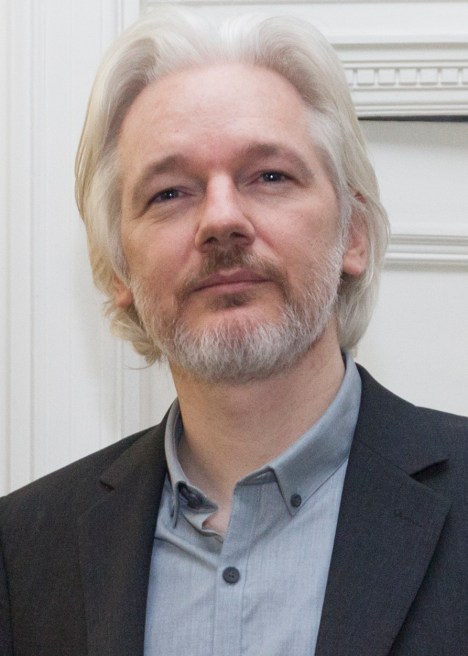
Julian Assange Aug 2014
Summary
The revised Returns Directive is supposed to “speed up return procedures, prevent
absconding and secondary movements, and increase the overall EU return rate, in full respect of fundamental rights.” This final point, however, is extremely doubtful. As this analysis makes clear, the key aim of the changes is to restrict individual rights in the name of improving the functioning of the EU’s deportation system. EU lawmakers should discard the proposal and focus on alternative measures that would be less harmful to individuals.
Jane Kilpatrick
September 2019
Link to full report
New UK-US Extradition Treaty
On 31 March, David Blunkett, UK Home Secretary, signed a new Extradition Treaty on behalf of the UK
with his United States counterpart, Attorney General Tom Ashcroft, ostensibly bringing the US into line
with procedures between European countries. The UK parliament was not consulted at all and the text
was not public available until the end of May. The only justification given for the delay was for
“administrative reasons”, though these did not hold-up scrutiny by the US senate, which began almost
immediately.
The UK-US Treaty has three main effects:
– (1) it removes the requirement on the US to provide prima facie evidence when requesting the
extradition of people from the UK but maintains the requirement on the UK to satisfy the “probable
cause” requirement in the US when seeking the extradition of US nationals;
– (2) it removes or restricts key protections currently open to suspects and defendants;
– (3) it implements the EU-US Treaty on extradition, signed in Washington on 25 June 2003, but far
exceeds the provisions in this agreement.
An analysis of the new UK-US Treaty – which will replace the 1972 UK-US Treaty – follows below,
together with a number of relevant cases and issues that raise serious concern about the new
agreement (and those between the EU and US).
Source pdf
London judge denies Julian Assange a delay in extradition hearings

|
WikiLeaks founder Julian Assange denied delay to extradition hearing by London judge, https://www.abc.net.au/news/2019-10-22/wikileaks-founder-assange-in-court-to-fight-extradition/11625042 The full extradition hearing of WikiLeaks founder Julian Assange will go ahead in February 2020 after a London judge declined a request by his lawyers to delay proceedings by three months. Key points:
The 48-year-old appeared in a packed court on Monday to fight extradition to the United States, where he faces 18 counts, including conspiring to hack into Pentagon computers and violating an espionage law. Britain’s former Home Secretary Sajid Javid signed an order in June allowing Assange to be extradited to the US, where authorities accuse him of scheming with former Army intelligence analyst Chelsea Manning to break a password for a classified government computer. He could spend decades in prison if convicted. Assange and his legal team said he needed more time to prepare his case, but failed to convince District Judge Vanessa Baraitser that a slowdown was justified. The full extradition is still set for a five-day hearing in late February, with brief interim hearings in November and December. Assange — clean shaven, with his silvery-grey hair slicked back — defiantly raised a fist to supporters who jammed the public gallery in Westminster Magistrates Court. After the judge turned down his bid for a three-month delay, Assange, speaking very softly and at times appearing to be near tears, said he did not understand the proceedings. He said the case was not “equitable” because the US government had “unlimited resources” while he did not have easy access to his lawyers or to documents needed to prepare his battle against extradition while confined to Belmarsh Prison on the outskirts of London. Lawyer Mark Summers, representing Assange, told the judge that more time was needed to prepare Assange’s defence against “unprecedented” use of espionage charges against a journalist. Mr Summers said the case has many facets and would require a “mammoth” amount of planning and preparation. He also accused the US of illegally spying on Assange while he was inside the Ecuadorian Embassy seeking refuge, and of taking other illegal actions against the WikiLeaks founder. “We need more time,” Mr Summers said, adding that Assange would mount a political defence. Mr Summers said the initial case against Assange was prepared during the administration of former president Barack Obama in 2010 but wasn’t acted on until Donald Trump assumed the presidency. He said it represented the US administration’s aggressive attitude toward whistleblowers. Representing the US, lawyer James Lewis opposed any delay to the proceeding. The case is expected to take months to resolve, with each side able to make several appeals of rulings. The judge said the full hearing would be heard over five days at Belmarsh Court, which would make it easier for Assange to attend and contains more room for the media. Assange’s lawyers said the five days would not be enough for the entire case to be heard. Health concerns for Assange Outside the courthouse, scores of his defenders — including former London mayor Ken Livingstone — carried placards calling for Assange to be released. Wikileaks editor-in-chief Kristinn Hrafnsson said it was a “big test case for journalism worldwide”. “This should be thrown out immediately because this is a total violation of a bilateral treaty between the US and the United Kingdom which basically states that you cannot extradite someone for political offences, and this is a political case,” he said. Regarding Assange’s health, Mr Hrafnsson said he was in a “stable condition” but was living in “de facto solitary confinement”. “After three or four weeks it starts to bite in and you can feel that he is suffering,” he said. Assange supporter Malcolm, who did not give his surname, told the ABC there was “not nearly enough” people actively campaigning for Assange’s freedom, and he wanted to see the whole street blocked at the next hearing. Another supporter accused the Australian government of failing to “defend their own citizen”. The crowd outside court was largely well-behaved but briefly blocked traffic when a prison van believed to be carrying Assange left court. |
|
Iranians losing trust that Western countries would keep faith with a nuclear deal
By John Krzyzaniak, October 18, 2019 Almost every aspect of Iranian President Hassan Rouhani’s approach to the nuclear agreement his country made with major world powers in 2015 finds broad support among the Iranian public. Put differently, the Trump administration’s “maximum pressure” campaign has not driven a wedge between Iran’s people and its government. That’s the main takeaway from a series of national surveys conducted by the University of Maryland and IranPoll, released this week.
The Iran nuclear deal, formally known as the Joint Comprehensive Plan of Action (JCPOA), was inked in July 2015. A month later, 76 percent of the Iranian public either “strongly approved” or “somewhat approved” of the agreement. As of October 2019, that number has dropped to 42 percent, its lowest point yet.
The Trump administration withdrew from the JCPOA in May 2018, but Iran continued to hold up its end of the bargain, hoping that the Europeans would continue delivering economic relief. In May 2019, after a year of European foot-dragging, Rouhani announced that Iran would begin taking steps to decrease its commitments to the deal. The survey shows 74 percent of Iranians supported this move, making it much more popular than the wait-and-see approach had been.
Donald Trump has said that he would be willing to meet with Rouhani without preconditions to renegotiate the nuclear deal. Rouhani rebuffed this offer, saying that he would only meet once US sanctions were lifted, and then only in a multilateral forum. The survey shows an Iranian public marching in lockstep; 75 percent support talks with the Trump administration if all sanctions are lifted and if the negotiations include all of the countries originally party to the JCPOA. Absent these two conditions, only 36 percent support talks.
Iran has also resisted the US desire to negotiate a grand bargain. At the G7 meeting in France in August, Trump suggested that such a bargain might cover a longer period of time and address Iran’s ballistic missile development. But only four percent of Iranians would support extending the JCPOA’s timeline in exchange for lifting nuclear-related sanctions. Even a deal that trades extra sanctions relief for longer timelines garnered only 35 percent support.
On the issue of missiles, 92 percent of respondents said that Iran’s missile development is either “very important” or “somewhat important,” and 58 percent see the ballistic missile program as non-negotiable. Here again, this echoes the Iranian government’s long-held position.
More broadly, the JCPOA experience has left a bad taste in Iranians’ mouths. Seventy-two percent now believe that the overarching lesson of the deal is that it isn’t worthwhile for Iran to make concessions because it can’t be confident that the other side will honor an agreement.
Russian nuclear submarine aborts ballistic missile test
|
Russian nuclear submarine aborts ballistic missile test, MOSCOW (Reuters) 21 Oct 19, – A Russian nuclear submarine aborted the test firing of an intercontinental ballistic missile during a military exercise overseen by President Vladimir Putin last week, the Ministry of Defence said on Monday.The nuclear submarine, K-44 Ryazan, part of Russia’s Pacific Fleet, was meant to launch two R-29R ballistic missiles from the Sea of Okhotsk on Oct. 17, but fired only one successfully with the other remaining in its tube onboard the submarine, the Vedomosti daily reported earlier on Monday.
The incident occurred on the same day as Putin oversaw the drills from a command center at the Defence Ministry in Moscow. The aborted drill was part of wider war games for Russia’s armed forces, known as ‘Thunder 2019,’ which were designed to test the readiness of the country’s strategic forces for a nuclear conflict. ….Reporting by Alexander Marrow; Editing by Andrew Osborn https://www.reuters.com/article/us-russia-missiles-drills/russian-nuclear-submarine-fails-to-test-fire-ballistic-missile-vedomosti-idUSKBN1X010P |
|
Kings Bay Plowshares 7 face criminal charges and long jail senetences

|
Taking Next Steps Toward Nuclear Abolition. https://truthout.org/articles/taking-next-steps-toward-nuclear-abolition/, BY Kathy Kelly, Voices for Creative Nonviolence, October 21, 2019 My friend Marianne Goldscheider, who is 87, suffered a broken hip in July, 2018 and then, in June 2019, it happened again. When she broke her hip the first time, she was running, with her son, on a football field. After the second break, when she fell in her kitchen, she was in so much pain that she recalls her only desire as she was placed on a stretcher: “I just wanted ‘the right pill.’” Marianne says her Catholic friends, who live nearby in the New York Catholic Worker community, persuaded her not to give up. They’ve long admired her tenacity, and over the years many have learned from her history as a survivor of the Nazi regime who was forced to flee Germany. Recalling her entry to the United States, Marianne jokes she may have been one of the only displaced persons who arrived in the United States carrying her skis. Yet she also carried deep anxieties, the “angst,” she says, of her generation. She still wonders about German people in the military and the aristocracy who knew where Hitler was headed and, yet, didn’t try to stop him. “When and how,” she wonders, “do human beings get beyond all reasoning?”
Marianne is deeply disturbed by the extraordinary danger of maintaining nuclear weapons arsenals and believes such weapons threaten planetary survival. She worries that, similar to the 1930s, citizens of countries possessing nuclear weapons sleepwalk toward utter disaster. On April 4, 2018, several of Marianne’s close friends from the New York Catholic Worker community became part of the Kings Bay Plowshares 7 by entering the U.S. Navy Nuclear Submarine base in King’s Bay, GA and performing a traditional Plowshares action. Guided by lines from Scripture urging people to “beat their swords into plowshares and their spears into pruning hooks,” they prayed, reflected and then symbolically disarmed the Trident nuclear submarine site. The Kings Bay is home port to six nuclear armed Trident ballistic missile submarines with the combined explosive power of over 1825 Hiroshima bombs. One of the banners they hung read “The Ultimate Logic of Trident is Omnicide.” Referring to this sign, Daniel Ellsberg, who leaked the Pentagon Papers in 1971, said the banner “is exactly right.” In an October 18 endorsement, he called their actions “necessary to avert a much greater evil.” In late September, the Catholic Bishops of Canada, alarmed over the increasing danger nuclear weapons pose, urged the Government of Canada to sign the Treaty on the Prohibition of Nuclear Weapons, adopted at the UN in 2017. The Canadian bishops issued their statement on September 26, the United Nations International Day for the Total Elimination of Nuclear Weapons. In it, they note the Vatican has already signed and ratified the Treaty. “The ashes of World War I and the centenary of its armistice,” wrote Pope Francis, “should teach us that future acts of aggression are not deterred by the law of fear, but rather by the power of calm reason that encourages dialogue and mutual understanding as a means of resolving differences.” The seven defendants, in everyday life, practice nonviolence while serving people who are often the least cared for in our society. Like Marianne, I have known each defendant for close to four decades. They have risked their lives, safety and health in numerous actions of civil disobedience. When imprisoned, they write and speak of the cruel abuse of human beings and the racist, primitive nature of the United States prison-industrial complex. They’ve also chosen to visit or live in war zones, providing witness on behalf of people trapped under bombardment. They live simply, share resources and strive to help build a better world. Nevertheless, beginning Monday, they will face serious criminal charges and potentially harsh sentences for their action at Kings Bay. Marianne anxiously awaits their trial. “Why,” she asks, “isn’t there more coverage?” One of the defendants, Rev. Steve Kelly, SJ, a Jesuit priest, referred to himself in a recent letter as “a tenuous voice in the wilderness.” He further explained that he is among the wilderness of the incarcerated, “two and a quarter million folks comprising the human warehouses in the empire.” Steve has been imprisoned in the Glynn County jail since April 4, 2018. His letter continues:
Late in the afternoon of October 18, Judge Woods issued her long-awaited orders regarding testimony allowed in court. She will not allow testimony about the illegality of nuclear weapons, the necessity of civil disobedience, or individual motivations and personal faith. Fortunately, the many dozens of people filling the Brunswick, GA courtroom on October 21 will help communicate the essential evidence that won’t be shared within the court. In alternative settings, such as over meals, during a Festival of Hope, and as part of a Citizens Tribunal, they’ll discuss and eventually share reasons that motivated our friends to perform the Kings Bay Plowshares 7 action. A recent op-ed in The New York Times suggests the Kings Bay Plowshares 7 message is entering public discourse. The defendants have clarified that the U.S. nuclear weapon arsenal robs resources desperately needed for food, shelter, health care and education. The New York Times notes if we could reach a total nuclear weapons ban, we could save roughly $43 billion each year on weapons, delivery systems and upgrades. “That’s roughly the same amount we’ve allocated in federal hurricane aid for Puerto Rico.” Marianne laments the way in which nuclear weapons are revered as a modern idol deserving of great sacrifice. She is rightfully wary of social and cultural developments that consider such reverence normal. She and I commiserate about recovering from hip fractures, (I’ve been on the mend for the past month), but we both know that Steve Kelly’s invitation deserves our greatest attention. Tiny postcards are the only means of correspondence allowed to or from the Glynn County jail. On one of these, Steve wrote a message to a large gathering in New York celebrating the Kings Bay Plowshares 7 action. “I am encouraged by your presence,” he wrote, “to ask that this small effort of ours not be the last word in nuclear abolition.” |
|
US Energy Secretary Perry turns New Nuclear Salesman to Europe

|
Messianic Perry preaches nuclear to sceptical Europeans, By Frédéric Simon | EURACTIV.com 21 Oct 19, Small nuclear reactors can help “vulnerable nations take control of their destinies,” the US energy secretary said in Brussels today (21 October), claiming that small off-grid nuclear plants can bring electricity to poor nations and “disperse the darkness” around the globe.
Countries with nuclear power “can’t be controlled by other countries wielding energy as a geopolitical weapon”, US Secretary of State Rick Perry said in Brussels as he addressed a forum of policymakers and industry representatives from both sides of the Atlantic. Nuclear power helps “vulnerable nations take control of their destinies,” Perry claimed, arguing that “energy security also bolsters national security”. Perry attended the first EU-US high-level forum on small modular reactors. His remarks on energy independence were chiefly aimed at Eastern European countries, which have repeatedly complained about Russian interference in national politics, using gas as a lever. Nuclear is a divise topic in Europe. While countries like France opted for it decades ago, others like Germany and Austria are strongly opposed. “Nuclear energy is neither safe and sustainable nor cost-effective,” said German State Secretary for Energy, Andreas Feicht, during a recent meeting of EU energy ministers, firmly rejecting suggestions that EU money might be used to extend the lifetime of existing nuclear plants. But Perry’s message was broader, and was also addressed at developing nations whom he said could benefit from small off-grid nuclear plants………. |
|
David Attenborough says humans have made ‘tragic, desperate mess’ of planet
David Attenborough says humans have made ‘tragic, desperate mess’ of planet, Broadcaster urges people to look after natural world as he launches new series with conservation ‘at its heart’ , Independent UK, Chris Baynes 21 Oct 19, Humanity has made a “tragic, desperate mess” of the planet, Sir David Attenborough has said.
The veteran broadcaster urged people to “look after the natural world” and waste nothing, as he prepared for his latest series to air this week.
Seven Worlds, One Planet, breaks with the tradition of previous BBC Natural History Unit programmes by putting a conservation message “at its heart”, instead of being tagged on at the end of each episode.
The series, which has been four years in the making, features wildlife firsts and has already been bought by broadcasters around the world.
Producers took drones over “volcanoes, waterfalls, icebergs and underground into caves” to shoot heart-wrenching “animal dramas” in all seven continents, the BBC said.
Dramatic scenes include a lone, grey-headed albatross chick in Antarctica being blown off its nest as a result of increasingly intense storms in the region.
Speaking at the launch, Sir David, who presents the programme, said: “We are now universal, our influence is everywhere. We have it in our hands, and we made a tragic, desperate mess of it so far. But, at last, nations are coming together and recognising that we all live on the same planet … and we are dependent on it for every mouthful of food we eat and every breath of air we take.”
Asked what we can do to save the planet, Sir David, 93, said: “The best motto … is not to waste things.
“Don’t waste electricity, don’t waste paper, don’t waste food – live the way you want to live, but just don’t waste.”
The broadcaster added: “Look after the natural world, the animals in it and the plants in it too. This is their planet as well as ours. Don’t waste.”
The seven-part series will reveal “new species and behaviours,” producers said……..
Antarctica, North America, South America, Europe, Africa, Asia and Australia will feature over different episodes in the seven-part series.
Seven Worlds, One Planet begins on Sunday 27 October at 6.15pm on BBC One. https://www.independent.co.uk/news/media/tv-radio/david-attenborough-new-series-seven-worlds-one-planet-climate-change-a9161866.html?fbclid=IwAR1hZAJJwhms9zcQNCCcn-PP4-D3vAjhHLZxHL9lFGUTmL1I1IWN5q3u4KE
Erdogan’s Ambitions Go Beyond Syria. He Says He Wants Nuclear Weapons.
|
“Some countries have missiles with nuclear warheads,” he told a meeting of his ruling party in September. But the West insists “we can’t have them,” …….(Subscribers only) https://www.nytimes.com/2019/10/20/world/middleeast/erdogan-turkey-nuclear-weapons-trump.html
|
Facing a nasty pro nuclear campaign, Ohio’s anti nuclear group hope for a federal court decision to delay nuclear bailout
Anti-nuclear bailout group fails to make deadline for referendum https://www.cincinnati.com/story/news/politics/elections/2019/10/21/anti-nuclear-bailout-effort-miss-deadline-submit-signatures/4052255002/ Jessie Balmert, Cincinnati Enquirer Oct. 21, 2019 COLUMBUS – Opponents of Ohio’s $1 billion bailout of two nuclear plants say they didn’t gather enough signatures to block the law by the Monday deadline.
Their only hope: a federal court decision that could give them more time to collect signatures.
Ohioans Against Corporate Bailouts spokesman Gene Pierce wouldn’t say how many signatures the group collected, but it wasn’t enough to put the issue before voters in November 2020.
Ballot groups often collect more than the required number in anticipation of some being tossed out because of duplicates, illegible signatures and other problems.
That means House Bill 6 will take effect at midnight. The law imposes a new fee of 85 cents per month for residential customers on Ohioans’ electric bills starting in 2021.
Those fees are expected to raise about $150 million a year for FirstEnergy Solutions’ plants – money the company says it needs to keep the doors open. Another $20 million from those fees will pay for solar energy companies.
The runup to Monday’s deadline has been one of the nastiest campaigns in recent Ohio history. The nuclear plants’ owner, FirstEnergy Solutions, and its allies deployed a variety of tactics to block the referendum from making the ballot ranging from anti-Chinese advertisements to petition signature blockers.
“Nuclear bailout supporters of House Bill 6 have stooped to unprecedented and deceitful depths to stop Ohioans from exercising their constitutional rights to put a bailout question on the ballot for voters to decide,” Pierce said in a news release.
Ohioans Against Corporate Bailouts had to submit at least 265,774 valid signatures from at least 44 of Ohio’s 88 counties to put the bill to a vote next year. The group failed to submit those signatures by Monday’s deadline.
The group has asked a federal court judge for more time to collect signatures because initial steps in the process, such as collecting 1,000 valid signatures and having ballot language approved as accurate, ate into its 90-day window.
A hearing on that request is set for Tuesday afternoon. U.S. District Court Judge Edmund Sargus will make a decision after hearing arguments from both sides.
On Monday, Ohioans for Energy Security submitted signatures to Rep. Jamie Callender, R-Concord Township, calling for a ban on foreign control of the state’s energy grid. Callender said he hopes to put that issue before voters.
“That’s kind of scary that someone who didn’t like America, who didn’t like our way of life could cause a lot of damage and a lot of havoc by randomly shutting down a plant that they had controlling interest in,” Callender said. “It could bring the grid down.”
The operators of Ohio’s electric grid say they are “vigilant” about the grid’s security. The federal government can block projects if foreign investment poses a national security risk.
For example, President Trump has halted two foreign acquisitions, citing national security concerns, since 2017: Lattice Semiconductor Corporation by a Chinese investment firm and telecom company Qualcomm by Singapore-based Broadcom.
Columbus bureau chief Jackie Borchardt contributed reporting.
Renewables use only fraction of minerals used for fossil fuel generation — RenewEconomy

IEA data smashes another renewables myth, showing that they account for a far smaller portion of global demand for minerals and metals than fossil fuels – particularly coal. The post Renewables use only fraction of minerals used for fossil fuel generation appeared first on RenewEconomy.
via Renewables use only fraction of minerals used for fossil fuel generation — RenewEconomy
October 21 Energy News — geoharvey

Science and Technology: ¶ “UK Man Invents Aluminum-Air Battery In His Garage” • Former Royal Navy officer Trevor Jackson began experimenting with aluminum air batteries at home in 2001. Now he says he has a new electrolyte that makes it possible for his battery to power an electric car for up to 1,500 miles. One […]
BHP cancels coal contracts, goes 100 per cent renewables at huge Chile copper mines — RenewEconomy

BHP cancels existing coal contracts and commits to going 100 per cent renewables at its huge Chile copper mines, to save money and emissions. The post BHP cancels coal contracts, goes 100 per cent renewables at huge Chile copper mines appeared first on RenewEconomy.
via BHP cancels coal contracts, goes 100 per cent renewables at huge Chile copper mines — RenewEconomy
1 This Month


Tell the Ukrainian Government to Drop Prosecution of Peace Activist Yurii Sheliazhenko

Petition to revoke the licensing of the Near Surface Nuclear Disposal Facility (NSDF) at Chalk River. https://www.ourcommons.ca/petitions/en/Petition/Details?Petition=e-7247


of the week – STOP SMALL MODULAR REACTORS IN CANADA
To see nuclear-related stories in greater depth and intensity – go to https://nuclearinformation.wordpress.com
-
Archives
- March 2026 (204)
- February 2026 (268)
- January 2026 (308)
- December 2025 (358)
- November 2025 (359)
- October 2025 (376)
- September 2025 (258)
- August 2025 (319)
- July 2025 (230)
- June 2025 (348)
- May 2025 (261)
- April 2025 (305)
-
Categories
- 1
- 1 NUCLEAR ISSUES
- business and costs
- climate change
- culture and arts
- ENERGY
- environment
- health
- history
- indigenous issues
- Legal
- marketing of nuclear
- media
- opposition to nuclear
- PERSONAL STORIES
- politics
- politics international
- Religion and ethics
- safety
- secrets,lies and civil liberties
- spinbuster
- technology
- Uranium
- wastes
- weapons and war
- Women
- 2 WORLD
- ACTION
- AFRICA
- Atrocities
- AUSTRALIA
- Christina's notes
- Christina's themes
- culture and arts
- Events
- Fuk 2022
- Fuk 2023
- Fukushima 2017
- Fukushima 2018
- fukushima 2019
- Fukushima 2020
- Fukushima 2021
- general
- global warming
- Humour (God we need it)
- Nuclear
- RARE EARTHS
- Reference
- resources – print
- Resources -audiovicual
- Weekly Newsletter
- World
- World Nuclear
- YouTube
-
RSS
Entries RSS
Comments RSS
 nuclear-news