#Nuclear #Norway #Halden spiralling costs and no home for the #radioactive waste
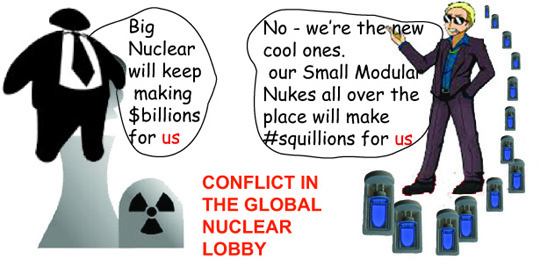
NOTE EUROPE HAS OVER 40 SIMILAR TEST REACTORS THAT ARE AT LEAST 40 YEARS OLD!!
UPDATE on Halden test reactor deocmmisioning
It can cost over NOK 4 billion to clean up the nuclear waste at Kjeller outside Oslo. This shows a new report from DNV GL to which Technical Weekly (TU) has accessed. That is more than four times more than was expected just three years ago.
“There is a significantly larger amount of waste than was predicted a few years ago, and it is estimated that it will take much longer to decommission the plants than previously thought,” says Pål Mikkelsen, Norwegian Nuclear Decomposition (NND).
The reason is that there is 14 times more waste at Kjeller than projected, and that the cleaning job can take up to 22 years, rather than just 15 that was estimated three years ago.
Where the study three years ago estimated a price tag of just over 890 million (2016 NOK) to clean up Kjeller, DNV GL now estimates the cost to 3.6 billion.
May cost 4.5 billion
But it does not stop there. For when the Storting decides on an investment of this type, the estimate p85 is often used, which indicates that there is an 85 per cent probability that the cost is within the given estimate. With such probability calculations, the cost estimate according to the same report from DNV GL is NOK 4.5 billion.
Mikkelsen says it is challenging to separate the nuclear facilities at Kjeller from the other buildings and areas that have not been used for nuclear activities.
– There is a much higher complexity to the tasks than expected, says Mikkelsen.
Since nuclear research started at Kjeller in the 1950s, three different nuclear reactors have been in operation, along with several nuclear waste storage facilities, as well as a laboratory for nuclear fuel research. There are thus several buildings and facilities that must be taken apart properly, decontaminated and driven away before the area can be declassified.
The Department of Energy Technology, which has operated the three reactors, has been given good targets for its research. Recently, a report from the Nordic research agency Oxford Reseach showed that research on the latest reactor, the Jeep 2, has been useful both nationally and internationally.
Nevertheless, the Jeep-2 reactor at Kjeller had to shut down before the summer, after IFE discovered serious corrosion damage to it.
The Halden reactor comes in addition
Both the reactor tanks and the spent nuclear fuel of the three reactors that have been operating at Kjeller are still stored in IFE’s area. It can’t stay there.
NND was created as a new government agency in August 2018 to handle all the waste. Director Pål Mikkelsen says he is not surprised that the costs of cleaning up now are increasing.
– No, this time I’m not. After the winter, we had significantly increased cost estimates for the demolition of the Halden reactor, we were prepared for a higher estimate for Kjeller, too, he says.
IFE has also had a fourth reactor in operation, the Halden reactor. Aftenposten could reveal in January that the cost of tearing it down is also much higher than expected.
The Halden reactor was decided to close a year ago. According to the report TU has gained access to, a cost of 3.4 billion to tear down the Halden reactor alone. The so-called P85 alternative estimates the cost at 4.27 billion.
The total cost of decommissioning the nuclear plants at Kjeller and Halden can thus amount to more than SEK 8.7 billion, DNV GL concludes.
“The report is thorough and shows how extensive, complex and demanding it is to downgrade Kjeller’s nuclear plants,” writes IFE’s CEO Nils Morten Huseby in an email to TU.
On top of these costs, there will be an additional cost to build new storage facilities for the spent nuclear fuel and old reactor components. The total projections for cleaning up Norwegian nuclear waste, and building new nuclear storage, are estimated at around 15 billion. But with the new figures from DNV GL, the price tag will be higher. Business Minister Torbjørn Røe Isaksen has promised a parliamentary report on the matter in the spring of 2020.
NND will take over in 2022
– Predictable framework conditions and funding are central to the success of the task, so it is very good that the government prepares a Storting report for the work, writes IFE Director Huseby.
Pål Mikkelsen says NND aims to take over all the nuclear plants that were closed down by 2022.
“It depends on us getting the necessary licenses, including for real decommissioning,” he tells TU.
– But we have a plan to build up the necessary expertise, and also take over much of IFE’s resources in this area during the period 2020 to 2022, he says.
He says it usually takes five years for the reactor to close until decommissioning begins.
– Now it’s been one year since the Halden reactor was closed. We believe we can physically start decommissioning within four years from the turn of the year 2020, he says.
Published by Erik Martiniussen’s energy Aug 26 2019 – 13:17
Translated from Norwegian
https://www.tu.no/artikler/atomopprydding-pa-kjeller-blir-tre-ganger-dyrere-enn-antatt/472431
No comments yet.
1 This Month
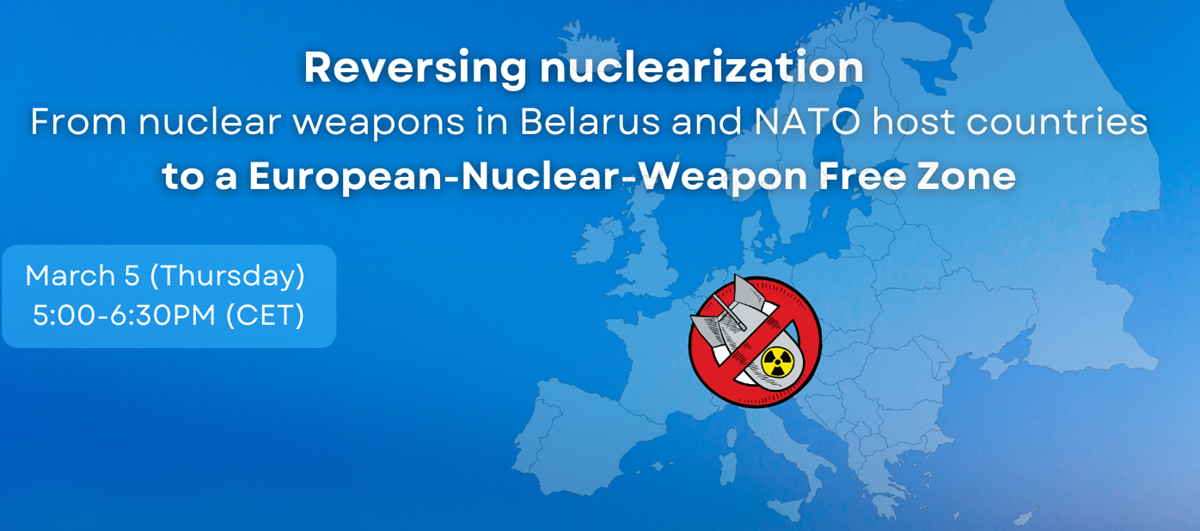
5 March -Online – Reversing nuclearization:
From nuclear weapons in Belarus and NATO host countries to a European-Nuclear-Weapon Free Zone
11am-12:30pm Eastern Time USA / 5pm-6:30pm CET

of the week – Advocating for a
nuclear free beach – https://www.samuellawrencefoundation.org/
The Samuel Lawrence Foundation advocates for a Nuclear Waste Free Beach at San Onofre, join us and take action!

10 March A LIVE WEBINAR THE REAL EFFECTS OF NUCLEAR POWER
What the Industry Isn’t Telling Us
1:00 PM Mountain, 2 pm Central, 3 pm Eastern. Live on the Keepers of the Water Facebook page

18 March Webinar @ 1 PM EST: An Assessment of SMR Projects: The Case of Canada
register for the zoom:
https://us02web.zoom.us/webinar/register/WN_o8BIIOUvQ2ONJR1nta65DQ#/registration

of the week – STOP SMALL MODULAR REACTORS IN CANADA
To see nuclear-related stories in greater depth and intensity – go to https://nuclearinformation.wordpress.com
-
Archives
- March 2026 (51)
- February 2026 (268)
- January 2026 (308)
- December 2025 (358)
- November 2025 (359)
- October 2025 (376)
- September 2025 (258)
- August 2025 (319)
- July 2025 (230)
- June 2025 (348)
- May 2025 (261)
- April 2025 (305)
-
Categories
- 1
- 1 NUCLEAR ISSUES
- business and costs
- climate change
- culture and arts
- ENERGY
- environment
- health
- history
- indigenous issues
- Legal
- marketing of nuclear
- media
- opposition to nuclear
- PERSONAL STORIES
- politics
- politics international
- Religion and ethics
- safety
- secrets,lies and civil liberties
- spinbuster
- technology
- Uranium
- wastes
- weapons and war
- Women
- 2 WORLD
- ACTION
- AFRICA
- Atrocities
- AUSTRALIA
- Christina's notes
- Christina's themes
- culture and arts
- Events
- Fuk 2022
- Fuk 2023
- Fukushima 2017
- Fukushima 2018
- fukushima 2019
- Fukushima 2020
- Fukushima 2021
- general
- global warming
- Humour (God we need it)
- Nuclear
- RARE EARTHS
- Reference
- resources – print
- Resources -audiovicual
- Weekly Newsletter
- World
- World Nuclear
- YouTube
-
RSS
Entries RSS
Comments RSS
 nuclear-news
Leave a comment