USA’s nuclear safety agreement with Ukraine is a nuclear marketing exercise
 Silver Post 17th Nov 2018 The signing of the agreement Ukraine-the United States on nuclear safety
will provide America the opportunity to sell the Ukrainians their nuclear
fuel. That is one of the main goals of this agreement is commercial.
https://sivpost.com/the-agreement-will-allow-the-united-states-to-make-ukraine-a-market-for-nuclear-fuel-scientist/33242/
South Africa’s Public Enterprises Minister Pravin Gordhan’s evidence at the State Capture Commission
 I WARNED ZUMA OF NUCLEAR PROCUREMENT IMPLICATIONS, SAYS GORDHAN https://ewn.co.za/2018/11/19/i-warned-zuma-of-nuclear-procurement-implications-says-gordhan
Public Enterprises Minister Pravin Gordhan says he advised former President Jacob Zuma that nuclear procurement would be a complex issue. Clement Manyathela 20 Nov 18 JOHANNESBURG – Public Enterprises Minister Pravin Gordhan has told the state capture commission that former President Jacob Zuma was determined to go ahead with the nuclear build programme despite the reality that the country could not afford it. Gordhan appeared before the inquiry on Monday in Parktown.
His interactions with the Gupta family are among other issues he is expected to deal with.
The minister says he advised Zuma that nuclear procurement would be a complex issue.
“I indicated to the former president that it would be lawful to follow procurement processes for such an expensive process to avoid being marred in scandals such as the arms deal.”
He says he wanted Zuma to be aware of the cost implications.
“I wanted to impress upon the former president that that undertaking, the nuclear procurement, required careful consideration of its costs, choice of supplier and due process.”
Last month, former Finance Minister Nhlanhla Nene told the commission Zuma was so determined to proceed with the nuclear build programme that he showed disregard and no appreciation for the financial ramifications for the country.
Gordhan will continue his testimony on Tuesday.
SCE and G electric utility aims to discredit the testimony of two former employees

 In fight over power bills, SCE&G seeks to disparage ex-employees, $1 million nuclear report, Greenville News, COLUMBIA — When the S.C. Public Service Commission rules on SCE&G’s electric rates next month, the Cayce-based utility doesn’t want those regulators to put too much stock into scathing testimony by two of its former employees.
Nor does SCE&G want the commission to weigh heavily a nuclear contractor’s late 2015 assessment that concluded SCE&G’s $9 billion nuclear construction project was foundering and way behind schedule.
Fighting allegations of fraud and mismanagement in this month’s PSC hearing into the failed V.C. Summer Nuclear Station expansion project, SCE&G has sought to disparage its former employees and a high-powered construction company that it paid $1 million.
It is a key part of SCE&G’s defense as the state’s utility watchdog, environmentalists and consumer groups cite those witnesses to bolster their arguments that the utility’s power bills – which rose by about $27 a month to bankroll the failing project – should be slashed.
That strategy likely will be on display again Tuesday when former utility executive Carlette Walker, vice president of nuclear finance administration for SCE&G’s parent company SCANA, and retired SCE&G engineer Ken Browne testify before the commission for the first time in this case.
Impeach your own people’
Walker and Browne are star witnesses for the S.C. Office of Regulatory Staff, the state’s utility watchdog.
In sworn statements filed with the PSC, both have said SCE&G executives misled the commission in 2015 by testifying the project would cost $698 million more to complete – a number supplied by the project’s lead contractor, Westinghouse.
That number was unrealistically low and based on a productivity rate that never had been achieved at the Fairfield County construction site, Walker and Browne say. A team of SCE&G accountants and engineers worked for weeks to estimate the project actually would cost an additional $1.2 billion to finish — $500 million more than Westinghouse had said.
That half-billion-dollar difference is key to Regulatory Staff’s argument that SCE&G fraudulently won rate hikes and kept its failing nuclear project alive by providing the PSC with low-balled cost estimates. ……..https://www.greenvilleonline.com/story/news/2018/11/19/sce-g-seeks-disparage-ex-employees-1-million-nuclear-report/2055992002/
UK’s Moorside nuclear project will not go ahead unless the taxpayer pays for it
 In Cumbria 16th Nov 2018 A nuclear power station for West Cumbria is unlikely to ever get the
go-ahead without the backing of public money. That was the conclusion of a
heated debate at a full meeting of Cumbria County Council, which saw an
urgent notice of motion agreed after tempers flared among the 80
councillors gathered.
It was the first time the council had met following
the decision by Toshiba to win up NuGen, the developer behind the £15
billion Moorside power station plans in West Cumbria.
The motion raised by David Southward (Lab, Egremont) and seconded by council leader Stewart
Young (Lab, Carlisle) read: “Council calls on the Government to enter
into urgent discussions with all interested parties and to take any
necessary steps to ensure that the nuclear power plant construction project
at Moorside goes ahead.
“Council considers that due to the level of commercial risk involved in projects of this nature, they are highly
unlikely to proceed without Government support, whether that be by way of
equity acquisition, underwriting potential losses or guaranteeing the
strike price.” Cllr Southward called the decision a “devastating
blow” and meant the area missing out on 5,000 construction jobs lasting
eight years, and a further 1,000 operational jobs.
http://www.in-cumbria.com/Moorside-Nuclear-power-plans-for-West-Cumbria-need-public-cash-2ebfba47-e6c9-4fb6-8a1b-1df5e4748f99-ds
France’s Environment Minister questions viability of EPR nuclear. France to cut back on nuclear power
France to cut nuclear energy reliance by 2035 – minister, Channel News Asia. 18 Nov 18 France aims to reduce the share of electricity produced by nuclear reactors to 50 percent from 75 percent now by 2035, Environment Minister Francois de Rugy said on Sunday. PARIS: France aims to reduce the share of electricity produced by nuclear reactors to 50 percent from 75 percent now by 2035, Environment Minister Francois de Rugy said on Sunday.
The French government has long outlined plans to shrink the country’s reliance on nuclear energy to 50 percent, though the deadline for that goal had remained less clear.
A long-awaited government update on France’s long-term energy strategy is expected to be released later this month, setting out in greater detail how it will cut the share of nuclear in its power generation……….
The new environment minister has said he expected there would be fewer nuclear reactors in France in 10 year’s time, though he has given few details on how many of state-owned EDF’s 58 plants will have to close.
De Rugy raised further doubts on Sunday over plans to build more plants using the European pressurized reactor (EPR) design, having previously questioned whether this new generation of reactors were viable……….
Read more at https://www.channelnewsasia.com/news/world/france-to-cut-nuclear-energy-reliance-by-2035—minister-10944548
How the USA gave up on protecting its citizens against nuclear attack, and settled for just elite shelters
How the U.S. Government Might Have Survived a Nuclear War, Yes, this is the real Deep State, National Interest,
THERE WERE 3 RADIATION FALLOUT RELEASES AT SANTA SUSANA NOT 1
History Channel – ROCKETDYNE
THEY OCCURRED IN 1959, 1964, 1969, Doug Carrol 19 Nov 18
“Until 2006, the site was operated by private corporations for federal agencies — chiefly NASA. The problems there began in 1959, when a nuclear reactor partially melted down, contaminating portions of the hilltop facility and spewing radioactive gases into the atmosphere. That incident wasn’t publicly disclosed until 1979. By then, more mishaps had followed, including reactor accidents in 1964 and 1969. The worst contamination is thought to be in a parcel known as Area IV, where the meltdown occurred”
20 years of the worst radioactive shit in the universe accumulated in simi valley, where the horrendous fire occured this past week. The place has not been cleaned up. The fires, that englufed Ventura county and Malibu. 3 nuclear meltdowns occured at Santa susana in a 10 year period. Multiple ignitions of shitty nuclear reactor engines, that just spewed radioactive shit into the valley, everytime they fired it off. The recent fires in ventura county, picked up that cesium 137, plutonium yada yada yada, and suspended it in the air all over so cal. Everyone there is breathing it.
I knew a Doctor raised south of Santa Susana. His one and only child, was born deaf and blind with deformities. His three siblings died of cancer, at relatively young ages.
Frank Zappa was from lancaster, and went to High School close to there. His father was affiliated with government research close to santa susana. FRANK may not have been in Lancaster when the first meltdown occured, but there was nuclear research there in the early 50s.
Watch for a massive uptick in the incidence of Reactive airway disease, intractable respiratory infections in children this winter. Watch for a large spike cancer, in the next few years in socal.
Pediatric Cancers Near the Santa Susana Field Laboratory
Frank Zappa died of the most hideous, fast growing metastatic-prostate cancer possible. That was at age 53. Continue reading
Contrary to U.S. Energy Department’s report, there WAS nuclear waste near New Mexico nuclear site rockfall
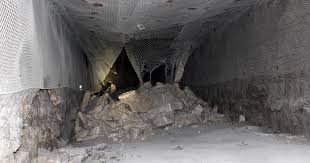
The radioactive waste included two canisters that were encapsulated in holes bored into the salt formation that makes up the walls and ceilings of the repository and its underground disposal rooms. There also were pieces of equipment in the room where the collapse happened that were contaminated by a 2014 radiation release.
Watchdogs pointed to agency documents and testimony during a recent hearing, saying officials knew what was in the room.
“For them to say there’s no waste, that’s just worse than false,” said Don Hancock with the Southwest Research and Information Center, an Albuquerque-based watchdog group. “Documents available to the public show 320,000 pounds of contaminated equipment in the room. That is waste. They know that.”
Hancock said the equipment contains fuel and other fluids that have never been drained, since crews have been kept out of the area for more than two years due to safety concerns.
Wednesday’s collapse prompted an evacuation. Workers heard a loud thud while doing inspections underground, so they left the area and all work was stopped………..
Access in the underground disposal area has been limited in the wake of the 2014 radiation release, which was caused by an inappropriately packed drum of waste that had come from Los Alamos National Laboratory. That release contaminated part of the area, forcing the closure of the repository for nearly three years and resulting in a costly recovery. https://apnews.com/b5902544d58f4b10bd352f15f0651a5d
Habitable areas of our planet are shrinking – as climate change exacerbates extreme weather

Until now, human beings have been spreading, from our beginnings in Africa, out across the globe—slowly at first, and then much faster. But a period of contraction is setting in as we lose parts of the habitable earth.
some of the world is becoming too hot for humans.
As some people flee humidity and rising sea levels, others will be forced to relocate in order to find enough water to survive.
escaping the wreckage is, almost certainly, a fantasy. Even if astronauts did cross the thirty-four million miles to Mars, they’d need to go underground to survive there. To what end?
“People think if we fuck up here on Earth we can always go to Mars or the stars,” “It’s pernicious.”
 How Extreme Weather Is Shrinking the Planet, New Yorker, by Bill McKibben November 18, 2018 With wildfires, heat waves, and rising sea levels, large tracts of the earth are at risk of becoming uninhabitable. But the fossil-fuel industry continues its assault on the facts …
“……For the past few years, a tide of optimistic thinking has held that conditions for human beings around the globe have been improving. Wars are scarcer, poverty and hunger are less severe, and there are better prospects for wide-scale literacy and education. But there are newer signs that human progress has begun to flag. In the face of our environmental deterioration, it’s now reasonable to ask whether the human game has begun to falter—perhaps even to play itself out. Late in 2017, a United Nations agency announced that the number of chronically malnourished people in the world, after a decade of decline, had started to grow again—by thirty-eight million, to a total of eight hundred and fifteen million, “largely due to the proliferation of violent conflicts and climate-related shocks.” In June, 2018, the Food and Agriculture Organization of the U.N. found that child labor, after years of falling, was growing, “driven in part by an increase in conflicts and climate-induced disasters.”
Scientists have warned for decades that climate change would lead to extreme weather. Shortly before the I.P.C.C. report was published, Hurricane Michael, the strongest hurricane ever to hit the Florida Panhandle, inflicted thirty billion dollars’ worth of material damage and killed forty-five people. President Trump, who has argued that global warming is “a total, and very expensive, hoax,” visited Florida to survey the wreckage, but told reporters that the storm had not caused him to rethink his decision to withdraw the U.S. from the Paris climate accords. He expressed no interest in the I.P. C.C. report beyond asking “who drew it.” (The answer is ninety-one researchers from forty countries.) He later claimed that his “natural instinct” for science made him confident that the climate would soon “change back.” A month later, Trump blamed the fires in California on “gross mismanagement of forests.
……….As a team of scientists recently pointed out in the journal Nature Climate Change, the physical shifts we’re inflicting on the planet will “extend longer than the entire history of human civilization thus far.”
The poorest and most vulnerable will pay the highest price. But already, even in the most affluent areas, many of us hesitate to walk across a grassy meadow because of the proliferation of ticks bearing Lyme disease which have come with the hot weather; we have found ourselves unable to swim off beaches, because jellyfish, which thrive as warming seas kill off other marine life, have taken over the water.
The planet’s diameter will remain eight thousand miles, and its surface will still cover two hundred million square miles. But the earth, for humans, has begun to shrink, under our feet and in our minds.
Climate change,” like “urban sprawl” or “gun violence,” has become such a familiar term that we tend to read past it. But exactly what we’ve been up to should fill us with awe. During the past two hundred years, we have burned immense quantities of coal and gas and oil—in car motors, basement furnaces, power plants, steel mills—and, as we have done so, carbon atoms have combined with oxygen atoms in the air to produce carbon dioxide. This, along with other gases like methane, has trapped heat that would otherwise have radiated back out to space. ……..
When I say the world has begun to shrink, this is what I mean. Until now, human beings have been spreading, from our beginnings in Africa, out across the globe—slowly at first, and then much faster. But a period of contraction is setting in as we lose parts of the habitable earth. Sometimes our retreat will be hasty and violent; the effort to evacuate the blazing California towns along narrow roads was so chaotic that many people died in their cars. But most of the pullback will be slower, starting along the world’s coastlines. Each year, another twenty-four thousand people abandon Vietnam’s sublimely fertile Mekong Delta as crop fields are polluted with salt. As sea ice melts along the Alaskan coast, there is nothing to protect towns, cities, and native villages from the waves. In Mexico Beach, Florida, which was all but eradicated by Hurricane Michael, a resident told the Washington Post, “The older people can’t rebuild; it’s too late in their lives. Who is going to be left? Who is going to care?” ………
According to a study from the United Kingdom’s National Oceanography Centre last summer, the damage caused by rising sea levels will cost the world as much as fourteen trillion dollars a year by 2100, if the U.N. targets aren’t met. “Like it or not, we will retreat from most of the world’s non-urban shorelines in the not very distant future,” Orrin Pilkey, an expert on sea levels at Duke University, wrote in his book “Retreat from a Rising Sea.” “We can plan now and retreat in a strategic and calculated fashion, or we can worry about it later and retreat in tactical disarray in response to devastating storms. In other words, we can walk away methodically, or we can flee in panic.” ………
some of the world is becoming too hot for humans. ……….
According to the National Oceanic and Atmospheric Administration, increased heat and humidity have reduced the amount of work people can do outdoors by ten per cent, a figure that is predicted to double by 2050. About a decade ago, Australian and American researchers, setting out to determine the highest survivable so-called “wet-bulb” temperature, concluded that when temperatures passed thirty-five degrees Celsius (ninety-five degrees Fahrenheit) and the humidity was higher than ninety per cent, even in “well-ventilated shaded conditions,” sweating slows down, and humans can survive only “for a few hours, the exact length of time being determined by individual physiology.”
According to the National Oceanic and Atmospheric Administration, increased heat and humidity have reduced the amount of work people can do outdoors by ten per cent, a figure that is predicted to double by 2050. About a decade ago, Australian and American researchers, setting out to determine the highest survivable so-called “wet-bulb” temperature, concluded that when temperatures passed thirty-five degrees Celsius (ninety-five degrees Fahrenheit) and the humidity was higher than ninety per cent, even in “well-ventilated shaded conditions,” sweating slows down, and humans can survive only “for a few hours, the exact length of time being determined by individual physiology.” ………
As some people flee humidity and rising sea levels, others will be forced to relocate in order to find enough water to survive. In late 2017, a study led by Manoj Joshi, of the University of East Anglia, found that, by 2050, if temperatures rise by two degrees a quarter of the earth will experience serious drought and desertification. The early signs are clear:
………We’ve already overpumped the aquifers that lie beneath most of the world’s breadbaskets …
…….All this has played out more or less as scientists warned, albeit faster. What has defied expectations is the slowness of the response.
………..Exxon’s behavior is shocking, but not entirely surprising. Philip Morris lied about the effects of cigarette smoking before the government stood up to Big Tobacco. The mystery that historians will have to unravel is what went so wrong in our governance and our culture that we have done, essentially, nothing to stand up to the fossil-fuel industry.
There are undoubtedly myriad intellectual, psychological, and political sources for our inaction, but I cannot help thinking that the influence of Ayn Rand, the Russian émigré novelist, may have played a role. Rand’s disquisitions on the “virtue of selfishness” and unbridled capitalism are admired by many American politicians and economists—Paul Ryan, Tillerson, Mike Pompeo, Andrew Puzder, and Donald Trump, among them.
Trump, who has called “The Fountainhead” his favorite book, said that the novel “relates to business and beauty and life and inner emotions. That book relates to . . . everything.” Long after Rand’s death, in 1982, the libertarian gospel of the novel continues to sway our politics: Government is bad. Solidarity is a trap. Taxes are theft. The Koch brothers, whose enormous fortune derives in large part from the mining and refining of oil and gas, have peddled a similar message, broadening the efforts that Exxon-funded groups like the Global Climate Coalition spearheaded in the late nineteen eighties…….
Musk, Jeff Bezos, and Richard Branson are among the billionaires who have spent some of their fortunes on space travel—a last-ditch effort to expand the human zone of habitability. In November, 2016, Stephen Hawking gave humanity a deadline of a thousand years to leave Earth. Six months later, he revised the timetable to a century. In June, 2017, he told an audience that “spreading out may be the only thing that saves us from ourselves.” He continued, “Earth is under threat from so many areas that it is difficult for me to be positive.”
But escaping the wreckage is, almost certainly, a fantasy. Even if astronauts did cross the thirty-four million miles to Mars, they’d need to go underground to survive there. To what end? The multimillion-dollar attempts at building a “biosphere” in the Southwestern desert in 1991 ended in abject failure. Kim Stanley Robinson, the author of a trilogy of novels about the colonization of Mars, recently called such projects a “moral hazard.” “People think if we fuck up here on Earth we can always go to Mars or the stars,” he said. “It’s pernicious.”
The dream of interplanetary colonization also distracts us from acknowledging the unbearable beauty of the planet we already inhabit. …….https://www.newyorker.com/magazine/2018/11/26/how-extreme-weather-is-shrinking-the-planet?mbid=nl_Daily%20111718&CNDID=53818310&utm_source=nl&utm_medium=email&utm_campaign=Daily%20111718&utm_content=&utm_brand=tny&utm_mailing=Daily%20111718&hasha=8c9f4

Rocky Flats still radioactively polluted
CNN Planet Earth: Poisoned Earth – Rocky Mountain Arsenal
The Dangers of Rocky Flats Are Forgotten but Not Gone, Westword, | NOVEMBER 17, 2018 “……..After nearly forty years of producing plutonium triggers for nuclear bombs, Rocky Flats was closed in 1992 after an endless series of fires, leaking storage containers and other accidents. At that time, it was said that Rocky Flats was likely to become a “national sacrifice zone” — a place so toxic it would never be fit for human habitation.
Then in 2000, only a few years later, Kaiser-Hill was given a contract to complete the closure of Rocky Flats, agreeing to clean up the entire 6,245-acre site in less than six years on a budget of $4 billion.
Really? From “sacrifice zone” to “70-year marginal clean up” to “perfectly safe” in less than six years? How is this possible?
The cleanup of Rocky Flats was declared complete in 2006 and, even more astonishing, new homes in the Candelas development began to appear in 2012, immediately south of Rocky Flats, near the buffer zone. Now, despite continuing protest, the Deputy Secretary of the Interior has ruled that the Rocky Flats National Wildlife Refuge (the innocuous new name for the plant) is safe enough for visits by children on school field trips.
The efforts to hide the dirty secrets of Rocky Flats are nothing new, and neither is the willingness of people to ignore the truth in order to lead lives free of worry. Newbies to Colorado, many of whom have invested much to make major life changes, are the biggest naysayers, wearing blinders to avoid the unsettling truth about their new choice of residence………..
We all lived in the Broomfield area of the Front Range from the early ’60s onward, I told the woman. For more than twenty years, I said, we all drank water from the Great Western Reservoir, Broomfield’s plutonium-laden water supply, and began suffering our health problems in the mid- to late ’80s. And this is just one family, I told her. One little family out of tens of thousands of families, all of which can tell their version of the same horror story. (When the members of a family or multiple families within a community contract this much cancer, says my primary care doctor, the cause is nearly always environmental.)……….
if Rocky Flats is so safe, why did an independent sample of soils east of Rocky Flats along Indiana Street in 2012 show plutonium contamination 100 times greater than allowable background levels? Why did a 2016 study led by Metropolitan State University of Denver find that those living downwind from Rocky Flats have unusually high rates of breast, thyroid, prostate, colon and rare cancers? And why do veterinarians in the Arvada-Westminster area report that dogs that frequent the Westminster Hills Dog Park — located just east of Rocky Flats and adjacent to the contaminated Great Western Reservoir — have abnormally high rates of bone and foot cancers?
More important, if Rocky Flats is so safe, why are home buyers immediately south of ground zero presented with advisory notices only at closing and told not to plant root-bound vegetables in gardens? One would think buyers would pay serious attention to such red flags, especially those buyers with young children……..
“In less than a generation we have almost forgotten what happened at Rocky Flats, and why it must never happen again,” says Kristen Iversen in Full Body Burden , her landmark exposé/history of Rocky Flats. ……..https://www.westword.com/news/op-ed-rocky-flats-dangers-are-forgotten-not-gone-11001314
UK’s nuclear industry will suffer, in withdrawing from the European Atomic Energy Community (Euratom)
 Power Technology 16th Nov 2018 The draft Brexit agreement, which was released on 14 November, includes a
provision that the UK will withdraw from the European Atomic Energy Community (Euratom), despite concerns that it could damage the UK nuclear energy industry, in particular civil nuclear power production.
Within the document titled ‘Draft Agreement on the withdrawal of the United Kingdom
of Great Britain and Northern Ireland from the European Union and the
European Atomic Energy Community’, plans are set for the UK to leave the
nuclear regulator when it leaves the European Union (EU).
The agreement states: “The [UK] shall have sole responsibility for ensuring that all
ores, source materials and special fissile materials covered by the Euratom
Treaty and present on the territory of the [UK] at the end of the
transition period are handled in accordance with relevant and application
international treaties and conventions, including but not limited to
international treaties and conventions on nuclear safety.”
https://www.power-technology.com/news/uk-euratom-brexit/
If scientists and communities can’t get the U.S. govt to clean up Santa Susana Nuclear Field Lab, perhaps Kim Kardashian can
Kim Kardashian calls for cleanup of Santa Susana Field Lab, joining residents who have long fought for it https://www.dailynews.com/2018/11/16/in-wake-of-woolsey-fire-kim-kardashian-calls-for-cleanup-of-former-rocketdyne-site-joining-residents-who-have-long-fought-for-it/ By OLGA GRIGORYANTS | ogrigoryants@scng.com | Los Angeles Daily News: November 16, 2018 A former nuclear and rocket engine testing site, which sits in the hills above San Fernando and Simi valleys, became a topic of discussion on Twitter after celebrity Kim Kardashian West called for a cleanup of the area.
Kardashian shared with her 58 million followers Thursday that she was “shocked and furious” to learn that the Woolsey fire, which threatened her Calabasas home, started at the former nuclear testing site and is “potentially radioactive.”
The celebrity’s sister, Kourtney Kardashian, echoed her concerns.
“Our family lives only 20 miles from a nuclear disaster site, Santa Susana Field Lab, and we didn’t even know it. We need Gavin Newsom to do something,” Kardashian tweeted Thursday.
But the contaminated 2,900-acre site is well known to San Fernando Valley residents.
Nearly 490,000 people signed a petition on Change.org, started by West Hills resident Melissa Bumstead whose daughter Grace has twice survived leukemia. The girl is one of 50 children within 20 miles of the site with cancer, a product, some residents say, of an era of nuclear research and rocket engine testing that left a tragic imprint in the area.
The lab appeared on the map in the 1940s, and about two decades later it became the site of a partial meltdown accident that left the area polluted with radioactive and chemical contamination. The United States Department of Energy and NASA signed an agreement in 2010, promising to remove all contamination from the site by 2017. The state’s Department of Toxic Substance Control, or DTSC, asked Boeing, which owns a portion of the area, to commit to its own cleanup.
About a year after the deadline, the companies still have not cleaned the area. Now, Bumstead and other parents worry that their families are being exposed to carcinogenic chemicals.
The Woolsey fire, which started near the former Rocketdyne site, has amplified those concerns.
“DTSC repeatedly minimizes risk from SSFL and has broken every promise it ever made about the SSFL cleanup,” Bumstead wrote in a statement. “Communities throughout the state have also been failed by DTSC. The public has no confidence in this troubled agency.”
Abbott Dutton, a spokeswoman for DTSC, wrote in an email that the agency’s experts accessed the site last Saturday to inspect damage caused by the fire.
“We confirmed that the SSFL facilities that previously handled radioactive and hazardous materials were not affected by the fire,” Dutton wrote. “Over the weekend our multi-agency team took measurements of radiation and hazardous compounds, both on the site and in the surrounding community. The results from this initial round of testing showed no radiation levels above background levels, and no elevated levels of hazardous compounds other than those normally present after a wildfire.”
But Bumstead was skeptical about the test results.
“I was outraged to learn that DTSC and other agencies are telling everyone there’s no risk, and then we find out they haven’t even received many of the test results,” she wrote in an email. “DTSC and Los Angeles County Department of Public Health should not make assurances when they don’t have the data and won’t release whatever measurements they may have taken.”
Success of Exxon and the fossil fuel industries in developing climate change denialism
The strategy of muddling the public’s impression of climate science has proved to be highly effective. In 2017, polls found that almost ninety per cent of Americans did not know that there was a scientific consensus on global warming.
What is certain is that the industry’s campaign cost us the efforts of the human generation that might have made the crucial difference in the climate fight
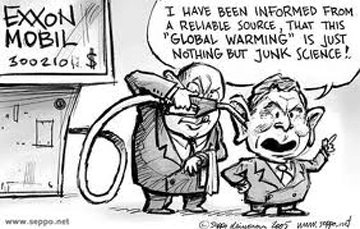 How Extreme Weather Is Shrinking the Planet, New Yorker, by Bill McKibben November 18, 2018 “………The climatologist James Hansen testified before Congress about the dangers of human-caused climate change thirty years ago. Since then, carbon emissions have increased with each year except 2009 (the height of the global recession) and the newest data show that 2018 will set another record. Simple inertia and the human tendency to prioritize short-term gains have played a role, but the fossil-fuel industry’s contribution has been by far the most damaging. Alex Steffen, an environmental writer, coined the term “predatory delay” to describe “the blocking or slowing of needed change, in order to make money off unsustainable, unjust systems in the meantime.” The behavior of the oil companies, which have pulled off perhaps the most consequential deception in mankind’s history, is a prime example.
As journalists at InsideClimate News and the Los Angeles Times have revealed since 2015, Exxon, the world’s largest oil company, understood that its product was contributing to climate change a decade before Hansen testified. In July, 1977, James F. Black, one of Exxon’s senior scientists, addressed many of the company’s top leaders in New York, explaining the earliest research on the greenhouse effect. “There is general scientific agreement that the most likely manner in which mankind is influencing the global climate is through carbon-dioxide release from the burning of fossil fuels,” he said, according to a written version of the speech which was later recorded, and which was obtained by InsideClimate News. In 1978, speaking to the company’s executives, Black estimated that a doubling of the carbon-dioxide concentration in the atmosphere would increase average global temperatures by between two and three degrees Celsius (5.4 degrees Fahrenheit), and as much as ten degrees Celsius (eighteen degrees Fahrenheit) at the poles.
Exxon spent millions of dollars researching the problem. It outfitted an oil tanker, the Esso Atlantic, with CO2 detectors to measure how fast the oceans could absorb excess carbon, and hired mathematicians to build sophisticated climate models. By 1982, they had concluded that even the company’s earlier estimates were probably too low. In a private corporate primer, they wrote that heading off global warming and “potentially catastrophic events” would “require major reductions in fossil fuel combustion.”
An investigation by the L.A. Times revealed that Exxon executives took these warnings seriously. Ken Croasdale, a senior researcher for the company’s Canadian subsidiary, led a team that investigated the positive and negative effects of warming on Exxon’s Arctic operations. In 1991, he found that greenhouse gases were rising due to the burning of fossil fuels. “Nobody disputes this fact,” he said. The following year, he wrote that “global warming can only help lower exploration and development costs” in the Beaufort Sea. Drilling season in the Arctic, he correctly predicted, would increase from two months to as many as five months. At the same time, he said, the rise in the sea level could threaten onshore infrastructure and create bigger waves that would damage offshore drilling structures. Thawing permafrost could make the earth buckle and slide under buildings and pipelines. As a result of these findings, Exxon and other major oil companies began laying plans to move into the Arctic, and started to build their new drilling platforms with higher decks, to compensate for the anticipated rises in sea level.
The implications of the exposés were startling. Not only did Exxon and other companies know that scientists like Hansen were right; they used his nasaclimate models to figure out how low their drilling costs in the Arctic would eventually fall. Had Exxon and its peers passed on what they knew to the public, geological history would look very different today. The problem of climate change would not be solved, but the crisis would, most likely, now be receding. In 1989, an international ban on chlorine-containing man-made chemicals that had been eroding the earth’s ozone layer went into effect. Last month, researchers reported that the ozone layer was on track to fully heal by 2060. But that was a relatively easy fight, because the chemicals in question were not central to the world’s economy, and the manufacturers had readily available substitutes to sell. In the case of global warming, the culprit is fossil fuel, the most lucrative commodity on earth, and so the companies responsible took a different tack.
A document uncovered by the L.A. Times showed that, a month after Hansen’s testimony, in 1988, an unnamed Exxon “public affairs manager” issued an internal memo recommending that the company “emphasize the uncertainty” in the scientific data about climate change. Within a few years, Exxon, Chevron, Shell, Amoco, and others had joined the Global Climate Coalition, “to coordinate business participation in the international policy debate” on global warming. The G.C.C. coördinated with the National Coal Association and the American Petroleum Institute on a campaign, via letters and telephone calls, to prevent a tax on fossil fuels, and produced a video in which the agency insisted that more carbon dioxide would “end world hunger” by promoting plant growth. With such efforts, it ginned up opposition to the Kyoto Protocol, the first global initiative to address climate change.
In October, 1997, two months before the Kyoto meeting, Lee Raymond, Exxon’s president and C.E.O., who had overseen the science department that in the nineteen-eighties produced the findings about climate change, gave a speech in Beijing to the World Petroleum Congress, in which he maintained that the earth was actually cooling. The idea that cutting fossil-fuel emissions could have an effect on the climate, he said, defied common sense. “It is highly unlikely that the temperature in the middle of the next century will be affected whether policies are enacted now, or twenty years from now,” he went on. Exxon’s own scientists had already shown each of these premises to be wrong.
On a December morning in 1997 at the Kyoto Convention Center, after a long night of negotiation, the developed nations reached a tentative accord on climate change. Exhausted delegates lay slumped on couches in the corridor, or on the floor in their suits, but most of them were grinning. Imperfect and limited though the agreement was, it seemed that momentum had gathered behind fighting climate change. But as I watched the delegates cheering and clapping, an American lobbyist, who had been coördinating much of the opposition to the accord, turned to me and said, “I can’t wait to get back to Washington, where we’ve got this under control.”
He was right. On January 29, 2001, nine days after George W. Bush was inaugurated, Lee Raymond visited his old friend Vice-President Dick Cheney, who had just stepped down as the C.E.O. of the oil-drilling giant Halliburton. Cheney helped persuade Bush to abandon his campaign promise to treat carbon dioxide as a pollutant. Within the year, Frank Luntz, a Republican consultant for Bush, had produced an internal memo that made a doctrine of the strategy that the G.C.C. had hit on a decade earlier. “Voters believe that there is no consensus about global warming within the scientific community,” Luntz wrote in the memo, which was obtained by the Environmental Working Group, a Washington-based organization. “Should the public come to believe that the scientific issues are settled, their views about global warming will change accordingly. Therefore, you need to continue to make the lack of scientific certainty a primary issue in the debate.”
The strategy of muddling the public’s impression of climate science has proved to be highly effective. In 2017, polls found that almost ninety per cent of Americans did not know that there was a scientific consensus on global warming. Raymond retired in 2006, after the company posted the biggest corporate profits in history, and his final annual salary was four hundred million dollars. His successor, Rex Tillerson, signed a five-hundred-billion-dollar deal to explore for oil in the rapidly thawing Russian Arctic, and in 2012 was awarded the Russian Order of Friendship. In 2016, Tillerson, at his last shareholder meeting before he briefly joined the Trump Administration as Secretary of State, said, “The world is going to have to continue using fossil fuels, whether they like it or not.”
It’s by no means clear whether Exxon’s deception and obfuscation are illegal. The company has long maintained that it “has tracked the scientific consensus on climate change, and its research on the issue has been published in publicly available peer-reviewed journals.” The First Amendment preserves one’s right to lie, although, in October, New York State Attorney General Barbara D. Underwood filed suit against Exxon for lying to investors, which is a crime. What is certain is that the industry’s campaign cost us the efforts of the human generation that might have made the crucial difference in the climate fight.…..https://www.newyorker.com/magazine/2018/11/26/how-extreme-weather-is-shrinking-the-planet?mbid=nl_Daily%20111718&CNDID=53818310&utm_source=nl&utm_medium=email&utm_campaign=Daily%20111718&utm_content=&utm_brand=tny&utm_mailing=Daily%20111718&hasha=8c9f4
Closure of UK’s Sellafield Thermal Oxide Reprocessing Plant – a commercial failure
15th Nov 2018 On the morning after the Financial Times has called on the UK Government to reassess its long-term energy plans following the demise of Toshiba’sMoorside nuclear project, the Stop Hinkley Campaign has published a briefing about lessons we can learn from the Sellafield Thermal Oxide Reprocessing Plant which is in the process of closing after only 24 years of operation and a very chequered performance.
The “Lessons for Hinkley from Sellafield” briefing says: The cost of building THORP increased from
£300m in 1977 to £1.8bn on completion in 1992. With the additional cost of associated facilities this figure rose to £2.8bn. Originally expected to reprocess 7,000 tonnes of spent fuel in its first ten years, it has managed only around 9,300 in 24 years.
The original rationale for THORP ended with the closure of the UK’s fast reactor programme in 1994. The new rationale – to produce plutonium fuel for ordinary reactors – was a disaster costing the taxpayer £2.2bn.
Stop Hinkley Spokesperson Roy Pumfrey said: “The rationale for building the THORP plant at Sellafield had disappeared before it even opened. The lesson for 2018 is that we should scrap Hinkley C now before costs escalate. The cancellation costs are small relative to the £50billion extra we’ll have to pay for Hinkley’s electricity, if it ever generates any. If we wait any longer to scrap it,
we risk heading for another Sellafield-scale financial disaster.” http://www.stophinkley.org/PressReleases/pr181115.pdf
Millstone Nuclear Power Plant uses the ‘zero carbon’ claim to try to qualify as ‘renewable’
 Connecticut utility regulators say Millstone Nuclear Power Plant ‘at
 risk’ of closing, New Haven Register, By Luther Turmelle A tentative ruling by state utility regulators may boost efforts by the owner of the Millstone Nuclear Power Plant to have the electricity it produces considered in ‘zero carbon’ auction that the state’s Department of Energy and Environmental Protection conducts to procure power.
Commissioners with Connecticut’s Public Utilities Regulatory Authority ruled that the Waterford-based power plant “is at risk of retirement.” Dominion Energy, the Virginia-based company that owns Millstone, has claimed for several years that economic conditions in the nation’s energy markets are making it difficult for the utility to keep operating the plant if it not allowed to compete for lucrative long-term contracts that are awarded to the winners of the zero-carbon auction.
“This interim decision does not reach the issue of whether a purchase power agreement with Millstone should be selected by DEEP or approved,” the tentative ruling says in part. “But (it) addresses solely the basis on which such a bid may be evaluated.”
Dominion officials release a statement Friday following PURA’s ruling say they are pleased with the decision made by regulators.
“They have been given access to our confidential information, have done their own analysis, and reached their own conclusion, Millstone is at risk,” the statement says in part. “We are now focused on the zero carbon procurement at the Department of Energy & Environmental Protection. We made numerous offers that would both ensure Millstone’s continued operations and provide benefits to Connecticut ratepayers ranging from the hundreds of millions of dollars to billions of dollars.”
DEEP officials are expected to announce the winners of the zero carbon auction by the end of the year. PURA’s determination that Millstone is at risk of closing will be a factor that DEEP officials will take into account as they try to determination the winners of the auction from a field of dozens of renewable energy sources that submitted proposals earlier this year……….
Joel Gordes, a West Hartford-based energy industry consultant, said PURA’s commissioners erred in their draft ruling.
“To treat nuclear power as it were a renewable resource is completely inappropriate,” Gordes said. “Real renewable resources don’t produce a deadly byproduct that has to be guarded for an eternity.” https://www.nhregister.com/news/article/Conn-utility-regulators-say-Millstone-at-13401695.php
1 This Month
Chernobyl: The Lost Tapes – A good documentary on Chernobyl on SBS available On Demand for the next 3 weeks– https://www.sbs.com.au/ondemand/tv-program/chernobyl-the-lost-tapes/2352741955560

of the week–London Campaign for Nuclear Disarmament

Tell the Ukrainian Government to Drop Prosecution of Peace Activist Yurii Sheliazhenko
To see nuclear-related stories in greater depth and intensity – go to https://nuclearinformation.wordpress.com
-
Archives
- April 2026 (152)
- March 2026 (251)
- February 2026 (268)
- January 2026 (308)
- December 2025 (358)
- November 2025 (359)
- October 2025 (376)
- September 2025 (257)
- August 2025 (319)
- July 2025 (230)
- June 2025 (348)
- May 2025 (261)
-
Categories
- 1
- 1 NUCLEAR ISSUES
- business and costs
- climate change
- culture and arts
- ENERGY
- environment
- health
- history
- indigenous issues
- Legal
- marketing of nuclear
- media
- opposition to nuclear
- PERSONAL STORIES
- politics
- politics international
- Religion and ethics
- safety
- secrets,lies and civil liberties
- spinbuster
- technology
- Uranium
- wastes
- weapons and war
- Women
- 2 WORLD
- ACTION
- AFRICA
- Atrocities
- AUSTRALIA
- Christina's notes
- Christina's themes
- culture and arts
- Events
- Fuk 2022
- Fuk 2023
- Fukushima 2017
- Fukushima 2018
- fukushima 2019
- Fukushima 2020
- Fukushima 2021
- general
- global warming
- Humour (God we need it)
- Nuclear
- RARE EARTHS
- Reference
- resources – print
- Resources -audiovicual
- Weekly Newsletter
- World
- World Nuclear
- YouTube
-
RSS
Entries RSS
Comments RSS
 nuclear-news