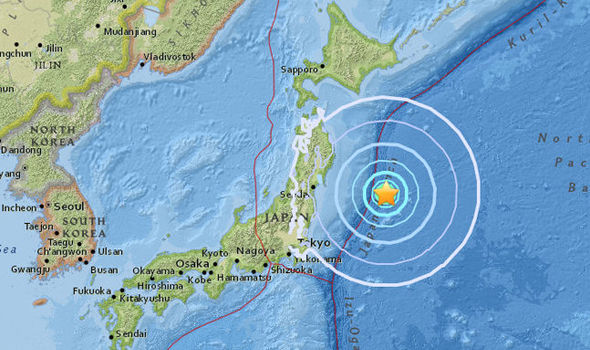
#Fukushima United Nations #OHCR report update 18th September 2018 #IDP
Posted to nuclear-news.net
Posted by Shaun McGee aka arclight
Posted on 18 September 2018
Baskut Tuncuk has finished his report on workers (globally) who are exploited here
A vicious form of exploitation: workers poisoned by toxic substances, says UN expert
GENEVA (12 September 2018) – Exposure of workers to toxic substances can and should be considered a form of exploitation and is a global health crisis, says a UN expert.
On Wednesday, UN Special Rapporteur on hazardous substances and wastes, Baskut Tuncak, told the UN Human Rights Council that governments and companies must strengthen protection for workers, their families
“and their communities from any exposure to toxic chemicals”.
https://www.ohchr.org/EN/NewsEvents/Pages/DisplayNews.aspx?NewsID=23543&LangID=E
Here is some background and upcoming reports with some recent activity;
SR on internally displaced persons due in first quarter of 2019 requested in first half of 2016 and confirmed in August 2017
Due on first quarter of 2019 https://spinternet.ohchr.org/_Layouts/SpecialProceduresInternet/ViewCountryVisits.aspx?Lang=en&country=JPN
SR on toxic waste
Sent Reminder but not confirmed
2019
Due in 2019 Link on the same as above.
37th HRC Session: Oral Statement on the Situation of the People Affected by the Fukushima Nuclear Disaster
The video and the full text of the statement can be accessed below.
Japan: Fukushima clean-up workers, including homeless, at grave risk of exploitation, say UN experts
GENEVA (16 August 2018)
“Detailed reports that the decontamination contracts were granted to several large contractors, and that hundreds of small companies, without relevant experience, were subcontracted, are of concern. These arrangements, together with the use of brokers to recruit a considerable number of the workers, may have created favourable conditions for the abuse and violation of workers’ rights.”
The UN rights experts have engaged in a dialogue with the Government since last year and have taken into account a recent reply to their most recent concerns.
As part of its Universal Periodic Review, Japan recently ”accepted to follow up” on a recommendation from other States to restore radiation levels to those before the disaster to protect the human right to health of pregnant women and children, among several other recommendations.
“The experts strongly urge the Government to lower the allowable dose of radiation to 1 mSv/year to protect children and women who may become pregnant.”
The UN experts remain available to advise on how best to address the ongoing issue of exposure of workers to toxic radiation following a previous response by the Japanese Government, and on the need to strengthen protection for workers.
In September, one of the UN experts, Baskut Tuncak, will present a report to the UN Human Rights Council, calling on States and employers to strengthen protection for workers from exposure to toxic substances, and proposing principles in that regard.
Link https://www.ohchr.org/en/NewsEvents/Pages/DisplayNews.aspx?NewsID=23458&LangID=E
Link to exclusive to nuclear-news.net video testimony from Internally Displaced People from Japan. This is part of a series of videos upcoming to this blog over the next few weeks. In the first video we hear from a Decontamination worker and Mother about the working conditions she experienced and the health effects she obseved with her family.
The second video highlights an issue with the nuclear industries “Stay in Place” orders to civilians downwind of a nuclear disaster by showing the different health effects of 2 families who take different approaches. One family removes themselves from the prefecture within days (with few health effects noticed) and another family who stayed in Fukushima Prefecture for another year and a half and both mother and daughter was found to have Thyroid abnormalities effecting their well being.
The third video covers health effects and costs (Just released)
More videos to come including a family who moved to another part of Japan and the nosebleeds started again when the new Prefecture started burning nuclear waste from the Fukushima cleanup! No escape! Here are the links to the first two short video testimonies of the first three families.
And finally a new report has come out concerning unreported deaths during the nuclear accident evacuation. Breaking!
TEPCO lawsuit: Futaba Hospital Patient Death is caused by the Nuclear Accident – Nurse’s Testimony
Google translated
Mainichi Newspaper September 18, 2018 22:01 (Last updated September 18 at 22: 1)
The Tokyo District Court (Kenichi Nagabuchi), the 26th trial of the three former management teams who were forcibly charged with negligence resulting in death and injury in business around Tokyo Electric Power Fukushima Daiichi Nuclear Power Plant incident, caused the accident damage The situation was first heard. A woman who was a nurse at Futaba Hospital (Okuma Town, Fukushima Prefecture) where many patients died from the evacuation shelter appeared as a witness and presented the view that “the patient died was caused by a nuclear accident” It was.
According to the indictment and others, the former management team neglected countermeasures even though a massive tsunami struck the nuclear plant and it could be predicted that an accident would occur, three former management teams invited an accident in March 2011, About 44 kilometers away from the hospital in the same hospital were reported to have died.
On the morning of this morning, the appointed attorney for the prosecutor’s office recited the record written by the prosecutors about doctors and staff of the hospital, self-defense officers and police officers who rescued immediately after the earthquake to listen to the prosecution. He insisted that the patient died due to lack of cooperation among related organizations, long-term movement, the medical environment of the evacuation destination, and so on.
In the afternoon’s trial, a woman who was deputy general manager of the hospital of the same hospital testified the evacuation situation of the patient. “If nuclear accidents did not occur and the patient was able to return to Futaba Hospital from the evacuation destination, I could keep a few more (life) because I could use medical instruments and medicines.”
The deputy director of nursing also revealed that he was already aware of the patient who had already died in the bus while traveling for a long time before arriving at the evacuation destination, and explained that “the face was so like it and it was shocking” [ie her patients looked shockingly pale (a sign of a critical condition or being very ill)] . “There were also patients wrapped in white protective clothing and falling under the seat” and looked back on the harsh conditions at the time.
In the trial, since the second deadline of January this year, witness interrogation continued, the hearing has been continued over the recognition of the former management team’s tsunami countermeasure. 【Iida Ken, Okada Ei】
[NOTE This is a poignant summary of the article from a Japanese speaker (to help clarify the articles bad translation )
“Nuclear accident occurred –> patients evacuated from the hospital –> patients were removed to a location without required medical treatments or equipment –> patients died ie killed” ]
https://mainichi.jp/articles/20180919/k00/00m/040/120000c
The second nuclear industry stillbirth – Small Modular Nuclear Reactors (SMRs)
 SMR – The Second Make-Believe Renaissance – Gordon Edwards, 18 Sept 18 SMR stands for “Small Modular Reactor(s)”. It is the latest effort by an increasingly desperate nuclear industry to create a “Nuclear Renaissance”. Nuclear Renaissance I
Duke Energy’s Brunswick Nuclear Plant declares an”unusual event”

 Florence floodwaters limit access to nuclear power plant, ‘unusual event’ declared By Travis Fedschun | Fox News, 18 Sept 18, A nuclear power plant just outside of Wilmington, North Carolina declared an “unusual event” Monday after rising floodwaters and storm damage caused limited access to the facility, officials said.
Duke Energy’s Brunswick Nuclear Plant – located about 30 miles south of Wilmington – declared the state of emergency, the lowest required by the Nuclear Regulatory Commission, after roads surrounding the 1,200-acre complex were impacted by flooding and downed trees.
“None of the roads are passable,” NRC spokesman Joey Ledford told the News & Observer. “The plant is safe. The reactors are in hot stand-by mode 3 shutdown.”………
The Brunswick plant’s two reactors are of the same design as those in Fukushima, Japan, which infamously exploded and leaked radiation following a 2011 magnitude 9 earthquake and tsunami. Following that disaster, federal regulators required all U.S. nuclear plants to perform upgrades to better withstand earthquakes and flooding.
Ledford told Fox News that both units still have offsite power, and that essential plant employees and NRC inspectors remain on site, though storm damage is “limiting access to the site by personal vehicles.”
Before the storm arrived, the NRC sent additional inspectors and provided staff to give around-the-clock support during the storm…….. http://www.foxnews.com/us/2018/09/17/florence-floodwaters-cut-off-nuclear-power-plant-unusual-event-declared.html
Civil and military nuclear industries locked in dependence on each other
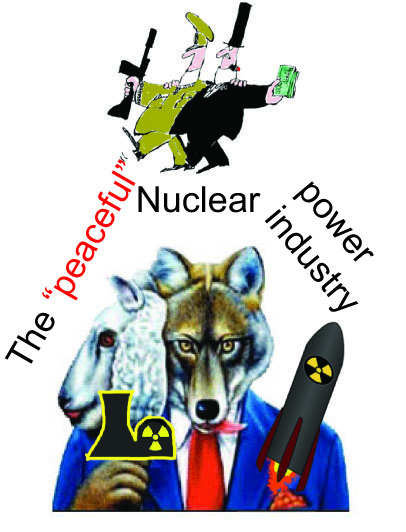 questions arise over many well-documented military entanglements of nuclear power
the “reliable provision of Russia’s defense capability is the main priority of the nuclear industry” – Rosatom
a host of other defense policy discussions are very clear that the UK nuclear ‘submarine industrial base’ would not be sustainable, if a decision were taken to discontinue civil nuclear power…statements from UK submarine industry sources note incentives to “mask” the costs of this military programme behind the related civilian industrial infrastructure…. a programme of submarine-derived small modular reactors should be adopted in UK energy policy in order to “relieve the Ministry of the burden of developing and retaining skills and capability” on the military side. – Rolls Royce
focused on facilitating ‘mobility’ between the civil and defense nuclear workforce – UK
In the USA, powerful imperatives have recently been openly declared in high level policy debate, to maintain support for otherwise-uncompetitive nuclear power in order to sustain a continuing nuclear navy.
How much of the costs of these shared underpinnings for military nuclear ambitions, are being concealed by otherwise uneconomic joint civil-military nuclear infrastructures?
A Global Picture of Industrial Interdependencies Between Civil and Military Nuclear Infrastructures https://www.sussex.ac.uk/webteam/gateway/file.php?name=2018-13-swps-stirling-and-johnstone.pdf&site=25 (this paper is richly supplied with comprehensive footnotes and references. Andy Stirling, Phil Johnstone, SPRU, August 2018 (This is an extended, updated and more fully referenced version of a chapter appearing in M. Schneider, A. Froggatt, J. Hazemann, T. Katsuta, M.V. Ramana, A. Stirling, P. Johnstone, C. von Hirschhausen, B. Wealer, The World Nuclear Industry Status Report 2018, Mycle Schneider Consulting, Paris, 2018)
Abstract
Noting the increasingly unfavourable economic and operational position of nuclear power around the world, this paper reviews evidence for a hitherto neglected connection between international commitments to civil and military nuclear infrastructures. Continue reading
French nuclear industry in turmoil, – inadequate welds at Flamanville nuclear reactor
 Le Monde 16th Sept 2018 [Machine Translation] Nuclear: In Flamanville, the welds of the discord.
The manufacturing difficulties of the French EPR have cruelly recalled the pitfalls that threaten the tricolor nuclear industry: an extremely ambitious initial vision and implementation difficulties with heavy consequences.
generators.
As a result, the group has to take back fifty-eight welds, knowing that a single weld represents eight weeks of extra work.
https://www.lemonde.fr/economie/article/2018/09/16/nucleaire-a-flamanville-les-soudures-de-la-discorde_5355892_3234.html
THE HIGH TOXICITY AND RADIOTOXICITY OF TRITIUM
 Ken Raskin, Tritium is mostly what the Japanese want to dump from Fukushima. Millions of tons of water with tritium in it. Massive amounts of nuclear waste from Fukushima.
Tritium bombards, and even attaches to tissue covalently. There is usually a lot of UNACCOUNTED FOR RADIONUCLIDE-TRITIUM, around nuclear reactors. That is because the nucleoapes that run the reactors are psychopaths. They have little value for life, human or otherwise. Like radioactice Carbon 14 can, Tritium, binds to tissue. TRITIUM then permanently bombards the heck out of surrounding tissue, with beta rays!
 There was a large study, that showed tritium increases cancer 20 times. It is teratogenic. There are several case studies, of workers with increased rates of granulomas and lymphomas who were chronically exposed for years.
The pronukers go on and on, about k40 which is a nonstart. Even the gaslighters do it. It is Irrelevent, then they trurn around and lie their asses off about the extreme radiotoxicity and biological toxicity of tritium!
The nuclearists encourage the myth of how harmless tritium is. It does not just mostly pass through the body in water. Another blatant lie. It biocumulates in worse ways than radioactive, iodine, cesium, uranium because it becomes a part of the human body. It impairs and destroys reproductive capabilities. There is a comprehensive study done showing it increased cancer several times. It can covalently take the place of hydrogen in the body, in tissue.
Financiers desert France’s EPR nuclear power plan for UK’s Hinkley Point C project

 Le Monde 16th Sept 2018 [Machine Translation] Can EDF’s finances support such a trajectory? The company’s chief financial officer, Thomas Piquemal, slammed the door in 2015, worried that the UK’s Hinkley Point EPR would weigh heavily on the company. According to him, the need for the nuclear company to finance alone two thirds of the project creates a situation too risky. ”
Who would bet 60% to 70% of its heritage on a technology that we still do not know if it works, while it’s been ten years that we try to build it? “, He launches in front of the deputies in 2016. This is the heart of the problem for EDF: how to finance new reactors? For Hinkley Point, it took considerable resources, even though EDF won a gold contract with the British state: for thirty years, the French group will sell its electricity at a guaranteed rate, twice the current price electricity!
In other words, British consumers will see their bill increase. In fact, most countries that continue to build nuclear power can only do so with a strong commitment from the state and a guaranteed income for private investors.
But the France of 2018 is no longer that of Pierre Messmer and the Commissariat au plan in 1974, when the French nuclear plan was launched. The impossible equation But the atom requires long time. “When we talk about the EPR, we
are talking about an investment over a century. We are in a period in which people want shorter-term returns, even in infrastructure, “says Emmanuel Autier of Bearing Point.
“We are not going to scramble to finance a project that has not yet proved its worth while it is much more profitable and less risky to finance renewable energy,” notes an investment fund manager. Especially since EDF’s current structure, subject to stock market fluctuations, does not encourage long-term commitment. “Finance costs are a
very important part of construction. A listed company can not wear that on its balance sheet in a massive way, “agrees Valérie Faudon, SFEN.
“It will be necessary for the state to play its full role by creating a new regulatory framework,” admits Xavier Ursat. In other words: to sustain the EPR – and make survive EDF – it will be up to the state to guarantee the investments and consumers to bear the burden on their electricity bill.
This is the impossible equation in which EDF is: to survive in its current form, it must.
https://abonnes.lemonde.fr/economie/article/2018/09/16/l-epr-le-cauchemar-d-edf_5355883_3234.html
Les Echos 17th Sept 2018 Nuclear: the amazing schedule for the extension of reactors. The first reactor of the Tricastin plant will stop in June 2019 to start the extension work after 40 years. But ASN will not give its generic opinion on
the subject until the end of 2020.
https://www.lesechos.fr/industrie-services/energie-environnement/0302222113379-nucleaire-letonnant-calendrier-de-la-prolongation-des-reacteurs-2205709.php
Community in Madhya Pradesh protest against proposed nuclear plant
 Activists, villagers raise concern over proposed nuclear plant in MP https://www.business-standard.com/article/pti-stories/activists-villagers-raise-concern-over-proposed-nuclear-plant-in-mp-118091801368_1.html
Press Trust of India | New Delhi September 18, 2018 Activists and villagers raised their concerns over a proposed nuclear power plant in Chutka in Madhya Pradesh on Tuesday, saying it would destroy nature and take away their homeland.
In 2009, Nuclear Power Corporation of India Ltd. (NPCIL) has decided to set up the atomic station in Mandla district of Madhya Pradesh to generate 1,400 MW power.
The villagers claimed they have been protesting for the past nine years over the atomic power plant and when they did not relent, compensation was put into their accounts forcefully. “MPPGCL forcefully put the compensation amount in our bank accounts and took our Aadhaar copies from the bank. We have written to the bank to remove their money,” said Meera Bai, a resident of Chutka.
Another resident, Dadu Lal Kudape, said they visited other villages where nuclear plants would be coming up and they found contaminated water and polluted environment.
“We do not want the same things to happen to us,” he said.
Padmini Ghosh, Women’s Regional Network India Coordinator, said if European countries are dismantling nuclear power plants, India is building them. “We need to review nuclear policy and install renewable energy plants,” Ghosh said.
Raj Kumar Sinha, activist working with the villagers, said they are being exploited and no amount of money could compensate for their land.
“These people are nature lovers. They can’t be bought with money,” he said.
The Women’s Regional Network said a total of 17,000 people would be displaced if the plant comes up.
 |
ReplyForward
|
World Nuclear Association don’t recognise 9 of the 12 major nuclear accidents
CHALK RIVER (Ontario), Dec. 2, 1952: The first major commercial reactor disaster occurred at this Canadian reactor on the Ottawa River when it caused a loss-of-coolant, a hydrogen explosion and a meltdown, releasing 100,000 curies of radioactivity to the air. In comparison, the official government position is that Three Mile Island released about 15 curies, although radiation monitors failed or went off-scale.
ROCKY FLATS (Colorado), Sept. 11, 1957: This Cold War factory produced plutonium triggers for nuclear weapons 16 miles from Denver. It caused 30 to 44 pounds of breathable plutonium-239 and plutonium-240 to catch fire in what would come to be known as the second largest industrial fire in US history. Filters used to trap the plutonium were destroyed and it escaped through chimneys, contaminating parts of Denver. Nothing was done to warn or protect downwind residents.
WINDSCALE/SELLAFIELD (Britain), Oct. 7, 1957: The worst of many fires burned through one reactor igniting three tons of uranium and dispersed radionuclides over parts of England and northern Europe. The site was hastily renamed Sellafield. Another large radiation leak occurs in 1981and leukemia rates soared to triple the national average.
KYSHTYM/CHELYABINSK-65 (Russia), Sept. 29, 1957: A tank holding 70 to 80 metric tons of highly radioactive liquid waste exploded, contaminating an estimated 250,000 people, and permanently depopulating 30 towns which were leveled and removed from Russian maps. Covered up by Moscow (and the CIA) until 1989, Russia finally revealed that 20 million curies of long-lived isotopes like cesium were released, and the release was later declared a Level 6 disaster on the International Nuclear Event Scale. The long covered-up explosion contaminated up to 10,000 square miles making it the third- or 4th-most serious radiation accident ever recorded.
SANTA SUSANA (Simi Valley, Calif.), July 12, 1959: The meltdown of the Sodium Reactor Experiment just outside Los Angeles caused “the third largest release of iodine-131 in the history of nuclear power,” according to Arjun Makhajani, President of the Institute for Energy & Environmental Research. Released radioactive materials were never authoritatively measured because “the monitors went clear off the scale,” according to an employee. The accident was kept secret for 20 years.
CHURCH ROCK (New Mexico), July 16, 1979: Ninety-three million gallons of liquid uranium mine wastes and 1,000 tons of solid wastes spilled onto the Navajo Nation and into Little Puerco River, and nuclear officials called it “the worst incident of radiation contamination in the history of the United States.” The Little Puerco feeds the Little Colorado River, which drains to the Colorado River, which feeds Lake Mead—a source of drinking water for Los Angeles.
TOMSK-7 (Russia), April 7, 1993: In “the worst radiation disaster since Chernobyl,” Russian and foreign experts said a tank of radioactive waste exploded at the Tomsk nuclear weapons complex and that wind blew its plume of radiation toward the Yenisei River and 11 Siberian villages, none of which were evacuated.
MONJU (Japan), Dec. 8, 1995: This sodium-cooled “breeder reactor” caused a fire and a large leak of sodium coolant into the Pacific. Liquid sodium coolant catches fire on contact with air and explodes on contact with water. Costly efforts to engineer commercial models have failed. Japan’s Monju experiment was halted in 2018 after over 24 years of false starts, accidents and cover-ups.
TOKAI-MURA (Japan), Sept. 30, 1999: A uranium “criticality” which is an uncontrolled nuclear chain reaction caused a “neutron burst” that killed three workers and dispersed neutron radiation throughout the densely populated urban area surrounding the factory.
Not to be slighted, deliberate contamination has also been enormous: Five metric tons of plutonium was dispersed over the earth by nuclear bomb testing, and other nuclear weapons processes; Over 210 billion gallons of radioactive liquids were poured into the ground at the Hanford reactor complex in Washington State; and 16 billion gallons of liquid waste holding 70,000 curies of radioactivity were injected directly into Idaho’s Snake River Aquifer at the Idaho National Lab.
Britain’s energy regulator trying to gag whistleblowers
 Guardian 17th Sept 2018 Britain’s energy regulator has been fighting to keep secret the claims of
two whistleblowers who independently raised concerns about potentially
serious irregularities in projects worth billions of pounds, the Guardian
can reveal. The two men say Ofgem threatened them with an obscure but
sweeping gagging clause that can lead to criminal prosecutions and possible
jail terms for those who defy it.
https://www.theguardian.com/law/2018/sep/17/ofgem-made-my-life-hell-whistleblowers-say-they-were-threatened-by-regulator
Emergency Declared At Brunswick Nuclear Power Plant In North Carolina… All Personnel Blocked From Entering The Facility As “Hot Shutdown” Under Way

The U.S. Nuclear Regulatory Commission has declared a state of emergency for both units of the Brunswick nuclear power facilities in North Carolina. An “unusual event” has occurred which is interfering with the ongoing “hot shutdown” of the nuclear power plants (a process which takes several weeks to complete).
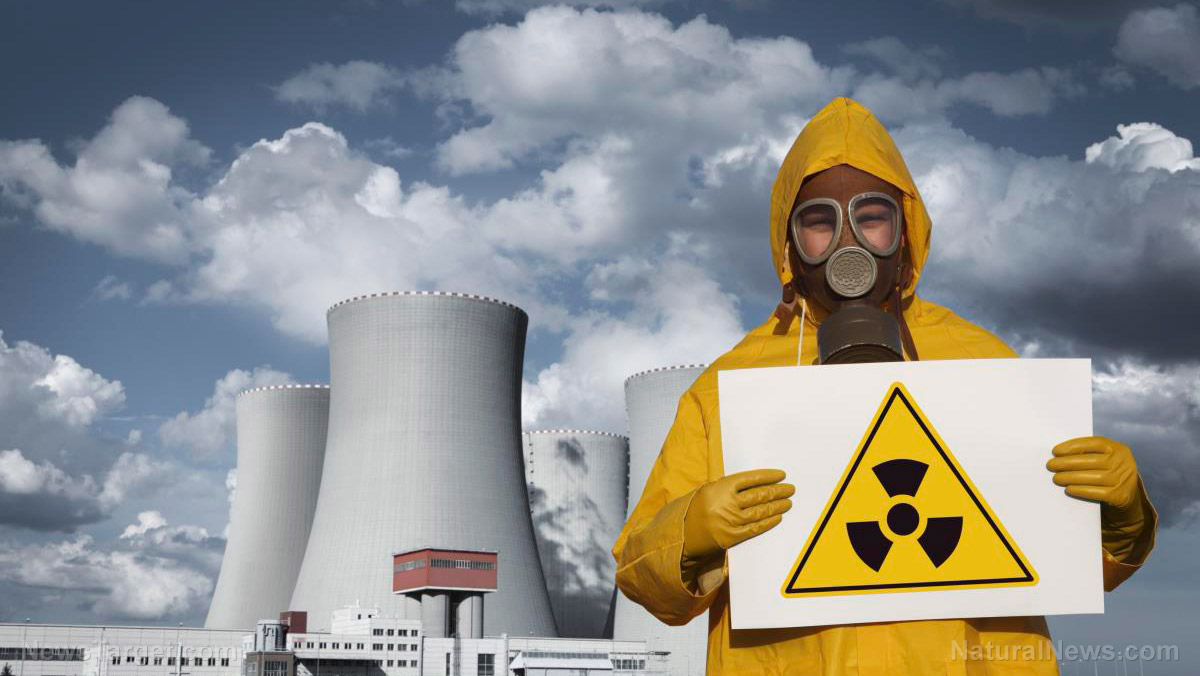
Full details of the event are found at this NRC.gov nuclear power plant alert page, which states:
UNUSUAL EVENT DUE TO SITE CONDITIONS PREVENTING PLANT ACCESS
“A hazardous event has resulted in on-site conditions sufficient to prohibit the plant staff from accessing the site via personal vehicles due to flooding of local roads by Tropical Storm Florence.”
Notified DHS SWO, FEMA OPS, and DHS NICC. Notified FEMA NWC, NuclearSSA, and FEMA NRCC via email.
In other words, the Brunswick power facilities can no longer be accessed by workers and technicians even as they are running a “hot shutdown” which requires…
View original post 235 more words
Judge calls for developers to clarify whether Hinkley radioactive mud dumping is covered by an environmental impact assessment (EIA)
 BBC 17th Sept 2018 , Developers must clarify whether dumping mud from near a nuclear plant is
covered by an environmental impact assessment (EIA), a judge has said.
important point” on whether material dredged from the seabed near Hinkley
Point C site in Somerset was included in the EIA. Campaigners want an injunction to halt the dumping that began last week. A High Court hearing
in Cardiff has been adjourned for seven days.
dredged from the seabed near the building site and deposited in the Cardiff
Grounds, a mile off the coast of the Welsh capital. Energy firm EDF, which
is behind the £19.6bn plan to build the nuclear plant, argued the mud dump
was addressed in a main environment statement that formed part of the main
planning application for Hinkley Point C and was approved by the UK
Government.
the company had submitted to court. The firm’s barrister James McClelland
accepted the wording could have been made clearer. Legal action is being
brought by the Campaign Against Hinkley Mud Dumping, which includes Super
Furry Animals keyboard player Cian Ciaran. Campaigners asked for a
temporary injunction to be imposed until the next hearing, but the request
was turned down. Neil McEvoy AM said campaigners were planning to organise
a blockade in an effort to halt the dumping. https://www.bbc.co.uk/news/uk-wales-45546550
The EPR, France and EDF’s nuclear nightmare
Le Monde 16th Sept 2018 , Le Monde 16th Sept 2018 [Machine Translation] The EPR, EDF’s nightmare. The European pressurized
reactor was to be the flagship of the French nuclear industry. For the
company it is now its survival and that of a whole sector that is at
stake, while the group is heavily indebted and its income is dwindling. 74
billion of debt … and with nuclear,that is not finished!
At the headquarters of EDF, avenue de Wagram, in Paris, the gigantic banner of
Greenpeace shows the color: we see the CEO of EDF, Jean-Bernard Lévy,
making two fingers of honor to passersby, under the mention “Thank you
Jean-Bernard”. This action of December 2016 marked a new stage in the
argument of nuclear opponents: it is not only to explain the risk of
accidents, but also the financial risk that would weigh on EDF.
NGOs are no longer alone in this field. In June, the then minister responsible for EDF
Nicolas Hulot, took up the argument. “One of the reasons why EDF finds itself
in difficulty is that the nuclear industry, sorry to say, leads us into a
drift. In a clear allusion to the expensive shipyard Flamanville (Channel),
he said: “It is clear that economically, there is a kind of golden rule
that is being established in this sector, it’s that in reality, we never
keep our promises. The minister is picking up a criticism that is becoming
more and more common: not only has nuclear become too expensive, but it
would also be a major strategic mistake for EDF.
https://abonnes.lemonde.fr/economie/article/2018/09/16/l-epr-le-cauchemar-d-edf_5355883_3234.html
USA Bill to allow private-public partnerships for new nuclear power technologies
Ars Technica 16thSept 2018 , Though economics might not favor nuclear power in the US, policy makers do.
Last week, the House passed a bipartisan bill that originated in the Senate
called the Nuclear Energy Innovation Capabilities Act (S. 97), which will
allow the private sector to partner with US National Laboratories to vet
advanced nuclear technologies.
The bill also directs the Department of
Energy (DOE) to lay the ground work for establishing “a versatile,
reactor-based fast neutron source.” The Senate also introduced a second
bill called the Nuclear Energy Leadership Act (S. 3422) last Thursday,
which would direct the DOE actually establish that fast neutron reactor.
That bill also directs the DOE to “make available high-assay, low-enriched
uranium” for research purposes. The Nuclear Energy Leadership Act has not
yet made it past a Senate vote.
https://arstechnica.com/tech-policy/2018/09/us-congress-passes-bill-to-help-advanced-nuclear-power/
Canada’s Brookfield in talks with Toshiba, about buying British new nuclear init NuGen
Toshiba in talks with Brookfield for U.K. nuclear unit sale: sources, Globe and Mail , REUTER, SEPTEMBER 18, 2018 Toshiba Corp is in talks with Canada’s Brookfield Asset Management Inc for the potential sale of its UK nuclear unit NuGen, a source familiar with the matter said on Tuesday.
1 This Month


Tell the Ukrainian Government to Drop Prosecution of Peace Activist Yurii Sheliazhenko

Petition to revoke the licensing of the Near Surface Nuclear Disposal Facility (NSDF) at Chalk River. https://www.ourcommons.ca/petitions/en/Petition/Details?Petition=e-7247


of the week – STOP SMALL MODULAR REACTORS IN CANADA
To see nuclear-related stories in greater depth and intensity – go to https://nuclearinformation.wordpress.com
-
Archives
- March 2026 (204)
- February 2026 (268)
- January 2026 (308)
- December 2025 (358)
- November 2025 (359)
- October 2025 (376)
- September 2025 (258)
- August 2025 (319)
- July 2025 (230)
- June 2025 (348)
- May 2025 (261)
- April 2025 (305)
-
Categories
- 1
- 1 NUCLEAR ISSUES
- business and costs
- climate change
- culture and arts
- ENERGY
- environment
- health
- history
- indigenous issues
- Legal
- marketing of nuclear
- media
- opposition to nuclear
- PERSONAL STORIES
- politics
- politics international
- Religion and ethics
- safety
- secrets,lies and civil liberties
- spinbuster
- technology
- Uranium
- wastes
- weapons and war
- Women
- 2 WORLD
- ACTION
- AFRICA
- Atrocities
- AUSTRALIA
- Christina's notes
- Christina's themes
- culture and arts
- Events
- Fuk 2022
- Fuk 2023
- Fukushima 2017
- Fukushima 2018
- fukushima 2019
- Fukushima 2020
- Fukushima 2021
- general
- global warming
- Humour (God we need it)
- Nuclear
- RARE EARTHS
- Reference
- resources – print
- Resources -audiovicual
- Weekly Newsletter
- World
- World Nuclear
- YouTube
-
RSS
Entries RSS
Comments RSS
 nuclear-news