Taiwan’s energy transition from nuclear to wind and solar power
Nuclear Ghost Town Reveals Power Risk for Taiwan’s Energy Shift, Bloomberg, By Dan Murtaugh, Miaojung Lin, and Samson Ellis August 7, 2018,
- Plan to shut reactors sparks race to develop wind, solar power
- Goal is 70% of electricity from gas, renewable sources by 2025
A map at the guard-house of the Lungmen Nuclear Power Plant in Taiwan shows what might have been: Classrooms, dormitories, a grocery store, a police station. It was supposed to be a self-contained city on the island’s northeast coast designed to meet growing demand for electricity in Asia’s seventh-largest economy.
Instead, the complex stands empty — unfinished and never used — a $10 billion casualty of growing public opposition to nuclear power. Since a disastrous 2011 reactor meltdown in Japan, more than 1,400 miles (2,250 kilometers) away, Taiwan has rewritten its energy plans. President Tsai Ing-wen ordered all of the country’s nuclear reactors to shut by 2025.
Taiwan’s Transition
Taichung gears up for wind power as Lungmen’s reactors are mothballed
That’s set off a high-risk gamble to find alternatives to nuclear, which supplies 12 percent of the island’s electricity, while limiting an increase in carbon emissions. The island’s sprint reflects a drive across the region toward cleaner energy sources such as sunlight, wind and natural gas. Nations from Australia to South Korea and mainland Chinato India are seeking to meet rising demand without belching more emissions blamed for climate change and smog.
Taiwan’s solution: Wind turbines are planned in the blustery Taiwan Strait, solar panels are popping up on coastal salt flats, and terminals are being planned to import more liquefied natural gas. But new sources could take years to develop, making power rationing and blackouts a possibility as the gap narrows between demand and generating capacity.
“There are going to be concerns over the next few years about reserve margins and power supply reliability,” said Zhouwei Diao, an IHS Markit analyst in Beijing.
The government’s plan has several parts. First, all nuclear and most oil-fueled generators will be shut. Together, they supplied 16 percent of Taiwan’s electricity in 2016. The country will still have about the same amount of coal capacity by 2025 as now, but its share of total power generation will drop to 30 percent from about half as sources of alternative energy expand. Natural gas will see the biggest usage gain, accounting for half of supply by 2025, while renewables like wind and solar will more than triple to 20 percent.
As electricity demand grows over the next seven years, the government says it will boost generating capacity while limiting carbon emissions and ridding itself of a political headache.
Taiwan’s state-run nuclear industry already was unpopular after it built a controversial waste-storage site on Orchid Island, home to one of the country’s indigenous peoples. But sentiment turned even more negative after the disaster in Japan, which occurred after a giant earthquake and tsunami. The disaster prompted countries including Germany and South Korea to ditch their nuclear programs.
Taiwan Power Co. operates three nuclear plants and was building the fourth in Lungmen when the Fukushima meltdown occurred. In 2014, the government halted construction that was nearly complete, with uranium-fuel rods in place. In 2016, the Democratic Progressive Party won election on an anti-nuclear platform. Last month, workers removed the unused fuel rods and sold them to a buyer in the U.S.
…….. The government has held firm to its plan. Part of the optimism comes from the plunging cost of building wind and solar projects around the world. There’s also expanding supplies of cheap liquefied natural gas available from the Middle East, Australia and the U.S…….. https://www.bloomberg.com/news/articles/2018-08-05/nuclear-ghost-town-reveals-power-risk-for-taiwan-s-energy-shift
No comments yet.
1 This Month
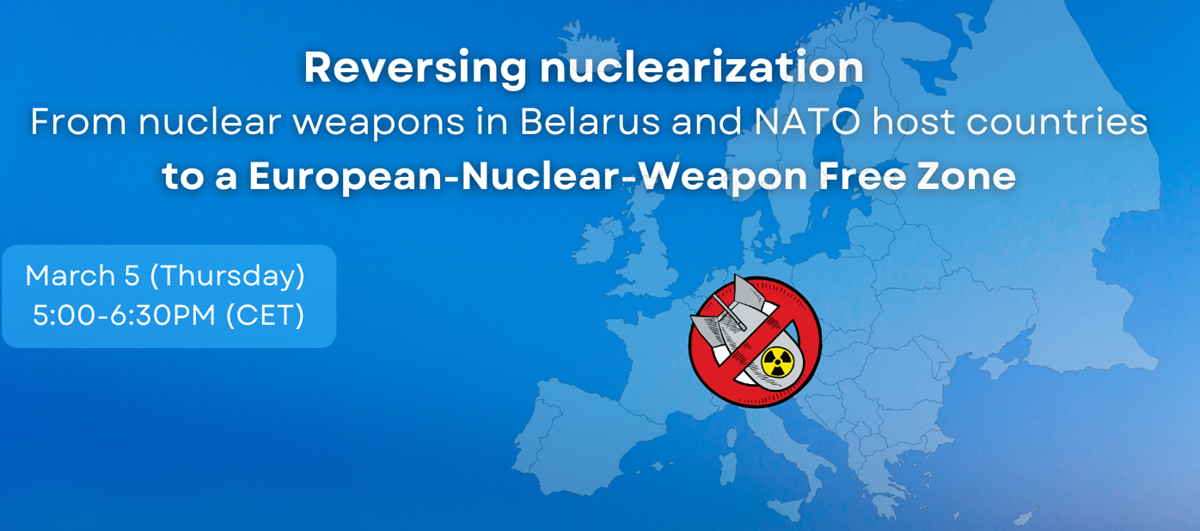
5 March -Online – Reversing nuclearization:
From nuclear weapons in Belarus and NATO host countries to a European-Nuclear-Weapon Free Zone
11am-12:30pm Eastern Time USA / 5pm-6:30pm CET

of the week – Advocating for a
nuclear free beach – https://www.samuellawrencefoundation.org/
The Samuel Lawrence Foundation advocates for a Nuclear Waste Free Beach at San Onofre, join us and take action!

10 March A LIVE WEBINAR THE REAL EFFECTS OF NUCLEAR POWER
What the Industry Isn’t Telling Us
1:00 PM Mountain, 2 pm Central, 3 pm Eastern. Live on the Keepers of the Water Facebook page

18 March Webinar @ 1 PM EST: An Assessment of SMR Projects: The Case of Canada
register for the zoom:
https://us02web.zoom.us/webinar/register/WN_o8BIIOUvQ2ONJR1nta65DQ#/registration

of the week – STOP SMALL MODULAR REACTORS IN CANADA
To see nuclear-related stories in greater depth and intensity – go to https://nuclearinformation.wordpress.com
-
Archives
- March 2026 (51)
- February 2026 (268)
- January 2026 (308)
- December 2025 (358)
- November 2025 (359)
- October 2025 (376)
- September 2025 (258)
- August 2025 (319)
- July 2025 (230)
- June 2025 (348)
- May 2025 (261)
- April 2025 (305)
-
Categories
- 1
- 1 NUCLEAR ISSUES
- business and costs
- climate change
- culture and arts
- ENERGY
- environment
- health
- history
- indigenous issues
- Legal
- marketing of nuclear
- media
- opposition to nuclear
- PERSONAL STORIES
- politics
- politics international
- Religion and ethics
- safety
- secrets,lies and civil liberties
- spinbuster
- technology
- Uranium
- wastes
- weapons and war
- Women
- 2 WORLD
- ACTION
- AFRICA
- Atrocities
- AUSTRALIA
- Christina's notes
- Christina's themes
- culture and arts
- Events
- Fuk 2022
- Fuk 2023
- Fukushima 2017
- Fukushima 2018
- fukushima 2019
- Fukushima 2020
- Fukushima 2021
- general
- global warming
- Humour (God we need it)
- Nuclear
- RARE EARTHS
- Reference
- resources – print
- Resources -audiovicual
- Weekly Newsletter
- World
- World Nuclear
- YouTube
-
RSS
Entries RSS
Comments RSS
 nuclear-news
Leave a comment