$2.2 billion jump – costs soar at Georgia’s Vogtle nuclear power project

Bond Buyer 9th Aug 2018 , A $2.2 billion jump over eight months in the estimated cost to complete two
nuclear reactors in Georgia could spell doom for the project. The actual
increase won’t be final until the project’s budget is revised, and it
will require that the private and public utility owners vote on whether to
continue the work at Plant Vogtle. The project is about 67% complete,
according to the latest estimate.
https://www.bondbuyer.com/news/costs-rise-for-unfinished-georgias-nuclear-reactors
Anxieties over the safety of nuclear wastes at Bradwell A site

 Mersea Life July 2018, A band of BANNG representatives, including myself, attended the June meeting of the LCLC at Mundon. The LCLC looks at what is happening at the Bradwell A site with regard to decommissioning and the future of the site.
The big issues discussed were: the entry of the site into Care & Maintenance (C&M); the long-term presence on site of the Intermediate-Level waste (ILW) store and of the highly radioactive graphite reactor cores. It was questioned how the site could really be said to be in C&M when it would still have activities ongoing.
The ILW store would require to be opened from time to time to accept deliveries of the 164 ILW casks still to come
from Dungeness and Sizewell (making Bradwell a regional nuclear waste store); and the highly radioactive reactor cores would continue to remain on site for the long-term.
This prompted questions: were the plans to monitor the site remotely from Sizewell during the C&M stage appropriate?;
what about the effects of public spending restraints on site security?; would cuts to police numbers affect the ability of Essex Police to respond to any incident at the site?
The Office for Nuclear Regulation (ONR) tried to reassure the meeting that the site will not be permitted to enter C&M
until the agency is satisfied with the safety case and it was known that Magnox and the police would be able to respond to events.
It was hoped to move the wastes to the national repository within 65-85 years. Andy Blowers pointed out that a repository does not yet exist, no-one knows when it will exist – or if it will exist at all. In any event, it is unlikely that wastes from Bradwell A will be high in the queue when Sellafield has first call on the repository.
http://edition.pagesuite-professional.co.uk/Launch.aspx?EID=46bf7f8d-da05-442f-83a8-2cc336bdc0a8
Taiwan’s energy transition from nuclear to wind and solar power
Nuclear Ghost Town Reveals Power Risk for Taiwan’s Energy Shift, Bloomberg, By Dan Murtaugh, Miaojung Lin, and Samson Ellis August 7, 2018,
- Plan to shut reactors sparks race to develop wind, solar power
- Goal is 70% of electricity from gas, renewable sources by 2025
A map at the guard-house of the Lungmen Nuclear Power Plant in Taiwan shows what might have been: Classrooms, dormitories, a grocery store, a police station. It was supposed to be a self-contained city on the island’s northeast coast designed to meet growing demand for electricity in Asia’s seventh-largest economy.
Instead, the complex stands empty — unfinished and never used — a $10 billion casualty of growing public opposition to nuclear power. Since a disastrous 2011 reactor meltdown in Japan, more than 1,400 miles (2,250 kilometers) away, Taiwan has rewritten its energy plans. President Tsai Ing-wen ordered all of the country’s nuclear reactors to shut by 2025.
Taiwan’s Transition
Taichung gears up for wind power as Lungmen’s reactors are mothballed
That’s set off a high-risk gamble to find alternatives to nuclear, which supplies 12 percent of the island’s electricity, while limiting an increase in carbon emissions. The island’s sprint reflects a drive across the region toward cleaner energy sources such as sunlight, wind and natural gas. Nations from Australia to South Korea and mainland Chinato India are seeking to meet rising demand without belching more emissions blamed for climate change and smog.
Taiwan’s solution: Wind turbines are planned in the blustery Taiwan Strait, solar panels are popping up on coastal salt flats, and terminals are being planned to import more liquefied natural gas. But new sources could take years to develop, making power rationing and blackouts a possibility as the gap narrows between demand and generating capacity.
“There are going to be concerns over the next few years about reserve margins and power supply reliability,” said Zhouwei Diao, an IHS Markit analyst in Beijing.
The government’s plan has several parts. First, all nuclear and most oil-fueled generators will be shut. Together, they supplied 16 percent of Taiwan’s electricity in 2016. The country will still have about the same amount of coal capacity by 2025 as now, but its share of total power generation will drop to 30 percent from about half as sources of alternative energy expand. Natural gas will see the biggest usage gain, accounting for half of supply by 2025, while renewables like wind and solar will more than triple to 20 percent.
As electricity demand grows over the next seven years, the government says it will boost generating capacity while limiting carbon emissions and ridding itself of a political headache.
Taiwan’s state-run nuclear industry already was unpopular after it built a controversial waste-storage site on Orchid Island, home to one of the country’s indigenous peoples. But sentiment turned even more negative after the disaster in Japan, which occurred after a giant earthquake and tsunami. The disaster prompted countries including Germany and South Korea to ditch their nuclear programs.
Taiwan Power Co. operates three nuclear plants and was building the fourth in Lungmen when the Fukushima meltdown occurred. In 2014, the government halted construction that was nearly complete, with uranium-fuel rods in place. In 2016, the Democratic Progressive Party won election on an anti-nuclear platform. Last month, workers removed the unused fuel rods and sold them to a buyer in the U.S.
…….. The government has held firm to its plan. Part of the optimism comes from the plunging cost of building wind and solar projects around the world. There’s also expanding supplies of cheap liquefied natural gas available from the Middle East, Australia and the U.S…….. https://www.bloomberg.com/news/articles/2018-08-05/nuclear-ghost-town-reveals-power-risk-for-taiwan-s-energy-shift
After PREMIUM TIMES report, contractors complete abandoned projects at Nigeria’s Nuclear Technology Centre
Premium Times Nigeria, August 12, 2018, Kemi Busari Seven months after PREMIUM TIMES published an investigation on the sorry state of Nigeria’s Nuclear Technology Centre, some abandoned projects within the centre have been completed.
Following the report of security loopholes in the investigation, the management of the Nigeria Atomic Energy Commission (NAEC) which oversees the centre also contracted a private firm to provide security for the centre.
In the two-part series published by PREMIUM TIMES in January, three projects were designated as abandoned as work had stopped on them.
Read first and second part of the investigation.
Identified as uncompleted were the centre’s recreational and educational facility, instrumentation laboratory and waste management plant.
In the report, some workers of the centre complained of idleness due to the inadequate facilities
The report also beamed a search light on the porous security at the centre which is partly due to the management’s insensitivity to the centre’s peculiar needs and a failed surveillance project………..
Waste Management
Meanwhile, works have continued on the radioactive waste management facility at the centre.
Awarded at over N400 million in 2009, a building that was supposed to serve as the radioactive waste management facility was overgrown with weed when this reporter first visited September 2017.
Waste management plants and equipment comprise various devices and machines used for treating, converting, disposing and processing wastes from various sources.
The construction of low/medium radioactive waste management facility was awarded at the contract sum of N401.4 million to Commerce General Limited and so far, N312 million has been paid to the contractor, the Nigeria Atomic Energy Commission (NAEC) said in response to a Freedom of Information request.
During the last visit, PREMIUM TIMES reporter observed the presence of the contractor at the site of the facility.
The management of NAEC did not respond to multiple inquiries on the rationale for redesign of the facility.
One of the staff members told this newspaper that the redesigning is unavoidable to correct the flaws of the contractor that first worked on the project.
He expressed optimism at the prospect of the facility.
“A lot of hazards will be reduced once it’s completed. As it is now, the country does not have a place to properly dispose our nuclear wastes. If it is completed and put to use, these hazards will be reduced. There is much to be benefitted if completed.”
Improved Security
………..But the level of security is not enough as expected of a nuclear technology centre says a staffer.
“The security is better but it’s not commensurate with what we expect in a nuclear environment. We commend the management for getting these people but they should give them orientation and we need armed security.
“There are differences. Before, if you come here, you won’t see anybody (at the gate). But now, it’s no longer like that. Even at weekends, you’ll meet them and policemen too. They are new and we feel that security of such places as this should be saddled with people that have at least basic educational level on nuclear technology,” he concluded. https://www. premiumtimesng.com/news/ headlines/279786-after- premium-times-report- contractors-complete- abandoned-projects-at- nigerias-nuclear-technology- centre.html
New Mexico State can’t stop Federal nuclear waste dump, but can oppose waste transport
Transportation Eyed for State Role Nuclear watchdogs concur that the federal government doesn’t need New Mexico’s approval to award a license. But the state could do more to stop the project’s progress if leaders want to.
The cities of Albuquerque and Las Cruces, as well as Bernalillo County, have voted to formally oppose Holtec’s project.
A proposed nuclear storage project in Utah, for example, received a license but never accepted waste after opponents there raised questions about transportation, as well as other concerns.
Holtec Nuclear Waste Project’s Opponents Seek Role for New Mexico Bloomberg, By Brenna Goth, August 8, 2018
New Mexico’s attorney general thinks the state can do little to stop Holtec International’s application to temporarily store high-level waste from commercial nuclear reactors, but that doesn’t deter critics of the project.
A state lawmaker and an environmentalist, who oppose the project to store the toxic trash in New Mexico before it is buried forever at Nevada’s Yucca Mountain or another site, said they believe the state—and not just the federal Nuclear Regulatory Commission—can exert some influence over the Holtec project’s future.
New Mexico Attorney General Hector Balderas (D) recently assessed the state’s role in regulating Holtec’s plan to store the radioactive materials in rural southeast New Mexico near the the Waste Isolation Pilot Plant (WIPP). An Energy Department facility that stores a different type of nuclear waste generated from weapons production, WIPP was subject to some state reviews before opening in 1999.
Holtec has an application before the NRC for a temporary place to keep nuclear waste from commercial power plants throughout the U.S. while the federal government develops permanent storage deep underground. There’s no timeline for permanent storage, as work on Yucca Mountain has long been stalled and has been met with
Intense opposition from Nevada lawmakers.
The plan to consolidate used fuel in New Mexico has drawn support for its potential economic impact and criticism for a range of health of safety concerns. Candidates running in November to replace Gov. Susana Martinez (R) have had conflicting views on the project.
But of all the factors that the NRC considers when awarding a license for temporary storage, “state approval is not among them,” said the attorney general’s July 19 letter, released to Bloomberg Environment under New Mexico’s public-records law.
Federal Law Governs Project
State Sen. Jeff Steinborn (D), who requested the attorney general’s opinion, told Bloomberg Environment the answers are “troubling.” Steinborn chairs a legislative committee on radioactive materials that has held hearings on Camden, N.J.-based Holtec’s proposal.
Steinborn said he’s “basically opposed” to the project given unanswered questions on the impacts to the state. He wants New Mexico to take an active role in the license review process and said the state can’t “put its head in the sand.”
Prior litigation shows the NRC can license the temporary storage facilities, said the attorney general’s letter, signed by Assistant Attorney General John Kreienkamp. Federal law pre-empts state laws when it came to nuclear waste regulation, he wrote.
The NRC, though, does provide protection against Holtec abandoning the site by requiring licensees to plan for and financially back eventual decommissioning. State tort law may help if people were injured or sickened by Holtec’s operations, the opinion said. ………
Transportation Eyed for State Role
Nuclear watchdogs concur that the federal government doesn’t need New Mexico’s approval to award a license. But the state could do more to stop the project’s progress if leaders want to, Don Hancock, director of the nuclear waste safety program and administrator at the Albuquerque environmental group Southwest Research and Information Center, told Bloomberg Environment.
Hancock, who opposes the proposal, said Holtec would need New Mexico’s cooperation elsewhere, such as help with moving nuclear waste through the state. A proposed nuclear storage project in Utah, for example, received a license but never accepted waste after opponents there raised questions about transportation, as well as other concerns.
“They do have mechanisms to do it outside the licensing process,” Hancock said of New Mexico officials.
The cities of Albuquerque and Las Cruces, as well as Bernalillo County, have voted to formally oppose Holtec’s project. Gubernatorial candidate Michelle Lujan Grisham (D) has spoken against it, while challenger Steve Pearce (R) said it could boost the state economically……..
states have limited authority to regulate projects such as what Holtec is proposing compared to other kinds of hazardous waste, Geoffrey Fettus, senior attorney at the nonprofit Natural Resources Defense Council, told Bloomberg Environment. Fettus was an assistant attorney general in New Mexico in the 1990s and works on nuclear waste issues.
The Natural Resources Defense Council has recommended giving states more power.
The NRC is starting to review the environmental impacts of the Holtec proposal. The public can request a separate hearing on the plan through Sept. 14, which would put Holtec’s application in front of judges from the commission’s Atomic Safety and Licensing Board Panel.https://www.bna.com/holtec-nuclear-waste-n73014481533/
San Onofre nuclear plant: Incident involving transfer of waste canister
Incident involving transfer of waste canister at San Onofre nuclear plant prompts additional training measures, LA Times, By ROB NIKOLEWSKI, AUG 12, 2018
A contractor responsible for transferring canisters of spent nuclear fuel at the site of the shuttered San Onofre Nuclear Generating Station has been cited for “performance errors” and was directed to “take corrective actions, including additional training” for its workers, Southern California Edison officials said.
The contractor, Holtec International, was cited for the incident that occurred earlier this month when a canister got caught on an inner ring as it was being lowered into a Cavity Enclosure Container at a newly constructed “dry storage” facility on the site of the plant that is in the process of being decommissioned, Edison said in a statement last week. The transfers have been placed on hold.
Since February, operators of the San Diego County plant have been transferring 73 canisters of spent fuel from what is called “wet storage” to the new dry storage installation. Used up fuel is thermally hot and to cool it, nuclear operators place the fuel in a metal rack and submerge it in a deep wet storage pool.
So far, 29 of the 73 canisters have been transferred to the new storage facility. Edison expects to complete the transfer by the middle of next year.
Edison’s announcement came one day after a man identifying himself as an industrial safety worker associated with the federal government’s Occupational Safety and Health Administration startled those attending a public meeting in Oceanside hosted by the SONGS Community Engagement Panel by describing a litany of safety shortcomings associated with the transfer process.
David Fritch said on Aug. 3 one of the canisters being lowered into the cavity enclosure “could have fallen 18 feet.”
In remarks during the Community Engagement Panel’s public comments period, Fritch said similar problems have occurred before “but it wasn’t shared with the crew that was working. We’re under-manned. We don’t have the proper personnel to get things done safely.”
Fritch, who said he’s been on the site for about three months, said some workers are “under-trained” and that many experienced supervisors “are often sent away” and replaced by new supervisors who “don’t understand it as well.”
Fritch’s remarks were captured on video from the livestream of the panel’s quarterly meeting.
……….Critics of Edison pounced on the disclosure, saying it points to larger issues surrounding the plant near San Clemente that is home to 3.55 million pounds of spent fuel at a site hugging the Pacific Ocean and near the busy 5 Freeway. The area also has a history of seismic activity and 8.4 million people living within a 50-mile radius.
The incident “confirms every fear we’ve had about what’s going on at San Onofre and what measures they’re taking to ensure the public’s safety,” said Charles Langley, executive director of the San Diego advocacy group Public Watchdogs, who has worried the walls of the canisters are not thick enough and could crack.
……..The utility also ran into a problem in March during the transfer of spent fuel at the site. Work was delayed 10 days after workers discovered a piece of shim — essentially, a pin 4 inches by a half-inch — came loose while a canister was being loaded.
Edison received assurance from Holtec and an independent engineering firm that the canister’s integrity was sound.
San Onofre was shut down for good in 2013 as a result of faulty equipment that led to a small release of radioactive steam and a heated regulatory battle over the plant’s license. http://www.latimes.com/local/lanow/la-me-ln-san-onofre-plant-20180812-story.html#
Russia and China pushing to create their economic nuclear empires
Russia on an international offensive to sell its nuclear plants, Vladimir Putin’s government vies with China to become a superpower in the field MOSCOW — Russia is stepping up its overseas sales of nuclear power plants, with state-run nuclear energy company Rosatom agreeing in July to cooperate in building a plant in the Central Asian country of Uzbekistan and reaching an accord with China to build a plant in that country.
Russia accounts for 67% of the world’s nuclear plant deals currently in development. By 2030, Rosatom aims to increase its overseas sales to two-thirds of total sales, from 50% at currently. Vladimir Putin’s government is looking to expand Russian influence through nuclear diplomacy, vying with China — which is promoting its own nuclear plants — for the status of nuclear energy superpower.
“We hope that a lot of other countries will become our partners, and as they say, ‘nuclear newcomers,'” Rosatom Chief Executive Alexey Likhachev told Prime Minister Dmitry Medvedev at a meeting in early July…….
During a visit by Putin to China in June, Rosatom entered into a framework agreement to cooperate in nuclear plant construction, including four reactors in Jiangsu and Liaoning provinces.
Russia intends to make nuclear power plants a major revenue earner alongside exports of crude oil and natural gas. Rosatom’s annual business report for 2016 showed it was involved in nuclear plant projects in more than 10 countries, including China, Bangladesh and India. The company had $133.4 billion of overseas orders, up 21% from a year earlier. It targets $150 billion to $200 billion in orders in 2030…….
Russia’s strength in the field is the all-out support of the government, and its ability to take on all aspects of a nuclear energy project. The Putin government attaches much importance to nuclear plants, seeing them as a globally competitive, technology-intensive industry with an important role to play in revitalizing Russia’s domestic industry. Putin himself has successfully pitched Russian nuclear plants to foreign leaders during international summits.
Russian nuclear plants also boast price competitiveness, with the government providing loans to finance the high costs. Not only does Russia build the plant, but it supplies the fuel, operates and maintains the reactors, and disposes of the used fuel. This makes a deal with Russia attractive for countries that want to build their first nuclear plant, but which lack the operational know-how…….
China has made it clear that its policy is to expand overseas nuclear plant deals by building on the technology of Russia, France and other countries that have been at the forefront of nuclear plant development. …….https://asia.nikkei.com/Business/Energy/Russia-on-an-international-offensive-to-sell-its-nuclear-plants
“Woefully inadequate” nuclear rod shipment planned from Illinois to Michigan
Nuclear rod shipment planned from Illinois to Michigan http://www.whig.com/article/20180811/AP/308119945#// The Associated Press Aug. 11, 2018 PORT HURON, Mich. (AP) — The owner of a northern Illinois nuclear plant wants to ship about 45 pounds of highly radioactive nuclear fuel rods through Michigan on their way to a Canadian testing facility.
Excelon Generation tells the Detroit Free Press that the rods will be packed inside a 24-ton, heavily shielded shipping cask for shipment from the LaSalle County Nuclear Generating Station near Marseilles, Illinois.
The company has asked the federal Nuclear Regulatory Commission for highway route approval to Port Huron, Michigan. Commission spokeswoman Viktoria Mitlyng says the shipment’s route and timing are kept secret for security reasons.
Kevin Kamps of the environmental group Beyond Nuclear calls the transport casks “woefully inadequate for real-world accidents or attacks.”
The Canadian Nuclear Safety Commission says it hasn’t received an application for allowing the shipment.
Information from: Detroit Free Press, http://www.freep.com
1 This Month
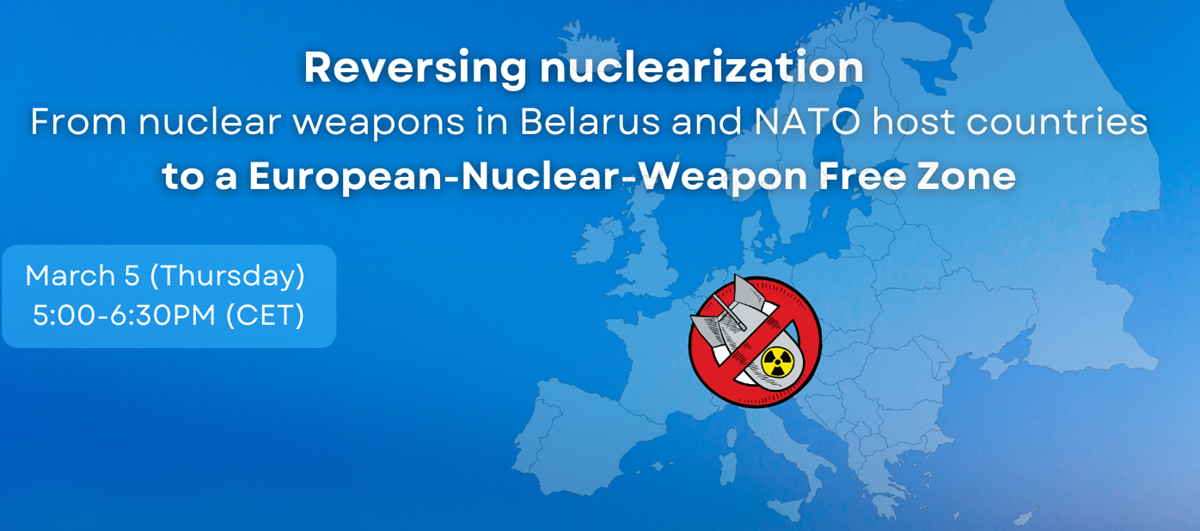
5 March -Online – Reversing nuclearization:
From nuclear weapons in Belarus and NATO host countries to a European-Nuclear-Weapon Free Zone
11am-12:30pm Eastern Time USA / 5pm-6:30pm CET

of the week – Advocating for a
nuclear free beach – https://www.samuellawrencefoundation.org/
The Samuel Lawrence Foundation advocates for a Nuclear Waste Free Beach at San Onofre, join us and take action!

10 March A LIVE WEBINAR THE REAL EFFECTS OF NUCLEAR POWER
What the Industry Isn’t Telling Us
1:00 PM Mountain, 2 pm Central, 3 pm Eastern. Live on the Keepers of the Water Facebook page

18 March Webinar @ 1 PM EST: An Assessment of SMR Projects: The Case of Canada
register for the zoom:
https://us02web.zoom.us/webinar/register/WN_o8BIIOUvQ2ONJR1nta65DQ#/registration

of the week – STOP SMALL MODULAR REACTORS IN CANADA
To see nuclear-related stories in greater depth and intensity – go to https://nuclearinformation.wordpress.com
-
Archives
- March 2026 (51)
- February 2026 (268)
- January 2026 (308)
- December 2025 (358)
- November 2025 (359)
- October 2025 (376)
- September 2025 (258)
- August 2025 (319)
- July 2025 (230)
- June 2025 (348)
- May 2025 (261)
- April 2025 (305)
-
Categories
- 1
- 1 NUCLEAR ISSUES
- business and costs
- climate change
- culture and arts
- ENERGY
- environment
- health
- history
- indigenous issues
- Legal
- marketing of nuclear
- media
- opposition to nuclear
- PERSONAL STORIES
- politics
- politics international
- Religion and ethics
- safety
- secrets,lies and civil liberties
- spinbuster
- technology
- Uranium
- wastes
- weapons and war
- Women
- 2 WORLD
- ACTION
- AFRICA
- Atrocities
- AUSTRALIA
- Christina's notes
- Christina's themes
- culture and arts
- Events
- Fuk 2022
- Fuk 2023
- Fukushima 2017
- Fukushima 2018
- fukushima 2019
- Fukushima 2020
- Fukushima 2021
- general
- global warming
- Humour (God we need it)
- Nuclear
- RARE EARTHS
- Reference
- resources – print
- Resources -audiovicual
- Weekly Newsletter
- World
- World Nuclear
- YouTube
-
RSS
Entries RSS
Comments RSS
 nuclear-news