USA’s Versatile Fast Neutron Source Nuclear Reactor plan could cost $10 billion
Plans for a controversial multibillion-dollar U.S. nuclear research reactor are coming together at lightning speed—much too fast, say some nuclear policy experts. With a push from Congress, the Department of Energy (DOE) has begun designing the Versatile Fast Neutron Source, which would be the first DOE-built reactor since the 1970s. It would generate high-energy neutrons for testing materials and fuels for so-called fast reactors. But U.S. utilities have no plans to deploy such reactors, which some nuclear proliferation analysts say pose a risk because they use plutonium, the stuff of atomic bombs.
Researchers are divided on whether the reactor, which would likely be built at Idaho National Laboratory (INL) near Idaho Falls, is badly needed or a boondoggle. “Definitely, there is a lack of capability in the U.S. and a shortage of such facilities worldwide,” says Massimiliano Fratoni, a nuclear engineer at the University of California, Berkeley. But Frank von Hippel, a nuclear physicist at Princeton University, says, “It’s a pork-barrel project.”
The reactor does enjoy extraordinary congressional support. In March, Congress gave the project $35 million for this year, although DOE only requested $10 million. The House of Representatives and the Senate have passed separate bills that call for completing the facility by 2025, with the House bill authorizing DOE to spend $2 billion. Von Hippel speculates that the cost could end up reaching $10 billion.
Rocketing costs add to concern that USA’s B61-12 nuclear gravity bombs might not be useful anyway

B-2 Flies First ‘End-To-End’ Tests With New Nuclear Bomb Amid Growing Cost Concerns
The B61-12 nuclear gravity bombs are set to enter service in 2020 and already cost nearly twice their literal weight in gold. The Drive, BY JOSEPH TREVITHICKJULY 2, 2018
The U.S. Air Force, in cooperation with the Department of Energy’s National Nuclear Security Administration, has completed the first end-to-end qualification flight tests of the new B61-12 nuclear gravity bomb on the B-2 bomber. This milestone comes amid continued concerns about the weapon’s cost, including the recent announcement that the Pentagon’s top internal watchdog has started its own audit of the program.
On June 29, 2018, the National Nuclear Security Administration, or NNSA, revealed the two successful test flights in an official press release. A B-2A Spirit stealth bomber from the Air Force’s 419th Test and Evaluation Squadron, situated at Edwards Air Force Base in California, had dropped the weapons, which did not carry live nuclear warheads, on the Tonopah Test…..
The full stockpile of approximately 400 bombs is supposed to be combat ready by 2025. The B-2A, along with various dual-purpose combat jets, such as the F-16C/D Viper and F-15E Strike Eagle, will be able to carry these weapons. The Air Force plans to integrate the B61-12 on the F-35A Joint Strike Fighter and B-21 Raider bomber in the future, too.
………. while the U.S. military insists that the B61-12 offers superior capabilities compared to the existing bombs and will allow it to consolidate its inventory of B61 bombs, the project has proven to be time-consuming and very costly. On June 28, 2018, a day before NNSA announced the successful test flights, the Department of Defense’s Office of Inspector General announced it was reviewing the price and management of the tail kit portion of the program.
Our objective is to determine whether the Air Force is developing the B61-12 Tail Kit Assembly within cost, schedule, and performance requirements,” the office said in an associated press release. “We will consider suggestions from management on additional or revised objectives.”
This is hardly the first time a U.S. government agency has taken a look into the program, either. In May 2018, the Government Accountability Office, a Congressional watchdog, released its own review of the project.
“GAO recommended in a January 2018 report that NNSA document and justify such decisions, in part because GAO’s prior work has shown that independent cost estimates historically are higher than programs’ cost estimates because the team conducting the independent estimate is more objective and less prone to accept optimistic assumptions,” the May 2018 report said. “In response to the January 2018 report, NNSA agreed to establish a protocol to document management decisions on significant variances between program and independent cost estimates, but it has not yet provided evidence that it has done so.”
Providing an accurate scope of the costs for both the bomb and the tail kit, which are managed and therefore budgeted for separately, has been a major source of controversy from the beginning. Just between 2011 and 2012, NNSA’s estimate of the program’s price tag grew from $4 billion to $10 billion, which did not include the cost of the tail kit and various other ancillary components.
This prompted criticism both within sectors of the U.S. government and among advocacy groups. In 2012, the non-profit Ploughshares Fund, among others, noted that this revised cost split among the 400 700-pound nuclear bombs meant that each one would literally be worth more than its weight in gold. At the current price of gold at the time of writing, each one of the B61-12s could actually be worth nearly twice as much per pound.
A significant increase in cost could magnify existing criticisms, as well as questions about whether or not B61s of any kind still have a place in the U.S. military’s over-arching nuclear modernization plans. The Nuclear Posture Review argues that the gravity bombs, despite their low-yield settings, do nothing to deter potential opponents, primarily Russia, from engaging in a limited nuclear confrontation.
Though this basic premise is highly debatable, under this logic, the utility of the gravity bombs becomes particularly questionable. The U.S. military has deemed the B-52H bomber too vulnerable to deliver nuclear gravity bombs in a future conflict and is rapidly approaching that conclusion, right or wrong, with regards to dual-use combat jets.
………… There is also a separate concern about whether the improved capabilities of the B61-12 will make it more “usable” and, in turn, increase the possibility of a nuclear conflict. It is always important to note that the United States does not have a “no first use” policy, which means it reserves the right to use nuclear weapons in retaliation for non-nuclear actions in certain circumstances, something we at the War Zone have explored in detail in the past. ………. Contact the author: jtrevithickpr@gmail.com http://www.thedrive.com/the-war-zone/21903/b-2-flies-first-end-to-end-tests-with-new-nuclear-bomb-amid-growing-cost-concerns
The 10 th #Thyroid Testing Evaluation Subcommittee live stream in 2 days (Japanese language only)

Image description: This slide shows a graph with age distribution of thyroid cancer patients in Ukraine and Fukushima in different post-accident time periods.
The 10 th #Thyroid Testing Evaluation Subcommittee live stream in 2 days (Japanese language only). Please share!

Scheduled for 8 Jul 2018
English information on the Japanese Thyroid increase;
Japanese government accepts United Nations Fukushima recommendations – current policies now must change to stop violation of evacuee human rights – https://nuclear-news.net/2018/03/14/japanese-government-accepts-united-nations-fukushima-recommendations-current-policies-now-must-change-to-stop-violation-of-evacuee-human-rights/
Fukushima Prefecture Announced More than 200 Malignant or Suspected Children Thyroid Cancer – https://nuclear-news.net/2018/06/22/fukushima-prefecture-announced-more-than-200-malignant-or-suspected-children-thyroid-cancer/
Clinicopathological Findings of Fukushima Thyroid Cancer Cases: October 2016 (Source of above image)– https://nuclear-news.net/2016/10/14/clinicopathological-findings-of-fukushima-thyroid-cancer-cases-october-2016/
Cancer patients in Queensland, Australia, benefit from nuclear medicine, safely produced at the hospital, with no need of a nuclear reactor
Cancer care in Queensland relies on nuclear medicine made in this concrete bunker http://www.abc.net.au/news/2018-07-03/nuclear-medicine-concrete-bunker-central-to-states-cancer-care/9920624 ABC Radio Brisbane By Hailey Renault
Staff at the Royal Brisbane and Women’s Hospital’s nuclear medicine department get to work in the morning around the same time as a baker starts serving up hot bread.
But instead of kneading dough and priming ovens, the labcoat-clad workers manufacture medicines that diagnose and treat cancer.
It’s a delicate operation with rigorous quality control and testing protocols that start deep in the bowels of the hospital behind several layers of thick concrete.
A vault with walls more than a metre thick houses a particle accelerator called a cyclotron.
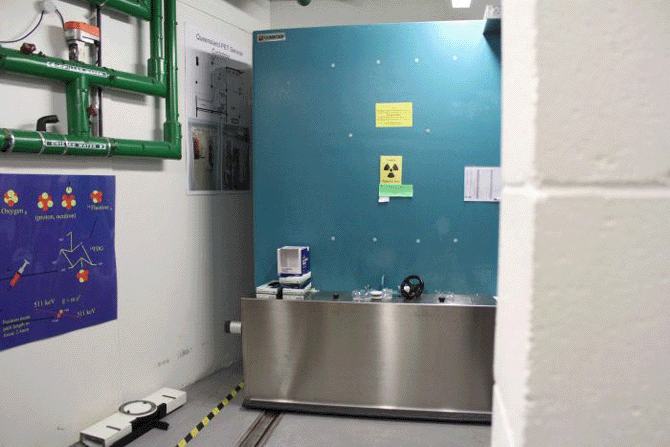
“It creates a proton beam which bombards oxygen-18 water and turns it into fluorine-18. That’s what we attach to those pharmaceuticals,” Dr Marissa Bartlett, manager of the Radiopharmaceutical Centre of Excellence, said.
The cyclotron is switched on at 4:00am every day to make a new batch of radiopharmaceuticals for lifesaving treatments and therapies.
“We make products that are taken up by cancer cells, so when a patient goes under the [PET] scanner the doctors can see pictures and images of where the cancer cells are,” Dr Bartlett told ABC Radio Brisbane’s Katherine Feeney.
“One of the therapies some patients who have cancer can have is a radionuclide therapy, which goes to the cancer cells and uses radiation to kill those cells.”
There’s no hazmat suits in sight — they’re not needed in a lab largely devoid of dangerous chemicals — but Dr Bartlett said lab workers were protected from radiation by a series of lead, lead-glass and concrete shields.
“When the cyclotron is on it generates very large amounts of radiation so it would be extremely dangerous to be anywhere near it when it’s on,” she said.
“In order to have it on campus we have it inside a concrete room. The walls of that room are thicker than I am tall.”
Medicines go direct to patients
Even though Dr Bartlett described the nuclear medicine department as an “obscure little branch” of hospital operations, many Queenslanders would come into contact with the radiopharmaceuticals it produced.
The Cancer Council of Queensland estimates nearly 27,000 people receive a cancer diagnosis each year.
“One of the things that makes this an amazing place to work is that you literally walk past the patients to get to the lab,” Dr Bartlett said.
“They might get news they really don’t want or maybe they’re coming back to see how their cancer is progressing or responding to treatment.
“We’re very aware of the patients who are lining up every day to get the products we make.”
And what happens to any radioactive materials that aren’t used?
“Everything we make has a very short half-life, so we basically store it until it decays away,” Dr Bartlett said.
“Then it’s completely cold and you wouldn’t know that it had been radioactive.”
Despite Donald Trump’s brash confidence, serious and delicate negotiations will be needed with North Korea

 Donald Trump is typically bullish about North Korea nuclear talks – but the hard work begins this week
Analysis: However confident Mr Trump is about nuclear talks with Pyongyang, the hard work is just beginning, The Independent, Chris Stevenson International Editor, 5 July 28, “……….In the lead-up to the unprecedented summit between Donald Trump and the North Korean leader in Singapore on 12 June – and in the weeks afterwards – the US president has sought to paint a picture of a problem solved. Indeed this week Mr Trump tweeted that talks were “going well,” and “All Asia is thrilled”.
Editorial. Restarting Tokai No. 2 nuclear plant would be a huge mistake
http://www.asahi.com/ajw/articles/AJ201807050026.html July 5, 2018
The Nuclear Regulation Authority has concluded that the Tokai No. 2 nuclear power plant in Ibaraki Prefecture, operated by Japan Atomic Power Co., meets improved safety standards for a restart.
The watchdog body’s decision effectively paves the way for bringing the idled facility back online.
But a slew of questions and concerns cast serious doubt on the wisdom of restarting this aging nuclear plant located at the northern tip of the Tokyo metropolitan area, given that it is approaching the end of its 40-year operational lifespan.
There is a compelling case against bringing the plant back on stream unless these concerns are properly addressed.
The first major question is how the project can be squared with the rules for reducing the risk of accidents at aging nuclear facilities.
The 40-year lifespan for nuclear reactors is an important rule to reduce the risk of accidents involving aging reactors that was introduced in the aftermath of the disaster at the Fukushima No. 1 nuclear power plant in 2011.
Although a reactor’s operational life can be extended by up to 20 years if approved by the NRA, the government, at the time of the revision to the law, said it would be granted only in exceptional cases.
Despite this caveat, Kansai Electric Power Co.’s applications for extensions for its three aging reactors all got the green light.
The NRA has yet to approve the requested extension of the Tokai No. 2 plant’s operational life. But it is obvious that the nuclear watchdog’s approval will cause further erosion of the rule. It will also undermine the regulatory regime to limit the lifespan of nuclear facilities per se.
Local communities have also raised objections to restarting the Tokai No. 2 plant. Some 960,000 people live within 30 kilometers of the plant, more than in any other 30-km emergency planning zone.
The local governments within the zone are struggling to develop legally required emergency evacuation plans to prepare for major accidents.
This spring, an agreement was reached between Japan Atomic Power and five municipalities around the plant, including Mito, that commits the operator to seek approval from local authorities within the 30-km zone before restarting the plant.
Winning support from the local communities for the plant reactivation plan is undoubtedly a colossal challenge, given strong anxiety about the facility’s safety among local residents. The gloomy situation was brought home by the Mito municipal assembly’s adoption of a written opinion opposing the plan.
But Japan Atomic Power is determined to carry through the plan as its survival depends on the plant continuing operation.
The company was set up simply to produce and sell electricity by using atomic energy. Its nuclear reactors are all currently offline, which has placed the entity in serious financial difficulty.
Since the company is unable to raise on its own funds to implement the necessary safety measures at the Tokai No. 2 plant, which are estimated to exceed 170 billion yen ($1.54 billion), Tokyo Electric Power Co. (TEPCO) and Tohoku Electric Power Co., which are both shareholders and customers of the company, will provide financial support.
But TEPCO has been put under effective state control to deal with the costly consequences of the Fukushima disaster.
It is highly doubtful that the utility, which is kept alive with massive tax-financed support, is qualified to take over the financial risk of the business of another company in trouble.
TEPCO claims the Tokai No. 2 plant is promising as a source of low-cost and stable power supply, although it has not offered convincing grounds for the claim.
Some members of the NRA have voiced skepticism about this view.
TEPCO and the Ministry of Economy, Trade and Industry, which supervises the power industry, have a responsibility to offer specific and detailed explanations about related issues to win broad public support for the plan to reactivate the Tokai No. 2 nuclear plant.
A hard look at the grim situation surrounding the plant leaves little doubt that restarting it does not make sense.
Japan Atomic Power and the major electric utilities that own it should undertake a fundamental review of the management of the nuclear power company without delaying efforts to tackle the problems besetting the operator of the Tokai No. 2 plant.
Fear over nuclear war runs high 50 years after nonproliferation treaty
http://thehill.com/opinion/international/395602-fear-over-nuclear-war-runs-high-50-years-after-nonproliferation-treaty BY GEORGE A. LOPEZ, OPINION CONTRIBUTOR — 07/05/18
Hitting 50 years of age can be a poignant moment for most individuals. For an international treaty, the half century mark would appear less angst generating, maybe even insignificant. Not so for the 50th anniversary of the Nuclear Nonproliferation Treaty of 1968 this month.
The rhetoric of the Singapore summit notwithstanding, the globe has witnessed in the dangerous escalatory rhetoric and nuclear saber rattling between North Korea and the United States a new awareness that fear and misperception increase the likelihood of accidental nuclear war. The U.S. withdrawal from the Iran nuclear deal and the plans announced by both Russia and the United States to spend billions of dollars to upgrade their respective nuclear arsenals in the coming years add to this.
These developments demand a midlife reconsideration of the spirit and letter of the law that has been the Nuclear Nonproliferation Treaty. It was designed as a three-legged stool to control the future spread of nuclear weapons and nuclear energy. The first leg stated that existing nuclear states would not transfer weapons or weapons grade materials to other states. Solidifying the stability of that pledge was that all non-nuclear states would neither obtain nor develop these weapons.
THIS DUAL PROMISE WAS TIED CLOSELY TO A SECOND LEG THAT NUCLEAR WEAPONS STATES WOULD MOVE TO DRAMATIC REDUCTIONS IN THEIR ARSENALS. CAREFULLY CRAFTED LANGUAGE STRUCTURED AMBIGUITY INTO THE TREATY REGARDING THE AIM OF THOSE NATIONS FOR “GOOD FAITH NEGOTIATIONS” TO PURSUE ARMS CONTROL AND ULTIMATELY COMPLETE NUCLEAR DISARMAMENT. THE THIRD LEG OF THE TREATY STATED THE RIGHT OF ALL STATES TO PURSUE NON-WEAPONS NUCLEAR ENERGY DEVELOPMENT IF THEY ABIDED BY THE SAFEGUARDS OF THE INTERNATIONAL ATOMIC ENERGY AGENCY AND OPENED THEIR FACILITIES TO INSPECTIONS.
DURING THE HEIGHT OF THE COLD WAR, AND THROUGH VARIOUS SERIOUS NUCLEAR CRISES, THE TREATY HAS CREATED AND SUSTAINED A REASONABLY SUCCESSFUL GLOBAL REGIME FOR MANAGING THE SPREAD OF NUCLEAR WEAPONS, INCLUDING DISSUADING MOST OF THE NEARLY TWO DOZEN STATES PREDICTED TO DEVELOP THEM FROM DOING SO. ONLY FOUR UNITED NATIONS MEMBER STATES HAVE NEVER SIGNED THE TREATY: INDIA, ISRAEL, PAKISTAN AND SOUTH SUDAN. THE FIRST THREE ARE ACKNOWLEDGED NUCLEAR WEAPON STATES, NOW JOINED BY NORTH KOREA, WHICH WITHDREW FROM THE TREATY IN ORDER TO FINALIZE ITS NUCLEAR AMBITIONS.
THE ENDURING RELEVANCE OF NUCLEAR NONPROLIFERATION TREATY CAN BE SEEN IN ITS UTILITY FOR THE TRANSFERENCE OF FORMER WEAPONS-FOCUSED URANIUM FROM THE FORMER SOVIET UNION INTO REACTOR FUEL THAT WAS SHIPPED TO THE UNITED STATES IN THE 1990S UNDER THE NUNN LUGAR COOPERATIVE THREAT REDUCTION PROGRAM. CONTINUED ADHERENCE TO THE TREATY IS A CRITICAL CONCERN AS THE WORLD WATCHES TEHRAN IN THE WAKE OF U.S. WITHDRAWAL FROM THE IRAN NUCLEAR DEAL, AND THE UNITED STATES ATTEMPTS TO GET NORTH KOREA TO DENUCLEARIZE.
BUT, AS OFTEN HAPPENS AT MIDLIFE, THE TREATY HAS BEEN SHAKEN BY CRITICISM ABOUT THE FAILURE TO ATTAIN ITS GOAL. ITS MOST OBVIOUS WEAKNESS HAS BEEN THAT THE FIVE AUTHORIZED NUCLEAR STATES, DESPITE MORE THAN 80 PERCENT REDUCTIONS DURING OVER THE YEARS, STILL WIELD 20,000 WARHEADS. MOREOVER, THOSE CUTBACKS WERE MORE RELATED TO IMPROVED RELATIONS BETWEEN RUSSIA AND THE UNITED STATES AFTER THE COLD WAR THAN TREATY ADHERENCE.
ONGOING DISGRUNTLEMENT AMONG ALMOST ALL OTHER NATIONS ABOUT THE STAGNATION IN WEAPONS DISARMAMENT LED DIRECTLY TO THE JULY 2017 PASSAGE BY 122 MEMBER STATES IN THE UNITED NATIONS GENERAL ASSEMBLY OF THE TREATY ON THE PROHIBITION OF NUCLEAR WEAPONS, NOW COMMONLY REFERRED TO AS THE NUCLEAR WEAPONS BAN TREATY. UNLIKE EARLIER ARMS CONTROL AGREEMENTS, THE BAN TREATY AIMS FOR THE COMPLETE ELIMINATION OF NUCLEAR WEAPONS IN ALL NATIONS. IT IS BEING HAILED IN MANY CAPITALS AS A “GAME CHANGER” IN GLOBAL MOMENTUM, MUCH LIKE THE TREATY OF 50 YEARS AGO.
BUT THE BAN TREATY QUICKLY FACED SIGNIFICANT CONDEMNATION FROM THE NUCLEAR POWERS AND THEIR ALLIES PROTECTED BY THEIR “NUCLEAR UMBRELLA.” IN SEPTEMBER 2017, THE NATO MINISTERS WERE CLEAR WHEN THEY STATED, “THE BAN TREATY IS AT ODDS WITH THE EXISTING NONPROLIFERATION AND DISARMAMENT ARCHITECTURE.” THEY SAID IT RISKS UNDERMINING THE ORIGINAL TREATY, WHICH HAS BEEN AT THE “HEART OF GLOBAL NONPROLIFERATION AND DISARMAMENT EFFORTS FOR ALMOST 50 YEARS.” THE BAN TREATY, IN THEIR VIEW, “DISREGARDS THE REALITIES OF THE INCREASINGLY CHALLENGING INTERNATIONAL SECURITY ENVIRONMENT.”
THE SUPPORT FOR NATO FROM OTHER MEMBERS OF THE NUCLEAR CLUB WAS PRONOUNCED. DESPITE THEIR SIGNIFICANT DIFFERENCES ON VIRTUALLY ALL CONTEMPORARY POLITICAL AND SECURITY MATTERS, RUSSIA AND CHINA HAVE AGREED WITH THE UNITED STATES AND NATO ON REJECTION OF THE BAN TREATY. THIS AFFIRMATION IS EVEN MORE STRIKING AS THE UNITED STATES AND RUSSIA TRADE BARBS OVER ALLEGED VIOLATIONS OF THE INTERMEDIATE RANGE NUCLEAR FORCES TREATY OF 1987. EMPOWERED WITH THE NEW MODEL FOR GLOBAL SECURITY THAT THE BAN TREATY ARTICULATES, HOWEVER, DOZENS OF NATIONS APPEAR UNDETERRED AND ARE CITING THE NEW COLD WAR, NORTH KOREA AND IRAN TO SUPPORT THEIR EFFORTS.
HEREIN LIES THE CHALLENGE TO THE ARMS CONTROL APPROACH THAT THE NUCLEAR NONPROLIFERATION TREATY HAS CHAMPIONED. FIVE DECADES AFTER ITS CREATION, THE PROBLEMS THE IT WAS MEANT TO ADDRESS EXIST IN MORE COMPLEX FORM AND FACE AN EVEN MORE PRESSING SET OF RELATED CHALLENGES. THESE KEEP NUCLEAR DISARMAMENT AND THE CAPACITY OF THE ORIGINAL TREATY TO ACHIEVE IT THROUGH ARMS CONTROL AND REDUCTIONS HIGH ON THE GLOBAL AGENDA.
GEORGE A. LOPEZ IS THE HESBURGH PROFESSOR EMERITUS AT THE KROC INSTITUTE FOR INTERNATIONAL PEACE STUDIES AT THE UNIVERSITY OF NOTRE DAME. HE SERVED ON THE UNITED NATIONS SECURITY COUNCIL PANEL OF EXPERTS FOR NORTH KOREA SANCTIONS AND WAS VICE PRESIDENT AT THE UNITED STATES INSTITUTE OF PEACE
Russia and China to co-operate in nuclear power build
Russia to build two new nuclear power units in China, 5 July 18
President Vladimir Putin mentioned that energy is the most important sector of cooperation, in a meeting with Chinese President Xi Jinping in the previous month. Moneycontrol News@moneycontrolcom Moscow and Beijing may sign agreements to build additional two power units of 1,200-Megawatt units in China by 2026 and 2027, as per reports by Russia’s state nuclear power corporation Rosatom.……. As reported by RT, the two countries are also working together on One Belt, One Road initiative. At this rate of growth, the trade between the two countries is expected to reach the target of $100 billion. https://www.moneycontrol.com/news/business/russia-to-build-two-new-nuclear-power-units-in-china-2674481.html
Japan nuclear agency urges measures to cut plutonium stocks
http://www.sandiegouniontribune.com/business/sns-bc-as–japan-nuclear-20180705-story.html MARI YAMAGUCHIAssociated Press
The annual “nuclear white paper” approved by the Atomic Energy Commission is an apparent response to intensifying pressure from Washington as it pursues denuclearization in North Korea. It says Japan’s fuel recycling program should continue, but minimize the amount of plutonium extracted from spent fuel for reuse in power generation to eventually reduce the stockpile.
Japan has pledged to not possess plutonium that does not have a planned use, but the promise increasingly sounds empty because of the slow restarts of Japanese power-generating reactors that can burn plutonium amid setbacks from the 2011 Fukushima disaster.
Though Japanese officials deny any possible misuse of the material and reprocessing technology, the large stockpile of plutonium that can make atomic bombs also raises security concerns as the U.S. wants North Korea to get rid of its nuclear weapons.
Commission chairman Yoshiaki Oka said the effort to tackle the stockpile is Japan’s own initiative underscoring its commitment to a peaceful nuclear program, and not because of the U.S. Oka said he was not aware of any outstanding problem between the two countries over the plutonium issue, but that Japan is taking into consideration the importance of maintaining “relationship of trust with the U.S.”
The commission is compiling guidelines to better manage and reduce the plutonium stockpile. Measures would include some government oversight in setting a cap on plutonium reprocessing and a study into how to steadily reduce the plutonium processed abroad.
Oka declined to cite a numerical target, but he said reducing the stockpile is a “must.”
Japan has nearly 47 tons of plutonium — 10 tons at home and the rest in France and Britain, where spent fuel from Japanese nuclear plants has been reprocessed because Japan is not able to reprocess it into plutonium-based MOX fuel at home.
The amount is enough to make 6,000 atomic bombs, but at Japan’s Rokkasho reprocessing plant denies any risk of proliferation, citing its safeguards and close monitoring by the International Atomic Energy Agency .
After years of delay due to technical issues, the Rokkasho plant is in the final stages of safety approvals by the regulators ahead of its planned launch in 2021. Critics, however, say that starting up the plant only adds to the stockpile.
The plant at full capacity can annually produce 8 tons of plutonium, and burning that would require 16-18 reactors — a long shot given the slow pace of restarts and public resistance. Japanese utility operators are also opting to decommission aged reactors rather than making costly safety upgrades to meet the post-Fukushima standards.
Only four reactors have restarted since the Fukushima crisis, using stricter safety requirements and despite resistance of neighbors.
Another setback for Japan’s plutonium balance is a failure of Monju, a plutonium-burning reactor built as the centerpiece of Japan’s fuel recycling program. Monju had been suspended after a major accident in 1995 and is now being scrapped.
Follow Mari Yamaguchi on Twitter at www.twitter.com/mariyamaguchi
Find her work at https://www.apnews.com/search/mari%20yamaguchi
Members of U.S. Congress to tour Yucca Mountain nuclear site
Reno Gazette Journal LAS VEGAS — Members of Congress are set to tour next week the site of a dormant nuclear waste dump at Nevada’s Yucca Mountain as they aim to restart a licensing process and eventually store nuclear waste there.
Japan’s new Basic Energy Plan favours nuclear energy, but also commits to solar and wind power
Nuclear reactor restarts likely as Cabinet OKs new energy plan http://www.asahi.com/ajw/articles/AJ201807030061.html, By SHINICHI SEKINE/ Staff Writer, July 3, 2018
A new wave of nuclear reactor restarts became more likely as the government approved the new Basic Energy Plan on July 3, confirming that nuclear power will remain a key component of Japan’s energy strategy.
But by rubber-stamping the plan, the government also strengthened its commitment to giving renewables such as solar and wind power a major role in energy generation.
The latest Basic Energy Plan, which charts the nation’s mid- and long-term energy policy, marks the fifth in a series that is required by law to be reviewed about every three years.
The second plan to be revised under the administration of Prime Minister Shinzo Abe stated for the first time that the country will strive to make renewable energy a major power source, although it noted fluctuations in output due to weather conditions.
Renewables can become a viable source of a stable power supply when they are combined with rechargeable batteries and hydrogen, according to the plan.
The plan also maintained the reliance on coal-fired thermal power as a base-load energy source despite high emissions of carbon dioxide.
The Abe administration decided to promote nuclear energy when it revised the plan in 2014, reversing the policy of the previous government led by the then-Democratic Party of Japan, which pledged to phase out nuclear power by 2039 in the face of mounting public concern over the safety of nuclear power following the 2011 Fukushima nuclear disaster.
Under the latest plan, the ratio of nuclear energy, renewables and coal thermal power in the nation’s overall energy as of fiscal 2030 will remain at 20-22 percent, 22-24 percent and 26 percent, respectively, in line with the government’s target set three years ago.
Experts say about 30 reactors need to be reactivated to achieve the 20-22 percent target, but only nine have gone back on line so far after they cleared the more stringent reactor regulations that took effect after the Fukushima accident.
The plan did not touch on the need for building a new nuclear plant in light of the widespread public opinion against nuclear energy. The last Basic Energy Plan did not mention the subject, either.
The latest plan re-endorsed using the nuclear fuel cycle, in which plutonium extracted from spent nuclear fuel at nuclear plants is used to generate power.
But the plan, noting calls from the United States, said that Japan “will make efforts to cut the stockpile of plutonium.”
Japan holds a total of 47 tons of plutonium, equivalent to 6,000 Nagasaki-type atomic bombs, a source of criticism from the United States and other countries.
The country has failed to reduce its plutonium stockpile due to little progress in the nuclear fuel cycle over decades.
The project to operate the Monju prototype fast-breeder reactor in Fukui Prefecture, the core part of the nuclear fuel cycle, rarely worked over 20 years due to numerous glitches. The government finally decided to pull the plug on it in 2016.
Burning a mixed oxide form of plutonium and uranium has not spread among conventional nuclear reactors, although it was considered a way to reduce the plutonium stockpile.
In its attempts to export nuclear plants, the country has hit major problems wherever it has pitched them.
But the government will maintain the export policy as a key component of the administration’s strategy for expanding the Japanese economy.
According to the Basic Energy Plan, “Japan is determined to make a positive contribution to enhancing the safety of nuclear energy and the peaceful use of nuclear energy” through exports of nuclear plants.
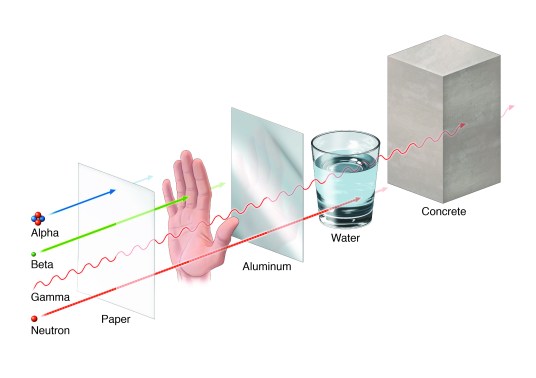
Nuclear Waste Fuel can be Lethal within a Minute!
Source:
Allan Hedin
“Spent nuclear fuel – how dangerous is it? A report from the project “Description of risk’ ”
SKB Report – Technical Report TR-97-13 (March 1997)
On page 21 of this report at para 3.5.2: the following two figures are provided:
1) the lethal dose is given as 5,000 ‘milli-Sieverts’ [1]
2) a dose rate of one million ‘milli-Sieverts’ per hour is quoted
(one year after one tonne of waste fuel has been taken out of a reactor – when standing at one metre distance from the waste fuel rod)
From these two figures it is then calculated [2] that:
To stand one metre from:
- one tonne of waste fuel,
- one year after its removal from the reactor
– would kill you in twenty seconds.
On page 23 of the NDA ‘Disposability’ report for Westinghouse ‘AP1000’ [3] type fuel [4], a weight of approximately 600 kilograms per ‘AP1000’ fuel assembly is quoted. (see Table B4)
The figure quoted for the weight of an ‘EPR’ [5] fuel assembly is also roughly 600 kilograms. [6] ( See page 29 – Table B9)
Therefore:
- One fuel assembly of either ‘AP1000’ or ‘EPR’ type fuel weighs roughly half a tonne.
- This means that standing next to one of either of these fuel assemblies could kill you in about a minute.[7]
Dr Rachel E J Western BA(Oxon) PhD MRSC
16th March 2018
[1] milli = one thousandth – (for defintion of ‘Sievert’ see ‘Technical section at the start of this document )
[2] (by reference to Figures 3-8a and b ( See pp 22- 23 )
[3] ‘AP’ – Advanced Passive
[4] “Geological Disposal Generic Design Assessment: Summary of Disposability Assessment for Wastesand Spent Fuel arising from Operation of the Westinghouse AP1000 ”
NDA ( Oct ’09 )
[5] ‘EPR’ – European Pressurised Reactor
[6] “Geological Disposal Generic Design Assessment: Summary of Disposability Assessment for Wastes and Spent Fuel arising from Operation of the UK EPR”
NDA Technical Note no. 11261814
NDA – October 2009
[7] assuming that the waste fuel had been removed from the reactor one year earlier and that you were standing one metre away.
Belgium Starts Giving Out Free Iodine Pills in Case of Nuclear Disaster
 https://sputniknews.com/europe/201803061062271532-biligum-iodine-pills-nuclear-emergency/ BRUSSELS (Sputnik) 4 July 18 – Free distribution of iodine tablets has started in Belgium as a precautionary measure in the event of a nuclear catastrophe, the Belgian Pharmaceutical Association told Sputnik on Tuesday.
Starting from Tuesday, every Belgian citizen can come to a pharmacy and get free iodine pills, the association said. This move is part of the government’s nuclear safety policy.
Before March 6, only those living within 20 kilometers (12 miles) from nuclear sites were entitled to receive the medication free of charge, while now the area of distribution has been increased to 100 kilometers (62 miles).
Belgium has two nuclear plants, Tihange and Doel, with a total number of seven reactors. Only in 2017, there were seven incidents at the facilities.
Belgium’s neighbors, Germany and the Netherlands, are concerned over the safety of the kingdom’s ageing nuclear reactors.
In 2016, Germany requested Belgium to shut down its two reactors because of defects found in their pressure vessels, but the kingdom refused. In September 2017, citizens of Aachen, a western German city located 70 kilometers (43 miles) away from the Belgian Tihange, started getting free iodine tablets.
In 2016, the Netherlands started distributing the pills to people who lived within a 100-kilometre (62-mile) radius of the neighboring Dutch Borsselle and Belgian Doel plants.
Belgian Nuclear Plant Test Reveals ‘Abnormal’ Findings, Raises Safety Concerns
https://sputniknews.com/europe/201807051066069197-belgium-reactor-shutdown/ People who live near the Tihange nuclear power plant in Belgium’s Wallonia region have serious concerns about the safety of the station which has experienced several shutdowns in recent years.
The station’s operator, Engie-Electrabe, found “instability” in the reinforced concrete ceiling of the reactor’s armored bunker during a planned check that started on March 30, the newspaper Soir reported on Thursday.
According to the newspaper, company specialists also determined that the “anomalies” in the reinforced concrete had been there since the time the bunker was built.
They fear that the defect may potentially weaken the structural strength of the unit.
Soir said that the reactors of the Doel nuclear power plant in Flanders have not been affected as they have different architecture.
Belgium’s nuclear safety agency (AFCN) said that the Tihange reactor will not be restarted before the bunker has been pronounced safe.
According to a preliminary estimate, this may not happen before September, the newspaper wrote.
The Tihange plant is located just 60 kilometers (37 miles) from the country’s border with Germany and the Netherlands, while the Doel plant is located near the Belgian port city of Antwerp, next to the Dutch border.
About half of Belgium’s power is supplied by nuclear energy from the country’s seven operating reactors, three at Tihange and four at Doel.
July 17 Public meeting on Oyster Creek nuclear plant decommissioning

 Public meeting on Oyster Creek nuclear plant decommissioning https://www.pressofatlanticcity.com/news/breaking/public-meeting-on-oyster-creek-nuclear-plant-decommissioning/article_e5c06b4b-7a88-59c1-8847-a40532e51939.html, MICHELLE BRUNETTI POST Staff Writer
1 This Month


Tell the Ukrainian Government to Drop Prosecution of Peace Activist Yurii Sheliazhenko

Petition to revoke the licensing of the Near Surface Nuclear Disposal Facility (NSDF) at Chalk River. https://www.ourcommons.ca/petitions/en/Petition/Details?Petition=e-7247


of the week – STOP SMALL MODULAR REACTORS IN CANADA
To see nuclear-related stories in greater depth and intensity – go to https://nuclearinformation.wordpress.com
-
Archives
- March 2026 (204)
- February 2026 (268)
- January 2026 (308)
- December 2025 (358)
- November 2025 (359)
- October 2025 (376)
- September 2025 (258)
- August 2025 (319)
- July 2025 (230)
- June 2025 (348)
- May 2025 (261)
- April 2025 (305)
-
Categories
- 1
- 1 NUCLEAR ISSUES
- business and costs
- climate change
- culture and arts
- ENERGY
- environment
- health
- history
- indigenous issues
- Legal
- marketing of nuclear
- media
- opposition to nuclear
- PERSONAL STORIES
- politics
- politics international
- Religion and ethics
- safety
- secrets,lies and civil liberties
- spinbuster
- technology
- Uranium
- wastes
- weapons and war
- Women
- 2 WORLD
- ACTION
- AFRICA
- Atrocities
- AUSTRALIA
- Christina's notes
- Christina's themes
- culture and arts
- Events
- Fuk 2022
- Fuk 2023
- Fukushima 2017
- Fukushima 2018
- fukushima 2019
- Fukushima 2020
- Fukushima 2021
- general
- global warming
- Humour (God we need it)
- Nuclear
- RARE EARTHS
- Reference
- resources – print
- Resources -audiovicual
- Weekly Newsletter
- World
- World Nuclear
- YouTube
-
RSS
Entries RSS
Comments RSS
 nuclear-news