A serious backward step for Iranian reform, if Trump destroys the nuclear deal
 If Trump destroys the nuclear deal, Iran will fall to its hardliners https://www.theguardian.com/commentisfree/2018/may/03/trump-nuclear-deal-iran-reform-netanyahu-tehran
Encouraged by Netanyahu, the US could soon withdraw from the agreement – which would spell the end of hopes for reform
Benjamin Netanyahu’s amateurish PowerPoint presentation in Tel Aviv this week – “Iran lied” flashed up behind him in huge letters – was in fairness a great improvement on the cartoonish diagram of an atomic bomb the Israeli prime minister held up at the UN general assembly in September 2012. But it served much the same purpose: to show that Iran can’t be trusted, and is poised to unleash nuclear havoc across the region. The “half-ton cache” of documents he presented as evidence that Iran hid a weapons programme predates the 2015 nuclear deal. John Kerry, one of its architects, tweeted that it represented “every reason the world came together to apply years of sanctions and negotiate the Iran nuclear agreement – because the threat was real and had to be stopped. It’s working!”
This is why, together with Kerry, European powers led by France, Germany and Britain made substantial efforts to push back against Netanyahu’s performance. In contrast, Mike Pompeo, Trump’s secretary of state, lauded it. In the words of Stephen Walt, a professor of international affairs at Harvard, “the Bush administration was better at inventing a phoney case for war with Iraq than the Trump team is at conjuring up a phoney case for war with Iran. But doesn’t mean they won’t eventually succeed.”
Arguably, if anyone has the right to complain, it is Iran. It has unplugged two-thirds of its centrifuges and shipped out 98% of its enriched uranium, but has not seen the economic benefits it was promised. Nearly three years on, not a single tier-one European bank is prepared to do business with Iran. The country’s currency crisis last month showed the extent of its economic vulnerability. Trump’s controversial Muslim travel ban has targeted Iranians and hampered the growth of tourism.
Perhaps more importantly, the collapse of the deal would be seen by the Iranian people as a huge betrayal. In 2013, Iranians brought the era of Holocaust-denier Mahmoud Ahmadinejad (despised at home after a fraudulent re-election in 2009), to a close. They put their trust in the reform-minded Hassan Rouhani, who subsequently fulfilled his promise to them of resolving the nuclear dispute with the west. Iran’s tech-savvy young people are by and large more progressive than previous generations. Last year, 24 million Iranians re-elected Rouhani by a landslide in an endorsement of his work on the deal. Yet just as the agreement is beginning to deliver, and with Iran fully complying, a new US administration seems set on scuppering it.
Of course, the fact that Iran is fulfilling its nuclear obligations does not mean it has been a good actor elsewhere. But the agreement was not supposed to address Iran’s regional behaviour or its missile programme, and should not be junked on this basis. In Syria, Iran is arguably making its biggest foreign policy mistake since the revolution. It has long defined its foreign policy as defending the oppressed, but for the first time it is clearly supporting the oppressor.
Even with Syria, however, the situation isn’t entirely straighforward. Vali Nasr, dean of the Johns Hopkins School of Advanced International Studies in Washington DC, argued in an essay in the latest issue of the Foreign Affairs that Tehran’s role in Syria could be understood as a form of “forward defence”, a way to survive the collapse of the old order in the Arab world following the US invasion of Iraq and widespread civil unrest. Washington’s efforts to roll back Iranian influence, he says, have failed to restore that order and may inadvertently have made Iran – worried that it has been outgunned by its traditional rivals – bolder: “The more menacing the Arab world looks, the more determined Iran is to stay involved there.”
The chances of a military conflict with Iran are not high for the moment, so long as Tehran has Russia’s backing. But the collapse of the deal would, even so, have terrible consequences. It would destroy the moderates and reformists in Iran for the foreseeable future. This is particularly important since the supreme leader, Ayatollah Ali Khamenei, is 78, and there has been speculation over his health. The time may soon come when a successor takes his place – the biggest political change in decades. Rouhani has already been under intense pressure from his opponents. The failure of the deal will only embolden hardliners, who are resposible for outrageous human rights abuses, such as the ongoing detention of dual nationals like Nazanin Zaghari-Ratcliffe.
While the reformist president Mohammad Khatami was in office, George W Bush undermined him and shattered Iranians’ hopes of rapprochement by labelling the country part of the “axis of evil”. Trump could be about to make exactly the same mistake with Rouhani.
2 Comments »
Leave a reply to Christina MacPherson Cancel reply
1 This Month
To see nuclear-related stories in greater depth and intensity – go to https://nuclearinformation.wordpress.com/
12 February – Webinar The Big Push: New Nuclear Projects in Canada
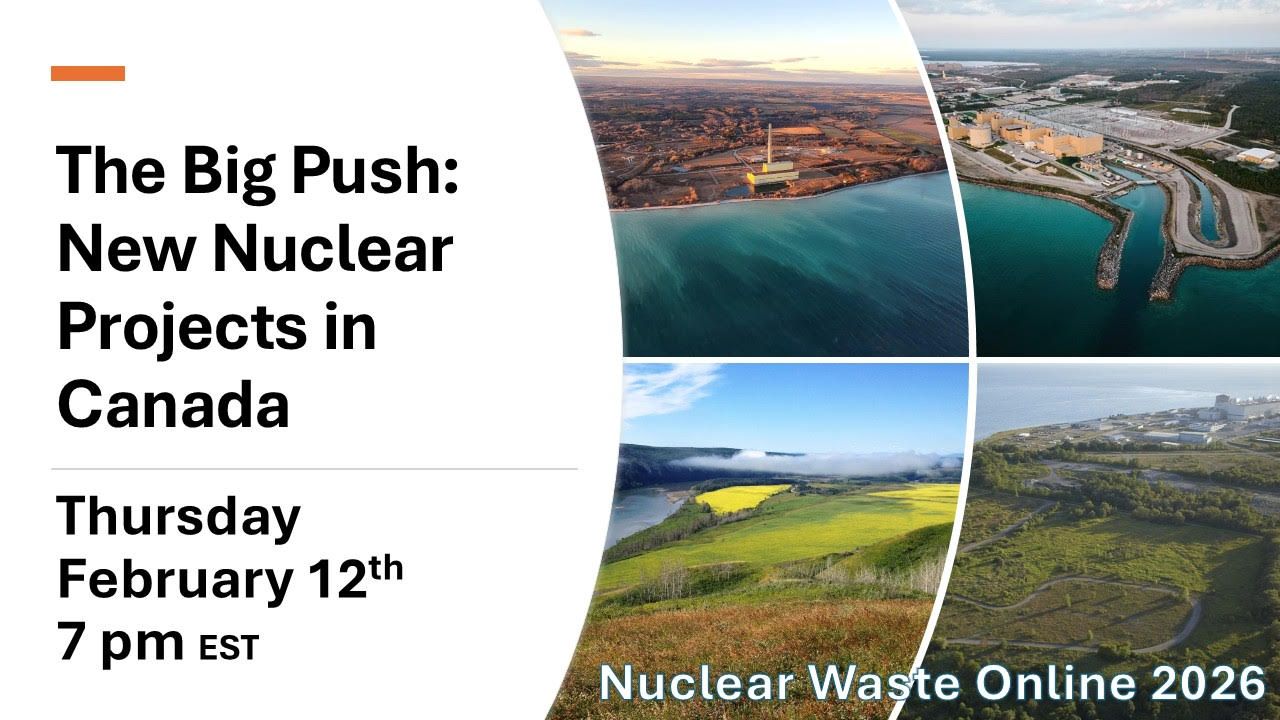
Thursday, February 12, 7 pm Eastern | 2nd of 4 sessions in the 2026 Nuclear Waste Online webinar series
Join a webinar on the push for new nuclear generation in Canada. Go to Northwatch.org to register or use the registration link https://us02web.zoom.us/webinar/register/WN_ZfWOf1GITqSRIZX8CB-A9w
-
Archives
- February 2026 (115)
- January 2026 (308)
- December 2025 (358)
- November 2025 (359)
- October 2025 (376)
- September 2025 (258)
- August 2025 (319)
- July 2025 (230)
- June 2025 (348)
- May 2025 (261)
- April 2025 (305)
- March 2025 (319)
-
Categories
- 1
- 1 NUCLEAR ISSUES
- business and costs
- climate change
- culture and arts
- ENERGY
- environment
- health
- history
- indigenous issues
- Legal
- marketing of nuclear
- media
- opposition to nuclear
- PERSONAL STORIES
- politics
- politics international
- Religion and ethics
- safety
- secrets,lies and civil liberties
- spinbuster
- technology
- Uranium
- wastes
- weapons and war
- Women
- 2 WORLD
- ACTION
- AFRICA
- Atrocities
- AUSTRALIA
- Christina's notes
- Christina's themes
- culture and arts
- Events
- Fuk 2022
- Fuk 2023
- Fukushima 2017
- Fukushima 2018
- fukushima 2019
- Fukushima 2020
- Fukushima 2021
- general
- global warming
- Humour (God we need it)
- Nuclear
- RARE EARTHS
- Reference
- resources – print
- Resources -audiovicual
- Weekly Newsletter
- World
- World Nuclear
- YouTube
-
RSS
Entries RSS
Comments RSS
 nuclear-news
What a load of baloney. Iran has been lying and Netanyahu brought it to light. I think you’re the uninformed one here.
>
Those lies were well known before. The point is that Iran has been sticking to the deal as agreed upon.