While the SSM said the nuclear fuel and waste management company SKB should be allowed to go ahead with the plan, which may take 10 years to complete, the Land and Environmental court said it was not certain of the proposed repository’s safety.
“There is still uncertainty about the ability of the capsule to contain the nuclear waste in the long term,” the court said, adding that further documentation was required.
The final decision to approve or reject the facility, designed to store up to 12,000 tonnes of spent fuel from Sweden’s nuclear plants, will be in the government’s hands.
In a statement to Reuters, Environment and Energy Minister Karolina Skog said no decision would be made this year.
SKB, controlled by Sweden’s nuclear plant operators, applied in March 2011 to build the repository at Forsmark in southwest Sweden.
Eva Hallden, SKB’s director, said the firm would produce additional documentation, which it was confident would allay the safety concerns of the environmental court.
Sweden currently stores its spent nuclear fuel in an interim facility near the Oskarshamn nuclear plant. Editing by Kevin Liffey
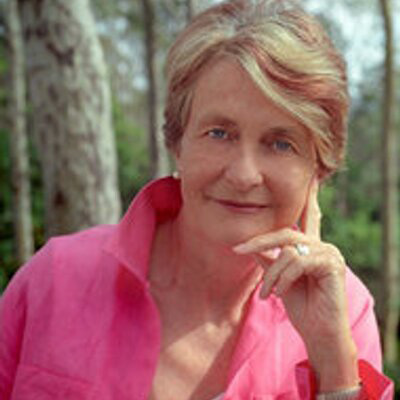
Helen Caldicott on Our Denial of the Threat of Nuclear Armageddonhttp://www.truth-out.org/progressivepicks/item/42494-helen-caldicott-on-our-denial-of-the-threat-of-nuclear-armageddon November 05, 2017 By Mark Karlin, Truthout | Interview Since the corporate media give short shrift to the peril of nuclear weapons, most world residents are unaware of how close we are to nuclear annihilation. So argues advocate and physician Dr. Helen Caldicott, editor of Sleepwalking to Armageddon: The Threat of Nuclear Annihilation, in this interview with Truthout. Mark Karlin: Despite Donald Trump’s insinuation that he might launch a first-strike nuclear attack on North Korea, the anti-nuclear weapons movement is still relatively quiescent. Do you have thoughts as to why most people on the Earth are “sleepwalking to Armageddon”? Helen Caldicott: Yes. It’s because the US media has totally failed in its duty to educate and inform the American people about the current state of world affairs, including the current US plans for a winnable nuclear war and the huge nuclear arsenals still being maintained by Russia and America. As Thomas Jefferson said so long ago, “An informed democracy will behave in a responsible fashion.” Of the 16,400 nuclear bombs in the world, Russia and the US own 94 percent — only they can destroy most life on Earth, so in reality, these two nations are today’s real terrorists.
Do you think the fact that the 2017 Nobel Peace Prize was awarded to the International Campaign to Abolish Nuclear Weapons will bring the issue more to the forefront?
No I don’t. However, their strategy is wise and relatively subliminal. Already, 122 nations have committed to the pledge of nuclear abolition. This massive support will no doubt place pressure upon the NATO countries that harbor US tactical nuclear weapons — the Netherlands, Turkey, Germany, Italy and Belgium — to forgo these commitments. This, then, will place further pressure upon other nuclear armed nations to abolish their nuclear stocks, including India, Pakistan, France, Britain, China, North Korea and Israel. Only then will international condemnation be so great that Russia and the US will be forced to contemplate abandoning their nuclear arsenals once and for all. Whether we have time before all hell breaks loose, nobody knows.
You state that the United States will spend $1 trillion over the next 30 years modernizing its nuclear arsenal. What exactly does that mean?
It means exactly that. In order for the New Strategic Arms Reduction Treaty (New START) to pass the Senate, Obama promised then-Senator Jon Kyl that he would authorize the spending of $1 trillion over the next 30 years to replace every single nuclear weapon, missile, aircraft carrier, submarine, ship and plane.
How are corporations stirring the pot of militarizing international relations? Clearly, the military corporations have huge influence upon the House and Senate by funding the campaigns of the representatives, so in effect, most Congress people and senators … in a fundamental sense do not represent the health, well-being and lives of their constituents.
You comment that “an order to launch [nuclear weapons] in US missile silos is the length of a tweet.” How long does it take to launch a nuclear weapon?
Three minutes once the presidential order has been received. This is why the men in the missile silos are called Minutemen. [As described by former Minuteman ICBM launch control officer Bruce Blair here.]
What are some of the promising forms of resistance to nuclear weapons that are taking shape?
There are young people in many countries involved in the UN ban treaty; however, I see very little awareness in the general public about the fact that we are closer to nuclear war than we have ever been, and this according to former Secretary of Defense William Perry, retired Gen. James Cartwright and others highly knowledgeable and experienced in this area. Most people are in fact practicing psychic numbing and denial.
HACKING NUCLEAR SYSTEMS IS THE ULTIMATE CYBER THREAT. ARE WE PREPARED? The VergeNightmare scenario By Sean Lyngaas
“………The stakes are high for this multibillion-dollar sector: a cyberattack combined with a physical one could, in theory, lead to the release of radiation or the theft of fissile material. However remote the possibility, the nuclear industry doesn’t have the luxury of banking on probabilities. And even a minor attack on a plant’s IT systems could further erode public confidence in nuclear power. It is this cruelly small room for error that motivates some in the industry to imagine what, until fairly recently, was unimaginable.
he Nuclear Threat Initiative, a Washington-based nonprofit co-founded by Ted Turner, has tallied about two-dozen cyber incidents since 1990, at least 11 of which were malicious. Those include a December 2014 attack in which suspected North Korean hackers stole blueprints for South Korean nuclear reactors and estimates of radiation exposure to local residents. The affected power company, which provides 30 percent of the country’s electricity, responded by carrying out cyber drills at plants around the country.
In another attack, hackers posing as a Japanese university student sent malicious emails to researchers at the University of Toyama Hydrogen Isotope Research Center, one of the world’s top research sites on the radioactive isotope that makes a hydrogen bomb. From November 2015 to June 2016, the hackers stole over 59,000 files, according to media reports, including research on the ill-fated Fukushima nuclear plant.
Any list of cyber incidents in the nuclear sector, however, is very likely incomplete. The US Nuclear Regulatory Commission, for example, only requires operators to report to the commission cyber incidents that affect the safety, security functions, or emergency preparedness of the plant, excluding potentially significant attacks on IT systems. It is, in general, extremely difficult for a hacker to breach a plant’s inner control systems implicated in the former category, but not nearly as challenging to penetrate the non-critical IT networks included in the latter……..
One of the first known cyber incidents at a nuclear plant took place in 1992 when rogue programmer Oleg Savchuk deliberately infected the computer system of a plant in Lithuania with a virus. Savchuk was arrested and became a precautionary footnote in the history of nuclear security. It would take a set of much more seismic events to illuminate the danger of cyber threats to nuclear operators.
In March 2007, with US energy regulators looking on, engineers at the Idaho National Lab showed how 21 lines of computer code could cripple a huge generator, as journalist Kim Zetter writes in her book. It was only through this jaw-dropping experiment, known as Aurora, that some energy industry officials came to accept that digital tools are capable of physical destruction………
While safety and security are paramount at nuclear plants, business considerations also come into play as many plants, including the vast majority of the 61 in the US, are privately owned. The financial and reputational damage that a successful cyberattack could wreak has led some executives to walk through them in advance…….. https://www.theverge.com/2018/1/23/16920062/hacking-nuclear-systems-cyberattack
NASA Pushes for Nuclear-Powered Space Missions, Scientific American, 24 Jan 18,
The space agency’s Kilopower project could end a half-century hiatus for U.S. reactors in space, By Harrison Tasoff, SPACE.com on January 23, 2018 “…….
Unlike previous technologies, the Kilopower reactor is simple, inexpensive and relies on fuels and technologies that are already well understood, NASA officials said. It uses active nuclear fission, like a conventional nuclear reactor, which will enable it to harvest far more energy from its uranium alloy core than an RTG could…………
In 2012, Los Alamos National Laboratory and NASA’s Glenn Research Center in Ohio conducted a successful proof-of-concept test of the reactor, and NASA gave them the go-ahead to continue development and testing at the Nevada National Security Site. Right now, the team is conducting component testing to determine the reactivity-worth of each of the reactor’s parts, namely how they react to the neutron radiation generated by the fission reaction. This phase of testing should be completed this week, according to officials at the conference. Then the project will progress to cold-critical testing, which will test the reactor’s components, this time with the enriched uranium fuel core inside, officials said at the conference. Full power testing is scheduled to begin in mid-March.
NASA’s interest in sending astronauts to Mars has provided the primary impetus behind the Kilopower project: The power demands for a human mission to Mars will be far greater than the requirements for previous robotic missions…..
Controversial Pacific trade pact revived, Perth Now, Lisa Martin with Reuters | AAP, January 24, 2018 The Trans-Pacific Partnership trade pact, which had been on life support since America’s withdrawal, has finally been resuscitated.
The 11 remaining countries are expected to sign a tweaked agreement on March 8 in Chile, Trade Minister Steve Ciobo has confirmed.
Canada threw a spanner in the works at the APEC summit in Vietnam last year derailing efforts to finalise the deal.
Ottawa has since been coaxed back to the fold following lobbying efforts from Tokyo and Canberra……….The TPP 11 is made up of:
Australia, Brunei, Canada, Chile, Japan, Malaysia, Mexico, New Zealand, Peru, Singapore and Vietnam……..
Some opponents of the TPP fear it opens doors for companies to sue governments for changing policies if it harms their investments. The deal has a controversial investor state dispute settlement clause.
* China is not part of the TPP and is trying to get up a rival deal with seven TPP countries, including Australia, and eight others.
Reuters, Shadia Nasralla, VIENNA -23 Jan 18, Austria is planning to sue the European Commission for allowing Hungary to expand its Paks atomic plant, it said on Monday, not viewing nuclear energy as the way to combat climate change or as being in the common European interest.
The country, which shares a border with Hungary, prides itself on supporting environmentally sound energy. It has for decades opposed nuclear power, which triggers huge disagreements about cleanliness, safety, and renewability.
The anti-nuclear position was reiterated in a coalition agreement struck last month between Chancellor Sebastian Kurz’s conservatives and the far-right Freedom Party.
“We in the government have agreed that there are sufficient reasons to sue (the Commission),” a spokesman for Austrian Sustainability Minister Elisabeth Koestinger said.
Guardian 21st Jan 2018, Finance aside, renewables will be nuclear’s real foe in the future. The
new chief executive of EDF Energy admitted last week that it had been a
“monstrous job” drumming up the backing for the UK’s first new
nuclear power station in decades.
The next nuclear plants will need to be built for a much cheaper, subsidised price
of power than the generous one awarded to EDF’s Hinkley Point C, Whitehall has warned.
So those who undertake construction will need every possible weapon at their disposal to
defeat their biggest enemy: financing.
Public finance is the magic sword that some think could slay the Godzilla-sized challenge facing Japanese
firm Hitachi, which wants to build a plant on the island of Anglesey.
Japanese press reports recently put the capital cost of the project at
£19.5bn, with more than £14bn to come from loans from the UK and Japanese
governments. The rationale for Tokyo is clear. The big question is why the
UK would want to shoulder the risk of such a huge scheme.
The idea of taxpayers taking on any of the construction risk of building new nuclear
plants has been political anathema for years. It has become a government
mantra that the subsidy cost promised to EDF is justified because the
public is not bearing the risks of building Hinkley.
Angela Bischoff, Outreach Director, 23 Jan 18, Since 2005, demand for electricity in Ontario has been steadily falling. In 2017, it fell a further 3.6%meaning thatdemand has dropped by 16% since 2005. That is the equivalent of taking 2.5 million homes off the grid – like unplugging all the houses and apartments in the City of Toronto twice over.
Ontario is not alone in seeing a sustained drop in demand. This is a trend that has taken hold in many countries and provinces thanks to new technologies such as super-efficient LED lighting and smart controls, cost-effective energy efficiency programs, and economic changes. In fact, reducing the need to generate electricity in the first place has become Ontario’s lowest costway of addressing our energy needs – the province paid on average just 2.2 cents to save a kilowatt-hour of electricity in 2016.
But oddly, the Wynne government shows no signs of recognizing the growing mismatch between its plans to spend billions of dollars on re-building aging nuclear reactors and the ever-decreasing need for the power they would produce. In fact, in order to justify continuing to operate the 47-year-old Pickering Nuclear Station – the highest cost nuclear plant in North America – the province is currently curtailing 26% of the potential annual output of our cleaner and safer wind and solar power plants.
Does it make sense to pay 7 times more to re-build aging nuclear reactors than to enhance energy efficiency? Should we rebuild nuclear reactors that have to run 24/7 when demand is falling and supply patterns are being rapidly changed by the introduction of increasingly low-cost renewable sources? These are questions the government seems determined to ignore.
Instead of simply ignoring the numbers, a far better way to act on these trends is to strike a deal with Quebec to import low-cost, flexible water power; continue to expand our cost-effective conservation programs; and embrace new renewable energy opportunities right here at home.
Denver Post A uranium company that is headquartered in Colorado “lobbied extensively” for President Donald Trump to reduce the size of Bears Ears National Monument, according to an investigation in last Sunday’s New York Times.
The implications of the story written by Hiroko Tabuchi were staggering: an area of long-held federal land only recently protected by President Barack Obama at the end of his administration for its significance to five Native American tribes could one day be pocked with uranium mines.
Tabuchi found that there are more than 300 uranium mining claims inside Obama’s boundaries for the national monument, nearly a third of which are tied to the Lakewood-based Energy Fuels Resources.
“The vast majority of those claims fall neatly outside the new boundaries of Bears Ears,” Tabuchi wrote…….
The valleys, buttes and desert landscape of Bears Ears are largely untouched and full of historical significance to the five Indian nations whose ancestors left their artifacts, ruins and hieroglyphics across the land as evidence that they were there first. Bears Ears deserves protection.
As Trump celebrated shrinking Bears Ears last month at the Utah Capitol, he said: “I’ve come to Utah to take a very historic action to reverse federal overreach and restore the rights of this land to your citizens.”
Trump is wrong. The land is still all federally owned, outside of the control and taxation of local entities. What Trump’s ruling did do was open up the possibility of private interests taking what they want from the land. Until Tabuchi’s reporting, we were all supposed to believe no one wanted this land for private gain. Now we all know the sad truth. https://www.denverpost.com/2018/01/20/uranium-mines-in-bears-ears-shame-on-trump/
Earth Sciences; Engineering and Technology; Environment and Environmental Studies; International Issues; National Security and Defense; Transportation and Infrastructure
Project Scope
The National Academies will evaluate the general viability of the U.S. Department of Energy’s (DOE’s) conceptual plans for disposing of surplus plutonium in the Waste Isolation Pilot Plant (WIPP) to support U.S. commitments under the Plutonium Management and Disposition Agreement, identify gaps, and recommend actions that could be taken by DOE and others to address those gaps. This evaluation will specifically address the following issues:
1. DOE’s plans to ship, receive, and emplace surplus plutonium in WIPP.
2. DOE’s understanding of the Impacts of these plans on the following:
a. Transportation safety, security, and regulatory compliance.
b. Current and future WIPP operations, including the need to construct additional waste disposal panels and/or operate WIPP beyond its currently planned closure date.
c. Disposal of other potential waste streams in WIPP, for example other plutonium wastes, Greater-than-Class-C-like wastes, and tank wastes.
d. WIPP pre- and post-closure safety and performance.
e. Compliance with WIPP waste acceptance criteria; Environmental Protection Agency disposal regulations; and The Land Withdrawal Act, National Environmental Policy Act, and Resource Conservation and Recovery Act requirements.
The Academies may examine policy options but should not make policy recommendations that require nontechnical value judgments.
Contact the Public Access Records Office to make an inquiry, request a list of the public access file materials, or obtain a copy of the materials found in the file.
Watershed year ahead for US nuclear industry, WNN, 22 January 2018 This may be a “watershed” year for the US nuclear industry, which must maintain a strong domestic sector by keeping its reactors operating but must also demonstrate it can build new plants, while paving the way for advanced reactors, the Nuclear Energy Institute’s (NEI) John Kotek told the US Energy Association’s State of the Energy Forum on 18 January………
Kotek said the nuclear industry must demonstrate that it can build and complete nuclear plants. He said the decision to proceed with the nuclear construction project at Vogtle in Georgia was significant, offering an opportunity for the US nuclear sector to show it can “successfully” build new reactors…….. http://www.world-nuclear-news.org/NP-Watershed-year-ahead-for-US-nuclear-industry-2201187.html
Zambia establishes an Interim Secretariat on Nuclear Science and Technology, Lusaka Times, January 23, 2018,Government has established an Interim Secretariat on Nuclear Science and Technology (ISNST) constituted by senior officers from various Government Ministries and Institutions. The Units under the ISNST include Nuclear Applications, Public Awareness and Consultation, Economics Assessment, Legal and Regulatory, and Programme Development.
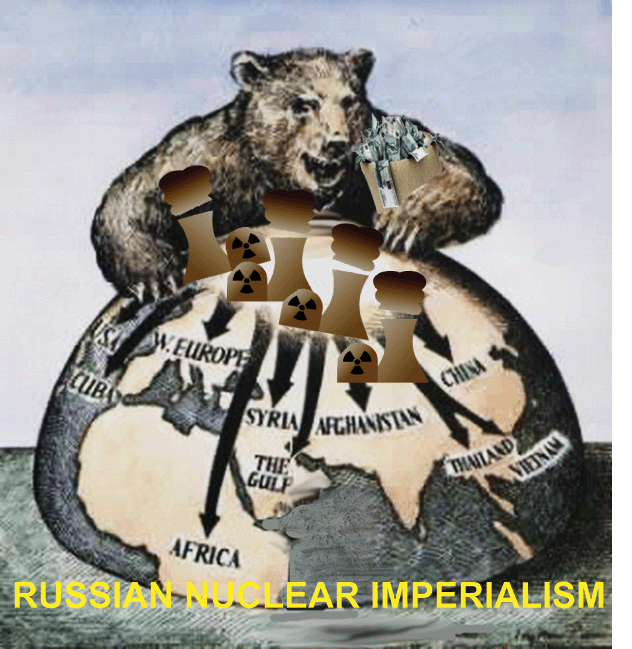
The ISNST will spearhead implementation of Zambian’s nuclear energy programme as well as the development of the Centre for Nuclear Science and Technology (CNST). The officers have since commenced work, which among others, will involve public awareness and consultations……..Government is hopeful that the nuclear energy programme will transform the country into an industrial hub in the region. A group of students have already been sent to Russia to study in various areas of nuclear science, who upon completing their studies would work in the CNST.
Government has since signed various agreements with the Russian Federation that have culminated into the implementation of the nuclear energy programme………
Cumbria Trust 22nd Jan 2018, Cumbria Trust notes with interest that a source close to the process is
quoted as saying: “The mess they made in the past can’t be repeated.It’s outrageous it became a victim of local politics last time.”
Let us not forget that this was supposed to be a voluntary process, where local
councils had the right to withdraw their interest. How could it be
considered outrageous to exercise that right to withdraw? The new process
starting this week is also based on voluntarism and councils are supposedly
free to withdraw at will. Are we to assume that once a council has
volunteered, it will be made increasingly difficult to withdraw? Is this
voluntarism or coercion? https://cumbriatrust.wordpress.com/2018/01/22/here-we-go-again/
With nuclear weapons, evacuation is not an option, The Hill , BY DAVID KRIEGER, OPINION CONTRIBUTOR — 01/22/18 “…….The fire, named the Thomas Fire, turned out to be the biggest in California history. ……..We were under mandatory evacuation from our home for 12 days, and then were evacuated from the place we were staying as the evacuation zone was expanded. The fire roared on in the backcountry, continuing to spew ash from the dry brush and trees it was consuming.
Throughout the area, people were wearing masks to keep from breathing in the ash. The sky was a sickening yellow-gray. It looked and felt like we were survivors of a nuclear attack. We were living with apprehension day to day, glued to the news, except when the electricity went out.
The fire was finally brought under greater control, and we were allowed to return to our homes. But a few weeks later, the expectation of heavy rains and possible flooding caused us to again be put under mandatory evacuation.
While still evacuated and feeling the pain of our community’s disaster, news came that on Jan. 13 a worker at the Hawaii Emergency Management Agency accidentally released an Emergency Alert warning that a ballistic missile was inbound to the state and that the people should seek immediate shelter. The alert emphasized, “THIS IS NOT A DRILL.” It was all too believable.
People scurried to be with loved ones or to call them to tell them they loved them and to say goodbye. The threat seemed very real, but the solution offered by the authorities was ridiculous. Shelter does not protect against thermonuclear weapons.
Nothing protects against thermonuclear weapons: not shelter, not nuclear deterrence, not missile defenses.
Thirty-eight minutes later came the message that the warning had been a “false alarm.” This is yet another reminder that accidents happen and humans are fallible, even in the best designed systems……..
I would hate to see the catastrophe experienced by our community played out on a global nuclear battlefield, but that is the direction in which the world is heading. The time ending the nuclear weapons threat to humanity is now, before it is too late. The draft Nuclear Posture Review should be scrapped and replaced with the commitment to take nuclear weapons off high alert status; to implement pledges of No First Use; and to commit to negotiate to achieve the only number that makes sense in a nuclear context: Zero.
With nuclear weapons, evacuation is not an option.
Jan. 22–The U.S. Department of Energy Environmental Management division, the Savannah River Site landlord, may soon get a new leader.
On Jan. 18, Anne Marie White — a nominee for EM-1, the head of the DOE’s environmental cleanup program — testified before a federal energy committee, defending her qualifications and answering a handful of state-specific questions.
The assistant secretary position, formally known as EM-1, is currently vacant. It was last held by Monica Regalbuto during Barack Obama’s presidency.
White, though, was not confirmed Thursday: U.S. Sen. Lisa Murkowski, R-Alaska, said the Senate committee “will be working to move our nominees as quickly as we can” into their respective positions.
“We’ve got big things that we address here in the energy committee,” Murkowski said. “There are big things that the Department of Energy faces on a daily basis.”
The U.S. Senate received White’s nomination, handled by President Donald Trump and reinforced by DOE Secretary Rick Perry, on Jan. 8.
Environmental Management is an organization within the DOE that is tasked with cleaning up more than 100 sites across the country.
“If I am honored with a confirmation by the United States Senate, I will look forward to working together with you and your staffs to resolve the challenging issues that confront the nation in the areas of risk reduction and environmental cleanup from the nuclear weapons production program,” White said Thursday to members of the U.S. Senate Energy and Natural Resources Committee.
She later said the EM-1 role encompasses “our moral obligation to clean up our environmental legacy challenges from World War II and the Cold War.”
White, who earned a master’s degree in nuclear engineering, has worked in the nuclear industry for approximately 25 years: According to her Thursday testimony, White began her career physically involved with nuclear cleanup and eventually established her own nuclear consulting firm.
White told the Senate committee she has worked at many DOE-EM sites.
A Jan. 3 White House statement — one that nominated several other people to a range of positions — said White’s credentials are “industry-recognized.”
“Environmental cleanup work was a natural fit for me,” White said, adding that, if confirmed, she would work to increase safety and establish relationships with those actually involved with the manual cleanup work.
“Maintaining and further building trust with the workforce that we rely on to clean up our nation’s legacy environmental challenges will be a focus throughout my tenure,” she said.
Murkowski, the committee chairwoman, was the first to question White. The Alaskan senator was curious how White would reduce risk at the DOE and how she would reduce the department’s profile on the U.S. Government Accountability Office’s radar.
The accountability office has labelled the DOE as “high risk,” citing the department’s growing liabilities.
As of 2017, the federal government’s environmental liability totals $447 billion, according to the GAO’s latest report. The DOE is responsible for a majority of that — approximately $372 billion, the largest amount since at least fiscal year 2000.
White said, if appointed, she would reduce DOE risk by always ensuring “a safe work environment.” She said decision making must be made more timely, technically based and involved and that she would make “some improvements” in the way of contracting and job assignments.
White would also like to engage local communities more. In response to questions posed by West Virigina Sen. Shelley Capito, a Republican, White said nuclear neighbors — think Aiken County and SRS — and their perception of the DOE is paramount.
“Local communities are extremely important to the work we do,” White said, “and gaining their support is extremely important.”
“We need to be transparent in our communications with them,” she continued.
The Senate committee’s reception of White on Thursday morning was balmy at best, tepid at worst.
U.S. Sen. John Barrasso, R-Wyoming, said he could not endorse White due to ongoing uranium trade conflicts involving Russia and Kazakhstan. Barrasso — who represents a state that is among the nation’s largest uranium suppliers — said the uranium business is being adversely affected. Without White’s promise she’d end international head butting, Barrasso said, he could not support her.
White’s nomination must go through more committee hearings and a full U.S. Senate hearing before it can be approved.
The Energy and Natural Resources Committee will next discuss White’s appointment on Jan. 30, according to the committee’s calendar.
Colin Demarest is a reporter with Aiken Standard and has been with the newspaper since November 2017. He is a New Jersey native and received his B.A. in Journalism and Mass Communications from the University of South Carolina.







 nuclear-news