Enormous survey over 13 countries shows that UK citizens want solar power, not nuclear
Solar Power Portal 15th Nov 2017, The majority of UK respondents to the largest survey of attitudes towards green energy ever conducted would like to see more solar power used compared to other generation technologies. The Ørsted Green Energy Barometer, which surveyed more than 26,000 people across 13 countries, asked just over 2,000 people in the UK where they would like to see more of their energy come from.
The results showed that the most common answer wassolar, with over three quarters (77%) preferring the technology to its closest competitors, tidal power (71%) and offshore wind (70%). Natural gas
and nuclear, the two technologies being pursued most vigorously by the UK government, languished in bottom place with 34% and 31% respectively, while the survey did not even ask UK respondents for their views on coal, which is to be phased out by 2025.
| UK (2,020 respondents) | International average (26,401 respondents) | |
|---|---|---|
| Solar power | 77% | 80% |
| Tidal power | 71% | 58% |
| Offshore wind | 70% | 67% |
| Onshore wind | 61% | 64% |
| Sustainably sourced biomass | 53% | 51% |
| Natural gas | 34% | 37% |
| Nuclear | 31% | 26% |
https://www.solarpowerportal.co.uk/news/new_evidence_of_overwhelming_public_support_for_solar
Royal Navy whistleblower William McNeilly’s security concerns are vindicated again
In 2015, McNeilly leaked a report to WikiLeaks detailing safety and security failures aboard the UK’s Trident nuclear armed submarines and at their base at Faslane in Scotland. The same concerns were raised on Wednesday in an open letter to Williamson, only this time by the officers in charge of base security.
In his letter, Keating pleaded with the Tory minister to veto further cuts to the defense budget and issued him with stark warning: cuts to the Ministry of Defence (MoD) police force budget will lead to fewer officers on the ground and weakened security at Faslane and other MoD sites.
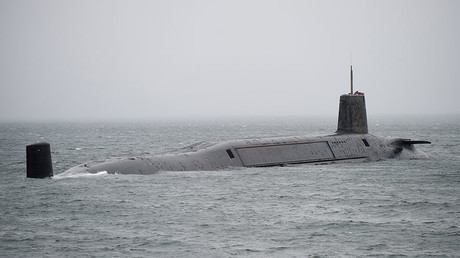
“I must highlight the deeply concerning, and in many cases deplorable decision making that is leaving many of the UK’s critical military assets and sites at unacceptable risk of attack on our own shores,” Keating’s letter reads.
“It is perhaps only a matter of time before an MoD establishment in the UK faces attack, and the reality is that continued and pernicious reductions in the capacity of the MoD Police leave it ill-equipped and understaffed to deal with such a situation.”
Keating’s plea for more finances echo the same concerns raised by McNeilly two years ago. At the time, McNeilly’s claims were dismissed by the military as unsubstantiated folly.
“I accessed the Faslane base for over a year. While I was assigned to the Trident submarines, I accessed them multiple times a day, most days of the week. It is ridiculous for anyone to say that I didn’t know anything about access when I accessed them on numerous occasions,” McNeilly told RT.
“I saw with my own eyes how ridiculous the security at Faslane is.”
McNeilly welcomed the plea from the Defence Police Federation chairman, warning it is “only a matter of time before a Ministry of Defence establishment in the UK faces attack.”
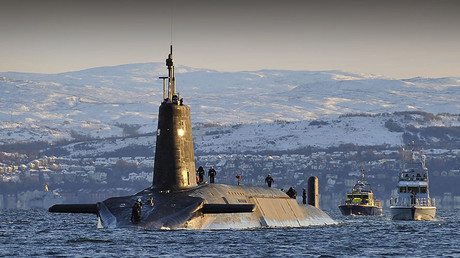
“Now the Defence Police Federation chairman has made a statement that clearly agrees with what I said years prior,” he said.
Recounting his personal experiences from his time at Faslane, McNeilly said his ID would rarely be checked properly and that he would seldom be questioned by security staff at the gate.
“I accessed the Trident submarines without having my ID checked. I just walked straight past [security], down onto the Trident submarine, and left my unchecked bag just feet away from a nuclear missile.
“You don’t need 50 years of experience to see that’s a major security risk.
“Saving time had priority over providing security.”
Keating and McNeilly have now both called for more security to protect UK munitions and bases.
The whistleblower wondered just how long it will take for a terrorist with a fake ID to get through the gates, telling RT the UK’s security weakness could make our own weapons “nothing but a target on our back in this war against terrorism.”
Nuclear station operator fails drug test
Peach Bottom nuclear plant operator fails drug test, Lancaster Online, AD CRABLE | Staff Writer, 16 Nov 17, A control room operator at the Peach Bottom nuclear plant has been barred from the controls after the employee failed a controlled substance test.
Plant owner Exelon notified the U.S. Nuclear Regulatory Commission last week that a licensed operator tested positive following a fitness-for-duty test.
The NRC is investigating and has asked Exelon for more information. The operator’s test showed the presence of a controlled substance, according to Neil Sheehan, an NRC spokesman.
The operator’s access to the plant has been frozen, pending further reviews of the employee, Sheehan said.
“We consider control room operators to be in a position of high responsibility and, in line with that, a failed test indicating substance use that could impair job performance is taken very seriously,” he said.
“A positive drug or alcohol test involving a control room operator is a rare occurrence. It takes years of training to become an operator and then regular retraining and requalification in subsequent years.”
Every U.S. nuclear power plant owner is required to maintain a comprehensive fitness-for-duty program that includes random and for-cause testing for drug and alcohol use.
This is not the first time control room operators at Peach Bottom have been flagged…….http://lancasteronline.com/news/local/peach-bottom-nuclear-plant-operator-fails-drug-test/article_58a95df2-ca2c-11e7-992f-97788865a95a.html
South Africa: Nuclear chief accuses foes of robbery
“Necsa has noted with concern the number of attacks launched against its Chairman‚ Dr Kelvin Kemm over the last couple of weeks‚” the state agency said in a statement.
“These attacks have taken different forms‚ but include a surgically executed robbery at his house at midday‚ plus the creation of a fake Twitter account in his name. The robbery and other incidents are in the hands of the police.”……..https://www.timeslive.co.za/news/south-africa/2017-11-16-nuclear-chief-accuses-foes-of-robbery-fake-twitter-account/
New report says that South Africa should ditch nuclear plan, to save Eskom from ruin
This comes as an Eskom report seen by Fin24 and EE Publishers shows that the power utility is projecting a R3.55bn loss by the end of its current financial year. It also shows the power utility’s poor governance has left it teetering on the edge of insolvency, with only R1.2bn of liquidity reserves expected to be in hand at the end of the month.
Amidst Eskom’s governance and financial crisis, President Jacob Zuma has repeatedly said that South Africa is committed to developing new nuclear power stations at a pace and scale it can afford. Critics, who believe it could cost over R1trn and that would threaten the country’s fiscal framework policy, want the nuclear policy scrapped altogether.
Now, the new research report, which was published on Thursday by Meridian Economics, shows that Eskom should decommission its older coal-fired power stations and consider curtailing the Kusile construction programme in order to save costs.
These interventions can be achieved without affecting security of supply, it shows.
The study also shows that South Africa does not need a nuclear, coal or gas power procurement or construction programme. Instead, it should accelerate its transition to cleaner, cheaper, and more sustainable renewable energy when further capacity is required.
“Stagnant demand and Eskom’s large power station construction programme has resulted in a growing surplus of expensive generation capacity,” Meridian Economics managing director Dr Grové Steyn said in a statement on Thursday.
“At the same time, the operating costs of Eskom’s coal-fired power stations have consistently increased. This has forced Eskom to implement the highest tariff increases in recorded history, and has led to a growing solvency and – at the time of writing – a liquidity crisis.
“If the system can meet demand over the same period by using alternative resources such as other existing coal stations, wind and solar – but at a lower cost than the cost of electricity from a particular coal-fired power station – it makes economic sense to decommission that station early, or not to complete it.”
A system analysis undertaken by the Council for Scientific and Industrial Research Energy Centre found that new coal and nuclear plants are simply no longer competitive against the falling costs of renewables and associated technologies, the report said.
For the foreseeable future no gas fired power stations are required (peaking gas turbines can run on liquid fuel).
“This means that South Africa does not need a nuclear, coal or gas power procurement or construction programme.”
Eskom shows no commitment to decommission older plants
Despite Eskom’s dire financial circumstances, it nonetheless has not yet committed to decommission any of its older plants, even as they approach the end of their lives and the costs of running the older stations increase, Meridian Economics explained.
“With Eskom’s on-going governance crisis, it appears that government and Eskom are partially paralysed, and could struggle to take the right decisions in the public interest. It is therefore critical that the National Energy Regulator (Nersa) ensures that these issues are investigated and addressed, and that Eskom is only allowed to recover efficient costs in its tariffs,” Meridian Economics said.
“If Eskom’s financial crisis continues to worsen, as we suspect it might, more drastic steps must be considered in light of the systemic risk to the state and the entire economy,” said Steyn.
“If the options of substantial tariff increases and further government bailouts are exhausted, Eskom will have to urgently find other ways to maintain its solvency and avoid a liquidity crisis…….. https://www.fin24.com/Economy/Eskom/to-save-eskom-from-ruin-sa-should-ditch-nuclear-plan-and-cut-coal-power-study-20171116
False information tweeted by US military command error – upset North Korea
World War 3: US military command ‘ERROR’ sent North Korea ‘false nuclear arsenal’ info
US MILITARY command tweeted false information about its nuclear arsenal sparking fears of an escalation from paranoid North Korea. Express UK, By TARYN TARRANT-CORNISHAn article that falsely boasted of “secret” US silos and B-1 bombers that can drop nuclear warheads was quickly debunked by experts online.
It is feared this move could lead to a catastrophic escalation of tensions with a military force seeming to confirm Pyongyang’s suspicions that B-1s can carry nukes, Asian security expert Van Jackson has warned.
The article that US Strategic Command shared said: “The USS Kentucky is part of what is called the ‘nuclear triad’.
“The triad are the three components of a nuclear defence system: land-based missiles fired from secret silos, B-1 bombers that can drop them from the air, and submarine launched ballistic missiles.” This could provoke a retaliation from North Korea next time the US flies a B-1 bomber over the Korean peninsula, it is feared.
Nuclear expert Vipin Narang said: “What the hell guys. Secret silos and B-1s? Don’t spread false information through the official handle.”….https://www.express.co.uk/news/world/880181/North-Korea-nuclear-weapons-Twitter-USA-Kim-Jong-un-World-War-3
South Carolina Electric and Gas Co (SCE and G) tries to placate electricity customers after failed nuclear project
SCE&G to cut electricity rates after failed nuclear project http://www.nasdaq.com/article/sceg-to-cut-electricity-rates-after-failed-nuclear-project-20171116-00969 Nov 16 (Reuters) – South Carolina Electric & Gas Co (SCE&G), the main subsidiary of Scana Corp, said it will cut electricity rates to placate customers angered at having to bear the cost of the company’s abandoned V.C. Summer nuclear project.
SCE&G will rollback residential rates to where they would have been in March 2015, resulting in an immediate annual reduction to rates by about $90 million, or 3.5 percent, the company said.
It said there would be $2.9 billion in reduced shareholder earnings over 50 years as they absorb the nuclear construction amortization costs. The company also said it would write off $810 million. “This proposal gives customers additional power generation while also lowering rates for customers,” he said.
SCE&G said it will add a 540-megawatt natural gas-fired power plant to its system, replacing more than 40 percent of the projected power that was to be provided from the V.C. Summer nuclear construction project.
The company also said it will add about 100 megawatts of large-scale solar energy to its system.
V.C. Summer, which was majority-owned by Scana, was ditched in July after estimated costs to build two nuclear reactors spiraled to as much as $24 billion.
Analysts have said the failure of the Summer project and the bankruptcy in March of its designer and contractor, Westinghouse Electric, will likely result in no new nuclear reactors being built in the United States for many years, if ever.
In October, Scana announced the resignation of its chief executive, Kevin Marsh, as the utility company grappled with billions of dollars in cost overruns tied to the abandoned nuclear project.
Summer was one of only two new nuclear power plants under construction in the United States. The other is at Southern Co’s Vogtle plant in Georgia, which is still being built. The two
Vogtle reactors are expected to be completed in 2021 and 2022.
Owners and suppliers of Finland’s Olkiluoto 3 nuclear reactor – locked in dispute over delayed project

 Reuters 14th Nov 2017, Pohjolan Voima Oy (PVO), the largest shareholder in Finland’s
long-delayed Olkiluoto 3 nuclear reactor, could make additional
compensation claims against suppliers Areva and Siemens following a recent
setback, PVO said on Tuesday.
The start of regular power production at
Olkiluoto 3 – Finland’s largest reactor – was last month postponed by
another five months to May 2019. “It (further compensation) has been
briefly discussed (within PVO). I don’t want to enter further this topic
as it is an issue for (reactor operator) Teollisuuden Voima (TVO) to
decide,” PVO CEO Lauri Virkkunen, told Reuters.
The owners and supplier are locked in a dispute over the plant’s delays at the International
Chamber of Commerce, where TVO is claiming 2.6 billion euros ($3.06
billion) from the Areva-led consortium, which has filed a counter-claim of
3.6 billion euros….
Insurance companies moved to divest from coal projects
Guardian 15th Nov 2017, A growing number of insurance companies increasingly affected by the
consequences of climate change are selling holdings in coal companies and
refusing to underwrite their operations.
About £15bn has been divested in
the past two years, according to a new report that rates the world’s
leading insurers’ efforts to distance themselves from the fossil fuel
industry that is most responsible for carbon emissions.
Fifteen companies -almost all based in Europe – have fully or partially cut financial ties,
says the study by the Unfriend Coal campaign, which represents a coalition
of a dozen environmental groups incl uding Greenpeace, 350.org and the
Sierra Club.
Zurich, the world’s seventh biggest insurer, is the latest to
shift away from coal, announcing this week that it is pulling out of coal
to contribute to broader efforts to achieve the Paris accord goal of
keeping global warming below 2C. Allianz, Aviva and Axa have previously
made similar moves. Lloyd’s and Swiss Re are expected to follow in the
coming months. The campaign has a long way to go. The early movers
represent only 13% of all global insurance assets. None of the major US
insurers such as Berkshire Hathaway, AIG and Liberty Mutual have taken
action, according to the study. Despite this, the authors say the shift of
assets and coverage since 2015 is gaining momentum.
https://www.theguardian.com/environment/2017/nov/15/growing-number-of-global-insurance-firms-divesting-from-fossil-fuels
Western countries are more secure without nuclear arms
NATO’s current nuclear strategy is untenable. Crises during the Cold War reveal that nuclear strategies become dangerous exactly in the circumstances they are intended to deter, in political confrontations.
Is the west’s own example more persuasive than admonitions and threats? To me, this is the missing question in the ominous brinkmanship over North Korea’s nuclear arms threats and looming crisis over Iran’s nuclear options, should the nuclear agreement crumble under pressure.
If we think nuclear arms are our ultimate assurance of security, why shouldn’t other countries think the same? A critical look at the role of these doomsday weapons in western defense strategy is now imperative.
This year three events should call our attention to the question: are we more secure with or without nuclear arms?
How my journey into the heart of communism made me a strong believer
Stanislav Petrov’s death this year reminds me of my first real job as a Visiting Lecturer from Norway at the University of Greifswald in the academic year of 1980 – 81, under the just recently signed cultural exchange treaty between our two countries, Norway and East Germany.
My journey into the heart of Communist Germany, not long after Timothy Garton Ash,[1] was considered daring at the time. This was when Reagan became President, Angela Merkel was a budding physicist and dissenter somewhere else in East Germany, and just a few years before Putin had been posted to the Dresden KGB branch office. Stanislav Petrov was an officer in the Soviet Strategic Missile Force where a few years later, he was to save the world from nuclear war by misreading some instructions.
Although not that far away, East Germany in 1980-81 was practically terra incognita. Consequently, I returned home an expert I thought, confident that I had uncovered the truth behind the veil of propaganda and lies. If anyone understood these communist power-mongers, it was I, and I found them dangerous both to our democracy and our freedom. Joining the Norwegian Ministry of Foreign Affairs after my job in East Germany, I became a strong believer in drawing even in nuclear arms in one of my first assignments, which was working on the disarmament process.
How I erred
Then after the end of the Cold War, when the truths came out, I realized I had got it all wrong. One specific memory will suffice. In East Germany, my wife and I soon blended in. So people let their guards down, and I could slip into meetings where people said things not exactly meant for my ears.
One such occasion was a discussion on whether class struggle in Scandinavia would lead to war with the socialist countries. A high-ranking naval officer stated that their observations in the Baltic Sea of the Swedish navy confirmed this. There was no doubt that the Swedes were preparing to attack. Two East German diplomats present then rejected this contention. They did not believe the Swedes were prepared to attack. At the time, I had put the naval officer’s bellicosity down to stupidity and sycophancy, and was reassured by the good sense of the East German diplomats.
Dangerous delusions
Was I wrong! In hindsight, I realized I had witnessed Operation Ryan at work. Unknown to all but a very narrow circle of decision-makers in the west, the ageing and ailing Kremlin leaders under the dying Andropov had come to fear that the western powers were preparing a nuclear first strike under the guise of a military exercise. Their reason was precisely the kind of class struggle analysis with which the East German naval officer had justified his bellicosity. In this ideological view of the world, war between such incompatible “systems” as socialism and capitalism, was inevitable. Maybe the time had come in 1983. Therefore, they ordered spies and their military to look for signs of an impending attack, so that the Kremlin could strike first to prevent the attack or at least cut their losses.
Spies telling the truth not believed
Most disturbing about this was their refusal to believe the presumably good news that their worst fears were unfounded. From the memoirs of the two last East German spy chiefs, Markus Wolf[2] and Werner Grossmann[3], we now know that their KGB superior Krytsjkov, refused to believe their spy in the NATO headquarter, Rainer Rupp, that there were indeed no NATO plans for a first nuclear strike. Even more disturbing is the view of the western agent in the KGB, Mitrokhin,[4] that the sycophancy of the East German spy chiefs prevented them from offering any intelligence that contradicted the prevailing view in the Kremlin.
Fortunately, British and US decision-makers believed their spy, KGB agent Oleg Gordievsky, and took care to scale down military exercises and tone down confrontational rhetoric.[5]
Ban on nuclear arms a threat to western security?
It is in my view disturbing that in the current controversy over nuclear arms there is not more focus on the example of Stanislav Petrov. The context in which he exercised his good judgement, was that of a nuclear strategy still in operation. A preemptive strike becomes a dangerous option when a political crisis feeds delusions about concealed intentions. Hierarchical bureaucratic organizations foster sycophancy by a combination of seduction and intimidation. The kind of person capable of the sound judgement and courage that Petrov demonstrated at that fateful moment, is far too rare and fragile a probability for the survival of humankind to hinge upon it.
Instead of taking the occasion of Petrov’s death to reflect critically on the soundness of current defense strategies, NATO states boycotted the UN vote over the ban on nuclear arms. The Netherlands even voted against the ban. Then, in an apparent rejection of the NATO nuclear strategy, the Norwegian Nobel Committee gave the Nobel Peace Prize to ICAN, the international organization to ban all nuclear arms.
These contradictory views on nuclear arms reflect a serious disagreement. What the disagreement over nuclear arms is all about, Petrov brought into sharp focus in 1983 during his lonely watch in the Soviet command center. He saved the world from total destruction when he prevented the Soviet Union from launching an all-out nuclear attack through a misunderstanding. This narrow escape shows that nuclear arms and concomitant strategies are a grave security risk.
Disagreement is a dilemma
The reasons for the persistence of NATO’s nuclear strategy in spite of the proven risks is that the disagreement over the role of nuclear arms actually reflects a dilemma, not only for NATO but also for Russia and for all other nuclear arms states. The threat of nuclear arms shall make attack impossible. At the same time, the thought of actually using nuclear arms under any circumstances is also impossible. The threat of nuclear arms must in other words be credible to be impossible.
The reason this contradiction turns into a dilemma is that two imperative goals pull in opposite directions. We need to prevent political pressure and block the options for military attack, while at the same time preventing nuclear war. This dilemma turns into a disagreement over the question of which of these goals entails the highest risk of unintended consequences.
Risk of nuclear war versus risk of vulnerability to political pressure
We can seek the answer to this question in evolving nuclear strategy, a strategy not hewn in stone, but changed in response to political crises. Up until the Cuban Missile Crisis in 1962, there was broad agreement that nuclear arms were a panacea for security by blocking both political pressure and war. However, on the brink of a nuclear war both the USA and the Soviet Union realized how dangerous their nuclear strategy became in a political confrontation.
We now know how President Kennedy during the Cuban Missile Crisis gradually realized that the risks of unintended nuclear war outweighed the risks of vulnerability to political pressure. Those who stuck to a tough posture were concerned to avoid the miscalculation that in their interpretation failed to contain the aggressive and expansive dictatorship of Hitler, the prelude to World War II.
Kennedy, however, in the course of the crisis became more concerned with the prelude to World War I. Robert Kennedy, in his book on how the President handled the crisis, says he read one of the bestsellers of that year, Barbara Tuckman’s book Guns of August. Her point was that military strategies inevitably led to war. The parallels to the nuclear strategies became impossible to overlook. After the Cuban Missile Crisis, US Secretary of Defense, Robert MacNamara concluded that the only realistic nuclear strategy was to avoid crises.
How western policy had dangerous unintended consequences
The subsequent period when the superpowers avoided dangerous crises between them ended abruptly with the Soviet invasion in Afghanistan in 1979. The west’s reactions, boycott, military maneuvers and confrontational rhetoric, proved to have dangerous unintended consequences. The ageing, isolated Kremlin leaders began seriously to envisage a western nuclear attack. If so, they needed to strike first to prevent the attack, or at least reduce the damage to the greatest extent possible. Would they have to destroy the feared US missiles before they could be launched? It was in this dangerous situation that Stanislav Petrov kept his cool and prevented an all-out «defensive» Soviet nuclear attack through misunderstanding.
This time, it took longer to adjust policy to the dangerous consequences of nuclear arms in political confrontations. Only with Gorbachev as the new Soviet leader did a radical nuclear disarmament become possible. The so-called intermediate nuclear missiles were removed by an agreement in 1987.
Contradictions in nuclear strategy block nuclear disarmament
However, an agreement to remove the rest of the nuclear missiles was impossible even under favorable political conditions. The contradictions in the nuclear strategies proved insurmountable.
Ever since the new leader of the Soviet Union, Gorbachev, met US president Reagan in Reykjavik in 1986, disagreement over US and NATO plans for missile defense blocked negotiations on effective nuclear disarmament. While the US and NATO contended that a missile defense was able to block off the feared nuclear attack, Russia thought the opposite. In the Russian view, a nuclear attack becomes more feasible if a missile defense can block off the capacity for a retaliatory attack. The problem is that both views are right.
New phase of confrontation may make nuclear strategy dangerous again
We are now entering a new phase of confrontation that begins to resemble the situation following the Soviet invasion of Afghanistan in 1979. Then as now, an absence of dialogue during political crises creates an emotional climate that may feed delusions about concealed intentions. However, at the same time, in political confrontations we face a growing need to resist political pressure and, in a worst-case scenario, block options for attack. Once more, two imperative goals pull in opposite directions. This may become dangerous – again.
NATO’s nuclear strategy untenable
NATOs current nuclear strategy is untenable. Crises during the Cold War reveal that the nuclear strategies become dangerous exactly in the circumstances they are intended to deter, in political confrontations. Then the risk of misunderstandings and miscalculations may reach a dangerous level.
Low political tensions enable nuclear disarmament
By contrast, experience also shows that the lower the political tensions, the easier it is to agree on cutting nuclear arms. By way of example, in the current political climate of confrontation and ensuing high tension, the US – Russian agreement to remove the old Soviet nuclear arms from the new state of the Ukraine would not have been possible. With the end of the Soviet Union, the Ukraine was suddenly a nuclear super power, but agreed to become a non-nuclear state, hardly likely today. How would it have affected our security, were they still armed to the teeth with nuclear weapons?
NATO defense strategy feasible without nuclear arms
Those who do not support a ban on nuclear arms now are of course right that we need an adequate defense to protect us against pressure and block options for an attack, should anyone ever begin to entertain such a deranged idea. The question is if an adequate defense is feasible without the ultimate threat of nuclear arms. A related question is of course how nuclear arms can deter when ultimate recourse to these doomsday weapons is inconceivable.
In the current disagreement over the ban on nuclear arms, nobody seems to recall that only ten years ago a group of elderly statesmen from the US, Russia and Germany called for a universal ban and a defense without nuclear arms. Among them were several with a thorough insight into and personal experience of both nuclear arms and nuclear strategies. The veteran Henry Kissinger in 1973 raised the US nuclear alert to pressure the Soviet Union to cease their support of Egypt during the war with Israel, thus threatening with nuclear arms for political leverage. The Soviet Union’s last leader, Michael Gorbachev, was intimately familiar with the risks inherent in Russian nuclear strategy that Petrov defused. Germany’s previous prime minister Helmut Schmidt initiated the fateful NATO nuclear rearmament that caused the 1983 war scare in the Kremlin. These statesmen had sound reasons for calling for a universal ban and a defense without the ultimate recourse to nuclear arms.
Open debate must consider arguments on their own merits
A realistic analysis of nuclear arms today must ask why these experienced and knowledgeable statesmen held this view. Those who oppose their view must show how they erred.
The answer to these imperative questions can only be found by an open and constructive debate in which arguments are considered on their own merits. Sycophancy, the very nature of hierarchical decision-making and the preeminent cause of bureaucratic dysfunction, is literally a security risk.
Robert Kennedy writes in his book on President Kennedy’s handling of the Cuban Missile Crisis that the President always wanted disagreement among his advisors to ensure the best possible advice.
Welsh anti-nuclear group partnering with Friends of the Earth Japan to oppose nuclear build at WYFLA
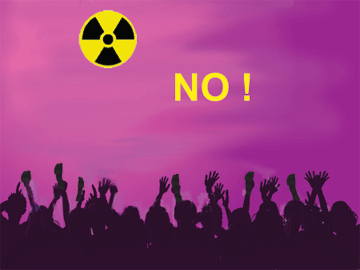 PAWB is proud to announce a new partnership with Friends of the Earth Japan
in the campaign to oppose Hitachi’s plans to build two huge nuclear
reactors at Wylfa. To confirm the partnership, Ayumi Fukakusa from Friends
of the Earth Japan will be visiting Ynys Môn and Gwynedd between November
18 and20. During her visit, Ayumi will discuss their campaigning in Japan
against exporting Hitachi and Toshiba nuclear technology to Wales and
England. She will also explain how their campaign focusses on halting JBIC,
Japan Bank for International Cooperation and NEXI, Nippon Export and
Investment Insurance finance and insurance for nuclear power projects
outside Japan.
http://stop-wylfa.org/wp/
S. Korea’s ruling party chief urges peaceful solution to N.K. nuclear crisis
WASHINGTON/SEOUL, Nov. 16 (Yonhap) — South Korea’s ruling party chief on Wednesday appealed for a peaceful solution to the North Korean nuclear crisis during a forum in Washington.
Choo Mi-ae of the Democratic Party said South Korea and the United States see eye to eye on the need to put more sanctions on Pyongyang but that the increased pressure should be aimed at bringing the North to the dialogue table.
“Our principle for resolving the North Korean nuclear issue must be (to seek) a peaceful solution,” she said during a talk at the U.S.-Korea Institute at Johns Hopkins School of Advanced International Studies.
“A peaceful solution to the North Korean nuclear issue is the only solution agreed on by responsible leaders of the region, including the U.S., China, and which is supported by the international community.”
Tensions caused by the North’s nuclear and missile tests and exchanges of threats and insults with the U.S. have recently shown signs of easing, as Pyongyang has not conducted any provocations for the past two months.
Choo Mi-ae, the leader of the ruling Democratic Party, delivers a speech at the U.S.-Korea Institute at Johns Hopkins School of Advanced International Studies in Washington on Nov. 15, 2017. (Yonhap) Choo Mi-ae, the leader of the ruling Democratic Party, delivers a speech at the U.S.-Korea Institute at Johns Hopkins School of Advanced International Studies in Washington on Nov. 15, 2017. (Yonhap)
Choo said the potential for conflict caused by a miscalculation is large due to a complete breakdown in communication between South and North.
“As tensions rise on the Korean Peninsula, calls for dialogue and peace must also grow louder,” she said, “and (both sides) must refrain from even the slightest word or action that could provoke the other.”
Choo lamented what she cast as the failures of the previous conservative administrations to build on the inter-Korean trust initiated by the liberal governments of Kim Dae-jung and Roh Moo-hyun. The current liberal government of President Moon Jae-in is determined to replant a “seedling in the forest of peace,” she said.
The Moon administration also recognizes the importance of a strong South Korea-U.S. alliance to peace and stability on the Korean Peninsula, according to Choo, and last week’s summit between Moon and U.S. President Donald Trump reaffirmed that there will be no sanctions for the sake of sanctions nor talks for the sake of talks.
“Sanctions are a concerted effort by the international community to make North Korea come to the negotiation table,” she said.
Later in the day, Choo warned that should Washington make demands that were “too unreasonable”, Seoul could not help but consider even scrapping the South Korea-U.S. free trade agreement (FTA).
“I have said here that our domestic political situation wouldn’t be permissive either if the U.S. makes unreasonable claims (regarding the FTA),” Choo told reporters.
Touching on Korea’s car exports, Choo voiced her opposition to a possible U.S. demand that auto parts be procured from within the U.S.
Seoul is taking domestic procedures ahead of formal negotiations to amend the five-year-old trade deal, which U.S. President Donald Trump called “quite unsuccessful and not very good for the U.S.” last week. Washington blames it for America’s growing deficit in goods trade with Korea despite its surplus in the services sector.
http://english.yonhapnews.co.kr/news/2017/11/16/0200000000AEN20171116000251315.html
Trump to tap nuclear industry lobbyist for U.S. Energy Dept job
16 November 2017 WASHINGTON (Reuters) – President Donald Trump plans to nominate Melissa Burnison, a nuclear energy industry lobbyist, to serve as assistant secretary in charge of congressional and intergovernmental affairs at the U.S. Energy Department, the White House said on Wednesday.
Burnison is currently director of federal programs for the Nuclear Energy Institute, “where she plans, directs and executes legislative strategies for nuclear energy programs and policies on behalf of the nuclear energy industry,” the White House said in a statement.
Previously, she was a senior adviser at the Energy Department and at the U.S. House of Representatives’ Committee on Natural Resources, where she advanced legislation to expand U.S. energy production and jobs, the statement said.
(Reporting by Eric Walsh; Editing by Tom Brown)
http://uk.businessinsider.com/r-trump-to-tap-nuclear-industry-lobbyist-for-us-energy-dept-job-2017-11?r=US&IR=T
FERC’s Chatterjee Has Interim Plan to Prop Up Coal, Nuclear Plants
http://www.powermag.com/fercs-chatterjee-has-interim-plan-to-prop-up-coal-nuclear-plants/
Federal Energy Regulatory Commission (FERC) Acting Chairman Neil Chatterjee, who has said he is “sympathetic” to a rule that would help prop up struggling U.S. coal and nuclear power plants, apparently is ready to move forward with an interim plan to keep financially troubled plants operating while his agency continues to consider a market-changing cost proposal from the Department of Energy (DOE).
Utility Dive on November 15 reported that Chatterjee is “considering regulatory action,” saying FERC could issue a “show cause” order directing regional transmission organizations (RTOs) and independent system operators (ISOs) to update market tariffs to keep baseload plants, or those with “necessary resilience attributes,” operating or show why those plants should not continue to remain online. That would provide time for FERC to institute rules regarding electricity grid resilience and market compensation.
Chatterjee, who said he has not detailed his plan with other FERC staff, told Utility Dive his proposal would be “messy” and “uncomfortable.” He said his interim step could dovetail with a broader rule on grid resilience to “accelerate” the process. Chatterjee last week broached the notion of an interim step in comments at the S&P Global Platts Energy Podium event in Washington, D.C., where he said “What I don’t want to have is plants shut down while we’re doing this longer-term analysis, so we need an interim step to keep them afloat.”
Chatterjee also had discussed a short-term solution in a recent interview with Bloomberg, saying
“It’s important to cast that interim lifeline. The worst-case scenario is we do the long-term analysis, we figure out we actually did need these plants, but they’re gone, they’re offline and we can’t get them back.”
DOE officials this week have defended their agency’s notice of proposed rulemaking (NOPR) that would allow power plants to fully recover their costs of power generation, provided they keep a 90-day supply of fuel on hand–a rule designed specifically to aid coal and nuclear plants. The “Grid Resiliency Pricing Rule” was proposed in late September, directing FERC to mandate power market rules to accurately price what it calls “fuel-secure” generation.
Sean Cunningham, who leads the DOE’s Office of Energy Policy and Systems Analysis, in his keynote address this week at the National Association of Regulatory Utility Commissioners meeting in Baltimore said he is confident FERC will “dutifully consider and adopt a rule that will address price formation in the electric markets.”
Other FERC officials have concerns about the DOE proposal. Commissioners Robert Powelson and Cheryl LaFleur each have said the NOPR is not accurate in its characterization of natural gas’ role in grid stability.
Some groups have questioned the DOE’s grid stability study from earlier this year, saying it was too supportive of fossil fuel-generated power at the expense of renewables.
Several groups have been vocal in their opposition to the DOE’s proposed plan, which faces a Dec. 11 deadline. Several states weighed in during the comment period for the NOPR, many urging FERC not to adopt the rule.
—Darrell Proctor is a POWER associate editor 15 November 2017
German Greens want last nuclear weapons withdrawn
BERLIN (Reuters) – Greens want the next coalition government to push for the removal of all nuclear warheads stationed in Germany, a document seen by Reuters showed on Wednesday. The discussion paper on defence and foreign policy did not mention the United States, which is believed to have 20 nuclear warheads at a military base in Buechel in western Germany, according to unofficial estimates.
Chancellor Angela Merkel is trying to secure a fourth term through an unlikely coalition with the ecologist Greens and pro-business Free Democrats (FDP) after her conservative bloc lost support to the far-right in an election in September. NATO member Germany is not a nuclear power and in 2011 a Merkel-led government announced plans to shut all nuclear reactors by 2022 after the Fukushima disaster in Japan.
“Within NATO, we want to ensure that the remaining nuclear weapons in Germany are withdrawn and we want to suspend the modernization programme,” read a section in the document stating the Greens’ position.
Before leaving office former U.S. President Barack Obama announced plans to modernize nuclear bombs, delivery systems and laboratories. His successor, Donald Trump, has said he wants to strengthen and expand his country’s nuclear capability.
The conservatives, Greens and FDP are hoping to end exploratory discussions on Thursday and move on to proper negotiations on forming a government. They remain divided on several key issues, including immigration, reforming the euro zone and climate policy. (This version of the story corrects to show nuclear warheads withdrawal is only Greens demand in 1st, 5th paragraphs)
This story has not been edited by Firstpost staff and is generated by auto-feed.
Published Date: Nov 16, 2017 06:15 am | Updated Date: Nov 16, 2017 06:15 am
1 This Month

of the week – Shut Down Drone Warfare!


Tell the Ukrainian Government to Drop Prosecution of Peace Activist Yurii Sheliazhenko

Petition to revoke the licensing of the Near Surface Nuclear Disposal Facility (NSDF) at Chalk River. https://www.ourcommons.ca/petitions/en/Petition/Details?Petition=e-7247
To see nuclear-related stories in greater depth and intensity – go to https://nuclearinformation.wordpress.com
-
Archives
- April 2026 (57)
- March 2026 (251)
- February 2026 (268)
- January 2026 (308)
- December 2025 (358)
- November 2025 (359)
- October 2025 (376)
- September 2025 (257)
- August 2025 (319)
- July 2025 (230)
- June 2025 (348)
- May 2025 (261)
-
Categories
- 1
- 1 NUCLEAR ISSUES
- business and costs
- climate change
- culture and arts
- ENERGY
- environment
- health
- history
- indigenous issues
- Legal
- marketing of nuclear
- media
- opposition to nuclear
- PERSONAL STORIES
- politics
- politics international
- Religion and ethics
- safety
- secrets,lies and civil liberties
- spinbuster
- technology
- Uranium
- wastes
- weapons and war
- Women
- 2 WORLD
- ACTION
- AFRICA
- Atrocities
- AUSTRALIA
- Christina's notes
- Christina's themes
- culture and arts
- Events
- Fuk 2022
- Fuk 2023
- Fukushima 2017
- Fukushima 2018
- fukushima 2019
- Fukushima 2020
- Fukushima 2021
- general
- global warming
- Humour (God we need it)
- Nuclear
- RARE EARTHS
- Reference
- resources – print
- Resources -audiovicual
- Weekly Newsletter
- World
- World Nuclear
- YouTube
-
RSS
Entries RSS
Comments RSS
 nuclear-news