Kobe Steel Scandal Grows to Include Subsidiaries, 500 Firms Hit by Cheating Scandal

Kobe Steel Scandal Grows to Include Subsidiaries

500 firms hit by cheating scandal: Kobe Steel CEO
Nuclear and climate news to October 15
 Unfortunately, that strange and worrying individual, Donald Trump, has yet again managed to dominate the news media, on nuclear and other issues. He has has struck a blow against the 2015 Iran nuclear agreement – in defiance of other world powers – by choosing not to certify that Tehran is complying with the deal. If Iran now leaves the deal, there’s the prospect of a new nuclear arms race, in the Middle East. Nobel Peace Prize winner ICAN says Trump is ‘igniting new conflict rather than reducing risk of war’.
Meanwhile, there’s the escalating danger of an American nuclear first strike on North Korea.
NUCLEAR. – Nobel Peace Prize winners say that the UN Treaty is the “beginning of the end for nuclear weapons”. Global opinion poll: people want diplomacy with North Korea, not war.
Despite the hype, it’s doubtful that underground bunkers will work, in the event of a nuclear attack.
Ignoring the danger of ionising radiation: nuclear waste dumping in the sea.
CLIMATE. Wounded Tropical Forests Now Emit 425 Million Tons of Carbon Each Year — Restoration, Fossil Fuel Emissions Cuts Now Urgent.
USA.Nuclear
- White House Chief of Staff John Kelly says current North Korea nuclear threat is manageable. House Minority Leader Nancy Pelosi pushing Congress to reject pre-emptive nuclear strike.
- Fact checking Donald Trump’s statements on Iran.– -Fact checking Donald Trump’s statement on Sen Bob Corker – verdict FALSE. Senator Bob Corker says President Donald Trump Could Bring About World War III. https://www.youtube.com/watch?v=YXcVk_y0cwo
- Donald Trump versus the freedom of the press. Donald Trump threatens NBC TV Network over its negative coverage of himself. Donald Trump wanted 8 fold increase in nuclear weapons: that’s when Secretary of State Rex Tillerson called Trump a “moron”.
- South Carolina’s failed nuclear project – SCANA accuses Santee Cooper of misleading State leaders for years. –
- Controversial plan to ship nuclear waste down the Hudson River.
- The U.S. solar industry’s new growth region: Trump country.
USA. Climate .The role of climate change in California’s wildfires. Unlike President Trump, USA’s military are keen to prepare for climate change disruption.
NORTH KOREA. Earthquake detected near North Korea’s nuclear site – raising fears of a new nuclear test. Satellite photos show North Korean shipyard test site. A new nuclear missile launch might be imminent.
JAPAN. Rokkasho Fuel Reprocessing Plant Faked Safety Records For 14 Years. Japan Cleared to Re-Start World’s Largest Nuclear Plant. Voluntary evacuees win compensation over Fukushima nuclear disaster. Fukushima District Court finds National Government and Tepco Responsible.
SWEDEN. Buildup of radioactivity in wild boars in Sweden – from eating Chernobyl area mushrooms.
SOUTH KOREA. South Korea: thyroid cancer patients say no to nuclear power plants.
UK.
- European Court of Justice begins hearing on UK subsidies for Hinkley Point C power plant.
- Money for UK’s costly Hinkley nuclear power project is actually funding nuclear weapons
- Britain’s nuclear industry in a panic over Brexit and departure from European regulator Euratom.
- Britain’s nuclear watchdog slams nuclear cleanup contract that cost public £122m
- South Wales petition calls for reviewing the dumping of radioactive mud off coast of Cardiff
- Scotland looking to a not for profit, publicly owned energy company.
FRANCE. Greenpeace protestors show poor security at French nuclear station – by breaking in!
UNITED ARAB EMIRATES. UAE to sever ties with North Korea.
PAKISTAN. Pakistan’s new nuclear-capable submarine-launched cruise missile (SLCM) opens up a dangerous new era.
CHINA. Chinese government boosting storage capacity for renewable energy.
SOUTH AFRICA. Eskom gets permission to develop a new nuclear plant.
SRI LANKA. Sri Lanka enforces UN resolution on nuclear and biological weapons.
INDIA. Tamil Nadu: Union Ministry of Environment now allowing mining of thorium, uranium, in ecologically sensitive CRZ areas.
RUSSIA. A new solar farm opened in Southern Russia.
Kobe Steel discloses 9 more cases of faked inspection data

Japan’s quiet payouts to cities near nuclear plants fuels speculation of political ploy

Trump’s anti-Iran speech, decertifying nuclear agreement, will cause problems with America’s European allies
 Iran nuclear deal: Trump decertifies Obama-era agreement and accuses Tehran of spreading ‘death and chaos’ The President’s more confrontational strategy toward Iran is likely to complicate relations with European allies, Independent UK, Alexandra Wilts Washington DC , 14 Oct 17, Donald Trump has struck a blow against the 2015 Iran nuclear agreement – in defiance of other world powers – by choosing not to certify that Tehran is complying with the deal.
During a speech at the White House, Mr Trump accused the “fanatical regime” in the Iranian capital of spreading “death, destruction and chaos around the globe” as he again called the nuclear pact “one of the worst” agreements the US has ever entered into.
However, he stopped short of scrapping the agreement altogether, saying he wanted his administration to work with Congress and other nations to address the “deal’s many serious flaws”. ……Federica Mogherini, the EU’s foreign policy chief and one of the deal’s chief negotiators, said the agreement will remain valid regardless of Mr Trump’s decision. ……
The move by Mr Trump was part of his “America First” approach to international agreements which has led him to withdraw the United States from the Paris climate accord and the Trans-Pacific Partnership trade talks and renegotiate the North American Free Trade Agreement with Canada and Mexico……
Mr Trump’s more confrontational strategy toward Iran is likely to complicate relations with European allies while strengthening ties with Israel.A vocal opponent of the agreement when it was signed, Israeli Prime Minister Benjamin Netanyahu welcomed Mr Trump’s “courageous” decision.
“I congratulate President Trump for his courageous decision today. He boldly confronted Iran’s terrorist regime,” the prime minister said in a video statement he released in English.
But both UK Prime Minister Theresa May and French President Emmanuel Macron this week had tried to persuade Mr Trump to re-certify the deal. Ms May has called the agreement “vital”, while Mr Macron has said it is “essential for peace”. …….
Russia’s foreign ministry said there was no place in international diplomacy for threatening and aggressive rhetoric such as that displayed by Mr Trump and said such methods were “doomed to fail”, in a statement issued after Mr Trump’s speech……
John McLaughlin, a former acting CIA director under Republican President George W Bush, called the decertification of the Iran deal one of Mr Trump’s “worst decisions”.
The decision “feeds Iran hardliners, splits allies, shreds US credibility, roils congress [and is a] gift to Russia,” he wrote on Twitter. http://www.independent.co.uk/news/world/americas/us-politics/iran-nuclear-deal-donald-trump-decertifies-agreement-2015-policy-obama-a7999451.html
Fact checking Donald Trump’s statements on Iran
 AP FACT CHECK: Trump’s statements on Iran http://www.dailymail.co.uk/wires/ap/article-4978836/AP-FACT-CHECK-Trumps-statements-Iran.html
By Associated Press 14 October 2017, WASHINGTON (AP) – President Donald Trump offered a questionable reading of Iran’s past economic condition Friday when he blamed the Obama administration for lifting sanctions just as Iran’s government was facing “total collapse.”
A look at some of his points in remarks Friday that denounced Iran’s behavior but stopped short of fulfilling his campaign promise to get the U.S. out of the multinational deal that eased sanctions on Iran in return for a suspension of its nuclear program:
THE FACTS: An imminent collapse of Iran’s economy was highly unlikely, according to international economists and U.S. officials.
International penalties on Iran in response to its nuclear program did drive its economy into crisis earlier this decade. But even before the nuclear deal, Iran had cut budget expenditures and fixed its balance of payments. It was still exporting oil and importing products from countries such as Japan and China.
The multinational deal froze Iran’s nuclear program in return for an end to a variety of oil, trade and financial sanctions on Tehran. Iran also regained access to frozen assets held abroad. The deal was conceivably an economic lifeline for the state, but international economists as well as U.S. officials did not foresee an imminent economic collapse at the time.
Among those experts, Patrick Clawson at the Washington Institute for Near East Policy said Iran’s leaders worried about the potential for social unrest at the time, but that the economy was sustainable.
TRUMP: “The Iranian regime has committed multiple violations of the agreement. For example, on two separate occasions, they have exceeded the limit of 130 metric tons of heavy water.”
THE FACTS: Iran is meeting all of its obligations under the deal, according to International Atomic Energy Agency investigators, who noted some minor violations that were quickly corrected.
Trump is right that Iran exceeded the limit on heavy water in its possession on two occasions. Both times, international inspectors were able to see that Iran made arrangements to ship the excess out of the country so that it could come back into compliance.
Deal supporters argue this shows the agreement works. Deal opponents say that because Iran sells the surplus on the open market, Iran is therefore being rewarded for violating the deal.
Trump and other critics of the agreement point in particular to Iran’s continuing missile tests, which may or may not defy the U.N. Security Council resolution that enshrined the deal. But those tests do not violate the deal itself.
TRUMP on the deal: “It also gave the regime an immediate financial boost and over $100 billion its government could use to fund terrorism. The regime also received a massive cash settlement of $1.7 billion from the United States, a large portion of which was physically loaded onto an airplane and flown into Iran.”
THE FACTS: The “financial boost” was from money that was Iran’s to begin with. It was not a payout from the U.S. or others but an unfreezing of Iranian assets held abroad.
The $1.7 billion from the U.S. is a separate matter. That dates to the 1970s, when Iran paid the U.S. $400 million for military equipment that was never delivered because the government was overthrown and diplomatic relations ruptured.
The rupture left people, businesses and governments in each country indebted to partners in the other, and these complex claims took decades to sort out in tribunals and arbitration. For its part, Iran paid settlements of more than $2.5 billion to American people and businesses.
The day after the nuclear deal was implemented, the U.S. and Iran announced they had settled the claim over the 1970s military equipment order, with the U.S. agreeing to pay the $400 million principal along with $1.3 billion in interest. Find AP Fact Checks at http://apne.ws/2kbx8bd
Buildup of radioactivity in wild boars in Sweden – from eating Chernobyl area mushrooms
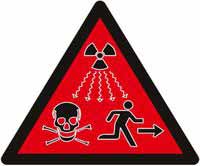
 Radioactive wild boars in Sweden are eating nuclear mushrooms, Quartz, 13 Oct 17 Radioactive wild boars currently roaming central and northern Sweden are proof positive that nuclear disasters have long-term environmental impacts, both near and far from where they occur.
In 1986, a nuclear power plant in Chernobyl, Ukraine exploded, irradiating the surrounding region, including Belarus, Russia and the rest of the Ukraine, and sending a cloud of radioactive material over northern and central Sweden. At the time, Swedes were warned against eating potentially nuclear berries and mushrooms. But no one told the wild boars about irradiated fruits and fungus, and three decades later these Swedish animals show exceptionally high levels of radioactivity because of mushrooms rooted deep in ground that remains radioactive.
On Oct. 5, the Swedish television channel SVT reported (link in Swedish) that of 30 wild boar carcasses tested for radiation this year by Calluna, a local environmental consultancy, 24 showed high levels of exposure. Calluna’s Ulf Frykman recently alerted local hunters in the Gävle region, about 100 miles north of Stockholm, of “extremely high” radiation levels among local boar,
“This is the highest level we’ve ever measured,” he told the Telegraph, noting one animal in particular. Although flora and fauna in Sweden have been generally deemed safe, Frykman believes deeply-rooted, nuclear mushrooms in the country’s northern territories are to blame for the high traces of radiation in these wild boars.
The creatures root for food in the soil, which exposes them to the iodine and cesium-137 traces that remain in soil long after they’re gone above ground. “Wild boar root around in the earth searching for food, and all the cesium stays in the ground,” Frykman explained. “If you look at deer and elk, they eat up in the bushes and you do not have not so much cesium there.”…….https://qz.com/1099248/radioactive-wild-boars-in-sweden-are-eating-nuclear-mushrooms/
White House Chief of Staff John Kelly says current North Korea nuclear threat is manageable
 US believes current North Korea nuclear threat is manageable – White House http://www.channelnewsasia.com/news/world/us-believes-current-north-korea-nuclear-threat-is-manageable—white-house-9306166 13 Oct 17
WASHINGTON: White House Chief of Staff John Kelly said on Thursday the Trump administration thinks the threat posed by North Korea’s nuclear weapons capability is currently manageable but Pyongyang cannot be allowed to develop the ability to strike the U.S. homeland.
“A state that has developed a pretty good ICBM (missile) capability and is developing a pretty good nuclear re-entry vehicle, I would believe … that that state simply cannot have the ability to reach the homeland,” Kelly said.
“Right now we think the threat is manageable but over time if it grows beyond where it is today, well, let’s hope that diplomacy works,” said Kelly, a retired Marine Corps general. (Reporting by Steve Holland; Writing by David Alexander; Editing by Chizu Nomiyama)
‘NO” to resuscitation of nuclear reactors – they should be closed, and then autopsied
Six US reactors — at five sites — have closed since 2013. Seven more remain on target to close within the next eight years, some of them as soon as 2019. A handful more had announced planned shutdowns, then received bailouts to prolong their existence, even though the plants are uneconomical and in dangerously degraded states due to aging and other factors. Wear and tear is a concern with any aging technology, but the risk factor goes up dramatically when nuclear power plants, filled with radioactive materials, are at issue.
Given the complexity of nuclear plants, their aging parts, rubber-stamped operating license extensions and their vulnerability to catastrophic failure, it makes sense to examine the “dead” reactors for a more reliable safety assessment of the potential failings of the “living” reactors. But the nuclear industry and its regulator, the US Nuclear Regulatory Commission (NRC), has successfully avoided this common-sense safety procedure for decades. Given the regularity with which US nuclear reactors are shutting down — a statistic that will likely only increase over time — we have quite a few closed reactors already, and plenty more in the pipeline. This is a perfect opportunity to conduct a full investigation into the extent of decay inherent in the nuclear plants still running.
Nuclear Reactors Can Cost More to Decommission Than to Build
When reactors close, they don’t just disappear. They must be decommissioned. This is a long, complicated and, above all, outrageously expensive process. For example, the Yankee Rowe Nuclear Power Plant in Massachusetts, which operated from 1960 to 1992, cost $39 million to build. Its decommissioning took 15 years and cost $608 million.
Vermont Yankee, shuttered at the end of 2014, is currently looking at a price tag of at least $1.24 billion in decommissioning costs. But this is an estimate from its owner, Entergy. The real figure could be a lot higher.
Decommissioning involves the removal and, theoretically, the decontamination of equipment, structures and portions of the facility containing radioactive contaminants. This allows the property to be released from NRC oversight and terminates the NRC license. The high-level radioactive waste, essentially the irradiated nuclear fuel, currently has nowhere to go and remains on site in dry storage casks. But decommissioned sites can remain radioactively contaminated long after the reactors close. One such example is Big Rock Point on the shoreline of Lake Michigan, where plutonium-239 is still to be found in the high-level wastes and radioactive contamination at the site.
To date, the decommissioning of a US reactor does not include an examination of the site and materials. Instead, the evidence of the effects of aging and material degradation are buried with the dismantled reactor. This “autopsy” could reveal those effects and provide potentially life-saving insights into the risks run by operating reactors. Furthermore, it would also verify (or dispute) quality assurance documentation for the fabrication process of installed safety-related nuclear components.
For example, it is now known that 17 of our operating nuclear reactors contain key safety parts that might be dangerously flawed. These large components were manufactured at the French Le Creusot forge, which was not only caught producing and selling substandard components, but tried to cover up its loss of quality control as well. This revelation resulted in the shutdown of 17 French reactors with Creusot components late last year as well as the forge itself, which was only reopened in July.
Fortunately, one of the US reactors that reportedly has a Creusot part is now permanently closed — the Crystal River nuclear generating station on Florida’s west coast. An autopsy of Crystal River would not only provide safety insights into the potential jeopardy at the 17 reactors still operating with suspect Creusot parts, it would also deliver general intelligence about the state of our entire operating reactor fleet.
An autopsy would take an enhanced look at the remaining material integrity of safety-related structures and components, particularly those that are difficult to reliably assess in operating reactors. This would include destructive analysis by cutting up large components like the reactor pressure vessel for an assessment of radiation-induced cracking, embrittlement and stress corrosion cracking. Sections of the concrete containment and “spent” nuclear fuel storage structures could be tested for the same aging effects that weaken concrete in bridges and dams.
Captured Regulators May Not Act to Examine Flaws in Closed Reactors
Rest assured no such examinations will happen voluntarily. One of us, Paul Gunter, now with Beyond Nuclear, joined 10 safe energy groups in 1995 to petition the NRC to conduct autopsies on embrittled reactor pressure vessels at the permanently closed Yankee Rowe, Trojan, San Onofre and Rancho Seco nuclear power stations.
The groups wanted the NRC to archive material specimens and set a benchmark on age-degradation for the rest of the operating industry. The NRC and industry didn’t want to know and rejected the petition.
This would seem to contradict the NRC’s mandate, proclaimed on its website as “protecting people and the environment.” Behind closed doors, the agency instead works tirelessly on behalf of the nuclear industry, protecting the corporate bottom line with almost evangelical zeal. The NRC has, for example, never denied a license extension to an operating reactor, no matter how blatant the safety risks. In December 2015, the NRC relicensed the Davis-Besse reactor in Ohio, despite the worsening cracking of the containment, without requiring the owners to repair a flaw so serious that a containment failure could lead to a meltdown.
Such capitulations have only one agenda — to save the nuclear industry money. Decommissioning costs are already so burdensome that Entergy is looking at a decommissioning option called SAFSTOR for its Vermont Yankee plant, which would essentially mothball the reactor for 60 years. By then, Entergy — already struggling financially — could be long gone, dodging the gigantic decommissioning bill altogether.
In order, therefore, not to demand expensive fixes of an industry in financial freefall, the NRC has a stellar track record of not enforcing its own safety orders, even though these might actually protect people and the environment. But the bigger cost that the NRC is seeking to avoid is the truth.
An autopsy might scientifically reveal just what a perilous, pre-meltdown condition most of our nuclear power plants are in. Such evidence would expose the NRC’s reckless bias in allowing US reactors to operate without essential safety fixes. It’s a gamble that saves the industry money, but which could cost thousands of lives or more.
Such revelations would also put a serious dent in the NRC’s efforts to extend the operating licenses of its remaining reactor fleet out to 60 and even a terrifying 80 years as the agency is now planning to do.
And the safety vulnerabilities uncovered by an autopsy might actually frighten people. They would start to question whether nuclear power was actually as safe as the NRC and the industry say it is, especially when they learn just how many things could go wrong. They might actually see the industry’s “safe and reliable” mantra for the lie that it is.
That’s exactly the kind of publicity the NRC and the industry don’t want. It’s this cost, more than that of the autopsy itself, that they are really trying to avoid. Because, for an inherently dangerous industry, the price of the truth is just too high http://www.truth-out.org/opinion/item/42228-nuclear-power-plants-should-be-closed-and-autopsied-not-resuscitated
Paul Gunter is the director of the Reactor Oversight Project at Beyond Nuclear.
Linda Pentz Gunter is an international specialist at Beyond Nuclear. She writes columns on the follies and false representations of nuclear energy and the link between nuclear power and nuclear weapons. Her views also appear on the Beyond Nuclear Twitter site.
RELATED STORIES
Nuclear Power Is on the Wane, Despite Efforts of High-Profile Boosters
Nuclear Power Is Not “Green Energy”: It Is a Fount of Atomic Waste
Nuclear Regulators’ Flawed Analysis Leaves Millions at Risk From Radioactive Fires
Nancy Pelosi pushing U.S. Congress to outlaw pre-emptive nuclear strike
Pelosi Says Congress Should Weigh Policy Change on Nuclear Arms https://www.voanews.com/a/pelosi-says-congress-should-weigh-policy-change-nuclear-arms/4067891.html WASHINGTON 13 Oct 17,
House Minority Leader Nancy Pelosi is pushing Congress to pass a measure saying that the U.S. would not fire its nuclear weapons unless another country did so first.
But the California Democrat insisted Thursday that her suggestion had nothing to do with President Donald Trump, even though it came in the wake of Trump’s warnings to North Korea and his reported suggestion that the nation’s nuclear arsenal should increase in size.
Pelosi said the current policy was outdated and any changes would apply to all presidents in the future.
Pelosi raised the issue at her weekly press conference, telling reporters, “There is interest in the U.S. establishing itself as no first use, no first nuclear use.”
Trump ‘igniting new conflict rather than reducing risk of war’ – says Nobel Peace Prize winner ICAN
 Iran nuclear deal: Nobel Peace Prize winner says Trump is ‘igniting new conflict rather than reducing risk of war’http://www.independent.co.uk/news/world/politics/iran-nuclear-deal-latest-trump-ican-nobel-peace-prize-igniting-conflict-war-a7999741.html
The International Campaign to Abolish Nuclear Weapons strongly criticises the President, Shehab Khan @shehabkhan 14 Oct 17 The 2017 Nobel Peace Prize Winner has said Donald Trump is “igniting new conflict rather than reducing the risk of nuclear war” after the President’s announcement to withhold certification of the Iran nuclear deal.
The International Campaign to Abolish Nuclear Weapons (Ican), the 2017 Nobel Peace Laureate, strongly criticised Mr Trump’s decision, who in his speech condemned Iran as a “fanatical regime”.
Speaking out against the move, Beatrice Fihn, the executive director of Ican, said Mr Trump’s move was a reminder of the immense nuclear danger facing the world.
“If ever there were a moment for nations to declare their unequivocal opposition to nuclear weapons, that moment is now. There is an urgent need to strengthen existing and develop new norms against the use and possession of nuclear weapons by joining the Treaty on the Prohibition of Nuclear Weapons,” she added.
South Korea: thyroid cancer patients say no to nuclear power plants

 Thyroid cancer patients say no to nuclear power plants http://m.koreatimes.co.kr/phone/news/view.jsp?req_newsidx=237600
  By Kim Se-jeong, 12 Oct 17,
They also asked the government to help them cope with their ordeals. Their calls came while the public debate on the construction of two Shin-Kori reactors is at its peak.
“Nuclear power plants are government projects,” a group of thyroid cancer patients and activists said in a press conference at the National Assembly, Wednesday. “We have contributed to the national growth by enduring many side effects of nuclear power plants. Now that we’re sick, we’re left to fight for survival alone.”
There are two ongoing lawsuits raised by the thyroid patients against Korea Hydro & Nuclear Power Co., the operator of the nuclear power plants, and Wednesday’s calls also meant to push the courts which are expected to deliver verdicts within this year.
One was filed in 2012 by a family of three ― a father, mother and son suffering colorectal cancer, thyroid cancer and a developmental disability, respectively. The lower court ruled partially in favor of the family, stating thyroid cancer had been caused by exposure to radioactive iodine from the power plant. The case is currently being reviewed by an appeals court.
The other lawsuit was filed in 2015 by 618 thyroid patients against the operator, demanding recognition and compensation. The patients are awaiting a verdict. What they want from the government are the following. For long-term action, they want no nuclear power plants so there will be no more such patients in Korea,” said Choi Soo-young, a Korean Federation for Environmental Movement activist. “For a short-term solution, they want to relocate themselves and want the government to pay for it.”
Exposure to radioactive iodine is one of the main causes of thyroid cancer.
A couple of epidemiological surveys in Korea have also found a high number of thyroid cancer patients in the areas close to nuclear power plants in Korea. Yet, the KHNP disputed this, saying the high number was a result of overtreatment.
Korea’s 24 nuclear power plants generate almost 30 percent of the nation’s electricity. Eighteen of them are concentrated in the southeastern region of Busan, Ulsan and Gyeongju.
“We want our voices to be heard by the group of citizens who are debating the new nuclear power plant construction. No more new nuclear power plants should be allowed,” Choi said. The group of almost 500 citizens is starting the three-day major debate on Friday in the final phase of the three-month-long debate. A decision on whether to resume the construction of the Shin-Kori reactors is expected on Oct. 20.
Iran might walk away from the nuclear agreement, if it does not serve the country’s national interests
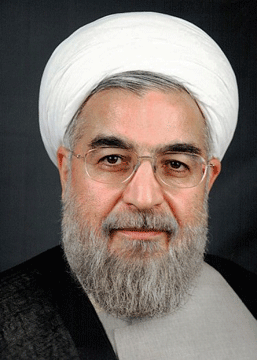 Rouhani says Iran will stay in nuclear deal only if it serves interests – TV, Parisa Hafezi, ANKARA (Reuters) 13 Oct 17, – Iran harshly reacted to President Donald Trump’s decision not to certify its nuclear deal with six major powers, and President Hassan Rouhani said Tehran might walk away if the continuing agreement does not serve the country’s national interests.
Defying Trump, Rouhani said Tehran will double its efforts to expand the country’s defence capabilities, including the country’s ballistic missile programme despite the U.S. pressure to suspend it.
“No president can revoke an international deal … Iran will continue to respect it as long as it serves our interests,” Rouhani said in a live television address, adding that Trump’s speech was full of “insults and fake accusations” against Iranians.
While Trump did not pull the United States out of the agreement, aimed at preventing Iran from developing a nuclear bomb, he gave the U.S. Congress 60 days to decide whether to reimpose economic sanctions on Tehran that were lifted under the pact.
That increases tension with Iran as well as putting Washington at odds with other signatories of the accord such as Britain, France, Germany, Russia, China and the European Union, who say the U.S. cannot unilaterally cancel the 2015 nuclear deal between Iran and world powers ……..http://uk.reuters.com/article/uk-iran-usa-rouhani-reaction/rouhani-says-iran-will-stay-in-nuclear-deal-only-if-it-serves-interests-tv-idUKKBN1CI2S9
Donald Trump refuses to certify Iran complying with nuclear deal
 Donald Trump refuses to certify Iran complying with nuclear deal, Congress to reconsider sanctions http://www.abc.net.au/news/2017-10-14/president-trump-has-decided-to-decertify-the-iran-nuclear-deal/9049246 US President Donald Trump has struck a blow against the 2015 Iran nuclear agreement in defiance of other world powers, choosing not to certify that Tehran is complying with the deal and warning he might ultimately terminate it.
Key points:
- Mr Trump is expected to announce additional economic sanctions against Iran
- He has previously called the pact “the worst deal ever negotiated”
- The deal saw Iran limit its nuclear program in exchange for fewer economic sanctions
Mr Trump announced the major shift in US policy in a speech that detailed a more confrontational approach to Iran over its nuclear and ballistic missile programs and its support for extremist groups in the Middle East.
Mr Trump said in an address at the White House that his goal was to ensure Iran never obtained a nuclear weapon.
While Mr Trump did not pull the United States out of the agreement, aimed at preventing Iran from developing a nuclear bomb, he gave the US Congress 60 days to decide whether to reimpose economic sanctions on Tehran that were lifted under the pact.
That would increase tension with Iran as well as put Washington at odds with other signatories of the accord such as Britain, France, Germany, Russia, China and the European Union.
Mr Trump warned that if “we are not able to reach a solution working with Congress and our allies, then the agreement will be terminated.”
The US military said it was reviewing the “entire breadth” of its security cooperation activities, force posture and plans to support the new strategy.
“We are identifying new areas where we will work with allies to put pressure on the Iranian regime, neutralise its destabilising influences, and constrain its aggressive power projection, particularly its support for terrorist groups and militants,” Major Adrian Rankine-Galloway, a Pentagon spokesman, told Reuters.
Iran’s President Hassan Rouhani is expected to respond to Mr Trump’s speech on live television in the coming hours.
Mixed responses to policy shift
The European Union’s foreign policy chief Federica Mogherini said the US could not unilaterally cancel the 2015 nuclear deal between Iran and world powers.
Ms Mogherini chaired the final stages of the landmark talks that brought the deal to fruition. She told reporters she spoke to US Secretary of State Rex Tillerson immediately after Mr Trump’s speech.
“We cannot afford, as the international community, to dismantle a nuclear agreement that is working,” she said.
“This deal is not a bilateral agreement … The international community, and the European Union with it, has clearly indicated that the deal is, and will, continue to be in place.”
Mr Trump’s announcement was praised by politicians from countries that have strained relationships with Iran.
Saudi Arabia welcomed the new policy towards Iran and said lifting sanctions had allowed Iran to develop its ballistic missile program and step up its support for militant groups, state news agency SPA reported.
The kingdom said Iran took advantage of additional financial revenues to support for the Lebanese Shi’ite movement Hezbollah and the Houthi group in Yemen.
Israeli Prime Minister Benjamin Netanyahu congratulated Mr Trump for his speech, seeing an opportunity to change the 2015 nuclear deal with Tehran as well as Iranian conduct in the region.
“[Mr Trump] boldly confronted Iran’s terrorist regime [and] created an opportunity to fix this bad deal, to roll back Iran’s aggression and to confront its criminal support of terrorism,” Mr Netanyahu said in a Facebook video.
Israel’s intelligence minister Israel Katz said the speech was “very significant” and could lead to war given threats that preceded it from Tehran.
Israel’s Channel 2 TV asked Mr Katz whether he saw a risk of war after the US leader’s speech.
“Absolutely, yes. I think that the speech was very significant,” he said.
“Iran is the new North Korea. We see where things are goings.” Reuters
Britain’s nuclear watchdog slams nuclear cleanup contract that cost public £122m
Watchdog slams nuclear cleanup contract that cost public £122m https://www.theguardian.com/politics/2017/oct/11/watchdog-slams-nuclear-cleanup-contract-that-cost-public-122m
Contract to dispose of material from 12 sites went ‘wrong on a fundamental level’ and led to multimillion pound payouts, Guardian, Rajeev Syal, 11 Oct 17, The government agency responsible for mishandling a major nuclear cleanup contract – costing the state more than £122m – has been severely criticised by Whitehall’s spending watchdog.
A National Audit Office inquiry into a bungled £6.2bn contract to dispose of material from 12 different nuclear sites has questioned whether the Nuclear Decommissioning Authority (NDA) is capable of understanding procurement rules.
The head of the NDA has apologised for “past mistakes” after the contract collapsed, leading to multimillion pound payouts to firms cut out of deal.
The NAO report published on Wednesday also criticised the Department for Business, Energy and Industrial Strategy’s oversight of the contract.
MP Meg Hillier, chair of the public accounts committee, said: “The NDA was badly mistaken about the work it needed to do on its sites when it let this contract, and has had to cancel it nine years early. It now has to start again from scratch.
“This was one of government’s biggest ever contracts and it has gone wrong on a fundamental level. Its failure raises serious questions about the NDA’s capability.”
Between 2012 and 2014, the NDA ran a competitive procurement exercise for 10 nuclear outlets and two research facilities resulting in the award of a 14-year contract for up to £6.2bn to Cavendish Fluor Partnership.
The deal collapsed after the high court found there was “a significant mismatch between the work specified … and the work that actually needs to be done”.
The NDA was forced to settle claims to the losing bidders in March of this year, when the government launched an inquiry into the contract.
Auditors found that the NDA: breached its obligation under public contracting regulations; settled legal claims with the rival bidders at a cost of £97.3m; and spent £13.8m on legal and external advisers, while in-house staff time cost £10.8m.
Civil servants from the business department and UK Government Investments were aware of the delays but did not raise concerns with ministers until last year, the report said.
Responding to the report, NDA’s chief executive officer David Peattie said: “I would like to apologise for these past mistakes.
“Since taking over earlier this year, I have made a number of improvements to the way the NDA operates to provide greater focus, discipline, standardisation and simplification to our work.”
A department spokesperson said the business secretary, Greg Clark, would scrutinise the auditors’ findings.
“The secretary of state has been clear that the reasons for the failure of the Magnox procurement should be exposed and understood, which is why he commissioned the independent Magnox Inquiry earlier this year,” he said.
“The government will carefully scrutinise the NAO report.”
1 This Month

of the week – Shut Down Drone Warfare!


Tell the Ukrainian Government to Drop Prosecution of Peace Activist Yurii Sheliazhenko

Petition to revoke the licensing of the Near Surface Nuclear Disposal Facility (NSDF) at Chalk River. https://www.ourcommons.ca/petitions/en/Petition/Details?Petition=e-7247
To see nuclear-related stories in greater depth and intensity – go to https://nuclearinformation.wordpress.com
-
Archives
- March 2026 (251)
- February 2026 (268)
- January 2026 (308)
- December 2025 (358)
- November 2025 (359)
- October 2025 (376)
- September 2025 (257)
- August 2025 (319)
- July 2025 (230)
- June 2025 (348)
- May 2025 (261)
- April 2025 (305)
-
Categories
- 1
- 1 NUCLEAR ISSUES
- business and costs
- climate change
- culture and arts
- ENERGY
- environment
- health
- history
- indigenous issues
- Legal
- marketing of nuclear
- media
- opposition to nuclear
- PERSONAL STORIES
- politics
- politics international
- Religion and ethics
- safety
- secrets,lies and civil liberties
- spinbuster
- technology
- Uranium
- wastes
- weapons and war
- Women
- 2 WORLD
- ACTION
- AFRICA
- Atrocities
- AUSTRALIA
- Christina's notes
- Christina's themes
- culture and arts
- Events
- Fuk 2022
- Fuk 2023
- Fukushima 2017
- Fukushima 2018
- fukushima 2019
- Fukushima 2020
- Fukushima 2021
- general
- global warming
- Humour (God we need it)
- Nuclear
- RARE EARTHS
- Reference
- resources – print
- Resources -audiovicual
- Weekly Newsletter
- World
- World Nuclear
- YouTube
-
RSS
Entries RSS
Comments RSS
 nuclear-news