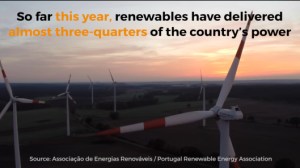
 Power of renewables is sweeping the world towards a new revolution, Business Live, 08 MAY 2017 – 05:57 MICHAEL POWER, I am not going to write about nuclear power. By the end of this article, you will know why. The global economy is on the cusp of its Fourth Industrial Revolution. And like the previous three, this one will be driven by — quite literally — a concentrated burst of energy. In the early 19th century, the original Industrial Revolution was based on harnessing steam energy; in the late 19th century, the second followed with the employment of electrical energy; in the late 20th century, the third was built on the exploitation of computing energy. And, as will become all too apparent in the coming decade, the fourth will be rooted in renewable energy.
Such supercharged progress is born from mixing the most basic laws in the universe, thermodynamics, with economics. When humanity harnesses a higher form of energy, we are capable of doing much greater amounts of work with it. And much greater wealth results. There is nothing more to it. Nor less.
We are leaving the age when, to generate power, we exploited minerals that we found underneath the earth’s surface: coal, oil, uranium. Henceforth, we will increasingly access assets above the earth’s surface: the sun and the wind, with water and steam in various forms playing supporting roles. And not only is the harnessing of these energy sources essentially renewable, the side-effects in terms of pollution will be next to negligible. The production of these new energies will be extraordinarily safe. And the Fourth Industrial Revolution will be a game-changer because once renewable power capacity is installed, the marginal cost of energy production from it will be close to zero.
How soon will this happen? It is already happening. Trusted Sources estimate that, in 2016, more than 60% of all new energy installations worldwide were in the renewable space. By 2020, they predict that share will be 100%. Thus, within three years, the share of energy generation worldwide attributable to traditional sources will be declining.
Wind power is already having a huge affect in colder countries in the northern hemisphere: Scotland, Denmark and Germany have days when renewables, led by wind, provide all their energy needs. Solar power is starting to be used much more in regions between the 45° north and south latitudes, which embraces virtually all inhabited regions in the southern hemisphere. Our Cape Agulhas is 35° south.
While the whole world will participate in this revolution to varying degrees, industrially it will be driven by China………
Perhaps the most radical breakthrough has been made by using molten salt to absorb energy in the day and release it at night: Spain’s 150MW Andasol solar power station uses this method, doubling the power plant’s operational hours. It has been very successfully employed in Chile’s Atacama Desert, now dubbed the Saudi Arabia of Solar Power. The Karoo is SA’s equivalent of the Atacama.
One of the most extraordinary advantages of solar is that it can easily and cost effectively be installed on a micro scale, making it particularly applicable for emerging markets. A panel can work for just one household and not need to be connected to a grid. This has spawned a supply revolution in regions where grid coverage is patchy.
Companies connecting panels to mobile payment systems have flourished: Kenya’s M-Kopa is but one example. And the results of this have spread into many corners of society: one estimate has it that, because homework can now be done at night, exam results for children living in solar-connected houses have improved 40%. As the immutable laws of thermodynamics dictate, energy is translated into work! New sources of energy that become readily accessible to the poor are what make these industrial advances so revolutionary.
As with all previous industrial revolutions, the breakthrough in harnessing a new energy source spawns myriad secondary developments that are dependent on it. ……
Invariably there are vested interests connected to old energy that will seek to slow this coming revolution. But plans to install old energy capacity in a world fast migrating to renewables is economic lunacy. So, the reason I am not writing about nuclear power should be abundantly clear: it is so, so yesterday. https://www.businesslive.co.za/bd/opinion/2017-05-08-power-of-renewables-is-sweeping-the-world-towards-a-new-revolution/
May 10, 2017
Posted by Christina Macpherson |
2 WORLD, renewable |
Leave a comment
 E.P.A. Dismisses Members of Major Scientific Review Board By CORAL DAVENPORT NYT, MAY 7, 2017 WASHINGTON — The Environmental Protection Agency has dismissed at least five members of a major scientific review board, the latest signal of what critics call a campaign by the Trump administration to shrink the agency’s regulatory reach by reducing the role of academic research.
May 10, 2017
Posted by Christina Macpherson |
climate change, USA |
Leave a comment
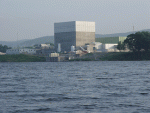 Vermont Yankee: Expert says faster reuse unrealistic amid national waste dilemma, Brattelboro Reformer, May 5, 2017 By Lissa Weinmann, BRATTLEBORO — Hopes for an expedited decommissioning and eventual reuse of the shuttered Vermont Yankee nuclear reactor are unrealistic and potentially misplaced, according to a radioactive waste policy expert and activists who will visit Brattleboro for a community discussion on “Nuclear Waste: The Road from Vermont Yankee to Texas” on Saturday, May 6, from 4:30 to 6 pm at the community room at the Brattleboro Food Co-op.
The presentation comes as federal and state authorities consider the sale of the plant to NorthStar Industries Inc., which has touted a faster decommissioning at a lower price than Entergy had planned.
Kevin Kamps, Radioactive Waste Watchdog for Maryland-based Beyond Nuclear, who has studied nuclear waste issues in the U.S. and globally for 25 years and is to be featured at the event, said he expects decommissioning will be hampered by deeper levels of radioactive contamination and reuse delayed by the continued presence of high level nuclear waste in dry cask storage on the Yankee site for many decades to come.
Kamps’ warning of a long wait amid hot controversy was underscored by testimony at an April 26 House Energy and Commerce Committee hearing on the draft Nuclear Waste Policy Amendments Act, which would break with current law to allow private companies like Waste Control Specialists, a Texas-based partner in the proposed Yankee sale, to build consolidated interim storage facilities to accept waste from the power plant site before a permanent deep geologic repository that could best contain lethal material for hundreds of thousands of years is available. ……
The Trump Administration’s congressional budget request in March 2017 includes “$120 million to restart licensing activities for the Yucca Mountain nuclear waste repository and initiate a robust interim storage program.” The nuclear industry in 2014 stopped paying a fee on nuclear energy generation to build a central repository; That $46 billion Nuclear Waste Fund falls far short of the “trillions” the DOE anticipates will be required to fund the facility.
WCS applied to the NRC in April 2016 for a license to construct and operate a centralized interim storage site adjacent to its lower-level radioactive dump (where thousands of tons of concrete and other waste from the Vernon site will be transported) in Andrews, Texas, stipulating that the DOE must bear sole and full liability for the waste even though, under current law, liability and title remain with the generators until the waste is taken away to an operating repository.
But the effort to quickly clean up the Vernon site was dealt a significant blow when Rod Baltzer, Waste Control Specialists president and chief executive officer, wrote a letter asking the NRC to “temporarily suspend” its review of the company’s application for a high-level waste dump. Baltzer cited a “magnitude of financial burdens.” The cost of the NRC review now is estimated at $7.5 million, “which is significantly higher than we originally anticipated,” he wrote.
“The bottom line for this push to interim storage is that nuclear companies want to reduce their liability for this highly problematic waste product as quickly as possible,” said Kamps. “Republican leaders in Congress and the nuclear companies who contribute to them want to weaken the law to allow privately owned de facto permanent parking lot dumps in Texas and New Mexico where liability for any problems is transferred to the U.S. taxpayer.”……..
UCS has yet to see an analysis demonstrating that the benefits of interim storage clearly outweigh the additional costs and risks associated with siting and licensing new storage facilities and the extra transportation that would be required,” Dr. Edwin Lyman, Senior Scientist at the Union of Concerned Scientists — a group that is not against nuclear power — testified to Congress, adding that interim sites raise the potential of terrorists getting bomb-making material.
“Transporting waste is the weakest link of a nonsensical interim plan that has nothing to do with finding a permanent repository,” Kamps said. “It plays musical chairs with deadly waste on US highways and rail lines, exposing millions of people to addition risk for no good reason.”
Advocates of interim storage say radioactive materials are transported all the time without incident, but Kamps said incidents do occur and that NorthStar partner Areva had acknowledged `numerous violations of surface contamination many hundreds of times above the allowable limits’ when transporting waste in France.
“CAN advocates for hardened on site storage to protect reactor communities until there is a scientifically sound and environmentally just solution for this toxic waste,” Katz said. “The communities targeted for nuclear waste are routinely rural, low income people of color and Native Americans. It is terrible to put people in the position of having to choose between short term economic survival and long term health and safety. Reactor and targeted communities need to work together to advocate for solutions that do the least harm.”……
Kamps says there is a reason that Entergy estimated $1.2 billion cleanup and NorthStar is estimating it will take less than half of that. “I have no doubt that the site is massively contaminated. We don’t know how long the underground pipes Entergy lied about having were leaking radioactive particles into the ground.”
Katz agreed. “NorthStar will find a much larger problem as all nuclear decommissionings have, but on a fixed contract, it will devise every trick in the book to limit cleanup,” so the public must remain vigilant, Katz said. “With Yankee Rowe and Connecticut Yankee, we had to bring documents to the state to show them that Yankee was putting the test wells exactly where the contamination wasn’t.”…….http://www.reformer.com/stories/vermont-yankee-expert-says-faster-reuse-unrealistic-amid-national-waste-dilemma,506578
May 10, 2017
Posted by Christina Macpherson |
USA, wastes |
Leave a comment
Families seeking aid through Radiation Exposure Compensation Act http://www.kob.com/politics-news/families-seeking-aid-through-radiation-exposure-compensation-act/4475299/ Chris Ramirez, May 05, 2017 , ALBUQUERQUE, N.M. — The Los Alamos of the 1950s was far different than the city on the mesa of today. And the precautions and safety measures of the ’50s were far different than any modern work site.
Lynne Loss was a little girl during that era living in Los Alamos when her father worked as an engineer in the lab and mother worked on site buying nuclear supplies.
“My brother used to go down into the canyon with his friends behind our house on Walnut Street and he would come home and tell mama that the deer had tumors on them,” Loss said.
In 1957, her family moved to Colorado, but she fears the damage was already done by then. Her father Henry Davis was frequently exposed to radiation and beryllium, a lightweight metal used in weapons.
“And then he would come home with it on his clothes and we would have to wash his clothes with ours and sit on the furniture, eat dinner, and whatever you do when you’re a family,” Loss said.
Davis suffered for 40 years from beryllium disease and radiation exposure, finally dying in 1994. Soon after, Loss learned she had colon cancer.
“‘God’, I said, ‘don’t put my family through all of this,’” she said. “I have two beautiful sons and five grandkids. I said I don’t want them to go through this with me. I said, ‘I want you to take me now or heal me’ and God I guess so far has wanted me to stay here and do this interview and help others.”
Loss is helping by pleading with Congress to add family members to the Radiation Exposure Compensation Act. It’s a law that allows the federal government to pay out employees whose jobs exposed them to radiation while helping to build America’s nuclear arsenal.
Sen. Tom Udall, D-N.M., is sponsoring amendments to the act.
“That’s an issue that we’ve been working on a lot over time,” Udall said. “And I think if a family member can show they have significant exposure, then there is a good argument they should be included.”
Udall admits at this point, family members of employees aren’t covered under the act, but it may be in the works.
“I think what we’ve done with the family members specifically is to try to do all of the studies, to include money to do research, to find out what the impact specifically has been on the families,” he said. “I believe there is probably an impact on families, especially if a miners, millers or others were working in the industry to produce the material for atomic bombs, national security work — I believe if they brought that material on their clothes and into their house, if they didn’t leave it at work, if they brought souvenirs and pieces of rock that would leak radon, all of those things could make a real difference.”
It would help children of lab employees like Loss. Her cancer has hurt her physically and financially.
“Oh my god, David and I lost all of our retirement money, $300,000 paying my medical,” she said. “My deductibles went up. My premiums went up. Everything went up sky high.”
Thousands of men and women helped to make the country safer and stronger by lending their brains and hands to research that could eventually cost them their lives and now the lives of their children. Lynne Loss hopes her country won’t forget about her.
May 10, 2017
Posted by Christina Macpherson |
health, PERSONAL STORIES, USA |
Leave a comment
Kudankulam Nuclear Unit Shut Down Due to Water, Steam Leakage,http://www.news18.com/news/tech/kudankulam-nuclear-unit-shut-down-due-to-water-steam-leakage-1393639.html The second unit of the Kudankulam Nuclear Power Project (KNPP) has been shut down due to water and steam leakage, an official said on Saturday.
The plant’s operator, Nuclear Power Corporation of India Ltd (NPCIL) said the Unit-II is likely to restart on May 11.
“The unit was shut down due to steam and water leakage. We have to first cool the reactor and then set right the system,” H.N. Sahu, Site Director, KNPP told IANS over phone from Kudankulam in Tirunelveli district around 650 km from here.
The NPCIL has two 1,000 MW nuclear power plants at KNPP built with Russian equipment.
The first unit was shut down on April 13, for annual maintenance and refuelling, a process that would take around two months.
May 10, 2017
Posted by Christina Macpherson |
incidents, India |
Leave a comment
Nuclear Decommissioning Citizens Advisory Panel strategizes with selectmen, Wicked Local, Plymouth By Frank Mand fmand@wickedlocal.com , 9 May 17 – The state’s Nuclear Decommissioning Citizens Advisory Panel will hold its first meeting in Plymouth on May 24, but there is already concern that that Plymouth’s representatives on the panel will have little say in the decommissioning process of the Pilgrim Nuclear Power Plant.
Based on the numbers alone, Plymouth’s interests should be well represented on the panel……..
Their basic mission, Grassie said, was to meet four times a year, advise the governor, general court and the public on the issues, “serve as a conduit of communications and encourage public involvement” and receive and issue reports.
Meanwhile, Grassie said, Entergy would hold its own meetings, including with the NRC, and making decisions including, as happened with the recently closed Entergy-owned Vermont Yankee nuclear plant, selling the decommissioning function to a separate entity altogether……..
The basic priorities that town officials and panelists will take are, however, becoming clear.
Because of safety concerns the town does not want spent fuel to be left in the pool inside the reactor building. Fortunately Entergy likely doesn’t want that either because, when the spent fuel is out of the pool they can dramatically reduce on-site staff and, therefore, reduce their management costs as well.
The town does not want spent fuel stored forever on site permanently. Unfortunately there is neither a temporary or permanent national spent fuel storage facility available at this time.
In the event that spent fuel in dry cask storage remains on site for the foreseeable future the town wants to be fairly compensated.
The town does not want to see the decommissioning fund used to pay for other costs associated with the continued presence of radioactive materials at the site. That has been happening at Vermont Yankee, where the decommissioning fund has been used to pay the tax payments charged by the host community……
The town wants the rights to the so-called “1,500 acres,” the largely pristine buffer around the plant that stretches from the waterfront around the plant, to the top of the Pine Hill.
The town wants a lot but the question on the minds of the panel members right now is simple: How can they influence the process effectively toward those goals?……..http://plymouth.wickedlocal.com/news/20170506/nuclear-decommissioning-citizens-advisory-panel-strategizes-with-selectmen
May 10, 2017
Posted by Christina Macpherson |
decommission reactor, USA |
Leave a comment
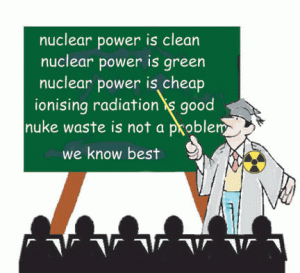
 SRNS provides funding support for innovative education in Augusta area, Augusta Chronicle May 6, 2017, By Thomas Gardiner Staff Writer “…… The vision of the school’s faculty caught the attention of Savannah River Nuclear Solutions, which recently funded the school’s purchase of a new semester-long class called Science and Technology…….
According to a release from SRNS, the management and operations contract company at Savannah River Site, the funding paid for teacher registration, professional development, and the materials and software to make the Science and Technology class a reality.
“Jackson Middle School has purchased the Science and Technology class, funded by Savannah River Nuclear Solutions (SRNS),” Kishni Neville, STEM Coordinator said in the release. “Using the materials and information provided through this class, our seventh and eighth graders explore principles of applied chemistry, nanotechnology and physics.”
She said the Engineering Design Process, a relatively new academic philosophy at Jackson Middle, is an important element of nearly all their instruction…….
SRNS has thus far donated about $4,000 in support of Jackson Middle School. The organization also donates to other area educational activities through Aiken County’s Public Education partners and its Innovative teaching Mini Grants. The Mini Grants program started in 2009 and has awarded over $500,000 total to teachers in the Augusta area.
The program awards cash grants of $500, $750, and $1,000 to teachers implementing innovative ideas in elementary and middle school math and science curricula. The annual program is open to teachers in Aiken, Allendale, Bamberg, Barnwell, and Edgefield counties in South Carolina and Columbia and Richmond counties in Georgia. http://chronicle.augusta.com/news/2017-05-06/srns-provides-funding-support-innovative-education-augusta-area
May 10, 2017
Posted by Christina Macpherson |
Education, USA |
Leave a comment
Africa can be a leader in renewable energy – GNA, 8 May 17 Mr Bill McKibben, Co-Founder of 350.org, says African countries could be great leaders in the use of renewable energy sources globally if they commited to using their resources.
He said countries that progressed fast in the use of renewable energy would lead in the future and Africa was blessed with vast amounts of sunlight and wind to lead in that regard.
Speaking at a press conference organised by 350 Ghana- Reducing our Carbon (G-ROC) he said Germany and other Scandinavian countries were investing heavily in renewable energy, with Germany having 85 percent of its energy mix in renewable energy.
Mr McKibben said climate change, which was caused by the use of fossil fuels, was the greatest crisis the world had ever faced and could also be the greatest opportunity for socio-economic development in Africa if its leaders increased efforts at prioritising renewable energy.
He said Africa had to choose the use of Solar Energy over other forms such as Nuclear, coal or other fossil fuels.
He explained that nuclear energy was very expensive and took decades to build. “Africa can make good use of the sunshine”, he added. Mr Mckibben said although investing in Solar Energy panels could be expensive in the beginning, it was worth it in the long run since the energy from the sun would be for free, saying “that is the cheapest deal”.
He said the cost of installing solar systems had reduced greatly in the last ten years, making solar energy the cheapest alternative for energy generation, both for individual households and for feeding into national grids, especially for countries like Ghana, which had an abundance of sunshine……..http://www.ghanaweb.com/GhanaHomePage/business/Africa-can-be-a-leader-in-renewable-energy-Bill-McKibben-535283
May 10, 2017
Posted by Christina Macpherson |
general |
Leave a comment
 Budgets approved to fight Yucca Mountain, https://www.reviewjournal.com/news/2017-legislature/budgets-approved-to-fight-yucca-mountain/ By Sean Whaley Las Vegas Review-Journal,May 7, 2017 CARSON CITY — The budgets for the state agencies charged with fighting the Yucca Mountain high-level nuclear waste dump were approved Saturday by the Senate Finance and Assembly Ways and Means committees.
The budget for the Agency for Nuclear Projects totals $3.8 million for the next two years, with most of the money going to fight against restarting Yucca Mountain. Of that total, $1.3 million will be spent fighting the expected restart of licensing proceedings.
The attorney general’s office budgets also were approved by the panels, including $3.4 million over two years to fight the project.
Sandoval, state Attorney General Adam Laxalt and most state lawmakers strongly oppose any restart of the Yucca Mountain licensing hearings. A resolution stating the Legislature’s opposition will get a committee hearing Monday.
But some Nevada elected officials, including Nye County Commissioner Dan Schinhofen, argue the licensing proceedings should be allowed to go forward to determine decisively whether Yucca Mountain is a suitable site for the dump. Attorneys for Nevada have raised scores of issues challenging the site’s suitability.
Despite past claims that the project has been long dead, President Donald Trump’s budget blueprint, issued in March, included $120 million in new funds to the Energy Department and the Nuclear Regulatory Commission to restart Yucca Mountain licensing activities.
The omnibus funding bill Congress approved this past week did not include any Yucca Mountain funding. But the funding could be included in the federal fiscal year 2018 budget, which begins Oct. 1.
The House Energy and Commerce Subcommittee on the Environment held a hearing on Yucca on April 26 and is expected to draft legislation for licensing proceedings to commence.
The Agency for Nuclear Projects indicated that the first step in the process is expected to be the reconstituting of the Yucca Mountain Construction Authorization Boards, followed by a case management conference. The restart proceedings could take up to a year, with hearings on challenges to the licensing application lasting three or more years.
Nevada officials estimate that a licensing hearing would require more than 400 days, taking an estimated four to five years at a cost to the Energy Department $1.66 billion.
Yucca Mountain is in Nye County, about 100 miles northwest of Las Vegas.
Contact Sean Whaley at swhaley@reviewjournal.com or 775-461-3820. Follow @seanw801 on Twitter.
May 10, 2017
Posted by Christina Macpherson |
politics, USA, wastes |
Leave a comment
Unviable economics of nuclear power catches up with Cameco, Independent Australia, Jim Green 9 May 2017 CAMECO’S INCIDENTS AND ACCIDENTS: 1981‒2016
This table lists many of Cameco’s accidents and controversies since 1981 — leaks and spills, the promotion of dangerous radiation junk science (in WA and elsewhere) appalling treatment of Indigenous people, systemic and sometimes deliberate safety failures and so on.
| Date and Location |
Description of Incident |
| 1981−89:
Saskatchewan, Canada |
153 spills occurred at three uranium mines in Saskatchewan from 1981 to 1989. Cameco was fined C$10,000 for negligence in relation to a 1989 spill of two million litres of radium- and arsenic-contaminated water from the Rabbit Lake mine. |
| 1990, May 13:
Blind River Uranium Refinery |
Leak shuts down the Canadian refinery. Approximately 178 kg of radioactive uranium dust leaked into the air over a 30-hour period. |
| 1993:
Canada/US |
Inter-Church Uranium Committee from Saskatchewan reveals export of at least 500 tons of depleted uranium to the US military by Cameco, despite several Canadian treaties to export uranium only for “peaceful purposes”. |
| 1998:
Kyrgyzstan |
A truck en route to a Cameco gold main spills 2 tons of cyanide into the Barskoon River, a local drinking water and agricultural water source. 2,600 people treated and more than 1,000 hospitalized. |
| 2001−
onwards:
Ontario |
A 2003 report by the Sierra Club of Canada provides details of 20 major safety-related incidents and unresolved safety concerns at the Bruce nuclear power plant. |
| 2002:
Kyrgyzstan |
Fatality at Cameco’s Kumtor Gold Mine. Death of a Kyrgyz national, buried in the collapse of a 200 meter-high pit wall. |
| 2003, April:
McArthur River, Saskatchewan |
Cave-in and flood of radioactive water at the McArthur River mine. A consultant’s report found that Cameco had been repeatedly warned about the water hazards right up until the accident happened. |
| 2004:
Key Lake uranium mill, Canada |
Canadian Nuclear Safety Commission approves Key Lake license renewal, despite continuing pit sidewall sloughing into the tailings disposed in the Deilmann pit. One million cubic meters of sand had already slumped into the tailings. |
| 2004, April:
Port Hope, Ontario |
Gamma radiation discovered in a school playground during testing in advance of playground upgrades. Although the Canadian Nuclear Safety Commission and AECL tried to dismiss the findings, the material under the school had to be removed when it was converted to low-cost housing in 2011. The contaminated material came from the uranium processing facility in Port Hope, now owned by Cameco. |
| 2006, April:
Cigar Lake, Saskatchewan |
A water inflow began at the bottom of the 6-meter wide shaft, 392 meters below the surface. All the workers left the area and removed equipment. According to a miner, “the mine’s radiation alarm kept going off, but the radiation technician merely re-set the alarm, assuring us that everything was fine.” |
| 2006, Oct.: Cigar Lake, Saskatchewan |
Cameco said its “deficient” development of the Cigar Lake mine contributed to a flood that delayed the mine project by three years and would double construction costs. |
| 2007:
Port Hope, Ontario |
Substantial leakage of radioactive and chemical pollutants into the soil under the uranium conversion facility ‒ leakage not detected by monitoring wells. |
| 2008:
US/Canada |
Uranium mines owned by Cameco in Nebraska, Wyoming, and Canada have all had spills and leaks. Cameco made a settlement payment of $1.4 million to Wyoming for license violations, and $50,000 to Nebraska for license violations. |
| 2008, January:
Rabbit Lake mill |
Seepage underneath the mill discovered after a contract worker noticed a pool of uranium-tainted ice at an outdoor worksite. |
| 2008, May:
Port Hope, Ontario |
It was discovered during soil decontamination at the suspended Port Hope uranium processing facility that egress from degraded holding floors had contaminated the harbour surrounding the facility, which flows into Lake Ontario. |
| 2008, June:
Key Lake |
Canadian Nuclear Safety Commission intends to approve the license renewal for Cameco’s Key Lake mill although CNSC staff assigned ‘C’ ratings (“below requirements”) in four out of 10 program areas assessed, including waste management, fire protection, environmental protection, and training. |
| 2010:
Rabbit Lake |
Uranium discharges from Rabbit Lake (highest by far in Canada) showed increase rather than the predicted decrease in 2010. |
| 2011: Ship from Vancouver to China |
A number of sea containers holding drums of uranium concentrate are damaged and loose uranium is found in the hold. |
| 2012, August:
Port Hope, Ontario |
Spill of uranium dioxide powder resulted in one worker being exposed to uranium and three other workers potentially exposed during clean-up. |
| 2012:
Northern Saskatchewan |
Draft agreement between Cameco, Areva and the Aboriginal community of Pinehouse includes extraordinary clauses such as this: “Pinehouse promises to: … Not make statements or say things in public or to any government, business or agency that opposes Cameco/Areva’s mining operations; Make reasonable efforts to ensure Pinehouse members do not say or do anything that interferes with or delays Cameco/Areva’s mining, or do or say anything that is not consistent with Pinehouse’s promises under the Collaboration Agreement.” |
| 2012, June 23: Blind River refinery, Ontario |
Three workers exposed to airborne uranium dust after a worker loosened a ring clamp on a drum of uranium oxide, the lid blew off and about 26 kg of the material were ejected into the air. |
| 2013‒ongoing: Canada |
Cameco is battling it out in tax court with the Canada Revenue Agency (CRA). Up to US$1.6 billion in corporate taxes allegedly went unpaid. Cameco also involved in tax dispute with the US IRS. According to Cameco, the IRS is seeking an additional $32 million in taxes, plus interest, and may also seek penalties. |
| 2013: English River First Nation, Canada |
English River First Nation sign deal with Cameco and Areva, agreeing to support Millennium uranium mine and drop a lawsuit over land near the proposed mine. Some English River First Nation band members reacted strongly to the agreement. Cheryl Maurice said. “I am speaking for a group of people who weren’t aware that this agreement was being negotiated because there was no consultation process.” |
| 2013, June: Saskatchewan |
Federation of Saskatchewan Indian Nations Chief Perry Bellegarde says the provincial government should not issue any new permits for potash, uranium or other resource development until First Nations concerns are addressed. Bellegarde said the province’s lack of a revenue-sharing deal with First Nations stemmed from “economic racism.” “Do not issue a licence to Cameco or Areva or BHP until indigenous issues are addressed,” he said. |
| 2013, August:
Troy, Ohio, USA |
A fire occurred on a truck carrying uranium hexafluoride which originated from Cameco’s refinery in Port Hope, Ontario. Nuclear regulators in Canada – where the cargo originated – and in the US were not informed of the incident. |
| 2013, Sept.:
Northern Saskatchewan |
Sierra Club Canada produces a detailed report on Cameco’s uranium operations in Northern Saskatchewan. It details systemic corporate failure by Cameco as well as systemic regulatory failure. |
| 2014, Jan.:
Port Hope |
About 450 Port Hope homeowners have had their soil sampled and properties tested in the first phase of the biggest radioactive clean-up in Canadian history. Some 1.2 million cubic metres of contaminated soil will be entombed in a storage facility. More than 5,000 private and public properties will undergo testing to identify places which need remediation. Port Hope is riddled with low-level radioactive waste, a product of radium and uranium refining at the Eldorado / Cameco refinery. The clean-up will cost an estimated US$1.3 billion. |
| 2014, March |
A statement endorsed by 39 medical doctors calls on Cameco to stop promoting dangerous radiation junk science. The statement reads in part: “Cameco has consistently promoted the fringe scientific view that exposure to low-level radiation is harmless. Those views are at odds with mainstream scientific evidence.” |
| 2015 |
A uranium supply contract was signed by Cameco and India’s Department of Atomic Energy on April 15, 2015. Nuclear arms control expert Crispin Rovere said: “As with the proposed Australia–India nuclear agreement, the text of the Canadian deal likewise abrogates the widely accepted principle that the nuclear recipient is accountable to the supplier. This is ironic given it was nuclear material diverted from a Canadian-supplied reactor that led to the India’s break-out in the first place. It would be like the citizens of Hiroshima deciding it would be a good idea to host American nuclear weapons within the city – the absurdity is quite astonishing.” |
| 2015: Saskatchewan |
Cameco’s uranium operations in Saskatchewan are facing opposition from the Clearwater Dene First Nation. A group called Holding the Line Northern Trappers Alliance has been camping in the area to block companies from further exploratory drilling in their territory. The group set up camp in November 2014 and plans to remain until mining companies leave. Concerns include Cameco’s uranium deal with India and the health effects of Cameco’s operations on the Indigenous people of northern Saskatchewan. |
| 2015:
Key Lake mill, Canada |
Cameco personnel identify the presence of calcined uranium oxide within a building. Five workers receive doses exceeding the weekly action level of 1 mSv. |
| 2016: Smith Ranch ISL uranium mine, Wyoming, USA |
The US Nuclear Regulatory Commission finds that a supervisor from Cameco subsidiary Power Resources deliberately failed to maintain complete and accurate records of workers’ exposure to radiation. The NRC issues a Notice of Violation to Cameco. |
| 2016: Smith Ranch ISL uranium mine, Wyoming, USA
|
The Nuclear Regulatory Commission issued a Confirmatory Action Letter to Cameco subsidiary Power Resources documenting actions that the company has agreed to take before resuming shipments of radioactive sludge to a Utah facility. The letter followed two incidents in which containers of radioactive barium sulfate sludge, a byproduct of uranium ore processing, arrived at their destination with external contamination from leakage during transport. |
A more detailed, referenced version of this information, written by Mara Bonacci and Jim Green for Friends of the Earth Australia, is posted at wiseinternational.org. https://independentaustralia.net/business/business-display/unviable-economics-of-nuclear-power-catches-up-with-cameco,10275
May 10, 2017
Posted by Christina Macpherson |
Canada, incidents, Reference |
Leave a comment
North Korea’s man-made islands being primed for nuclear attacks, expert warns, NORTH KOREA could be preparing for “evil deeds” on mysterious man-made islands. Express, By JOEY MILLAR, May 9, 2017 North Korea experts are concerned the new lands, which were recently revealed by satellite imagery near the Sohae Satellite Launching Station missile testing site, could be used to launch devastating nuclear attacks.
Gordon Chang, an author of several books on Kim Jong-un’s hermit state, said the islands had set alarm bells ringing in Seoul, Washington and Tokyo. …….
Other North Korea experts, however, urged calm and said the islands could be used for non-violent means – possibly even agriculture.
Dr Bruce Bechtol said: “As far as the islands being something that could present a real imminent threat to the US or South Korea, I’m just not seeing it
“The land mass of those islands is too small to move around missiles.” He said farms, not the “raining fire” promised by Kim earlier this year, is the more likely end result.
Dr Bechtol said: “It’s interesting that they’re developing these islands, but they’re probably mostly for civilian use……http://www.express.co.uk/news/world/802139/north-korea-islands-war-nuclear-usa-kim-jong-un
May 10, 2017
Posted by Christina Macpherson |
North Korea, weapons and war |
Leave a comment
Indian Point lawsuit dead before arrival, Rye City Review, May 5, 2017 by James Pero A lawsuit seeking to halt the shutdown of a long controversial nuclear power plant located at Indian Point in Buchanan is dead on arrival after staunch opposition from Westchester County’s Democratic lawmakers.
Last week, the Board of Legislators’ Democratic caucus voted to kill the lawsuit, proposed by County Executive Rob Astorino, a Republican, earlier this month, before it was even sent to committee, and well short of a vote by the full Legislature, which is required by law.
“Instead of engaging in a wasteful lawsuit where both sides are funded with taxpayer money, the best approach is to work with all of the affected communities on how to mitigate the economic, social, and environmental impacts of Indian Point closing,” said Democratic Majority Leader Catherine Borgia, of Ossining……..
County Democrats say they plan to host community meetings with affected residents and stakeholders in Indian Point as a part of their own initiative.
To lessen the economic impact on workers at the plant, Cuomo has floated a potential transition into the renewable energy sector for workers laid off by the plant’s closure.
Details of what the decommissioning process will look like will continue to be hashed out by a recently formed task force, which consists of both state and local lawmakers as well as various officials from Cuomo’s administration. http://www.ryecityreview.com/lead-stories/indian-point-lawsuit-dead-before-arrival/
May 10, 2017
Posted by Christina Macpherson |
decommission reactor, USA |
Leave a comment
Help for St. Louis-area homeowners near radioactive landfill gets sliced again KANSAS CITY STAR, BY ALLISON PECORIN, apecorin@kcstar.com JEFFERSON CITY
Getting money allocated for a buyout program for homes near a toxic landfill just northwest of St. Louis has been a multiyear mission for state Sen. Maria Chappelle-Nadal.
And she says that mission took a big setback Wednesday as lawmakers were putting finishing touches on the state’s $27 billion budget.
Chappelle-Nadal originally asked for $12.5 million to fund the program, which would have been enough to buy out 91 eligible homes and a small trailer park near the West Lake Landfill. The landfill stores radioactive waste left over from the Manhattan Project, and neighbors have long complained that exposure to the landfill causes asthma, cancer and other chronic illnesses…….http://www.kansascity.com/news/politics-government/article148732619.html
May 10, 2017
Posted by Christina Macpherson |
politics, USA |
Leave a comment
Nuclear-safety concerns linger at Westinghouse plant, The STate, 8 May 17 BY SAMMY FRETWELLsfretwell@thestate.comThe U.S. Nuclear Regulatory Commission will increase scrutiny of a Columbia atomic fuel factory after nearly a year of concerns about safety and the buildup of uranium at the 48-year-old plant.
Since finding an accumulation of uranium in an air pollution control device last summer, the NRC has cited one additional violation related to the same piece of equipment in the Westinghouse nuclear fuel plant off Bluff Road, federal records show.
In the most recent case, the company potentially allowed uranium to build up for 23 hours late in 2016 in the pollution control device. Westinghouse did not properly restart nozzles on the device, known as a scrubber, that keep processed water flowing, a Jan. 27 NRC violation notice says.
That finding, to be discussed Tuesday night at a meeting in Columbia, follows the discovery months earlier that enough uranium had built up in the scrubber to have caused a small burst of radiation. No explosion occurred, but the issue was significant enough for Westinghouse to shut down part of the plant for several months while it worked to make improvements. The closed portion of the plant has since been restarted.
As a result of problems at the plant, the NRC says it will conduct comprehensive performance reviews annually instead of every two years…….http://www.thestate.com/news/local/article149368179.html
May 10, 2017
Posted by Christina Macpherson |
safety, USA |
Leave a comment








 nuclear-news