Smoke emerges at TEPCO’s Niigata nuclear plant

NIIGATA, Japan (Kyodo) — Smoke emerged at a service building of the Kashiwazaki-Kariwa nuclear power plant in Niigata Prefecture on Thursday but it quickly halted after a firefighting effort by workers, its operator said.
Tokyo Electric Power Company Holdings Inc. said there was no radiation leak in the incident. The utility has not identified the cause of the incident.
The plant operator confirmed smoke coming out around 3:25 p.m. from a locker room inside the service building, located near the No. 6 and No. 7 reactors at the plant. The building is not a radiation controlled area, according to the company.
The two reactors on the Sea of Japan coast are being screened by the Nuclear Regulation Authority as TEPCO is seeking to resume their operation after they were halted following the 2011 nuclear meltdowns at the Fukushima Daiichi power plant, also operated by TEPCO.
http://mainichi.jp/english/articles/20170223/p2g/00m/0dm/083000c
Governor likely to OK Sendai plant operation

The governor of Kagoshima in western Japan is expected to approve the continued operation of a nuclear plant in the prefecture. Experts have found no irregularities at the facility following last year’s strong earthquakes.
Governor Satoshi Mitazono had called for the operation of the Sendai nuclear plant to be suspended after a series of earthquakes centered in nearby Kumamoto Prefecture.
He noted public concern and also asked for an inspection of the plant.
Kyushu Electric Power Company officials rejected his call to halt operations, but they carried out a special inspection. They say they found the quakes caused no abnormalities.
Last Thursday, an expert panel set up by the prefecture also reported that the quakes left no effects on the plant.
Mitazono said on Wednesday that there is currently no need for strong measures against the plant. He said he will remain vigilant if troubles arise.
There were mixed reactions to Mitazono’s decision.
A man in his 70s says the governor may have found that he cannot prevail over the central government in his anti-nuclear battle. He says there was no other choice but to continue operating the plant.
A woman in her 30s says she wanted the governor to stick to the anti-nuclear policy he pledged in the campaign.
She says she wants him to ensure that Kagoshima is a place where children will be able to live safely, now and in the future.
113 Major Active Faults across Japan
Japan is located in the seismically active zone and that is where more than 10% of all earthquakes in the world. The ideal place to build many nuclear plants if you have a death wish!!!

16 locations in Kanto, Chugoku, Kyushu added to list of ‘major active faults’
The government’s Headquarters for Earthquake Research Promotion held a task-force meeting on Feb. 21 and decided to add 16 locations in the Kanto, Chugoku, and Kyushu regions to the list of “major active faults” that could cause heavy damage.
The decision is expected to help with regional disaster prevention efforts as the newly listed active faults will be subject to priority research to be conducted by the government and other relevant entities. The latest addition has brought the total number of locations listed as “major active faults” across the country to 113.
Detailed research had been conducted in the three regions ahead of other areas since 2013 to check the possibility of earthquakes occurring in each of the three regions. The number of major active faults could increase further as the headquarters is also planning to conduct similar research in other regions.
The newly added major active faults include: the Minobu fault straddling Yamanashi and Shizuoka prefectures; the Okubo fault in Gunma and Tochigi prefectures; the Shikano-Yoshioka fault in Tottori Prefecture; the Saga plain northern fault zone; and the Midorikawa fault zone in Kumamoto Prefecture. The Shinji fault, that stretches from east to west about 2 kilometers south of Chugoku Electric Power Co.’s Shimane Nuclear Power Plant in Matsue, was also added to the list.
Since the 1995 Great Hanshin Earthquake, the headquarters had designated active faults with high seismicity stretching at least 20 kilometers that could cause earthquakes with a magnitude of 7 or higher as major active faults.
However, in response to a series of major tremors such as the 2004 Chuetsu earthquakes caused by faults that had not been listed as major active faults, the headquarters has conducted survey research on active faults including non-listed faults. As a result, even some of those faults that were considered to fall short of meeting the criteria for being called major active faults have been added to the list.
Kojin Wada, an official of the Earthquake and Disaster-Reduction Research Division at the Education, Culture, Sports, Science and Technology Ministry, said, “We expect that the general public’s awareness of regional active faults is going to rise (with the latest addition to the list).”
http://mainichi.jp/english/articles/20170222/p2a/00m/0na/005000c
1 This Month
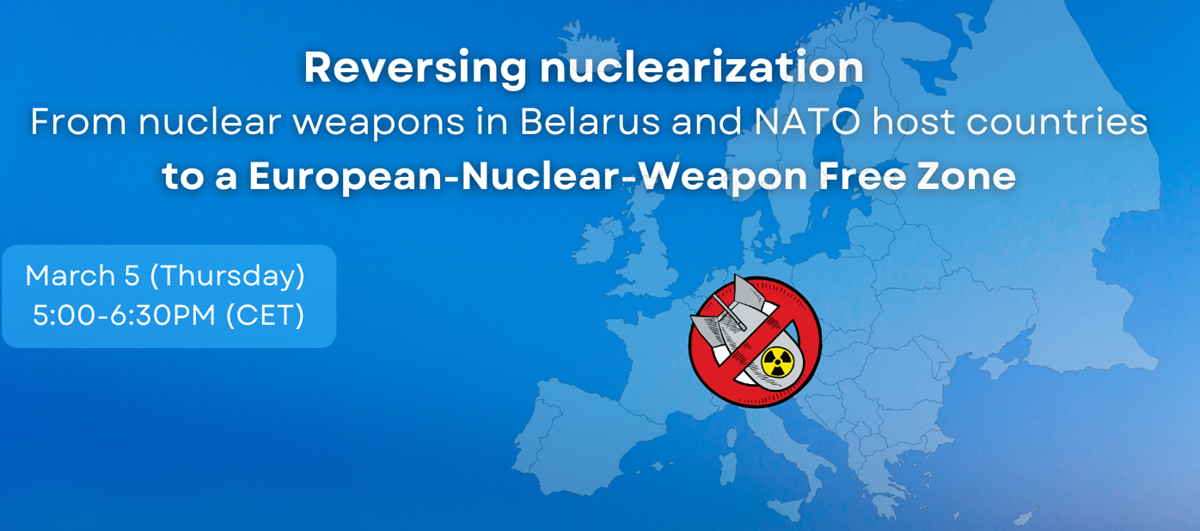
5 March -Online – Reversing nuclearization:
From nuclear weapons in Belarus and NATO host countries to a European-Nuclear-Weapon Free Zone
11am-12:30pm Eastern Time USA / 5pm-6:30pm CET

of the week – Advocating for a
nuclear free beach – https://www.samuellawrencefoundation.org/
The Samuel Lawrence Foundation advocates for a Nuclear Waste Free Beach at San Onofre, join us and take action!

10 March A LIVE WEBINAR THE REAL EFFECTS OF NUCLEAR POWER
What the Industry Isn’t Telling Us
1:00 PM Mountain, 2 pm Central, 3 pm Eastern. Live on the Keepers of the Water Facebook page

18 March Webinar @ 1 PM EST: An Assessment of SMR Projects: The Case of Canada
register for the zoom:
https://us02web.zoom.us/webinar/register/WN_o8BIIOUvQ2ONJR1nta65DQ#/registration

of the week – STOP SMALL MODULAR REACTORS IN CANADA
To see nuclear-related stories in greater depth and intensity – go to https://nuclearinformation.wordpress.com
-
Archives
- March 2026 (27)
- February 2026 (268)
- January 2026 (308)
- December 2025 (358)
- November 2025 (359)
- October 2025 (376)
- September 2025 (258)
- August 2025 (319)
- July 2025 (230)
- June 2025 (348)
- May 2025 (261)
- April 2025 (305)
-
Categories
- 1
- 1 NUCLEAR ISSUES
- business and costs
- climate change
- culture and arts
- ENERGY
- environment
- health
- history
- indigenous issues
- Legal
- marketing of nuclear
- media
- opposition to nuclear
- PERSONAL STORIES
- politics
- politics international
- Religion and ethics
- safety
- secrets,lies and civil liberties
- spinbuster
- technology
- Uranium
- wastes
- weapons and war
- Women
- 2 WORLD
- ACTION
- AFRICA
- Atrocities
- AUSTRALIA
- Christina's notes
- Christina's themes
- culture and arts
- Events
- Fuk 2022
- Fuk 2023
- Fukushima 2017
- Fukushima 2018
- fukushima 2019
- Fukushima 2020
- Fukushima 2021
- general
- global warming
- Humour (God we need it)
- Nuclear
- RARE EARTHS
- Reference
- resources – print
- Resources -audiovicual
- Weekly Newsletter
- World
- World Nuclear
- YouTube
-
RSS
Entries RSS
Comments RSS
 nuclear-news