Radioactive contamination spreading within Hanford plant
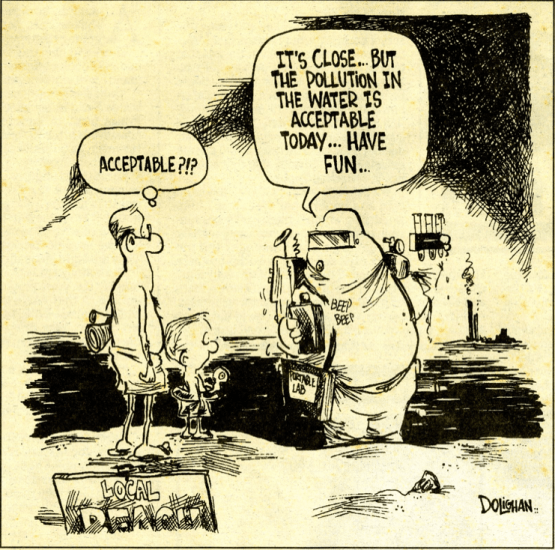
Image source; http://toronto.mediacoop.ca/audio/cnscs-marc-drolet-20mins-radioactive-contamination-peterborough-area/11040
January 1, 2017 8:55 Pm
Article source ; http://www.tri-cityherald.com/news/local/hanford/article124127169.html
Radioactive contamination is spreading within one of Hanford’s huge processing plants, and the problem could escalate as the plant, unused since the 1960s, continues to deteriorate.
A new report on the Reduction-Oxidation Complex, more commonly called REDOX, recommends that $181 million be spent on interim cleanup and maintenance of the plant. REDOX is not scheduled to be demolished until about 2032, or possibly later because the nearby 222-S Laboratory in central Hanford will be needed to support the Hanford vitrification plant for another 30 to 40 years.
REDOX is highly contaminated, after processing eight times more fuel per day than earlier processing plants.
Doing some work on the building soon could reduce the threat of contamination spreading outside the building, including by animals, a break in a utility pipe or a fire, according to the report. Recommended work also would help protect Hanford workers.
REDOX was used from 1952-67 to process about 24,000 tons of irradiated uranium fuel rods to remove plutonium for the nation’s nuclear weapons program and also to recover uranium to reuse in new fuel rods. It is highly contaminated, after processing eight times more fuel per day than earlier processing plants.
The main building is huge, measuring 468 feet long, 161 feet wide and 60 feet tall, with additional underground processing area.
Each annual inspection of some parts of the plant from 2012-15 found an escalation in the spread of radioactive contamination, including by precipitation that has leaked through the roof and joints of the concrete building.
Spread of contamination has been observed throughout the buildings and will intensify as the facilities continue to degrade.
DOE report on REDOX
Salt used to neutralize the contaminated processing system after it was shut down in 1967 appears to have corroded through some of the stainless steel process piping, according to an earlier Defense Nuclear Facilities Safety Board staff report.
Plastic bags were taped on one processing line to catch any drips of residual plutonium nitrate in places where leaks were anticipated. Two of the bags hold significant amounts of plutonium nitrate, which will spread if the bags leak, the DOE report said.
Signs of animal intrusion and deteriorating asbestos have been found in inspections of several areas.
The main part of the plant — a long, high “canyon” — has not been entered since 1997. But “based on current conditions in areas where surveillance inspections are performed, water accumulation, animal intrusion, structure deterioration and contamination spread are expected,” the report said.
REDOX was used from 1952-67 to process about 24,000 tons of irradiated uranium fuel rods to remove plutonium for the nation’s nuclear weapons program and also to recover uranium to reuse in new fuel rods.
The report considered three plans to slow down deterioration and take action to confine contamination and reduce its spread, recommending the most extensive of the three alternatives. The plans range in cost from $148 million to $181 million.
Actions would include tearing down the plant’s radioactively contaminated Nitric Acid and Iodine Recovery Building and the main plant’s attached annexes. Two underground, single-shell tanks used to hold up to 24,000 gallons each of hexone also would be removed, if possible. Hexone was used in the process to extract plutonium from fuel rods.
Elsewhere in the plant, steps would be taken to reduce current hazards, which also could help prepare for the eventual demolition of the plant. Waste could be stabilized by isolating it or covering it with a fixative. Piping out of the plant could be plugged, fluids could be drained from piping and equipment, and some equipment could be removed.
Modifications to the plant’s ventilation system would be needed for some of the work.
The actions also target maintaining a skilled workforce at the Hanford Site that is experienced in contaminated deactivation and decommissioning work, which will be needed when major funding becomes available in the future.
DOE report on REDOX
Doing the proposed work would help retain workers experienced in decommissioning nuclear facilities at Hanford. They will be needed as more federal money becomes available for central Hanford environmental cleanup in the future, the report said.
DOE will consider public comments before a decision is made to proceed with work. Work would be done over the next several years as money is available and as the need for the work at REDOX is balanced against other Hanford cleanup priorities.
Public comment may be sent until Jan. 20 to REDOXEECA2016@rl.gov or to Rich Buel, DOE; Richland Operations Office; P.O. Box 550, A7-75; Richland, WA 99352.
Annette Cary: 509-582-1533, @HanfordNews
Nuclear -Failed energy?
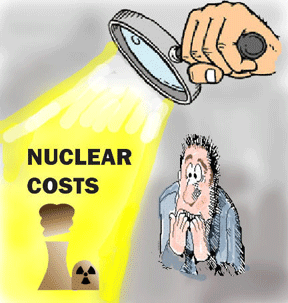
As nuclear power plants age, risks rise. The environment, workers and communities are left to pay for America’s failed energy investment.
Article source; http://www.mpnnow.com/news/20170101/failed-energy
SEABROOK, N.H. – Paul Gunter steps out of his Jeep in a near-empty parking lot off Seabrook’s Ocean Boulevard, unfolds his 6-foot-7-inch frame and tugs the bill of a well-worn cap against the sun. Behind him, anglers hang lines into Hampton Harbor from a nearby pier, and kayakers and swimmers play in the water. They take no notice of the Seabrook Station nuclear power plant, which looms from the other shore.
But Gunter notices, and has noticed for more than 40 years now. It was in 1976, at a picnic table near here, that he and a small band of like-minded citizens formed the Clamshell Alliance, one of the nation’s oldest and most active anti-nuclear groups.
The Seabrook power plant was just in the planning stages back then. But incidents at existing plants had raised alarms: In 1966, a blocked cooling system caused a partial fuel meltdown at the Fermi reactor in Michigan; 10 years later, a fire broke out at the Browns Ferry reactor in Alabama, started by a candle being used to check for fuel leaks.
All this as President Richard Nixon, in 1973, pledged to make the U.S. energy-independent by building 1,000 nuclear power plants – touted by proponents as a source of clean, inexpensive energy – by the year 2000.
Gunter and his associates mobilized. They named their movement for the environmentally sensitive marshes and clam beds that bordered the planned site of the Seabrook plant. They pledged to oppose all nuclear power in New England and, along the way, became a model for the mass nonviolent anti-nuke demonstrations that swept across the country.
The movement was successful. One Seabrook reactor was ultimately completed, but 10 years after its initially projected startup and at a $7 billion cost that bankrupted the public utility group behind the endeavor. A second planned reactor at Seabrook was never built.
Gunter is 67 now. In the U.S., the promise of nuclear power was never realized; barely 10 percent of the projected plants were ever built, and so far none has experienced the kind of catastrophic events seen at Chernobyl in Ukraine or Fukushima in Japan.
So far. For Gunter, those are the operative words. He’s now director of nuclear oversight for Beyond Nuclear, a national group that works to educate the public about the dangers of nuclear power and the benefits of renewable energy sources such as wind and solar. And these days, he tries to get people to understand that the fallout of America’s nuclear plants is much more pervasive than a potential radiation leak.
Rather, that fallout includes long-term damage to the environment and safety risks posed by the tons of radioactive spent fuel left at reactor sites.
“We realized even then that nuclear power was going to be dirty, dangerous and expensive,” Gunter says as he squints toward Seabrook. “These are things we said back then, and the same holds true today.”
What it means for communities
Fifty years after the U.S. launched a bold plan to invest in nuclear power, most of the promises of clean, inexpensive energy have failed to materialize. Plants often cost far more than projected and took years longer to build – driving up rates for consumers. Many plants were never completed, instead becoming a debt utility companies passed on to ratepayers.
In New York state, the Ginna Nuclear Power Plant that has operated since 1970 in the town of Ontario, Wayne County, was recently earmarked for shutdown with much cheaper forms of energy such as natural gas making it hard to compete. Basically, nukes need more money than they now make in the wholesale market.
Then along came the governor’s plan to pump up renewables. Under Gov. Andrew Cuomo’s Clean Energy Standard, 50 percent of New York’s electricity will come from renewable energy sources by 2030. Cash flow for producers of renewables such as wind, solar and nuclear will come from a monthly fee customers see on their electricity bill, not more than $2 for the average household, according to the governor. Barring success of lawsuits over the plan, Ginna’s future looks secure, at least through its current contract to 2029.
For the Rochester region’s more than 300,000 Rochester Gas & Electric customers, whether or not Ginna closes will have no effect on service. The $150 million Ginna Retirement Transmission Alternative Project (GRTA) now underway is upgrading the RG&E system to break free of reliance on Ginna. “When we finish this project, we will have the capacity to disconnect,” said John Carroll, spokesman for RG&E parent company Avangrid.
The project is expected to wrap up by the end of March 2017.
RG&E has been dependent on Ginna “as a critical clog,” Carroll said. GRTA will change that. RG&E will continue tapping into the power generated by the nuclear power facility in Wayne County, along with other sources in the mix such as natural gas, hydro-electric, wind and coal. But if the nuclear plant were to close, RG&E would experience no hiccups, and customers wouldn’t notice. A RG&E surcharge (about $2 a month for an average household) that customers have been paying due to Ginna power will go away over time, Carroll said.
However, all electricity customers statewide can look forward to a monthly charge due to the state’s Clean Energy Standard. The governor has said the charge won’t be more than $2 for an average household.
Reason to fear?
Meanwhile, the direst fears of anti-nuclear activists also have not played out. Although there are rashes of safety incidents, the most serious U.S. incident being the 1979 partial meltdown of a reactor at Three Mile Island, there has never been the kind of catastrophe seen at the Chernobyl plant or, more recently, at the Fukushima reactor.
But skeptics such as Gunter say risks are still with us. As reactors age, they are more prone to accidents caused by worn-out parts. In some cases, operating licenses are being renewed far beyond a plant’s planned shelf life, meaning expensive upgrades and extra-vigilant maintenance – things not always tended to by strapped utilities.
Of even greater concern to the nuclear watchdogs: the vast and growing piles of spent nuclear fuel. There is still no known way to store used fuel long-term that guarantees it won’t leak during the tens of thousands of years some components remain radioactive. The 76,000 metric tons of dangerous nuclear waste that already has been generated now sits on plant sites across the country. To give that number perspective, if existing radioactive fuel assemblies were stacked end to end and side by side, they would stand more than two stories high and cover a football field.
And there is another impact – one that perhaps even the most ardent of anti-nuclear activists did not envision. Across the country, communities expanded and grew dependent on the nuclear plant in their backyards. Now, as many of those plants cut back or are decommissioned, economic vitality is gutted. Jobs and middle-class lifestyles disappear. Housing prices collapse. Tax bases dwindle, undermining everything from school budgets to road repairs.
Out of work
1 This Month


18 March Webinar @ 1 PM EST: An Assessment of SMR Projects: The Case of Canada
register for the zoom:
https://us02web.zoom.us/webinar/register/WN_o8BIIOUvQ2ONJR1nta65DQ#/registration


of the week – STOP SMALL MODULAR REACTORS IN CANADA
To see nuclear-related stories in greater depth and intensity – go to https://nuclearinformation.wordpress.com
-
Archives
- March 2026 (141)
- February 2026 (268)
- January 2026 (308)
- December 2025 (358)
- November 2025 (359)
- October 2025 (376)
- September 2025 (258)
- August 2025 (319)
- July 2025 (230)
- June 2025 (348)
- May 2025 (261)
- April 2025 (305)
-
Categories
- 1
- 1 NUCLEAR ISSUES
- business and costs
- climate change
- culture and arts
- ENERGY
- environment
- health
- history
- indigenous issues
- Legal
- marketing of nuclear
- media
- opposition to nuclear
- PERSONAL STORIES
- politics
- politics international
- Religion and ethics
- safety
- secrets,lies and civil liberties
- spinbuster
- technology
- Uranium
- wastes
- weapons and war
- Women
- 2 WORLD
- ACTION
- AFRICA
- Atrocities
- AUSTRALIA
- Christina's notes
- Christina's themes
- culture and arts
- Events
- Fuk 2022
- Fuk 2023
- Fukushima 2017
- Fukushima 2018
- fukushima 2019
- Fukushima 2020
- Fukushima 2021
- general
- global warming
- Humour (God we need it)
- Nuclear
- RARE EARTHS
- Reference
- resources – print
- Resources -audiovicual
- Weekly Newsletter
- World
- World Nuclear
- YouTube
-
RSS
Entries RSS
Comments RSS
 nuclear-news