What Does A Trump Presidency Mean For Climate-Change Education? #auspol

By Tania Lombrozo

On Nov. 8, the World Meteorological Organization published a press release summarizing the findings from a report on global climate from 2011-2015.

The report identified the last five years as the hottest on record, with 2015 marking the first year with global temperatures more than 1 degree Celsius above the pre-industrial era. Arctic sea ice declined, sea levels rose and many extreme weather events occurred — events that were “made more likely as a result of human-induced (anthropogenic) climate change.”
The same day the press release was published, Donald Trump was elected as the next president of the United States.

This combination of events is deeply troubling. Trump has called climate change a hoax and has threatened to withdraw from the 2015 Paris agreement to limit climate change. Already, Trump has named climate skeptic Myron Ebell to head his Environmental Protection Agency transition team.
More generally, there’s…
View original post 1,612 more words
November 21 Energy News

Opinion:
¶ “Solar And Wind Versus Nuclear: Is Baseload Power Obsolete?” Renewables coupled with efficient, cost effective energy storage make grids virtually obsolete. Utility companies are petrified they may become irrelevant and the trillions of dollars invested in building grids throughout the world will no longer produce income. [PlanetSave.com]
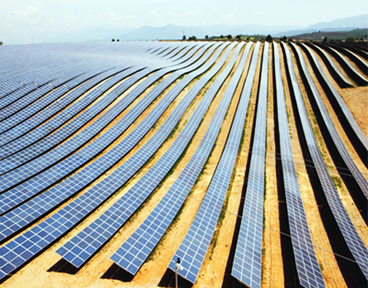 Solar installation (via Quora)
World:
¶ S&P Global Platts reports that European power prices spiked
in early November as unscheduled nuclear outages in France continued to squeeze supply margins across Northwest Europe. Doubts continued to assail the market in mid-November, holding baseload prices for next January at up to €140/MWh ($149/kWh). [ScandOil]
¶ Between November 1 and November 15, Brazil’s wind power output rose by 53.6% on the year to an average of 4,817 MW, according to preliminary figures released by the Power Trading Chamber. Wind power’s share of Brazilian power generation grew to 7.8%. Biomass and…
View original post 635 more words
Gov Nikki Haley $55,000 from Holtec Nuclear’s Kris Singh; Sec of State Interprets Treaties; Possible Conflict of Interest in Application of Nuclear Liability Agreement

Among the functions of the Secretary of State: “Negotiates, interprets, and terminates treaties and agreements“. http://www.state.gov/secretary/115194.htm
This appears to include the “Convention on Supplementary Compensation for Nuclear Damage” which is a shared nuclear liability agreement, including the US and India. Apparently above a certain amount, US vendors and/or taxpayers will be responsible for 1/3rd of the cost of a nuclear disaster in India under this Convention. This CSC convention only benefits those who sell defective nuclear parts, do faulty construction-installation and/or utilities which cut corners. There is no incentive to make quality products or do maintenance, if you must pay for the cost-cutting and mistakes of competitors. Both CSC and the US Price Andersen should be canceled and the individual nuclear providers held liable for their products, along with the utilities.
If Governor Nikki Haley becomes Secretary of State, she could have a huge conflict of…
View original post 1,917 more words
Magnitude 6.9 Earthquake Strikes Off Japanese Coast, Tsunami Warning

An earthquake with a preliminary magnitude of 7.3 hit northern Japan on Tuesday, the Japan Meteorological Agency said, generating a tsunami that hit the nation’s northern Pacific coast.
The U.S. Geological Survey initially put Tuesday’s quake at a magnitude of 7.3 but down graded it to 6.9.
The earthquake, which was felt in Tokyo, was centered off the coast of Fukushima prefecture at a depth of about 10 km (6 miles) and struck at 5:59 a.m. (2059 GMT) the agency said.
USGS said that it was a shallow quake, at about 10 kilometers, which tended to cause more shaking damage and had greater potential to cause a tsunami.
“The good news here is that the direction the fault was moving is a slight lateral slip. When the faults move laterally they do not create the vertical movement associated with large tsunamis,” the U.S. agency said.
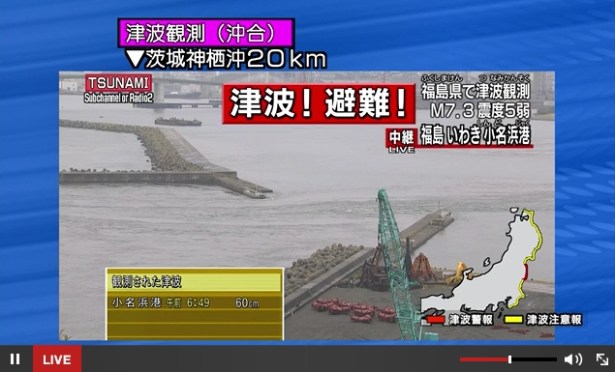
A 60 cm (2 foot) tsunami had been observed at Iwaki city’s Onahama Port and a 90 cm (3 foot) tsunami at Soma Port soon after, public broadcaster NHK said. The region is the same that was devastated by a tsunami following a massive earthquake in 2011. A tsunami warning of up to 3 meters (10 feet) has been issued.

Japan’s chief government spokesman Yoshihide Suga said that a government taskforce had been established to deal with the quake and tsunami, and called on people in affected areas to evacuate, according to media outlet NHK.
NHK also reported that water could be seen moving bath and forth in Onahama Port and that tide levels were rising in some areas on Japan’s eastern coast. Television footage showed ships moving out to sea from Fukushima harbors as tsunami warning signals wailed.
Tokyo Electric Power, known as Tepco, said on its website that no damage from the quake has been confirmed at any of its power plants, although there have been blackouts in some areas. Tepco’s Fukushima Daiichi nuclear plant caused Japan’s worst nuclear disaster when it was knocked out by the 2011 tsunami.
Tohoku Electric Power said there was no damage to its Onagawa nuclear plant, while the Kyodo news agency reported there were no irregularities at the Tokai Daini nuclear plant in Ibaraki Prefecture.
Earthquakes are common in Japan, one of the world’s most seismically active areas. Japan accounts for about 20 percent of the world’s earthquakes of magnitude 6 or greater.
The March 11, 2011, quake was magnitude 9, the strongest quake in Japan on record. The massive tsunami it triggered caused world’s worst nuclear crisis since Chernobyl a quarter of a century earlier.
An Iwaki city fire dept official said there was smoke or fire at Kureha’s research center in a petrochemical complex in Iwaki city at 6:17 a.m., but it was extinguished at 6:40 a.m. Other details were not clear, he said, adding that no other major damage in the city has been reported at the moment.
One hotel in Ofunato, badly hit by the 2011 quake, told guests to stay in the facility, which is on high ground.
All nuclear plants on the coast threatened by the tsunami are shut down in the wake of the 2011 Fukushima disaster. Only two reactors are operating in Japan, both in the southwest of the country. Even when in shutdown nuclear plants need cooling systems operating to keep spent fuel cool.
At Fukushima Daiichi, the plant workers are reporting they felt shaken even in the seismic isolation building. Most of the workers have not come to the plant for today yet. The situation is still under investigation. No further information yet.
At Fukushima Daini, Tepco said that its water-cooling system for spent fuel at reactor 3 had stopped working at 6:10AM but that there was enough water in the pool to keep the fuel cool, posing no immediate danger. Tepco rebooted the coolant system of SFP 3 of Fukushima DAINI at 7:47AM (JST).
http://www.jma.go.jp/en/quake/20161122061144495-220559.html
http://www.cnbc.com/2016/11/21/magnitude-73-earthquake-hits-japan-usgs-says.html
https://twitter.com/nhk_seikatsu/status/800825947507212288
https://www.pref.fukushima.lg.jp/sec/16025c/genan10.html
http://www3.nhk.or.jp/news/html/20161122/k10010779181000.html
Off Fukushima coast – tsunami warning has been issued, following earthquake
Tsunami warning issued after earthquake off Fukushima, Japan, SMH, 22 Nov 16 A tsunami warning, with waves of up to three metres, has been issued for Fukushima following a magnitude 7.3 earthquake on Tuesday morning.
NHK, Japan’s national public broadcaster, is showing a livestream of the coast around Fukushima, where a three-metre tsunami is expected to hit.
NHK said a tsunami had already been observed about 20 kilometres off Fukushima’s coastline, at 6.06am local time.
At 6.49am, a 60 centimetre tsunami was observed at the Port of Onahama, at Fukushima. NHK said back wash has been reported, as the sea level decreases for the approach of a tsunami.
MA said the tsunami height is estimated to be one to three metres in the Fukushima area. Tsunami waves are expected to hit repeatedly, the warning said.
The epicentre of the earthquake, which was felt in Tokyo, was off the coast of Fukushima prefecture at a depth of about 10 kilometres, the Japan Meteorological Agency (JMA) said.
Residents are being told to evacuate from coastal regions and riverside areas to a safe place, such as higher ground or an evacuation building immediately.
NHK is repeatedly telling people in coastal areas of the Fukushima prefecture to evacuate to higher ground immediately….. .http://www.smh.com.au/world/tsunami-warning-issued-after-earthquake-off-fukushima-japan-20161121-gsuh5y.html
Temporary Radioactive Soil Storage Sites Hinder Fukushima Farmers

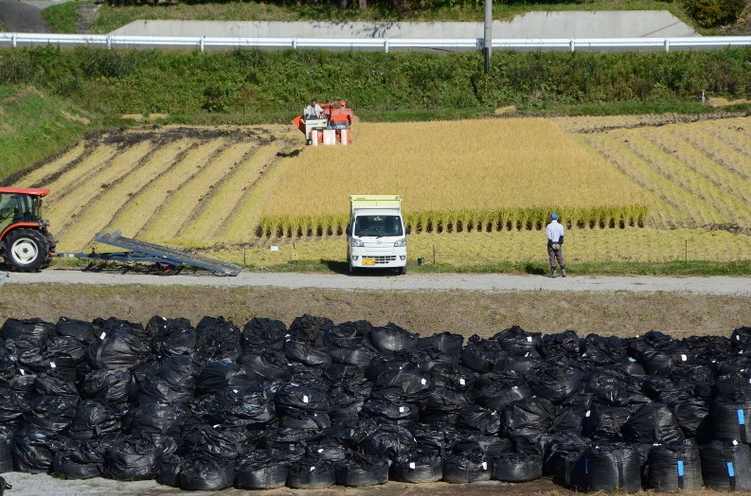
Farmers harvest rice in one of Hisayoshi Shiraiwa’s paddies in Katsurao, Fukushima Prefecture, on Oct. 19, 2016. Another rice paddy in the foreground serves as a temporary storage site for piles of black plastic bags containing radioactive soil.
FUKUSHIMA — Wide swaths of temporary storage sites for radioactive soil and other waste generated from decontamination work in areas around the crippled Fukushima No. 1 Nuclear Power Plant are hampering locals from resuming farming, it has been learned.
The makeshift storage sites occupy roughly 1,000 hectares in total, or an area the size of 213 Tokyo Domes, across zones currently or formerly designated for evacuation in 11 municipalities in Fukushima Prefecture, according to the Ministry of the Environment. The high occupancy is the result of delayed work to develop interim storage facilities for contaminated soil.
Because slightly over 90 percent of those temporary storage sites lie on farmland, local governments are deprived of the very foundation for restoring farming — a key local industry — in those areas while farmers are concerned about possible damage caused by harmful rumors.
According to the Environment Ministry, there are about 280 temporary storage sites in areas designated as evacuation zones. Those storage sites — which are leased to the ministry by local farmers — accommodate over 7 million black plastic bags containing radioactive soil, grass and branches. Those flexible container bags — each capable of containing 1 cubic meter of soil and other waste — are commonly known as “flecon baggu” in Japanese.
Under the ministry plan, interim storage facilities will be built in areas totaling some 1,600 hectares in the so-called “difficult-to-return” zones in the prefectural towns of Futaba and Okuma around the Fukushima No. 1 plant. Under the scheme, radioactive soil temporarily stored at different locations in Fukushima Prefecture will be transported there for longer storage periods spanning up to 30 years before it is put to final disposal outside the prefecture.
While the ministry had initially sought to begin construction of interim storage facilities in July 2014, delays in negotiations with local residents and efforts to acquire land lots made it impossible to meet the schedule. The ministry aims to finish acquiring up to 70 percent of land necessary for the construction of interim storage facilities by the end of fiscal 2020, but the land it had managed to acquire by the end of October this year stood at a mere 170 hectares, or only 10 percent of the planned area.
The Environment Ministry estimates that up to 22 million cubic meters of contaminated soil and other waste will be generated across Fukushima Prefecture, but the interim storage facilities are expected to be able to accommodate no more than 12.5 million cubic meters of such waste by the end of fiscal 2020.
The Fukushima Prefecture village of Katsurao, where evacuation orders were lifted in most areas in June, has been pushing restoration of farming as a key policy measure. However, the total size of rice paddies in the village has dropped from some 130 hectares operated by roughly 270 households in 2010 — prior to the Fukushima meltdowns — to around 6 hectares operated by 11 households this year. Nearly 30 percent of the village’s rice paddies totaling some 220 hectares now serve as temporary storage sites for radioactive soil and other waste.
Hisayoshi Shiraiwa, a 70-year-old farmer in Katsurao, harvested rice in his paddy in October, which is adjacent to another paddy that serves as a temporary storage site for piles of black plastic bags containing radioactive soil. As the price of rice from the area hasn’t recovered to pre-disaster levels, local farmers are worried about prolonged reputational damage.
“As long as temporary storage sites remain here, farmers will lose their motivation and face a shortage of successors,” Shiraiwa said.
http://mainichi.jp/english/articles/20161120/p2a/00m/0na/004000c
Ice wall at Fukushima plant examined
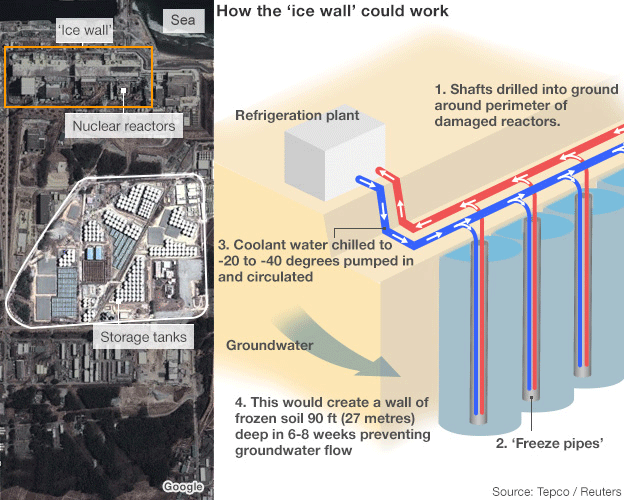
Government officials have examined an underground ice wall built around Japan’s crippled Fukushima Daiichi nuclear plant to confirm whether the soil has frozen.
Work is ongoing to build a 1.5 kilometer barrier of frozen soil encircling reactor buildings. The goal is to prevent underground water from seeping into the plant premises, resulting in more tainted water.
Coolants are being circulated from pipes buried around the reactor site.
Work to build an ice wall began in March, and is almost completed.
State minister for industry, Yosuke Takagi and others on Monday looked at an exposed section of the ice wall.
They said the ice wall had hardened enough to withstand being hit with a hammer.
Officials say prior to construction of the ice wall, workers collected some 350 tons of underground water on a daily basis. The amount has shrunk to about 200 tons.
Japan’s nuclear regulator is also planning to assess the effectiveness of the ice wall installment.
Pro-Nuclear Candidate Wins in Kashiwazaki-Kariwa Nuclear Plant Host City
Pro-nuclear candidate wins mayoral race in plant host city
KASHIWAZAKI, NIIGATA PREF. – A candidate who pledged to conditionally approve the restart of the world’s biggest nuclear power plant has been elected mayor of Kashiwazaki, Niigata Prefecture.
Masahiro Sakurai, a 54-year-old former member of the city’s assembly, on Sunday defeated Eiko Takeuchi, 47, a former municipal employee who opposes the restart of the Kashiwazaki-Kariwa complex on the Sea of Japan coast.
During the campaign, Sakurai said he would not reject a restart of the power plant if Tokyo Electric Power Company Holdings Inc. takes into account the opinions of nearby residents and ensures the facility’s safety.
He was supported by the Liberal Democratic Party and local businesses.
Takeuchi promised not to accept the plant restart, saying it will expose the public to danger. She had official support from the Japanese Communist Party and the Social Democratic Party.
Speaking with reporters Monday morning, Sakurai repeated his pledge to gradually reduce dependence on nuclear power but that he sees value in the plant operating for a certain period of time.
He also referred to decommissioning some of the reactors, saying the process should create jobs in the city.
It remains uncertain whether Tepco will be able to resume operation of the plant due to opposition from Niigata Gov. Ryuichi Yoneyama, who was elected in October.
An agreement, though nonbinding, between the utility, Kashiwazaki and Niigata Prefecture is essential to restart the nuclear power station.
The power station straddles Kashiwazaki and the village of Kariwa.
Kariwa Mayor Hiroo Shinada, who supports restarting the plant, was handed a fifth term Nov. 15 when no one ran against him.
Whether to restart nuclear facilities has dominated several local elections across Japan, especially since the accident at the Fukushima No. 1 nuclear power plant in March 2011.
Reactors 6 and 7 at the Kashiwazaki-Kariwa plant are boiling water units, the same type that suffered core meltdowns at Fukushima No. 1, raising safety fears.
If all of its seven units are in operation, Kashiwazaki-Kariwa is the world’s largest nuclear power complex, boasting a combined output capacity of around 8.2 million kilowatts.
Mayoral candidate in Japan campaigning to bring world’s biggest nuke plant back online set to be elected: exit polls
A pro-nuclear power advocate who campaigned on a platform of rebooting the world’s largest nuclear power plant is placed to win the mayoral election in the Japanese City of Kashiwazaki, in Niigata Prefecture, exit polls reported by local media showed Sunday.
According to Kyodo News, Masahiro Sakurai, 54, who formerly worked for the city council in Kashiwazaki, will become mayor, having beaten his opponent Eiko Takeuchi, 47, a former employee of the city, who stood in opposition of the Kashiwazaki-Kariwa nuclear complex being restarted.
Despite the likely win for Sakurai however and his plans to bring the mega-plant on the Sea of Japan back on-line, the plant’s utility may not get the green light to restart its idled reactors, as a month earlier Ryuichi Yoneyama, an anti-nuclear candidate, won the gubernatorial election in Niigata Prefecture.
Yoneyama winning the race was a major blow to Tokyo Electric Power Company Holdings Inc. as well as Prime Minister Shinzo Abe’s ruling administration, who favors bringing the nation’s nuclear power plants, idled in the wake of the Fukushima disaster in 2011, back online, as he has unequivocally stated that he will not accept the plant being restarted.
“Let me clearly say that I cannot accept the restart of the Kashiwazaki-Kariwa plant under the current circumstances where I cannot protect people’s lives and live as I have promised,” Yoneyama was quoted as saying to his supporters recently, with reference to major concerns in the area over the plant’s checkered safety record.
The Kashiwazaki-Kariwa power station that Sakurai wants to reboot is located in the towns of Kashiwazaki and Kariwa in Niigata Prefecture, on the Sea of Japan, and was central to Yoneyama’s winning campaign, with incumbent Gov. Hirohiko Izumida, who was not seeking reelection, also voicing skepticism over the safety of the plant’s restart.
For the power station, with a potential output of 8.2 million kilowatts making it the largest in the world to be restarted, an accord has to be struck between the city, the prefecture and the utility, with Yoneyama likely to be the bottle-neck.
Safety concerns have been rife in the region as the Kashiwazaki-Kariwa plant’s Nos. 6 and 7 units use the same boiling water technique as the reactors at TEPCO’s Daiichi plant in Fukushima that suffered multiple meltdowns in 2011, leading to the worst nuclear disaster since Chernobyl in 1986.
The Kashiwazaki-Kariwa plant itself has been no stranger to accidents and controversy and in 2007 an earthquake caused reactors at the plant to catch fire and leak radioactive materials. As with Fukushima Daiichi, the plant is also owned and operated by the embattled Tokyo Electric Power Company (TEPCO), which is currently under state control.
Following TEPCO’s numerous coverups, continued misinformation and other monumental gaffes related to the ongoing Fukushima disaster, public opinion towards the utility, and, by default, the government here, has remained indignant and distrusting.
http://www.traderplanet.com/news/view/130585/
Pro-reactor restart candidate wins mayoral race
Voters in a Japanese city that hosts an offline nuclear power plant have chosen their new mayor. Independent Masahiro Sakurai conditionally supports plans to restart the plant.
He defeated the only other candidate, who opposes the restart, in the election in Kashiwazaki, Niigata Prefecture, on Sunday.
Sakurai endorses the plan to restart the Kashiwazaki-Kariwa plant with some conditions, including ensuring its safety. He also insists that the number of nuclear plants needs to be reduced in the future.
During his campaign, Sakurai said the plant’s operator, Tokyo Electric Power Company, as well as the central government should play a proactive role in preventing nuclear disasters. He promised to work for necessary legal revisions.
Sakurai also urged the city to overcome the division regarding the restart.
He garnered support from local business leaders and many municipal assembly members.
Last month, a candidate with a cautious stance toward the restart won the election to become the prefecture’s governor.
A Preposterous Proposal on Nuclear Accident Compensation

The industry ministry has put forth a ridiculous proposal on financing compensation payments to victims of nuclear accidents.
In essence, the ministry’s proposal is designed to bail out operators of nuclear power plants that have failed to set aside compensation money for possible accidents at facilities that have been in service for decades.
To secure necessary funds for potentially huge compensation payments, the ministry wants to require old customers to bear part of the burden.
The Ministry of Economy, Trade and Industry, which regulates the power industry, has submitted this proposal to a panel of experts discussing the issue.
This effectively means shifting the cost of bad management to people who are not responsible, an approach that defies common sense in the world of business management and obscures the responsibility of the operators. The ministry should withdraw the proposal.
The law concerning compensation for nuclear accident-related damages stipulates that in principle operators are responsible for paying compensation for all damages caused by accidents at their facilities.
But the 2011 disaster at the Fukushima No. 1 nuclear power plant, operated by Tokyo Electric Power Co., prompted the government to set up an entity to pay compensation to the victims. Under this arrangement, TEPCO and other established electric utilities will pay back the money over a long period of time.
This new system, based on the notion of mutual help, is designed to get nuclear power plant operators involved in a joint effort to cover the risks of nuclear accidents.
The utilities involved are allowed to raise their electricity rates to finance contributions to the system. So the burden is actually borne by customers of the utilities.
The ministry’s new proposal would widen the scope of contributors to the pool of money for compensation payments. The new contributors include electricity suppliers that have entered the market in response to its liberalization even though they don’t operate nuclear power plants.
Specifically, the new utilities would be required to make contributions through the increased fees they pay to use the power transmission lines operated by established utilities. That would force almost all people in this country to shoulder part of the burden.
Here’s the ministry’s case for this scheme.
The money needed to pay compensation for damages caused by nuclear accidents should have been set aside since the 1960s, when nuclear power generation started in Japan. So it is appropriate to require people who paid low electricity rates that didn’t include this cost to bear the burden now.
Behind the ministry’s move is the fact that the total compensation amount related to the Fukushima nuclear disaster has already surpassed the original estimate and is now reaching 6 trillion yen ($54 billion). The amount is expected to grow in the coming years.
Even so, if past beneficiaries of low electricity rates are involved, the established utilities should be first forced to use the profits they accumulated in the past through their nuclear power operations.
At the very least, no consumer would accept such a new financial burden unless the utilities are held responsible for failing to save up for emergencies during the past half century.
The ministry has also proposed similar plans to tap the fees paid by new power suppliers for use of established utilities’ transmission cables to cover the costs of decommissioning the reactors at the crippled Fukushima plant and aging reactors at other plants.
The latest proposal is the third scheme based on this approach.
Imposing part of the burden on newcomers in the power market is tantamount to giving preferential treatment to nuclear power and undermines the fair competitive environment that is the foundation for power deregulation.
Some consumers have switched from established utilities to new power suppliers because of their aversion to nuclear power generation.
Clearly, adequate compensation should be paid to victims of nuclear accidents.
But the costs related to nuclear power generation should be shouldered by the operators of nuclear plants. An unreasonable scheme to shift this burden from the operators is simply unacceptable.
http://www.asahi.com/ajw/articles/AJ201611210025.html

Skiing in Fukushima
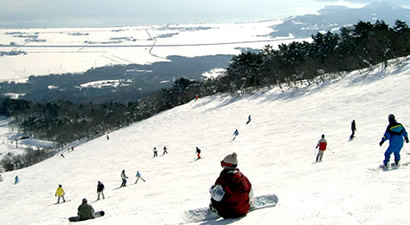
Fukushima mounts winter tourism offensive to draw foreign tourists to its snowy charms
A project will kick off in Fukushima Prefecture this winter to lure more foreign tourists to its snowy hills and mountains to help revitalize depopulated regions.
For starters, the prefecture will invite tourists from Taiwan, Thailand and Australia to Okuaizu, Urabandai and southern areas of the prefecture, and subsidize nearly all of their transportation and accommodation costs. About 200 people are expected to participate.
The purpose of the project is to promote Fukushima’s name overseas, raise occupancy at its hotels and inns, and bolster jobs in its tourism industry.
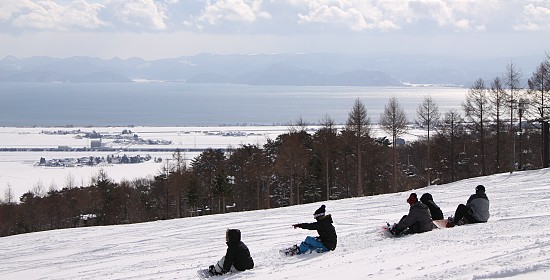
The project will run until fiscal 2018. The Fukushima Prefectural Government plans to earmark about ¥17 million from the central government’s local revitalization subsidies to finance the first year.
The prefecture is coordinating with travel agencies so that areas including the towns of Minamiaizu, Kaneyama and Bandai, as well as the villages of Kitashiobara and Tenei, can welcome visitors from Australia, where skiing is very popular, and Taiwan and Thailand, where Fukushima has tourism offices.
The four towns and villages will get three tours each, including an overnight journey, with the prefecture shouldering most of the transport and accommodation fees.
Each tour is designed so participants can ski, snowboard and have snowball fights in Fukushima’s powder snow, as well as enjoy local snow festivals. There are also plans to reserve a ski resort for a whole weekday just for foreign visitors.
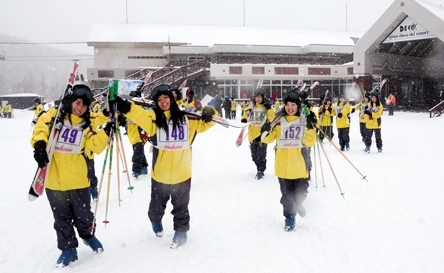
In addition, tourists will be invited to soak in hot springs to interact with local residents after experiencing snow-removal activities. This will be followed by chances to sample the local cuisine and taste sake popular at home and abroad.
Other trips are being planned to famous tourist spots along the Tadami Line, which has gained an overseas following on the internet, and to fishing spots where pond smelt can be caught in Hibara and Hatori lakes.
Once the visitors return home, the project encourages them to spread information on the ski resorts, tourist spots, food and sake they experienced via SNS.
Already, the Fukushima Prefectural Government is looking to create more tours that appeal to a wider range of countries, including China and South Korea.
It intends to set up a study group comprising officials from cities, towns, villages and local tourism associations to analyze the participants’ reactions. Based on the results, the prefecture will set up multiple tourism routes to draw attention ahead of the Tokyo 2020 Olympics.
“Amid tepid demand from Japanese skiers, if the prefecture successfully emphasizes the high quality of its snow, it is possible to lure more tourists from abroad,” said a source connected with a ski resort in the Aizu region.
“We’d like to design a model tour to make the mountainous areas popular in winter,” an official in the prefecture’s regional development section said.
Even though tourism has rebounded since the Fukushima disaster unfolded in 2011, it has not fully recovered.
Last year, foreign tourists who stayed at lodging facilities with more than 20 employees in Fukushima came to 48,090, more than double the 2011 tally, according to the Japan Tourism Agency.
But that’s still far short of the 87,170 who did so in 2010, and the prefecture is hunting for more ways to raise tourism in cooperation with its neighbors in the Tohoku and Kanto regions.
Unease amongst world leaders over Donald Trump’s nuclear policies, and appointments
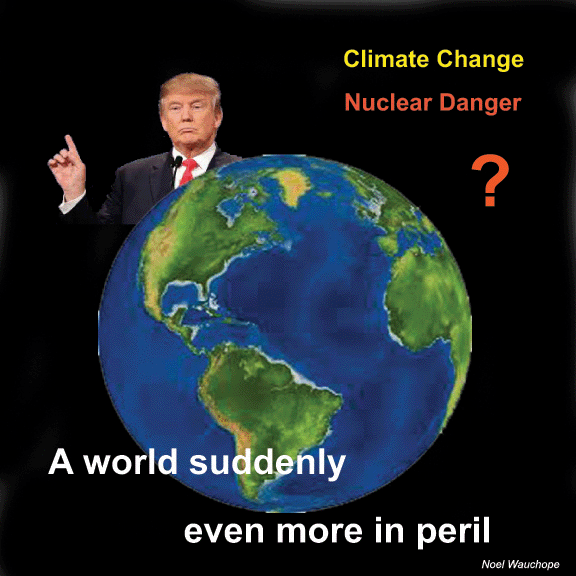 World leaders anxious for Trump’s nuclear policy, The Hill, BY REBECCA KHEEL – 11/20/16 Questions are swirling about whether President-elect Donald Trump will follow through on suggestions during the campaign that he might allow other countries to develop nuclear weapons.
“Nobody likes uncertainty, and the U.S. has been a champion of nonproliferation for decades,” said James Goldgeier, dean of the School of International Service at American University. “To have a candidate during the campaign suggest that it’s fine — and also suggesting with more than a hint that the U.S. didn’t necessarily view traditional alliance obligations the same way — is unprecedented. So it creates uncertainty.”
At various points during the campaign, Trump said that if Japan, South Korea and Saudi Arabia had nuclear weapons, he’s “not sure that would be a bad thing for us.” He said that those countries might be better off with nuclear weapons, adding that he’s “prepared to” let them become nuclear powers if they don’t pay more for U.S. protection.
But in sometimes the same breath, Trump has said he “hate[s] nuclear more than any” and that the “biggest problem, to me, in the world, is nuclear, and proliferation.”…….
Experts say Japan is unlikely to pursue a nuclear weapon because of its history as the only country to have ever been attacked with a nuclear bomb.
But hawks in South Korea who want their country to have its own nuclear weapons have been empowered by Trump’s win………
Pompeo made a name for himself in part as a staunch opponent of the Iran nuclear deal. Flynn also opposes that deal……http://thehill.com/policy/defense/306852-world-leaders-anxious-for-trumps-nuclear-policy
Pacific Island Nations appeal to USA to save them from global warming
The participants also agreed the Marrakech Proclamation, a statement re-affirming the intentions of all 197 signatories to the Paris deal.Seen as show of unity on the issue in the light a possible US withdrawal, countries stated they would live up to their promises to reduce emissions. The proclamation also called on all states to increase their carbon cutting ambitions, urgently.
Some of the poorest nations in the world announced that they were moving towards 100% green energy at this meeting.
The Climate Vulnerable Forum said that the 47 member countries, including Bangladesh, Ethiopia and Yemen, would achieve this goal between 2030 and 2050. And they challenged richer countries to do the same.
Despite these steps forward there were still some areas of significant difference between the parties, especially over money. The talks will continue in 2017 with a new US delegation picked by the Trump administration.
 Climate talks: ‘Save us’ from global warming, US urged http://www.bbc.com/news/science-environment-38034171 19 November 2016 The next head of the UN global climate talks has appealed for the US to “save” Pacific islands from the impacts of global warming.
Fijian Prime Minister Frank Bainimarama said that the islands needed the US now as much as they did during World War Two. He was speaking as global climate talks in Marrakech came to an end.
Mr Bainimarama said that climate change was not a hoax, as US President-elect Donald Trump has claimed. Mr Trump has promised to pull the US out of the Paris Climate Agreement and scrap all payments for UN global warming projects.
But as he accepted the role of president of the Conference of the Parties for the year ahead, the Fijian leader took the opportunity to call on to the next US president to step away from his scepticism.
“I again appeal to the President-elect of the US Donald Trump to show leadership on this issue by abandoning his position that man-made climate change is a hoax,” said Mr Bainimarama.
“On the contrary, the global scientific consensus is that it is very real and we must act more decisively to avoid catastrophe.” He also made a direct call to the American people to come to their aid in the face of rising seas, driven by global warming. Continue reading
Canadian government to review plan to dump nuclear waste close to Great Lakes
“No matter what process is followed, burying and abandoning radioactive nuclear waste in the Great Lakes Basin will always be a bad idea” “The Trudeau government’s environmental credibility is on the line.”
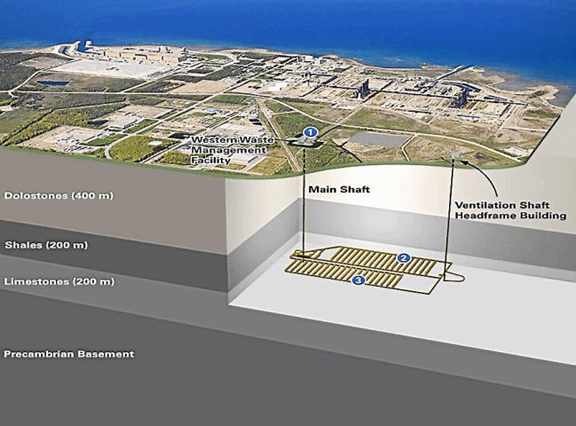
Ottawa to hold public review of new material on proposed nuclear waste dump
OPG to submit information to Canadian government in December By Jim Bloch For The Voice, 20 Nov 16 Next month, Ontario Power Generation will submit to the Canadian government new information about its proposed Deep Geological Repository for low- and intermediate-level nuclear waste.
Arctic ocean protection: Obama blocks new oil, gas drilling
 Obama blocks new oil, gas drilling in Arctic Ocean, USA Today WASHINGTON (AP) — The Obama administrationis blocking new oil and gas drilling in the Arctic Ocean, handing a victory to environmentalists who say industrial activity in the icy waters will harm whales, walruses and other wildlife and exacerbate global warming.
Killings of climate activists
The deadly business of grassroots climate activism New Internationalist, 20 Nov 16 A recent report found that 2015 was the deadliest year on record for environmental activists, raising concerns for those who continue to fight on the frontline, writes Liam Turner. It’s 2015, and Honduran campaigner Berta Cáceres has just won the Goldman Environmental Prize for grassroots environmentalism in South and Central America. The crowd claps as she walks up to the podium in her silver-sequined dress, a slight smile on her face. Then the room goes quiet, and Berta adopts a much more serious tone.
She speaks of her people, the Lenca, and their constant battle to protect their land. She speaks of how the world must break free from the grasp of ‘rapacious capitalism, racism and patriarchy’ that will ultimately lead to its self-destruction. She speaks of how her people’s sacrifice is not just for them, but for the world and everyone in it. She ends by dedicating the award to the martyrs who have given their lives in the struggle to defend our natural resources.
Less than a year later, armed men would break into her house in the middle of the night and murder her in cold blood, making her the latest to die for her cause. She was 44.
The Truth Behind the Paris Climate Deal
Climate activism has always been risky. Not only are there hazards that come from protesting at large, industrial sites, there is also the danger that comes from conflict with people whose interests lie with extractivist transnational companies. Ultimately, those who make a stand put themselves in harm’s way one way or another.
In fact, there’s evidence to suggest that climate activism is now more dangerous than ever. In June, a report by Global Witness revealed that 2015 was the deadliest year for environmental activists. It had recorded a total of 186 killings across 16 different countries, an increase of 59 per cent from the previous year. Global Witness also believes this number should actually be much higher, as a lack of reliable data meant that they weren’t able to record all fatal incidents.
An increasing threat
In a postscript to the Global Witness report – entitled ‘On Dangerous Ground’ – campaign leader Billy Kyte said: ‘As demand for products like minerals, timber and palm oil continues, governments, companies and criminal gangs are seizing land in defiance of the people who live on it. Communities that take a stand are increasingly finding themselves in the firing line of companies’ private security, state forces and a thriving market for contract killers.’
The report revealed that activists in Brazil were the worst hit, with a total of 50 recorded deaths. The Philippines was the next highest, with 36 deaths……… https://newint.org/features/web-exclusive/2016/11/15/the-deadly-business-of-grassroots-climate-activism/
1 This Month

of the week – Shut Down Drone Warfare!


Tell the Ukrainian Government to Drop Prosecution of Peace Activist Yurii Sheliazhenko

Petition to revoke the licensing of the Near Surface Nuclear Disposal Facility (NSDF) at Chalk River. https://www.ourcommons.ca/petitions/en/Petition/Details?Petition=e-7247
To see nuclear-related stories in greater depth and intensity – go to https://nuclearinformation.wordpress.com
-
Archives
- April 2026 (114)
- March 2026 (251)
- February 2026 (268)
- January 2026 (308)
- December 2025 (358)
- November 2025 (359)
- October 2025 (376)
- September 2025 (257)
- August 2025 (319)
- July 2025 (230)
- June 2025 (348)
- May 2025 (261)
-
Categories
- 1
- 1 NUCLEAR ISSUES
- business and costs
- climate change
- culture and arts
- ENERGY
- environment
- health
- history
- indigenous issues
- Legal
- marketing of nuclear
- media
- opposition to nuclear
- PERSONAL STORIES
- politics
- politics international
- Religion and ethics
- safety
- secrets,lies and civil liberties
- spinbuster
- technology
- Uranium
- wastes
- weapons and war
- Women
- 2 WORLD
- ACTION
- AFRICA
- Atrocities
- AUSTRALIA
- Christina's notes
- Christina's themes
- culture and arts
- Events
- Fuk 2022
- Fuk 2023
- Fukushima 2017
- Fukushima 2018
- fukushima 2019
- Fukushima 2020
- Fukushima 2021
- general
- global warming
- Humour (God we need it)
- Nuclear
- RARE EARTHS
- Reference
- resources – print
- Resources -audiovicual
- Weekly Newsletter
- World
- World Nuclear
- YouTube
-
RSS
Entries RSS
Comments RSS
 nuclear-news